We have a Ukraine Emergency Translation Group meeting scheduled for this Friday, May 20, at 11:00 AM Pacific Time, noon Mountain time, 1pm Central time, 2pm Eastern time, 8pm Greece, 9pm Turkey.
We will share your Translation with the group, if you like. You can email your Translation to me at zonta1111@aol.com.
Or perhaps you have a sense testimony you’d like to share. Or other insights or comments you may have.
Open to all Translators. Translate whatever you like or don’t Translate anything at all. Your choice.
See you Friday.
Mike Zonta Ukraine Emergency Translation Group
Prosperos Meetings is inviting you to a scheduled Zoom meeting. Topic: Ukraine Emergency Translation Group Time: May 20, 2022 11:00 AM Pacific Time (US and Canada)
One tap mobile +19292056099,,84023755291# US (New York) +13017158592,,84023755291# US (Washington DC) Dial by your location +1 929 205 6099 US (New York) +1 301 715 8592 US (Washington DC) +1 312 626 6799 US (Chicago) +1 669 900 6833 US (San Jose) +1 253 215 8782 US (Tacoma) +1 346 248 7799 US (Houston)
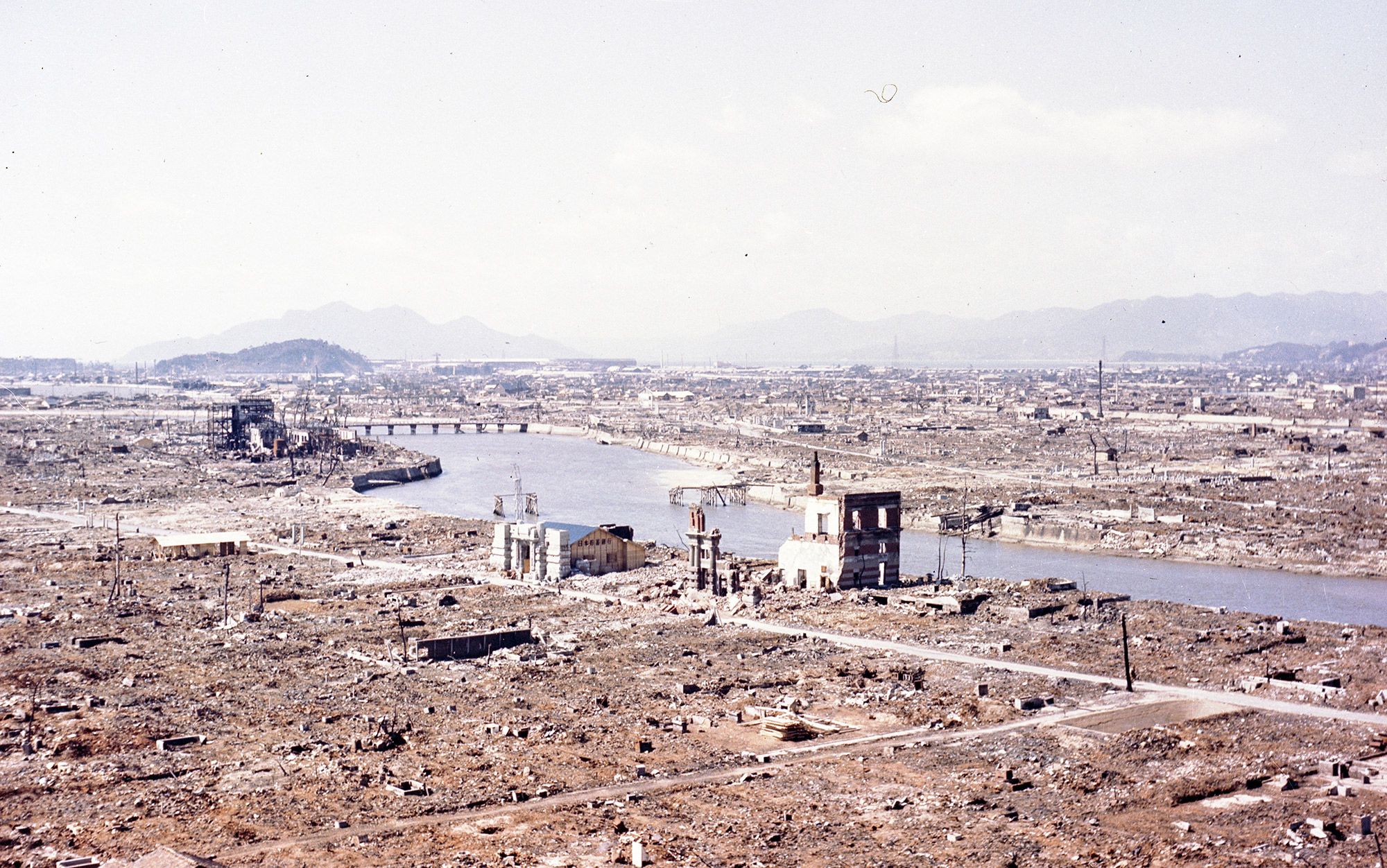
From the ashes of the Second World War, Günther Anders forecast a new catastrophe: technology would overwhelm its creatorsDevastation after the atomic bombing of Hiroshima, Japan; undated photograph. Courtesy the Department of Defense/Department of the Air Force
Audrey Borowski is postdoctoral fellow at the MCMP at the Ludwig Maximilian University of Munich, as well as a research associate at the University of Oxford where she completed her DPhil. Her interests range widely from the early modern period to the 21st century, from Leibniz to catastrophe and the philosophy of artificial intelligence.
As the commander of the weather plane that supported the dropping of the atomic bomb on Hiroshima on 6 August 1945, Claude Eatherly did not feel any particular animosity towards the Japanese, involved as he was in committing arguably one of the most barbaric acts of the Second World War with complete indifference. Eatherly carried out his mission, oblivious to its ultimate finality. How had it come to that? How was it possible that, as the philosopher Günther Anders later wrote, ‘the amount of wickedness required to accomplish the ultimate crime, a disproportionate crime, was equal to zero’?
B-29 Superfortress ‘Straight Flush’ with its commander Claude Eatherly, centre, back row. He later became a friend and correspondent of Günther Anders. Photo courtesy US Air Force
The work of Anders (1902-92), a German philosopher and essayist of Jewish descent, bears testimony to some of the 20th century’s major disasters and their effect on the intellectual landscape of the time. Anders set out to theorise those disasters and the impact of technology on modernity and the human condition, in particular technology’s gradual domination over all aspects of human activity – the commodification, dehumanisation and even derealisation of the world that had resulted from that domination.
Exiled to Paris in 1933, Anders eventually wound up in California, and in the Hollywood film industry of all things, where he supported himself by writing film scripts and doing odd jobs in factories and movie repositories. There, he closely observed the dramatic rise of consumerist culture – from the ashes of the Second World War and Western humanist ideals – while attending seminars held by members of the Frankfurt School. Despite his complicated relationship with Theodor Adorno, much of Anders’s critiques and concerns overlapped with Adorno’s in seeking to come to grips with modernity’s darker side. Much later in life, from his hospital bed, Anders would declare their oeuvre complementary in providing an ‘encyclopaedia of the apocalyptic world’ that had recently unfolded. In 1950, he returned permanently to Vienna.
Anders’s work has long remained unknown in the English-speaking world, perhaps because of what Herbert Marcuse described as its ‘unsparingly critical pessimism’. Yet, it already prefigured key themes later addressed by the philosophers Jean-Luc Nancy, Bernard Stiegler, Jean-Pierre Dupuy and Zygmunt Bauman; and it has recently gained new currency and relevance. Alarmed by some of the social effects of the new phantasmagoric world that had taken shape around us, Anders set out to dissect it and find out how it had inured us to – and even led us to embrace head-on – the devastating effects of technological development, and even our potential extinction, in order to prompt us to break from it by mobilising fear.
As he set out to tackle the challenges faced by the human condition – and the threats to its very existence – Anders jettisoned the academic style of his teachers Edmund Husserl and Martin Heidegger for a more accessible style of philosophical language that paused to consider historical realities as fully fledged philosophical objects. Auschwitz and Hiroshima, in particular, with their mass-production of deaths on an industrial scale, marked turning points in Anders’s thinking. These catastrophes had been made possible by the progress of science and technology, progress that had brought the very existence of our world into jeopardy.
The advent of the nuclear age had transformed peace into the perpetual preparation for war, and, in an interesting reversal of Carl von Clausewitz’s dictum that war is a continuation of politics by other means, threatened to cancel politics altogether by ensuring the mutual destruction of the belligerents. Anders deplored tacticians’ and politicians’ collective blindness, their unconsciousness in seeking to instrumentalise the threat of annihilation for political purposes – a gamble that relied on their very ignorance. In the early 1940s, he wrote (translations from the French my own):
None of us has a knowledge commensurate with what an atomic war could be … which means that, in this field, no one is competent and that the apocalypse is therefore, by essence, in the hands of the incompetent.
The modern use of nuclear power had blurred the distinction between civilian and military, and rendered the possibility of disaster omnipresent. A threshold had been irredeemably crossed when mankind deliberately hung a sword over its head and created the conditions for its self-annihilation.
For Anders, the disasters of the 20th century were simply the logical outcome of a pernicious process that had already been underway for many years, involving the gradual exclusion of mankind from all production processes – and, ultimately, from the world created by those processes. The real catastrophe in this regard, which Anders hoped to make ‘visible for the first time’, lay in the transformation of the human condition, a transformation that had become as naturalised and imperceptible as it was destructive. ‘The atom bomb,’ he argued, was ‘thus the ultimate emblem of an unearthly, unsettling and haunting force channelled by complex technological objects: it illuminates that the more “our” technological power grows, the smaller we become; the more unconditional and unlimited the capability of machines, the more conditional our existence; the more machines connect us by virtue of their very existence, the more we are also singled out as being expendable and inadequate.’
Günther Anders on his way to Hiroshima in 1958. Photo courtesy the Austrian National Library and Günther Anders Archive.
Like his first wife, the philosopher Hannah Arendt, Anders paused to reflect on the retreat of human morality, and on man’s ability to suspend his ability to reflect, to take leave of his sensitivity and empathy. No task was more pressing than examining those processes ‘inscribed at the very heart of our technical modernity’, which meant that ‘the repetition of the monstrous is not only possible, but it is probable’.
Technology restricted our experiential horizons, offering only ready-made worlds
At first protective, technology and artifice, by mediating every dimension of human life, had exacerbated our alienation in the world and now threatened to overwhelm us. In his landmark work The Obsolescence of Man – whose first volume (subtitled On the Soul at the Time of the Second Industrial Revolution) appeared in 1956, and second volume (On the Destruction of Life at the Time of the Third Industrial Revolution) in 1980 – Anders delivered a blistering indictment of modern-day consumerist, technological reality. The modern work model, with its extreme technical division of labour and chains of abstraction, had made the worker lose sight of the end product (and environmental consequences) and reduced his function to mere repetitive execution or monitoring. The worker performed standardised work of little intrinsic value – geared mainly towards profitmaking – in which there was little possibility for self-expression or the cultivation of a work ethic.
For all its benefits, technology restricted our experiential horizons, offering only ready-made worlds and predetermined modalities of experience carefully determined by corporations and advertising industries. As Anders wrote:
The whole world, in so far as it is offered, preestablishes the actions, opinions, feelings that we take into consideration, in short: our entire lifestyle, that our obedience is ensured without our needing to perceive an order as such. Consuming what is free is our obedience, as is delivering the order we receive.
The proletarisation of labour went hand in hand with the production of poor-quality products programmed for immediate obsolescence: objects were no longer intended to last, but to be consumed as perishable materials and replaced at a frantic rate in an unending cycle of creation and destruction justified by advertising’s ‘death drive’. The world had been transformed into a ‘ghost’, derealised through an abundance of ersatz products and make-believe realities that extended well into our private lives in the shape of what Anders described as ‘playful products freely delivered [by radio and TV] at home’:
Nothing alienates us from ourselves or alienates the world more disastrously than spending our lives, now almost constantly, in the company of these deceptively intimate beings, these spectral slaves that we introduce in our living rooms.
This ‘techno-totalitarian empire’ threatened to ‘liquidate’ us and reduce us to mere cogs of the mega-machine. In fact:
the possibility of our own liquidation is the principle we endow all our technological devices with, regardless of what other special function we entrust to them too. Liquidation is the exclusive principle that informs the construction of machines … What we exclusively aim at are machines, the functions of which make us superfluous, turn us off, and liquidate us.
Within this ‘totalitarianism of apparatuses’, programmed obsolescence had been extended to man as he had found himself increasingly assimilated to the technology of production. He had been gradually deprived of his autonomy and ability to create a world for himself, and his freedom was reduced to the stark choice between adequacy within the technological world or exclusion from it for failing to comply with its imperative to continuously produce and consume. By investing all dimensions of human existence, it had ushered in the complete pacification and subordination of man within a fully consumerised society:
This logic that inhabits them comes from the roles that they have been made to play since their invention: saving human labour, increasing production, exploiting nature. This is the gist of the talk about the millions of passive Eichmanns, freed from thought and responsibility, rather than act, who perform unthinking tasks other than in purely instrumental ways. Man is probably not a machine, but he behaves as such in a situation where the machines impose his operating rules. Indeed, the progress of technology should not be understood as necessarily being the progress of mankind: far from it, they are not accompanied by a progress of thought, reflection and responsibility, since they eliminate their intervention and even often make them impossible.
Crucially, man increasingly found himself enlisted in the production of his own disappearance ‘in the most natural manner possible’. Anders set out to analyse the ‘new variety of shame’ that had been imposed on man for having been born, not made. Our design was ‘blind and uncalculated’, our bodies ‘stiff, recalcitrant and limited’, unlike ‘immaculate products, which are carefully designed through and through’ and to which we can never measure up. Technological modernity had imposed our unilateral surrender to machines, rendering our capacities to understand, feel or act redundant and superfluous in the expectation of becoming ‘absolutely consubstantial’ with machines and freed of our ‘shortcomings’ by them. For Anders, the root cause of our apathy lay in the discrepancy that had arisen between our faculties, especially our imagination, and our actions, in such a way that ‘we are unable to conceive what we can construct; to mentally reproduce what we can produce; to realise the reality which we can bring into being.’
The ability to kill thousands at the press of a button was no longer matched by the ability to take the measure of the calamity wrought. This ‘promethean lag’ often anaesthetised our faculties, including our ability to fear the danger that threatens us, for the simple reason that we cannot know what we cannot understand or represent concretely or morally to ourselves. These limitations in us induced a state of irresponsibility, a form of nihilism in action that maintained us as atomised individuals while we laboured toward our own irrelevance and extinction.
Some of Anders’s predictions are eerie in their prescience of how devices and machines have come to mediate our thoughts, discussions, ideas and even relationships, cramming our minds with addictive and pacifying frivolity:
Stage-managing masses the way Hitler did has become superfluous: if one wants to strip man of his personality (and even make him proud to be a nobody), it is no longer necessary to drown him within the mass …
No depersonalisation, no degradation of man is more effective than the one that seems to preserve the freedom of the personality and the rights of that individual. Each separately undergoes the ‘conditioning’ process, which works just as well in the cages where individuals are now confined, despite their loneliness, in their millions of isolated units. This treatment is inconspicuous since it is presented as fun, since it conceals from its victim the sacrifices it demands of her and leaves her with the illusion of a private life or at least of a private space. We will fill people’s minds with what is futile and fun. It is good to prevent the mind from thinking through incessant music and chatter. Sexuality will be placed at the forefront of human interests. As a social tranquilliser, there is nothing better …
In general, we will make sure to banish seriousness from life, to deride anything that is highly valued and to constantly champion frivolity: so that the euphoria of advertising becomes the standard of human happiness and the model for freedom. Conditioning alone will thus produce such integration that the only fear – which must be maintained – will be that of being excluded from the system and therefore no longer able to access the conditions necessary for happiness.
Our ‘blindness in the face of the apocalypse’, which, according to Anders characterises the Third Industrial Revolution, enables us ‘to make plans and to live as if everything … were going to continue as before’. This belief in progress, persistently ingrained since the Industrial Revolution, makes any end to human history inconceivable:
Faced with the idea of the apocalypse, our soul forfeits. Under these conditions, the idea of the apocalypse is no more for us than a simple word.
Much of the recent technological takeover of our lives has been underpinned by the myth that it was synonymous with emancipation and progress – a conceit it was suspect to challenge even while that very imperative further contributed to the growth of inequalities, the destruction of nature and the waste of resources. ‘The real terrorists’ in this regard are the so-called experts in charge who were as ignorant as us but ‘who continuously frighten our common world with the threat of destruction.’ Rather than ‘enlightening’ man, the progress of technology had ended up further anchoring his obsolescence and placing him outside of history.
In light of the looming environmental crisis, our growing servitude to a soulless consumerist society built on waste and exploitation, and the increasingly mediated nature of reality, Anders’s analyses remain strikingly pertinent. Despite increasing media representation of these threats, we live in what Anders called ‘the age of the inability to be afraid’ and still overwhelmingly remain passive in the face of this development. Even when objectively aware of the dangers linked to the climate crisis, the collapse of biodiversity and the diminution of resources, we prefer to continue to pay lip-service to them to better avoid direct confrontation with them. We take refuge in ignorance, even in reckless overconsumption. And yet, faced with the prospect of our not so remote extinction, ‘Do we,’ as Anders challenges us, ‘have the right to sit idly by? Is the mortal gravity of our future … a carte blanche to laziness?’
To cultivate and educate the faculties that have been rendered impotent by technical development, Anders invites us to draw on the memory of past disasters to uphold an image of man in his creativity, ingenuity, sensitivity and responsibility. If we are to survive, according to Anders, ‘we must practise understanding the unseen as the present at all times, and educate the next generation in this understanding and the anguish it demands.’
Above all, we need to resist the temptation to naturalise that which has victimised us and laid the groundwork for our extinction, but instead safeguard our humanity and power as individuals. It is imperative to emerge from our slumber by widening the limits of imagination in order regain awareness of the human, social and moral consequences of our actions, and to conceive an adequate responsibility for any disproportionate consequence. Only then can we hope to ‘keep [our] conscience alive in the age of the machine’.
Anders maintained that widespread opposition to morally irresponsible production and consumerism was possible
Crucially, against the prevailing indifference instilled in us by the ambient technological nihilism, Anders tried to impress upon us the necessity to rebel and panic, turning fear into a revelation and object of lucidity. In this manner, he prefigured the ‘enlightened catastrophism’ theorised by the French thinker Dupuy. Convinced that humanity was on borrowed time, Anders hoped to ‘sow panic’ and wrest his readership from its apathy: ‘Because he who sees the danger in panic, and not in the danger against which we warn those who are anxious to be anxious, distorts the truth and wilfully blinds his neighbours’ – and to design a new morality capable of taking into account new catastrophes and the preservation of mankind.
Specifically, Anders enjoined us to protest and revolt against the fatality of techno-totalitarianism. Drawing on the socialist struggles against capitalist servitude and the proletarian successes of the 19th century, and on his own reflections on atomic bombs – ‘nothing is more false than to assert that in our time we would no longer have the power, the same duty of resistance’ – Anders maintained that a determined and widespread opposition to certain modes of social organisation and morally irresponsible forms of production and consumerism was possible, for example through unions and political movements. He also called for strike action against production and consumption:
We would therefore have to explain to them that a strike of a totally new kind is necessary today, a strike whose object is fundamentally different from that of all the strikes that have taken place until now: that the strike is today desirable not only when it comes to combating intolerable working conditions or wages, but also when the products that we are asked to manufacture lead to unjustifiable effects; that he who feels in himself even a spark of responsibility has a duty to refuse to take part in the manufacture of such products, regardless of the salary offered for it.
By refusing to collaborate with an oppressive order, by creating forms of resistance to any order that perpetuated massacres, devalued us as human beings, atomised societies and imperilled our very existence, we could then perhaps hope to salvage man from a conformist throwaway culture. In The View from the Moon: Philosophical Reflections on Space Travel, Anders, decades before a new generation of billionaires attempted to colonise space, imagined looking back at Earth from the Moon. It is perhaps still not too late to regain a sense of our shared destiny.
What changes can a human undergo without becoming someone different? For example, if a degenerative disease paralyses your body, it’s clearly still you who exists in this transformed state. But what if the disease transforms your mind, impairing your memory or causing radical personality change? Would this new ‘you’ be a different person entirely than the one who existed before the transformation?
Part of what makes it hard to answer this question is its ambiguity. Imagine you saw my father, John, one day and then his twin brother, Joe, the next, and you pointed out Joe to me and said that you had only just seen him. I might correct you by saying that the person you see now is a different person than the person you saw yesterday. But is that the meaning we have in mind when we ask whether the person existing in the wake of a disease is a different person than the one before?
Or is it more like this: a man goes away to war, where he experiences great horrors, and on his return his family finds him to be a different person entirely than he was when he left. This is different from your confusion about John and Joe (and different from the situation if the person who showed up at the doorstep after the war happened to be an imposter). The family take for granted the continued existence of the man who left and then returned home. What troubles them is that he has changed, so much so as to be unrecognisable except in outward appearance. And the same point seems to hold in the case of the degenerative disease: if it were not you who existed in the wake of it, then your loved ones would not have cause to mourn your state in the way they do. But what, then, can we mean when we say, as we so often do, that the disease (or war, or drug taking, or divorce, or near-death experience…) has made you into a different person?
Here’s another example – imagine contemplating a life experience that will radically transform your values. The philosopher L A Paul calls this a transformative experience, such as when parents claim to have been altered fundamentally by the first sight of their newborn child. Given the prospect of such a radical change, should you allow it to happen? Perhaps you currently enjoy late nights on Saturdays and lazy Sunday brunches, while the person you’d be as a parent would enjoy – or at least profess to enjoy – lengthy bedtime routines and Saturday morning swim meets. You’d be a different person entirely! And yet it has to be you who would be this different person, or else the prospect of this change would not concern you. You’re asking yourself: is this the kind of person I should become? For someone else to find pleasure in the life of a parent may strike you as perplexing, but clearly it wouldn’t trouble you in the same way.
Some philosophers, most famously John Locke, have tried to clarify this kind of situation by distinguishing between the continued existence of human beings and that of the persons who human beings are. Locke motivates this distinction by imagining a case in which the soul of a prince is transferred into the body of a cobbler. Supposing that the cobbler now has all the essential psychological characteristics that the prince had before, would we not say that this one man (this human being) had somehow become a different person? Likewise, then, could we say of the soldier come home from war that his family’s alarm was a response to changes in the man they knew, while the person who went away no longer existed – and, likewise, that a transformative experience, or a degenerative disease, can change what person you are without thereby making you a different human being?
When someone tells you who she is as a person, her answer will reflect her sense of identity
This solution is unsatisfactory because it treats the concept of personhood as something entirely abstract and metaphysical. Whatever else the concept of a person does for us, it has to be closely tied to our use of the words ‘you’ and ‘I’, and via these to ‘he’ and ‘she’ as well. When you consider whether to undergo a transformative experience, the question at stake is whether you should become this way or not. By the same token, there is no question that the man who returns from war owes all the same debts as the man who left, that he has committed the same deeds and is married to the same woman, and so forth. If the concept of a person is good for anything at all, it must be what stands as the basis of such judgments.
So, what then do we really mean when we say of someone that this individual is not the same person as before?
One simple answer is that we use these words to refer to a great degree of change, with a focus on those psychological traits that we deem most central to ‘personhood’. Understood this way, the point of saying that the man who returns from war is a ‘different person’ than before is to say that he differs greatly in those important respects. Likewise for a degenerative disease that transforms a patient’s personality. But the problem with this answer is that when we use ‘different person’ in the way that we are trying to unpack, we usually mean wholly different – not gradations of certain specific trait changes.
The philosopher Vincent Descombes suggests a more sophisticated answer in his bookPuzzling Identities (2016, translated by Stephen Adam Schwartz) in which he highlights the distinctive way we use the language of identity. When someone tells you who she is as a person, her answer will reflect her sense of identity, speaking to something more like ‘What are you really about?’ – her goals and purposes in life – rather than ‘What is your name and where are you from?’ Our identity in this sense isn’t a ‘fixed’ quality that has been handed down to us, rather it is something we shape and determine over time. Perhaps, when we say that someone has become a different person, we mean that they would give a different account of who they are, where this has changed so radically that they now identify as someone altogether different.
There is much to be said for this analysis. But it cannot be the full explanation of what we mean by ‘same person’ and ‘different person’ because similar language is used in many other contexts without any associated change in self-identity. For example, if I bring my broken-down car to the shop and the mechanic returns it with a gleaming exterior and the engine purring, I might say that it is now a different car than the one I brought in – but of course I wouldn’t mean that I’ve been given a car that belongs to someone else. Likewise, if an author sends her manuscript to the publisher and gets it back with the plot inverted and many essential passages excised, she might say it is not the same book as the one she wrote, though without any implication that the mail got mixed up. In both cases, we used the language of ‘same’ and ‘different’ in just the way that interests us for people and personhood, but without supposing that the identity of my car, or of the author’s book, is something that those items were able to shape or determine.
The claim that someone has become a different person can be used to justify cutting them out of our lives
Nevertheless, Descombes’s account brings us closer to answering the puzzle of what we mean by someone becoming a different person. Just as a person’s identity is a matter of what she is really about – that is, her passions that give direction to her life – we can apply this same concept to something like a car or a book: for example, asked to say what her book was really about, the author might have called it a poignant tale of lost love. (Likewise, I’d have called my car a clunker.) To say this is to make a claim about the essence of the book, or the defining thing that makes it the book it is. If, after the editor’s cut, the book reads like a beachside romance, that might be grounds for calling it a different book entirely.
So maybe this is what we are saying when we use ‘same’ and ‘different’ about a person changed by disease, war or something else. Here, talk of what you are ‘really about’ isn’t necessarily tied to the ability to decide or determine this aspect of one’s own identity – though, in the case of mature human beings, they may turn out to be closely connected: perhaps my identity, or what I am about, is in general just what I say it is. For me to become a different person, then, would be for me to become, and so to be prepared to say that I am, ‘about’ something totally different.
Recently, the philosopher and cognitive scientist Joshua Knobe and his collaborators have proposed a similar argument in admirable detail. According to Knobe, the uses of ‘same’ and ‘different’ that have been my focus here are connected to the notion of what someone or something really is – as when, for example, you say of a derivative song on the radio that there’s a sense in which it’s punk rock, but, if you think about what it means to be punk rock, you would have to say that it isn’t really punk rock at all. Behind this kind of statement is the sense that there is something essential to punk rock, or definitive of its true nature, that a song can lack, even as it embodies some of its superficial features. And maybe the changes that would make someone become a different person entirely are changes in such a dimension.
If this is correct, then what is the moral upshot of saying that someone has become a different person, whether through war, dementia or parenthood? What makes these judgments matter to us in the way that they evidently do? What is their significance in how we are to treat one another, in how we are to live?
Sometimes, the claim that someone has become a different person can be used to justify cutting them out of our lives, or treating them as if they were a mere acquaintance. This makes sense in some cases: for example, if you and a classmate once bonded over a shared love of punk rock, or a common religious conviction, then, if they were to lose this love, or this conviction, it might be appropriate for you to dissolve your friendship. In such a case, the person who was your friend is no longer ‘about’ the thing that was the ground of your relationship. Hearing from your friend how she has changed, you will find yourself asking: who are you? For the purposes of your friendship, the person that you knew is gone.
But not all human relationships are this way. A person you marry, or a parent or child or elderly relative, is not someone who is tied to you just by virtue of a shared passion or purpose. Your relation to them goes deeper than that, and its ground is your shared life. It is part of being human that people sometimes change in ways that can make a radical difference to what they are about. But our passions and purposes are not the only things that determine who we are. Our lives are also defined by the irrevocable commitments we make to our loved ones, and the ties that bind together parent, child, sibling and kin. To see ourselves, and one another, for who and what we really are, we need to recognise these aspects of our identity that are not so subject to change.
The Lord of Truce marks a period where we are able to rest and recover, after a difficult time in our lives. It will appear after trauma – the breakdown of a relationship; a troublesome and worrying time financially; an operation or major illness.
There will always have been conflict and stress beforehand, this card marks the kind of breathing space we often need in order to clarify our view of the situation, to gather our strength and to decide how best to move forward. When this card appears in a reading, the first thing it tells us is that it is time to rest, time to stop worrying about the things that have happened.
However, it must be noted that Truce is not peace. This is a respite – a down time in which we can catch our breath, ease our tension and relax for a brief time. But once that has been done, we need to recognise that there is still more to be done – the battle isn’t over yet. So when acting under the influence of this card, bear in mind that first you must take it easy, but then you must begin to plan your next step.
If we fail to do that, then when the effect of the Lord of Truce passes away, we shall be left high and dry, with no route planned for our future. And in that case the turmoil which preceded this card may well manifest again.
Sometimes, when the card comes up with a ‘person’ card, it indicates that a rift can begin to be mended between two people who have been at loggerheads previously. In this case, again, it is important to stress that this card does not indicate peace – as before, much more work will need to be done before the damage is entirely healed. We need to be on our guard, too, for other people running personal agendas which may mean that the ‘truce’ is more convenient than sincere.
New Thinking Allowed with Jeffrey Mishlove May 17, 2022 Charles Upton’s first books of poetry were published in 1968 and 1969 by Lawrence Ferlinghetti of City Light Books in San Francisco. He was then considered the youngest member of the “beat generation” as he was still in high school. He has subsequently written many books associated with the traditionalist school of spirituality including The Science of the Greater Jihad, System of the Antichrist, Vectors of the Counter-Initiation, Folk Metaphysics, and Alien Disclosure Deception: The Metaphysics of Social Engineering. His website is https://charles-upton.com/. Here he notes that René Guénon wrote about several types of initiation that deviate from authenticity: anti-initiation (i.e., materialism), pseudo-initiation (i.e., fantasy), and counter-initiation (i.e., potentially, if not actually, evil). He proposes that counter-initiation is the ultimate conspiracy theory – the conspiracy behind all other harmful conspiracies. He provide a number of examples, including Satanism, UFO cults, and Aztec ritual sacrifice. He argues that Sufism, when removed from its essential Islamic context – as well as other efforts to form universal religions – may be approaching counter-initiation. New Thinking Allowed host, Jeffrey Mishlove, PhD, is author of The Roots of Consciousness, Psi Development Systems, and The PK Man. Between 1986 and 2002 he hosted and co-produced the original Thinking Allowed public television series. He is the recipient of a doctoral diploma in “parapsychology” awarded by the University of California, Berkeley, 1980. He is also the Grand Prize winner of the 2021 Bigelow Institute essay competition on the best evidence for postmortem human survival. (Recorded on April 30, 2022)
“Learn to get in touch with the silence within yourself and know that everything in this life has a purpose. There are no mistakes, no coincidences. All events are blessings given to us to learn from.” Elizabeth Kubler-Ross (1926-2004) Swiss American Psychiatrist
AN OPPORTUNITY FOR DAILY REFLECTION BROUGHT TO YOU BY THE SCHOOL OF PRACTICAL PHILOSOPHY
is a PhD student at the KTH Environmental Humanities Laboratory and at the Division of History of Science, Technology and Environment at the KTH Royal Institute of Technology in Stockholm, Sweden.
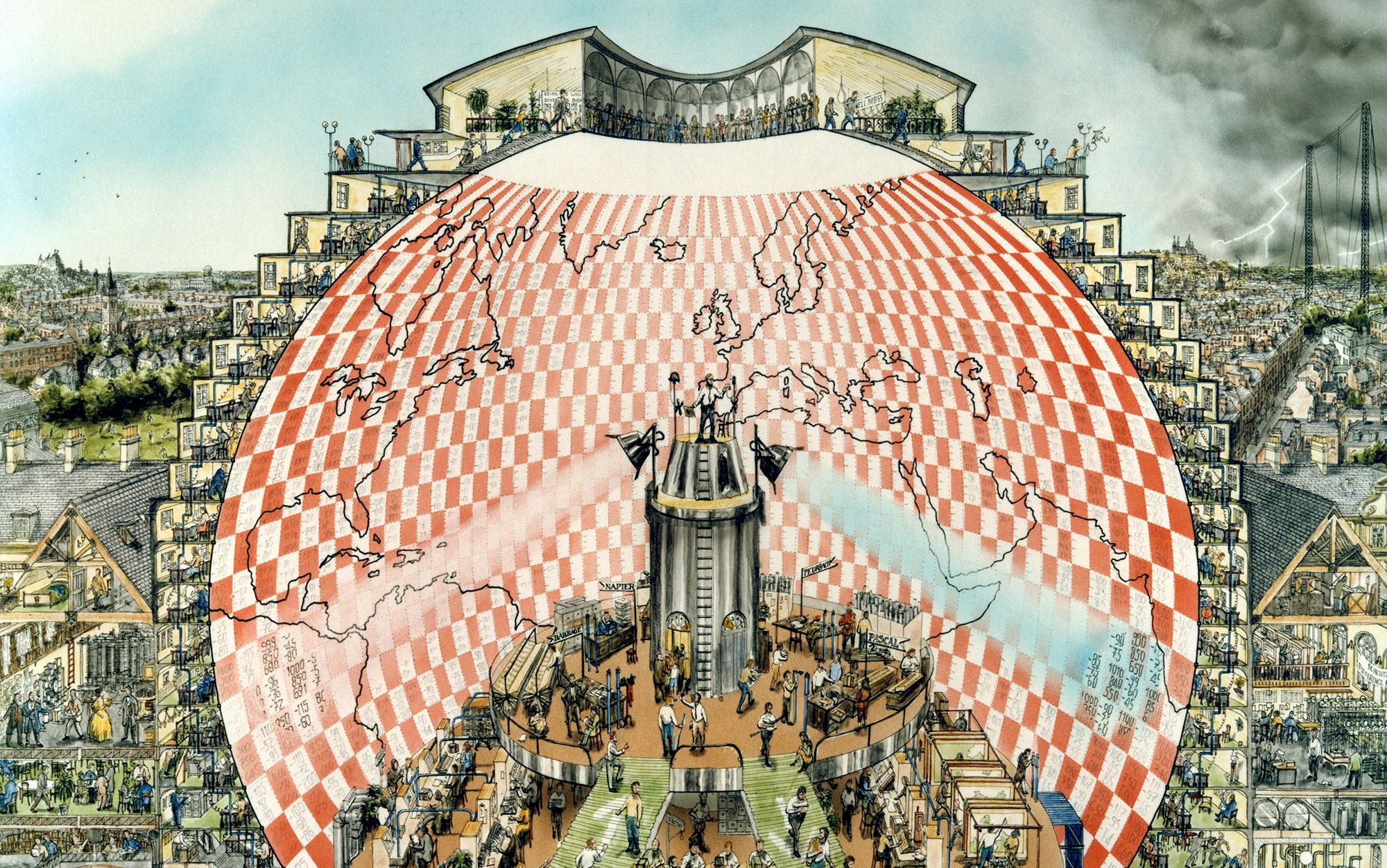
Imagine a vast circular chamber, with walls covered in a towering painted map of planet Earth. Picture this hall ‘like a theatre, except that the circles and galleries go right round through the space usually occupied by the stage’. Enormous rings of tiered seating circle its outer walls. Imagine that working in these seats are 64,000 ‘computers’ – humans doing calculations – each preparing a different weather forecast for their designated geography. And in the middle of the hall, on a large pulpit at the top of a tall multistorey pillar, stands the ‘man in charge’, who coordinates the scattered weather calculations from his computers into a global forecast like a ‘conductor of an orchestra’.
This ‘forecast factory’ was the dream of the 20th-century English mathematician and meteorologist Lewis Fry Richardson. Following hundreds of pages of equations, velocities and data in his prosaically titled bookWeather Prediction by Numerical Process (1922), he asks the reader to indulge him: ‘After so much hard reasoning, may one play with a fantasy?’ For Richardson, one of the main limitations on weather forecasting was a lack of computational capacity. But through the fantasy he could ignore practical problems and bring an entire planet into focus. His ‘factory’ saw once-scattered local observations merging into a coherent planetary system: calculable, predictable, overseen and singular.
Richardson died in 1953, the year IBM released the first mass-produced electronic computer. Though his factory never materialised exactly as he imagined it, his dream of a calculable planet now seems prophetic. By the 1960s, numerical calculation of global weather conditions had become a standardised way of recording changes in the atmosphere. Clouds and numbers seemed to crowd the sky. Since the 1960s, the scope of what Richardson called weather prediction has expanded dramatically: climate models now stretch into the deep past and future, encompassing the entirety of the Earth system rather than just the atmosphere. What is startling about this is not that our technical abilities have exceeded Richardson’s wildest dreams but the unexpected repercussions of the modern ‘forecast factory’. The calculable, predictable, overseen and singular Earth has revealed not only aeons of global weather, but a new kind of planet – and, with it, a new mode of governance.
The planet, I argue, has appeared as a new kind of political object. I’m not talking about the Sun-orbiting body of the Copernican revolution, or the body that the first astronauts looked back upon in the 1960s: Buckminster Fuller’s ‘Spaceship Earth’, or Carl Sagan’s ‘lonely speck’. Those are the planets of the past millennium. I’m talking about the ‘planet’ inside ‘planetary crisis’: a planet that emerges from the realisation that anthropogenic impacts are not isolated to particular areas, but integrated parts of a complex web of intersecting processes that unfold over vastly disparate timescales and across different geographies. This is the planet of the Anthropocene, of our ‘planetary emergency’ as the UN secretary-general António Guterres called it in 2020. The so-called planetary turn marks a new way of thinking about our relationship to the environment. It also signals the emergence of a distinct governable object, which suggests that the prime political object of the 21st century is no longer the state, it’s the planet.
For those closely following contemporary environmental science and politics, this is nothing new. The need to stay within the boundaries of the planet became a flashpoint in the 1970s after the Club of Rome published its reportThe Limits to Growth (1972). The report suggested that unlimited economic growth on a planet with finite resources would prove unsustainable in the long term. Since then, rather than ‘limits’, the crucial framework for global environmental governance has become ‘planetary boundaries’, a term coined in 2009 by the Swedish scientist Johan Rockström and a team of researchers. This change is emblematic of how global, social, economic and technological relations have become conflated with the physical properties of the planet itself.
Modelling the outcome of the entangled and rapidly declining relationship between humans and Earth has become a key task for scientists across a range of fields, which has led to a blurring of scientific and political futures. The closer this relationship gets, the harder it becomes to disentangle the two from each other. For someone like myself, born in the mid-1990s, models of planetary conditions have almost become images of the future itself. The planet is suddenly everywhere. Planning, designing, research, strategising – even the grounds for thinking itself – are now adjusted to the planetary scale. As this scale becomes ubiquitous, it can sometimes be difficult to see that this form of the planet has a history of its own. If the planet just recently resurfaced as a new kind of environmental category, where did it come from?
The recently resurfaced planet, I argue, can be traced back to fantasies like Richardson’s. Contemporary planetary governance relies on a specific trajectory of planetary monitoring. Even though efforts to map and measure global space have a far longer history – not least as a primary vehicle of Western colonialism and imperialism – the efforts to monitor and govern planetary dynamics have also relied on a particular history of knowing, seeing and measuring the planet. Thinking of the planet as an interconnected system required quantified and centralised approaches as well as a wide set of scientific instruments and technologies. A specific kind of planet was able to emerge, not by itself, but through the interconnected histories of geopolitics, technology and grand visions of planetary monitoring.
Collection of planetary-scale data did not happen in a vacuum: it was mobilised by geopolitical ambition
Technically, the beginning of a gradual transition from planetary monitoring to planetary governance began during the postwar era, as connections tightened between the planetary and the global. But even before that time, before the technological and scientific means to monitor planetary dynamics, the conceptual framework for quantifying a dynamic planet was starting to be sketched out.
Richardson’s 100-year-old fantasy did not consider the entirety of Earth’s processes (only weather conditions unfolding in real time), but his approach is surprisingly contemporary. Much like his human ‘computers’ reporting weather data to the ‘man in charge’ as they worked along the walls of the forecast factory, today a wide range of scientific fields provide the raw materials for climate modellers. Though the data now spans millennia, the structuring logics of Richardson’s factory have remained intact. Over time, new numerical problems were added to the forecast factory framework and, as the prospect of human impact on planetary dynamics grew more likely, the work of the factory expanded into the domains of politics and history.
The data was not just a series of numbers waiting to be plucked from the land, sea and sky. It was made and mobilised. To monitor the entire planet across space and time, researchers in the mid-20th century understood they needed to translate natural phenomena – including tree rings and ice cores – into data that could be synchronised and compared through models. The Earth sciences, such as oceanography, glaciology and meteorology, played a key role in this translation work, but the collection of planetary-scale data did not happen in a vacuum: it was mobilised by the geopolitical ambition to extend military power to the most remote parts of the planet. Tracing the origins of a monitored planet takes us from fantasies of forecast factories to vast material technological networks, Cold War fears and climate histories hidden deep inside the polar ice sheets.
The International Geophysical Year (IGY), which started in 1957, is a prime example of how this development took place. The IGY was a remarkable scientific and diplomatic endeavour: by involving 60,000 scientists from 67 countries, it functioned as a kind of ‘scientific Olympics’. The goal was to construct a coherent understanding of how the planet functioned on a geophysical level and how its many components interacted. Remote geographies, such as the polar regions, the ocean floor and the upper atmosphere were drawn into a bourgeoning understanding of the planet as interconnected and dynamic.
Technology was at the heart of the IGY: the event was accompanied by a surge of new devices for sensing, sampling and recovering parts of Earth that had previously been inaccessible. Much of this technology emerged from Cold War geopolitics and military funding of Earth sciences. The IGY began in July 1957 and, as it progressed, scientists were given access to a growing parade of scientific instruments: satellites, rockets, weather balloons and radar equipment could be directed towards the atmosphere and beyond; acoustic sonar technologies, current meters, magnetometers and deep-coring devices opened up new domains of study in the oceans; and ice-core drills, crevasse detectors and seismographs did the same for the polar regions. Even though these instruments worked in different ways and applied to different geographies, they produced the same result: numbers.
The IGY, with its overarching goal to study the planet as a ‘single physical system’, necessitated a kind of elemental translation. Ice, rock, soil, air and water were measured and turned into numbers, which in turn could form quantified ways of knowing planetary-scale dynamics. In the years after the IGY, the gathered data were stored on microfilm in countries of the World Data Center system, an institution created to coincide with the event and to facilitate the global spread of the research results. Even though this was easier said than done (this was, after all, during the Cold War, and geophysical data was always of interest to the military), the data centres formed a predigital rendition of what would later become digital climate databases. In storage facilities across the world, a quantified version of the planet began to take shape, rolled up on mile-after-mile of microfilm.
Geophysical optimism became contrasted with an awareness of ecological fragility – and, potentially, disaster
In contrast to contemporary climate models, the IGY did not give primacy to human impact. In fact, political matters of any kind were kept as implicit as possible: the IGY was a dual enterprise, at once scientific and military, but the latter was for diplomatic reasons that were not stated explicitly. The non-political nature of the project was constantly reiterated by Western scientists as they pointed to the universal appeal of acquiring new planetary-scale knowledge that transcended Cold War politics. Potential controversial study objects, such as radioactive fallout and anthropogenic climate change, had to be framed as technological rather than political issues. Rather than being seen as problems for societies to deal with, which might open the door to diplomatic and political issues, changes in planetary dynamics due to human impact were framed as large-scale ‘experiments’. An optimistic idea about humanity’s role in planetary affairs took hold. At the time, the ways that fossil-fuel combustion affected climate dynamics became ‘perhaps the greatest geophysical experiment in history’, in the words of Roger Revelle, a leading US oceanographer and organiser behind the IGY.
With the rise of environmentalism in the 1960s, and broader concerns about anthropogenic environmental degradation, the geophysical optimism of the IGY became contrasted with an awareness of ecological fragility – and, potentially, disaster. Many of the environmental concerns that emerged at that time stemmed from scientific traditions such as ecology, biology and plant physiology, and a geophysical conceptualisation of the planet remained beyond the scope of environmental consciousness. Given the close ties between military funding and geophysical research, environmental issues were left to other disciplines, and the utility of geophysics was primarily conceptualised in geopolitical terms and as a military strategic tool. However, this was about to change. The enormous processes and vast geological timescales of geophysics would begin intersecting with the political urgency of environmentalism and an understanding of a perilous relationship between humanity and the planet began taking shape.
In 1966, on a US army base named Camp Century in northwestern Greenland, a team of scientists took one step in that direction. Hidden deep inside the Greenland ice sheet, the base was a US Cold War project par excellence: fuelled by a nuclear reactor, situated in a geopolitically strategic site in the Arctic, and well connected to the technological and infrastructural force of the US Army. It was also in the process of being abandoned.
A cutaway drawing view of Camp Century Nuclear Laboratory, Greenland (c1960-61). Courtesy the US Army Corps of Engineers
As military interest moved to other parts of the world, the Danish geophysicist Willi Dansgaard saw his chance to utilise the Greenland base to drill far further down into the ice than had previously been possible. His goal was to recover cores: long, cylindrical cut-outs of the ice sheet in which layers of ice had gathered over centuries or even millennia. Using the recently developed technique of isotope dating, Dansgaard could study the stratigraphy in the ice cores to uncover the composition of the atmosphere at the time the ice froze. A new kind of conceptualisation of ice was taking form: by approaching the ice sheet as a vertical space, it could function as an archive of past climates, a frozen repository of planetary histories. Earlier generations of glaciologists had often spoken of ice as a ‘calendar’ that could be studied in real time because glaciers respond to changing climates around them. Later, these ‘calendars’ would be understood as ‘archives’ – a change in temporal metaphor indicative of a larger conceptual shift in the relation between ice and history, where the slow bodies of the glaciers were increasingly seen as proxies for rapid planetary change.
Engineers capture an ice core at Camp Century, Greenland, 1960-61. Courtesy the ERDC Cold Regions Research and Engineering Laboratory
At Camp Century, Dansgaard finally had the technological means to try his dating methods on a larger scale. As a graduate student in Copenhagen, he had used an old beer bottle and a funnel to gather rainwater in his garden in order to study ‘old water’. Having access to a technologically advanced military base inside the Greenland ice sheet – arguably a better place for the study of old water – he could vastly scale up his research. In 1966, Dansgaard and his team drilled all the way through the ice sheet down to bedrock, 1,387 metres below them. The ice core they were able to recover was far longer than any previous core and produced a climate history dating back 100,000 years. For reference, the attempts to drill for ice cores during the IGY in 1957-58 had produced records of only 900 years. Dansgaard’s core revealed the past of a planet that had undergone dramatic shifts during its history, with large variabilities and rapidly changing climates.
If the planet had undergone rapid shifts in the past, it could do so again
The scientists left Camp Century shortly after the drilling because it was gradually being crushed by the slow movements of the ice sheet (the facility has only recently begun resurfacing as climactic changes cause the ice above to melt). In a sense, the real work began once they left. Chopped up into small pieces, the ice core was circulated around research facilities in the US and Denmark, and the massive amounts of data it held suggested new research questions: what could ice cores be good for?
Dansgaard had plenty of ideas. ‘The development of the ice core drilling technique has led to a broad variety of studies reaching far beyond glaciology itself,’ he wrote in 1973, and listed a wide range of disciplines – from solar physics to meteorology and atmospheric chemistry – that could benefit from ice-core studies. He also began speculating whether ice cores could be used to predict future climatic conditions and form a baseline against which human impact could be measured. He particularly appealed to the growing community of climate modellers, and asserted that they should use his ice cores to diagnose ‘the processes that cause climatic changes’ and to check the validity of their models. One can almost imagine Dansgaard showing up at Richardson’s forecast factory, an ice core under his arm, taking his place along the sides of the enormous theatre and disclosing an entirely new set of numbers to the man on the central pulpit.
This increase in the temporal scope of Earth’s 20th-century forecast factory added an additional dimension to the understanding of the planet. The planet stretched out in time and could now be considered a place with a rich and dramatic climate history. It also raised the stakes for the future: if the planet had undergone rapid shifts in the past, it could do so again.
In the early 1970s, Dansgaard was far from alone in his ambition to bring together long, planetary timescales with the surging scientific field of climate modelling. Ice cores were lined up along with other climate archives – deep-sea sediments, ancient pollen samples, corals, tree rings – that could now be translated into one coherent climate system. But the archives alone were not enough: while Dansgaard and his colleagues were drilling through the Greenland ice sheets, a new generation of meteorologists and climate modellers had developed increasingly advanced methods to calculate and predict future climate conditions. What began as an ambition to predict short-term changes in the weather, an ambition shared by Richardson, was growing temporally and spatially. The first General Circulation Models (GCMs), developed to quantify atmospheric processes on monthly or seasonal timescales, were produced in the 1960s. But these models were still rudimentary, produced by small teams, and could give only fragmented and partial answers to the questions the modellers asked them. New questions were also emerging. As the leading climate scientist William Welch Kellogg wrote in 1971, ‘the haunting realisation’ that humanity could alter Earth’s climate had become ‘one of the most important questions of our time’.
In the years after Kellogg’s realisation, different components of the quantified planet began coming together: the coordinated global data gathered by the IGY, the deep timescales made visible in ice cores and other climate archives, and the growing concern for human impact on planetary dynamics were drawn into one coherent model. While the GCMs were able to ‘calculate’ the immensely complex atmosphere, a new generation of models aimed to conceptualise the entire Earth as a system consisting of interacting components. If each of these components – whether oceans, atmosphere or polar regions – could be quantified and modelled in relation to each other, the argument went, it could be possible to produce models of the Earth system.
Making models on such a large scale, involving so many metrics and components, also necessitated a great deal of pragmatism. Computing power is not infinite. Each process entering the model had to be reduced to a manageable scale, translating complex local variabilities into standardised algorithms. As Earth System Models (ESMs) gradually replaced GCMs, the ambition of modelling the planet grew in scope but remained surprisingly modest: the goal became far more wide reaching but did not necessitate any dramatic increase in data collection. The late Francis Bretherton, a mathematician and former chairman of NASA’s Earth System Science Committee, outlined the philosophy of his research agenda in an interview in Science in 1986: ‘Many of the observations we need are already being made for other reasons, such as weather forecasting.’ The difference from previous approaches, he believed, was intellectual rather than technological: ‘It’s more an attitude of mind. We want to make sure that we go the extra mile – that we cover everything.’ The perspective was shifting. It appeared that the models could encompass far more phenomena than had previously seemed possible.
Planetary monitoring was becoming planetary governance
The unifying agenda outlined by Bretherton and his colleagues sought to bring different processes – geological, geochemical, biological, political – into one coherent framework. The role of human impact also became seen as a factor that affected the Earth system, but it was simultaneously naturalised as just one of many forces interacting on the planet. In visualisations and diagrams of the Earth system, a humble box with ‘human activity’ written on it appeared next to boxes representing other planetary processes. Humanity appeared as a monolith, a unified force like any other geophysical category. The insertion of human activities into Earth system modelling marked a formalisation of what had been long in the making: the past and future of human life was one of many planetary timescales that the newfound Earth system science was tracking. The stability of the system did not just depend on natural forces, but also on political decisions and environmental regulations. Planetary monitoring was becoming planetary governance.
The recent turn towards the planetary must be understood as the outcome of a longer scientific history of conceptualising planetary dynamics and fantasies of planetary monitoring. The planet has, in one sense, always been here but, in another, it has just recently appeared. In the century since Richardson shared his fantasy, an immense mobilisation of science and technology, as well as political and financial interest in planetary dynamics, has fundamentally altered the relationship between Earth and its human inhabitants. At the same time, the human pressure on the Earth system has reached unprecedented, and potentially disastrous, proportions. The knowledge of the planet as an interconnected system has co-evolved with the acceleration of human impacts on the system.
It’s somewhat surprising how well Richardson’s model of the forecast factory has held up, given the dramatic expansion of knowledge in the past 100 years and the insight that humanity is not just living with climate, but effectively interfering in it. Richardson was merely fantasising about improving short-term weather prediction, which at the time seemed like a wild dream, and yet the same model of gathering data from across the world to produce synchronous models of planetary dynamics has remained remarkably intact. Early numerical weather prediction produced highly scalable models for calculating the weather, which were gradually scaled up to encompass an ever-increasing number of metrics and variables – increasing even now.
Global coordinated scientific projects, from the International Geophysical Year to Dansgaard’s ice cores, are emblematic of how new categories and datasets have entered a pre-existing framework. With the establishment of Earth system science in the 1980s, the forecast factory expanded into a multitude of processes, as well as into the domain of politics. While Richardson was living at a time when human impact was not a factor to reckon with, his fantasy has remained intact even as humanity steps into the foreground of the very processes the factory aims to forecast. With the planet emerging as this century’s prime political object, understanding its history can help us recognise how the planetary, despite its seemingly unequivocal nature, carries a politics of its own. This new Earth – calculable, predictable, overseen and singular – did not rise in a vacuum.
The Orchard Music (on behalf of Documents); Sony Music Publishing, LatinAutor – SonyATV, PEDL, UNIAO BRASILEIRA DE EDITORAS DE MUSICA – UBEM, LatinAutorPerf, LatinAutor – Warner Chappell, and 4 Music Rights Societies
(Courtesy of Alan Blackman)
Consciousness, spirituality, biography, sexuality, androgyny, futurism, space, the arts, science, astrology, democracy, humor, books, movies and more