
May 15, 2022 Eben Alexander, MD, is a neurosurgeon and a near-death experiencer. He is author of Proof of Heaven, The Map of Heaven, and (with Karen Newell) Living in a Mindful Universe. His website is http://ebenalexander.com/. In this three-hour interview, he goes through many of the details regarding his 2008 coma and near-death experience. He explains why scientists have been particularly interested in his medical records. He describes three distinct stages of the afterlife that he characterizes as the “earthworm’s view,” the “gateway valley,” and the “core realm.” He shares his visions of death, life review, and reincarnation. He describes his encounters with the “God Force.” New Thinking Allowed host, Jeffrey Mishlove, PhD, is author of The Roots of Consciousness, Psi Development Systems, and The PK Man. Between 1986 and 2002 he hosted and co-produced the original Thinking Allowed public television series. He is the recipient of the only doctoral diploma in “parapsychology” ever awarded by an accredited university (University of California, Berkeley, 1980). He is also the Grand Prize winner of the 2021 Bigelow Institute essay competition regarding the best evidence for survival of human consciousness after permanent bodily death. (Recorded on April 26, 2022)
Monthly Archives: May 2022
Scorpio Total Lunar Eclipse, May 15, 2022

Scorpio Full Moon Lunar Eclipse
The Scorpio lunar eclipse is a total eclipse of the Moon, downplaying intense feelings that so often go with the Scorpion’s experience. Maybe for one moment we don’t have reactions of anxiety, dread, or jealousy that seem to dog this sign, particularly when the Moon is involved, as this can be our nerve center where we register pain first because our reactions — both physical and emotional — seem to pulse the strongest here.
Even if there’s a brief absence of pain, perhaps it’s long enough to remind us what a part of our life feels like without that intensity. We may experience it as joy, simple relief, or as a glimmer of hope that has felt out of sight for a while.
There are two quite different aspects involving the Moon during this lunation, which bring to mind the opposing qualities of fire and ice, since they involve Mars and Saturn — one planet traditionally associated with warmth, the other with cold. This may be practical and physical, or emotional and mental, but both seem to have a compelling validity.
The closest aspect is Moon square Saturn in Aquarius, which has an especially strong resonance, given that the Moon is conjunct the South Node. It’s possible we struggle to hold on to any “good” vibe from a moment of hope and relief offered during the eclipse, not least because Saturn leans us towards tendencies of doubt, doom, and gloom! With a square to the South Node and Moon in Scorpio, there’s a sense of slipping back inexorably into an old habit or pattern. Yet maybe if we resist, it doesn’t happen — which can be part of the square’s task. A bit like sitting in a car at a junction when another car also wants to move forward — we hold back because it doesn’t make sense to go crashing into the other vehicle.
So maybe Saturn is warning us to stay calm and not let things slip. There may be a reminder, through the presence of both Saturn and the South Node, that the past is affecting us, but our response to those effects is a choice we make in the present. Maybe we choose an attitude or course of action that doesn’t hinder our mood, allow bodily pains to take over, or provoke grumpiness and negatively affect our relationship with another. It might not be easy, but it’s possible to try another way!
We can take inspiration from Mars and Neptune, partnered up in Pisces and trining the Moon. Those planets bring a warm swim to mind — perhaps we can soothe the senses in a hot tub or warm pool! Even a steam room or sauna could help. If a physical bath or similar is unavailable, we could try a guided meditation, or simply imagine being in one of those places. As Shakti Gawain established years ago in her Creative Visualization book, the part of the mind that works during meditation cannot tell the difference between real and imagined content — if we focus on something positive, it works for stimulating positive feelings, simple as that!
There’s a push-pull between the Mars trine and Saturn square Moon–South Node, which suggests we have a choice. There’s also another way of seeing these energies. If the trine offers an easy option, then maybe it’s easy to be impatient too, which is something Mars can represent. If the square offers a harder option, then maybe it speaks of trouble managing patience or difficulty playing the long game.
Either way, it boils down to the same difference: we might obtain some quick fix to feel better in the moment, while knowing that a tricky situation isn’t going to resolve itself overnight. Maybe that’s OK. Perhaps it’s fine to reach for solutions that relieve some pain — hopefully none make it worse overall, of course. Getting to the longer-term answer or result could take time, and we’ll need strategies to help us stay the course. The Moon sextiles Pluto in Capricorn, so we can make tracks, slowly but surely — but must remain determined.
This article is from the Mountain Astrologer written by Diana McMahon Collis
Braver Angels: Reuniting America
Craig Hamilton on defense mechanisms
Sex and prosperity
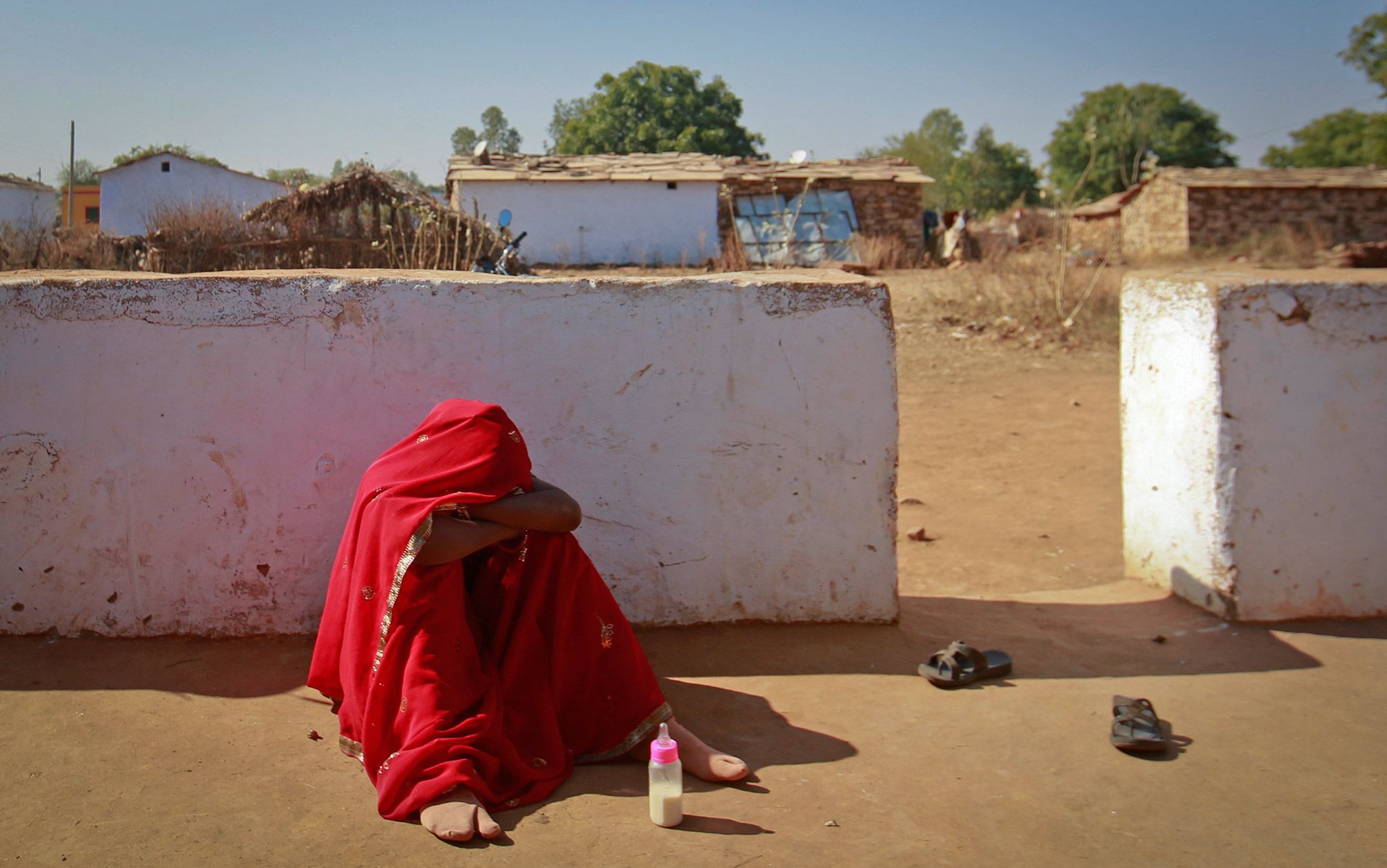
Nothing we can do will make the world more free, fair and prosperous than giving women control over their own bodiesKrishna (14) married her husband Gopal when she was 11 and he was 13. The legal age for marriage in India is 18, but in poor, rural areas girls are often married young. Rajasthan, 21 January 2013. Photo by Danish Siddiqui/Reuters
Victoria Bateman is director of studies, fellow and college lecturer in economics at Gonville and Caius College at the University of Cambridge. Her latest book is The Sex Factor: How Women Made the West Rich (2019). She lives between Cambridge and London.
Edited bySam Haselby
4 September 2019 (aeon.co)
Love Aeon?
Support our workDONATE
Women’s bodies are one of the biggest political battlegrounds of our time. What should in many ways be personal – a woman’s body – is instead political. The assault ranges from the recent clampdown on family planning in the United States (and its global gag rule prohibiting funding for international family-planning organisations that discuss or offer abortion), to new repressive restrictions on clothing, including ‘burqa bans’, or new laws in a growing number of European countries that aim to abolish women’s ability to monetise their bodies. Everyone, it seems, has a view on what women should or shouldn’t be doing with their own bodies.
That is a point I make when protesting naked. When I’m met with criticism and verbal abuse, my response is simple: if you don’t like women’s bodies featuring in the public sphere, then I’m not the one you need to get angry with. If women’s bodies weren’t political, I wouldn’t be spending my time giving naked talks to draw attention to the bleak reality. Blame politicians. Even better, blame the voters who vote for them.
The redoubled attack on women’s bodily autonomy comes, paradoxically, at a time when feminism is increasingly popular. In part, the expanding appeal of feminism might be a response to the evident regression. But feminists are not entirely blameless. A vein of feminism lies at the heart of some of the growing restrictions on women’s bodily freedom. Some ‘feminists’, for example, like to argue that one cannot be feminist while showing off too much of your body; others argue that you cannot be feminist while covering too much of your body. Both see clothing restrictions as empowering to women. Women’s ability to choose seems not to feature; the claim that we are all ‘socially conditioned’ apparently makes it irrelevant.
The greatest of the ‘feminist’ attacks on women’s freedom comes in the form of the ‘Nordic Model’ feminists. They have, in effect, made it harder and more dangerous for women who choose to make money from their bodies. While monetising your brain is to be celebrated, monetising your body is, apparently, to be denigrated, even criminalised – if not on the selling side, then on the buying side. While we can all agree that those forced into sex work should be helped to exit – and those doing the forcing brought to justice – many others are simultaneously being denied the right to make their own choices about whether or not to charge for access to their vagina (by women who are, of course, free to charge for the use of their brains). The intellectual elitism and hypocrisy are apparent, and society’s discomfort with sex – never mind sex work – allows those leading the attack to claim the moral high ground.
This attack on women’s bodily freedoms is deeply worrying – particularly when women themselves are participating as opposed to resisting. Women’s freedom is central to making our societies more prosperous, more equal and more environmentally sustainable. Any attempt to undermine that freedom, no matter how well-intentioned, will make for a poorer and more unequal world.
Of course, women’s bodies are not a traditional subject when thinking about either economic prosperity or inequality. Early birth-control campaigners, however, knew very well that they should be. A world in which women lack control over their own bodies is a world in which women are condemned to a life of reproductive and caring labour, with an expanding number of dependants – and a simultaneous diminution of their capacity to earn and feed them. No woman can be in control of her life, her labour and her finances without also being in control of her fertility.
Still, today, almost one in two pregnancies globally are not intended, and more than 200 million women worldwide who would like to control their fertility have no access to birth-control technology. The global gag rule – a step by the ascendant Right-wing to defund birth control for the world’s poorest women – will increase unplanned pregnancies and make birth-control technology harder to access for some of the world’s poorest women. In the US, the assault on family planning includes headline-grabbing changes to abortion law in certain states, renewed offensives on Planned Parenthood, an organisation that provides birth control and sexual health services for millions of the poorest women in the US, as well as a movement by companies (and, for example, the University of Notre Dame in Indiana) to remove family-planning services from the health insurance that employers provide for people in the US.
Despite the clear relationship between women’s bodies and economic prosperity and inequality, modern-day economists rarely consider it. That’s because economics operates on the basis of assumptions that render us genderless. According to its ascendant orthodoxy, we are all rational, calculating, independent agents. Love, sex, dependency and society fall outside the economists’ way of looking at the world. Furthermore, economists typically presume that we are all free to make our own choices. Potential restrictions on those freedoms (from access to birth control to the criminalisation of sex work and even types of clothing) are ignored. Economics instead focuses on what we do with our freedoms: the choices we make with them, why, and how those choices affect the behaviour of the economy.
If it opened its eyes, economics would be a natural ally to women’s freedom. It could provide a bulwark against the intrusions into the most intimate aspects of our lives, even those undertaken in the name of feminism. The whole idea of ‘the invisible hand’ was that the economy could arrive at the best outcome only if people are free to make their own choices. When the state and the Church regulated so many aspects of life, including what colours different social classes could wear and which days of the week we were able to have sex (all supposedly for our own good or for the good of wider society), Adam Smith’s idea couldn’t have been more radical. Just as in those bad old days when we were bossed around by state and Church, today individual women are being told that someone else knows what’s good for them – often other women.
For Malthus, sex was central to understanding why the rising economic tide would not lift all boats
If economics is to act as a defender of women’s freedom, it needs to remove its blinkers: to bring women and their bodies into the heart of thinking about prosperity and inequality. Gender is almost completely missing from Thomas Piketty’s much-praised book Capital in the 21st Century (2013), and it’s also missing (as, by the way, are women contributors) from recent books that claim to offer new solutions to the present growth slowdown, and a new way forward for macroeconomics.
Unlike present-day economists, the English scholar Thomas Malthus (1766-1834) placed sex at the heart of his story of poverty and prosperity. For Malthus, sex was central to understanding why the rising economic tide would not lift all boats; why the standard of living of the majority would ultimately stagnate. Despite being a deeply religious man, Malthus lacked faith in any attempt to improve the lives of the masses, whether through revolutionary means that re-sliced the economic pie – of a kind taking place in France during his lifetime, and about which other intellectuals of the time were feeling pretty optimistic – or through unleashing economic growth of a kind that grows the economic pie, enabling a bigger slice for everyone.
For a long time, Malthus’s ‘dismal’ view has been relegated to the waste bin of economic thought. Economists have shaken off their pessimistic reputation to become some of the most optimistic of people. Few have greater faith in the notion that human ingenuity will eventually solve all our problems. While some economists certainly do utter the word ‘stagnation’, others are quick to jump to the economy’s defence, noting that past pessimism has always been proven wrong: that across our long history, we’ve become richer despite the fact that population expands year-on-year.
We should not be so quick to write off Malthus. Sex is still central to understanding why so many countries remain mired in poverty today – and why inequality in the West has been increasing since the late-1970s. But, to see why, we need to take a trip back to pre-industrial Europe, to a time much closer to that of Malthus than is our own.
While most of us alive today were raised with the view that, economically at least, ‘West is best’, for millennia Europe was a backwater of global civilisation. While Europeans were chasing wild animals, draped in the skins of those same hunting endeavours, further east, in China, the Indus Valley and the Middle East, great civilisations flourished. How Europe, the dark horse, managed not only to catch up but overtake is one of the most debated questions in economic history. The typical set of answers implicitly revolve around men’s lives, bringing to mind figures such as Isambard Kingdom Brunel, Isaac Newton, James Watt and Richard Arkwright.
What made Britain so inventive that it became the hub of the Industrial Revolution? The question has occupied many a mind. The Enlightenment, a high-wage economy and a bourgeois ethic are all popular explanations. However, when looking for what might have made Britain – and indeed wider Europe – different to most other parts of the world, giving it the special ingredient that enabled it to move from the bottom to the top of the international league table, we should look at women’s lives. When it comes to explaining the rise of the West, women’s freedom is the elephant in the room.
On the eve of the Industrial Revolution, women in Britain and nearby parts of Europe lived a life that was markedly different to those elsewhere in the world. Though not in the upper echelons of the payscale, it was common for women to engage in paid work, and they were free to decide for themselves whether, whom and when to marry. As a result, some women chose not to marry at all, and the average age at which those who did marry rose to a remarkably modern 25-26 years in the centuries prior to the Industrial Revolution.
Large parts of the world are still locked in a vicious circle, where wages are low and labour is abundant and cheap
Furthermore, because newly married couples set up independent homes, rather than a newly married woman being absorbed into the groom’s family, marriage responded to the motions of the economy. If fortunes took a turn for the worse, people postponed marriage and, with it, baby-making. They had to – until they could afford otherwise. This affected population dynamics in a way that helped to keep population growth in check, enabling the economy to support a higher wage. The relatively greater degree of women’s freedom in Europe meant that the economy entered its virtuous circle in which higher wages and productivity growth positively fed back on each other.
As globalisation continued, the West lost its relative insulation from the rest of the world. The virtuous equilibrium that gave rise to the Industrial Revolution and the continued expansion since has collided with an altogether different kind of equilibrium. Large parts of the world are still locked in the opposite of a virtuous circle: a vicious one, one in which wages are low and, as labour is abundant and cheap, there is little incentive to invest and invent. This dynamic is a consequence of women having little control over their own lives, even their fertility. With little in the way of financial independence, girls lack the means to stand up to their parents and avoid or delay marriage. Once married, young women (or, rather, girls) then lack the ability or freedom to take charge of their baby-making capacity.
One of the great achievements of 20th-century humanity came in global public health, in the efforts to eradicate or radically diminish diseases. The success in lowering the death rate, without a similar-sized decline in fertility, meant that the global population ballooned. In 1920, global population growth was no more than 0.6 per cent a year, no higher than it had been in 1760. By 1962, it had reached 2.1 per cent. While global population growth has since slowed, to around 1.2 per cent, all of those babies born in the peak have, up to the present day, contributed to an expanding global labour supply, and population is still growing twice as fast as it was historically. While in 1962 the global population was not much more than 3 billion, today it is more than 7 billion. By 2100, it is projected to rise to over 11 billion. One of the major developments in world economic history over the past 35 years has, therefore, been a significant expansion in effective labour supply. The increasing integration of the world economy means that the growth in labour supply is felt everywhere.
Through globalisation, whether through immigration or trade, the expanding global labour supply has become available to more and more Western businesses. With it, bargaining power has suffered in the West, putting an end – at least for now – to the high-wage growth and high-productivity growth equilibrium. The result is widening inequality in the West. Businesses have been able to substitute capital with the cheaper labour pool, resulting in lower investment rates and slower productivity growth. The economic pie is expanding at a slower rate, and becoming more unequally distributed.
To bolster the standard of living, individual Western governments have turned to minimum or ‘living’ wages. But they do not have the power – individually – to tackle what is really a global problem: a world awash with people. Some, buoyed by voters, are therefore responding by restricting immigration or raising trade barriers. We should instead resolve the problem at the source. A crisis brought on by too little freedom should never be resolved by further restricting freedom, in this case freedom to buy and sell across borders or freedom to move in search of a better life.
If women have control over their bodies, they will make fertility choices to help keep the wolf from their door. They will lead lives that help to prevent population growth from undermining wage growth. Economic empowerment is prerequisite for a woman to have such control over her body. Opportunities to become educated, to join the workforce and to be represented in political decisions (including about birth control) are all necessary. Rather than being a pawn, to be ‘married off’ at a young age and produce child after child, women with the opportunity to support themselves financially are able to take control of their lives. They have the freedom that allows them to go out into the world and build an independent life, determining for themselves whether, whom and when to marry. Women’s wombs become their own. Simply by being able to act in their own self-interest, women will, without knowing it, make choices that not only help themselves but that add up to a more prosperous and equitable global economy. And one that’s better for the planet.
Falling fertility freed women, increasing their economic independence and challenging their subordination
According to UNICEF, the proportion of women today aged 20-24 who were first married by the age of 18 stands at 41 per cent in West and Central Africa, 35 per cent in Eastern and Southern Africa, and 30 per cent in South Asia. Asia is home to almost half of all child brides; and one-third of them are in India. Globally, one in five girls marry before they are 18. The United Nations Family Planning Agency has documented that, once married (and, indeed, before), many of the world’s poorest women lack access to reliable birth control. Right now, for too many, the problem is getting worse not better.
China is the great exception. In 1980, China was home to more poor people than anywhere else in the world. However, since 1981, 680 million people have been lifted out of poverty. The proportion of those living in extreme poverty has fallen from 84 per cent to less than 10 per cent. This is the single most important development in lowering global poverty and global income inequality. According to standard accounts, globalisation and market liberalisation are responsible. However, women’s relatively low fertility must play a role, and stands in stark contrast to other poor countries.
By taking steps to restrain population through its ‘one child policy’, the Chinese state helped to overcome a population problem that blighted the standard of living throughout history. Along the way, falling fertility freed women to work outside the home, increasing their economic independence and challenging their subordination. To be sure, the ‘one child policy’ has come at a big price – in terms of restricting choice and ‘missing women’. State attempts to directly suppress population growth have a murky history, including forced sterilisations of some of the world’s most marginalised and poorest women. Such practices are abhorrent and the antithesis of freedom. European history provides a much better path, one in which greater opportunities for women to participate in the economy transform family life and allow women to voluntarily take control of their own bodies.
Some economists have expressed deep concern about the way in which a slowdown in population growth might harm the economy. Newspaper headlines deliver messages such as ‘the choice to be childless is bad for America’. This consternation ignores the fact that population growth has too often depended on women’s unfreedom. Population growth has in fact been built on women’s hard, unpaid labour. Women’s reproductive and domestic labour have, of course, historically been excluded from the cash economy.
In the longer view, equitable and environmentally sustainable growth is possible only if we give women freedom to take charge of their own fertility. While fertility rates have been falling in recent years, we still have a long way to go until women’s bodily autonomy becomes a reality for all women. At present, sadly, we risk moving backwards.
Inequality is one of the most pressing crises of our time, and we’re tackling it in precisely the wrong way. Rather than restricting the freedom of individuals, we should be increasing it, especially women’s freedom to control and make decisions about their own bodies. Respecting women’s autonomy and personhood will not only help the world’s women, it will create a more equal form of prosperity, one that’s better for the planet. If economics comes to embrace the sex factor, it could lead the way – rather than lag behind – in fighting for women’s freedom and a better world.
‘The Sex Factor: How Women Made The West Rich’ by Victoria Bateman is published via Polity Books.
Full Moon And Total Lunar Eclipse In Scorpio – Redemption
 | Astro Butterfly May 14, 2022 |
On May 16th, 2022 we have a Full Moon and a Total Lunar Eclipse in Scorpio.
This is that time of the year when the Sun in Taurus aligns with the Moon in Scorpio, and we have a Full Moon in Scorpio.
Since this year we also have the Lunar Nodes on the Taurus/Scorpio axis, this is not our regular Full Moon in Scorpio. It is a Lunar Eclipse – or a Full Moon in Scorpio on steroids!
Yesterday I listened to a U2 song which reminded me that Bono, the lead singer, has his Sun in Taurus and Moon in Scorpio.
U2 was formed in 1976 and the 4 band members have been together for almost 50 years now. Same with Bono’s marriage. He also got together with his wife in 1976 and they have been together ever since.
Taurus and Scorpio are the most “fixed” signs of the zodiac.
There is something about Taurus and Scorpio – their loyalty, their determination, their commitment – that makes all the other signs look a bit flaky. They hold on with fierce determination to what matters to them.
Unlike cardinal signs which initiate things, and unlike mutable signs which finish things up, Taurus and Scopio’s role is to preserve the status quo and make things work, at all costs.
Without Taurus and Scorpio, nothing of value would ever be built, or preserved.
The Full Moon in Scorpio will remind us of this basic truth, and it will make us appreciate those parts of us that are fierce, loyal, and committed.
But the Eclipse comes with a subtle twist. “Subtle” because Neptune is involved.
We can fulfill our Scorpio agenda – and still be loyal, determined and committed – without holding onto the same approach, without walking on the same path we always have.
Full Moon and Total Lunar Eclipse In Scorpio – When Fate Is Calling
All eclipses have a fated feel – and this Lunar Eclipse is even more so. Why?
 This is a Total Eclipse, and Total Eclipses are the most intense and life-changing type of eclipses. When we have a Total Lunar Eclipse, the Moon is very close to one of the Nodes.
If a Partial Eclipse can go unnoticed in the sky, a Total Eclipse never goes unnoticed – at least in the coverage area.
When we have a Total Solar Eclipse, the Sun disappears during daytime, and everything goes dark. When we have a Total Lunar Eclipse, the Moon turns blood red, and it’s impossible to ignore.
Total Eclipses are so unique, so extraordinary, that they require our full attention. Total Eclipses are wake-up calls. “Pay attention, or else”.
This is a South Node Eclipse – unlike North Node eclipses which come with opportunities and new developments – South Node eclipses are concerned with consequences of past actions.
Some South Node Eclipses can come with losses, others with achievements. When we have a South Node Eclipse, it’s payout time. A chapter of our life reaches a peak – it’s either time to close it, or to transform it.
The Total Lunar Eclipse in Scorpio makes aspects with all slow-moving planets: it squares Saturn, trines Neptune and Jupiter, sextiles Pluto, and opposes Uranus.
Outer planets carry a collective energy, and when an Eclipse makes aspects with outer planets, the best approach is surrendering to the greater forces that are out of our control.
Lastly, Eclipses of all types are times of alignment – their goal is to remind us of our life’s purpose. If we’re on our path, an Eclipse will come with new opportunities (North Node eclipses) or tangible payouts (South Node eclipses).
If we’re not on our path, an Eclipse will ‘create’ a series of events or mindset shifts that will help us get back on track.
One thing for sure, when we have an Eclipse, especially a Total Eclipse, fate is calling. Whatever happens at this eclipse, it is meant to be.
Full Moon and Total Lunar Eclipse In Scorpio – The Aspects
The Full Moon and Total Lunar Eclipse is at 25° Scorpio. The Eclipse features a tight square to Saturn at 24° Aquarius. The Eclipse is also trine Mars and Neptune, both at 23° Pisces.
Saturn squares usually come with challenges and restrictions.
However, since Mars, the ruler of the Full Moon, is conjunct Neptune, the Great Dissolver, we may pay less notice to Saturn and take a deep dive into Neptune’s shifting waters instead.
With Mars conjunct Neptune, the Universe speaks: “Don’t force your way through. Listen to subtle messages. Find a higher purpose for your actions.”
Full Moon and Total Lunar Eclipse In Scorpio – How It Will Influence You
At the Eclipse we truly have a chance to find Neptune’s redemption despite, or perhaps thanks to the Saturnian obstacles along the way.
Neptune will bring some movement to Scorpio’s tough, still waters, inviting us to be a little bit more open, a little bit more flexible.
These are some questions that the eclipse will raise:
- Where am I stuck in Scorpionic manic determination?
- Where do you I apply a “black and white”, “all or nothing”, “my way or the highway”, “win at all cost” approach?
- Are there any ways I can loosen up? Take a different approach? Listen to subtle guidance? Do things differently?
The Eclipse will especially influence you if you have personal planets or angles between 23°-27°in fixed signs (Taurus, Leo, Scorpio or Aquarius).
Even if you don’t have any planets within these degrees, the Eclipse will fall in a certain area of your chart (the house where you have 25° Scorpio), highlighting themes connected with that area of your life.
The Lunar Eclipse will be visible in South and West Europe, South and West Asia, Africa, South America, and most of North America.
Dogen on Truth

Don’t Be Fooled. It’s All About Women and Sex.
GAIL COLLINS
May 11, 2022 (NYTimes.com)


By Gail Collins
Opinion Columnist
When I was back in high school — a Catholic girls’ school in Cincinnati at the beginning of the sexual revolution — our religion class covered the abortion issue in approximately 45 seconds.
“Abortion is murder,” said the priest who was giving the lesson, before moving on to more controversial topics, like necking and heavy petting. I still have a vivid memory of being marched into the auditorium for a lecture from a visiting cleric who assured us that when Jesus was dying on the cross, he was tortured by a vision of the sins of mankind — notably adolescent girls “making out with boys in the back seat of a car.”
Now, that was a long time ago, and the bottom line was at least clear and consistent: no sex except for married couples who want to have babies. You don’t hear that specific message too much in today’s political debates about reproduction, but as a way of thinking, it’s most definitely still there.
On Wednesday the Senate failed to pass a Democratic bill supporting women’s right to choose in anticipation of a Supreme Court decision going in the other direction.
ADVERTISEMENTContinue reading the main story
During the debate, Republicans claimed most Americans are opposed to late-term abortion, while Democrats noted that polls show the public wants abortion to be a matter between a woman and her doctor. Easy to imagine both being true — most people are uncomfortable with the idea of ending a pregnancy when the fetus is well developed, but there’s long been a deeply reasonable yearning to keep the government out of a matter so private and personal.
It’s pretty clear where we’re going. The Supreme Court’s Trump-constructed majority will reject the by-now-longstanding understanding that a woman has the constitutional right to decide whether she wants to end a pregnancy. In at least 13 states, laws banning abortion could kick into place almost immediately.
Welcome to the land of my high school religion classes, people. The governor of Mississippi, when asked whether the state would move on to a ban on contraception, said, rather unnervingly, that it’s “not what we’re focused on at this time.” And the dreaded Tennessee senator Marsha Blackburn has denounced the Supreme Court decision in Griswold v. Connecticut, which covers the use of contraceptives for married couples under the constitutional right to privacy.
Blackburn says Griswold is “constitutionally unsound.” Not the only unnerving position — when Republican candidates for Michigan attorney general were asked about Griswold in a debate earlier this year, they didn’t seem to know what it was about. (One pulled out a mobile device to look it up while another complained, “I didn’t know we could have our phones up here.”)
Anyhow, the question is whether states that are able to ban abortion will march further into anti-birth-control territory. There’s bound to be a next step. The many, many activists who have focused their political careers on constraining women’s sexual activity aren’t going to just declare victory and go home.
ADVERTISEMENTContinue reading the main story
In Louisiana, lawmakers are considering a proposal to classify ending a pregnancy at any point from the moment of fertilization as homicide. And the Idaho State Legislature may hold hearings on outlawing emergency contraceptives, a reminder that when we’re talking about “states’ rights,” we should think about trusting your fate to a roomful of state legislators.
All this is basically about punishing women who want to have sex for pleasure. It’s a concept with a long tradition in American history. Back in 1873, Congress began to pass a series of laws prohibiting dissemination through the mail of birth control literature, drugs or devices. Later, when a journalist asked Anthony Comstock, founder of the New York Commission on the Suppression of Vice, whether it would be all right for a woman to use contraceptives if pregnancy would endanger her life, Comstock snapped: “Can they not use self-control? Or must they sink to the level of beasts?”
OK, the current debate is probably not going to get quite that far. But it’s important to note that the policies we’re talking about here are basically a matter of legislating the religious beliefs of just one segment of the public.
The goal of the Democratic Senate bill was mainly to get the public focused on the reproductive rights issue before the fall elections. And that certainly couldn’t hurt. There have to be voters out there who aren’t all that geared up about going to the polls but who might be moved if they got to hear the speech by Republican Steve Daines of Montana that praised anti-abortion laws as being similar to ones “that protect the eggs of a sea turtle or the eggs of eagles.”
Those sea turtles have been coming up a lot in this debate. Republican James Lankford of Oklahoma, in a long, emotional speech, recounted a confrontation with abortion rights demonstrators who pointed out there was a difference between laws protecting a woman’s right to choose and laws protecting endangered species.
“And I’m called the extremist,” Lankford declared. He added, “If people call me a radical for believing children are valuable — so be it.”
Actually, people call Lankford a radical for believing that the reproductive experiences of female water-dwelling reptiles are comparable to the experiences of human beings whose offspring will need and deserve many years of constant care and concern in order to prosper.
Follow The New York Times Opinion section on Facebook, Twitter (@NYTopinion) and Instagram.
When hope gets in the way

Hope is usually seen as a positive agent of change that spares us from pain. But it can also undermine healing and growthPhoto by Fotoholica Press/LightRocket via Getty
Santiago Delboy is a psychodynamic psychotherapist in private practice and adjunct clinical faculty at the Chicago Center for Psychoanalysis. His writing has appeared in the journals Psychoanalytic Dialogues, Psychoanalytic Inquiry and Revista de la Sociedad Peruana de Psicoanálisis. He lives in Chicago.
Edited byPam Weintraub
13 May 2022 (aeon.co)
Love Aeon?
Support our workDONATE
The word ‘hope’ seems to hold an unambiguous quality in our vocabulary, imbued with a kind of purity that makes it unquestionably good. From old sayings to modern slogans, we are encouraged to develop and sustain a sense of hope. As a psychotherapist, I believe there is good reason for this. I have repeatedly witnessed the overwhelming burden of hopelessness and the centrality of hope in healing and growth. This is particularly true for people who experienced chronic childhood trauma, including emotional abuse or neglect, which undermines their ability to imagine that a different future is possible.
But I also believe that hope is a complex concept that deserves a more nuanced understanding. For example, hope may be considered both an antidote to helplessness and a source of helplessness. As the psychiatrist Harold Searles observed, we tend to consider hope our ‘last repository of … innate goodness as human beings’. It can be challenging, he suggests, to accept that our hopes can indeed be permeated with ambivalence and conflict.
Even though hope is seen as curative and a critical agent of change in a clinical setting, are there times when persistently holding on to hope – consciously or not – can get in the way? If hope is oriented towards the future and can make the present more bearable, what is the role of our past in the experience, function and meaning we give to hope? More specifically, when our emotional wounds were created by old relationships, how do they shape the conscious and unconscious hopes we hold for new ones? I would like to explore these issues through Alex, a composite fictional patient who represents some of the experiences people bring to therapy. The clinical process I describe is influenced by my own approach and illustrates how psychotherapy can help.
Alex entered the waiting room 15 minutes early for our first appointment. He started talking as soon as he sat down, without pause or hesitation, telling me about his background and why he came to see me. He was articulate and charming, yet something felt rehearsed and guarded. Were his words and his demeanour an attempt to prevent a silent crack through which pain could filter? A successful professional, Alex was worried about how unmotivated and stuck he felt lately, and how anxious and irritable he was in his close relationships. Before he left, he asked me, with a tremulous voice: ‘Am I depressed?’
Alex worked hard to be a good patient. He was eager to talk, astute in his observations, and open to hearing mine. Thanks to prior rounds of therapy, he could articulate some of the struggles he had endured as a child.
‘I know about my family issues,’ he said a few times, as if to convey: ‘So let’s move on.’ I continued to wonder what he was protecting behind that veil of self-awareness. His apparent desire to leave the past behind may have conveyed fears of opening old wounds, anticipation of being disappointed by me, or wishes to protect something he may not want to surrender.
At first, Alex approached our work like other new relationships. A coat of confidence and engagement covered a wall of ambivalence and mistrust. As we scratched the surface, I learned that he grew up fearful of his distant, critical and fragile father, whose expectations felt as unclear as impossible to satisfy. He kept a few fond memories of his mother, whom he experienced as occasionally tender and warm, but mostly depressed and emotionally absent.
It is hard to underestimate the impact of these experiences on Alex’s sense of hope. As Erik Erikson suggested, our primal sense of hope and doom springs from the dialectic between trust and mistrust during the earliest stage of human development. Conscious and unconscious hope and hopelessness coexist, not always peacefully, throughout our lifetime.
Alex managed to recruit the same cast of characters to rehearse the lines for a role he knew too well
This paradox appeared in Alex’s vivid childhood memory of hiding under the bed when his father seemed angry. It was a heartbreaking image, which found its way a number of times into our conversations. Each time, I felt a deep sense of desolation. I imagined a scared little boy in the darkness, his face against the cold floor, learning to identify every footstep while secretly hoping to be found by his mother. ‘I always had to come out on my own, my mom never looked for me,’ he said the first time I saw him cry.
Alex’s attempts to be heard, accepted or valued were either met by his father’s anger and rejection, or by his mother’s passivity and neglect, leaving him feeling unloved, ineffective and alone. He developed what Donald Winnicott called a ‘False Self’, a way to organise his personality and locate himself in the world that allowed him to adapt to a misattuned, unresponsive and traumatic environment, protect himself from hurt and disappointment, and regulate emotions that felt overwhelming to his young mind. For Winnicott, the function of the False Self is to hide and protect the True Self, where spontaneity and authenticity reside, by becoming compliant to environmental demands; over time, it will hide larger parts of our inner reality.
As an adult, Alex found himself oscillating between two familiar ways of relating, expressing different shades of his insecure attachment and different aspects of his False Self. He either felt anxious, fearful and unsafe with those he felt more distant from – especially if he placed them in a position of authority – or impatient and angry with those he felt closer to. This pendulum between taking on roles of victim or aggressor left him feeling depleted, disappointed and disconnected. ‘Why do I care so much about what they think?’ he said, exasperated, in both a sincere attempt to understand himself and as a wish to get rid of what he saw as the source of his problems.
Over time, we began to appreciate how these patterns infiltrated his relationships, turning them into a stage where familiar scenes from childhood were stubbornly repeated. Alex managed to recruit the same cast of characters in order to rehearse the lines for a role he knew too well. This casting process in the external world was a reflection of the rich and complex constellation of mental representations in Alex’s internal world, based on past relationships with significant others. Each of these representations is associated with different experiences of self, leading to what psychoanalysts have called ‘internal object relations’. This concept is intrinsically tied to a model of mind based on the notion of multiplicity of self, a central concept in both trauma theory and relational psychoanalysis. The repetition of roles and scenes constitutes a form of reenactment, which is one of the ways in which traumatic experiences become part of the fabric of our lives. Repetition, the psychoanalyst Peter Shabad observes, ‘is an attempt to remedy [a sense of] lack, and resolve the nostalgia of homesickness’, becoming ‘simultaneously an obliteration of memory and a form of remembering’.
Alex started seeing this repetition not only in the relationship with his parents, but everywhere he looked. There it was, in the ways he bent over backwards to get his boss’s validation, which never felt enough. There it was again, in the anger he felt when his partner seemed to ignore him, which always left him feeling ashamed. And again, in how he minimised his own disappointments and accomplishments.
This recognition brought up painful memories and unsettling feelings. Alex was familiar with the traumatic nature of his early experiences, but now he was starting to see how he kept them alive. He understood how his childhood wishes for love and connection were thwarted, but was less acquainted with the despair behind his adult demands for the same. As Stephen Mitchell, one of the central authors in contemporary relational psychoanalysis, reminds us, childhood trauma is always transformed in adulthood in one way or another.
Alex’s chronic longing for a mother who would ‘find’ him fed fantasies of being rescued by other people’s recognition. His passive endurance of his father’s rage, turned into vengeful anger and emotional passivity. Adam Phillips’s words resonate with this process: ‘Wanting to be understood, as adults, can be, among many other things, our most violent form of nostalgia.’ Alex’s anger, with himself and with others, was not only a reaction to fear and hurt, not only a ‘secondary emotion’, but a protective anticipation to disappointment and injury. I started to realise that, sooner or later, I too would become the disappointing and injurious Other.
One session, after a family visit, Alex seemed sad and burdened. He paused for a moment and said: ‘I can’t do this anymore.’ He had said this before, but this time his voice had a heaviness I did not recognise. I did not ask what he meant, worried that my search for cognitive clarity might obscure his emotional experience. Alex’s intellectual defences (along with mine) would have likely derailed a process that needed us to embrace uncertainty. We remained silent for a few minutes as he started to weep. Unlike other times, when Alex cried out of sadness, frustration or pain, these tears seemed to come from a different place, an old well of grief that had long been forgotten.
Hope involves not only a wish, but the belief that its fulfilment is possible
Over time, thanks to his increasing openness and vulnerability, we came to understand Alex’s repetitions and reenactments as unconscious expressions of hope. Maybe this time things will be different. Maybe this time he will see me and love me for who I am. Maybe this time she will care enough to come find me. Maybe this time I won’t feel alone, powerless and broken. Alex had never allowed himself to say these things out loud, as they would have required him to accept wishes he worked hard to disown. These wishes were frozen in time, leading to unconscious hopes that were in conflict, as Searles suggested, with his conscious hopes for ‘not caring’ about other people’s opinions. Dissociation, a central feature of trauma, kept these wishes in the realm of the unthinkable, both protecting Alex from unbearable yet familiar pain and allowing him to keep deeply held wishes from being destroyed or taken away.
Hope involves not only a wish, but the belief that its fulfilment is possible and, for Alex, that he had the power to make it come true. If only he found the right words, if only he became who they wanted him to be, he could make things right. This type of response is a common feature of how trauma stays with us. Subject to an abusive or neglectful environment, our developing mind will carry the blame or responsibility to preserve a sense of control, avoid the reality of a dangerous and painful experience, and preserve the goodness of our caretakers. As Winnicott observed, the False Self cannot experience life and feel real. Indeed, Alex’s attempts to be someone else left him feeling like a shadow, growing more distant from his own needs, wishes and desires, and trapped by alienation and disconnection.
These attempts were aimed not only at seeking safety, but also allowed Alex to hold on to the hope of being able to change the end of the story, to make them accept him for who he truly is. At the same time, he knew this was futile, feeding feelings of hatred and resentment. Hope and hopelessness coexisted in his mind, even if defended against by dissociation or denial.
As we deepened our work, we fluctuated between struggling to stay afloat and daring to visit the depths of the well Alex had started to open. The hopes and dreads he held made an unavoidable appearance in our work together: he started expressing his frustration with me more openly, whether for judging him against impossible expectations or for doing nothing to help him while he struggled. He initially rushed to offer me apologies and reassurance, feeling ashamed and fearful of his own anger. I acknowledged that at times I felt impatient, which may have come across as judgmental or withholding. Through our work, I felt both grounded and decentred, confident and inadequate, close and distant. As a therapist, I believe it is critical to pay attention to my shifting states to understand more about my patients’ experience. Why would Alex need me to feel in this way? I consider my emotional reactions with him, part of what therapists call countertransference, as an expression of my participation in our unconscious communication. This type of communication has long been recognised by psychoanalysis and more recently conceptualised by neuroscience as a process of right-brain-to-right-brain communication and affect regulation.
Over time, Alex and I became better able to appreciate how we were enacting the scenes from his childhood in our sessions, allowing us to relate to each other in a more authentic way. The recognition of how historical relational dynamics enter the relationship with a therapist is an important development. The therapeutic relationship is recognised as a central agent of change, but I believe its importance goes beyond the therapist’s attempts to provide empathy, attunement or safety. It involves the recognition of our mutual influence and an understanding that what happens in the therapy room, the direction of treatment itself, is co-created in conscious and unconscious ways. My countertransference was essential in developing a sense of shared meaning with Alex.
Through these experiences, Alex and I started to understand that his unyielding hope served him to avoid experiencing the overwhelming pain of disappointment and loss. He was employing what the psychoanalyst Martha Stark has called ‘relentless hope’, a defence against the unbearable pain of grief. Hope got in the way of healing and growth by impeding Alex’s movement through mourning. Trauma experts such as Judith Herman consider this a crucial stage of trauma recovery. For her, people who experience psychological trauma ‘must mourn the loss of the foundation of basic trust, the belief in a good parent. As they come to recognise that they were not responsible for their fate, they confront the existential despair that they could not face in childhood.’
Attachment theory has, too, recognised the centrality of mourning. John Bowlby suggested that the way we respond to early attachment rupture and loss may impact personality development, particularly when we don’t have a witness who can help us make sense of our experience. Bowlby emphasised our attempts to recover the ‘lost object’ driven by our attachment system. Mourning as a process to perpetuate the bond with a loved ‘object’, whether a real or imagined person, was also discussed by Sigmund Freud in his seminal paper ‘Mourning and Melancholia’ (1917).
The work of mourning, Freud suggested, involves accepting the painful reality of loss. When this loss is too overwhelming to accept, when the bonds of love will not be relinquished, the natural process of mourning is transformed into melancholia (roughly equivalent to what later was called introjective depression). In this case, Freud suggests, a person might become aware of the loss, ‘but only in the sense that he knows whom he has lost but not what he has lost in him’. Alex may have been aware of how he lost his father each time he instilled fear in him and how he lost his mother each time she emotionally withdrew, but he was only now starting to recognise how he was transformed as a result, what was lost in him. In fact, his conscious insight may have served to disavow this unconscious transformation.
In melancholia, Freud’s thinking goes, rather than letting go of the lost object, we unconsciously identify with them. Once this happens, reproaches towards them become reproaches towards ourselves, resulting in a deflated sense of worth. In later writings, Freud acknowledged that identification plays an important role not only in melancholia, but in ‘normal’ mourning and in the development of our ‘character’.
For an alternative view of the process of identification, I turn to the psychoanalyst Sándor Ferenczi. In his classic paper ‘Confusion of the Tongues Between the Adults and the Child’ (1933), he proposed that children who experience intense trauma from significant adults (he writes in the context of sexual abuse) may feel such intense anxiety that they will be compelled to ‘subordinate themselves … to the will of the aggressor, to divine each one of his desires’, rendering them ‘completely oblivious of themselves’.
For Ferenczi, identification involves internalising our aggressors in order to make them ‘disappear’ from external reality, ensuring psychic survival while keeping our emotional attachment to them. The price we pay is steep: the experience of trauma is perpetuated in the child’s mind, and we continue – consciously or not – fighting with the dramatis personae in our heads well into adulthood, like Alex did with many people in his life. Ferenczi’s notion of identification involves becoming highly attuned to the aggressor’s needs and desires, accommodating our personality and subordinating our sense of self to the internalised other: we become whom we learned they want us to be, forgetting ourselves in the process. As a result, our own developing subjectivity is evacuated and our own needs, wishes and desires become dissociated. This process does not require severe transgressions such as sexual abuse. Environmental and parental failures to provide attunement to and recognition of the child’s inner states, needs and experiences can also trigger this process.
Mourning the loss of what we never had involves becoming open to imagining a new future
It is in the context of traumatic identification and repetition that we develop unconscious hopes – hope that we can right old wrongs and experience repair, feel recognised by those who didn’t see us, win fights that we lost, or be rescued by those we needed but who never showed up. These hopes include not only dissociated wishes for a different experience, but omnipotent fantasies about our role in making those wishes happen, since we have organised our personality and found safety in the deep-seated belief that we are responsible for our misfortune. Complex relational trauma during our childhood, when the chronic nature of our sorrow becomes embedded in life itself, hampers the mourning process. It keeps us in a suspended state of infantile hope while, at the same time, leading us to deflate our own desires and detach from wishes that we learned would only lead to perpetual disappointment.
My work with Alex involved understanding some of his symptoms in this context. For example, together we realised the way in which his lack of motivation could be understood as an attempt to escape the unconscious mandate to be someone else. More importantly, however, our work involved facilitating, through our shared relational experience, a process of mourning that included deconstructing the old hopes he unconsciously held. If his wounds were created in relationships that left his needs unmet, his wishes unrecognised and his cries unheard, it only makes sense that their healing would take place in a relational context. The old hopes Alex held, Mitchell would suggest, were soaked in pain, frustration and longing, a complex blend of wishes and needs, of restorative demands and magical fantasies. The process of mourning included acknowledging the longings Alex disavowed and protected behind a wall of compliance. It entailed decoupling these wishes from the possibility of their realisation, which allowed him to hold space for both his desires and his disappointment. Finally, it involved recognising, with acceptance and compassion, the ways in which he attempted to repeat old scripts that he could not change on his own.
Mourning the loss of what we never had is always complicated and painful. It involves not only dealing with the past, but becoming open to imagining a new future. I appreciate how Shabad describes mourning as a ‘process of internal transformation by which the old is relinquished and the new is engaged with an open heart’, which is ‘at the crux of how human beings change and grow’. Alex’s old hopes had tightly sealed a well of grief and sadness that he never fully abandoned despite his best efforts. He started confronting the despair he managed to avoid for so long, doing so not only intellectually but also in his relationships, including ours. Our work offered not only the opportunity to have a witness to his grief, but the possibility to start holding the feelings he had worked so hard to forget. This process opened up space in his mind and his heart, where he became able to tolerate and experience the desolation of a wish orphan of hope.
After some time, Alex started, not without ambivalence, reclaiming his own wishes and desires, disentangling them from the ways in which he insisted on their fulfilment, accepting the limits of his power to make them happen, and finding new ways of relating to others with authenticity and vulnerability. In the space we were able to create, he was finding, as Mitchell puts it, ‘new growth embedded in old hopes’. Recognising the complexity of hope involves, he suggests, acknowledging the dialectic interplay ‘between the static and familiar and the longing for something fuller and more rewarding’.
Redefining his sense of hope through mourning, anchored in an acknowledgement of his wishes and a recognition of his limits, was central to Alex’s healing process. He started to become able to experience hope for a new future inside his old hopes for a new past, shifting his attempts to right old wrongs for the ability to imagine new possibilities. From his deep well of grief, despair and disappointment, new waters started to flow. Alex was on a path to meet and embrace a child who was starting to feel found.
The first war crimes trial in Ukraine begins
| First Thing: The first war crimes trial in Ukraine begins |
| (info@editorial.theguardian.com) |
| Vadim Shysimarin, a 21-year-old Russian commander of the Kantemirovskaya tank division, is charged with murdering a 62-year-old Ukrainian civilian |
| May 13, 2022 |
 |
 Vadim Shysimarin, who is accused of murder Photograph: c/o General Prosecutor’s Office Vadim Shysimarin, who is accused of murder Photograph: c/o General Prosecutor’s Office |
| Vivian Ho |
| For the first time since Vladimir Putin ordered the invasion of Ukraine, a court in Kyiv will hear a war crime trial of a Russian soldier accused of murdering a 62-year-old civilian.Vadim Shysimarin, 21-year-old commander of the Kantemirovskaya tank division, is accused of fatally shooting the unarmed man after being ordered “to kill a civilian so he would not report them to Ukrainian defenders”, according to prosecutors. Shysimarin, who is now in custody, is also accused of shooting at a civilian car after his convoy of military vehicles had come under attack from Ukrainian forces. He then drove the car away with four other soldiers as he sought to flee Ukrainian fighters. Two other cases are likely to be heard in court within days, including an in absentia trial of Mikhail Romanov who is accused of breaking into a house in the Brovarsky region near Kyiv, murdering a man and then repeatedly raping his wife in front of her underage child. |