MAY 17, 2022 AT 7:00 AM BY ROB BREZSNY (newcity.com)
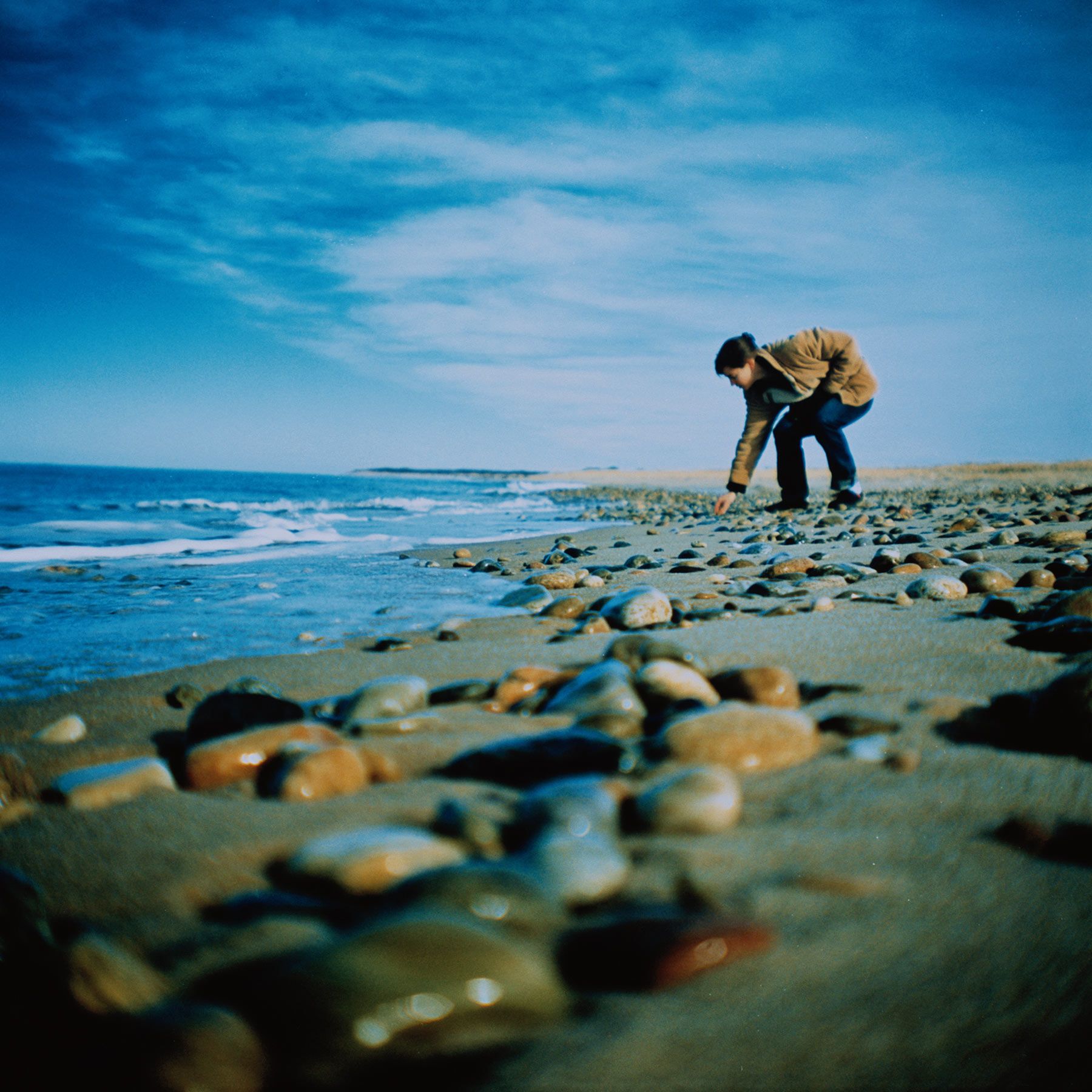
Photo: Krystal Ng
ARIES (March 21-April 19): “The only way to the truth is through blasphemy,” declared Aries author Flannery O’Connor. I appreciate the cheeky sentiment, but I don’t believe that all truth requires blasphemy. In many cases, rebellion, irreverence and skepticism may be enough to pry loose hidden and buried information. Outright blasphemy isn’t necessary. What does this have to do with you? Well, I’m hoping you will be feisty and audacious in your quest for interesting truths. As you dig, I invite you to be less than perfectly polite. Don’t be rude or unkind, of course. Just be charmingly bold.
TAURUS (April 20-May 20): “I am so beautiful, sometimes people weep when they see me,” declares comedian Margaret Cho. I would love for you to summon her level of self-esteem and bravado in the coming weeks. According to my interpretation of the astrological omens, you now have the right and duty to boost your self-worth. All of creation is conspiring with you to develop more faith in yourself. And if you do the work to deepen your confidence and self-esteem, there will be an added bonus: a health breakthrough. As spiritual author Caroline Myss says, “Belief in oneself is required for healing.” My prediction: You will rouse an enhanced power to get the soul medicine you need.
GEMINI (May 21-June 20): According to the blogger Artemisiasea, “The grandeur of life is the attempt, not the solution. It’s about behaving as beautifully as one can under completely impossible circumstances; making room for what breathes in the presence of the attempt—in the coming-to-be.” I invite you to embrace that wisdom in the coming weeks, Gemini. You won’t be dealing with impossible circumstances, but you may have to navigate your way through fascinating brainteasers and heart riddles. Whatever your destination might turn out to be, enjoy the ride with all the verve you can summon. At least for now, put aside your longing for particular results and instead simply live your life as if it were a magnificent work of art.
CANCER (June 21-July 22): It will be in your interest to change more than usual in the coming weeks. I suppose you could wait around passively and scramble to adjust as life flings challenges your way. But the better approach would be to make conscious decisions about how you want to transform. Identify the situations that would most benefit from modification and then initiate the transitions. Rather than depending on fate to provide you with random wake-up calls, choose constructive wake-up calls that are fun and invigorating.
LEO (July 23-Aug. 22): “If everyone likes you, it probably means you aren’t saying much,” declared politician Donna Brazile. I suspect you will disprove her theory in the coming weeks. According to my reading of the astrological omens, you will have a lot to say; your communications will be even more interesting than usual. And yet, I also expect you will receive extra respect and appreciation from others. While you may articulate ideas that are challenging to some, you will do so with enough charisma to disarm agitated reactions. A winning combination: expressiveness and approval.
VIRGO (Aug. 23-Sept. 22): Have you heard of Virgo adventurer Reinhold Messner? The man is a marvel, and not just because he’s a passionate environmental activist. He was the first mountaineer to reach the top of Mt. Everest alone, as well as the first to ascend Everest without supplemental oxygen. No one before him had ever climbed all fourteen of the world’s peaks higher than 26,000 feet. He has transited Greenland and Antarctica without the aid of dog sleds or snowmobiles. He also completed a solo trip across the Gobi Desert. I propose we make Messner your inspirational role model for the next four weeks. You may not achieve history-making triumphs like him, but you could surpass what you assumed were your limits. I trust that you will break at least one of your personal records.
LIBRA (Sept. 23-Oct. 22): “The world is a very puzzling place. If you’re not willing to be puzzled, you just become a replica of someone else’s mind.” Author Noam Chomsky said that. It’s useful counsel for you right now. I’ll go even further. I will advise you to relish the healthy pleasures of being both mysterious and mystified. Seek out fertile enigmas and be a fertile enigma yourself. Explore the rejuvenating wisdom of being indefinable and uncategorizable. Exult in the quizzical joys of Eternal Paradox.
SCORPIO (Oct. 23-Nov. 21): Have you ever contemplated the beauty of the people and animals you care for and thought, “I would love to give them the strongest blessings I have to give, the smartest love I can express, and the best listening I’m able to provide.” If so, Scorpio, the coming days will be an excellent time to do that. You will have an extra capacity to offer exceptional gifts that are useful and inspirational. You will be at the peak of your ability to home in on what your beloveds need.
SAGITTARIUS (Nov. 22-Dec. 21): Sagittarian author Madeleine L’Engle told us, “The discoveries don’t come when you’re looking for them. They come when for some reason you’ve let go conscious control.” That approach isn’t absolutely true, but it may be useful for you to deploy in the coming weeks. I invite you to relinquish at least a modicum of your conscious control. And if zesty discoveries start flowing in, consider relinquishing even a bit more conscious control.
CAPRICORN (Dec. 22-Jan. 19): Is it a legend or a true story? Scholars disagree about whether Capricorn scientist Isaac Newton really was spurred to formulate the theory of gravity when an apple fell from the tree he was sitting beneath. This much is certain: Newton lived in the home near the famous apple tree. And that tree is alive today, 380 years after his birth. Ripe apples still fall from it. Is there an equivalent landmark or keystone from your own past, Capricorn—where an important insight arose or pivotal event happened? The coming weeks would be a good time to revisit that power spot, at least in your imagination, in quest of fresh inspiration.
AQUARIUS (Jan. 20-Feb. 18): Aquarian poet Jack Gilbert devoted himself to soulful beauty. I swooned when I first read his line, “We must unlearn the constellations to see the stars.” I cried for joy when he said, “We must have the stubbornness to accept our gladness in the ruthless furnace of this world.” On the other hand, I suspect Jack may have been overly consumed with his pursuit of lyrical moments. His girlfriend Linda Gregg said, “All Jack ever wanted to know was that he was awake—that the trees in bloom were almond trees—and to walk down the road to get breakfast. He never cared if he was poor or had to sleep on a park bench.” I bring this up, dear Aquarius, hoping you will avoid Gilbert’s lack of attention to practical matters. In the coming weeks, I invite you to be your extravagant, idiosyncratic, interesting self to the max. But also be sure to eat healthy food, engage in pleasurable exercise, and get plenty of rejuvenating sleep—preferably in a comfortable bed rather than on a park bench.
PISCES (Feb. 19-March 20): The Uberfacts Twitter account informs me that if you were to consume the amount of food equivalent to what a hummingbird eats, you would eat 300 hamburgers or 7,800 cabbages per day. To match the amount of exercise a hummingbird gets while burning all those calories, you’d have to do approximately thirty-seven bazillion jumping jacks. You will never do this, of course. But in the coming weeks, you may be more metaphorically hungry than usual. I predict you will be voracious for new information and novel experiences and fresh ideas. Not 300 hamburgers or 7,800 cabbages’ worth—but still, a lot. My advice: Have fun being insatiably curious and greedy for stimulation.
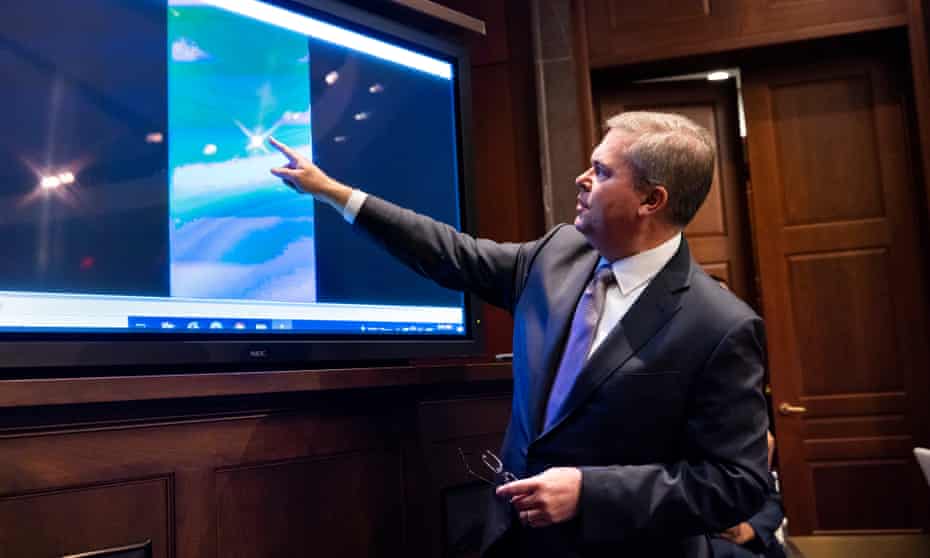
The US Congress held its first open briefing on UFOs in more than 50 years on Tuesday, but those seeking explanations for the numerous military sightings of unexplained objects were left disappointed, as defense officials appeared to hold their juiciest information for closed door hearings.
During a 90-minute briefing in Washington a highlight was the release of two new videos showing unidentified aerial phenomena, although one of them was immediately debunked by Scott Bray, the deputy director of navy intelligence.
The hearing, the first of its nature since 1966, came after a bumper year for UFO enthusiasts. In 2021, US intelligence released a landmark report which found 144 reports of unidentified aerial phenomenon, only one of which could be explained.Advertisement
The report followed US navy pilots publicly discussing their encounters with UAPs, with one retired lieutenant claiming he saw objects in the sky above the east coast “every day for at least a couple years”.
On Tuesday Bray sought to defend the government’s investigation of UAPs – following accusations that the Pentagon is not taking the issue seriously enough – but also showed members of an intelligence subcommittee videos of airborne objects.
One video, filmed during daylight, showed an object appearing to whiz past a military jet. The fleeting appearance of the object – it appeared on screen for less than a second – showed the difficulty in gathering data on some UAPs, Bray said.
Another clip, recorded at night from a military plane at some time in 2019, showed triangle shapes appearing to hover in the sky. Bray then played another video that captured the same phenomena, but followed it up with a mundane explanation: the objects were drones, rendered triangular in shape and other-worldly in motion because of a quirk in the way video was captured through night-vision equipment.
The debunking did little to counter accusations – including one leveled by Andre Carson, the committee chair – that the Pentagon has little interest in investigating the inexplicable.
“One of Congress’s concerns is that the executive branch, the administration, both parties, have been sweeping concerns about UAPs under the rug by focusing on events that can be explained, and avoiding them that cannot be explained,” Carson, a Democratic congressman from Indiana said.
“What can you say to give the American people confidence that you aren’t just focusing our attention on low-hanging fruit, the easy explanations?”
The line of questioning followed concerns that while the Pentagon has established a UAP office – the bureaucratically titled Airborne Object Identification and Management Synchronization Group – research in this field is still far from a top priority.
Bray acknowledged the intelligence community had “had to sometimes be less forthcoming with information”, adding, “we do not want potential adversaries to know exactly what we’re able to see or understand or how we come to the conclusion.”
The answer revealed an attitude that has long frustrated those seeking fuller disclosure – and has prompted a range of conspiracy theories about what the government may be hiding.
Bray and Ronald Moultrie, the defense under secretary for intelligence and security, soon provided an example of that aversion to disclosure, when asked if the Pentagon has “any sensors underwater to detect on submerged UAPs – anything that is in the ocean or the seas”.
“I think that would be more appropriately addressed in closed session,” Moultrie said.
While nuggets of new information remained infuriatingly rare, Bray did report that the intelligence community has “seen an increasing number of unauthorized and or unidentified aircraft or objects”, which he attributed to destigmatizing military reporting of encounters and the use of new detection systems.
The 2021 report acknowledged sightings of UAPs that “appeared to remain stationary in winds aloft, move against the wind, maneuver abruptly, or move at considerable speed, without discernible means of propulsion”, and on Tuesday Bray ruled out a foreign adversary possessing such technology.
Some politicians have openly expressed dissatisfaction with the progress of the new UAP office – which less than a month from its start date has yet to appoint a director – with an aide to Kirsten Gillibrand, the US senator from New York, telling Politico in May: “Senator Gillibrand believes that the [department of defense] needs to take this issue much more seriously and get in motion.”
The dissatisfaction is a far cry from the optimism that surrounded the government when it released its report in 2021. At the time amateur UAP organizations had hoped that the Pentagon would be more open in sharing its own data and more willing to examine videos and images recorded by amateur investigators.Advertisement
Moultrie made it clear, however, that this would not be the case, when he suggested that some groups “are putting information out there that could be considered to be somewhat self serving”.
As Carson brought the hearing to a close he noted to his Democratic and Republican colleagues that the topic of “UAPs and UFOs” is “one of the few times we can demonstrate some degree of bipartisanship”.
For the watching public, however, it was clear that the briefing had mostly raised more questions – and frustration – than answers. As before, humans remain no closer to finding out whether alien life is out there.
Alejandro Rojas, a researcher at Enigma Labs, an analytics and community platform for UFOs and a board member at the Scientific Coalition for UAP Studies, tweeted: “[The hearing was] mostly a cordial conversation about how great AIMSOG will be one day.
“We got some answers, but I have much less confidence in AIMSOG as I did before the hearing.”
Humans grow up with a powerful drive to learn how things work and why certain patterns and properties exist in the world. Wonder, a word with multiple related meanings, has one sense that captures this desire to know. You employ wonder when you ask questions such as ‘How do fish breathe underwater?’ or ‘Why do air conditioners drip water?’ Wonder, as I describe it here, is more than the sort of curiosity that motivates someone to seek a simple factual answer (eg, ‘What is the biggest kind of dog?’) Wonder moves someone to seek out explanations – especially about the patterns of cause and effect that underlie phenomena. It is also different from awe, which can occur as a more passive state of amazement. Wonder involves active thought and engagement. It invokes conjectures about ‘how’ and ‘why’. It might even launch speculations about different possible worlds. Wonder motivates targeted explorations and discoveries.
In its most mature forms – in adults who have flourished as lifelong wonderers – wonder promotes sustained excavation of the rich causal architectures of the world. It helps us to appreciate everything around us more fully. We come to see a more richly textured and dynamic reality. For example, through wondering and learning about how and why songbirds sing, how the first flowers break through frozen ground, and how animals hibernate, we come to see and experience the first days of spring in more immersive and rewarding ways. Each instance of wondering in turn launches a branching network of new instances and opens a door to the potentially endless joy of successive discoveries. If this sounds overly euphoric, it is exactly how renowned polymaths describe their lives, from childhood to their final moments.
Wonder and the learning it encourages enable us to more fully engage with others – not just about topics such as cosmology or evolution, but also pressing current issues such as epidemics and the climate crisis. It can also help provide a shield against misinformation. Even the most schematic understanding of gravity, stars and planets, for instance, can make one more suspicious of causal claims by astrologers. Dubious ideas, including notions about disease or climate risk that run contrary to the scientific consensus, are easier to question if we acquire rough renderings of the mechanisms involved.
Sophisticated elements of wondering appear at an early age. Around 40 years ago, a pair of British researchers, Barbara Tizard and Martin Hughes, investigated children’s spontaneous questions, finding that children were asking them soon after they started using language. At first, the questions might be simple requests for the whereabouts of a favourite toy, but soon they were asking more ‘why’ questions, such as why some roofs are steeply slanted and others are not, why babies can’t drink really sweet drinks, and why you have to pay people money for doing things for you. More recent studies show that wonder expands greatly in power and scope in the preschool years, as children learn how to go deeper and deeper in their understanding of the hidden workings of things and learn how to rely upon the knowledge in other minds.
Research has even revealed early versions of enthusiastic wondering in preverbal infants. These signs of wondering occur when an object doesn’t act as it should – such as when it seems to pass through a solid wall. The surprised infant might immediately start to explore and manipulate the object to figure out why, perhaps by banging it against a surface.
Wonder commonly declines with age – but it doesn’t have to
Around the time children enter classrooms, their spontaneous questions seem to plummet. Even worse, this abandonment of wonder can persist indefinitely. This decline happens at all levels of affluence and across diverse groups and cultures, leading some to worry that it is inevitable.
Yet some people remain lifelong, joyful wonderers. What makes them able to sustain their wonder? Consider the biochemist Jennifer Doudna, who launched the CRISPR gene editing revolution in biology. She recalls wondering constantly about the plants around her when she was growing up in Hawaii. She became fascinated with how certain plants closed up protectively when touched and, more generally, why and how plants developed ways to survive specific threats. In adolescence, she became fascinated with how genes mediate the adaptations of organisms to their environments. As Walter Isaacson, a biographer of famous wonderers including Doudna, notes:
When we are in our wonder years, we always ask these questions – up until some grown-up finally says, ‘Hey, quit asking so many stupid questions!’ But what we have to do is be like Leonardo da Vinci, Ben Franklin, Steve Jobs, and Jennifer Doudna, and not outgrow our wonder years.
Such famous examples – along with less well-known lifelong wonderers whom we know or encounter – provide reason to believe that we can regain and maintain wonder in adulthood. We might even help young people hold on to theirs. Gaining insights through wondering is not some kind of rarefied ability that is off-limits to most people. Its presence in young children shows how intrinsic it is to being human. And wonder can continue to grow and expand for a lifetime.
After more than 50 years involved in experimental research on how both adults and children make sense of the world around them, I have become ever more impressed by the ability of young humans to sense something important lurking beneath the surface of things. They quickly grasp that uncovering how something works is especially rewarding. An intrinsic joy is at the heart of what makes this happen. All of us should experience the pleasures of learning through wonder every day of our lives. Through studies in my lab at Yale and countless discussions with other researchers and notable wonderers, I’ve been able to collect a number of practical strategies that can help you revive your wonder and maintain it at levels that become so rewarding that they are self-sustaining.
What to do
Conductregular introspections
Ask yourself: have you learned anything new in the past month that has changed how you view or understand some aspect of the world? This might include learning important new facts or realising that you were mistaken in some way about a prior view. Think about these updates in your understanding as opportunities that enable you to see the world more clearly. It would be the ultimate form of hubris to assume that one already understands everything just right. Uncovering pockets of ignorance or misunderstanding and gaining new insights can feel invigorating. Leading scientists freely admit not knowing as a primary reason for conducting research, and you can follow their lead.
You can begin to embrace this spirit of seeking new understanding by making a point of pausing on the first day of every month and asking what new insights you have recently gained or what misunderstandings you have resolved. When you identify an instance, think about what has changed in your mind and what new lines of enquiry have been revealed as a result of this change. Almost always, you will have several novel things to explore.
If nothing comes to mind during your introspection, take a few minutes to reflect on what is around you. For example, as I sit here writing this sentence, I can look around the room or outside the window and quickly find an area of ignorance. On an early spring day, looking outside, my attention lingers for a moment on a lone cluster of daffodils. In interrogating my own knowledge, I realise that I have enjoyed seeing the first flowers of spring all my life – but that I have no idea why daffodils come up early while other flowers, such as roses, appear much later. This line of enquiry quickly unrolls a rich tapestry of follow-up questions about whether the early flowers tend to be ones with bulbs and why that might be the case.
Even at such early stages of wondering about a new topic, you quickly come to look at the object of your wonder differently and experience it more deeply. To find out more, you might start searching for answers online – or, if the right search phrase or source of information is not obvious, you might ask a friend who is knowledgeable about the subject how they suggest learning more. That discussion could in turn lead to a visit to your local library or perhaps to an expert in your community.
After a few months of regular introspections, you’ll likely find yourself doing them more spontaneously because it is so rewarding.
Embrace the proliferation of wonder
When you wonder, try to approach a question with the expectation that you are just taking the first step in what might turn out to be many possible cycles or branching paths of wondering, each one triggered by what you learn in response to the prior question.
The natural world and the world of technology are both full of complex, nested systems. Consider the components of a car and how each of these (engine, brakes, transmission, etc) has its own complexities and internal parts with additional complexities. What this means is that you should be on the lookout for what new ‘wriggling worms’ appear when you overturn your first rock of enquiry though wondering. For example, if you find out that slime moulds can solve mazes and wonder how that happens, then learn that they leave behind slime trails as a form of ‘external memory’, you might immediately start asking how they ‘read’ such trails and use them.
Adopt diverse ways of wondering
You can experience extra pleasure in information foraging when you discover a new way of learning more. Alternatives to the standard search engine query, as helpful as that can be, might include seeking out YouTube videos created by experts or visiting online forums such as Reddit’s ‘Explain Like I’m Five’. You could also explore lectures or other educational events at nearby science museums or colleges.
Do not feel shy about asking experts you meet to help you understand a subject. While some experts might not want to explain things to a novice, many, including those who are leaders in their field, are thrilled to share their excitement and help you see why they have devoted so much of their life to a topic. Even some doctors, despite crushing schedules, might still be happy to have a patient who becomes more of an intellectual partner in understanding what is going on. Emails out of the blue to experts you haven’t met might not always work because of the sheer volume they receive, but it is often quite easy to approach an expert after a talk or other event.
If a topic of interest seems especially complex, looking back at its early history could provide a useful entry point. For example, say you became interested in the concept of electromagnetism. Entering the topic by reading about mathematical models might be intimidating. Even back in the early 1860s, James Clerk Maxwell’s four equations required a fair bit of mathematical understanding. Yet if you go back just a few more decades and read a book about the pioneering scientist Michael Faraday (and perhaps some excerpts from his notebooks), you can quickly gain a vivid, almost mathematics-free sense of many key phenomena.
The more you approach a topic from different vantage points and perspectives, the more you start to see the phenomenon under investigation emerge in all its beauty and complexity.
Look for anomalies and puzzles
Wonder will often go into high gear when you are confronted with an apparent anomaly or puzzle. Sometimes, people ignore anomalies as annoying exceptions to a simple explanatory story that they have in mind. But very often an anomaly can be extremely revealing and cause a revamping of your understanding. For instance, you might notice that a particular tree in your town loses its leaves much earlier than all others. At first, you just ignore the anomaly, but when you eventually decide to look up why this might be the case, you learn that trees often lose their leaves earlier when they are stressed by poor soil conditions or a toxic substance. You now better appreciate how trees provide information about the quality of the local environment.
Here’s another example: perhaps you learn that many political scientists recommend ranked-choice voting systems, yet these systems are far from universal. When you start to consider why this is the case, you begin to wonder all sorts of things about voting. You explore what reasons are given for and against ranked-choice voting and other types. You might ask whether implementing this kind of voting has unanticipated consequences in addition to the suggested benefits. You start to better appreciate the many intertwined processes involved in practically implementing fair and efficient voting systems.
Similarly, if you stop and try to explain to yourself or others how various ordinary things work, you might find that there are gaps in your understanding – whether it is your grasp of how a flush toilet works or how the heart pumps blood. When you stumble upon such gaps, appreciate that you have just uncovered an opportunity to unleash wonder and to explore why something works the way it does.
Explore contrasting cases
A range of studies has shown the value of contrasting cases for learning more deeply about a topic. For example, your understanding of the concept of mammal will likely deepen after you compare various pairs of mammals and consider the commonalities and differences between them. You might also wonder about the similarities and differences between two related concepts in psychology or another field – concepts such as ‘extrinsic motivation’ and ‘intrinsic motivation’ – and by contrasting them, learn more about a larger topic (eg, motivation) and how experts think about it.
A vivid example of the power of contrasting cases in my own life concerns the planets Earth and Venus. I grew up in the 1950s and ’60s thinking of Venus as our twin planet. It is almost the same size, only a little closer to the Sun, and covered with clouds, which suggested that it might have lots of water and a climate that could support life. My visions of Venus were supported by science fiction of that period – such as Ray Bradbury’s story ‘All Summer in a Day’ (1954) – that presented Venus as a warmer, more humid version of Earth. So, I was recently staggered to learn that Venus is now considered ‘the evil twin’ because it is so different from Earth in ways that are hostile to life. For example, the mean surface temperature is an astonishing 864 degrees Fahrenheit (462°C), and the atmosphere consists mostly of carbon dioxide, nitrogen and sulphuric acid. It is about as lethal a place for humans as one could find.
This contrast launched me into a wonder-propelled effort to find out how two planets of the same mass could have such different environments. As I explored the topic, I came to see why the solar system is truly a system, with interactions between planets and asteroids over time that may have led to the huge contrast. I also learned how clouds can become vehicles for runaway global warming. I still have much more to learn but, even at this point, when I look at the night sky and easily locate Venus, I see and experience it completely differently – not as the friendly twin where Earthlings might live in a few decades, but as an example of how Earth’s status as a liveable planet might be far more fragile than we realise.
Entertain counterfactuals
Wonder is most powerful when it uncovers the causal structures that lie beneath and are responsible for surface phenomena. These structures often include elaborate and extensive branches, so that each ‘how’ or ‘why’ question can launch a cascade of follow-up questions. Many recent studiesshow that posing counterfactual questions is an excellent way to peel away appearances to see the workings underneath.
In asking such questions, you provide fuel for wonder. For example, you might ask: ‘What would the world be like if water contracted when it froze (like most liquids) rather than expanded?’ If you think it through on your own, and then consult some sources, you might be astonished to learn just how important that very unusual feature of water is. Indeed, some experts believe this property of water is essential to life on Earth. To grasp such claims fully, you will find yourself coming up with a number of follow-up questions.
How do you know what to counterfactualise? It is much more interesting to wonder what transportation would be like if the speed of light was 100 miles per hour than to wonder what it would be like if all wheeled vehicles had blue wheels. Why is one counterfactual so much more interesting? It has to do with the ramifications of changing such an important property as the speed of light. If you engage in counterfactual exercises regularly, you will develop a better sense of the sorts of what-if questions that are likely to be most revealing. But most of us know right from the start that some attributes of the world are more interesting to imagine transforming than others.
Practice win-win wondering with others
One way to reawaken wonder lies in your interactions with others. Many adults see arguments as aversive battles with the goal of conquering the other with your point of view. But this ‘argue to win’ perspective neglects the opportunity that disagreements offer for expanding wonder. To take advantage of this, we need to adopt an ‘argue to learn’ mindset.
Can you think back to an argument when everyone exchanged views with no fear of ‘losing’? When getting closer to the truth, not winning, was the focus, and all sides made positive contributions? All too often we can fall into a zero-sum framing of disagreements when in fact win-win encounters are also possible – and are more rewarding for all parties. The next time you find yourself disagreeing with a friend, try to embrace that disagreement as an opportunity to learn and communicate. Let your friend know that you want to argue in good faith and that you would be delighted to have your mind changed as you can learn more that way. Following through on this commitment to learn almost invariably involves asking ‘why’ and ‘how’ questions.
There are other simple ways to promote arguing to learn. One of the easiest is to have arguments with another person without an audience, and with an agreement that the details of who knew what at the beginning of the conversation are of no concern to anyone else.
Create a checklist for wondering
Checklists can be surprisingly useful for helping you engage effectively in a variety of desired activities – including wondering.
Suppose you wonder about the costs and benefits of a particular public health intervention. Given that emotions can bias how we approach and value information, you might be especially vigilant by using a checklist with items such as the following:
Did I consult at least three different sources? Did I make sure those three didn’t all get their information from one common source?
Did I check the reputation of my sources by looking at their affiliations, their training and other indicators that they are respected for the quality of their views?
Did the sources actually discuss any mechanisms involved (eg, how a vaccine works) in more than a hand-waving manner? Or did they rely more on personal anecdotes or opinions? Badly informed sources rarely dive deeply into mechanisms.
Depending on the subject of your wondering, the checklist might include different items. For instance, your checklist could ensure that you are taking into account your own cognitive biases, such as the tendency to seek out information that confirms your beliefs and to neglect information that challenges it. If these checks sound difficult, with a little practice, you’ll find that they are often surprisingly easy to do and can become automatic.
To foster more moments of wonder, upon encountering a new phenomenon that is puzzling, you might check how often you pursued the topic with a number of ‘how’ and ‘why’ questions instead of just seeking a simple answer. For example, upon learning about so-called ‘wood wide webs’ of fungi that link trees to each other, instead of simply asking when or by whom they were discovered, you might ask why trees form such communities or how those communities expand. Fact-seeking questions can be fruitful if they are used as launchpads for wondering, but not if they close down further enquiry because an ‘answer’ has been found.
These examples are not meant to be prescriptive, but rather to give a sense of how you might construct checklists that work best for you. One key constraint is to focus on wondering that seeks out the truth as opposed to fitting into an agenda or serving as a means to some other end.
The more you engage in wondering, the more you will ask why you haven’t wondered more in the past. Wondering deeply is one of the few activities in life in which you can acquire something of great value at little or no material cost – something that can continuously enrich how you experience the world going forward.
Key points – How to revive your sense of wonder
Wondering is rewarding. By embracing wonder – your drive to learn about the world – you can deepen your appreciation of the world’s richness and engage more fully with others.
Wonder commonly declines with age – but it doesn’t have to. A childhood boom in wondering often subsides as people grow up, yet lifelong wonderers show that we can maintain the habit of asking questions.
Conduct regular introspections. A periodic check-up can help you take stock of the insights you have recently gained – or prompt you to start wondering about areas of ignorance.
Embrace the proliferation of wonder. Wondering deeply is not about finding one simple answer. Answers to questions beget new questions, and each offers an opportunity to learn.
Adopt diverse ways of wondering. Search engines have their place, but also look to other resources, such as videos, educational events and books that provide an accessible introduction to a subject.
Look for anomalies and puzzles. Zero in on phenomena that seem atypical or unclear – they can provide fuel for wondering.
Explore contrasting cases. Examining the similarities and differences between related kinds or concepts can yield unexpected insights.
Entertain counterfactuals. Wondering what would happen if something about the world was different can help you understand why certain things work the way they do.
Practice win-win wondering with others. Adopt an ‘argue to learn’ mindset, treating disagreements as opportunities for wondering rather than battles to be won.
Create a checklist for wondering. A checklist can help ensure that you wonder in ways that are as fair and thorough as you’d like.
In addition to reviving our wonder as adults, we can choose to interact with children in ways that help support and maintain their high early levels of wonder. By preserving wonder in the next generation, we will also be more likely to experience it in our own lives.
You can start by simply having different kinds of conversations with children. The goal is to help them continue to enjoy and grow the knowledge that they already have. One approach involves asking them open-ended questions. These are questions that expand on a conversation instead of abruptly shutting it down. For example, if a child has just returned from picking apples in an orchard, you might ask: ‘How did you decide which apples to pick?’ This question invites an extended conversation about apple variations, the ease of picking, ripeness, and other details. Expanded discussions encourage children to delve more deeply and form new insights by reflecting on the answers to the question. It is far better than asking something like: ‘Were there a lot of apples?’ Questions like this can be answered with a simple ‘yes’ or ‘no’, which does not so easily invite further discussion of the topic.
You can also ask more ‘why’ and ‘how’ questions of yourself while in the presence of a child. This reminds children of their own past pleasures when asking those kinds of questions. It also illustrates your role as a partner in wondering and learning. ‘Why’ and ‘how’ questions address children’s special appetites for uncovering hidden mechanisms in the world. You can show children how uncovering a gap in your own understanding is energising while also providing a revealing demonstration of intellectual humility.
Wondering about how things work and why they are the way they are demonstrates the pleasures of discovery. It is similar to finding a new trail that promises exciting, unfamiliar terrain to explore. By jointly engaging in wondering, you illustrate the pleasures and powers afforded by new insights, especially when they are shared with someone else. There are many activities between parents and children that can promote wonder, ranging from reimagining dinner conversations around shared topics of wonder (perhaps even with a prop, such as a local fossil), to pausing at intriguing spots on a walk, to wondering why cellphone service disappears and reappears on a drive, and perhaps also why the GPS signal doesn’t. The possibilities are endless once you get used to such practices and appreciate the intellectual pleasures that follow.
Links & books
In my bookWonder: Childhood and the Lifelong Love of Science (2022), I provide a detailed account of the sense of wonder and why it is so important to support the incredible ways it flourishes in young children.
The page on curiosity on the Character Lab website from the psychologist Angela Duckworth is a great place to learn more about wonder-related activities.
The Reddit forum ‘Explain Like I’m Five’ offers a springboard for asking and seeking answers to a large variety of questions, as well as fun examples of how to simplify phenomena that might at first intimidate. And the linked forum ‘Change My View’ nicely demonstrates the kind of attitudes involved in ‘argue to learn’ conversations and in monthly introspections.
The bookThe Age of Wonder: The Romantic Generation and the Discovery of the Beauty and Terror of Science (2010) is a fascinating account by the English biographer Richard Holmes of how wonder took off in a diverse group towards the end of the Enlightenment.
The bookThe Last Man Who Knew Everything (2006) by Andrew Robinson is a remarkable portrait of Thomas Young, an extraordinary polymath from an ordinary background who, by his own account, came to know so much because of unceasing wondering, not exceptional cognitive ability.
Elinor Wonders Why (2020-) is a PBS show that takes a promising approach to supporting wonder in children. The programme’s website features games, activities and videos for young wonderers.
Kenneth Boydholds a PhD in philosophy from the University of Toronto. His philosophical work concerns the ways that we can best make sure that we learn from one another, and what goes wrong when we don’t.
We all experience physical pain. While some causes of, and remedies for, pain are obvious – eg, I wasn’t careful chopping onions and now I need a bandage, or I celebrated a bit too much last night and now I need water and a nap – the types of pain that can be experienced are diverse and, in some cases, poorly understood. Sometimes, the source of one’s pain isn’t obvious, especially when it lasts a long time, and can’t be treated by a quick trip to the medicine cabinet. In such cases, treating pain may require conceiving of it not as simply a physical condition but a mental one too.
Many such treatments conceive of pain under a biopsychosocial model. According to this model, experiences of pain go beyond the purely physical: in particular, your mental state impacts your feelings of pain, which can make such feelings better or worse. This model also suggests a possible avenue of treatment, namely one that addresses negative psychological effects in order to help alleviate your experience and perception of pain. Effective treatment of the psychological aspects of pain thus relies on your self-knowledge, specifically the knowledge you have about your negative thoughts, experiences and beliefs regarding the severity of your condition and potential to get better.
It might seem like acquiring this self-knowledge is easy: how hard is it, after all, for me to know what I’m thinking and feeling? However, I think there can be two obstacles that can prevent you from acquiring and accurately reporting self-knowledge when it comes to your own experiences of pain. The first is psychological – being in pain can tax one’s cognitive resources – and the second is epistemic – experiences that accompany being in pain can provide you with misleading information about the nature and extent of your pain. It can, then, sometimes be difficult for you to acquire knowledge about yourself. This points to a potentially surprising conclusion: we can turn to others, especially close friends and family, to make it easier to know things about what seem to be fundamentally personal experiences.
According to traditional conceptions of self-knowledge, obtaining self-knowledge is easy because we have privileged and direct access to the contents of our own minds: privileged, because we are seemingly in the best position to know what’s going on in there, and direct because the method by which we come to acquire self-knowledge – often thought of as the result of introspection – provides that knowledge, without the need for any kind of interpretive work on our part. According to this picture, introspection requires little effort and is rarely mistaken: since my beliefs and my feelings are my own, and accessible only to me, I am the ultimate authority on my own mind.
Other people are in a better position to know whether we are popular or unpopular, patient or prone to anger, are the life of the party or a bit of a wet blanket
However, few today hold the view that we are never mistaken when it comes to what’s going on in our minds. We possess unconscious and implicit biases, we are often poor judges of our own character traits, and we can fail to predict what will make us happy and sad. There are also times when we confabulate (ascribing to ourselves beliefs and thoughts that we do not possess) and others when we experience cognitive dissonance (ascribing to ourselves views that we don’t actually hold in the service of maintaining some level of consistency). Gaining self-knowledge takes work.
Being in pain can make acquiring self-knowledge even more difficult, not only because it makes it more effortful, but also because it can make your beliefs less accurate. For instance, those with conditions that produce pain for extended periods might catastrophise (ie, worry excessively and view their situation as catastrophic), ruminate (ie, fixate on pain-related thoughts), and have false beliefs about the amount of control they have over their experiences of pain. Acquiring self-knowledge as a means to effective treatment, then, requires that you be able to ignore misleading evidence with regards to your condition and experiences of pain. One way to do this is to turn to others to help you gain knowledge about yourself.
Looking to others is not such a wild idea. After all, there is a lot of information about ourselves that other people are in a better position to know than us: whether we are popular or unpopular, patient or prone to anger, are the life of the party or a bit of a wet blanket. There are even times when others know our emotions better than we do. Consider a case in which you’re having a disagreement with your partner, who then tells you that you are getting upset. You may insist that you are not upset, but it is easy to imagine situations in which this assessment is mistaken. Your partner might know what you are feeling better than you do.
We might think, though, that pain is a different matter. After all, feelings of pain seem to be immediate and sensory. How could it be, then, that others could know our pain experience better than we know it ourselves?
Consider how your hatred and fear of the dentist can make the experience of a thorough plaque removal seem more painful and traumatic than it actually is
Recall that, according to the biopsychosocial model, physical experiences of pain are not completely separate from your emotions, beliefs and other cognitive states. If you can have false beliefs about your negative thoughts and feelings about your own pain experiences, then there is also reason to think that someone else could help you gain more accurate beliefs about those thoughts and feelings. This is not to say that someone else can better know my phenomenological experience of pain: there is, perhaps, a fundamental ‘what it’s like’-ness about myself and my experience that can never be known by anyone but me. But given that a biopsychosocial model conceives of pain as something more than mere sensation, it is possible that important aspects of our experiences of pain are ones that we can be mistaken about, and that others could potentially know better than us.
Take an example. We say to the crying child who has scraped their knee that they are overreacting, and that it does not hurt as much as they are making it out. This is not necessarily a claim that the child is lying; it is a claim that they just are not in as much pain as they may think they are. Or consider how your hatred and fear of the dentist can make the experience of a thorough plaque removal seem more painful and traumatic than it actually is: in such a case, your mental state may exacerbate your experiences of pain. There are also cases in which you may believe you’re in less pain than you actually are: your competitive spirit, for example, might prevent you from fully appreciating the pain you’re in as the result of an injury in the middle of a big game.
Appealing to others to help manage your own experiences of pain can potentially provide you with more accurate self-knowledge in two ways. First, doing so can help you overcome the epistemological obstacles to acquiring self-knowledge: since others might not share the false beliefs of the person experiencing pain, and are not presented with the same kinds of potentially misleading evidence, they might be able to help the pained person make a more accurate assessment of their pain, as well as their ability to cope and improve. Second, by having the task of acquiring accurate self-knowledge partially delegated to others, you can better overcome the psychological obstacles to acquiring self-knowledge, as they do not have to bear the full cognitive load by themselves.
Of course, none of this is to say that just anybody is a better judge of your pain than you are: people you are closest to are likely in a better position to help you more accurately report what you’re feeling than a stranger. I’m also not here suggesting that you always consult with someone else to figure out how severe your pain is – if I cut myself while chopping onions (again), I don’t need to turn to my partner, bleeding finger outstretched, and ask how much it hurts. Nor am I suggesting that others who are closest to us always know better than we do: there are many times when others can fail to recognise our very real experiences of pain, and can simply be wrong if they say our pain isn’t as bad as we’re making it out to be.
What I am suggesting is that turning to those close to us to help acquire self-knowledge can be helpful when it comes to more demanding pain-management tasks. What might this look like in practice? If you are engaged in a long-term cognitive restructuring project to help manage prolonged experiences of pain, for example, having those who are close to you provide input on your mood and emotions could help produce a more accurate picture of your pain. You could also seek the input of others when it comes to experiences that you know are liable to be impacted by your negative beliefs and emotions. My disdain for the dentist might lead me to think that my previous experiences were much worse than they actually were, which results in heightened anxiety about an upcoming cleaning. Having someone I’m close to remind me that my last visit went smoothly and that I didn’t express any discomfort afterwards could then help me acquire self-knowledge that could have been difficult to get otherwise.
It’s clear that having a support group of friends and family is important when it comes to managing pain. However, in addition to lending emotional support, they might be able to help with the process of gaining self-knowledge, as well.
The Astrology Podcast May 19, 2022 A deep dive into the meaning of the zodiac sign Taurus in astrology, and some of the traits and characteristics of people born with that sign prominent in their birth chart, with astrologers Mo, Pao, and Chris Brennan. Taurus is the second sign of the zodiac, and it is a feminine or nocturnal sign, fixed, earthy, and ruled by the planet Venus. This is the second in a series of episodes where we do a deep-dive into each of the signs of the zodiac, one per episode, in order to really understand their core meaning and significations. Mo and Pao are the hosts of the Fixed Astrology Podcast: https://anchor.fm/fixedastropod Mo and Pao both have Taurus placements prominent in their birth chart. Mo has her Taurus Sun and South Node in Taurus, and Pao has Taurus rising with the Moon in the first house. During the course of the episode, we talk about various keywords and traits associated with Taurus and also look at some birth charts of famous people who were born with different planets in that sign. Some of the keywords we discussed were drawn from a Twitter survey: https://twitter.com/chrisbrennan7/sta…
The Emperor is numbered four and is the Empress’s other half. Here is a man in the prime of life – successful, confident, secure and well-established. Where the Empress is allied with the Moon, the Emperor is aligned with the Sun.
The Emperor is quick and energetic, exerting dynamic control over his life. He feels born to rule and at his best is a thoughtful and sensitive leader. He listens to others but always the final decision is his own.
This is a man who has proved himself worthy. He has won most of his battles and now is the time to rule over a rich and bountiful land. He is the King Arthur type. He also represents fatherhood – fertile man, protector and providor.
When we are the Emperor, we are taking hold of our power. We are prepared to protect and defend the vulnerable, as well as to shed the lazy and weak. Finally, we are willing and ready to pass on what we have discovered to others who are ready to learn.
The Othering & Belonging Institute at the University of California, Berkeley advances groundbreaking research, policy, and ideas that examine and remediate the processes of exclusion, marginalization, and structural inequality—what we call othering—in order to build a world based on inclusion, fairness, justice, and care for the earth—what we call belonging.The concept of belonging describes more than a feeling of inclusion or welcome. Its full power is as a strategic framework for addressing ongoing structural and systemic othering, made visible, for example, in the wide disparities in outcomes found across a variety of sectors and identity groups.
Belonging, as OBI defines it, means having a meaningful voice and the opportunity to participate in the design of political, social, and cultural structures that shape one’s life — the right to both contribute and make demands upon society and political institutions. At its core, structural belonging holds a radically inclusive vision because it requires mutual power, access, and opportunity among all groups and individuals within a shared container (such as a society, organization, club, etc).
The Institute We have been doing this work of building belonging since 2012—first, under the name of the Haas Institute for a Fair and Inclusive Society and now under our identity as the Othering & Belonging Institute at UC Berkeley.
The Institute grew out of a core group of engaged scholars at UC Berkeley who had organized around thematic topics related to marginalization and inclusion, including disability studies, public health, race and education, LGBTQ citizenship, religious pluralism, among others. Out of these clusters a formal center was born in 2012, made possible by a foundational grant from the Walter & Evelyn Haas, Jr. Fund. Support from the Haas Jr. Fund, and other members of the Haas family, endowed seven faculty chairs to lead each of the research clusters, and brought john a. powell to UC Berkeley to lead the Institute as its inaugural director, where he holds the eighth endowed chair.
The Institute was and remains unique in academic institutions for the breadth of its vision, the expansiveness of its influence in a range of sectors, and the scale of its scholarship and structure.
From the beginning, our understanding of marginalization and exclusion was informed by a wider view of how groups are situated in society based upon race, gender, sexual orientation, ability, and religion, and how policy, legal, and cultural interventions can remediate these cleavages and facilitate more equitable outcomes. We have consistently insisted on recognizing the centrality of how structures and systems work to create or exacerbate othering or belonging. This orientation has given us key insights into dynamics such as structural racism, mass incarceration, the crisis of affordable housing, corporate misalignment, public finance, among other broad issues. Throughout our work, we push for reforms that can unlock transformative change, prioritizing those who are the most targeted or marginalized, while doing work that benefits all.
Our Main Goals
Advancing multidisciplinary research, analysis, policy, and strategic narrative
Our research examines the structural and cultural impediments to opportunity that limit full inclusion and block benefits derived from an equitable society. We address complex and intertwined issues holistically, cultivating research contributions and collaboration across fields. Research is informed by understanding how structures and systems work across domains to produce exclusion and inequality, and inclusion and equality.
Building relationships among diverse groups and across disciplines
We align our research efforts with the needs of community organizers, policymakers, and other stakeholders. Community-centered collaborations help inform our research while our scholarship helps community partners and policymakers with strategies and policy, which increase our mutual effectiveness at many levels. This type of relationship-building moves beyond just coalitions toward deeper synergy, is strengthened by time and interaction, and ultimately yields a greater capacity to effect change.
Employing communications and culture to illuminate research and impact policy
To be most successful, we must engage the conscious mind and the unconscious mind, which is less empirical, less fact-driven, highly social, and more animated by stories, values, and metaphors. This communications and cultural work goes beyond messaging to engage in a battle of big ideas, to take command of how a debate, such as the entire concept of public space or citizenship, is framed in public discourse in order to construct and employ new narratives.
Making a difference
Our model allows us to work not only in a different way but also at a different scale, countering a lack of capacity that has made many of our most important efforts seem intractable. Our resources are also devoted to a few “game changers”— issues that if won or lost will have a profound impact on society.