
Big Think Truth vs Reality: How we evolved to survive, not to see what’s really there New videos weekly: https://bigth.ink Join Big Think+ for exclusive video lessons from top thinkers and doers: https://bigthink.com/plus/ ———————————————————————————- Galileo was quite controversial, in part, because he argued that Earth moved around the sun, despite people’s senses deluding them that the world was static. Evolution may have primed us to see the world in terms of payoffs rather than absolute reality — this has actually helped us survive. Those who win payoffs are more likely to pass on their genes, which encode these strategies to get to the “next level” of life. It’s important to listen to people’s objections because they may bring something to your attention outside your ken. Learn from them to make your ideas sharper. ———————————————————————————- DONALD HOFFMAN: Donald Hoffman is professor of cognitive science at the University of California, Irvine. His writing has appeared in Scientific American and Edge, and his work has been featured in the Atlantic, Wired, and Quanta. He resides in Irvine, California. ———————————————————————————- TRANSCRIPT: DONALD HOFFMAN: Galileo was quite controversial, of course, in his time, because he was claiming that something that we all could see with our own eyes wasn’t true. We could all see that the earth doesn’t move and that the sun, and moon, and stars go around the earth. And we believed that as a race for about 2,000 years. And Galileo was saying that your eyes are lying to you. The earth actually moves and it’s not the center of the universe. And he was put under house arrest for it. And we don’t like to be told that our senses aren’t telling us the truth. And then Galileo took it another step. He said, it’s not just that our senses are lying about movement of the earth, he said that he thought that tastes, odors, colors, and so on reside in consciousness. Hence, if the living creature were removed, all these properties, these qualities, would be utterly annihilated. That’s almost a direct quote in the translation. So he was saying that our senses are also making up the tastes, odors, and colors that we experience. They’re not properties of an objective reality. They’re actually properties of our senses that they’re fabricating. And by objective reality in this case, I’m going to use that term in a very specific way. By objective reality, I mean what most physicists would mean. And that is that something is objectively real if it would continue to exist even if there were no creatures to perceive it. So the standard story, for example, is that the moon existed before there was any life on Earth and, perhaps, before there was any life in the universe. But it still existed. Its existence does not depend on the perceptions of any creatures. And so that’s the sense in which I’ll talk about objective reality. And what Galileo was saying was that colors, odors, tastes, and so on are not real in that sense of objective reality. They are real in a different sense. They’re real experiences. And so I’ll talk about real experiences. So your headache is a real experience, even though it could not exist without you perceiving it. So it exists in a different way than the objective reality that physicists talk about. So Galileo was quite brave and quite out of the box in his thinking by saying not only the earth in his movement, but even colors, tastes, and odors are our perceptual constructions. But he wouldn’t go the next step. He wouldn’t say that shapes, and mass, and velocities of objects, and space, and time themselves are our constructions. He thought that those were objectively real. So the shape of the moon, the position of the moon, is an objectively real thing, including its mass and its velocities. So, this is a distinction that was later called the primary and secondary qualities of distinction by John Locke. Primary qualities are things like position, mass, shape, and so forth. These are presumed to exist even if no creature observes them. Whereas colors, and odors, and tastes are secondary qualities that are sort of mostly the contribution of our senses. And in brief, what I’m saying is we need to take the next step beyond what Galileo said. It’s not just tastes, odors, and colors that are the fabrications of our senses and are not objectively real. It’s, rather, that space-time itself and everything within space-time– objects, the sun, the moon, the electrons, quarks, their shapes, if objects have shapes, their masses, their velocities– all of these physical properties are also our constructions. And I’ve come to that conclusion. It was a bit of a shock to me. We always as… For the full transcript, check out https://bigthink.com/videos/donald-ho…
Monthly Archives: November 2021
Marianne Williamson on horizontal vs. vertical
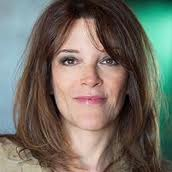
“The real axis of social change is not horizontal, but vertical. We don’t need a whole bunch of people gathering to think shallow thoughts together. What we need is for as many people as are ready to gather and think deep thoughts together.”
Marianne Deborah Williamson (born July 8, 1952) is an American author, spiritual leader, and political activist. She has written 13 books, including four New York Times number one bestsellers in the “Advice, How To, and Miscellaneous” category. Wikipedia
Book Review: A Human History of Emotion
by Richard Firth-Godbehere – HACHETTE BOOK GROUP
reviewed by Emily Qureshi-Hurst
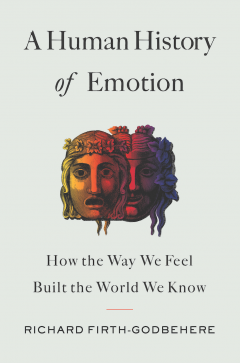
EMOTIONS ARE one of the most universally experienced aspects of being human. We have all felt the rippling burn of anger and the calm comforting love we have for a close friend. Offering a novel and engaging spin on many well-known historical events (and some lesser-known ones), Richard Firth-Godbehere’s A Human History of Emotion: How the Way We Feel Built the World We Know shows how emotions have shaped today’s world.
This book is an ambitious and sweeping story about how our understanding of emotions has evolved and the important role that emotions have played in human history. Firth-Godbehere takes his readers on a journey through the emotional landscapes of various cultures past and present.
He begins in Ancient Greece with the famous philosophers whose writings have shaped Europe’s intellectual landscape and ends with the possibility of emotion-feeling artificial intelligence. In between he travels from the rage of an African queen to the humiliation of a China ravaged by opium, from the fear that drove the witch hunts to the pride that promoted the Space Race. Emotions consistently take center stage.
Firth-Godbehere selects significant historical moments and brings them alive. His patchwork narrative structure involves blending neuroscientific and psychological insights with evocative storytelling and historical analysis, creating an exciting and accessible read.
Inside your dreamscape

Dream-hacking techniques can help us create, heal and have fun. They could also become tools of commercial manipulationNot-so-private world. Photo by Chris Stowers/Panos
Adam Haar Horowitz is a PhD student in the Fluid Interfaces group at MIT, whose research focuses on sleep and embodied cognition.
Robert Stickgold is professor of psychiatry at Harvard Medical School and director of the Center for Sleep and Cognition at Beth Israel Deaconess Medical Center. He is the co-author of When Brains Dream: Exploring the Science and Mystery of Sleep (2021) (with Antonio Zadra) and co-editor of The Neuroscience of Sleep (2009).
Antonio Zadra is a sleep and dream researcher at the Hôpital du Sacré-Coeur’s Center for Advanced Research in Sleep Medicine and professor of psychology at the Université de Montréal. His books include When Brains Dream: Exploring the Science and Mystery of Sleep (2021), co-authored with Robert Stickgold, and The Dreamkeepers (2021), a suspense novel blending sleep science with dream mythology. He lives in Montreal, Canada.
Edited by Matt Huston
19 November 2021 (aeon.co)
Love Aeon?
Support our workDONATE
Advertisers have begun invading our sleep in an attempt to place their products in our dreams. This is neither metaphor nor fiction; it’s a fact. The night before Super Bowl LV, the beverage company Molson Coors ran what they called the ‘world’s largest dream study’. They explicitly aimed to place images of Coors beer, along with positive imagery (of refreshing alpine rivers, for instance), into dreamers’ minds. They hired a Harvard psychologist to design dream-incubation stimuli, incentivised participation with offers of free drinks, and, in a marketing coup, had the pop star Zayn Malik agree to sleep on Instagram Live while having an incubated Coors dream – though he did mention the whole project was ‘kinda messed up’.
This isn’t an isolated case. Multiple marketing studies are openly testing new ways to alter and drive purchasing behaviour through sleep and dream hacking. The American Marketing Association New York’s 2021 Future of Marketing study found that, of more than 400 marketers from firms across the United States, 77 per cent of them aim to deploy dream-tech for advertising in the next three years. The commercial, for-profit use of dream incubation – the presentation of stimuli before or during sleep to affect dream content – is rapidly becoming a reality.
Of course, advertisers are far from the first people to work on influencing and incubating dreams. Dream incubation stretches back more than 4,000 years to ancient Egypt, where sleepers lay in sacred beds in the Ṣaqqārah Serapeum to receive divine dreams; to ancient Greece, where ailing people went to dream in oracular temples; to today, where dream incubation plays a key role in healing, therapeutic and spiritual practices such as yoga nidra and Mohave shamanism. These traditions span time and place, providing tools for people to move from unpredictable dream content to sought-after dreams dealing with specific themes and issues. But technological advances and improved sleep science are expanding how such techniques can be reliably implemented.
Two of us (Adam and Robert) recently worked on a team developing a wearable dream-incubation device called Dormio. It pairs three sleep sensors with a computer or smartphone to prompt users to think about a specific topic – something as simple as a tree or as complex as a perplexing work problem. Then, after determining that they have been asleep for a predetermined period of time, the technology awakens them with a slight sound and records their verbal dream report. A recent paper on this technique, which we call ‘targeted dream incubation’ (TDI), showed incorporation of the pre-sleep prompts into participants’ dreams more reliably than has been seen with previous lab-tested incubation techniques.
As it happens, the recent paper on TDI appears to have influenced Molson Coors’s foray into dream hacking; they used the phrase ‘targeted dream incubation’, language unique to this paper, in their marketing. As research in this field progresses, we can only expect that others will try to use these techniques and findings to manipulate our dreams for product placement and, ultimately, to influence our waking behaviours. Not surprisingly, one of us (Adam) has already been contacted by several companies, including large tech- and travel-industry players, seeking help on commercially driven dream-incubation projects. Yet the core principles and methods behind TDI and other techniques designed to influence dream content aren’t that difficult to understand and implement. A time will come soon when the help of sleep scientists is not needed.
As scientists, we study sleep and dreams for a variety of reasons, including to understand sleep-dependent memory processing and emotion regulation; to study how dreaming impacts prior learning; to better understand and treat dream-related symptoms such as post-traumatic stress disorder (PTSD) nightmares; and as a source of clues about psychological wellbeing. Similarly, researchers working on TDI and in the broader field of dream engineering aim to understand how the brain gives rise to dream experiences across different stages of sleep, and to improve people’s sleep quality, stimulate creativity and facilitate sleep-related learning. While these are all laudable goals, we are highly concerned by the current efforts to exploit people’s sleep and dreams, as highlighted by Molson Coors’s attempt to use TDI to sell an addictive substance.
We are also baffled by the lack of public outcry over the mere idea of having our nightly dreams infiltrated, at grand scale, by corporate advertisers. Other than some concerns – occasionally tinged with humour – expressed in the comments section that accompanied the Coors promotional video and a piece in the journal Science, this issue and the questions it raises have received little attention. This is reflected in the 2021 Future of Marketing study: of more than 500 consumers surveyed, only 32 per cent were opposed to the use of dream incubation by advertisers, while about three in 10 were unsure. What have we lost when we become so collectively inured to invasions of our privacy and to exploitative economic practice that we would happily accept a 12-pack for the placement of beer advertising into our dreams? Among other things, we certainly seem to have a diminished awareness of just how important sleep and dreams are – how they play a crucial, constructive role in our wellbeing and daytime behaviour.
Over the past two decades, it has become abundantly clear that sleep is not just a period of rest. While we sleep, our brain is constantly reviewing our memories of the day’s events. Some of these memories sleep stabilises, making them resistant to forgetting. Others sleep actively strengthens. And sometimes it only strengthens or stabilises a part of a memory. This can be the emotional core of a memory or, at the opposite extreme, just the gist of the memory. Sleep integrates new information into our brain’s networks of pre-existing information, and it identifies patterns shared by multiple memories, discovering rules that govern these patterns. Sleep can even enhance our creativity, either indirectly – making creative discoveries more likely after we wake up – or directly, in the content of our dreams.
But these processes can be manipulated. After taking a nap, study participants were better at recalling the location of an object (eg, a cat) that they had previously seen on their computer screen, if a related sound (eg, a meow) had been played during the nap. Participants in another study were willing to pay more for a common snack food after its name had been played during a nap, but not if the name was played while they were awake. While most of the memory processing that occurs during sleep is thought to happen outside of the sleeper’s awareness, it is now clear that it occurs during dreaming as well. That makes dream hacking a potential threat to our memories and very sense of self – a sense defined in large part by the autobiographical memories that we stabilise and integrate during sleep.
Dreams could be used by writers, musicians or anyone else aiming for creative inspiration and exploration
The influence of pre-sleep experiences on the content of dream reports is well documented, especially for the ‘hypnagogic’ dreams that occur in the minutes immediately before or after sleep onset. The pre-sleep period is a time of day that evolution has designated for reviewing the day’s events in order to identify and tag those memories that require subsequent processing during sleep. Experimentally inserting thoughts into this period can thus give these thoughts priority in subsequent memory processing that night. In one study, two-thirds of subjects who spent hours playing the game Tetris over the course of several days reported at least one dream with clear Tetris imagery during the sleep-onset period on the nights after play. In another study, brief immersion in a virtual reality flying task increased flying dreams in participants in a subsequent nap and the following night.
Targeted dream incubation takes advantage of the privileged sleep-onset period to influence dream content during the first minutes of sleep. There are plenty of reasons to be excited about the constructive potential of this approach. Anecdotal evidence suggests that recalled dreams, especially from the sleep-onset period, can facilitate creativity. In his book 50 Secrets of Magic Craftsmanship (1948), Salvador Dalí documented a technique that he called ‘slumber with a key’. Sitting in a chair with one arm on the armrest, holding a heavy key over an upside-down plate, he would bring to mind a problem he was working on and allow himself to drift off to sleep. With the onset of sleep, his hand muscles would relax, the key would fall and hit the plate, waking him up, often with a solution to his problem.
As noted above, Dormio, a wearable device, has proven effective in facilitating targeted dream incubation, producing what can only be called creative dreams. When 25 study participants were prompted to think about a tree and then awakened a combined total of 67 times, all but one of the awakenings produced a hypnagogic dream report, and 45 of these included references to trees. As examples of the creativity of these reports, one subject reported: ‘I could hear the roots of the tree pulsating with energy as if they were leading me to some location’; another recalled: ‘I was much bigger than the trees and I could eat them like finger food.’ Stories produced by participants after sleep with incubated dreams were significantly more creative, by both subjective and objective measures. Dreams such as these could be used by writers, musicians, filmmakers or anyone else aiming for creative inspiration and exploration.
Fostering creativity is just one of the potential uses for TDI techniques. We are currently investigating, for example, whether TDI can be used with sufferers of PTSD to support sleep-dependent processing of the trauma memory and facilitate recovery. We are also hopeful that it can be used for treating nightmare sufferers by helping them dream about the topics of their nightmares more creatively and changing their sense of control regarding dream content.
But there are abundant signs that TDI can be used for less benevolent purposes.
There is a history of intimate links between the study of dreams and the US advertising industry. Sigmund Freud’s nephew Edward Bernays is credited with pioneering the US public relations and advertising industries, in part through influential books such as Propaganda (1928). It was Freud’s theories, which examined the nature of dreams and the unconscious, that Bernays took as inspiration for his approaches to influencing the public, with a focus on the creation of unconscious desires and associations. In a series of hugely successful advertising campaigns, Bernays demonstrated that the irrational forces that drive human behaviour could be harnessed to ‘engineer consent’ and manipulate people’s behaviour without their realising it. It is psychoanalysis that gave advertising the idea to sell by association, linking cars and masculinity or cigarettes and freedom, just as the Coors dream-incubation project linked beer with positive, refreshing experiences.
Bernays inspired a wave of advertising industry leaders in the ensuing decades to hire ‘motivational analysts’ and ‘depth manipulators’, who sought to uncover and redirect the unconscious desires of consumers. The use of subliminal stimuli, first explored in perception and attention laboratories, seemed well suited to their purposes. Research suggested subliminal stimuli might be able to deliver messaging below a person’s perceptual threshold, allowing for the undetected insertion of new motivations and meaningful associations in vulnerable viewers.
In 1957, a press conference from the market researcher James Vicary – claiming that flashing the phrases ‘Eat popcorn’ and ‘Drink Coca-Cola’ during a film significantly increased the sale of these products – hit a raw nerve. Claims about the potential of subliminal messaging smacked of manipulation by a Communist state broadcast. A demonstration of subliminal advertising was demanded and held for the Federal Communications Commission (FCC) and members of Congress, where ‘Eat popcorn’ was flashed at the attendees during a TV programme. But the response was mild: one senator reportedly quipped ‘I think I want a hot dog,’ and it seems that nobody was overcome with a desire for popcorn.
It’s not surprising that the audience was unmoved; the evidence for large behavioural effects caused by subliminal advertising was, and remains, quite weak. By his own admission (five years after the fact), Vicary had faked his study. Nevertheless, the FCC has stated that: ‘Regardless of whether it is effective, the broadcast of subliminal material is inconsistent with a station’s obligation to serve the public interest because it is designed to be deceptive.’ In the view of the regulatory body, a message that seeks to circumvent the awareness of a listener to influence them without their being able to assess it is, by nature, deceptive. More generally, the Federal Trade Commission, which has the power to regulate all advertising, has concluded that: ‘It would be deceptive for marketers to embed ads with so-called subliminal messages that could affect consumer behaviour,’ making it a prohibited form of advertising. But no extension of these prohibitions to dream hacking has been made, and the advertising industry must be aware of this lack.
Playing recordings of product names during sleep could shift snack preferences toward either M&Ms or Skittles
The use of our dreamscape as advertising space is essentially what people feared subliminal marketing might be. Stimuli delivered during sleep can influence people without their being able to assess those stimuli. And it is far easier to deliver such information during sleep than during the milliseconds-long windows that subliminal stimuli must fit into. It’s very likely that advertising in dreams would change behaviour, even in unknowing listeners and those who remember only some of their dreams.
Admittedly, this is a nascent field of study, but there is already reason to think that such interventions, even if briefly administered during a single night of sleep, could impact people’s waking behaviour. As an example, a recent study of adult smokers showed that delivering targeted smells – a combination of rotten eggs or fish and cigarette smoke – during participants’ sleep resulted in a 30 per cent reduction in their smoking over the following week. Most of these participants reported having no memory whatsoever of the intervention. Further underscoring the remarkable effect of this kind of associative learning administered during sleep is the fact that, when researchers presented the same smells to a second group while they were fully awake, the smells had no impact on their subsequent smoking.
This kind of research not only highlights the powerful (yet often underappreciated) nature of the many processes carried out by our brain while we sleep, but also reveals how the mind is both suggestible while we sleep and amnesic for what occurs. Another example is the recent paper demonstrating that playing audio recordings of product names during sleep, but not during wakefulness, could shift snack preferences toward either M&Ms or Skittles. The researchers concluded that: ‘sleep likely represents a unique period during which preferences and choices that are otherwise stable can be selectively modified by external cues.’ And if scientists believe this, tech companies can’t be too far behind.
Tech giants such as Amazon, Apple and Google have all developed smart devices designed to monitor people’s sleep (eg, Amazon’s upcoming radar sensor, Apple’s iPhone and Apple Watch, Google’s Fitbit and Nest Hub). While these technologies and the data they collect are ostensibly geared to improve people’s sleep, it is not hard to envision a world in which our phones and smart speakers – now widely present in people’s bedrooms – become instruments of overnight advertising, or data collection, with or without our knowledge.
Even if we willingly give permission for the collection of our sleep data, it could be difficult to fully understand what will be done with it. Imagine this data being sold to corporations selling sleep aids, so that, after a particularly restless night, the ads that appear during your internet searches are for Benadryl, Ambien or Tylenol PM, even though you might not remember how poorly you slept. Since sleep loss is known to increase risk-taking behaviour, one might expect to be hit with targeted ads for online gambling. As there is evidence linking sleep loss to sugar intake as well, ads for candy might pop up. Going further, and taking a cue from the research on changing candy preferences during naps, one can easily imagine a musician collaborating with the manufacturer of Skittles to offer an hour-long nap soundtrack that incubates psychedelic candy dreams. Consumers could get half-off on candy just for listening to a relaxing nap soundtrack, and there might be no legal requirement for clear informed consent about how the incubation could drive purchasing behaviour.
Candy in hand, perhaps you would want to watch a show while you snack. A promotion with Netflix could mean your subscription comes with dream-incubation stimuli as well, enabling dreams related to a new show after you binge-watch until bedtime, all while measures of sleep quality – including changes in your breathing and heart rate during dreams – tell advertisers whether these stimuli were well received and how to target and tailor future advertisements.
This would almost certainly not be what you thought you were agreeing to when you gave your consent for the recording of your sleep.
Some might support dream engineering aimed at helping to confront fears or become better athletes or artists
To be clear, we don’t think that sleep and dream science is sufficiently advanced at this point to reliably use TDI to influence consumer behaviour at scale. But this won’t stop companies from using what is already known to explore new marketing techniques and to set the stage so that, when the needed science is there, they’ll be ready. Ultimately, the key question at hand isn’t necessarily whether or not dream advertising can influence people’s behaviour (it can) or if large-scale sleep-related advertising is cost-effective (still unclear), but rather if we, as individuals and as a society, think powerful marketers and companies should even be allowed to collect massive datasets on the workings of our brains during sleep, let alone to exploit or manipulate them. If our online activities and internet fingerprints have taught us anything, it is that, once collected, such data can be leaked, traded and used for profiling, selective targeting, manipulation and commercialisation without our knowledge.
Drawing lines between potentially beneficial and harmful uses of emerging sleep- and dream-related technologies is not a simple matter. Many people would be interested in immersive tools designed to facilitate flying dreams or to induce lucid dreaming (knowing that you are dreaming while still in the dream). Some of us would endorse dreams of Batman or Superwoman for our children (or even for ourselves!) just for fun, and some would embrace dreams of walking through cities in Spain or Chile to enhance language learning, and perhaps even to incentivise tourism. Others might support dream engineering aimed at helping people to confront their fears or to become better athletes or artists. And, as we saw above, these technologies could potentially also be used to foster creativity, alleviate nightmares, help treat sufferers of PTSD, or alter harmful behaviours such as cigarette smoking.
There is no lack of grey areas that people will want to explore. Our responsibility is to create dialogue and map out these spaces before these scenarios become a fait accompli. Steps in this direction have already been taken. For starters, a group of more than 40 sleep and dream researchers from the scientific community recently co-signed a document rejecting dream advertising campaigns such as the one run by Molson Coors, while others have drafted a Dream Engineering Ethic to foster discussions on the implications of this emerging field of research and the ethical considerations that should guide this work moving forward. One of the clear policy questions is whether the Federal Trade Commission will release an enforcement policy statement that explicitly declares advertising that targets dreams without informed consent as deceitful, as they have done regarding subliminal advertising practices.
Over the past decade, we have entered a new and exciting era in our understanding of the myriad complex functions executed by the brain during various stages of sleep, including those closely associated with dreams. While these scientific developments carry great promise, they also reveal the many ways this knowledge and technology can be abused. The Coors dream advertisement was not merely a gimmicky marketing campaign; it was a signal that what was once the stuff of science fiction might quickly become our reality. We now find ourselves on a very slippery slope. Where we slide to, and at what speed, depends on what actions we choose to take in order to protect our dreams.
To read more on sleep and dreams, visit Psyche, a digital magazine from Aeon that illuminates the human condition through psychology, philosophy and the arts.
Norm Macdonald Out Smarts Astrophysicist Neal deGrasse Tyson
The Jimmy Dore Show Become a Premium Member: http://bit.ly/JDPremium & https://www.patreon.com/jimmydore Schedule of Live Shows: http://bit.ly/2gRqoyL Check out our Merch Store: http://bit.ly/tjdsmerch or http://bit.ly/shopTJDS Full audio version of The Jimmy Dore Show on iTunes: http://bit.ly/tjdshow Join our community by liking, commenting and sharing to help us reach a wider audience. Keep it positive! Jimmy Dore on Twitter: https://twitter.com/Jimmy_Dore Stef Zamorano on Twitter: https://twitter.com/miserablelib Edited by Arno Bolbolian: https://twitter.com/Arneasy
Anti Mysticism with James Tunney
New Thinking Allowed with Jeffrey Mishlove James Tunney, LLM, is an Irish Barrister who has lectured on legal matters throughout the world. He is a poet, a visual artist, and also author of The Mystical Accord: Sutras to Suit Our Times, Lines for Spiritual Evolution. In addition, he has written two dystopian novels — Blue Lies September, and Ireland I Don’t Recognize Who She Is. His website is http://www.jamestunney.com. Here he discusses various elements of society that are antagonistic to mysticism. He notes that the objectivist philosophy of Ayn Rand, while antagonistic to religion, and therefore mysticism, ought not to be — since it emphasizes individual freedom. However, objectivism has strong rationalistic and scientistic elements that tend to view mysticism as a dangerous superstition. Similarly, psychiatry also tends to confuse mysticism with psychopathology. New Thinking Allowed host, Jeffrey Mishlove, PhD, is author of The Roots of Consciousness, Psi Development Systems, and The PK Man. Between 1986 and 2002 he hosted and co-produced the original Thinking Allowed public television series. He is the recipient of the only doctoral diploma in “parapsychology” ever awarded by an accredited university (University of California, Berkeley, 1980). (Recorded on January 18, 2020)
Workshop Prep for Enhanced Crown Mysteries on November 20
 |
Taking Enhanced Crown Mysteries? Build up your practice of Translation and Releasing the Hidden Splendour ahead of this special event! Pinnacle Series Workshop Event Workshops for Translation and Releasing the Hidden Splendour Saturday, November 20th @ 10:00 am Pacific Time Get ready for Enhanced Crown Mysteries in December.Workshop will run approximately 3 hours with Rick Thomas, H.W., M. and Janet Cornwell, H.W., m. Introductions by William Fennie, H.W., M. Saturday, November 20th starting @ 10:00 am Pacific Time For more information, please visit: https://www.theprosperos.org/prosperos-events/workshops (No fee is required, although we gratefully accept donations.) Click on the button below to join the Zoom Meeting…Join the Workshop |
| Copy the Workshop link to your calendar: https://us02web.zoom.us/j/82448721437?pwd=UGFVQ3dmTitOTW10V3ZSazhwUlViZz09 |
Full Moon And Lunar Eclipse In Taurus – Quo Vadis, Domine?
| by Astro Butterfly (astrobutterfly.com) |
On November 19th, 2021 we have a Full Moon and Lunar Eclipse at 27° Taurus.
This is the first eclipse on the Taurus-Scorpio axis – a very important Eclipse, since it will set the tone for the upcoming 2-year eclipse season.
While the Lunar Eclipse in Taurus is classified as a “Partial Eclipse” since the Moon is a micromoon – the close proximity to the North Node of the Moon will make this eclipse as intense as any other total eclipse.
The earth will still cast a shadow over the Moon – for a long time, a record of 3 and a half hours – but since the Moon is at apogee, the Moon won’t turn red. The huge transformative potential is there, but unlike Total Eclipses which have an “I can’t escape my fate” feel, this time we do have a choice.
Full Moon And Lunar Eclipse – Taurus vs Scorpio
This is the first Eclipse on the Taurus-Scorpio axis. While the Lunar Nodes are still in Gemini and Sagittarius, we will definitely note the energy shift.
If in the past 1 and a half year we’ve been busy arguing (South Node in Sagittarius) on social media (North Node in Gemini), at this Lunar Eclipse things will suddenly get serious, like life (Taurus) and death (Scorpio) serious.
The Taurus and Scorpio axis is what we value. The Full Moon Eclipse in Taurus will ask us to find what truly matters to us – and as always with the Nodes, we have two ways to approach the “how to”: take the safe route, or venture into the unknown.
The danger with the South Node in Scorpio is getting stuck in the “same old”, a masochistic approach to life “to get what I want I have to go to hell first”.
On the other side of the zodiac, the North Node in Taurus invites us to keep things simple and to stop obsessing about things that haven’t even happened. Yes, we are worthy. Yes, we deserve the good things in life. Yes, there’s no caveat.
However, we can’t just cut off the Scorpionic tail of the dragon (even if we know it’s poisonous). We shouldn’t forget those hard lessons around betrayal, the sacrifices we made to survive in a harsh world.
Learning from the past – knowing what can go wrong – can help us find the sense of security the Full Moon in Taurus needs.
Full Moon Square Jupiter – Quo Vadis, Domine

The Lunar Eclipse is square Jupiter and trine Pluto, coming with an incredible pull to transform our belief system. We are at a crossroads. Something very fundamental about us, who we are, our purpose in life, will be challenged.
If you’ve been turning a blind eye to some harsh lessons from the past – Sun in Scorpio conjunct South Node will remind you of what has been brushed under the carpet. The ghosts of the past will continue to haunt you until you turn on the light.
And if you can’t yet see the future that lies ahead of you, the Moon in Taurus conjunct the North Node will come with a vision of what’s possible. You can change your karmic path IF you get very honest about what truly matters to you.
“Quo Vadis, Domine” means “God, where are you going?” and it is a Christian reference to an imaginary interaction between Jesus and Peter.
As Peter flees the crucifixion in Rome, he has a vision that he meets the risen Jesus carrying a cross. Peter asks Jesus, “Quo Vadis, Domine” and Jesus replies, “Romam eo iterum crucifigi” which means “I am going to Rome to be crucified again”. This vision gives Peter the courage to return to Rome and continue his ministry where he is martyred by crucifixion.
When our deepest beliefs are being challenged, we may also feel as though we are headed to crucifixion, and not necessarily by choice. But it’s in the power of embracing the paradox of the old and the new that we will find redemption and head for a better future.
Oscar Wilde on bankers and artists

“When bankers get together for dinner, they discuss Art. When artists get together for dinner, they discuss Money”
― Oscar Wilde
Oscar Fingal O’Flahertie Wills Wilde (October 16, 1854 – November 10, 1900) was an Irish poet and playwright. After writing in different forms throughout the 1880s, he became one of the most popular playwrights in London in the early 1890s. Wikipedia
Tarot Card for November 19: The Princess of Disks
The Princess of Disks
A young woman indicated by the Princess of Disks would be a quiet, reserved person – sometimes shy. She will be practical and capable, though rarely seeking the limelight. I used to know a stage manager who always came up as a Princess of Disks – she loved the glitz of the theatre as long as she could stay behind the scenes – having, of course, created them first!
She’s a gentle person who, like the Queen of Disks, is much concerned with domestic matters, and with Nature and growth. As a result, sometimes when this card comes up we may be looking at somebody who is expecting a child. The Princess of Cups often represents conception, the Princess of Disks shows the pregnancy and the Ace of Wands will then indicate the birth.
The Princess of Disks woman is a reliable and diligent person, trustworthy and hard-working. She is faithful by nature, and deals badly with conflict. She likes life to unfolds in an ordered fashion. In fact, she contemplates life very thoroughly, being sensitive to the needs of others, and sympathetic to their feelings.
Despite her quiet exterior, she has a huge resource of strength and support to offer to those who need it. She is also an excellent practical manager with marked proficiency in dealing with money and accounting. This will, however, generally be expressed in the home environment where she is at her most content.
When the card comes up to indicate a period in somebody’s life, rather than the person herself, we will be looking at a young woman on the threshold – of life, marriage, motherhood, though rarely on the threshold of some major career ambition. That step would be more readily indicated by the Princess of Wands.

(via angelpaths.com and Alan Blackman)