If Love Will Not Swing Wide the Gates, No Other Power Will

Vanessa Able (thedewdrop.org)

“Yes, it does indeed mean something—something unspeakable—to be born, in a white country, an Anglo-Teutonic, antisexual country, black. You very soon, without knowing it, give up all hope of communion.”

– James Baldwin


James Baldwin described his own coming of age and awakening to spiritual and political consciousness as beginning with the revelation and realization of sin: ‘I became, during my fourteenth year, for the first time in my life, afraid—afraid of the evil within me and afraid of the evil without.’ In this excerpt from his essay, titled Letter From a Region in My Mind, originally published in the New Yorker in 1962, the writer and activist talks about the relationship he had with the church ‘racket’ and the idea that, for all its shortcomings, it had saved him during this very vulnerable period of his life by putting him out of harm’s way. ‘One doesn’t, in Harlem, long remain standing on any auction block,’ he wrote about the perilous world he lived in as a young man. 


As I look back, everything I did seems curiously deliberate, though it certainly did not seem deliberate then. For example, I did not join the church of which my father was a member and in which he preached. My best friend in school, who attended a different church, had already “surrendered his life to the Lord,” and he was very anxious about my soul’s salvation. (I wasn’t, but any human attention was better than none.) One Saturday afternoon, he took me to his church. There were no services that day, and the church was empty, except for some women cleaning and some other women praying. My friend took me into the back room to meet his pastor—a woman. There she sat, in her robes, smiling, an extremely proud and handsome woman, with Africa, Europe, and the America of the American Indian blended in her face. She was perhaps forty-five or fifty at this time, and in our world she was a very celebrated woman.

“It was my good luck—perhaps—that I found myself in the church racket instead of some other, and surrendered to a spiritual seduction long before I came to any carnal knowledge.”

My friend was about to introduce me when she looked at me and smiled and said, “Whose little boy are you? “ Now this, unbelievably, was precisely the phrase used by pimps and racketeers on the Avenue when they suggested, both humorously and intensely, that I “hang out” with them. Perhaps part of the terror they had caused me to feel came from the fact that I unquestionably wanted to be somebody’s little boy. I was so frightened, and at the mercy of so many conundrums, that inevitably, that summer, someone would have taken me over; one doesn’t, in Harlem, long remain standing on any auction block. It was my good luck—perhaps—that I found myself in the church racket instead of some other, and surrendered to a spiritual seduction long before I came to any carnal knowledge. For when the pastor asked me, with that marvellous smile, “Whose little boy are you?” my heart replied at once, “Why, yours.”

“The anguish that filled me cannot be described. It moved in me like one of those floods that devastate counties, tearing everything down.”

The summer wore on, and things got worse. I became more guilty and more frightened, and kept all this bottled up inside me, and naturally, inescapably, one night, when this woman had finished preaching, everything came roaring, screaming, crying out, and I fell to the ground before the altar. It was the strangest sensation I have ever had in my life—up to that time, or since. I had not known that it was going to happen, or that it could happen. One moment I was on my feet, singing and clapping and, at the same time, working out in my head the plot of a play I was working on then; the next moment, with no transition, no sensation of falling, I was on my back, with the lights beating down into my face and all the vertical saints above me. I did not know what I was doing down so low, or how I had got there. And the anguish that filled me cannot be described. It moved in me like one of those floods that devastate counties, tearing everything down, tearing children from their parents and lovers from each other, and making everything an unrecognizable waste. All I really remember is the pain, the unspeakable pain; it was as though I were yelling up to Heaven and Heaven would not hear me. And if Heaven would not hear me, if love could not descend from Heaven—to wash me, to make me clean—then utter disaster was my portion.

“If one despairs of human love, God’s love alone is left. But God—and I felt this even then, so long ago, on that tremendous floor, unwillingly—is white.”

Yes, it does indeed mean something—something unspeakable—to be born, in a white country, an Anglo-Teutonic, antisexual country, black. You very soon, without knowing it, give up all hope of communion. Black people, mainly, look down or look up but do not look at each other, not at you, and white people, mainly, look away. And the universe is simply a sounding drum; there is no way, no way whatever, so it seemed then and has sometimes seemed since, to get through a life, to love your wife and children, or your friends, or your mother and father, or to be loved. The universe, which is not merely the stars and the moon and the planets, flowers, grass, and trees, but other people, has evolved no terms for your existence, has made no room for you, and if love will not swing wide the gates, no other power will or can. And if one despairs—as who has not?—of human love, God’s love alone is left. But God—and I felt this even then, so long ago, on that tremendous floor, unwillingly—is white. And if His love was so great, and if He loved all His children, why were we, the blacks, cast down so far? Why? In spite of all I said thereafter, I found no answer on the floor—not that answer, anyway—and I was on the floor all night. Over me, to bring me “through,” the saints sang and rejoiced and prayed. And in the morning, when they raised me, they told me that I was “save.”

“The principles were Blindness, Loneliness, and Terror, the first principle necessarily and actively cultivated in order to deny the two others.”

Well, indeed I was, in a way, for I was utterly drained and exhausted, and released, for the first time, from all my guilty torment. I was aware then only of my relief. For many years, I could not ask myself why human relief had to be achieved in a fashion at once so pagan and so desperate—in a fashion at once so unspeakably old and so unutterably new. And by the time I was able to ask myself this question, I was also able to see that the principles governing the rites and customs of the churches in which I grew up did not differ from the principles governing the rites and customs of other churches, white. The principles were Blindness, Loneliness, and Terror, the first principle necessarily and actively cultivated in order to deny the two others. I would love to believe that the principles were Faith, Hope, and Charity, but this is clearly not so for most Christians, or for what we call the Christian world.


James Baldwin (1924-1987)

From: The Fire Next Time

What Makes You You Makes the Universe: Nobel Laureate Erwin Schrödinger on Quantum Physics, Vedanta, and the Ongoing Mystery of Consciousness

By Maria Popova (brainpickings.org)

To face the question of what makes us who we are with courage, lucidity, and fulness of feeling is to face, with all the restlessness and helplessness this stirs in the meaning-hungry soul, the elemental fact of our choicelessness in the conditions that lead to our existence.

That is what the Nobel-winning founding father of quantum mechanics Erwin Schrödinger (August 12, 1887–January 4, 1961) addresses in some exquisite passages from My View of the World (public library) — the slender, daring deathbed book containing two long essays penned on either side of his Nobel Prize, thirty-five years apart yet united by the unbroken thread of his uncommon mind unafraid of its own capacity for feeling, that vital capacity for living fully into the grandest open questions of existence.

Erwin Schrödinger, circa 1920s.

Schrödinger opens with one swift, awe-striking defense of what scientists dismiss as metaphysics — a realm of knowledge that lies beyond the current scientific tools and modes of truth-extraction, which history attests always reveals more about the limitations of the tools than about the limits of nature’s truths. (Lest we forget, even so pure a form of physics as the hummingbird’s flight was long considered a metaphysical phenomenon — that is, a yet-unsolved phenomenon explained as magic — until science fermented the technology of photography to capture the mechanics of the process.) Echoing Hannah Arendt’s daring indictment that ceasing to ask unanswerable question would mean relinquishing “not only the ability to produce those thought-things that we call works of art but also the capacity to ask all the answerable questions upon which every civilization is founded,” Schrödinger writes:

It is relatively easy to sweep away the whole of metaphysics, as Kant did. The slightest puff in its direction blows it away, and what was needed was not so much a powerful pair of lungs to provide the blast, as a powerful dose of courage to turn it against so timelessly venerable a house of cards.

But you must not think that what has then been achieved is the actual elimination of metaphysics from the empirical content of human knowledge. In fact, if we cut out all metaphysics it will be found to be vastly more difficult, indeed probably quite impossible, to give any intelligible account of even the most circumscribed area of specialisation within any specialised science you please. Metaphysics includes, amongst other things — to take just one quite crude example — the unquestioning acceptance of a more-than-physical — that is, transcendental — significance in a large number of thin sheets of wood-pulp covered with black marks such as are now before you… A real elimination of metaphysics means taking the soul out of both art and science, turning them into skeletons incapable of any further development.

Even as he made his reality-reconfiguring contributions to science and its search for fundamental truth, Schrödinger never relinquished his passionate curiosity about philosophy and the ongoing questions of meaning that kernel every truth in the flesh of consciousness. He was as drawn to Spinoza and Schopenhauer as he was to the ancient Eastern traditions, and especially in their untrammeled common ground of panpsychism — one of the oldest and most notoriously misunderstood theoretical models of consciousness in relation to the universe.

Total eclipse of the sun by Étienne Léopold Trouvelot. (Available as a print, as stationery cards, and as a face mask.)

A century after the pioneering Canadian philosopher, psychiatrist, and nature-explorer Richard Maurice Bucke drew inspiration from Whitman to develop his theory of cosmic consciousness, and a century before the emerging science of counterfactuals threw its gauntlet at our fundamental assumptions about the nature of the universe, Schrödinger takes up the parallels between the discoveries of quantum physics and the core ideas of the Hindu philosophy of Vedanta. In what might best be described as an existentialist prose-poem, he invites you to imagine yourself seated on a mountain bench at sunset, beholding a transcendent display of nature:

Facing you, soaring up from the depths of the valley, is the mighty, glacier-tipped peak, its smooth snowfields and hard-edged rock-faces touched at this moment with soft rose-colour by the last rays of the departing sun, all marvellously sharp against the clear, pale, transparent blue of the sky.

According to our usual way of looking at it, everything that you are seeing has, apart from small changes, been there for thousands of years before you. After a while — not long — you will no longer exist, and the woods and rocks and sky will continue, unchanged, for thousands of years after you.

What is it that has called you so suddenly out of nothingness to enjoy for a brief while a spectacle which remains quite indifferent to you?

I see my soul reflected in Nature by Margaret C. Cook from a rare 1913 English edition of Walt Whitman’s Leaves of Grass. (Available as a print.)

In a passage evocative of Whitman’s timeless lines from “Crossing Brooklyn Ferry” — “Others will enter the gates of the ferry and cross from shore to shore… Others will see the islands large and small… A hundred years hence, or ever so many hundred years hence, others will see them… I am with you, you men and women of a generation, or ever so many generations hence … Just as you feel when you look on the river and sky, so I felt… Just as any of you is one of a living crowd, I was one of a crowd… What is it then between us?” — Schrödinger answers:

The conditions for your existence are almost as old as the rocks. For thousands of years men have striven and suffered and begotten and women have brought forth in pain. A hundred years ago, perhaps, another man sat on this spot; like you he gazed with awe and yearning in his heart at the dying light of the glaciers. Like you he was begotten of man and born of woman. He felt pain and brief joy as you do. Was he someone else? Was it not you yourself? What is this Self of yours? What was the necessary condition for making the thing conceived this time into you, just you and not someone else? What clearly intelligible scientific meaning can this ‘someone else’ really have? If she who is now your mother had cohabited with someone else and had a son by him, and your father had done likewise, would you have come to be? Or were you living in them, and in your father’s father… thousands of years ago? And even if this is so, why are you not your brother, why is your brother not you, why are you not one of your distant cousins? What justifies you in obstinately discovering this difference — the difference between you and someone else — when objectively what is there is the same?

[…]

Inconceivable as it seems to ordinary reason, you — and all other conscious beings as such — are all in all. Hence this life of yours which you are living is not merely a piece of the entire existence, but is in a certain sense the whole.

Double rainbow from Les phénomènes de la physique, 1868. Available as a print and face mask.

Once we fathom this fundamental reality of interbeing, Schrödinger observes, it becomes impossible to wish anything for ourselves that we do not wish for everyone else or to harm anyone else without harming ourselves:

It is the vision of this truth (of which the individual is seldom conscious in his actions) which underlies all morally valuable activity.

A decade later, in a lovely testament to Schrödinger’s insistence on the indivisibility of science and art in addressing those grandest unanswered question, Iris Murdoch — one of the vastest minds and finest literary artists of her time, and of all time — captured this elemental truth in her case for art as “an occasion for unselfing,” observing:

The self, the place where we live, is a place of illusion. Goodness is connected with the attempt to see the unself… to pierce the veil of selfish consciousness and join the world as it really is.

Complement this fragment of Schrödinger’s My View of the World — a superb read in its slim totality — with the poetic physicist Alan Lightman on selfhood, mortality, and what makes life worth living, then revisit Alan Watts — who introduced the Western mind to Vedanta and its consonance with “the new physics” of the quantum world — on the self, the universe, and becoming who we really are.

James Baldwin Boards a Plane to Paris with $40 in His Pocket

November 7, 2021 (lithub@lithub.com)

This Week in Literary History
James Baldwin boards a plane to Paris with $40 in his pocket. 

James Baldwin boards a plane to Paris with $40 in his pocket. 

On November 11, 1948, frustrated by the relentless racism of life in New York City, a 24-year-old and hardly published James Baldwin boarded a plane bound for Paris. “It wasn’t so much a matter of choosing France—it was a matter of getting out of America,” Baldwin told The Paris Review’s Jordan Elgrably in 1984. “I didn’t know what was going to happen to me in France but I knew what was going to happen to me in New York. If I had stayed there, I would have gone under.” 

After “rain, fatigue, panic, the absolute certainty of being dashed to death on the vindictive tooth of the Eiffel Tower,” Baldwin landed. “I had a few ‘friends’ in Paris, and $40 in my pocket, and expected a little less from my friends than I did from the $40,” he later wrote. “I was wrong, I must tell you at once, as to my friends, who were far more present than I would have dared allow myself to hope—my first lesson, perhaps, in humility; perhaps the first opening of a certain door . . . On the other hand, I was right about the $40, which melted in a day, and there I was, in Paris, on my ass.”

But as you probably know, he made it work. Famously, he wrote much of his semi-autobiographical coming-of-age novel Go Tell It on the Mountain upstairs at the Café de Flore, and published “Everybody’s Protest Novel” in the French journal Zero, which led to a shouting match between Baldwin and Richard Wright on the streets of Paris; though he would eventually return to the States, where he would explore the Deep South, get involved in the civil rights movement, and earn himself a 1,884-page FBI file, he would live in France for most of the rest of his life, spending his last 17 years in St.-Paul-de-Vence in a house that, despite attempts to save it, has for years been a semi-anonymous ruin and is now at least partially demolished.

James Baldwin is, by any measure, one of the most important and influential figures of the 20th century, a radical literary (and sartorial) icon and public intellectual cited as inspirational by everyone from David Bowie to Ocean Vuong to Jacqueline Woodson to President Obama; his work and legacy continue to be essential today. “We live in an age in which everybody’s for sale, everything is for sale,” Cornel West told Christopher Lydon in 2017. “Baldwin would never have sold out. He was true to himself. He was true to his soul. This is in many ways the Baldwin moment, and it’s primarily because we know here’s somebody who’s committed to intellectual integrity, committed to a moral honesty.” Not for nothing, he was also pretty great at writing about sex. The man could do it all.

An Unprecedented Portrait of the Hidden Patterns in Human Society

Atlas of the Invisible

Award-winning geographer-designer team James Cheshire and Oliver Uberti transform enormous datasets into rich maps and cutting-edge visualizations. In this triumph of visual storytelling, they uncover truths about our past, reveal who we are today, and highlight what we face in the years ahead. With their joyfully inquisitive approach, Cheshire and Uberti explore happiness levels around the globe, trace the undersea cables and cell towers that connect us, examine hidden scars of geopolitics, and illustrate how a warming planet affects everything from hurricanes to the hajj. Years in the making, Atlas of the Invisible invites readers to marvel at the promise and peril of data, and to revel in the secrets and contours of a newly visible world. Start reading now!

MORE ON BALDWIN

“Write a Sentence as Clean as a Bone” and Other Advice from James Baldwin

“Write a Sentence as Clean as a Bone” and Other Advice from James Baldwin

The Joy and Terror of Translating James Baldwin’s Giovanni’s Room

The Joy and Terror of Translating James Baldwin’s Giovanni’s Room

Baldwin vs. Buckley: A Debate We Shouldn’t Need, As Important As Ever

Baldwin vs. Buckley: A Debate We Shouldn’t Need, As Important As Ever

ON THE PRICE NO WRITER SHOULD PAY:

“I still believe that the unexamined life is not worth living: and I know that self-delusion, in the service of no matter what small or lofty cause, is a price no writer can afford. His subject is himself and the world and it requires every ounce of stamina he can summon to attempt to look on himself and the world as they are.”—JAMES BALDWIN,
Nobody Knows My Name

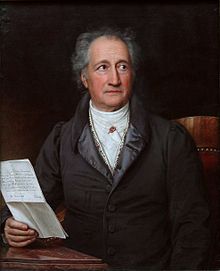
Goethe on error and truth

Error is to truth as sleep is to waking. I have observed that one turns, as if refreshed, from error back to truth.

Johann Wolfgang von Goethe

Johann Wolfgang von Goethe (August 28, 1749 – March22, 1832) was a German poet, playwright, novelist, scientist, statesman, theatre director, and critic. His works include plays, poetry, literature and aesthetic criticism, and treatises on botany, anatomy, and colour. He is considered to be the greatest German literary figure of the modern era. Wikipedia

Lila (Hinduism)

From Wikipedia, the free encyclopedia

Lila (Sanskrit: लीला, IAST līlā) or Leela can be loosely translated as the “divine play”. The concept of Lila is common to both non-dualist and dualist philosophical schools of Indian philosophy, but has a markedly different significance in each. Within non-dualism, Lila is a way of describing all reality, including the cosmos, as the outcome of creative play by the divine absolute (Brahman). In the dualistic schools of Vaishnavism, Lila refers to the activities of God and his devotee, as well as the macrocosmic actions of the manifest universe, as seen in the Vaishnava scripture Srimad Bhagavatam, verse 3.26.4:[1]

sa eṣa prakṛtiḿ sūkṣmāḿ
daivīḿ guṇamayīḿ vibhuḥ
yadṛcchayaivopagatām
abhyapadyata līlayā

As His pastimes, that Supreme Personality of Godhead, the greatest of the great, accepted the subtle material energy, which is invested with three material modes of nature.”

Modern interpretations

Brahman is full of all perfections. And to say that Brahman has some purpose in creating the world will mean that it wants to attain through the process of creation something which it has not. And that is impossible. Hence, there can be no purpose of Brahman in creating the world. The world is a mere spontaneous creation of Brahman. It is a Lila, or sport, of Brahman. It is created out of Bliss, by Bliss and for Bliss. Lila indicates a spontaneous sportive activity of Brahman as distinguished from a self-conscious volitional effort. The concept of Lila signifies freedom as distinguished from necessity.— Ram Shanker Misra, The Integral Advaitism of Sri Aurobindo

The relation of Purusa to Prakrti—the unfolding force of nature—becomes here a relation of male to female. This is expressed in the Siva temple in the core image of the sivalinga, an expression of male (linga) and female (yoni) union. The basic cosmogonic motif of an unfolding or flowering cosmos is expressed here specifically in the relation of male to female, as well as in terms of consciousness and intentionality (in the concept of lila as the divine play of male and female). As such, the core saivite image of cosmogony as the flowering of consciousness and sexual union rather than the sacrificial act. This theme resonates with other Hindu doctrines, such as Tantra and Sakta.— Heinrich Zimmer and Joseph CampbellPhilosophies of India

The Vedantic yogi never tires of stating that kaivalya, “isolation-integration”, can be attained only by turning away from the distracting allure of the world and worshiping with single-pointed attention the formless Brahman-Atman; to the Tantric, however—as to the normal child of the world—this notion seems pathological, the wrong-headed effect of a certain malady of intellect. (…) “I like eating sugar,” as Ramprasad said, “but I have no desire to become sugar.” Let those who suffer from the toils of samsara seek release: the perfect devotee does not suffer; for he can both visualize and experience life and the universe as the revelation of that Supreme Divine Force (shakti) with which he is in love, the all-comprehensive Divine Being in its cosmic aspect of playful, aimless display (lila)—which precipitates pain as well as joy, but in its bliss transcends them both.— Rohan Bastin, The Domain of Constant Excess: Plural Worship at the Munnesvaram Temples in Sri Lanka

The basic recurring theme in Hindu mythology is the creation of the world by the self-sacrifice of God—”sacrifice” in the original sense of “making sacred”—whereby God becomes the world which, in the end, becomes again God. This creative activity of the Divine is called lila, the play of God, and the world is seen as the stage of the divine play. Like most of Hindu mythology, the myth of lila has a strong magical flavour. Brahman is the great magician who transforms himself into the world and then performs this feat with his “magic creative power”, which is the original meaning of maya in the Rig Veda. The word maya—one of the most important terms in Indian philosophy—has changed its meaning over the centuries. From the might, or power, of the divine actor and magician, it came to signify the psychological state of anybody under the spell of the magic play. As long as we confuse the myriad forms of the divine lila with reality, without perceiving the unity of Brahman underlying all these forms, we are under the spell of maya. (…) In the Hindu view of nature, then, all forms are relative, fluid and ever-changing maya, conjured up by the great magician of the divine play. The world of maya changes continuously, because the divine lila is a rhythmic, dynamic play. The dynamic force of the play is karma, an important concept of Indian thought. Karma means “action”. It is the active principle of the play, the total universe in action, where everything is dynamically connected with everything else. In the words of the Gita Karma is the force of creation, wherefrom all things have their life.— Fritjof CapraThe Tao of Physics (1975)

Implications

Hindu denominations differ on how a human should react to awareness of Lila. Karma Yoga allows a joyful embrace of all aspects of life (“intentional acceptance”) while maintaining distinction from the Supreme, while Bhakti and Jnana Yoga advocate striving for oneness with the Supreme. Lila is an important idea in the traditional worship of Krishna (as prankster) and Shiva (as dancer), and has been used by modern writers like Stephen NachmanovitchFritjof Capra, and Alan Watts.

Lila is comparable to the Western theological position of Pandeism, which describes the Universe as God taking a physical form in order to experience the interplay between the elements of the Universe.[2]

More at: https://en.wikipedia.org/wiki/Lila_(Hinduism)

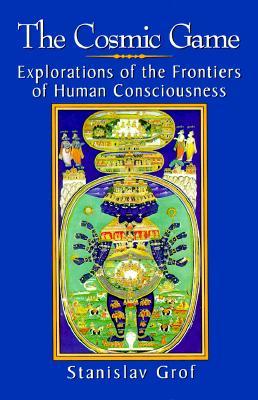
Book: “The Cosmic Game: Explorations of the Frontiers of Human Consciousness”

The Cosmic Game: Explorations of the Frontiers of Human Consciousness

The Cosmic Game: Explorations of the Frontiers of Human Consciousness

by Stanislav Grof 

In this, his culminating work, the leading international figure in consciousness research masterfully synthesizes his vast findings, drawing not only upon psychedelic therapy and Holotropic Breathwork, but also from literature, cross-cultural studies, ancient mystical sources and psychological data, resulting in a profound consolidation and articulation of what is now known about nonordinary states of consciousness.

The Cosmic Game discusses the broadest philosophical, metaphysical and spiritual insights gleaned in Grof’s research concerning human nature and reality, addressing the most fundamental questions human beings have asked about the nature of existence since time immemorial.

Insights from research into nonordinary states of consciousness portray existence as an astonishing play of the cosmic creative principle that transcends time, space, linear causality, and polarities of every kind and suggest an identity of the individual psyche in its furthest reaches with the universal creative principle and the totality of existence. This identity of the human being with the Divine is the ultimate secret that lies at the core of all great spiritual traditions.

What moves this book into the status of a classic is that it is in substantial agreement with the world’s great wisdom and spiritual traditions. This modern corroboration of the perennial philosophy is a stunning achievement and deserves publication to the widest audiences. — Ken Wilber, author of Up from Eden: A Transpersonal View of Human Evoution and The Atman Project: A Transpersonal View of Human Development

The Cosmic Game is the latest and best of Stanislav Grof’s extraordinary contributions to our understanding of human consciousness. This book provides a coherent picture of how individual experience fits into universal patterns of consciousness — Frances Vaughan, author of Shadows of the Sacred: Seeing through Spiritual Illusions

Perhaps the most important of all his works, representing as it does an integration of the most profound of his clients’ experiences and demonstrating a remarkable convergence with the deepest spiritual experiences reported across centuries and cultures. This convergence is a finding of the greatest significance. — Roger Walsh, author of The Spirit of Shamanism

Grof is the world’s leading authority on the deep exploration of the mind and soul… This is a wonderful gift! — Charles Tart, author of States of Consciousness and Psi: Scientific Studies of the Psychic Realm

Stanislav Grof, MD, is a psychiatrist with more than fifty years of experience in research of nonordinary states of consciousness. He has been Principal Investigator in a psychedelic research program at the Psychiatric Research Institute in Prague, Czechoslovakia; Chief of Psychiatric Research at the Maryland Psychiatric Research Center; Assistant Professor of Psychiatry at the Johns Hopkins University; and Scholar-in-Residence at the Esalen Institute. He is currently Professor of Psychology at the California Institute of Integral Studies, conducts professional training programs in holotropic breathwork, and gives lectures and seminars worldwide. He is one of the founders and chief theoreticians of transpersonal psychology and the founding president of the International Transpersonal Association (ITA). In 2007, he was granted the prestigious Vision 97 award from the Vaclav and Dagmar Havel Foundation in Prague. He is the author and editor of many books, including The Adventure of Self-Discovery: Dimensions of Consciousness and New Perspectives in Psychotherapy and Inner Exploration; Ancient Wisdom and Modern Science; Beyond the Brain: Birth, Death, and Transcendence in Psychotherapy; Human Survival and Consciousness Evolution; and Psychology of the Future: Lessons from Modern Consciousness Research; all published by SUNY Press.

(Goodreads.com)

The New Science of Epigenetics with Kenneth R. Pelletier

New Thinking Allowed with Jeffrey Mishlove Kenneth R. Pelletier, MD, PhD, is professor of medicine at the University of California, San Francisco, Medical Center. He is author of Longevity, Mind As Healer – Mind As Slayer, Toward a Science of Consciousness, Sound Mind – Sound Body, The Best Alternative Medicine, Healthy People in Unhealthy Places, and Change Your Genes – Change Your Life. Here he describes progress in the emerging new scientific field of epigenetics. He points out that the manner in which genes express themselves is determined by diet, exercise, and mental state, in addition to other biochemical factors. Alterations to epigenetic markers can be passed on to one’s descendants — in effect, supporting the once discredited notion of Lamarckian genetics. We are at the brink of a new era of personalized medicine. New Thinking Allowed host, Jeffrey Mishlove, PhD, is author of The Roots of Consciousness, Psi Development Systems, and The PK Man. Between 1986 and 2002 he hosted and co-produced the original Thinking Allowed public television series. He is the recipient of the only doctoral diploma in “parapsychology” ever awarded by an accredited university (University of California, Berkeley, 1980). (Recorded on May 4, 2019) For a complete, updated list with links to all of our videos, see https://newthinkingallowed.com/Listin…. For opportunities to engage with and support the New Thinking Allowed video channel — please visit the New Thinking Allowed Foundation at http://www.newthinkingallowed.org. To join the NTA Psi Experience Community on Facebook, see https://www.facebook.com/groups/19530…. To download and listen to audio versions of the New Thinking Allowed videos, please visit our new podcast at https://itunes.apple.com/us/podcast/n…. You can help support our video channel while enjoying a good book. To order Change Your Genes – Change Your Life by Kenneth R. Pelletier, click here: https://amzn.to/2DOzLaI.

Trees

The Joyce Kilmer Memorial Forest and Wilderness, U. S. Forest Service, North Carolina.

TREES

I think that I shall never see
A poem lovely as a tree.

A tree whose hungry mouth is prest
Against the earth’s sweet flowing breast;

A tree that looks at God all day,
And lifts her leafy arms to pray;

A tree that may in Summer wear
A nest of robins in her hair;

Upon whose bosom snow has lain;
Who intimately lives with rain.

Poems are made by fools like me,
But only God can make a tree.

(written February 2, 1913)

Alfred Joyce Kilmer (1886-1918) was a young American poet who suffered a tragic death in World War I at the age of 31. His poem Trees is probably the most quoted poem in American history.