
“It’s absurd to have a hard and fast rule about what one should read and what one shouldn’t. More than half of modern culture depends on what one shouldn’t read.”
― Oscar Wilde, The Importance of Being Earnest

― Oscar Wilde, The Importance of Being Earnest
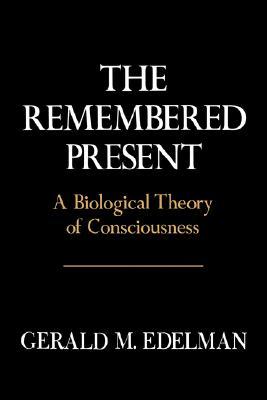
A genuine understanding of how mental states arise from the structure and function of the brain would be, as William James declared in 1892, ”the scientific achievement before which all past achievements would pale.” Can a comprehensive biological theory of consciousness be constructed in 1990? Any attempt has to reconcile evidence garnered from such diverse fields as developmental and evolutionary biology, neuroanatomy and neurophysiology, cognitive psychology, psychiatry, and philosophy.Having laid the groundwork in his critically acclaimed books Neural Darwinism (Basic Books, 1987) and Topobiology (Basic Books, 1988), Nobel laureate Gerald M. Edelman now proposes a comprehensive theory of consciousness in The Remembered Present. Integrating findings generated by the recent explosive growth in the neurosciences with current knowledge of anatomy, cell biology, and psychology, Edelman has been able to construct a detailed model of how we become aware of our own existence.In addition to providing a scientific account of brain function and consciousness, the theory advanced in The Remembered Present will have a significant impact on a wide variety of fields. It provides a new outlook that may prompt fundamental revisions in the way linguists view language, physicians classify mental diseases, and philosophers look at the mind-body problem.
(Goodreads.com)
Happy To Announce 2 new pieces, “Gods of Divine Inebriation” and “Golden Gate Park January 14, 1967” (Human Be-In).
Both pieces have a common theme, one ancient, one more contemporary. Details on the pieces below!
(These Pieces Are Available Only In The US At This Point)

Gods of Divine Inebriation Blotter
A nod to Dionysus/Bacchus and the attending divine and semi divine beings… God of the vine, grape-harvest, wine-making, wine, fertility, ritual madness, religious ecstasy, theatre… one has to remember that the Ancients used admixtures in their wines: including tropanes, opium, certainly cannabis and other substances. The use of these wines varied with the seasons. One had to mix the wine with water due to the potency. Nothing like this on the market now days!
Dionysus, the God of Divine Inebriation, whose followers were tied to the Orphic myths celebrated their deity with the mysteries, revelries, theatre, ceremony, celebration & getting thoroughly out of their heads. This piece was originally put together for The Invisible College, and will be available as a regular print soon.
| Gods of Divine Inebriation Blotter |
| Gods of Divine Inebriation Blotter $35.00 USD |
_______________________________________
Golden Gate Park January 14, 1967 (Human Be-In)
In the heady days of late 1966, I heard about a planned gathering in San Francisco set for early January. Living in Denver at that time, I had friends who headed to California to attend. They brought back wonderous tales of that afternoon. Tim Leary, Lenore Kandel, Gary Snyder, Allen Ginsberg, Alan Watts, Dick Gregory, Richard Alpert(Ram Dass), Michael McClure, Lawrence Ferlinghettis, Jerry Rubin. Stanley Owsley provided the sacred elixir of choice…. Quicksilver, The Grateful Dead, Jefferson Airplane were among the bands that performed.
Little did we all know this was perhaps the apex event of the awakening of consciousness in the 1960’s. Not Woodstock, or any other festival event, but The Human Be In.
This piece is my homage to the event, born out of longing, and acknowledgement of the beauty of that moment. I tie it into the ancient rites, and it was certainly Dionysian, but also Apollonian in the choice of some of the speakers.
Years ago I communicated with Michael Bowen (who along with the poet Allen Cohen published the San Francisco Oracle), organized the event. Michael and Allen are gone now, but the legacy and the movement of that moment still reverberates through our emerging culture. A print version will be available soon.
| Golden Gate Park January, 14 1967(Human Be-In)Blotter |
| Golden Gate Park January, 14 1967(Human Be-In) $35.00 USD |
_______________________________
Lots of new art coming, and lots of radio shows. Let me know what you are thinking about these offerings, feedback is appreciated.
Bright Blessings,
Gwyllm
To order go to: https://www.gwyllm-art.com/archives/1688
| by Astro Butterfly (astrobutterfly.com) |
On March 28th, 2021 we have a Full Moon in Libra, one of the most intense Full Moons of the year.
The Full Moon is at 8° Libra, and Sun, Venus and Chiron are all conjunct very very tightly at 8° Aries, opposing the Moon. The Full Moon is trine Mars in Gemini and Saturn in Aquarius and forms a beautiful aspect pattern called “Kite”.
If you look at the chart of the Full Moon in Libra you will see a kite-shaped pattern with the Moon at the base, and the Sun, Venus and Chiron heading upwards.
The Moon in Libra is the propeller of this kite, guiding its moves. Sun, Venus and Chiron are at the apex – finding new avenues of creative expression.
The Moon is in Libra, and Libra is the sign of relationships. Moon in Libra is very accommodating and quickly picks on the moods and needs of others.
The Sun, Venus and Chiron are in Aries, the 1st sign of the zodiac, so they are concerned with the Self (NOT with others).
The Full Moon in Libra opposite the planets in Aries will create a conflict between our need to be in relationships and our need to be true to ourselves.

Let’s get back to basics, and talk a bit about Aries and Libra. When the Full Moon is in Libra, the Sun is always in the opposite sign, Aries, so we are dealing with Aries-Libra polarity.
Aries is the first sign of the zodiac, and it is a symbol for “Me”.
A healthy focus on “Me” is vital to our survival. You need to put your oxygen mask on first before helping others.
But too much focus on “Me”, and we never grow up. Without a partner, without a “mirror”, we get stuck in our bubble.
The fear of losing our identity can make us afraid of relationships, and even when we get involved with someone, we tend to dominate them so we can get things “our way”.
Libra is the sign of “The Other”. Having relationships with other people – any type of relationship – is a vital survival skill.
In fact, historians say that Homo Sapiens ‘won’ the evolution game thanks to their ability to establish social networks and having “good relationships skills”.
However, too much focus on our partners (Libra) and we lose ourselves, and stop trusting our instincts (Aries). When we rely too much on other people we develop codependency issues.
Of course, a healthy balance between Me and the Other is key.
A Full Moon in Libra by itself does a pretty good job at reconciling the “Me vs. Other” conflict. But the Sun-Venus-Chiron conjunction in Aries will take this process one level deeper, by helping us get to the root of our wounding.
The concept of duality – and the reconciliation of this duality – is at the core of Chiron.
Chiron is a half-man, half-horse centaur, a symbol for our attempts to make the conflicting sides of psyche our work as an integral whole.
A centaur looks awkward: is it a human, or a horse? What kind of ‘creature’ is that? Disgusted by his appearance, Chiron’s mother abandons him at birth.
Therefore, Chiron’s primal wound is the wound of rejection. This rejection wound is a metaphor for our identity wound: when the world rejects us just because we are being ourselves.
Chiron is eventually adopted by Apollo (the Sun) and learns from him the art of healing, prophecy and astrology. These gifts, combined with Chiron’s natural animal, raw connection to nature, helped him become the greatest healer and teacher of his time.
In the end, it was EXACTLY Chiron’s dual nature that allowed him to reach his full potential. It was EXACTLY his half-human, half-horse “package” his mother initially rejected, that was his greatest gift.
Chiron is a symbol of what feels awkward and unacceptable at first, but if integrated, eventually becomes our greatest gift.
It’s important to remember that Chiron was wounded when he was a newborn and his mental functions were not yet developed. If someone rejects us in our adulthood, we may feel a bit bad, but we eventually get over it.
However, in childhood, we are not equipped to handle the pain of rejection. Chiron’s wound is deeply rooted in our past and requires a lot of digging.
The good news is that if we do dig and bring this wound to the surface, we heal. As adults, we DO have the resources to transform our wound into a gift.
The primal Chironic wound keeps us broken, alienated and separated. When we finally heal it, we become “whole again”.
How does Chiron fit in the Full Moon in Libra narrative?
Chiron has a special relationship with Aries and Libra: it spends the longest time in Aries, and the shortest time in Libra, so the Aries-Libra axis is a Chiron-sensitive axis. This means that Chiron understands very well the dynamics of this polarity axis.
The path to wholeness is not a solo-journey.
In fact, we can only find out who we are when we interact with other people. We learn about ourselves and about the world through our one-on-one relationships.
Our partner (spouse, friend, therapist etc.) is a mirror for us, and we are a mirror for them. In a relationship, we bounce back words, ideas and feelings. And is this one-on-one interaction that keeps us ‘sane’ and ‘in check’ with reality.
We are wired to find wholeness through others, and the Chiron-flavored Full Moon in Libra will give us a profound understanding of what it means to be “whole”.
Chiron conjunct Sun and Venus will expose all our vulnerabilities, asking us to “get real” and show up as we are – without masks or filters.
And the Moon in Libra will remind us that we can only find wholeness in the inherent duality of a relationship with Another.
Here are some questions for reflection for the upcoming Full Moon in Libra:
Rise in 3D-printed homes comes as California’s housing crisis continues to rage, with 1.8m to 3.5m new units needed by 2025

Kari Paul Fri 19 Mar 2021 (theguardian.com)
The desert landscape of California’s Coachella Valley will soon be home to the first US neighborhood comprised entirely of 3D-printed houses.
Through a partnership between two California companies – Palari, a sustainable real estate development group, and Mighty Buildings, a construction technology company – a five acre parcel of land in Rancho Mirage will be transformed into a planned community of 15 3D-printed, eco-friendly homes claiming to be the first of its kind.

“This will be the first on-the-ground actualization of our vision for the future of housing,” said Alexey Dubov, the co-founder and chief operating officer of Mighty Buildings.
In the large warehouse of its Oakland headquarters, Mighty Buildings creates homes using massive 3D printers the size of small garages. The material used by Mighty Buildings hardens almost immediately, allowing a roof, layers of insulation, and exterior features such as an overhang to be added all in one process. Up to 80% of the construction can be automated, Mighty Buildings claims, with 95% fewer labor hours and 10 times less waste than conventional construction.
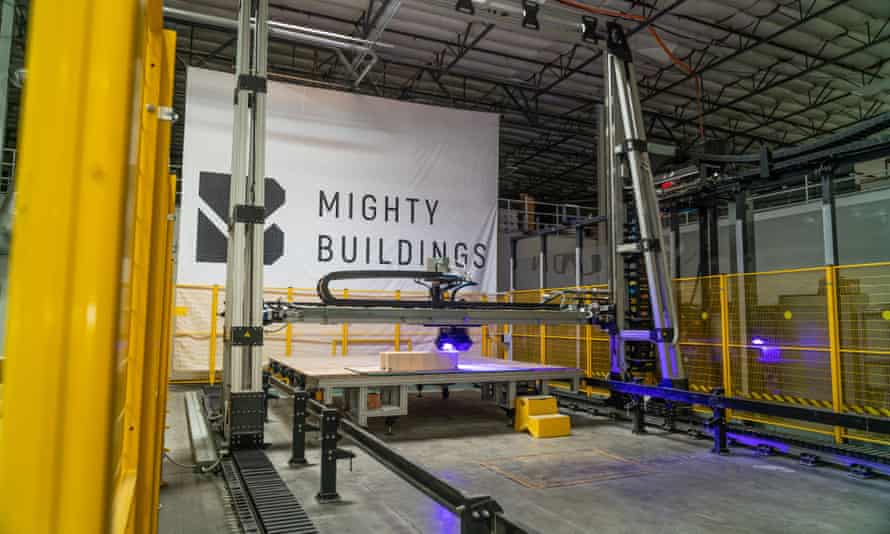
The company’s printers have the capacity to make a 350-sq-ft home in less than 24 hours, said Sam Ruben, the co-founder and chief sustainability officer of Mighty, during a recent tour of the headquarters. Often the printers are set to build a house overnight, while the employees are asleep.
“We are actually limited more by road transport of the buildings than the actual ability to print,” Ruben said.
The Rancho Mirage homes will each feature mid-century modern architecture and consist of a three-bedroom, two-bath primary residence of 1,450 sq ft, along with a secondary residence on the property of two bedrooms and one bath.
Each home’s 10,000-sq-ft lot will have a swimming pool in the back yard and the option to pay extra for amenities such as cabanas, hot tubs, fire pits and outdoor showers. Prices will start at $595,000 for a base 3BR/2BA model and go up to $950,000 for a two-home configuration with upgrades.

Rancho Mirage is not the first place to see 3D-printed homes in recent years. In 2019 a non-profit in Mexico announced the production of 3D-printed homes for low-income families. Meanwhile, 3D-printed homes are scheduled to be installed in Austin, Texas, later this year.
The rise of 3D-printed homes comes as California’s housing crisis continues to rage. The state needs between 1.8m and 3.5m new housing units by 2025 to address the shortage and accommodate projected population growth. In February, Mighty Buildings secured $40m in series B funding.
Ruben said that while Mighty Buildings had spoken with local governments about the potential to 3D print homes for vulnerable populations, the company was largely focused on targeting what he calls “the missing middle”.
“The missing middle is too often left out of the conversation,” he said. “These are your teachers, your firefighters, people who serve a community, but because of how insane the housing market is in California, they have never had the opportunity to buy a home.”

To be alive is to marvel — at least occasionally, at least with glimmers of some deep intuitive wonderment — at the Rube Goldberg machine of chance and choice that makes us who we are as we half-stride, half-stumble down the improbable paths that lead us back to ourselves. My own life was shaped by one largely impulsive choice at age thirteen, and most of us can identify points at which we could’ve pivoted into a wholly different direction — to move across the continent or build a home here, to leave the tempestuous lover or to stay, to wait for another promotion or quit the corporate day job and make art. Even the seemingly trivial choices can butterfly enormous ripples of which we may remain wholly unwitting — we’ll never know the exact misfortunes we’ve avoided by going down this street and not that, nor the exact magnitude of our unbidden graces.
Perhaps our most acute awareness of the lacuna between the one life we do have and all the lives we could have had comes in the grips of our fear of missing out — those sudden and disorienting illuminations in which we recognize that parallel possibilities exists alongside our present choices. “Our lived lives might become a protracted mourning for, or an endless tantrum about, the lives we were unable to live,” wrote the psychoanalyst Adam Phillips in his elegant case for the value of our unlived lives. “But the exemptions we suffer, whether forced or chosen, make us who we are.”
The garland of those exemptions strews our sense of self — our constellating experience of personal identity which, as the poet and philosopher John O’Donohue so incisively observed, “is not merely an empirical process of appropriating or digesting blocks of life.”
No one has captured that ultimate existential awareness more beautifully, nor with greater nuance, than the trailblazing French existentialist philosopher and feminist Simone de Beauvoir (January 9, 1908–April 14, 1986) in her autobiography, All Said and Done (public library).
Simone de Beauvoir, 1946 (Photograph: Henri Cartier-Bresson)
From the fortunate rostrum of her own long life, Beauvoir reflects on this constellation of chance and choice:
Every morning, even before I open my eyes, I know I am in my bedroom and my bed. But if I go to sleep after lunch in the room where I work, sometimes I wake up with a feeling of childish amazement — why am I myself? What astonishes me, just as it astonishes a child when he becomes aware of his own identity, is the fact of finding myself here, and at this moment, deep in this life and not in any other. What stroke of chance has brought this about?
With an eye to the element of chance and its myriad manifestations, she adds:
But the most curious part of this perplexity, Beauvoir notes, is that despite the larger cosmic accident of all life and the chance nature of our particular lives within it, we experience ourselves and our existence as non-accidental — a disconnect that fringes on the free will paradox. She writes:
Considering the precise nature of this “curious object,” Beauvoir draws on the physics that revolutionized the human understanding of life and reality in her lifetime, and writes:
[…]
And yet life is also a finite reality. It possesses an inner heart, a centre of interiorization, a me which asserts that it is always the same throughout the whole course. A life is set within a given space of time; it has a beginning and an end; it evolves in given places, always retaining the same roots and spinning itself an unchangeable past whose opening toward the future is limited. It is impossible to grasp and define a life as one can grasp and define a thing, since a life is “an unsummed whole,” as Sartre puts it, a detotalized totality, and therefore it has no being. But one can ask certain questions about it.
Of course, as De Beauvoir’s American peer and contemporary Susanne Langer has memorably pointed out, our questions invariably shape our answers. But to this central question of whether and to what degree we are contingent upon chance, De Beauvoir offers an answer that radiates the ultimate antidote to regret:

Simone de Beauvoir, 1952 (Photograph: Gisèle Freund)
Complement this particular fragment of the wholly magnificent All Said and Done with philosopher Rebecca Goldstein on what makes you and your childhood self the same person despite a lifetime of change, then revisit Beauvoir on freedom, busyness, and why happiness is our moral obligation, vitality and the measure of intelligence, and her daily routine.
By Candy Sagon
March 22, 2021 (aarpethel.com)
My husband says he’s going to the kitchen to get a glass of water. Minutes later, he’s back without a glass of water. “Where’s the water?” I ask. He sighs. “I walked into the kitchen and couldn’t remember what I was there for.”
A friend and I are discussing our recent favorite books. I mention one I just finished, but for the life of me, I cannot remember the author’s name. “Oh, don’t worry,” my friend consoles me. “You’re just having a senior moment.”
We are both in our mid-60s. Another friend of a certain age worries that her husband has become increasingly forgetful. He recently complimented her on a long, flowing skirt she was wearing, asking, “Is that new?” even though she’s worn it weekly since they began dating in 1985. He also goes blank on the names of friends they have known for decades.
“Do you think I need to get him tested?” she asks me.
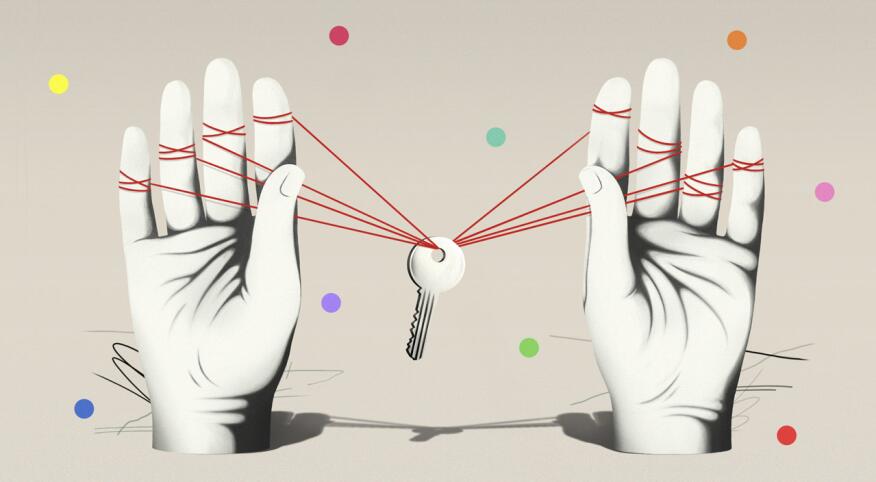
As we inch beyond our 50s, these kinds of memory lapses become more common, and so do our mounting fears that they could signal the first step toward dementia. Forgetting a word, not remembering where you stashed the keys — these incidents can seem ominous. Even rigorous sex or other physical activity can trigger a sudden episode of memory loss. (Don’t ask me how I personally know this.) The temporary condition is called transient global amnesia and it’s rare but more likely in people ages 50 to 70.
Then again, maybe the reason we’re so worried about our memory slips is that we’re constantly hearing the message that age equals mental decline. Ageist terms like “senior moment” (as if people in their 20s and 30s never forget anything) and the preponderance of negative stereotypes in the media about older adults can undermine our mental health. It may even undermine our memory skills, according to psychologist Sarah Barber.
“Forgetfulness can happen at any age, but we interpret why it happens differently,” says Barber, an assistant professor of psychology at Georgia State University who studies ageism’s effect on memory. “When younger people forget something, we often assume that it’s due to a lack of effort or being distracted. When older people forget something, we assume it’s due to their lack of memory ability.”
Barber adds that her research shows that “people who internalize negative attitudes about aging actually have worse [memory] outcomes as they get older.”
Frankly, I’d like to blame all my brain blips on ageism, but there are a variety of other reasons for our lack of recall as we get older. The main culprit is a slowdown in mental processing speed — meaning the time it takes us to react to or retrieve information, or to complete a mental task.
Mental processing slows with age, no matter how experienced or skillful we are. That’s why, as studies show, older chess players, regardless of their skill level, will be slower to select the best move against an opponent than younger players. It’s why the mandatory retirement age for air traffic controllers, who need to be able to react quickly, is 56.
On the other hand, like wine, some things in our brain improve with age — namely our store of knowledge, facts and skills, as well as our ability to detect patterns and make accurate predictions over time.
As neuroscientist Daniel Levitin argues in a recent essay in The New York Times titled, “Everyone Knows Memory Fails as You Age. But Everyone is Wrong”: “If you’re going to get an X-ray, you want a 70-year-old radiologist reading it, not a 30-year-old one.”
Research also indicates that our memory and thinking skills change throughout our life span and may change at different ages for different people. For some, certain abilities may begin declining around the time of their high school graduation, while others don’t peak until their 40s or beyond, as Harvard researchers reported in a 2015 study on the rise and fall of different cognitive abilities in the journal Psychological Science.
We may even be able to grow new brain neurons (the cells that transmit information, well into our 70s or older), as a 2018 study of brain samples, published in the journal Cell Stem Cell, suggests. And the good news for older adults who want to sustain fitness of the brain is the proliferation of lifelong learning and continuing education programs offered by colleges and universities.
Then there are those who seem to stay sharp effortlessly well into their 90s. My father, who just turned 96, took computer and accounting classes when he retired around age 70. He now handles accounts payable and other financial record-keeping for my brother’s advertising firm and calls and reminds me of changes in the tax law that I might want to consider.
Others may not be as fortunate as my dad, due to a range of causes — from medication side effects to vitamin deficiency to hearing loss or depression to more serious conditions like dementia or Alzheimer’s disease. And then, of course, there’s the coronavirus pandemic, resulting in, for many of us, social isolation, loneliness and fear of mortality — all possible risk factors for memory problems. Indeed, the pandemic has contributed to 28 percent of older women reporting increased anxiety or depression, according to a July 2020 Kaiser Family Foundation poll.
So how do we recharge our brain and maybe even our memory skills? The experts have some suggestions below.
Get regular physical activity
Better yet, do it outdoors. A 2019 study of adults ages 55 to 85 found that even a single session of moderate exercise may increase activity in portions of the brain involved in long-term memory. As an added bonus, exercising outside provides mental health benefits, improving our mood and reducing stress.
Adjust your diet
Cutting back on red meat and sugar and increasing plant-based foods may help. The Mediterranean diet, which is rich in fruits, vegetables, grains and beans has been linked to reduced risk of developing memory and thinking problems and some forms of dementia.
Still worried?
If you’re wondering if those memory lapses are normal aging or something more serious to discuss with your doctor, the National Institute on Aging has a helpful online guide called Memory, Forgetfulness and Aging: What’s Normal and What’s Not?”
As for me, I’m spending more time these days picking my dad’s brain about my tax return and less time fretting about the little and not-so-little things that just happen to slip my mind.
(Contributed by Suzanne Deakins, H.W,. M.)
Our topic “Our Future is found in this moment Now”
In this continuing series, you are invited to find insights that awake from in-depth conversations with interesting and piquant guests. Our next meetup is a conversation between book author, Business development consultant, and personal coach, Marni Spencer-Devlin and your host Calvin Harris, H.W., M.
Marni, the founder, and president of a thriving, multimillion-dollar marketing company is an international writer, who has survived molestation, rape, heroin addiction, prostitution, homelessness and even prison.
She wrote her autobiography, “Crawling into the Light”, while in steel handcuffs.
Marni’s second book, “The Iceberg Principles” a story of living in the Now, led her to true freedom, deep personal insights about the universe and our place in it and a sense of renewed energy.
Marni will discuss gems from her life as well as a tidbit about her new book soon to be released called “The List” – as she discusses what she has used that has proven to be a scientific method for finding the love of your life, and more personal fulfillment.
.This event is free, one hour beginning 11:00 a.m. Pacific time- Sunday, March 28, 2021.
Sunday Meeting on Zoom
Zoom Link: https://us02web.zoom.us/j/332275676
