homovegetus0 John Cleese Podcast #32 The Scientists John Cleese Podcasts are available at http://www.johncleesepodcast.co.uk
Monthly Archives: March 2021
Anima and animus
From Wikipedia, the free encyclopedia
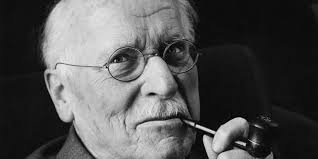
The anima and animus are described in Carl Jung’s school of analytical psychology as part of his theory of the collective unconscious. Jung described the animus as the unconscious masculine side of a woman, and the anima as the unconscious feminine side of a man, each transcending the personal psyche. Jung’s theory states that the anima and animus are the two primary anthropomorphic archetypes of the unconscious mind, as opposed to the theriomorphic and inferior function of the shadow archetypes. He believed they are the abstract symbol sets that formulate the archetype of the Self.
In Jung’s theory, the anima makes up the totality of the unconscious feminine psychological qualities that a man possesses and the animus the masculine ones possessed by a woman. He did not believe they were an aggregate of father or mother, brothers, sisters, aunts, uncles, or teachers, though these aspects of the personal unconscious can influence a person’s anima or animus.
Jung said that “the encounter with the shadow is the ‘apprentice-piece’ in the individual’s development … that with the anima is the ‘masterpiece'”.
–Jung quoted in Anthony Stevens On Jung (London 1990) p. 206
Jung believed a male’s sensitivity is often lesser or repressed, and therefore considered the anima one of the most significant autonomous complexes. Jung believed the anima and animus manifest themselves by appearing in dreams and influence a person’s attitudes and interactions with the opposite sex. A natural understanding of another member of the opposite sex is instilled in individuals that stems from constant subjection to members of the opposite sex. This instilment leads to the development of the anima and animus.[1] Jung said that “the encounter with the shadow is the ‘apprentice-piece’ in the individual’s development … that with the anima is the ‘masterpiece'”.[2] Jung viewed the anima process as being one of the sources of creative ability. In his book The Invisible Partners, John A. Sanford said that the key to controlling one’s anima/animus is to recognize it when it manifests and exercise our ability to discern the anima/animus from reality.[3]
More at: https://en.wikipedia.org/wiki/Anima_and_animus#cite_note-2
Anima mundi
From Wikipedia, the free encyclopedia
The world soul (Greek: ψυχὴ κόσμου psychè kósmou; Latin: anima mundi) is, according to several systems of thought, an intrinsic connection between all living things on the planet, which relates to the world in much the same way as the soul is connected to the human body. Plato adhered to this idea and it was an important component of most Neoplatonic systems:
Therefore, we may consequently state that: this world is indeed a living being endowed with a soul and intelligence … a single visible living entity containing all other living entities, which by their nature are all related.[1]
The Stoics believed it to be the only vital force in the universe. Similar concepts also hold in systems of eastern philosophy in the Brahman–Atman of Hinduism, the Buddha-Nature in Mahayana Buddhism,[citation needed] and in the School of Yin-Yang, Taoism, and Neo-Confucianism as qi.
Other resemblances can be found in the thoughts of hermetic philosophers like Paracelsus, and by Baruch Spinoza, Gottfried Leibniz, Immanuel Kant, Friedrich Schelling and in Hegel‘s Geist (“Spirit”/”Mind”).
In Jewish mysticism, a parallel concept is that of “Chokhmah Ila’ah,” the all-encompassing “Supernal Wisdom” that transcends, orders and vitalizes all of creation. Rabbi Nachman of Breslov states that this sublime wisdom may be apprehended (or perhaps “channeled”) by a perfect tzaddik (holy man).[2] Thus, the tzaddik attains “cosmic consciousness” and thus is empowered to mitigate all division and conflict within creation.
Consciousness in the age of machines: Sheldrake-Vernon Dialogue 41
Rupert Sheldrake It’s clear that our world is profoundly shaped by machines, from motor cars to mobile phones. But what impact do they have upon our awareness? In the latest Sheldrake-Vernon dialogue, Rupert Sheldrake and Mark Vernon discuss a fascinating new book, In The Shadow of The Machine by Jeremy Naydler. It’s a prehistory of the computer, tracking the way human consciousness evolved in order to conceive of a mechanised world. Sheldrake and Vernon ask what’s been gained and what’s been lost in this process, the ways in which our perception of life and consciousness has been moulded, and how human consciousness might evolve further as the machine metaphor itself “runs out of steam”. Dr Rupert Sheldrake, PhD, is a biologist and author best known for his hypothesis of morphic resonance. At Cambridge University he worked in developmental biology as a Fellow of Clare College. He was Principal Plant Physiologist at the International Crops Research Institute for the Semi-Arid Tropics and From 2005 to 2010 was Director of the Perrott-Warrick project, Cambridge. https://www.sheldrake.org Mark Vernon is a psychotherapist, writer and scholar of ancient philosophy. He’s contributed through radio and print with the BBC, The Guardian, Church Times, and elsewhere. He teaches at The Idler Academy and The School of Life and also leads workshops and groups on the dynamics of transformation and inner life. http://www.markvernon.com
Book: “A Room of One’s Own”

A Room of One’s Own
A Room of One’s Own is an extended essay by Virginia Woolf. First published on the 24th of October, 1929, the essay was based on a series of lectures she delivered at Newnham College and Girton College, two women’s colleges at Cambridge University in October 1928. While this extended essay in fact employs a fictional narrator and narrative to explore women both as writers and characters in fiction, the manuscript for the delivery of the series of lectures, titled Women and Fiction, and hence the essay, are considered nonfiction. The essay is seen as a feminist text, and is noted in its argument for both a literal and figural space for women writers within a literary tradition dominated by patriarchy.
(Goodreads.com)
Free Will Astrology: Week of March 25, 2021
MARCH 23, 2021 AT 7:00 AM BY ROB BREZSNY
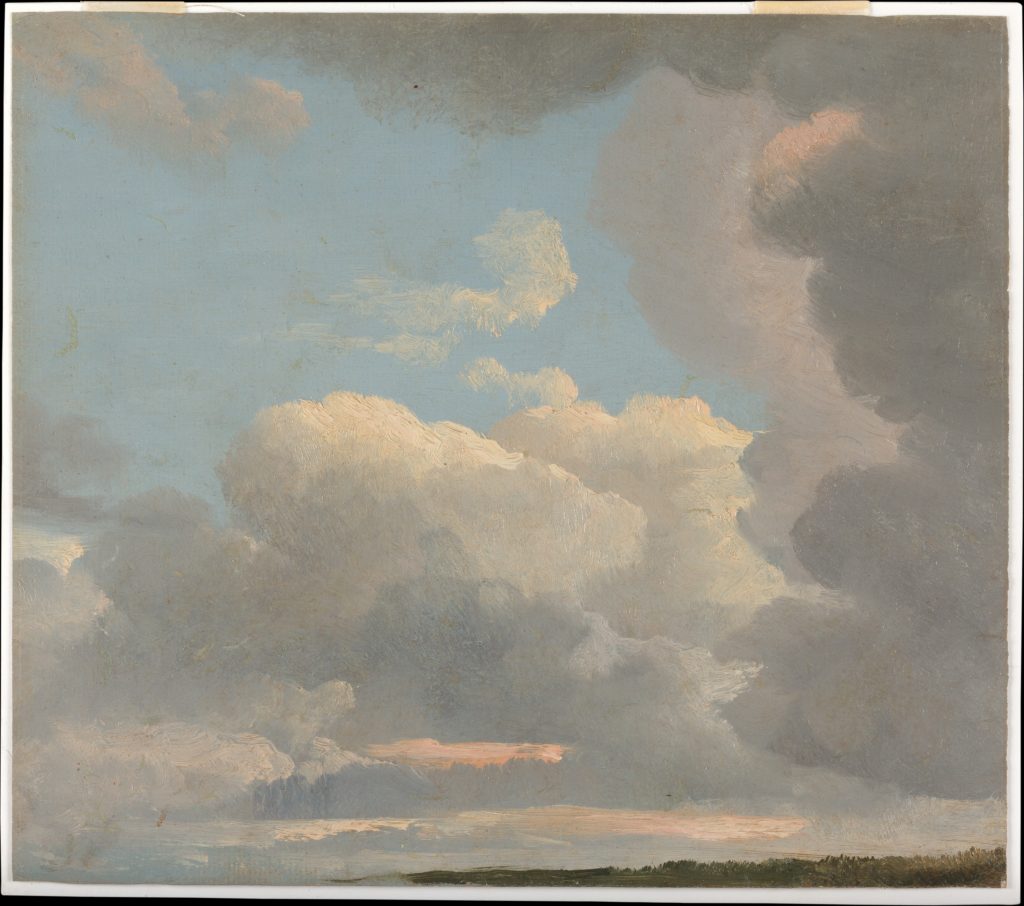
“Cloud Study (Early Evening),” Simon Denis/courtesy The Metropolitan Museum of Art.
ARIES (March 21-April 19): In the novel “House of Leaves,” the hero Johnny Truant describes his friend Lude as wanting “more money, better parties, and prettier girls.” But Johnny wants something different. What is it? He says, “I’m not even sure what to call it except I know it feels roomy and it’s drenched in sunlight and it’s weightless and I know it’s not cheap.” In my opinion, that declaration is far too imprecise! He’ll never get what he wants until he gets clearer about it. But his fantasy is a good start. It shows that he knows what the fulfillment of his yearning feels like. I suggest you get inspired by Johnny Truant’s approximation to conjure up one of your own. Gaze ahead a few years, and see if you can imagine what your best possible future feels like. Then describe it to yourself as precisely as possible.
TAURUS (April 20-May 20): How distraught I was when I discovered that one of my favorite poets, Pablo Neruda, was an admirer of the murderous dictator Joseph Stalin. It broke my heart to know I could never again read his tender, lyrical poetry with unconditional appreciation. But that’s life: Some of our heroes and teachers disappoint us, and then it’s healthy to re-evaluate our relationships with them. Or maybe our own maturation leads us to realize that once-nurturing influences are no longer nurturing. I recommend that sometime soon, you take a personal inventory with these thoughts in mind. I suspect there may be new sources of inspiration headed your way. Get ready for them.
GEMINI (May 21-June 20): Self-help author Steve Maraboli has useful advice for you to consider in the coming weeks. I hope you’ll meditate on what he says and take decisive action. He writes, “Incredible change happens in your life when you decide to take control of what you do have power over instead of craving control over what you don’t.” To get started, Gemini, make a list of three things you do have power over and three things you wish you did but don’t have power over.
CANCER (June 21-July 22): While he was alive, Cancerian author Franz Kafka burned ninety percent of everything he wrote. In a note to a friend before he died, he gave instructions to burn all the writing he would leave behind. Luckily, his friend disobeyed, and that’s why today we can read Kafka’s last three novels and a lot more of his stuff. Was his attitude toward his creations caused by the self-doubt that so many of us Cancerians are shadowed by? Was he, like a lot of us Crabs, excessively shy about sharing personal details from his life? In accordance with astrological omens, I urge you to at least temporarily transcend any Kafka-like tendencies you have. It’s time to shine brightly and boldly as you summon your full powers of self-expression.
LEO (July 23-Aug. 22): To create your horoscope, I’ve borrowed ideas from Leo-born author Cassiano Ricardo. He speaks of a longing “for all that is tall like pine trees, and all that is long like rivers, and all that is purple like dusk.” I think yearnings like those will be healthy and wise for you to cultivate in the coming weeks. According to my reading of the astrological omens, you need expansive influences that stretch your imagination and push you beyond your limitations. You will benefit from meditations and experiences that inspire you to outgrow overly small expectations.
VIRGO (Aug. 23-Sept. 22): Virgo actor and director Jean-Louis Barrault (1910–1994) aspired to “wake up a virgin each morning.” He wanted “to feel hungry for life,” as if he had been reborn once again. In order to encourage that constant renewal, he regarded going to sleep every night as “a small death.” I recommend his approach to you during the coming weeks. In my astrological opinion, the cosmic rhythms will be conspiring to regularly renew your desires: to render them pure, clean, raw and strong. Cooperate with those cosmic rhythms!
LIBRA (Sept. 23-Oct. 22): Is there anything more gratifying than being listened to, understood, and seen for who you really are? I urge you to seek out that pleasure in abundance during the coming weeks. My reading of the astrological omens tells me you need the nurturing jolt that will come from being received and appreciated with extra potency. I hope you have allies who can provide that for you. If you don’t, search for allies who can. And in the meantime, consider engaging the services of a skillful psychotherapist or life coach or some other professional listener.
SCORPIO (Oct. 23-Nov. 21): “Blobs, spots, specks, smudges, cracks, defects, mistakes, accidents, exceptions and irregularities are the windows to other worlds,” writes author Bob Miller. I would add that all those things, along with related phenomena like fissures, blemishes, stains, scars, blotches, muck, smears, dents and imperfections, are often windows to very interesting parts of this seemingly regular old ordinary world—parts that might remain closed off from us without the help of those blobs and defects. I suggest you take full advantage of the opportunities they bring your way in the coming weeks.
SAGITTARIUS (Nov. 22-Dec. 21): Innovative psychologist Carl Jung had a nuanced understanding of the energies at work in our deep psyche. He said our unconscious minds are “not only dark but also light; not only bestial, semi-human, and demonic, but also superhuman, spiritual, and, in the classical sense of the word, ‘divine.’” I bring this to your attention, Sagittarius, because now is a favorable time to get better acquainted with and more appreciative of your unconscious mind. For best results, you must not judge it for being so paradoxical. Don’t be annoyed that it’s so unruly and non-rational. Have fun with its fertility and playfulness and weirdness.
CAPRICORN (Dec. 22-Jan. 19): The fantasy drama “Game of Thrones” appeared on TVs all over the world. But the audience that watched it in China got cheated out of a lot of essential action. Government censorship deleted many scenes that featured nudity and sex, fighting and violence, and appearances by dragons, which play a starring role in the story. As you can imagine, Chinese viewers had trouble following some of the plot points. Telling you about this, Capricorn, is my way of nudging you to make sure you don’t miss any of the developments going on in your own personal drama. Some may be hidden, as in China’s version of “Game of Thrones.” Others might be subtle or disguised or underestimated. Make it your crusade to know about everything.
AQUARIUS (Jan. 20-Feb. 18): “Words are, of course, the most powerful drug used by mankind,” wrote author Rudyard Kipling. Yes, they are. I agree. They change minds, rouse passions, build identities, incite social change, inspire irrationality, and create worlds. This is always true, but it will be especially important for you to keep in mind during the coming weeks. The ways you use language will be key to your health and success. The language that you hear and read will also be key to your health and success. For best results, summon extra creativity and craftsmanship as you express yourself. Cultivate extra discernment as you choose what you absorb.
PISCES (Feb. 19-March 20): Piscean linguist Anna Wierzbicka says the Russian expression Dusha naraspashku means “unbuttoned soul.” She continues, “The implication is that it is good, indeed wonderful, if a person’s ‘soul,’ which is the seat of emotions, is flung open in a spontaneous, generous, expansive, impetuous gesture, expressing full trust in other people and an innocent readiness for communion with them.” I wouldn’t recommend that you keep your soul unbuttoned 24/7/365, but in the coming weeks, I hope you’ll allocate more time than usual to keeping it unbuttoned.
Homework: Send ideas for April Fool pranks that fulfill the following prescription: “Comfort the afflicted and afflict the comfortable.” Truthrooster@gmail.com
The politician is the malformed monster of our coexistence

Detail of Guillaume Budé (c1536), by Jean Clouet. Courtesy the Metropolitan Museum of Art, New York
23 MARCH 2021 (psyche.co)
Emma Claussenis a British Academy postdoctoral fellow and an affiliated lecturer in French at the University of Cambridge. Her first book is Politics and ‘Politiques’ in Sixteenth-Century France: A Conceptual History (forthcoming, July 2021) and she is working on her next, ‘What Makes Life Worth Living in Early Modern France?’
Edited by Sam Haselby
In the early days of my PhD, whenever I tried to explain to a fellow graduate student or relative that I was working on ‘politics and political actors in 16th-century France’ – pedantically refusing to say ‘politicians’, since politique meant more ‘civic administrator’ in that period, strictly speaking – I would often be interrupted: ‘I’ll tell you what politicians are. They’re self-interested, backstabbing, Machiavellian, hypocrite liars!’ Indeed, that was how ‘political actors’ were often described in the early modern period, when this kind of language began to be used about politicians. France was a key setting for intellectual and polemical investment in the role of the political person: a crucible in the process of politicians becoming more prominent and more problematic in Western culture.
There have always been politicians; many ancient philosophers describe the roles of the ‘statesman’ or ‘political man’ in positive terms. In the Renaissance, politics rose to prominence among the disciplines, with new translations and commentaries of the political theory of classical antiquity such as Aristotle’s Politics, and original works such as Machiavelli’s Prince. However, enacting this difficult expertise was thankless, sometimes explicitly dangerous – and the moral status of the politician was in doubt, especially in the context of Reformation conflict.
In France, civil wars raged from 1562 to 1598, fought partly along religious lines like the English civil wars a century later. Early in the century, the scholar Guillaume Budé, advisor to King François I and the first royal librarian, wrote his own version of a prince’s handbook. Printed posthumously in 1547, it contained the observation that political laws need to be tempered by ‘mixed, ambidextrous men’. Budé was referring to the delicate mixing of different types of law (including civil and ecumenical), in a context of factional divisions and mass conversion to the reformed faith. The idea of a fundamentally mixed person enacting politics – an ‘ambidextrous’ character, balancing ‘Right’ and ‘Left’ centuries before these were political categories – came under intense pressure as religious and social change intensified. Politics was the art of the possible: it also involved attempting to reconcile the irreconcilable. Then as now, this was considered horrifying as well as hopeful.
Political infrastructure was changing in tandem with shifts in thinking about politics. This period saw the development of a class of counsellors, legislators, scholars and ambassadors across Europe grappling with this increasingly dark art. Among the royal portraits produced in European courts, we find figures from this loose political class: Budé’s portrait, attributed to Jean Clouet, is held at the Metropolitan Museum of Art in New York; Hans Holbein painted Thomas Cromwell and his rival Thomas More. These men, politicians avant la lettre, were sometimes objects of public loathing. Nor were they always appreciative themselves of those who practised politics. Not long before his execution, More wrote an irritable pamphlet criticising ‘polytykes’ as ‘pacyfyers’ acting as apologists for heresy in order to maintain public peace.
Political action was associated with flexibility: a willingness to break any promise or moral principle if expedient
In France, religious difference was not only considered heresy, it also challenged the established political identity of the realm, expressed in the axiom ‘one king, one law, one faith’. Although initially French intellectual elites – inspired by Renaissance practices of translation and careful re-readings of ancient texts – had been open to new interpretations of scripture, they didn’t entirely anticipate the radical potential of re-reading. The theologian Jean Calvin attempted to enact that potential. Calvinist missionaries to France were instrumental in the conversion of thousands across the social spectrum. Elements of the already restive nobility also adopted the reformed faith. Budé himself was suspected of having converted. By the middle of the 16th century, when Henri II’s early death left his sickly 15-year-old son on the throne with Catherine de’ Medici as regent, the scene was set for war: the one king was propped up by multiple advisors, and by his mother; the one faith was now at least two; the law was ill-equipped to handle the consequences.
Calvin, a trained lawyer, wrestled with the relationship between ‘spiritual’ and ‘political’ jurisdictions, the issue at the heart of the French conflict. Early in the wars, people began referring to a type of person, the politique, who prioritised social order over spiritual unity, just as More had described ‘polytykes’ doing in the English context. After thousands of French Protestants were massacred in 1572, poems celebrating the killings dismissed politiques who preferred peaceful coexistence to violent purges. Protestant writers, meanwhile, characterised Machiavelli as the amoral inspiration for the monarchy’s betrayal of its Calvinist subjects: it is to them that we owe the Florentine’s sulphurous reputation. In all these cases, political action was associated with flexibility: either toleration of difference, or a willingness to break any promise or moral principle if expedient. ‘Ambidextrous’ mixing became, in some quarters, moral abjection.
The last phase of the civil wars was fought by the ‘Catholic League’, known as the ‘Holy Union’, against a combination of Huguenot and royalist forces whose supporters in the courts and parliaments were known as politiques. Pamphleteers and preachers wishing to restore the ‘holy union’ of French Catholicism condemned their opponents as an unholy union, representing politiques as an extravagant blend of mythological creature, animal and human to exemplify the point. One broadsheet offering a portrait of a politique described this figure as a ‘monster’, with an illustration of the politician as a mermaid: half-woman, with the head of Medusa, and half-fish with a double tail – another version of ambidexterity.
The civil war portrait of a politique as a monstrous amalgam seems antithetical to the sober, scholarly image of Budé by Clouet. It might then seem that the mixed politique of the radical Catholic polemic emerges entirely in response to the fractious ‘mixing’ of Catholics and Protestants – and is a corruption of Budé’s ‘mixed’ corrector of political laws. But the politique monster is also a composite of various Classical myths (note the reference to Medusa). In that respect, it symbolises a key intellectual and literary technique of the age: the compilation of classical narratives and figures, in order to create new, hybridised forms. Writers were anxious about the consequences of unbridled creative variation, even as they prized its aesthetic effects. Gendered anxiety also tracks across many texts of the period: bad politicians were described as ‘effeminate’, or represented as monstrous women, like the Medusa-Mermaid. This vision of dangerous, ambivalent femaleness sits alongside the ‘motherland’ (and later Marianne, the symbol of the Republic) in French political imagination. The early modern invention of the mixed ‘political monster’, forged in Reformation conflict, also betrayed the tensions inherent to Renaissance creative and intellectual practice, and the fragile masculinity of the practitioners.
By the time I’d finished my PhD and begun turning it into a book, politicians were held, if it were possible, in even lower regard, and unions of all kinds were in jeopardy – not only in Europe. French secularist policy (laïcité), nominally developed as an antidote to ‘one law, one faith’, was held to be in crisis, or to do more harm than good. A female member of the UK parliament, Jo Cox – whose first parliamentary speech argued that ‘we have far more in common than that which divides us’ – had been assassinated. Britain had voted to leave the EU. Populations across the world had elected nationalist ‘strong’ men who exploited anti-politician sentiment. The battle between political monster and ‘holy’ union continues.
The composite political monster of Renaissance France stands in contrast to fantasies of uncomplicated unity; it is also a fantastical vision of the coalition that ended the conflict. After the wars, French leaders established an official policy of ‘forgetting’ the fighting that had torn towns and families apart. But the politique monster is worth remembering. It was intended as a slander, a warning as to the monstrous, amoral purpose of politics – that is, to suffer compromise and betray ideals. Still, this vision of the political person is also of somebody who uneasily embodies coexistence. It’s not a facile fiction of unity, but one that acknowledges the discomfort in cohesion. There could be worse monsters.
Alain de Botton on Romanticism
The School of Life The ideology of Romanticism has been fatal to our chances of long-term happiness in modern relationships. Here, School of Life founder Alain de Botton delivers a lecture at the Sydney Opera House charting a wiser course for love. With deepest thanks to the team at the Opera House. Please subscribe here: http://tinyurl.com/o28mut7 If you like our films take a look at our shop (we ship worldwide): http://www.theschooloflife.com/shop/all/ Brought to you by http://www.theschooloflife.com Produced in collaboration with The Sydney Opera House. #TheSchoolOfLife
Beauty Quarks
Key to how universe works may have been discovered
Sarah Knapton March 23, 2021, 5:14 AM · (yahoo.com)

The key to understanding how the universe works may have been discovered by scientists at the Large Hadron Collider, in a breakthrough hailed as the most exciting in 20 years.
Particle physicists have seen signs that a mystery particle or force is interacting with other particles in a manner never witnessed before.
It may explain some of the deepest puzzles in modern physics, such as what dark matter is made from, or why there is an imbalance of matter and antimatter in the universe.
Currently, scientists understand the universe using The Standard Model, a theory which describes all the known fundamental particles and the forces that they interact with.
It sets out the workings of the building blocks of nature: quarks, leptons, force-carrier particles, and the Higgs boson.
But the Standard Model breaks down when it comes to explaining crucial issues such as gravity or why the expansion of the universe is accelerating.
It also cannot account for dark matter, an invisible substance which makes up 27 per cent of the mass of the universe and is thought to hold galaxies together.

To find out what is going on, scientists at the Large Hadron Collider created particles known as Beauty Quarks which existed soon after the Big Bang but which decay quickly into electrons and muons, and now no longer exist in nature.
But they discovered they are not behaving in the way they expected. Under the Standard Model, Beauty quarks should decay into particles called K+mesons which have either two muons or two electrons.
Scientists found that for every 100 mesons with electrons, there were just 85 with muons, something that cannot happen under the Standard Model.
It suggests never-before-seen particles or forces are tipping the scales away from muons.


Dr Mitesh Patel, from the Department of Physics at Imperial College, and one of the leading physicists behind the measurement, said: “We were actually shaking when we first looked at the results, we were that excited. Our hearts did beat a bit faster.
“It’s too early to say if this genuinely is a deviation from the Standard Model but the potential implications are such that these results are the most exciting thing I’ve done in 20 years in the field. It has been a long journey to get here.”
The LHC is the world’s largest and most powerful particle collider – it accelerates subatomic particles to almost the speed of light, before smashing them into each other.
These collisions produce a burst of new particles, which physicists then record and study in order to better understand the foundations of nature.
In the Standard Model, electrons and their heavier cousins, muons, are treated identically, so beauty quarks should decay into muons just as often as they do to electrons. The new result suggests that this is not happening.

Dr Paula Alvarez Cartelle, of the University of Cambridge, one of the team leaders, said: “This new result offers tantalising hints of the presence of a new fundamental particle or force that interacts differently with these different types of particles.
“The more data we have, the stronger this result has become. This measurement is the most significant in a series of results from the past decade that all seem to line up – and could all point towards a common explanation.
“The results have not changed, but their uncertainties have shrunk, increasing our ability to see possible differences with the Standard Model.”
Scientists say the latest result offers for the first evidence that there could be something wrong with our current understanding of particle physics.
But there are still concerns it may be a fluke, and Bristol University particle physics group is currently trying to confirm the results.
Dr Konstantinos Petridis of the University of Bristol’s School of Physics, one of the physicists behind the measurement, said: “This has been a seven-year saga. Over this period, we have been seeing clues of a new unexplained process at work, but the effects were too subtle to draw any conclusions.
“We are very excited about this result but remain cautious as well.
“The discovery of a new force in nature is the holy grail of particle physics. Our current understanding of the constituents of the universe falls remarkably short – we do not know what 95 percent of the Universe is made of or why there is such a large imbalance between matter and anti-matter.”
The experiment is expected to start collecting new data next year, following an upgrade to the detector.
The result was announced today at the Moriond Electroweak Physics conference and published as a preprint.
(Contributed by Janet Cornwell, H.W., m.)
Continue reading Beauty QuarksWhat Makes a Person Attractive?
The School of Life We are collectively obsessed with the idea that an attractive person is, first and foremost, someone who looks terrific. But that’s to ignore the widespread phenomenon of the objectively good looking individual who nevertheless fails to hold much appeal – and vice versa. Here is a guide to the psychology of that too seldom earnestly-studied issue: hotness. Sign up to our new newsletter and get 10% off your first online order of a book, product or class: https://bit.ly/2LayJ9F For gifts and more from The School of Life, visit our online shop: https://bit.ly/2MZghp4 Our website has classes, articles and products to help you lead a more fulfilled life: https://bit.ly/2H2vJNi FURTHER READING You can read more on this and other subjects on our blog, here: https://bit.ly/2KDkrQG “Understandably enough, our societies pay vast attention to the idea of ‘sexiness’; far more questionably, they tempt us to believe that it might be easy to understand what this quality consists of. The leading suggestion takes its starting point from the biological sciences: we learn that sex aims at successful reproduction and genetic fitness in the coming generation. Therefore ‘sexiness’ must logically comprise a host of semi-conscious signals of fertility and of resistance to disease: bilateral facial symmetry, large bright pupils, full lips, youthful skin and melanin-rich hair…” MORE SCHOOL OF LIFE Visit us in person at our London HQ: https://bit.ly/2YX1WA2 Watch more films on SELF in our playlist: http://bit.ly/TSOLself You can submit translations and transcripts on all of our videos here: https://www.youtube.com/timedtext_cs_… Find out how more here: https://support.google.com/youtube/an… SOCIAL MEDIA Feel free to follow us at the links below: Facebook: https://www.facebook.com/theschoolofl… Twitter: https://twitter.com/TheSchoolOfLife Instagram: https://www.instagram.com/theschoolof… CREDITS Produced in collaboration with: Creative Seed https://creativeseed.co.za/ Title animation produced in collaboration with Vale Productions https://www.valeproductions.co.uk/