Your Horoscopes — Week Of July 16, 2019 (theonion.com)

Cancer | June 21 to July 22

You’ll ask the tool salesman for a drill press that can bore all the way through a bowling pin the long way, but he’ll know damn well what you really want it for.

Leo | July 23 to Aug. 22

You’ll be asked to give up your destructive patterns of behavior by concerned people who love you but don’t understand how much fun it is to destroy things.

Virgo | Aug. 23 to Sept. 22

The blessed arrival of a baby in your life would be greeted with a lot more joy if you could figure out who mailed it to you.

Libra | Sept. 23 to Oct. 22

Investigators on the scene of the accident will say there was nothing you could have done, unless you count not stomping on the gas and driving straight into the huge tanker truck.

Scorpio | Oct. 23 to Nov. 21

Someday, people will have healthy, well-adjusted attitudes toward sex, but until then, you can still have it occasionally.

Sagittarius | Nov. 22 to Dec. 21

Your ravenous hunger for human flesh will be quashed when you find out how it’s made and how much artificial crap is in it.

Capricorn | Dec. 22 to Jan. 19

You will be granted an uncommonly long life, though an uncommonly large part of it will be spent getting into bus accidents.

Aquarius | Jan. 20 to Feb. 18

There will be a brief cease-fire in the age-old war between the sexes as both sides cooperate in hunting you down and trying you for war crimes.

Pisces | Feb. 19 to March 20

The flaw in your plan was the part where your accomplice would start a fire, and in the confusion, you would sneak into the philosophy department and finish writing your dissertation.

Aries | March 21 to April 19

It’s important, as Kipling said, to treat triumph and disaster both the same, but it seems all you ever get are mild satisfaction and vague disappointment.

Taurus | April 20 to May 20

You’re trying to live healthier, but you’ll continue refusing to give up cigars, since they’re still the best way to light the dynamite you throw into children’s hospitals.

Gemini | May 21 to June 20

You will soon be judged by a jury of your peers, which is a good thing, as people who weren’t also self-centered drunken assholes would probably want you dead.

Bridging the gap between humans and artificial intelligence

Electric vehicles, rockets… and now brain-computer interfaces. Elon Musk’s newest venture, Neuralink, aims to bridge the gap between humans and artificial intelligence by implanting tiny chips that can link up to the brain. At a press conference on July 16, Neuralink’s ambitious plans were detailed for the first time, showcasing a future technology that could help people deal with brain or spinal cord injuries or controlling 3D digital avatars.

Capricorn Lunar Eclipse Full Moon, July 16, 2019, 2:38 pm PDT

Wendy Cicchetti

The Capricorn partial lunar eclipse is visible from only some of the world’s regions, as can be seen at: https://www. timeanddate.com/eclipse/lunar/2019-july-16

Capricorn’s nature is dedicated and hardworking. But under a lunar eclipse, even the most loyal and devoted people could question what all their striving is for. This may be especially apt if there is a background issue to deal with, such as ill health or the approach of a significant turning point like marriage, parenthood, or retirement. Powerful lifestyle changes, such as divorce, unemployment, or a relocation, could also hang new questions in the air, encouraging us to rethink our future path.

Since Capricorn is an earth sign, we may be looking at whether we need to uproot ourselves. Pluto and the South Node are firmly sandwiched between the Moon and Saturn, so we are both drawn to the past and in need of detaching from it. Decisions may have to be pragmatic rather than emotional, though, given an obscured Moon. Making a change is hard on the heart, yet we may lack the time to think about it; “needs must,” and we have to favor practical action.

It may be that whatever occurs around this eclipse will seem like a blip on the radar screen — but we later come to view the event as more significant. If we have to say goodbye to something, this could be a wrench at first, but we eventually feel relief around the parting. Occasionally, eclipse activity is more subtle. Something we were quite convinced we would miss — and could not live without — is simply forgotten: the famous “out of sight, out of mind” scenario of a Pluto–Saturn-themed eclipse!

Pluto, the South Node, and Saturn — all effectively under Saturn’s control by dispositorship — are also each in retrograde motion (appearing to travel backwards along the zodiac belt, from our earthly perspective). Saturn is a relatively slow-moving planet, in any case, and retrogradation further underlines that theme. Therefore, a situation may seem to be endlessly dragging its heels under this lunation. There is, however, often an internal logic to slow developments, including highlighting the need to review a situation. Retrogrades can also coincide with disruptions and/or distortions, so that matters do not run smoothly, or all is not as it usually appears. Sometimes retrograde cycles coincide with déjà vu experiences or near-repeat circumstances, with similar dynamics playing out.

Since the Moon is opposed by Mercury, we also have to wonder whether our needs are being accurately heard. If the answer is “no,” then the next question is: Have we stated these needs clearly and loudly enough? If not, the eclipse task is to look at how we can close that gap — how we can finally find that elusive voice and make our points clearer.

Despite Saturn’s obvious strength in his home sign, the planet’s retrograde status, its conjunction with the South Node and Pluto, and the total eclipse all add their various challenges. So, disciplines may be set, but such commitments could also be hard to keep. Perhaps that firm foray into a sugar-free diet could slip unconsciously into a subtle negotiation, with a tempting voice whispering, “But it’s a special occasion, and one chocolate won’t hurt!” Because retrograde planets can bring extra delays, we may think that the time of waiting for something seems intolerable and unreal. Yet it may be the most realistic timescale possible, under this extraordinary planetary pattern.

With Saturn in charge, reality may arrive with a thud, a sinking heart, or a cold, hard slap! But any fresh realization that follows from our changed circumstances also creates a different baseline on which we can build a new future. Saturn currently opposes Venus, so it would be reasonable to expect that some sort of pleasure may be curtailed or limited. Venus in Cancer needs nourishment, though, or finds comfort in giving the same to others — and therein may lie some form of healing. We may not have all we would like, but we can find some kindness to offer another. We might be able to accept a similar offering, if we can lower our Saturnian defenses enough to let it in.

Written by Diana McMahon Collis for the Mountain Astrologer Magazine

Full Moon symbolizes the fulfillment of the seeds planted at a previous New Moon or some earlier cycle. Each Full Moon reminds us of the seeds that may be coming to maturity, to their fullness, to fruition, to the place where the fruits or gifts are received. It may seem that fulfillment of our goals takes a long time. Some intentions may manifest within the two week phase prior to the next New or Full Moon. Some however, depending on their complexity, may take a much longer time. Just remember that our thoughts and emotions set Universal Action in motion and much work takes place behind the scenes as everything is orchestrated for fulfillment. Keep visualizing your goals as though you have already attained them and they will eventually manifest. Do not concern yourself with current conditions or worry about controlling it. The universe takes care of those details. Just keep seeing what you want, and move in that direction with your actions, and give no energy to what you don’t want. Patience is required.

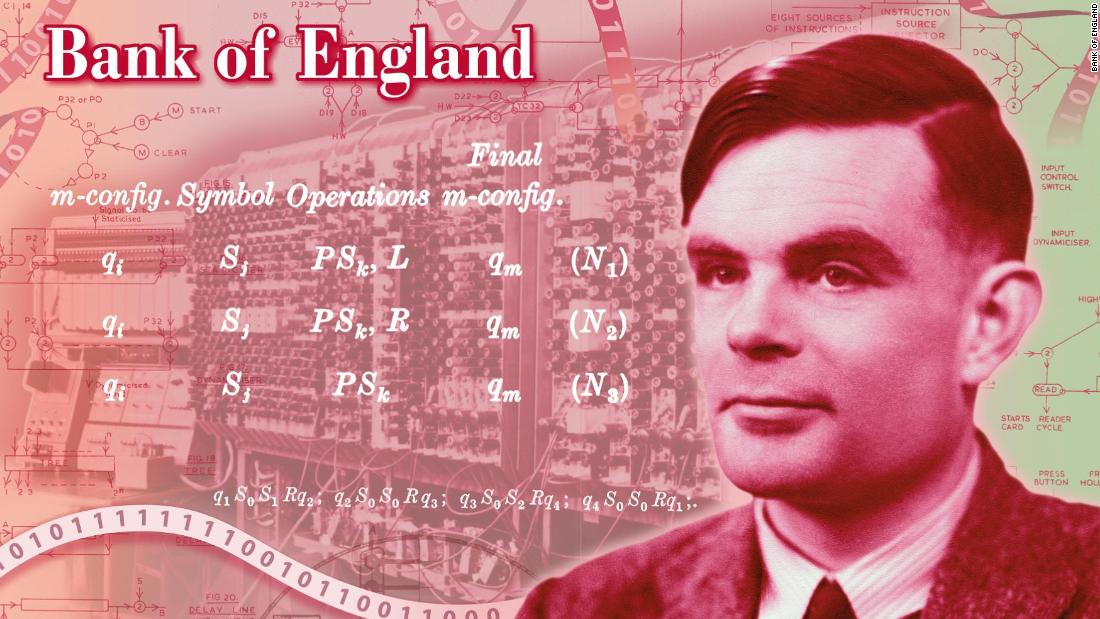
Bank of England to honor Alan Turing on £50 note

“It is almost impossible to put into words the difference that Alan Turing made to society.”

  • The late British mathematician and theoretical computer scientist Alan Turing will appear on Britain’s 50-pound note starting in 2021.
  • Turing is best known for helping to crack the Nazis’ Enigma machine, a feat that’s estimated to have cut World War II short by two years.
  • The British government, which chemically castrated Turing in 1952 for “homosexual acts,” officially apologized to Turing in 2009.

The Bank of England has announced that Alan Turing — the late British codebreaker who helped end World War II — will be the new face of the 50-pound note starting in 2021.

“Alan Turing was an outstanding mathematician whose work has had an enormous impact on how we live today,” said Bank of England governor Mark Carney. “As the father of computer science and artificial intelligence, as well as a war hero, Alan Turing’s contributions were far ranging and path breaking. Turing is a giant on whose shoulders so many now stand.”

As a mathematician, logician and early computer scientist, Turing helped crack the Nazis’ Enigma machine while working at Britain’s Bletchley Park as part of the Ultra intelligence outfit. The breakthrough is estimated to have cut the war short by two years. Turing is also often called the Father of Artificial Intelligence, and his Turing machine can be considered an early example of a general-purpose computer.

“His genius lay in a unique ability to link the philosophical and the abstract with the practical and the concrete,” Carney said. “All around us his legacy continues to build.”

But despite his contributions to society, British authorities, in 1952, prosecuted Turing, who was gay, for homosexual acts under a Victorian-era law commonly known as the Labouchere Amendment. Turing was forced to choose between prison or chemical castration by the injection of female hormones. He chose the latter. Two years later, Turing killed himself at the age of 41 by consuming cyanide.

“It is almost impossible to put into words the difference that Alan Turing made to society, but perhaps the most poignant example is that his work is estimated to have shortened the war by four years and saved up to 21 million lives,” John Leech, a former Liberal Democrat MP for Manchester Withington, told The Guardian. “And yet the way he was treated afterwards remains a national embarrassment and an example of society at its absolute worst.”

In 2009, former British Prime Minister Gordon Brown issued a national apology to Turing.

“Alan and the many thousands of other gay men who were convicted, as he was convicted, under homophobic laws, were treated terribly,” Brown said. “Over the years, millions more lived in fear in conviction. I am proud that those days are gone and that in the past 12 years this Government has done so much to make life fairer and more equal for our LGBT community. This recognition of Alan’s status as one of Britain’s most famous victims of homophobia is another step towards equality, and long overdue.”

In 2014, Queen Elizabeth II officially pardoned Alan Turing, marking the nation’s fourth royal pardon granted since World War II.

Turing wasn’t the only British scientist considered for the 50-pound note. Among the shortlist of candidates, as The Guardian reports, were Mary Anning, Paul Dirac, Rosalind Franklin, William Herschel and Caroline Herschel, Dorothy Hodgkin, Ada Lovelace and Charles Babbage, Stephen Hawking, James Clerk Maxwell, Srinivasa Ramanujan, Ernest Rutherford, and Frederick Sanger.

Campaigners and some British lawmakers had signed a 150,000-strong petition to honor a scientist of color on the 50-pound note, warning that selecting a white scientist risks sending a “damaging message that ethnic minorities are invisible.” However, Carney said the Bank intended to celebrate “all aspects of diversity.”

“We want to represent as best as possible all aspects of diversity within the country, from race, religion, creed, sexual orientation, disability and beyond,” Carney told The Guardian. “What we have today is a celebration of one of the greatest mathematicians and scientists in the United Kingdom and not just this country’s history but world history.”

In the U.K., cashless transactions are becoming increasingly common, though Carney noted that paper notes will still be around “for a very long period of time.” It’s also worth noting that, while Turing might’ve appreciated being honored on fiat currency, his contributions undoubtedly helped pave the way for cryptocurrency.

Why fascism is so tempting — and how your data could power it | Yuval Noah Harari


TED
Published on Jun 8, 2018

In a profound talk about technology and power, author and historian Yuval Noah Harari explains the important difference between fascism and nationalism — and what the consolidation of our data means for the future of democracy. Appearing as a hologram live from Tel Aviv, Harari warns that the greatest danger that now faces liberal democracy is that the revolution in information technology will make dictatorships more efficient and capable of control. “The enemies of liberal democracy hack our feelings of fear and hate and vanity, and then use these feelings to polarize and destroy,” Harari says. “It is the responsibility of all of us to get to know our weaknesses and make sure they don’t become weapons.” (Followed by a brief conversation with TED curator Chris Anderson)

Check out more TED Talks: http://www.ted.com

Integral theory (Ken Wilber)

From Wikipedia, the free encyclopedia

Integral theory is Ken Wilber’s attempt to place a wide diversity of theories and thinkers into one single framework.[1] It is portrayed as a “theory of everything” (“the living Totality of matter, body, mind, soul, and spirit”),[2] trying “to draw together an already existing number of separate paradigms into an interrelated network of approaches that are mutually enriching.”[1]Wilber’s integral theory has been applied by some in a limited range of domains. The Integral Institute publishes the Journal of Integral Theory and Practice,[3] and SUNY Press has published nine books in the “SUNY series in Integral Theory.”[4] Wilber’s ideas have mainly attracted attention in specific subcultures, and have been widely ignored in academia.[5][6]

Origins and background[edit]See also: Spiritual evolutionPerennial philosophy, and Great chain of beingOrigins[edit]Ken Wilber’s “Integral Theory” started as early as the 1970s, with the publication of The Spectrum of Consciousness,[7] that attempted to synthesize eastern religious traditions with western structural stage theory, models of psychology development that describe human development as following a set course of stages of development.[8][note 1]Wilber’s ideas have grown more and more inclusive over the years, incorporating ontologyepistemology, and methodology.[9] Wilber, drawing on both Aurobindo’s and Gebser’s theories, as well as on the writings of many other authors, created a theory which he calls AQAL, “All Quadrants All Levels”.Background[edit]Sri Aurobindo[edit]The adjective integral was first used in a spiritual context by Sri Aurobindo (1872–1950) from 1914 onward to describe his own spiritual teachings, which he referred to as Purna (Skt: “Full”) Yoga. It appeared in The Synthesis of Yoga, a book that was first published in serial form in the journal Arya and was revised several times since.[10]Sri Aurobindo’s work has been described as Integral Vedanta [11][12] and psychology,[13][14] as well as Integral Psychology (the term coined by Indra Sen) and the psychotherapy that emerges from it.[15] His writings influenced others who used the term “integral” in more philosophical or psychological contexts.In the teachings of Sri Aurobindo, integral yoga refers to the process of the union of all the parts of one’s being with the Divine, and the transmutation of all of their jarring elements into a harmonious state of higher divine consciousness and existence.As described by Sri Aurobindo and his co-worker The Mother (1878–1973), this spiritual teaching involves an integral divine transformation of the entire being, rather than the liberation of only a single faculty such as the intellect or the emotions or the body. According to Sri Aurobindo,(T)he Divine is in his essence infinite and his manifestation too is multitudinously infinite. If that is so, it is not likely that our true integral perfection in being and in nature can come by one kind of realisation alone; it must combine many different strands of divine experience. It cannot be reached by the exclusive pursuit of a single line of identity till that is raised to its absolute; it must harmonise many aspects of the Infinite. An integral consciousness with a multiform dynamic experience is essential for the complete transformation of our nature. — Sri Aurobindo, The Synthesis of Yoga, p. 114

Aurobindo’s ideas were further explored by Indra Sen (1903–1994) in the 1940s and 1950s, a psychologist, and devotee of Sri Aurobindo and The Mother. He was the first to coin the term “Integral psychology” to describe the psychological observations he found in Sri Aurobindo’s writings (which he contrasted with those of Western Psychology), and developed themes of “Integral Culture” and “Integral Man”.[16]These ideas were further developed by Haridas Chaudhuri (1913–1975), a Bengali philosopher and academic who founded in 1968 the California Institute of Integral Studies.[17]

“Why Socialism?” by Albert Einstein

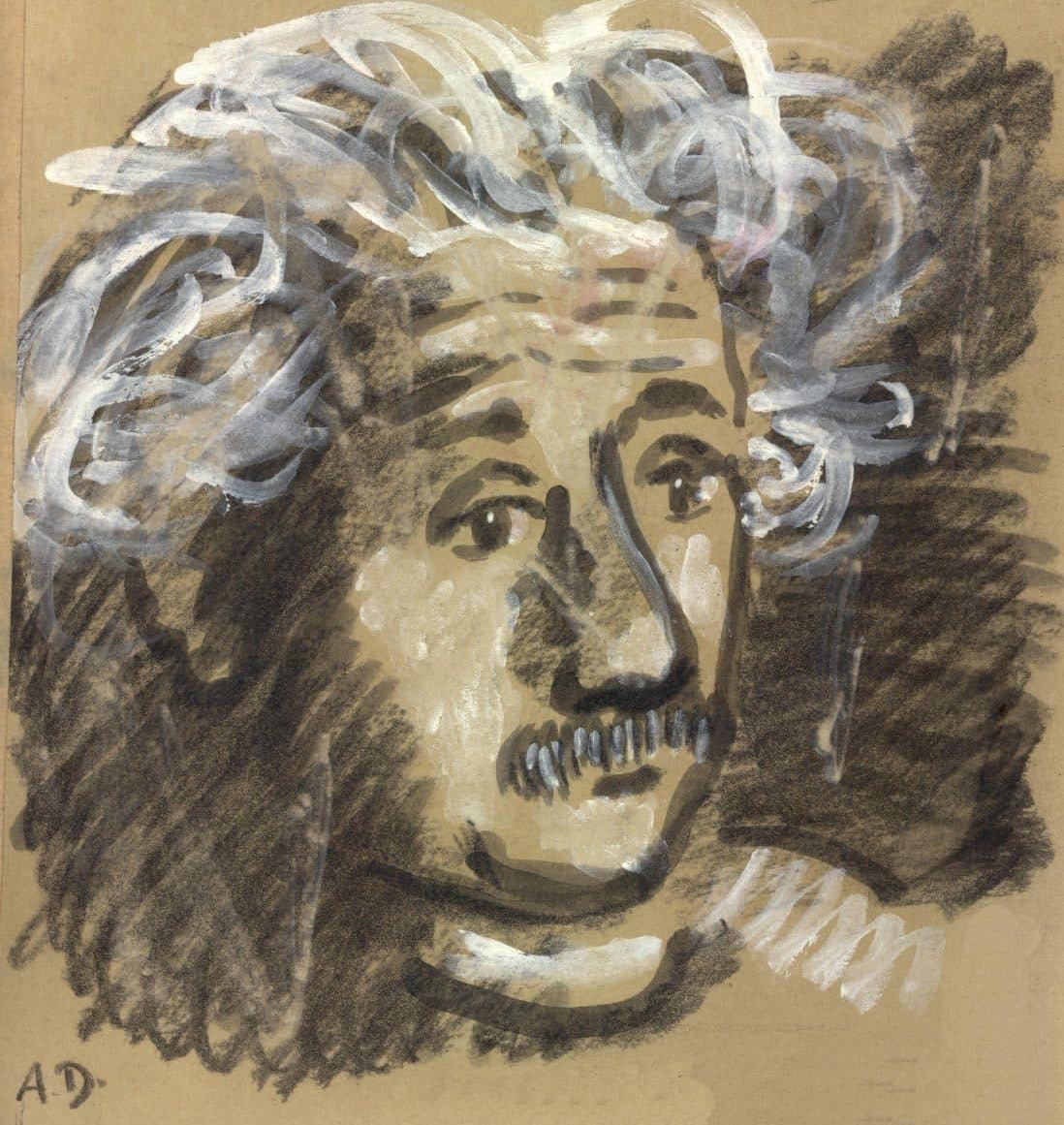
Albert Einstein (1959), charcoal and watercolor drawing by Alexander Dobkin

Albert Einstein (1959), charcoal and watercolor drawing by Alexander Dobkin. Dobkin (1908–1975) was an important painter of the mid-twentieth century American realist tradition along with other left-wing artists such as Jack Levine, Robert Gwathmey, Philip Evergood, and Raphael and Moses Soyer. A student and collaborator of the Mexican muralist Jose Clemente Orozco, his work is in the permanent collections of the Butler Art Institute, the Museum of Modern Art, the Brooklyn Museum, the Whitney Museum of American Art, the Philadelphia Museum of Art, the Library of Congress, and the Smithsonian Institution. (The preceding caption was written by John J. Simon, “Albert Einstein, Radical: A Political Profile,” Monthly Review vol. 57, no. 1 [2005].)

Albert Einstein is the world-famous physicist. This article was originally published in the first issue of Monthly Review (May 1949). It was subsequently published in May 1998 to commemorate the first issue of MR‘s fiftieth year.

The Editors

Is it advisable for one who is not an expert on economic and social issues to express views on the subject of socialism? I believe for a number of reasons that it is.

Let us first consider the question from the point of view of scientific knowledge. It might appear that there are no essential methodological differences between astronomy and economics: scientists in both fields attempt to discover laws of general acceptability for a circumscribed group of phenomena in order to make the interconnection of these phenomena as clearly understandable as possible. But in reality such methodological differences do exist. The discovery of general laws in the field of economics is made difficult by the circumstance that observed economic phenomena are often affected by many factors which are very hard to evaluate separately. In addition, the experience which has accumulated since the beginning of the so-called civilized period of human history has—as is well known—been largely influenced and limited by causes which are by no means exclusively economic in nature. For example, most of the major states of history owed their existence to conquest. The conquering peoples established themselves, legally and economically, as the privileged class of the conquered country. They seized for themselves a monopoly of the land ownership and appointed a priesthood from among their own ranks. The priests, in control of education, made the class division of society into a permanent institution and created a system of values by which the people were thenceforth, to a large extent unconsciously, guided in their social behavior.

But historic tradition is, so to speak, of yesterday; nowhere have we really overcome what Thorstein Veblen called “the predatory phase” of human development. The observable economic facts belong to that phase and even such laws as we can derive from them are not applicable to other phases. Since the real purpose of socialism is precisely to overcome and advance beyond the predatory phase of human development, economic science in its present state can throw little light on the socialist society of the future.

Second, socialism is directed towards a social-ethical end. Science, however, cannot create ends and, even less, instill them in human beings; science, at most, can supply the means by which to attain certain ends. But the ends themselves are conceived by personalities with lofty ethical ideals and—if these ends are not stillborn, but vital and vigorous—are adopted and carried forward by those many human beings who, half unconsciously, determine the slow evolution of society.

For these reasons, we should be on our guard not to overestimate science and scientific methods when it is a question of human problems; and we should not assume that experts are the only ones who have a right to express themselves on questions affecting the organization of society.

Innumerable voices have been asserting for some time now that human society is passing through a crisis, that its stability has been gravely shattered. It is characteristic of such a situation that individuals feel indifferent or even hostile toward the group, small or large, to which they belong. In order to illustrate my meaning, let me record here a personal experience. I recently discussed with an intelligent and well-disposed man the threat of another war, which in my opinion would seriously endanger the existence of mankind, and I remarked that only a supra-national organization would offer protection from that danger. Thereupon my visitor, very calmly and coolly, said to me: “Why are you so deeply opposed to the disappearance of the human race?”

I am sure that as little as a century ago no one would have so lightly made a statement of this kind. It is the statement of a man who has striven in vain to attain an equilibrium within himself and has more or less lost hope of succeeding. It is the expression of a painful solitude and isolation from which so many people are suffering in these days. What is the cause? Is there a way out?

It is easy to raise such questions, but difficult to answer them with any degree of assurance. I must try, however, as best I can, although I am very conscious of the fact that our feelings and strivings are often contradictory and obscure and that they cannot be expressed in easy and simple formulas.

Man is, at one and the same time, a solitary being and a social being. As a solitary being, he attempts to protect his own existence and that of those who are closest to him, to satisfy his personal desires, and to develop his innate abilities. As a social being, he seeks to gain the recognition and affection of his fellow human beings, to share in their pleasures, to comfort them in their sorrows, and to improve their conditions of life. Only the existence of these varied, frequently conflicting, strivings accounts for the special character of a man, and their specific combination determines the extent to which an individual can achieve an inner equilibrium and can contribute to the well-being of society. It is quite possible that the relative strength of these two drives is, in the main, fixed by inheritance. But the personality that finally emerges is largely formed by the environment in which a man happens to find himself during his development, by the structure of the society in which he grows up, by the tradition of that society, and by its appraisal of particular types of behavior. The abstract concept “society” means to the individual human being the sum total of his direct and indirect relations to his contemporaries and to all the people of earlier generations. The individual is able to think, feel, strive, and work by himself; but he depends so much upon society—in his physical, intellectual, and emotional existence—that it is impossible to think of him, or to understand him, outside the framework of society. It is “society” which provides man with food, clothing, a home, the tools of work, language, the forms of thought, and most of the content of thought; his life is made possible through the labor and the accomplishments of the many millions past and present who are all hidden behind the small word “society.”

It is evident, therefore, that the dependence of the individual upon society is a fact of nature which cannot be abolished—just as in the case of ants and bees. However, while the whole life process of ants and bees is fixed down to the smallest detail by rigid, hereditary instincts, the social pattern and interrelationships of human beings are very variable and susceptible to change. Memory, the capacity to make new combinations, the gift of oral communication have made possible developments among human being which are not dictated by biological necessities. Such developments manifest themselves in traditions, institutions, and organizations; in literature; in scientific and engineering accomplishments; in works of art. This explains how it happens that, in a certain sense, man can influence his life through his own conduct, and that in this process conscious thinking and wanting can play a part.

Man acquires at birth, through heredity, a biological constitution which we must consider fixed and unalterable, including the natural urges which are characteristic of the human species. In addition, during his lifetime, he acquires a cultural constitution which he adopts from society through communication and through many other types of influences. It is this cultural constitution which, with the passage of time, is subject to change and which determines to a very large extent the relationship between the individual and society. Modern anthropology has taught us, through comparative investigation of so-called primitive cultures, that the social behavior of human beings may differ greatly, depending upon prevailing cultural patterns and the types of organization which predominate in society. It is on this that those who are striving to improve the lot of man may ground their hopes: human beings are not condemned, because of their biological constitution, to annihilate each other or to be at the mercy of a cruel, self-inflicted fate.

If we ask ourselves how the structure of society and the cultural attitude of man should be changed in order to make human life as satisfying as possible, we should constantly be conscious of the fact that there are certain conditions which we are unable to modify. As mentioned before, the biological nature of man is, for all practical purposes, not subject to change. Furthermore, technological and demographic developments of the last few centuries have created conditions which are here to stay. In relatively densely settled populations with the goods which are indispensable to their continued existence, an extreme division of labor and a highly-centralized productive apparatus are absolutely necessary. The time—which, looking back, seems so idyllic—is gone forever when individuals or relatively small groups could be completely self-sufficient. It is only a slight exaggeration to say that mankind constitutes even now a planetary community of production and consumption.

I have now reached the point where I may indicate briefly what to me constitutes the essence of the crisis of our time. It concerns the relationship of the individual to society. The individual has become more conscious than ever of his dependence upon society. But he does not experience this dependence as a positive asset, as an organic tie, as a protective force, but rather as a threat to his natural rights, or even to his economic existence. Moreover, his position in society is such that the egotistical drives of his make-up are constantly being accentuated, while his social drives, which are by nature weaker, progressively deteriorate. All human beings, whatever their position in society, are suffering from this process of deterioration. Unknowingly prisoners of their own egotism, they feel insecure, lonely, and deprived of the naive, simple, and unsophisticated enjoyment of life. Man can find meaning in life, short and perilous as it is, only through devoting himself to society.

The economic anarchy of capitalist society as it exists today is, in my opinion, the real source of the evil. We see before us a huge community of producers the members of which are unceasingly striving to deprive each other of the fruits of their collective labor—not by force, but on the whole in faithful compliance with legally established rules. In this respect, it is important to realize that the means of production—that is to say, the entire productive capacity that is needed for producing consumer goods as well as additional capital goods—may legally be, and for the most part are, the private property of individuals.

For the sake of simplicity, in the discussion that follows I shall call “workers” all those who do not share in the ownership of the means of production—although this does not quite correspond to the customary use of the term. The owner of the means of production is in a position to purchase the labor power of the worker. By using the means of production, the worker produces new goods which become the property of the capitalist. The essential point about this process is the relation between what the worker produces and what he is paid, both measured in terms of real value. Insofar as the labor contract is “free,” what the worker receives is determined not by the real value of the goods he produces, but by his minimum needs and by the capitalists’ requirements for labor power in relation to the number of workers competing for jobs. It is important to understand that even in theory the payment of the worker is not determined by the value of his product.

Private capital tends to become concentrated in few hands, partly because of competition among the capitalists, and partly because technological development and the increasing division of labor encourage the formation of larger units of production at the expense of smaller ones. The result of these developments is an oligarchy of private capital the enormous power of which cannot be effectively checked even by a democratically organized political society. This is true since the members of legislative bodies are selected by political parties, largely financed or otherwise influenced by private capitalists who, for all practical purposes, separate the electorate from the legislature. The consequence is that the representatives of the people do not in fact sufficiently protect the interests of the underprivileged sections of the population. Moreover, under existing conditions, private capitalists inevitably control, directly or indirectly, the main sources of information (press, radio, education). It is thus extremely difficult, and indeed in most cases quite impossible, for the individual citizen to come to objective conclusions and to make intelligent use of his political rights.

The situation prevailing in an economy based on the private ownership of capital is thus characterized by two main principles: first, means of production (capital) are privately owned and the owners dispose of them as they see fit; second, the labor contract is free. Of course, there is no such thing as a pure capitalist society in this sense. In particular, it should be noted that the workers, through long and bitter political struggles, have succeeded in securing a somewhat improved form of the “free labor contract” for certain categories of workers. But taken as a whole, the present day economy does not differ much from “pure” capitalism.

Production is carried on for profit, not for use. There is no provision that all those able and willing to work will always be in a position to find employment; an “army of unemployed” almost always exists. The worker is constantly in fear of losing his job. Since unemployed and poorly paid workers do not provide a profitable market, the production of consumers’ goods is restricted, and great hardship is the consequence. Technological progress frequently results in more unemployment rather than in an easing of the burden of work for all. The profit motive, in conjunction with competition among capitalists, is responsible for an instability in the accumulation and utilization of capital which leads to increasingly severe depressions. Unlimited competition leads to a huge waste of labor, and to that crippling of the social consciousness of individuals which I mentioned before.

This crippling of individuals I consider the worst evil of capitalism. Our whole educational system suffers from this evil. An exaggerated competitive attitude is inculcated into the student, who is trained to worship acquisitive success as a preparation for his future career.

I am convinced there is only one way to eliminate these grave evils, namely through the establishment of a socialist economy, accompanied by an educational system which would be oriented toward social goals. In such an economy, the means of production are owned by society itself and are utilized in a planned fashion. A planned economy, which adjusts production to the needs of the community, would distribute the work to be done among all those able to work and would guarantee a livelihood to every man, woman, and child. The education of the individual, in addition to promoting his own innate abilities, would attempt to develop in him a sense of responsibility for his fellow men in place of the glorification of power and success in our present society.

Nevertheless, it is necessary to remember that a planned economy is not yet socialism. A planned economy as such may be accompanied by the complete enslavement of the individual. The achievement of socialism requires the solution of some extremely difficult socio-political problems: how is it possible, in view of the far-reaching centralization of political and economic power, to prevent bureaucracy from becoming all-powerful and overweening? How can the rights of the individual be protected and therewith a democratic counterweight to the power of bureaucracy be assured?

Clarity about the aims and problems of socialism is of greatest significance in our age of transition. Since, under present circumstances, free and unhindered discussion of these problems has come under a powerful taboo, I consider the foundation of this magazine to be an important public service.


Biomimicry


TreeTV
Published on Sep 11, 2015

Biomimicry, the practice of looking deeply into nature for solutions to engineering, design and other challenges, has inspired a film about it’s ground-breaking vision for creating a long-term, sustainable world. This film covers how mimicking nature solves some of our most pressing problems, from reducing carbon emissions to saving water. The film, titled “Biomimicry” features Janine Benyus, is brought to you by Leonardo DiCaprio, Executive Producers Oliver Stanton, directed by Leila Conners, produced by Mathew Schmid and Bryony Schwan, created by Tree Media with Executive Producers Roee Sharon Peled and George DiCaprio. For more information on Biomimicry: http://www.biomimicry.org For more on the film: http://www.treemedia.com

Book: “The Lightest Object in the Universe”

The Lightest Object in the Universe

The Lightest Object in the Universe

by Kimi Eisele (Goodreads Author)

If the grid went down, how would you find someone on the other side of the country? How would you find hope?

After a global economic collapse and failure of the electrical grid, amid escalating chaos, Carson, a high school teacher of history who sees history bearing out its lessons all around him, heads west on foot toward Beatrix, a woman he met and fell hard for during a chance visit to his school. Working his way along a cross-country railroad line, he encounters lost souls, clever opportunists, and those who believe they’ll be delivered from hardship if they can find their way to the evangelical preacher Jonathan Blue, who is broadcasting on all the airwaves countrywide. Meanwhile, on the other side of the country, Beatrix and her neighbors turn to one another for food, water, and solace, and begin to construct the kind of cooperative community that suggests the end could, in fact, be a promising beginning.

But between Beatrix and Carson lie 3,000 miles. With no internet or phone or postal service, can they find their way back to each other, and what will be left of their world when they do? The answers may lie with fifteen-year-old Rosie Santos, who travels reluctantly with her grandmother to Jonathan Blue, finding her voice and making choices that could ultimately decide the fate of the cross-country lovers.

The Lightest Object in the Universe is a story about reliance and adaptation, a testament to the power of community and a chronicle of moving on after catastrophic loss, illustrating that even in the worst of times, our best traits, borne of necessity, can begin to emerge.

(Goodreads.com)

Consciousness, spirituality, biography, sexuality, androgyny, futurism, space, the arts, science, astrology, democracy, humor, books, movies and more