
Monthly Archives: January 2019
Superordinate Ethical Principle
The Seekers Mode: What Steve Jobs And Richard Feynman Have In Common


If you’re like most people, you think that some statements are true and that other statements are not.
That’s something that is inevitable.
It’s harmless to have this or that mental model of reality and to use it to determine whether things people say to you are true or false.
I believe that the earth is round and if you believe that our planet has another shape, I think you’re wrong.
The second thing that is unavoidable is that this worldview is somewhat robust. If you change your mind every time someone tells you something that contradicts your current opinions, you’re not going to get very far.
And there’s the danger.
I used to have very robust takes on matters and every time someone disagreed with me I felt an urge to start an argument and I could never resist it.
My life sucked because of it.
Two modes of being
As I have come to see it, one can go through life in one of two mindsets.
On the one hand, you can be in the ‘Finders Mode’. In this state of mind, you’re constantly looking to enforce your worldview on others. You aren’t aiming to improve the accuracy of your mental model; instead, you do your best to force the world into your conception of it. Everything is either proof that you were right, or plainly false. Other people are potential opponents in a fierce argument. Discussions are about winning.
I used to be like this. It’s not a lot of fun.
Conversations — especially when there was alcohol involved — unavoidably turned into rather unfriendly discussions. Because I was confusing how I felt things should be with how things actually are, I reacted defensively all the time.
In the Finders Mode, your urge to correct other people doesn’t arise from your full-time job as self-proclaimed ‘defender of truth’, but from your fear of being wrong. It’s a classic defense mechanism. You don’t want to lose face or admit that you might be mistaken, so everyone who disagrees with you must be proven wrong.
Your ego is running your life.
Seekers mode
“I want to learn more and more to see as beautiful what is necessary in things; then I shall be one of those who make things beautiful. I do not want to wage war against what is ugly. I do not want to accuse.” — Friedrich Nietzsche
The other state of mind is the ‘Seekers Mode’.
In this mode, you are not looking to confirm your worldview, but to improve it. You’re not attached to any specific opinion. Other people are not people to beat in an argument, but potential partners to go on an adventure with to discover what’s true. You love questions and don’t care that much for answers because having an answer means that the search is over and the search is what you love. Instead of answers, what you look for is understanding, which is getting why a particular answer is in fact the right answer to a question, not that it is.
How you feel things ‘should’ be is no longer a relevant variable in why you embrace or discard opinions. Thinking of being mistaken as losing face strikes you as ridiculous.
Why you should become a seeker
“Closed mindedness is terribly costly. It causes you to lose out on all kinds of wonderful possibilities and dangerous threats that other people might be showing you.” — Ray Dalio
Today, so many people think that they have figured out the truth, see other people as opponents and their opinions as things to eliminate rather than to understand.
This is dangerous, because if you’re too proud of what you know, you will learn less, make inferior decisions and fall short of your potential. You will fail to benefit from other people’s thinking. Therefore, it’s invaluable to know what you don’t know.
Moreover, in cases of disagreement, life is so much more interesting when you attempt to understand rather than to persuade. You’ll have more fun and you’ll have better relationships.
And, perhaps most importantly, as a Seeker, you are free to admit that you don’t know something, which is essential for making progress. That’s why it’s so hazardous that so many people refuse to admit that they might be wrong — by definition, that stops them from advancing.
As the famous Nobel Prize-winner Richard Feynman says:
“With more knowledge comes a deeper, more wonderful mystery, luring one on to penetrate deeper still. Never concerned that the answer may prove disappointing, with pleasure and confidence we turn over each new stone to find unimagined strangeness leading on to more wonderful questions and mysteries — certainly a grand adventure!”
As a seeker, you’re no longer looking to protect your views and to convert others, but you’re willing to be changed.
Choose wisely, my friend
“Stay hungy. Stay foolish.” — Steve Jobs
If we get attached to our opinions, we no longer move forward.
Steve Jobs understood this.
Remaining foolish means not letting your need to right overshadow your need to find out what’s true.
It saves you a lot of wasted energy in defending your worldview and fighting with others over it.
Really, arguing is stupid.
Remaining hungry means choosing improvement over confirmation and uncertainty over defensiveness — replacing attachment to always being right with the joy of learning what’s true.
This stops you from confusing knowing with understanding.
Realize that the game of life is about playing it— not about winning it.
Then, one day, perhaps you’ll be as good at it as Jobs and Feynman were.
TRANSLATION ADVENTURE – 1/6/19
Translators: Zoe Robinson, Hanz Bolen, Alex Gambeau, Heather Williams
SENSE TESTIMONY: In-adequate guidance causes harm
5th Step Conclusions:
-
One Infinite Mind is here now completely and adequately guiding All there IS.
-
Infinite Intelligence is Imminently SO.
-
All One Mind Truth is the everpresent able Guidance of all with complete sound harmonious Well Being. Being is the Cause of Our Desire and is always complete.
-
Sound Awareness is to render wisdom of firm agreement that it’s principle system of whole and sound consciousness.
Nazis in our classes: The 50-year-old lesson about fascism still terrifying us today
In 1967, a teacher from Palo Alto radicalised his students into a fascist party in five days. Here’s what he taught humanity that week.

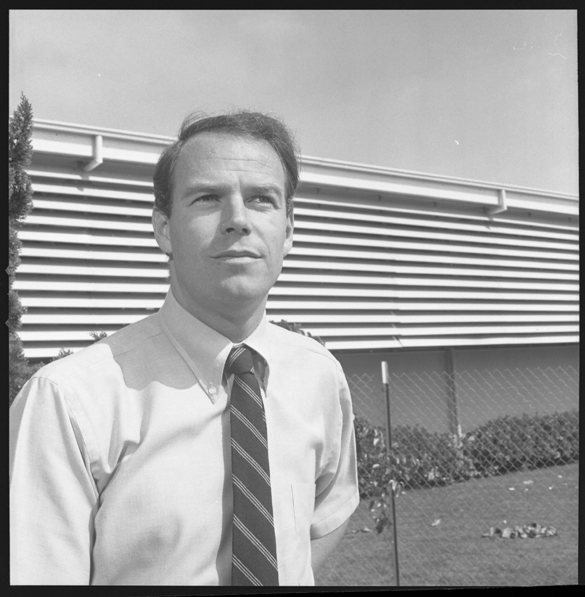
‘Why did the German people let the holocaust happen?’. This question is one often asked of history teachers by their inquisitive students. It’s a valid question and doesn’t have a simple soundbite answer. The reasons sit deep in the complexity of human psychology.
For Ron Jones, the answer was to show his students and not tell them. It was 1967 at Cubberley High School in Palo Alto California. Jones was a popular teacher, a recent Stanford graduate who ran engaging classes.
His students would frequently skip other classes to come and sit on his fun and imaginative lectures.
What transpired in this Californian classroom would resonate around the world. Jones would teach all his students and the rest of the world a very important lesson about fascism. It would later be called ‘The Third Wave’ experiment. Jones was clear, history can repeat itself, but sometimes it does under controlled conditions.
This is exactly what happened across one week in April 1967.
The ‘Third Wave’ Experiment
Monday — Jones establishes his authority
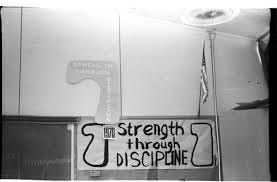
Jones’ bubbly persona gave way to something a little more stern on Monday morning. He ordered the students to call him ‘Mr. Jones’. He followed this with a strong lecture about the benefits of discipline. The class was drilled in how to sit and stand to attention. According to Jones, his idea was simple. He was giving the children first-hand experience of what it was like to operate under a totalitarian regime.
This was where he’d imagined the experiment would end. He was wrong.
Tuesday — Slogans and salutes
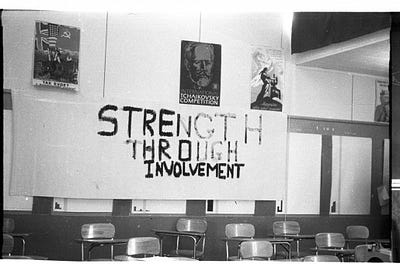
The following day the students were back in their seats, sat at attention, alert and ready. Jones did a double take upon arrival, ever the improviser he then wrote ‘Strength Through Discipline’ on the board. He followed this with “Strength through Community’. The movement was underway. These phrases would go on to the group slogan and chants.
Those in the Contemporary History class faced a decision. He told them if they participated in his movement they would receive an A grade. If they went along with the movement but didn’t fully take part that they would get a C grade. If they tried to revolt he would send them to the library for the duration of the class and they would fail with an F.
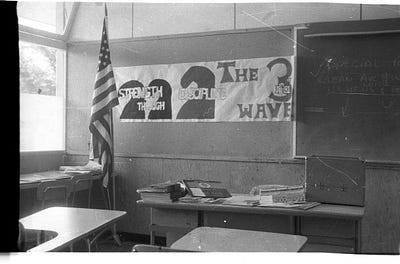
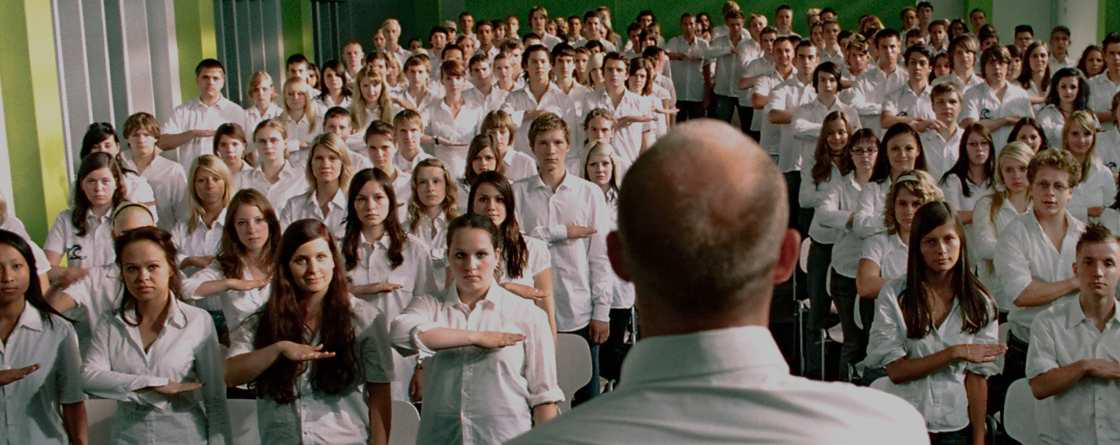
Jones invented a salute, a cupped hand moving across the chest to the opposite shoulder. This salute was compulsory. It was to be given to party members both inside and outside of the classroom. The movement was also given a name. ’The Third Wave’. Silence fell as the bell rang for the end of lesson and Jones saluted the class.
Chillingly reminiscent of the Nuremberg rally, the class saluted back in perfect unison.
Wednesday — The establishment of the secret police
The group of thirty had expanded to forty-three by Wednesday. Students from other classes had heard about ‘The Third Wave’ and were keen to get involved. Jones issued membership cards, appointed some select students to be his elite bodyguard. Members of the Third Wave got instructions on how to recruit new members.
Mr. Jones then instructed the students to put their heads down on the desk and close their eyes. He tapped three of them on the shoulder. These three students then became ‘secret policemen’, duty bound to report any deviation from the rules to Jones. Students were banned from congregating in groups of more than three.
The secret police would inform Jones of any transgressions and a show trial would follow. The accused stood at the front of the class, Jones would read the charges and presume guilt. He would ask the accused to explain themselves before starting a ‘guilty’ chant. Being found guilty meant ostracism from the group and Jones began to suggest that it might mean expulsion from the college itself. Fear ran amok.
Thursday — The announcement of the ‘bigger picture’
After a student followed Jones into the staffroom, a colleague tried to throw them out. The student retorted that they were Mr. Jones’ personal bodyguard. It was at this point that Jones realised that the experiment was becoming far too real for the children. Things were getting out of hand.
Students from other schools in the area began skipping their classes to join ‘The Third Wave’. Jones made the decision to end the experiment himself. Knowing that it would need to culminate in a decent lesson for all those involved, he decided to double down.
He told the students that they were part of a national movement called ‘The Third Wave’. They would be part of a political group that would revolutionise American politics. There was an excitement. Tomorrow, he told them, over 1000 youth groups would stand up and pledge allegiance to the leader. There would be a rally at midday and only members could attend.
Quite by accident, an advert for Lumber in Time Magazine featured a poster saying ‘The Third Wave is coming”. The children seized upon this as a sign that gave legitimacy to Jones’ claims. Things were getting serious.
To reinforce his control he demonstrated his power. He had three dissident girls escorted to the library under ‘house arrest’. They were the girls who had questioned the validity of the movement early on. He banned them from the rally, everyone else was still invited.
Friday — The Third Wave rally
At midday, the students arrived for the rally. They had banners and were chanting the slogans. There were now over 200 members of the Third Wave taken from students in three local schools. Jones did one last inspection of his troops. Getting the students to repeat in increasing volume the mantra.
‘Strength Through Discipline’
At 12:05 Ron Jones turned on the television. For two minutes it played only static, lighting the children with an eerie glow. At 12:07 the children began to realise that there was no leader. There was no national movement. There was an air of disappointment.
Jones told them that there was no leader, that they had been used and manipulated. He told them how they’d been shoved by their own desires for power into an uncomfortable situation. He told them that they bargained away their freedom for the comfort of discipline.
He told them that the lure of feeling superior was what made them attend the rally. He told them they probably felt they could leave at any time. Then he pointed out that none of them had. He asked them how far they would’ve gone. How far could they have been pushed?
And with that Jones projected a video onto the wall featuring clips of the Nuremberg rally, the concentration camps and the rise of the Third Reich. Many of the students started to cry, some from shock, some from relief. The lesson was both powerful and profound.
The aftermath
The following week, the class learned about Vietnam. The social experiment was gone but not forgotten. Over a decade later Ron Jones had a chance encounter with one of his students in Berkeley. Recognising him immediately, the ex-student gave him the cupped hand salute. It struck Jones that he might have had a greater impact on his students than he first imagined.
He wrote down details of his experiment in the magazine Whole Earth Review.His story was retold as a novel in 1981, and two movie versions came out that same year. In 2008 the story hit the screens in the German film ‘Die Welle’ (The Wave). In 2011 a documentary called ‘The Lesson’ was released. It followed the story of the Third Wave and was created by Phillip Neel, one of the original students in the party.
The ‘Third Wave Experiment’ is now taught on Psychology courses around the world and is on the curriculum in Germany and Israel.
What does the ‘Third Wave’ mean for us today?
What Ron Jones accomplished in his week-long ‘Third Wave’ resonated around the world. It was a microcosm of the appeal of demagogues. It still has plenty to say about the modern world and our ability to resist the creep of fascism.
Jones noticed that often the most popular and academic students were expelled first. This movement appealed to the quiet middle. Those students teachers often miss because they don’t stand out. When loyalty and obedience are the currency of success, those who don’t question float to the top.Academic students found themselves expelled very early on.
I am a big question asker. I stood up by my desk and said ‘Mr. Jones, why can’t we just say what we think? Why can’t we just express our opinions of what we think about the Third Wave?’ And at that point, he said, ‘You to the library for the rest of the semester’.
Sherry Tousley, Interview in ‘The Lesson’ (2011)
Sherry had mounted an active resistance campaign after being expelled from the Third Wave on day two. She got her Dad to drive her into school early so she could hang posters where they couldn’t be torn down.
Whilst a few others thought about joining the resistance, most chose not to. They were afraid of sharing her fate, being given an F-grade and banishment to the library. The Third Wave didn’t target the best students, it targeted those already marginalised. Those for whom the system wasn’t working. Does this sound familiar?
Indoctrination in the digital age
We see this happening in the world around us. Whilst the technology has moved on, the psychology hasn’t. There has been a huge increase in personality movements which rely on a ‘with us’ or ‘against us’ mentality. The messages of MAGA and Brexit may be very different from #MeToo and #NoPlatform but they are two sides of the same coin.
Followers often exhibit rigid thinking in which they position themselves as morally right. They don’t want to engage in conversation. You are either with them or against them. There’s no space for nuanced debate, many people are ‘sent to the library’ for daring to question the received wisdom.
The right open Concentration Camps, the left open Gulags. They are identical experiences for the people inside.
Having strongly held beliefs about how the world should be doesn’t make you a fascist. But an inability to question your beliefs leaves you open to exploitation by demagogues. When your beliefs become weaponised against others, that’s when fascism can begin its inexorable creep.
Like the students in Palo Alto, you may find yourself succumbing to a lack of questioning. If you’re chanting ‘lock her up’ at political rallies then it might be time to think about what you’re calling for. Likewise, if you’re determined to ruin the career of a man because you have decided guilt prima facie. These are things that should make you stop and think.
We have engineered a society in which public opinion is fast replacing the law courts. Our movements, our political biases, our friendships, and our feelings are published daily. Usually by us, but not always. Join me in a dystopian subjunctive. Imagine what the Nazi party could have accomplished with access to Facebook and Twitter.
We have provided enough scaffolding for a sufficiently intelligent and ambitious fascist regime to take hold. Whether that regime springs from the nationalistic right or the ideological left is still up for debate.
Those students 51 years ago failed to notice they were getting swept up in a story. We must learn the lesson they understood only on Friday afternoon. When the pleasure of belonging outweighs your ability to question you must force yourself to recalibrate.
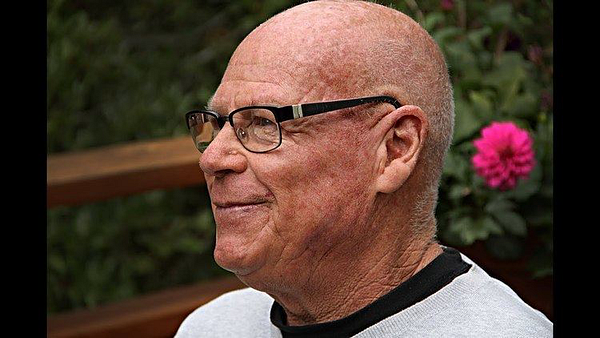
In an uncertain world, it feels good to have certainties. Understand though, our psychologies are flawed and hacked with ease. It took five days for one imaginative history teacher to radicalise a class of students. Ron Jones taught the world how easily we can be exploited.
For that warning which has echoed down the ages, we should be eternally grateful.
But what about you? Will you have the courage to be sent to the library with an F-Grade when the time comes? Will you be like Sherry Tousley hanging dissenting posters in the digital hallway? Or will you find yourself standing at a cyber-rally, chanting slogans and feeling like you have no other choice?
Capricorn New Moon, Solar Eclipse, January 5, 2019 (15 degrees) 5:28 pm PST

Wendy Cicchetti
This Capricorn New Moon eclipse is unusually striking since the Sun and Moon are surrounded by Mercury, Saturn, and Pluto. We term the gathering of three or more planets in one sign a stellium — written about eloquently and in depth by the late Donna Cunningham. In The Stellium Handbook, she describes this configuration as having a “laser-like focus” on the traits or areas of life it touches on; she also says it’s like a house filled with unruly, hormonally driven teenagers! This Capricorn stellium has the added potency of including the Moon’s South Node, making old patterns of behavior more pronounced.
Cunningham’s rule of thumb says that, to qualify as a stellium, two of the planets involved must be other than the Sun, Mercury, and Venus because those are often close together, due to their relatively similar travel speeds. Clearly, the Moon, Saturn, and Pluto meet this criterion. They are also celestial bodies of complex and contrasting qualities. The Moon is often experienced as a deeply personal part of our being, yet also symbolizes instincts and memories shared in common. These reach universally across human boundaries, including the collective unconscious — a kind of cosmic data bank we can all draw upon, through dreams, meditation, and spiritual connection.
Saturn, the planet of boundaries, clarifies rules and limits that cannot be ignored without incurring consequences. Pluto links to power issues and extremes, to obsession and oblivion — we may be either happier in the thick of things or more at peace in a void, depending on our specific needs. With these mixed energies, this is anything but a straightforward New Moon, even if well-ordered Capricorn might want it that way!
Arguably, the light, creativity, and rationale of the Sun and Mercury are in the background, with Saturn and Pluto’s heavier energies dominating and the sensitive Moon grappling with this mixed bag. One common thread is the Capricorn understanding of the importance of the long game, bringing patience to bear on any situation. Capricorn relates to executive ability and the strength to stand tall and robust, despite how trying matters may be. Saturn has the most strength of all the planets in this sign because it is in its celestial home, so we can hope for true mastery.
For some of us, this mastery will be reflected through someone else whom we feel that we can trust and follow. There may be a mentor or teacher to look up to, and whether this figure is living or not, the real point is the inspiration he or she continues to provide. We can draw great strength from examples shown by such individuals. For others, mastery must come from within and, typically, could relate to work trials, relationship issues, economic struggles, or health challenges. Whatever the area, we can tap into the laser-like focus of the stellium’s planetary mix and apply it towards our efforts. It is important to remember that mastery is not given, but is achieved through practice and hard work.
Like an Olympic athlete pursuing a shiny medal, our will to reach the goal helps us commit to the path, which may involve staying on task when we do not feel like it, such as going out in extreme weather or getting up early for an important event. Mastery may require breaking habits that have become “norms,” giving up routines that have bound us in some form of addiction or are affecting our well-being. Perhaps we have been relying too much on something to make us feel okay in the moment, when a shakeup of routine could lift us to feeling much better overall! As the saying goes, “No pain, no gain”; we may have to crack open a shell that had kept us feeling safe and warm, and allow ourselves to become exposed and vulnerable. Yet the process of growth will carry us through to a new stage, where we can find wings and achieve greater things.
The New Moon and Saturn sextile outer planet Neptune, which hints at both healing and inspiration. If we can open ourselves up to be inspired, persevere at applying some rules, and persist with aiming at self-mastery, there is so much that could be put right in our world. Almost anything negative can be turned around under such a potent solar eclipse!
This article is from the Mountain Astrologer, written by Diana Collis.
PLAN YOUR OWN NEW MOON CEREMONY. Give yourself some quiet time in meditation to see where you need to seed new ways of becoming. List these areas within your life you want to change. What areas do you want to break free from the norm and become more productive and discerning? The NEW MOON is the time to manifest the personal attributes you want to cultivate as well as the tangible things you want to bring to you. Possible phrasing: I now manifest ____ into my life. I am now _______ . Remember, think, envision and feel with as much emotion as possible, as though you already have what you want. Thoughts are things and the brain manifests exactly what you show it in the form of thoughts, visuals and emotions. The Buddha said, and I am paraphrasing, “We are the sum total of our thoughts up to today. ” If we want to be different then we must change our thoughts. “If you always do what you’ve always done then you’ll always get what you’ve always got.” CONSCIOUS CHANGE is the key.
American Exceptionalism Is a Dangerous Myth

An American soldier stands before a burning oil well in Rumayla, Iraq, on March 27, 2003. Photo: Mario Tama/Getty Images
Donald Trump has done more to elevate the left’s critique of U.S. foreign policy than any politician in modern memory.
As a presidential candidate, the mogul told Republican primary audiences that George W. Bush had lied the United States into Iraq; that said war had done a “tremendous disservice to humanity”; and that America could have saved countless lives by investing $5 trillion in domestic infrastructure instead. As commander-in-chief, Trump has suggested that there is no moral distinction between the U.S. and other great powers; that American foreign policy in the Middle East is largely dictated by the interests of arms manufacturers; and that the U.S. judges foreign regimes by their utility to American economic interests, not their commitment to human rights.
But if Trump’s descriptions of geopolitics echo Noam Chomsky, his prescriptions owe more to Attila the Hun. The president does see the invasion of Iraq as a criminal waste — but only because the U.S. failed to expropriate the region’s oil fields. He does imply that, in the eyes of the American state, Raytheon’s profits count more than journalists’ lives —but he sees that as a good thing. And when Trump suggests our country isn’t “so innocent,” he isn’t imploring neoconservatives to hold America to higher moral standards, but rather, to hold foreign autocrats to lower ones.
In other words, the Trump presidency can be read as an object lesson in the virtues of hypocrisy. Having a global hegemon that preaches human rights — while propping up dictators and incinerating schoolchildren — is bad. But having one that does those things while preaching nihilism is worse; not least because even a nominal commitment to liberal values can function as a constraint against their violation. Trump’s distaste for the whole “shining city on a hill” shtick has, among other things, enabled the Pentagon to tolerate higher levels of civilian casualties in the Middle East, the Israeli government to accelerate settlement expansion in the occupied West Bank, and the Saudi crown prince to take a bonesaw to international law.
It’s understandable, then, that many liberal intellectuals are eager to revive the national myths that Trump has busted. Such thinkers concede that Trump has highlighted flaws in the triumphalist, Cold War narrative about American global leadership. And they acknowledge the necessity of rethinking what “leading the free world” truly requires of the United States. But they nevertheless insist that America’s self-conception as an exceptional power — which is to say, as a hegemon whose foreign policy is shaped by universal ideals (as opposed to mercenary interests) — isn’t just a beneficent fiction, but an actual fact. And that compulsion is unfortunate; because it will be difficult for liberals to realize their vision for America’s exceptional future, if they refuse to grapple with its unexceptional past.
In the current issue of The Atlantic, former Hillary Clinton adviser Jake Sullivan presents one of the more compelling cases for making America exceptional again. Against Dick Cheney’s arrogant, unilateralist approach to world leadership — and Trump’s nihilistic disavowal of America’s international obligations — Sullivan offers a call for restoring the U.S. to its former role as a benevolent hegemon, one whose global supremacy is legitimated by its demonstrable commitment to spreading peace, democracy, and shared prosperity.
Crucially, Sullivan recognizes that this restoration is contingent on sweeping reform. He acknowledges that, in recent decades, U.S. foreign policy has often betrayed both its putative ideals and the concrete material interests of ordinary Americans — thereby inviting the cynicism of young idealists, and the xenophobic resentment of aging nationalists. Further, policymakers have habitually overreached militarily, while grossly underinvesting in cybersecurity, diplomacy, foreign aid, and other forms of soft power.
To rectify these errors, Sullivan argues that America should strive to build (and/or fortify) multilateral institutions of global governance; shape its geopolitical strategy around the interests of working people (by, among other things, cracking down on tax havens and international corruption); shift resources away from military pork and toward diplomacy, development, and technology; and exercise more humility when contemplating foreign intervention.
And yet, while Sullivan’s prescriptions for U.S. foreign policy are broadly consistent with those of progressive darlings like Elizabeth Warren and Bernie Sanders, his description of American grand strategy, pre-Trump, is as delusional as that of the median neoconservative.
Sullivan argues that the case for American leadership rests on the existence of American exceptionalism, which he defines as “the idea that the United States has a set of characteristics that gives it a unique capacity and responsibility to help make the world a better place.”
That America has such a responsibility should not be controversial. For anyone who subscribes to universalist values (or those of Spider-Man), the notion that the world’s wealthiest nation has an obligation to concern itself with the well-being of global humanity is self-evident. But whether America has proven itself uniquely qualified for this task is less clear.
Here is how Sullivan makes the case:
From the republican ideas of the Founders—in particular, from their notion of interdependence—flows an attitude. Alexis de Tocqueville called it “self-interest rightly understood.” Today, we might call it positive-sum thinking.
This attitude guided America’s grand strategy after the Second World War, as the U.S. rebuilt vanquished foes, protected the sea lanes, and responded to natural disasters halfway around the world. For centuries, European states waged war with grim regularity. The fact that the major powers have not returned to war with one another since 1945 is a remarkable achievement of American statecraft. Meanwhile, China’s extraordinary development was the result not of failures in U.S. foreign policy but of its successes. The U.S. maintained the security that helped drive remarkable economic growth across the Asia-Pacific region.
He then contrasts America’s enlightened, positive-sum approach to leadership with the crass imperialism of other great powers:
At some level, most of the world knows that America’s positive-sum approach is valuable and unusual. At a gathering of Asian nations in 2011, I heard the Chinese foreign minister address the issue of Beijing’s ambitions in the South China Sea this way: “China is a big country, and other countries here are small countries. Think hard about that.” This is China’s way, and Russia’s way. It generally has not been America’s way.
That is, it wasn’t until Trump came along. He treats foreign policy in simple terms: us against them.
Now, Sullivan is no arrogant Chenyite; he acknowledges that the “story” of American exceptionalism is “incomplete.” There have always been “the mistakes, the complexities, the imperfections — things like covert regime change across Latin America, support for brutal dictators, the invasion of Iraq, and the tragedies (despite the best of intentions) of Somalia and Libya.”
But what if “things like covert regime change across Latin America” weren’t deviations from “the American way,” but expressions of it? Sullivan doesn’t entertain the question. In lieu of an explanation for how a great power uniquely committed to republican values came to organize so many authoritarian coups against republics, Sullivan offers a single quote from Reinhold Niebuhr: “Hypocrisy and pretension are the inevitable concomitants of the engagement between morals and politics.”
This is a means of evasion, not an argument. And it is utterly insufficient for countering the copious evidence disputing Sullivan’s narrative. For one thing, if Trump introduced zero-sum thinking into American grand strategy in 2016, how does one account for George Kennan’s authorship of the following quote, in a State Department “policy planning” document, circa 1948?
[W]e have about 50% of the world’s wealth but only 6.3% of its population. This disparity is particularly great as between ourselves and the peoples of Asia. In this situation, we cannot fail to be the object of envy and resentment. Our real task in the coming period is to devise a pattern of relationships which will permit us to maintain this position of disparity without positive detriment to our national security. To do so, we will have to dispense with all sentimentality and day-dreaming; and our attention will have to be concentrated everywhere on our immediate national objectives. We need not deceive ourselves that we can afford today the luxury of altruism and world-benefaction.
The history of American foreign policy over the past seven decades has been more consistent with Kennan’s summation of national purpose than Sullivan’s. More specifically, U.S. foreign policy has more consistently reflected the economic interests of American capital than it has the ideals of republicanism — which makes intuitive sense. Generally speaking, one would assume that a government’s policies would reflect the interests of whoever controls said government. And when State Department wonks like Sullivan analyze the intentions of foreign nations, they avail themselves of this basic insight. American exceptionalism is rooted in the improbable notion that the the United States is uniquely unbeholden to the logic of power.
For the sake of argument, let’s say that America is unexceptional in this respect. Let’s say that our nation’s foreign policies are shaped, above all, by the material interests of those who enjoy the most power over our government. And let’s further stipulate that all American corporations, combined, invest more time and money into trying to influence public policy — and enjoy more intimate access to D.C. policy-makers — than do human-rights activists.
From these (highly plausible) premises, one would expect the U.S. to pursue a foreign policy that prioritizes the interests of corporate America over the promotion of democracy or human rights. Or, put differently: One would conclude that, in its glory days as “leader of the free world,” America’s primary beef with Communism wasn’t that it threatened the civil liberties of Eastern Europeans (or Southeast Asians, or Cubans), but rather, that it threatened the prerogatives of American capitalists.
It is much easier to reconcile the historical record with this theory, than with the opposite one. As the critic George Scialabba has observed:
In the nineteenth century, as Henry Cabot Lodge acknowledged, the United States compiled “a record of conquest, colonization, and expansion unequalled by any other people.” Its record in the twentieth century was no less execrable. The idealistic Woodrow Wilson made war on both Haiti and the Dominican Republic, killing thousands, in order to block constitutional rule and fortify the position of international investors and domestic elites. In the 1920s and 1930s, the US military occupied Nicaragua and Honduras for the same purpose. In the 1950s the US organized the ouster of a moderate democratic regime in Guatemala, likewise in the Dominican Republic in the 1960s, resulting, both times, in horrendous violence and retarded development. In Brazil in 1964, Chile in 1973, and Argentina in 1976, the US instigated or welcomed the overthrow of democratic governments by murderously repressive (but investor-friendly) military juntas. In the 1980s the US orchestrated fanatically bloody insurgencies and counterinsurgencies throughout Central America, invariably against movements or governments with more popular support than the US client.
Scialabba’s litany is limited to the Western hemisphere. But the same pattern can be discerned in America’s activities the world over: Given the choice between supporting democratic governments that threaten the interests of major American corporations and investors — and authoritarian governments that don’t — the U.S. has almost invariably opted for the latter.
To be sure, every foreign policy adopted by the U.S. is not a mechanical translation of the aggregated interests of American capital. Beyond the fact that many policy question bitterly divide corporate America — and that there are many well-funded, noncorporate lobbies that exert significant influence over American foreign policy — there is also always contingency in human affairs. Policy-makers have agency, and, as we’ve seen over the past two years, unusual individuals sometimes make policy. Corporate control of American grand strategy isn’t an absolute rule; but it is the path of least resistance.
Acknowledging this reality does not require one to deny America’s various contributions to global well-being. It doesn’t even (necessarily) refute the notion that America has been a more benevolent hegemon than previous imperial powers. Our nation’s many crimes do not erase the past decades of peace in Europe, or poverty reduction in Asia. That American foreign policy is principally driven by corporate interests is not inconsistent with the idea that it has produced some positive-sum outcomes. The Marshall Plan created highly profitable markets for American exporters and investors; it also helped birth unprecedented prosperity in Japan and Western Europe.
But the fact that American exceptionalism is a myth does have important implications for anyone who wishes to bend reality in its direction. Put simply, if one wishes to reform an institution, it’s best not to begin by wildly misconstruing how it works.
To appreciate this point, consider the following passage from Sullivan’s Atlantic piece:
Jennifer Harris, a former State Department colleague, posed an arresting question when I spoke with her recently: How is it that the domestic economic agenda of the Obama administration could be so different in its values and priorities from President George W. Bush’s—so much more focused on the needs of working people—while its international economic agenda was nearly identical? The answer is that both political parties came to treat international economic issues as somehow separate from everything else.
Sullivan’s answer is neither accurate nor an answer. Both parties do not treat “international economic issues” as “separate from everything else” — rather, the Democratic Party behaves as though it is (almost) as unaccountable to working-class constituencies in the foreign policy realm, as Republicans are in the domestic one. And it is. The fine details of trade agreements and investment pacts — which are negotiated unilaterally by the Executive branch — are much less visible to the public than are the fine details of major legislation debated by Congress. An administration official bartering with other diplomats in some foreign capital is insulated from popular influence and scrutiny to much a greater degree than a Democratic senator is, when negotiating with Republicans (even as the latter is also quite insulated from popular influence and scrutiny). But multinational corporations have the resources (i.e. lobbyists) to keep a watchful eye on alldimensions of policy-making. If a White House’s posture in trade negotiations compromises the interests of American patent holders, they will raise holy hell; if it compromises the interests of all non-superrich Americans — by neglecting to make “stopping plutocrats from stashing 10 percent of all global wealth in tax havens” a top-tier priority — virtually no voters will even notice.
Sullivan’s call for reorienting U.S. foreign policy around the interests of working Americans is constructive. But his failure to recognize America’s unexceptional characteristics jeopardizes that project. If the default setting of American foreign policy is to pursue its enlightened “national” interest, then recentering U.S. grand strategy around progressive economic principles is a simple task: Make a persuasive argument that it is in America’s national interest to raise the median worker’s wages, and a new consensus will take shape. By contrast, if America’s default setting is to safeguard the interests of its most powerful individuals and entities, then durably reorienting foreign policy in the manner Sullivan prescribes will require drastically shifting the balance of power between capital and labor within the United States. If liberal elites adhere to an exceptionalist understanding of the American state, they will miss the central importance of domestic economic reform to any progressive reorientation of foreign policy.
And that is not all they will miss. The exceptionalist narrative is most dangerous for the way it implies that assertions of American power on the world stage should be presumed well-intentioned, until proven otherwise. If the consensus view among liberal elites circa 2003 had been that American foreign policy is typically shaped by the mercenary interests of corporations (not least, arms manufacturers), they would likely have treated George W. Bush’s plans for Iraq with less credulity. Instead, in that instance (and many others), liberals championed a just, humanitarian intervention — only to find, to their shock and awe, that those prosecuting the war did not, in fact, have the purest of hearts. So long as progressive forces do not have a firm grip on the national security state, progressives mustn’t presume that the worst thing that state can do in the face of injustice overseas is nothing.
Relatedly, the myth of American exceptionalism functions as rationale for the U.S. to subordinate international law to its own enlightened judgement. If one presumes America’s beneficence, then one will prize its freedom of action over adherence to the (often arbitrary) dictates of treaties. Tellingly, the phrase “international law” appears nowhere in Sullivan’s essay (and his remarks on the Syrian civil war suggest that scrupulous observance of international law does not figure into his vision for a progressive foreign policy).
Finally, the myth of American exceptionalism might do more to strengthen Trumpism than to undermine it. No small portion of our country’s xenophobia is informed by ubiquitous ignorance of our national sins. If one shares Sullivan’s faith in the beneficence of American global leadership, then it’s easy to conclude that Americans owe little to people in other countries. After all, we selflessly tried to bring freedom to Iraq and Afghanistan — and look how those ungrateful Muslims responded; we saved Central Americans from the tyranny of Communism, and now they’re showing up at our border asking for more help. American exceptionalism suggests that the entire world owes a debt to the United States. Trumpism suggests the same — and then demands the world pay up.
Donald Trump has rebranded U.S. foreign policy in his image. Which is to say, he has put the ugliest possible face on American empire. For liberals, there is a strong temptation to call this hideous visage a mask; to insist that “this isn’t who we are.”
But it would be more accurate to say that this is who we’ve too often been. This hateful sociopath, immune to all human sentiments save fear and greed, devoid of all principles save a will to power, incapable of seeing the world from anyone’s perspective but his own — this is who we were to thepeasants of Vietnam, and to the people of Jacobo Árbenz’s Guatemala, Salvador Allende’s Chile, Mohammad Mosaddegh’s Iran, João Goulart’s Brazil, and so many other fragile republics yearning to breathe free.
Trump’s great gift to the American people is that he has made our government’s ugliest features easier to see — and thus, to change. But if we respond by burying Uncle Sam’s deformities beneath the concealer of American exceptionalism, the change we make won’t even be skin deep.
(Submitted by Gwyllm Llwydd.)
The Jonah Complex And The Fear Of Greatness
The story of Jonah and becoming who you are

Inthe Book of Jonah, the story follows that God commanded the main character, Jonah, to go to the city of Nineveh to warn the people of their impiety and to preach repentance. Instead, however, Jonah attempted to flee from the “presence of the Lord” by walking in the opposite direction towards Jaffa and then sailing to Tarshish.
On the way to Tarshish, a great storm crashed against the sea and the boat began to sway violently, threatening the lives of all on board. The storm was so powerful that the sailors were convinced God had formed it. And so, they began calling upon God to relieve them from their punishment.
As the storm raged, Jonah laid asleep at the bottom of the ship. The sailors awakened him and asked him to pray to his God. Jonah confessed that he was running away from the Creator God and that the storm had been sent down for him. He told the sailors that if they threw him overboard, the storm would cease, and all would resume as normal.
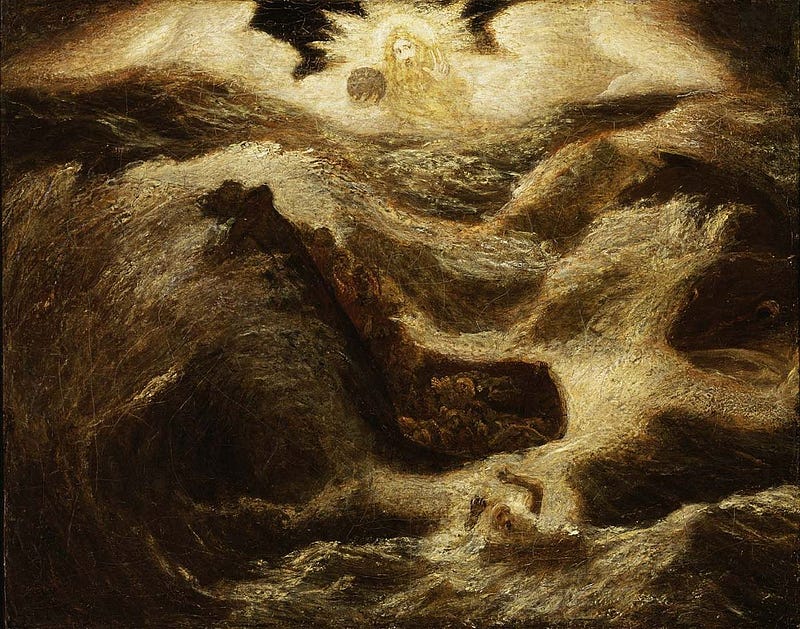
But the sailors refused for they were good men, and continued rowing despite the harsh weather. Eventually, the sailors became exhausted and could no longer fight against the violence of the storm. They had no option but to throw Jonah into the sea. In an instant, the storm calmed, and the waters smoothed over.
Jonah struggled to keep his head above the water for quite some time. Suddenly, a whale leaped from the sea and swallowed him in whole. Whilst inside the belly of the whale, Jonah prayed to God for mercy and committed himself to the fate that was chosen for him. God, who was satisfied with Jonah’s promise, then commanded the fish to spit Jonah out.
“When my life was ebbing away, I remembered you, LORD, and my prayer rose to you, to your holy temple.”
Jonah 2:7
Afraid but determined not to upset God again, Jonah travelled straight to Nineveh. This time he entered the city and cried, “In forty days Nineveh shall be overthrown.” After Jonah had walked across Nineveh preaching the word of God, the people of Nineveh believed his truth and questioned what their punishment would be.

To appease God, the king of Nineveh decreed fasting and repentance. The entire city was humbled and followed the king’s orders. In the end, God saw their repentant hearts and spared the city.
The story of Jonah and the Whale begins with Jonah receiving a calling from God. And this calling urged Jonah to achieve the greatest of his possibilities, to stand firm against the emerging chaos and atrophy of the world around him. But Jonah refused to fulfill his obligation to his higher self — he was fearful of extending beyond the limits he had already imposed on himself. And so, he ran away in fear from the fate bestowed on him.
This is a universal, even archetypal story of a man fighting against the highest of his desires. It is a story that everyone will be able to resonate with. For there exists within us all an impulse to achieve greatness. If you had the courage, if you were really honest, you would admit that you see this potential for mastery within yourself. But that won’t do, will it? For you exist as a tiny speck of dust in an infinite, fragile galaxy of light and sound. You sit on this rock alone, separate from the spirit of the universe, and you take delight in your solitude.
Your thoughts will say, “Look, tiny man, look how small you are.” You believe this voice. Compared to the dancing stars and the orbiting moons, you are little more than nothing. And you carry this belief in your demeanour. Your shoulders roll forwards, your head bows towards the ground and you think of all the wrong you have done — you are a harmless bystander, a passive observer of the wonders of the world.

Still, there is that voice within telling you that you are more than you are. For it is you who shares the same blood as Jesus Christ. You say, “What must I do to achieve my worth?” You ask this question because you do not really want to become who you are — you are afraid. It is a simple truth that man fears his greatness more than he desires it.
Therefore, what you will do is find some practice that allows you to evade your capabilities. And so, like Jonah, you take to the seas and travel in search of new worlds. But it is not the familiarity of home that you are running away from, it is, rather, yourself. Rome may beautiful, Paris too, and you will, at first, be intoxicated by the novelty of it all. But you carry yourself to these cities, the same dreary, unfulfilled self that had, not long ago, sat at home dreaming of foreign lands.
And now you are here, beneath St Peter’s Basilica, but the sadness has returned. So you seek yet more grand palaces and cathedrals, all of them beautiful, all of them wonderful symbols of royalty and majesty. But you are a fool. For you see the world as you see yourself, and if you do not carry the beautiful within yourself then you will not discover it elsewhere.
All the games and wagers, the alcohol and the medicines, the meaningless jobs and the idle amusements — they are all a means of postponement from your true purpose. They have nothing to do with the realisation of the self. But, still, you persist. The longer you persist, the greater the storm of anxiety and stress becomes, and the more you depress your true vitality. Each wasted moment damages your clarity of purpose.

And without the grounding of a purpose, the core of the masculine, you detach your energy from the truth and your life swerves out of alignment. Your career becomes a way to get money to support your comfortable lifestyle, your partner becomes a means of sexual release and your friendships become mere company rather than mentors. Indeed, you will continue to suffer so long as you live with a closed heart.
You know what you want to give most as a gift to the world and you wish you could offer it without holding back. You enjoy and relish in the possibilities that you see in yourself. Yet you simultaneously quiver with weakness, dread, and terror before these very same possibilities. And so, you blush and squirm at thought of ever realising your true potential. Not only do you fear death, but you also fear life itself. But if not you, then who else?
Jonah continued to ignore the calling from God until, suddenly, he found himself in the underworld, inside the belly of the whale. Jonah chose to endure the monster of the unconscious, and fell willingly into the abyss. He left the realm of the light and entered into the unknown. And whilst submerged in the silence of darkness, Jonah repented and healed the fears that were preventing him from living his truth.
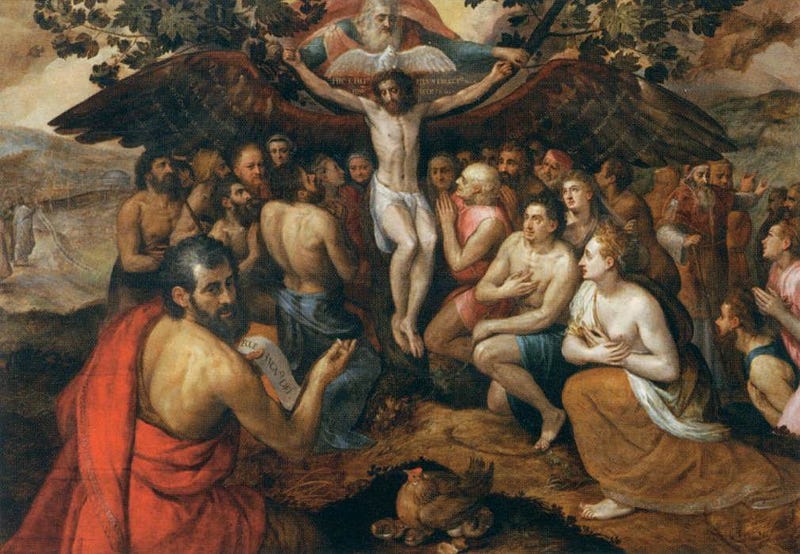
The Bible used the imagery of the stomach to show that Jonah was being digested — for the unconscious brings forward and restores that which is resourceful and destroys what is harmful and poisonous. The ego construct – his character, his hopes and dreams – with which Jonah had so far interacted with the world had to fall if he was to fulfill his divine destiny. But, Jonah was too proud to abandon his old life. He had attached his identity to the pleasures of the world — he was wealthy, he was well liked and he had a family.
“For whoever would save his life will lose it, but whoever loses his life for my sake will find it. For what will it profit a man if he gains the whole world and forfeits his soul? Or what shall a man give in return for his soul.”
Matthew 16:25–26
But God, Jonah’s intuition or the universe, however you wish to name it, called to Jonah and demanded that he expand his personality and let go of the things of this world — for there was a greater mission that awaited him. And so, he had to die to himself, to let go of his old container in order to nourish himself with his purpose.

This idea — that you must die before you die — is an ancient truth that is shared across the religions. Indeed, to evolve in the world requires that you integrate the vast internal landscape of who you are and who you could be with the constrained and limiting barricades of the ego.
As Jonah left the darkness and rose from the dead, he achieved this integration of spirit and mind — he transcended the limits of the flesh and re-associated himself with the powers of nature. After he had discovered his truth, Jonah reoriented himself to the new phase of his life. And, with renewed energies and restored faith, Jonah, the hero, tasted blood and decided, as St. George and Siegfried did, to slay the dragon that had corrupted Nineveh.
Here, we reach the message behind the story of Jonah: Betray your destiny, betray the responsibility that God has given to you, and see how long it takes before you drown in a storm. Because if you choose to deliberately avoid fulfilling your deepest truth and refuse to face the dragon, the underworld will pull you into the depth of the unknown and you will be forced to reconcile with the unconscious self.
New Moon Solar Eclipse January 5, 2019

The New Moon Solar Eclipse 5 January 2019 falls at 15º Capricorn. The Solar eclipse is a partial one and the eclipse path will be mainly seen in northeast Asia. The New Moon January astrology has the Moon aligned with poetic and musical fixed star Vega found in Lyra the Harp. It is a romantic one too as it is sextile Neptune. The tarot card associated with Capricorn Decan 2 is the three of pentacles a card associated with architecture and craftsmanship. So this is a great solar eclipse for creativity inspired by a muse.
Solar Eclipse January 2019 Astrology ~ Capricorn Decan 2
The Solar Eclipse January falls in Capricorn decan 2, which is a tough placement such a sensitive body. Instead of home comforts, the new moon seeds are expected to grow in a fairly spartan environment. The land here is hard and dry, so it will take some toil to make it fertile. Much depends on carefully organizing structures in order to yield the best results from this new Moon. This month will probably be one of hard knocks and deferred gratification then. It will be hard for anyone touched by this solar eclipse to be empathetic to anyone who might be lagging behind due to domestic problems. They will have to maintain a ‘pull yourself up by your bootstraps’ approach.
Because of the seductive aspect of this Solar Eclipse. There is an element of using one’s sexual allure to seal a business deal. Those touched by this moon should beware of a potential partner who seems quite blown away by your money, popularity or influence. This is quite an insidious, gold-digging solar eclipse and one could get easily carried away by flattery. The ruthless side of Capricorn decan 2 will do anything to climb the pyramid. Unfortunately, because of this Moon’s sextile to Neptune, we may be blinded by our compassion. The positive side to this Solar Eclipse is that it is a great one if you are creating very elaborate architecture. Capricorn loves to build and sculpture is also well starred.
Solar Eclipse January 2019 Star ~ Vega
 Moon with Vega 14º Capricorn ~ “Public disgrace, probably through forgery, loss through writings, some ill-health, success in business, gain through an annuity or pension.” [3] “A compassionate leader; someone who cares. To be focused on humanitarian issues. Hight expectations; seeking a saviour.” [4] and “It gives beneficence, ideality, hopefulness, refinement and changeability, and makes its natives grave, sober, outwardly pretentious and usually lascivious.” The Ebertins bring out the artistic side saying “In a good cosmic configuration, Vega is supposed to give artistic talents especially for music and acting, but also a liking for good living. With eccentric artists, this may lead to a debauched life. Vega is said to pave the way to riches and fame. In connection with the Moon…a tendency for occult and mysticism may be given.” [1]
I have written a whole post on Vega so here are my keywords:
Blood is thicker than water, family honor, loyalty, musical, theatrical, arty and crafty, waxes lyrical, charming the birds from the trees, pied piper, paying the piper, songbirds, lullaby, lair, aspiring, social climbers, class-conscious, divas, wannabes, fans, stalkers, admirers, high status, flash cars, impressive, political clout, gangsters, grasping, publicity hungry, media whores, ancestral talents, dynasties, forging, faking, plastic surgery, perfection, idealism, the pinnacle of success, snobbery, rags to riches, riches to rags, thieving, criminal activity, torture, punishment, law unto themselves.
When I studied Vega and Lyra in depth I found they were definitely associated with wealth and a tad of pretentiousness. It fits very well with the aspirational mountain-climbing goat. But tropical Capricorn is ruled by Saturn, so we get a doubling of the planet’s more severe and authoritarian side, which makes for a great policeman. Stars of the constellation Sagittarius in general “soften tigers, rid the lion of his fierceness, speak to the elephant…..it has lordship over beasts. And because it carries a shaft poised on a drawn bow, it imparts strength to limb and keenness to the intellect, swiftness of movement, and an indefatigable spirit.”[2] Again this just emphasises law and order or the civilisation of the errant criminal or savage!
The 2nd Face Of Capricorn
“A man with a common ape in front of him. This is a face of seeking to do what cannot be done and to attain what cannot be” ~ Picatrix
Artwork ‘Inspiration’ & ‘Whisperer” kindly supplied by J Swofford at :abnormalimage.com and JSwoffordArtandPhoto
Solar Eclipse General Meaning
A solar eclipse is a turbocharged New Moon. Generally, New Moon rituals are perfect for planting new seeds and starting afresh. We are essentially working on the blank canvas of the dark moon where our ideas can gestate in the new moon soil. But with an Eclipse, the Moon comes between the Sun and the Earth. Therefore the lunar interrupts the flow of energy and causes disruption. It breaks our habitual behaviour and gives us a kind of cosmic reboot. The Moon blots out masculine/left brain energy for a while, so the feminine/right brain is flooded with instinctual and intuitive energy. This makes the unconscious, conscious, like when you become aware that you are dreaming.
A Cosmic Reboot
During an eclipse, like the lucid dream, we get that same sudden feeling of hyperawareness. We could do anything!! Sometimes this is so awesome that we don’t know what to do, others even become afraid of their own power. At best, the effect of a solar eclipse can amplify insights gained from a very balanced left and right brain. The Solar eclipse is very good at showing up any imbalances you have. Eg, You are on one leg in tree pose and the Solar eclipse pokes you in the side. The amount of wobble shows how much centering you need to do. A Solar Eclipse can bring an awakening or a shocking revelation that rocks you to the core. It aims to balance out left and right brain hemispheres and therefore consciousness so that you are not lopsided.
Solar Eclipse January Tarot Card For Capricorn Decan 2
 The tarot card associated with this decan is the Three Of Pentacles. This card depicts the architect and specialised tradesmen. It is about learning practical skills and putting long-term commitment into building something that will last. Churches are both something useful, lasting and sacred. In this incarnation, you are ” being rewarded at long last for all the effort you have been putting in for so many years (Lifetimes). Others are prepared to back you now and offer support where in the past you struggled alone with your ideas and plans for the future.” ~ teachmetarot. These folk can be elitists, but the material gain that comes with this decan is usually well earned and deserved. The evolved native does not become complacent, nor expect rewards to be handed to them on a plate. Everything is worked hard for and material gains are valued and reinvested for future generations.
Solar Eclipse January 2019 Astrology
