
The story of Jonah and becoming who you are

Inthe Book of Jonah, the story follows that God commanded the main character, Jonah, to go to the city of Nineveh to warn the people of their impiety and to preach repentance. Instead, however, Jonah attempted to flee from the “presence of the Lord” by walking in the opposite direction towards Jaffa and then sailing to Tarshish.
On the way to Tarshish, a great storm crashed against the sea and the boat began to sway violently, threatening the lives of all on board. The storm was so powerful that the sailors were convinced God had formed it. And so, they began calling upon God to relieve them from their punishment.
As the storm raged, Jonah laid asleep at the bottom of the ship. The sailors awakened him and asked him to pray to his God. Jonah confessed that he was running away from the Creator God and that the storm had been sent down for him. He told the sailors that if they threw him overboard, the storm would cease, and all would resume as normal.
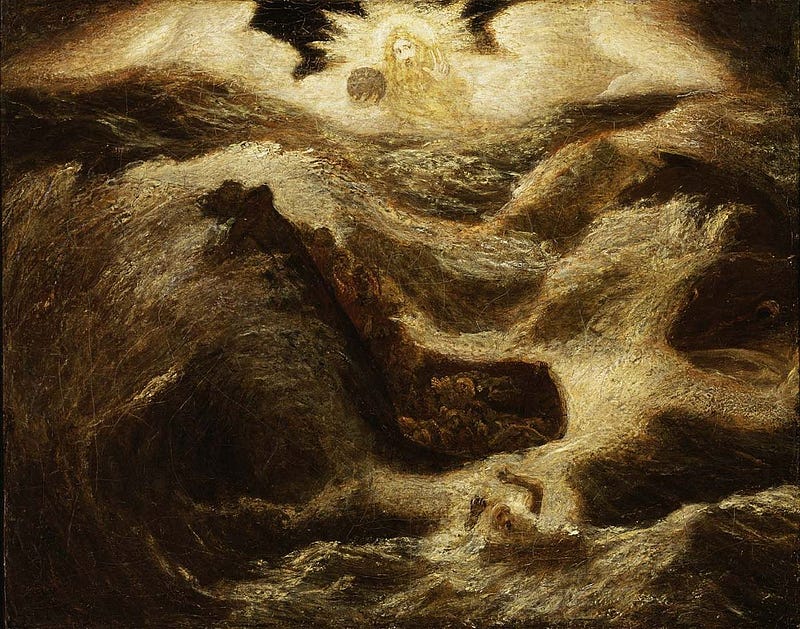
But the sailors refused for they were good men, and continued rowing despite the harsh weather. Eventually, the sailors became exhausted and could no longer fight against the violence of the storm. They had no option but to throw Jonah into the sea. In an instant, the storm calmed, and the waters smoothed over.
Jonah struggled to keep his head above the water for quite some time. Suddenly, a whale leaped from the sea and swallowed him in whole. Whilst inside the belly of the whale, Jonah prayed to God for mercy and committed himself to the fate that was chosen for him. God, who was satisfied with Jonah’s promise, then commanded the fish to spit Jonah out.
“When my life was ebbing away, I remembered you, LORD, and my prayer rose to you, to your holy temple.”
Jonah 2:7
Afraid but determined not to upset God again, Jonah travelled straight to Nineveh. This time he entered the city and cried, “In forty days Nineveh shall be overthrown.” After Jonah had walked across Nineveh preaching the word of God, the people of Nineveh believed his truth and questioned what their punishment would be.

To appease God, the king of Nineveh decreed fasting and repentance. The entire city was humbled and followed the king’s orders. In the end, God saw their repentant hearts and spared the city.
The story of Jonah and the Whale begins with Jonah receiving a calling from God. And this calling urged Jonah to achieve the greatest of his possibilities, to stand firm against the emerging chaos and atrophy of the world around him. But Jonah refused to fulfill his obligation to his higher self — he was fearful of extending beyond the limits he had already imposed on himself. And so, he ran away in fear from the fate bestowed on him.
This is a universal, even archetypal story of a man fighting against the highest of his desires. It is a story that everyone will be able to resonate with. For there exists within us all an impulse to achieve greatness. If you had the courage, if you were really honest, you would admit that you see this potential for mastery within yourself. But that won’t do, will it? For you exist as a tiny speck of dust in an infinite, fragile galaxy of light and sound. You sit on this rock alone, separate from the spirit of the universe, and you take delight in your solitude.
Your thoughts will say, “Look, tiny man, look how small you are.” You believe this voice. Compared to the dancing stars and the orbiting moons, you are little more than nothing. And you carry this belief in your demeanour. Your shoulders roll forwards, your head bows towards the ground and you think of all the wrong you have done — you are a harmless bystander, a passive observer of the wonders of the world.

Still, there is that voice within telling you that you are more than you are. For it is you who shares the same blood as Jesus Christ. You say, “What must I do to achieve my worth?” You ask this question because you do not really want to become who you are — you are afraid. It is a simple truth that man fears his greatness more than he desires it.
Therefore, what you will do is find some practice that allows you to evade your capabilities. And so, like Jonah, you take to the seas and travel in search of new worlds. But it is not the familiarity of home that you are running away from, it is, rather, yourself. Rome may beautiful, Paris too, and you will, at first, be intoxicated by the novelty of it all. But you carry yourself to these cities, the same dreary, unfulfilled self that had, not long ago, sat at home dreaming of foreign lands.
And now you are here, beneath St Peter’s Basilica, but the sadness has returned. So you seek yet more grand palaces and cathedrals, all of them beautiful, all of them wonderful symbols of royalty and majesty. But you are a fool. For you see the world as you see yourself, and if you do not carry the beautiful within yourself then you will not discover it elsewhere.
All the games and wagers, the alcohol and the medicines, the meaningless jobs and the idle amusements — they are all a means of postponement from your true purpose. They have nothing to do with the realisation of the self. But, still, you persist. The longer you persist, the greater the storm of anxiety and stress becomes, and the more you depress your true vitality. Each wasted moment damages your clarity of purpose.

And without the grounding of a purpose, the core of the masculine, you detach your energy from the truth and your life swerves out of alignment. Your career becomes a way to get money to support your comfortable lifestyle, your partner becomes a means of sexual release and your friendships become mere company rather than mentors. Indeed, you will continue to suffer so long as you live with a closed heart.
You know what you want to give most as a gift to the world and you wish you could offer it without holding back. You enjoy and relish in the possibilities that you see in yourself. Yet you simultaneously quiver with weakness, dread, and terror before these very same possibilities. And so, you blush and squirm at thought of ever realising your true potential. Not only do you fear death, but you also fear life itself. But if not you, then who else?
Jonah continued to ignore the calling from God until, suddenly, he found himself in the underworld, inside the belly of the whale. Jonah chose to endure the monster of the unconscious, and fell willingly into the abyss. He left the realm of the light and entered into the unknown. And whilst submerged in the silence of darkness, Jonah repented and healed the fears that were preventing him from living his truth.
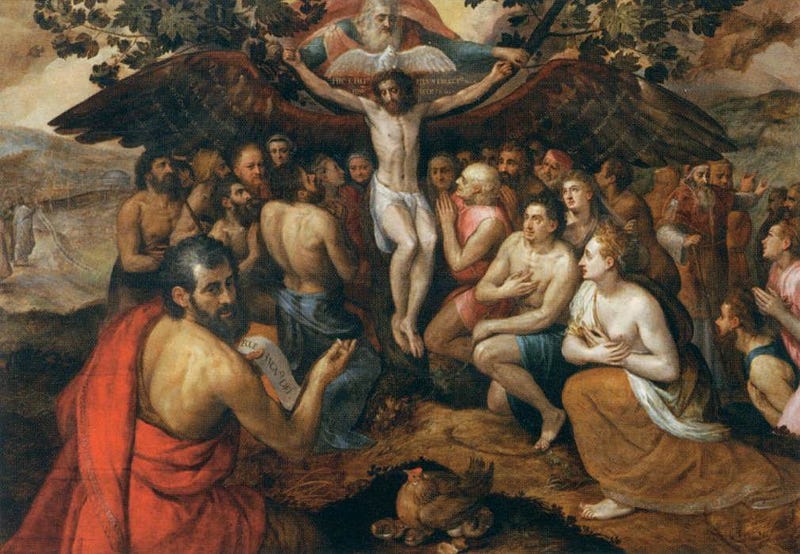
The Bible used the imagery of the stomach to show that Jonah was being digested — for the unconscious brings forward and restores that which is resourceful and destroys what is harmful and poisonous. The ego construct – his character, his hopes and dreams – with which Jonah had so far interacted with the world had to fall if he was to fulfill his divine destiny. But, Jonah was too proud to abandon his old life. He had attached his identity to the pleasures of the world — he was wealthy, he was well liked and he had a family.
“For whoever would save his life will lose it, but whoever loses his life for my sake will find it. For what will it profit a man if he gains the whole world and forfeits his soul? Or what shall a man give in return for his soul.”
Matthew 16:25–26
But God, Jonah’s intuition or the universe, however you wish to name it, called to Jonah and demanded that he expand his personality and let go of the things of this world — for there was a greater mission that awaited him. And so, he had to die to himself, to let go of his old container in order to nourish himself with his purpose.

This idea — that you must die before you die — is an ancient truth that is shared across the religions. Indeed, to evolve in the world requires that you integrate the vast internal landscape of who you are and who you could be with the constrained and limiting barricades of the ego.
As Jonah left the darkness and rose from the dead, he achieved this integration of spirit and mind — he transcended the limits of the flesh and re-associated himself with the powers of nature. After he had discovered his truth, Jonah reoriented himself to the new phase of his life. And, with renewed energies and restored faith, Jonah, the hero, tasted blood and decided, as St. George and Siegfried did, to slay the dragon that had corrupted Nineveh.
Here, we reach the message behind the story of Jonah: Betray your destiny, betray the responsibility that God has given to you, and see how long it takes before you drown in a storm. Because if you choose to deliberately avoid fulfilling your deepest truth and refuse to face the dragon, the underworld will pull you into the depth of the unknown and you will be forced to reconcile with the unconscious self.