The Intelligent Design of the Universe

Michio Kaku, who is highly regarded in the scientific community thanks to his work in helping to popularize the String Theory, has developed a new theory which he says points to the existence of God or an intelligent designer for the universe.

The American scientist, who is a professor in theoretical physics at the City College of New York, came to his conclusion by studying “primitive semi – radius tachyons”.

These tachyons are theoretical particles that have the ability to “unstick” matter in the universe or vacuum space between particles, essentially leaving everything free from the influence of the universe.

This led Mr. Kaku to the conclusion that the universe was created through design, and not random chaos and that we could be living in a type of “matrix”.

He said of his research: “I have concluded that we are in a world made by rules created by an intelligence.

“Believe me, everything that we call chance today won’t make sense anymore.

“To me, it is clear that we exist in a plan which is governed by rules that were created, shaped by a universal intelligence and not by chance.”

He said in a YouTube video: “The final solution resolution could be that God is a mathematician.

Related image

“The mind of God, we believe, is cosmic music, the music of strings resonating through 11-dimensional hyperspace.”

With all of the calculations that would need to go into creating a successful universe, Mr. Kaku says that God is a mathematician – which could imply that we are living in a simulation, which many experts are considering the notion of.

https://en.wikipedia.org/wiki/Michio_Kaku

MilkyWay Astronomers

The 8 Most Famous ‘Functioning Alcoholics’ in History

 Taryn Smee (thevintagenews.com)
Featured image
Photo by Getty images

From the rituals of the Greeks and Egyptians to the formation of countries and culture, alcohol has lubricated the minds of some of our greatest thinkers.

Whether spearheading an empire or founding a cultural movement, some of our most famous drinkers have achieved monumental things despite having a fondness for the sauce.

While their achievements can be admired, their alcohol intake is not to be imitated. Drink responsibly this weekend.

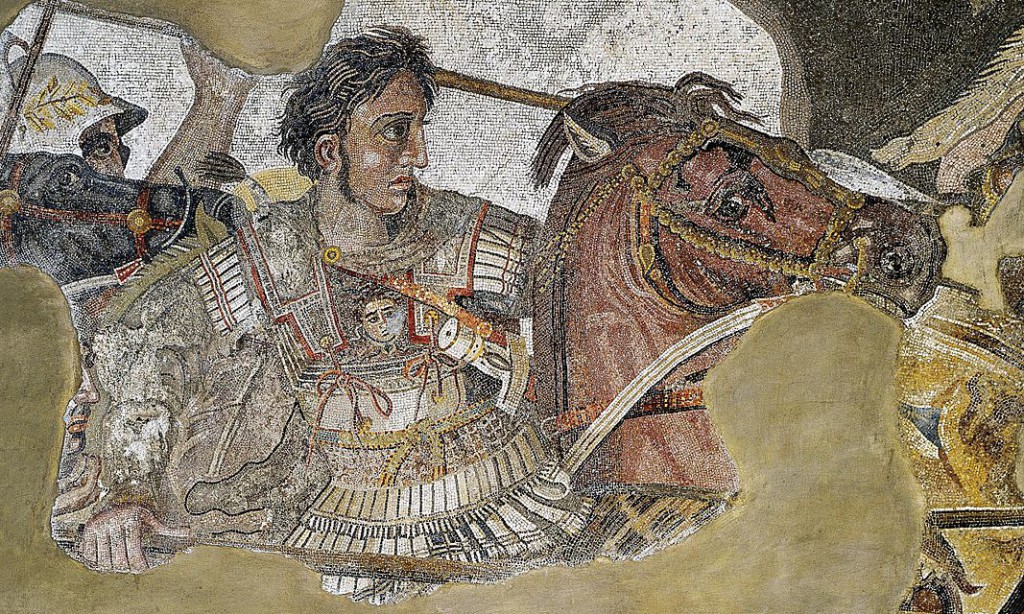
Alexander the Great

Alexander the Great is depicted with sideburns in a mosaic from Pompeii.

Arguably the drunkest overachiever in history. By the time of his death at the age of 32, very likely related to malaria exacerbated by excessive alcohol consumption, Alexander the Great had conquered most of the known world, murdered one of his best friends in a drunken rage and was responsible for a drunken orgy which led to the burning of a Persian palace in Persepolis in 330 BC.

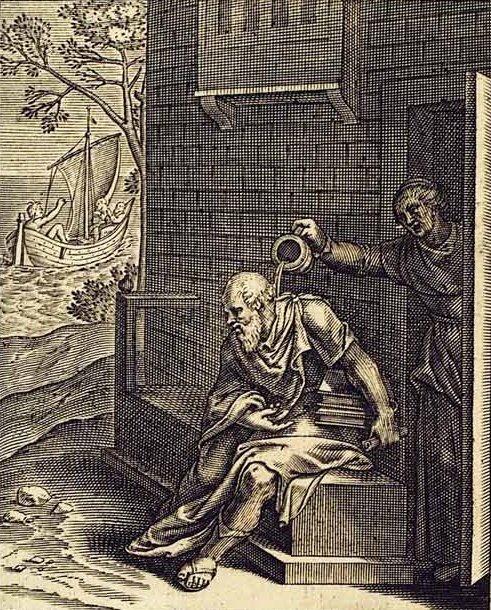
Socrates

Being the father of western philosophy may not have happened if it hadn’t been for the Ancient Greek tradition of holding symposia.

Socrates and Xanthippe

At a symposium, men would dine together and then drink into the night discussing the big ideas of the time.

Socrates was known to drink big but never appear drunk, holding court among his admirers including Aristotle.

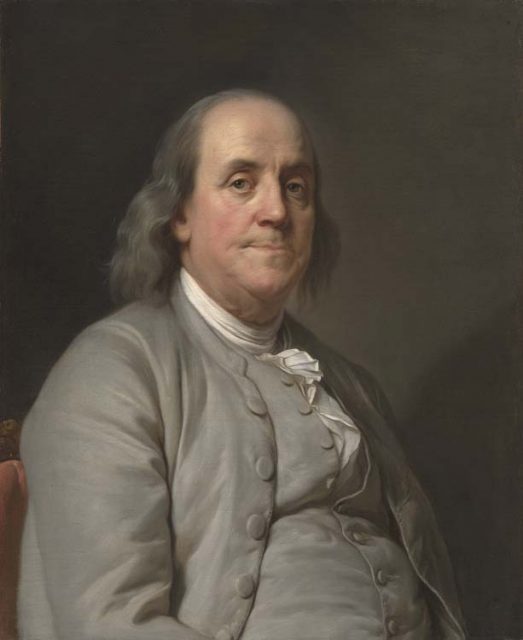
Benjamin Franklin

Fresh water during Benjamin Franklin’s time was so unsanitary that it was safer to drink fermented and distilled beverages.

Benjamin Franklin

The Founding Father seems to have enjoyed this more than others and is famously quoted as saying “Beer is living proof that God loves us and wants us to be happy.”

Lord Byron

One of the leading lights in the Romantic Movement and arguably one of the most influential English poets of all time, Lord Byron was known for spending big and partying hard.

His drank his libations from a skull-shaped cup and is known for writing “Man being reasonable must get drunk; The best of life is but intoxication.”

Portrait of Lord Byron

One of his many mistresses, Lady Caroline Lamb, said of Byron that he was “mad, bad and dangerous to know.”

Lord Byron is also a national hero in Greece for his role in the Greek War of Independence against the Ottoman Empire.

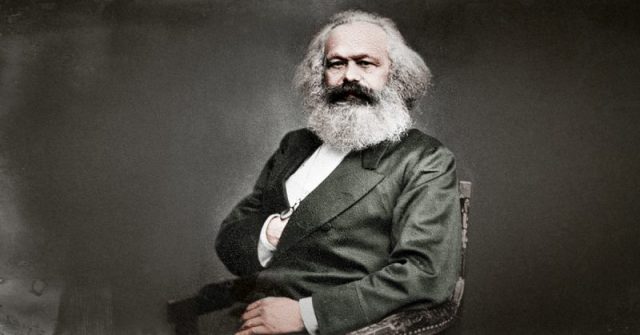
Karl Marx

The man who inspired the dictators everywhere was famous for excessive boozing.

Along with his partner in thought, Friedrich Engels, the two drank their way across Europe and changed the course of political history along the way.

Karl Marx

Marx and Engels met in 1844 and during ten beer-soaked days formed a lifelong partnership that resulted in the Communist Manifesto and Das Kapital.

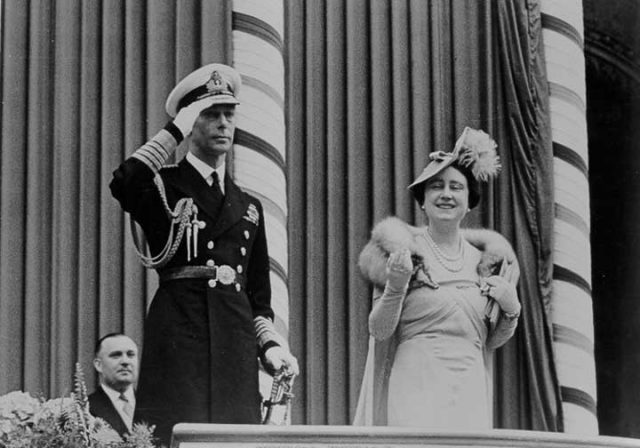
Elizabeth the Queen Mother

Bastion of old English reserve and beloved matriarch of the Royal Family, the Queen Mother was known to start the day with a cocktail at noon and end with two glasses of Veuve Cliquot at dinner.

King George VI and Queen Elizabeth at Toronto City Hall, 1939.

During the war, after refusing to leave London, the Queen Mother held court at Buckingham Palace, raiding the wine cellars and ensuring everyone maintained their high spirits.

Portrait of Her Majesty Queen Elizabeth The Queen Mother painted by Richard Stone in 1986.

The Queen Mother, who lived to the age of 101, famously said that “I couldn’t get through all my engagements without a little something.” And her staff made sure there was always a bottle of gin in her carriage for between engagements.

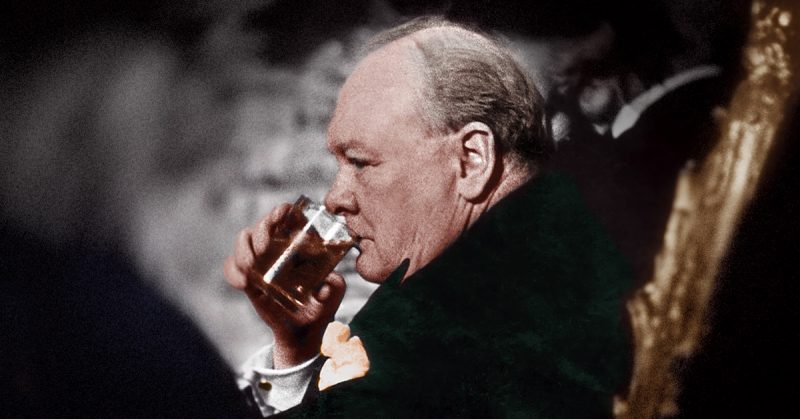
Winston Churchill

Two-time Prime Minister, Nobel Prize winner and accomplished watercolorist, Winston Churchill also served on the front lines of Cuba, India, Sudan, and South Africa, all while cultivating a mammoth drinking habit.

Winston Churchill giving his famous ‘V’ sign, May 1943.

He would start the day with a Johnny Walker and water, a habit he picked up in India where the water was almost unpalatable, and would end the day with a few glasses of scotch, champagne and a highball.

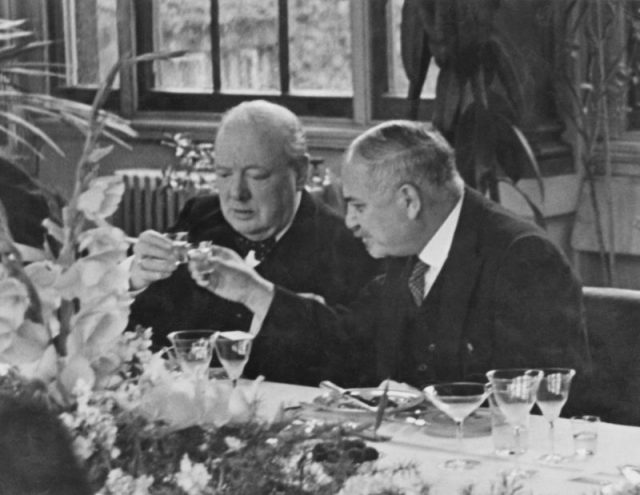
British Prime Minister Winston Churchill (left) clinks glasses with Soviet Ambassador Ivan Maisky at a lunch party given by the ambassador for representatives of all the Allied governments, in the Winter Garden of the Soviet Embassy in London, August 1941.

There is some debate among biographers about the breadth of Churchill’s drinking, but Churchill himself acknowledged that alcohol had a significant impact on his life when he famously said, “I have taken more out of alcohol than alcohol has taken out of me.”

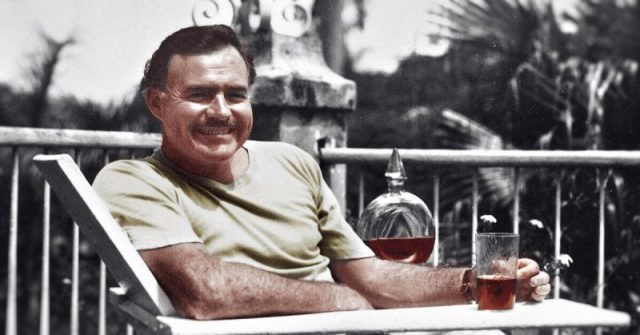
Ernest Hemingway

Hemingway’s love affair with booze started as a young fifteen-year-old reporter in Kansas City and was kicked into overdrive when he went to Europe during World War One.

He proceeded to drink his way around the world and write books that captured the emotional heartache of a generation.

Ernest Hemingway

Having moved to Paris to escape prohibition, he took full advantage of the bars of Europe and famously shared wine with Fascist dictator Benito Mussolini. Of his drunken escapades Hemingway wrote, “I have drunk since I was fifteen and few things have given me more pleasure.”

Read another story from us: Alcohol Inspiration: The Drinking Habits of 8 Famous Writers

Hemingway would publish numerous works including For Whom the Bell Tolls and The Sun Also Rises precipitating a new wave of American literature and was awarded the Nobel Prize for literature in 1954.

(Submitted by Richard Burns, H.W., M.)

How to Make the Power of Your Subconscious Mind Work for You

So creative, it seems like magic: a step-by-step guide to unleashing your most innovative brainpower

Our rational, conscious mind is a wonderful thing. But sometimes when we are looking for a solution, it can be a limited resource. I’m always looking for ways to work smarter, not harder.

What if I could come up with answers in my sleep? I discovered that it’s possible to do just that.

To the outsider, it can look as if someone were literally dreaming up solutions to situations. What’s really happening, though, is that a person who is skilled at this is first removing their overeager conscious mind temporarily from the equation, and then mobilizing the power of their subconscious minds through the power of a specific question.

It’s not half as complicated as that last sentence suggests. Questions are the key. I learned how to make this work for me, and I’ll show you how to do it, too.


How Does It Work?

To understand better how the mind works, we’re going to look at an analogy from science fiction: the Starship Enterprise from Star Trek—partly for its shape, and partly for the the way the different departments interact.

The “bridge” of the ship is the place where most of the action appears to happen—it’s the control center. Captain Kirk stands manfully on the bridge of the Enterprise, making decisions and giving orders—with an ego the size of a nearby planet.

Captain Kirk is, in fact, the perfect example of ‘ego’ from the point of view of psychology or personal development: he’s our self concept or the representation of the constructed self.

The Oxford dictionary defines ego as “the part of the mind that mediates between the conscious and the unconscious and is responsible for reality testing and a sense of personal identity.”

Despite what he gets up to in the series, Captain Kirk’s job is to ensure the success of his mission and the continual wellbeing of his crew and ship. It is up to him to receive and evaluate information, weigh options, and decide on the best course of action.

Our conscious brain work is like our own ‘Captain Kirk’, standing on the bridge of our mind, taking control and trying to make all the decisions. Any problems or situations to be reviewed come here first to the bridge, and our conscious mind is very good at making those decisions.

However, like Captain Kirk, our ego can be a little too full of its own importance and overeagerness to solve issues. It often doesn’t notice all the possible solutions, or make use of resources better suited to finding those solutions.

The bridge is only a small part of The Enterprise, however. Supporting everything happening on the bridge is engineering. The bridge and Captain Kirk may look like the center, but without engineering, no one’s going anywhere. Engineering is where the warp engines lay, and where all the data is stored from every mission and available databank.

The WILL to boldly go may be on the bridge of the ship, but the POWER to get there is in the engineering bay.

The engines and the supercomputers in engineering never stop, never sleep—unlike Captain Kirk. They receive instructions, then keep processing and working away until a solution is found.

In The Enterprise of our mind, the engineering bay is our subconscious mind. Always processing, it doesn’t sleep like the conscious mind.


The Problem-Solving Power of the Subconscious Mind

Max Maltz likens the subconscious mind to a supercomputer or autoserver mechanism in his work (and subsequent book), Psycho Cybernetics. Maltz originally published this back in 1960, but his methods and ideas are still prevalent, and relevant, today. You can see the influence of his work in that of thought leaders such as Zig Ziglar, Tony Robbins, and Benjamin P. Hardy.

He explains that in the same way that a machine does not reason or judge, rather it just follows the task set it, so does the subconscious mind.

A really simple example of this is when you’re trying to remember someone’s name. It bugs us, doesn’t it? The simple question of “what is their name?” is sent back from the conscious to the subconscious mind, where our search engine works away until three hours later, while washing up, we think “Jane!”

The original situation has passed, but the subconscious “engineering” has been working away to find an answer while our conscious mind has been doing other things. Now while we’re doing something that doesn’t involve high levels of brain power, the message can get through, “Hey, you on the bridge: Jane!”

Another example of the play between conscious and subconscious is how they work together when we need to make a decision. For example, let’s say I want to buy new shoes.

As I go about my daily tasks, I now start noticing people’s shoes. The file is still open on ‘Which shoes do I buy?’ so my data collection devices (eyes and ears) send information back into the control center (conscious mind) which does a quick evaluation (horrible color/looks comfy).

Did I notice people’s shoes before? Not really.

Were people wearing shoes before that? Of course! I just didn’t have a “scan and search” order set for “shoes”.

Buying shoes is a simple example, but the same principle is in action if we want to change our job, find a course, meet a new partner, or discover a way to change an area of our lives. We can set an order to search and scan. The data comes in, and the amazingly powerful subconscious connects and compiles it, even when we are not consciously thinking about it.


How to Get It to Work for You

We know that asking the right questions are the key, and that we need to get the Captain Kirk of our ego to release its hold on the situation and take a break.

So now we can look at how to practically do that and set up our brains for finding creative solutions and success.

Questions are the key. A question is better than an opinion or affirmation for finding creative solutions. Positive affirmations can be very effective for changing the programing in our subconscious, but it doesn’t send the command to do anything: to search and connect.

I’ve been consistently working on this idea of setting my subconscious a question for nearly a year and I have noticed differences in my results. Here is what I’ve learned, through trial and error, and some corresponding research.

Ask quality questions

Good questions invite action and expansion. The subconscious loves making connections and having something to do, and it loves good questions.

Secondly, the focus of the question makes a difference. A big difference.

If I send the question ‘how can I feel less tired all the time?’ it’s a negative question. The focus is on feeling tired, so that’s what you are telling your computer to focus on. The resulting thoughts and feelings will reflect this focus. ‘Tired’ in, ‘tired’ out.

By rephrasing the question to: ‘How can I re-energize myself this week?’ the focus is positive, on energy and feeling energized, and the results will follow suite. By setting a specific time frame of this week or tomorrow, you are also setting nice manageable parameters for your subconscious to play with.

I found that it was worth spending a little time phrasing my questions so they were positive and specific. The five or ten minutes I spent weighing the question until it felt right and in line with what I wanted was worth it in results.

Get your ego to let go

When we hold on to our issues in our conscious mind, it can cause stress and frustration. It’s not surprising really: it needs options and space with which to consider decisions or have that insight.

Essentially, you need to take a break! It might sounds surprising to say that to find the solution, you should stop consciously working on it. Remember: Archimedes didn’t have his ‘Eureka’ moment until he had his bath.

Sherlock Holmes, although a fictional character, would play chess or the violin when wanting the answer to something that had him stumped. I wonder how many times Arthur Conan Doyle did something similar as he allowed his mind to percolate his stories and ideas?

Personally, I find taking a break allows me release the build up of pressure in my thoughts, meaning that the only headbanging that I do is to music.

Take a break to be more productive.

It is an effective short term solution. It gives ‘engineering’ time to sort through data and make connections, send the results back up to the bridge and … ‘Eureka!’

Nap to release the ego

Thomas Edison would regularly take a nap when faced with a problem. He is famous for taking a nap in his chair while holding two metal balls in his hands, which would drop and wake him if he fell into a deep sleep. The answer or insight would often be there upon waking.

Albert Einstein and Nikola Tesla were also famous for their napping habits.

Did you know that famous British prime minister Winston Churchill had a bed in the Houses of Parliament, and was convinced that his regular siestas and power naps were part of the success of his governing?

I used to laugh at the idea of a power nap—they’re for grannies, right? But I found I was wrong and that sometimes a brief bit of downtime refreshes my energy levels, and allows my subconscious mind to shine. The subconscious doesn’t sleep, remember, so a brief bit of shut eye effectively releases my conscious mind’s hold on a subject so that ‘engineering’ can do what it does best.

Sleep, perchance to dream…

Napping is good, but what I find to be most effective is to ask a question at night, right before sleeping.

In bed, nice and relaxed, I like to review my day and send a question to my subconscious to play with while I recharge my batteries.

I’m literally working in my sleep.

One article on neural plasticity published in the ‘Frontiers in Neural Circuits’ journal explains that —

During sleep, new synaptic connections are formed, and old connections are ‘cleaned up’. This can allow you to see patterns where none existed before.”

Edison is said to never have gone to sleep without first setting his mind a question. Those patterns mentioned in the article are what give us the solutions and insights the next morning.

Write your pre-sleep question down

Writing the question down before sleep helps me twofold.

It helps me to think about, and carefully form, the best question to give me the best answer. It also reminds me in the morning what I’d asked.

Writing it down at night to review the next day keeps me on track.

This has become a part of my nightly routine—a sort of mental hygiene. In the same way that I brush my teeth at night as part of my dental health, I also review my three wins and set my question in my journal as part of my mental health.

Journal in the morning

The technique of setting your question at night before sleep works really well in conjunction with morning journaling.

I’m not talking about the ‘what I had for breakfast and my back aches’ type of journaling, but rather a form of writing where we move ourselves into a peak state of focus and set our most valuable priorities for our day, sculpting our future before it happens.

Some use the habit of ‘morning pages’, where they brain-dump, first thing in the morning, as they write without specifically filtering ideas. Nedd Herrmann in his work on brain waves confirmed that there is something special about capturing your mental state upon first waking:

“During this awakening cycle it is possible for individuals to stay in the theta state for an extended period of say, five to 15 minutes — which would allow them to have a free flow of ideas about yesterday’s events or to contemplate the activities of the forthcoming day. This time can be extremely productive and can be a period of very meaningful and creative mental activity.”

This creativity is vital. It allows us to think from a different perspective and see what we couldn’t see before.

Don’t make the mistake of thinking that writing morning pages is just for, say, creative writers. It can be used by anyone wanting to access their full range of brain power.


Your Beautiful Mind

Our mind is amazing. What I see in my personal experience and research on this topic is that it is possible to maximize our potential and productivity through a simple habit.

  • Create a question.
  • Let that question resonate.
  • Trust your subconscious mind to come through for you.
  • Go do something else, like sleep.
  • Be ready and aware for the answer.

Promoting greater balance and cohesion in my mind is important to me, as is working smarter—not just harder—to create what I want.

I’m no Einstein or Churchill, but by emulating their habits, I can better my own, and then let those habits improve my life. I also have less headaches now, and I’m having fun playing with this simple technique to increase my creativity, insight, and productivity.

After all, that’s not something that I’m going to lose any sleep over, right?

Bentinho Massaro’s Free Teachings

The following is a clear overview of every primary way in which you can engage with Bentinho Massaro’s extensive free teachings, to see which platforms are right for you. Everything listed is free.

WWW.BENTINHOMASSARO.COM

This is mostly an “online business card.” Aside from several great blog articles by Bentinho, this is not the platform for the bulk of Massaro’s transformative content. It’s more a place to get introduced to and learn about Bentinho, and to sign up for our newsletter, which we highly recommend. You can easily share this website with friends for introductory purposes.

MONTHLY NEWSLETTER

Regardless of your interest level, we ask that you please subscribe to our newsletter. It’s a reliable way to get the most important updates on Bentinho’s work, as well as to receive inspiring content, without having to keep track of everything on social media. Whenever there is something big or important to announce, or a quality interview or new offering available, you will be sure to hear about it in our newsletter. We also send inspiring articles, quotes, and videos every now and again. On average, we send out 1 to 2 emails per month. We’re looking to double the frequency of our newsletters by next year so that you will receive a weekly update with a summary of all new content made available that week.

WWW.TRINFINITYACADEMY.COM

After visiting www.bentinhomassaro.com and following Bentinho on Instagram, Facebook or YouTube for a while, we generally recommend that people jump headfirst into Trinfinity Academy. It’s an accessible online school for the full enchilada of enlightenment and empowerment teachings.

Although it’s not one of Bentinho’s most recent offerings, Trinfinity Academy is truly brilliant in structure, flow, and content. What’s so good about it is the ease with which one can incrementally digest multi-level teachings and precise instructions in a way that feels like a breeze.

Trinfinity Academy originated as Bentinho’s vision of a platform that would allow the main components and the most important realizations of the paths of Enlightenment (Self-Realization) and Empowerment (Self-Actualization) to be organized for the beginning to intermediate seeker. But even advanced seekers have expressed that the Academy brings things together for them in a way they’ve always longed for! So it’s really a must to go through these courses to get your spirituality up to date with modern standards of holistic, authentic, contemporary spiritual understanding.

Trinfinity Academy can be seen as the coming together of East, West, and Cosmos. It is a skillful blend and integration of the ancient, the modern and the New Age, giving the spiritual seeker a totality of understanding that transcends any one of the above-mentioned categories of spirituality.

With over 100 video lessons to digest in a recommended order (categorized by course and type of teaching) your consciousness and mind will undergo a major transformation. You will be upgraded to the point where you will then be ready to understand pretty much all of Bentinho’s content outside of Trinfinity Academy. Trinfinity Academy’s teachings are a profound foundation recommended for anyone interested in a holistic understanding of practical spirituality.

A few years ago, Bentinho and his Team decided to make the Academy free, giving up their main source of income at the time and their security as a company. This leap of faith was motivated by the inherently free and generous nature of someone living in faith, desiring to provide accessibility to this profound and precise platform so that all may awaken to their true Self and their infinite potential. Enjoy this life’s work offering of pure love for you, all of humanity and our potentially golden future.

WWW.YOUTUBE.COM/BENTINHOMASSARO

Watch hundreds and hundreds of videos on Bentinho’s popular YouTube channel,  which offers a wealth of teachings that you can apply to your everyday life. This too is entirely free of charge, and also free of YouTube advertisements. Please make a little extra effort to “like” every video you watch, write a positive comment, and share the video if you feel it has relevance for the people who follow you. And of course, by subscribing to the channel, you will be the first to see the new uploads.

WWW.INSTAGRAM.COM/BENTINHOMASSARO

This is the platform personally favored by Bentinho out of all of his social media accounts, as it allows for a more personal, intimate and occasionally contradictory (fun!) touch. It’s also a bit more artistic since images and short clips are such a central part of this platform. We highly recommend you follow Bentinho here, for the most personal and private peek into some of his life experiences, moments and insights.

WWW.FACEBOOK.COM/BENTINHOMASSARO

Although Facebook isn’t what it used to be in terms of reaching thousands of people with great ease, it’s still a good way to stay connected to Bentinho’s content and spread the love/light.

STEPHEN HAWKING’S FINAL THEORY ABOUT OUR UNIVERSE

Groundbreaking physicist Stephen hawking left us one last shimmering piece of brilliance before he died: his final paper, detailing his last theory on the origin of the universe, co-authored with Thomas Hertog from Ku Leuven.
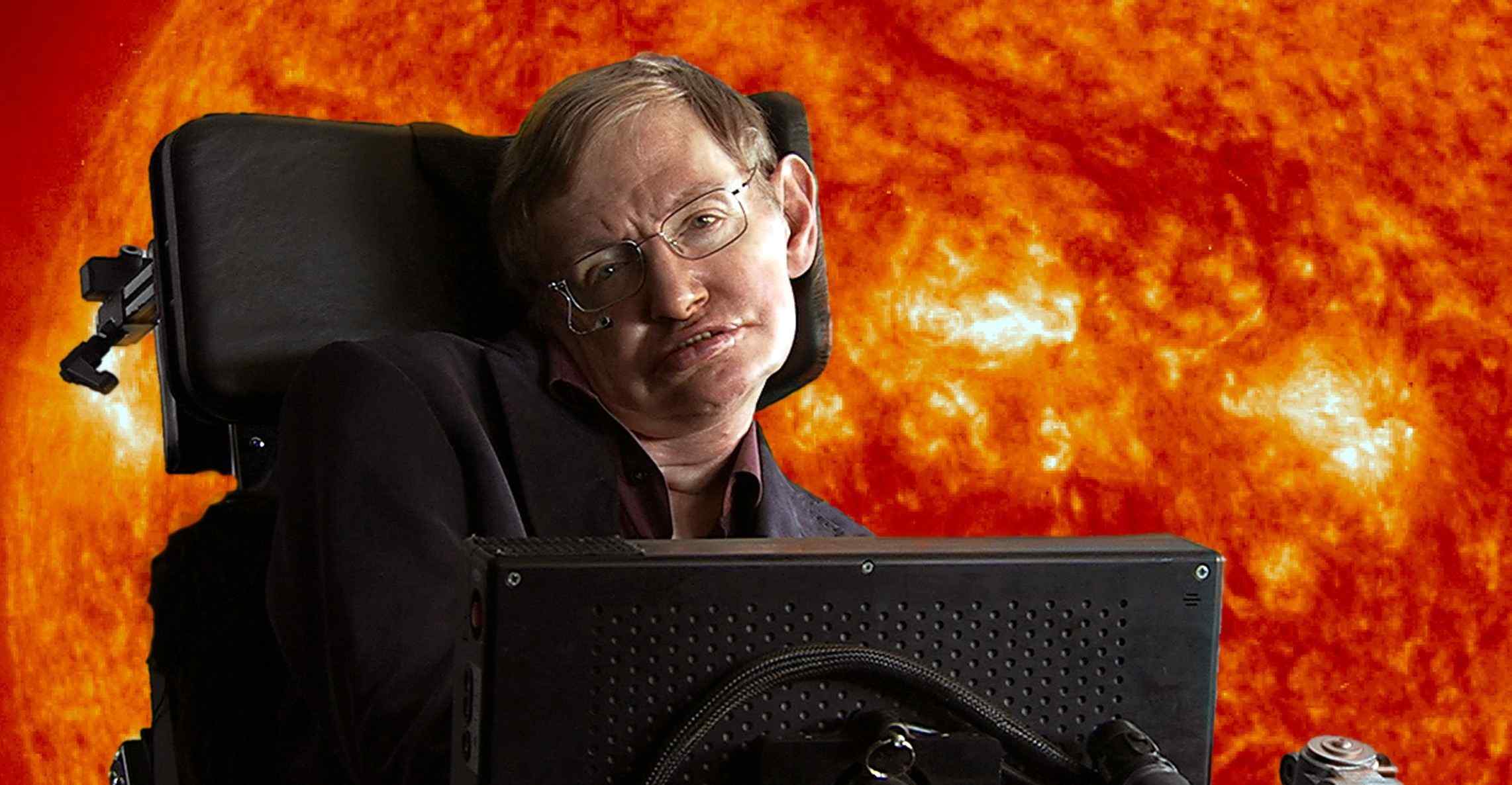
Image result for universe stephen hawking

The paper, published in the journal of high energy physics in May, puts forward that the universe is far less complex than current multiverse theories suggest.

It’s based around a concept called eternal inflation, first introduced in 1979 and published in 1981.

After the big bang, the universe experienced a period of exponential inflation. Then it slowed down, and the energy converted into matter and radiation.

However, according to the theory of eternal inflation, some bubbles of space stopped inflating or slowed on a stopping trajectory, creating a small fractal dead-end of static space.

Meanwhile, in other bubbles of space, because of quantum effects, inflation never stops – leading to an infinite number of multiverses.

Everything we see in our observable universe, according to this theory, is contained in just one of these bubbles – in which inflation has stopped, allowing for the formation of stars and galaxies.

multiverse inflating

Visualization of the inflating multiverse. (a. Linde/Stanford university)

“The usual theory of eternal inflation predicts that globally our universe is like an infinite fractal, with a mosaic of different pocket universes, separated by an inflating ocean,” hawking explained.

“The local laws of physics and chemistry can differ from one pocket universe to another, which together would form a multiverse. But i have never been a fan of the multiverse. If the scale of different universes in the multiverse is large or infinite the theory can’t be tested.”

Even one of the original architects of the eternal inflation model has disavowed it in recent years.

Paul Steinhardt, physicist at Princeton university, has gone on record saying that the theory took the problem it was meant to solve – to make the universe, well, universally consistent with our observations – and just shifted it onto a new model.

Hawking and Hertog are now saying that the eternal inflation model is wrong. This is because Einstein’s theory of general relativity breaks down on quantum scales.

“the problem with the usual account of eternal inflation is that it assumes an existing background universe that evolves according to Einstein’s theory of general relativity and treats the quantum effects as small fluctuations around this,” Hertog explained.

“However, the dynamics of eternal inflation wipes out the separation between classical and quantum physics. As a consequence, Einstein’s theory breaks down in eternal inflation.”

Hawking’s last theory is based on string theory, one of the frameworks that attempts to reconcile general relativity with quantum theory by replacing the point-like particles in particle physics with tiny, vibrating one-dimensional strings.

In string theory, the holographic principle proposes that a volume of space can be described on a lower-dimensional boundary; so the universe is like a hologram, in which physical reality in 3d spaces can be mathematically reduced to 2d projections on their surfaces.

The researchers developed a variation of the holographic principle that projects the time dimension in eternal inflation, which allowed them to describe the concept without having to rely on general relativity.

This then allowed them to mathematically reduce eternal inflation to a timeless state on a spatial surface at the beginning of the universe – a hologram of eternal inflation.

“When we trace the evolution of our universe backwards in time, at some point we arrive at the threshold of eternal inflation, where our familiar notion of time ceases to have any meaning,” said hertog.

In 1983, hawking and another researcher, physicist James Hartle, proposed what is known as the ‘no boundary theory’ or the ‘Hartle-hawking state’. They proposed that, prior to the big bang, there was space, but no time. So the universe, when it began, expanded from a single point, but doesn’t have a boundary.

According to the new theory, the early universe did have a boundary, and that’s allowed hawking and Hertog to derive more reliable predictions about the structure of the universe.

“We predict that our universe, on the largest scales, is reasonably smooth and globally finite. So it is not a fractal structure,” hawking said.

It’s a result that doesn’t disprove multiverses, but reduces them to a much smaller range – which means that multiverse theory may be easier to test in the future, if the work can be replicated and confirmed by other physicists.

Hertog plans to test it by looking for gravitational waves that could have been generated by eternal inflation.

These waves are too large to be detected by LIGO, but future gravitational wave interferometers such as space-based LISA, and future studies of the cosmic microwave background, may reveal them.

The team’s research was published in the journal of high energy physics, and can be read in full on arxiv. Good luck.

~ http://www.milkywayastronomers.com/2018/12/stephen-hawkings-final-theory-about-our.html?fbclid=IwAR2Wk57kQmGBpwRwOxARvCa1dGixYoTPSUgEFK_nedPf7dwCSN2YqKfLTWY

Cancer Full Moon, December 22th, 9:49 am PST

Wendy Cicchetti

This Full Moon period has a slightly restrained quality, with the masculine facets of the Sun and Saturn in Capricorn,opposing the Cancer Moon’s feminine, intuitive energy. The Moon is strong in its own sign of Cancer, but the Sun and Saturn seem to bear down on it, rather like severe parents or bosses, warning, “Take one step out of line” and the Moon will be in trouble! Yet this may be no disadvantage around the festive season’s often turbulent energy. Families brought together at Christmas can end up quarrelling, and this is reflected by the Full Moon making an out-of-signsquare to combative Mars.

Mars in Pisces can express as super-emotional, especially if people are more sensitive or alcohol is flowing. Nonetheless, Mars is conjunct Chiron, the sky’s Wounded Healer, so feelings need to be felt and tears may need to flow in order to heal something. With Mars sextile Pluto, we may be surprised at how deep our emotions run at times, but humans were intended to have feelings and to care. We need compassion for ourselves and for others in this process, with an attitude of “better let it out than hold it in,” while not taking too much too personally.

Pluto in earthy Capricorn reminds us that dammed-up emotions can solidify and cause problems to grow in the body. Mars–Chiron in Pisces may help to release the emotional charge around a matter that has begun to manifest as a health problem, with healing soon to follow. For some, this could literally indicate opting for surgery or other remedial treatment.

There could also be a wonderful surprise that nobody saw coming, marked by Uranus in trine to the Sun and sextile to the Moon. This may not seem obvious in the astrological picture at first, because the connection is out of sign, with the Full Moon at 0° Cancer–Capricorn and Uranus aspecting the Sun–Moon opposition from 28° Aries. The link is clearly there, though, with an orb of only 2° making it quite potent. Whatever the surprise turns out to be, it promises to light up this period of the year which, for many, can be a time of external and internal darkness. With Uranus retrograding back through Aries, the surprise element has a distinctly personal and individual feel, whilst also extending further, due to the natural reach of outer planets. Tradition and modernity may even harmonize in the mix of Sun–Saturn in early Capricorn and Uranus in late Aries. Families and communities could gain a greater sense of peace by “paying it forward.”

Undoubtedly, this is a “watery” lunation, with the Moon in Cancer and Mars in Pisces, but the respective focuses of these water signs do differ from one another. Cancer is cardinal water, which relates to the need to lead the way and take action; Pisces is mutable water, relating to blending and melding. Pisces can be the slippery fish that avoids getting pinned down and caught; drawing on its survival instinct, it will wriggle free or dart away in another direction. Cancer is more likely to man the fort, take a position, and fight for a particular outcome.

In this Full Moon setup, the Capricorn emphasis of Sun–Saturn suggests that backup may be needed for anything to be accomplished. With square aspects, the planets emphasize that we have choices: We may turn this way or that way, take help or not take help. We just need to be mindful of the possible consequences of going forward, in either direction.

Also notable is Mercury’s move from behind Jupiter to ahead of it in the zodiac. Compared to the December 6–7 lunation picture, this looks like progress, of a sort. Yet care is needed with thoughts and words, internal and shared, now that Mercury is in Sagittarius — effectively “alien” territory, in the sign opposite its natural/archetypal Gemini placement. Mercury, far away from its own turf, may not know the ropes and is unfamiliar with the rules, which could prove troublesome when speaking or acting out of line. We should not forget, however, that Mercury is still very close to Jupiter in its own sign of Sagittarius, hinting that as long as we do not bend the truth too far, or say anything too caustic or sarcastic, we can still achieve positive results.

Written by Diana McMahon Collis for the Mountain Astrologer Magazine

Full Moon symbolizes the fulfillment of the seeds planted at a previous New Moon or some earlier cycle. Each Full Moon reminds us of the seeds that may be coming to maturity, to their fullness, to fruition, to the place where the fruits or gifts are received. It may seem that fulfillment of our goals takes a long time. Some intentions may manifest within the two week phase prior to the next New or Full Moon. Some however, depending on their complexity, may take a much longer time. Just remember that our thoughts and emotions set Universal Action in motion and much work takes place behind the scenes as everything is orchestrated for fulfillment. Keep visualizing your goals as though you have already attained them and they will eventually manifest. Do not concern yourself with current conditions or worry about controlling it. The universe takes care of those details. Just keep seeing what you want, and move in that direction with your actions, and give no energy to what you don’t want. Patience is required.

Consciousness, panpsychism, and AGI: What is it like to be a hat?

What if consciousness isn’t all about the brain?

BEN GOERTZEL: Consciousness is one of these great vexing and confusing words and concepts, which intelligent people take different positions on and could argue about forever. My own perspective on consciousness is rooted in what you could call a sort of panpsychism, by which I mean the idea that consciousness is in essence a property eminent in existence, as much as space and time are. I mean everything that we see around us somehow is situated in time and in space, in our space-time continuum; panpsychism is the idea that everything around us and within us has some element of consciousness to it also, so that it’s not really meaningful to think of: ‘Here’s this non-conscious matter and then there’s this thing called consciousness, which is attached to some matter and not to others.’ Now panpsychism to me is not even that interesting, it’s almost obvious — it’s just the foundation, the beginning for thinking about consciousness because then you have interesting questions like why is the consciousness associated with my brain so much more self-reflective and dynamic and in some senses intense than, say, the consciousness associated with my hat? I mean, it’s a cool hat, it may be more conscious than the average hat, but in the end the brain has these complex feedback loops, the brain can model itself, the brain responds very differently to slightly different stimuli coming in and many properties of the brain seem associated with the more powerful and dynamic states of consciousness that it has relative to other things. So, if you accept panpsychism, that everything is imbued somehow with an element of consciousness, some things can still be more conscious than others and some things are differently conscious than others. And then that’s where things get interesting.

When you talk about AI — so I would imagine if I were able to tap a wire into my brain or wi-fi connection into my brain and wire my brain into your brain, then as I increase the bandwidth of that wire between my brain and your brain, I would feel your mind there on the fringe of my mind, like almost as if we were fusing into one shared mind or something. That would be a bit freakish, it could be a lot of fun. But on the other hand, if I took my mind and wired it into my hat, I might feel what it is to be a hat, but I would imagine that whatever consciousness I feel on the other end of the wire, it’s not going to be quite the same as a melding my mind with the mind of another human; it’s going to be melding my mind with something that doesn’t change very much or have much variety to its state. On the other hand, what if we think of Sophia version 10.0 with her mind enhanced by the SingularityNET blockchain-based AGI mind cloud — what if I wire my brain into that? Does it feel like wiring my brain into a human brain? Does it feel like wiring my brain into a hat or a brick or an earthworm? These would be very interesting experiments to do and they’re even scientific in the sense that they could be audited by the community. If I wired my brain into my hat and then I said, ‘Well I don’t feel too much of the hat’s consciousness there, just a little’, you could wire your brain into that wire and then view what is the fused state of myself and the hat. Or if I wired my brain into super Sophia and I said ‘Wow that’s a really intense state of consciousness, now I feel what it’s like to be a robot’ and it’s amazing you’ve got sensors all over the globe, it’s like a DMT trip to the 10th power. You could wire your brain into that wire and like look in on that subjectively and think ‘Whoa yeah, I can feel on the fringes of my consciousness like there’s Ben some Sophia SingularityNET super mind, which are fusing together in an intensely conscious way.’

So this is what I think of as second-person science because it’s a little different than just first-person experience that others can’t audit, except indirectly through words or pictures or something. It’s also different than typical third-person science where you’re concerned with spreadsheets of numbers that are read out from the dials of experiments and so forth. It’s sort of scientific community-based auditing of shared experience among different entities. And I think this is going to unfold in the next decades as brain-computer interfacing and brain-brain interfacing technology mature beyond their current significant but still early stage. And this is probably how we’re going to really crack the nut of consciousness and see in what sense does panpsychism make sense and what sense are humans differently conscious than different types of computer systems and so forth.

  • Panpsychism is the idea that there is an element of consciousness in everything in the universe. The theory goes like this: You’re conscious. Ben Goertzel is conscious. And his hat is conscious too. What if consciousness isn’t about the brain at all, but it’s as inherent to our universe as space-time?
  • “Now, panpsychism, to me, is not even that interesting, it’s almost obvious — it’s just the foundation, the beginning for thinking about consciousness… ” says Goertzel. It’s what comes after that excites him, like the emerging technology that will let us connect our minds to bricks, hats, earthworms, other humans, and super AGIs like Sophia, and perhaps glimpse at the fabric of consciousness.
  • Goertzel believes brain-brain interfacing and brain-computer interfacing will unfold in the coming decades, and it’s by that means that we may finally crack the nut of consciousness to discover whether panpsychism makes any sense, and to learn why humans are so differently conscious than, for example, his hat.

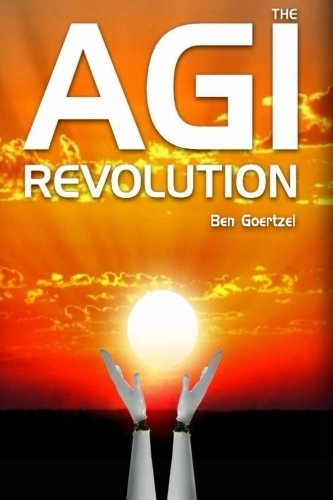
AGI Revolution: An Inside View of the Rise of Artificial General Intelligence
List Price: $24.99
New From: $23.40 in Stock
Used From: $23.34 in Stock