TRANSLATION ADVENTURE – 4/22/18

Translators: Heather Williams, Zoe Robinson, Alex Gambeau

SENSE TESTIMONY:

Suggestions: Confused attention prevents right action

5th Step Conclusions:

  1. Hence that which is so is Consciousness Infinitely aware of, attending harmoniously to Itself being all there is as that which is Right Action.
  2. One Infinite Truth is Here Now energizing Consciousness of Right Action.
  3. Awareness is the flow of one I Am that I Am, stretching, Mind, Consciousness and Formless Thinking Force.

The Ecological Disaster that is Trump’s Border Wall

April 9, 2018

The wall could cut off a Texas wildlife refuge and the habitat of big, beautiful cats.  During the campaign, it was easy to scoff at President Donald Trump’s promise to build a “big, beautiful” concrete wall along the US-Mexico border. It sounded, well, preposterous.

But now the prospect of a border wall is quite real. Trump has requested $1.6 billion for fiscal year 2018 to build three segments totaling 74 miles. The Department of Homeland Security is planning to test the eight prototypes it built this summer in San Diego over the next 30 to 60 days.

There’s a long debate over whether physical barriers on the border actually curb the illicit flow of people and drugs. The Border Patrol, which is backing Trump’s plan, says they’re a “vital tool.” Migration experts say they’re more symbolic than effective.

But what is undeniable is that the 654 miles of walls and fences already on the US-Mexico border have made a mess out of the environment there. They’ve cut off, isolated, and reduced populations of some of the rarest and most amazing animals in North America, like the jaguar and ocelot (also known as the dwarf jaguar). They’ve led to the creation of miles of roads through pristine wilderness areas. They’ve even exacerbated flooding, becoming dams when rivers have overflowed.

Now, DHS is eyeing unfenced areas in two Texas wildlife refuges that conservationists consider some of the most ecologically valuable areas on the border — home to armadillos and bobcats. If a wall were to slice through these ecosystems, it could cause irreversible damage to plants and animals already under serious threat.

“We’ve been dealing with all these negative environmental impacts of fences on the border for more than a decade,” says Dan Millis of the Sierra Club Borderlands project. “And Trump’s proposal would make it worse.”

The political boundary between the US and Mexico stretches 2,000 miles from the Gulf of Mexico to the Pacific Ocean. Along the way, there are three mountain chains, the two largest deserts in North America, vast cattle ranches, a handful of cities and their sprawling suburbs, and the Southern section of the mighty Rio Grande river.

Much of the region has never been heavily populated, and over the years, several large swaths of land have been designated as protected areas. Today there are 25 million acres of protected US public lands within 100 miles of the line. That includes six wildlife refuges, six national parks, tribal lands, wilderness areas, and conservation areas — all of them managed by various federal agencies and tribal governments.

On the Mexican side, meanwhile, sit protected areas like El Pinacate y Gran Desierto Altar, which abuts the US Cabeza Prieta National Wildlife Refuge and parts of the Organ Pipe National Monument and Barry M. Goldwater Range in Arizona.

These protected areas have been established, in part, to protect wildlife and plants that span both countries. In the case of the El Pinacate and Cabeza Prieta, desert species like the Sonoran pronghorn (an antelope relative) have been able to migrate back and forth. But in recent years, that’s gotten harder with the construction of long sections of vehicle barriers and fences, as you can see from the map.

“People think of deserts as barren lands and flat sand dunes with nothing there,” Sergio Avila, a conservation scientist at the Arizona-Sonora Desert Museum, says. “But deserts are very diverse and rich in life.”

Saguaro cacti, or “giant cacti,” and ocotillo cactus (in bloom) in the Organ Pipe Cactus National Monument park in the Sonoran Desert. Arterra / UIG via Getty Images


The protected areas on the border harbor an incredible array of wildlife and plants

When you trace the border from west to east (as this Story Map project by Krista Schlyer did), you find shrinking pockets of remarkable biological abundance. At the far west is the Tijuana Estuary, a key salt marsh habitat for some 400 species of migrating birds. At the far east, birds and butterflies stop through the Lower Rio Grande Valley, which is also a permanent home for colorful mammals, reptiles, and amphibians.

“There are tropical animal species in some of these canyons that are not found anywhere else,” says Jesse Lasky, a biologist at Penn State who has studied the impact of border fences on border species. “They inhabit these little slices of tropical ecosystem that creep up into the US near the Gulf coast.”

Not many scientists have measured the border’s biodiversity in its totality — or the full impact of fences. One of the few studies to tackle these questions was written by Lasky and co-authors in 2011. They estimated that 134 mammal, 178 reptile, and 57 amphibian species live within about 30 miles of the line. Of those, 50 species and three subspecies are globally or federally threatened in Mexico or the United States. And they survive only because people on both sides have worked hard to conserve them.

New walls through the Lower Rio Grande Valley could further isolate the few remaining populations of ocelots in the US. Arterra / UIG via Getty Images

Probably the most biologically impressive region on the border, according to Avila, is the sky islands, a range of mountain “islands” that extend from Arizona and New Mexico into Mexico and host a greater variety of life than almost anywhere else in North America. Most are part of the Coronado National Forest, the most ecologically diverse national forest in the country. The Coronado also hosts the greatest number of threatened and endangered species of any national forest in the US.

Living in those sky islands are spotted owls, jaguars, thick-billed parrots, barred tiger salamanders, Mount Graham red squirrels, and many more unusual species. But as with all of the protected areas on the border, these populations are dwindling fast. Climate change and urbanization are factors. But the biggest threat of all, according to Lasky, Avila, and other conservationists in the border region, are the fences that have been built along the border in the past couple of decades.

Border fences have been terrible for wildlife and plants

Since 1994, the US government has been erecting barriers to keep people and drugs from Mexico and beyond out. By 2010, about one-third of the border had been fenced with materials ranging from barbed wire to steel, bollard to wire mesh, and chain link. In addition, the Department of Homeland Security has built hundreds of miles of roads to allow the Border Patrol to access remote regions, both fenced and unfenced.

All of this construction has sliced and diced a lot of protected land along the border. And ever since the passage of the Real ID Act of 2005, DHS has had the power to waive most environmental reviews in the name of national security.

So, unlike most federal infrastructure projects, these fences have received little or no input from the public, land managers, conservation groups, or other agencies. Experts had no chance to assess beforehand what impact the fence might have on wildlife, plants, and rivers. Only after the fact have researchers documented instances where fences have interrupted wildlife corridors, and caused erosion and other damage to fragile ecosystems, as well as flooding.

But what evidence we do have is alarming. For instance, Lasky and his co-authors found that the biggest risk comes when fences bisect the range of a small population of a species with a specialized habitat, leaving the majority of the population on one side and the others adrift. His paper found 45 species and three subspecies that the current fence has affected this way.

Mexican gray wolves are the most endangered wolf in the world. In 2016, there were just 113 in the US and about three dozen south of the border. Don Bartletti / Los Angeles Times via Getty Images
Cutting off animal populations in this fashion leads to reduced gene flow and inbreeding — leading to a greater risk of extinction. Conservation groups are particularly worried about the Mexican gray wolf; in 2016, there were just 113 in the US and about three dozen south of the border. A wall between them could make the recovery of the population unsurmountable.

Fences also can also restrict animals’ access to water sources — particularly problematic in the drought-prone Southwest. And they can make it harder for animals to adapt to climate change. “A lot of species do best in Northern Mexico, but with changes in precipitation patterns, they would need to disperse across the border,” says Lasky. “This is something we should be thinking about a lot more — how fast organisms are responding to climate change.”

The wall structures hurt animals and insects in other ways too. Some sections have lights that attract and zap pollinators, like the monarch butterfly, that migrate across the border. And the taller the fence, the more impassable it is for some bats and birds, like the cactus ferruginous pygmy owl.

Based on this research, leading groups like the Sierra Club, the Center for Biological Diversity, and Defenders of Wildlife have strongly recommended against any further construction of fences on the border.

Trump’s proposed wall could have a big impact on still-pristine areas

About two-thirds, or 1,350 miles, of the border, remains unfenced. Trump said on July 13 that he intends to build a total 700 to 900 miles of new wall, which will be exceedingly difficult to do. (Cost estimates for walling off the entire border range from $21 billion to $40 billion, and 700 miles would cost at least $12 billion.)

But it’s plausible that Congress will give US Customs and Border Patrol, the division of DHS in charge of border security, at least some of the $1.6 billion that Trump requested to build three segments totaling 74 miles for the fiscal year 2018. That would reportedly include “28 miles of new levee wall system in Rio Grande Valley, 32 new miles of border wall system in the Rio Grande Valley, and 14 miles of replacement secondary barrier in San Diego,” according to a DHS spokesperson.

San Diego is a sprawling urban center, but just south of it is the Tijuana Estuary, where the Tijuana River meets the Pacific Ocean. It’s one of the most biodiverse areas in the entire state of California, according to Millis of the Sierra Club, and has already been impacted by fences. Replacing the fences there could mean more habitat destruction in the estuary.

Activists in Texas who’ve been tracking fence construction over the years say they think part of the new levee walls CPB would build if Congress allocates the money for them will bisect the Lower Rio Grande Valley National Wildlife Refuge — a collection of dozens of tracts of habitat stretching from Brownsville by the Gulf of Mexico to Rio Grande City, about 100 miles west.

This area is a refuge for 19 federally threatened and endangered species and 57 state protected species, including the ocelot and other species in the illustration below. And a wall could have a serious, in some cases deadly, impact on these species:

Walls and levee walls in this region could also pose a serious flooding hazard, says Millis. “They are particularly problematic because they would be the first walls built inside the Rio Grande floodplain, and thus are likely to cause floods in the populated areas where they are planned,” he says.

Building fence where there is a flood risk has already caused chaos on other parts of the border: Flash floods in Nogales and Organ Pipe Cactus National Monument in Arizona have caused millions of dollars in damage and two deaths because of floodwaters that built up along the fence.

Another region with no fence: Big Bend National Park, where the Rio Grande forms a natural barrier between Mexico and the US. AP Photo / Guillermo Arias

“Flood water always has debris in it,” Millis says. “That’s how you got these damming events that blew out chunks of wall. Damming also causes erosion — it creates the situation we saw in Arizona where debris backs up the water and then the sediment building upstream created a waterfall that causes more erosion. This is liable to happen in Texas.”

Current walls in Texas are not in the floodplain — in part because a binational commission that oversees the Rio Grande River has refused to allow CPB to build there, fearing flooding in towns on both sides. But Scott Nicol, with the Sierra Club in McAllen, Texas, says he’s worried that CPB intends to act unilaterally and will build new fence in the floodplain of the Rio Grande, despite Mexico’s objections.

Another region of concern is the Santa Ana National Wildlife Refuge in south Texas. According to a July 14 report in the Texas Observer, CPB officials have been quietly planning to build nearly three miles of 18-foot levee walls through it, which could ruin the habitat there for 400 bird species, rare plants, and the ocelot. Reuters also confirmed that CPB does not intend to do an environmental impact study (which would take several years) before beginning construction in the Santa Ana refuge, invoking its exemption under the Real ID Act.

One unfenced section of the border is precious jaguar habitat

Photos of a jaguar known as El Jefe were captured on remote-sensor camera during his foray into the US in 2015. Conservation Catalyst and the Center for Biological Diversity

The Trump administration is focused on building new fence in Texas and San Diego for the moment. But one day it could turn its sights on other unfenced sections — and one of the most troubling possibilities would be the miles of protected areas in Arizona and New Mexico where jaguars occasionally roam.

Jaguars are critically endangered in North America; the populations that once prowled New Mexico, Arizona, Texas, and Southern California were essentially hunted to extinction in the 20th century. The northernmost breeding population in the Americas — some 80 to 120 individuals — is in the Northern Jaguar Reserve in the Mexican state of Sonora.

Like wolves, jaguars like to ramble widely, with ranges anywhere from 10 to 50 square miles. And since 1996, seven males have been spotted in the US, giving conservation groups hope that they may be trying to reestablish a population on this side of the border. The Fish and Wildlife Service, along with several conservation groups, have tried to encourage them by establishing six critical habitat areas under the Endangered Species Act to allow the Jaguars to enter the US.

“The only hope for natural re-colonization in the U.S., however remote, hinges on maintaining this core population to the south, and its connectivity,” said Alan Rabinowitz, CEO of Panthera, in a statement. And a fence through the unfenced areas in the illustration above would clearly destroy that connectivity.

Conservationists say the threat of Trump’s wall also puts a strain on binational relationships. “We have a lot of successful conservation partnerships working together with Mexico (monarch butterfly and jaguar, for example),” says Avila. “But these policies are putting a dent in those partnerships and pitting people against each other. They could sour the relationships.” For instance, he says, changes in immigration policies are making it harder for him to bring Mexican officials to meetings in the US.

When it comes to protecting jaguars and other big cats threatened on the border, he says the solution is pretty simple: Just don’t build a wall.

“We don’t have to do that much. We have to leave them alone and allow them to move freely and their populations would move freely,” he says. “If we create a wall for these species north or south of the border, it doesn’t matter; they’re blocked.”

Will Trump ultimately get to build the border wall he’s promised his supporters? We don’t know if Congress will give him the money. But DHS’s record of building fences whenever it can — with the anachronistic but still powerful argument that walls work for national security — suggests it will fight hard for it. And the tragedy for conservationists is that they have next to no legal leverage — when it comes to the border, security trumps just about every other law of the land.

Existing US-Mexico border fence data featured in the maps is from Reveal and the Center for Investigative Reporting and OpenStreetMap contributors.

~ https://thetrumplist.wordpress.com/2017/04/10/the-ecological-disaster-that-is-trumps-border-wall-a-visual-guide/

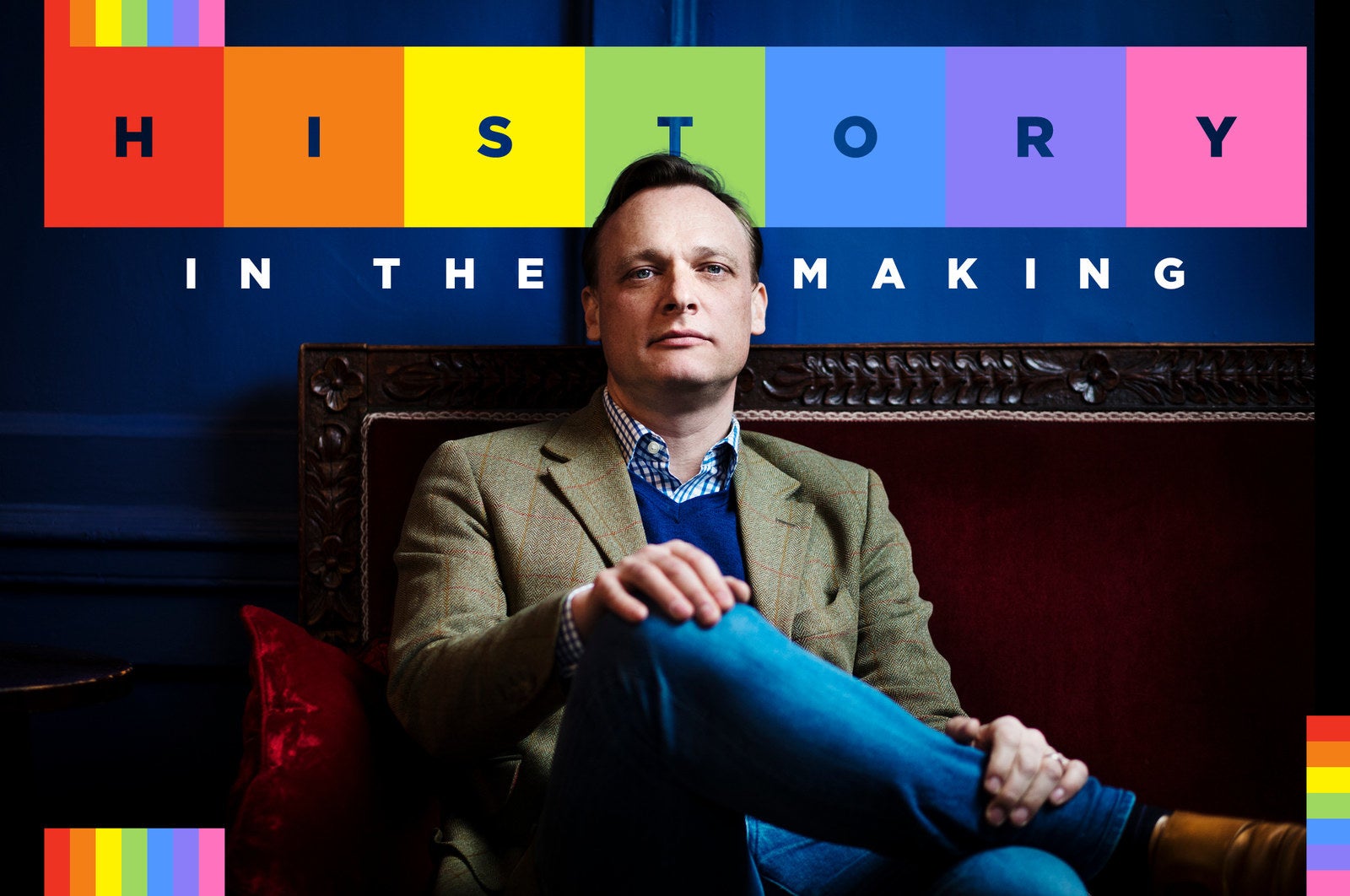
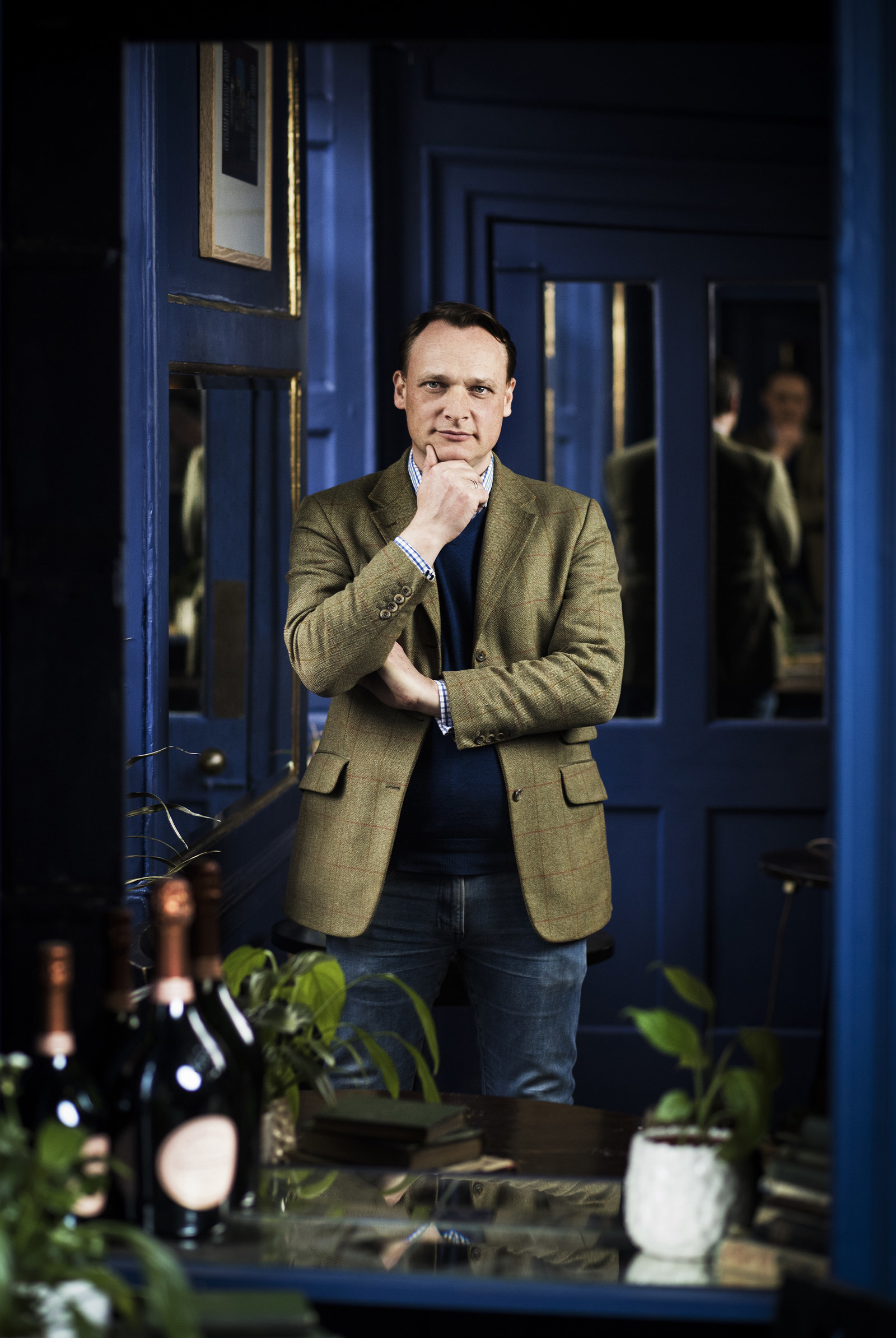
This Man Is Planning To Open the World’s Largest LGBT Museum

Richard Boll for BuzzFeed

Exclusive: London will be the home of a ground-breaking, immersive museum that conjures centuries of queer history. The man behind it, Joseph Galliano, told BuzzFeed News why it’s so important and how it will unearth unearth and preserve untold stories.

Posted on 

Plans are being developed to open the world’s largest LGBT museum in London, BuzzFeed News can reveal.

Named Queer Britain: The National LGBTQ+ Museum, the scale and scope of the project will be unrivalled, according to those behind the plans, dwarfing existing museums devoted to queer history – most notably Berlin’s Schwules Museum – and drawing together an unprecedented collection of historical, artistic, political, and cultural artefacts.

Virtual reality experiences, immersive exhibitions, and a vast digital platform are also being proposed to conjure a 3D experience that organisers hope will attract a broad audience and convey untold stories from LGBT history.

If the proposed timeline is met, it could open as early as 2021.

Sadiq Khan, the mayor of London, is believed to have given the museum his backing, BuzzFeed News understands. Discussions are underway with major cultural funding bodies. Big businesses are being approached to dip into their corporate social responsibility pots and donations are being sought from major private donors, as well as the wider public. A location for the site has also been identified and a bid for it is being lodged.

The CEO of the project is author, editor, and charity communications strategist Joseph Galliano, who has assembled a board of trustees and advisers from across the LGBT, financial, and cultural sectors, including Lisa Power, the cofounder of Stonewall and a leading figure in Britain’s LGBT community since the 1980s; Ian Mehrtens, the chief operating officer of London South Bank University; Sandy Nairne, the former director of the National Portrait Gallery; Lord Chris Smith, who was the first out gay MP; and Liz Bingham, a managing partner at Ernst and Young.

A launch event to announce the venture and kick-start funding will take place later this week.

Galliano told BuzzFeed News the museum will reflect every race, gender, and orientation under the LGBT umbrella in a bid to preserve histories that have been ignored or destroyed – before it is too late.

 Steve Eason / Getty Images

“The history [of LGBT people] has been recorded in a very piecemeal way and if you just take men, the most visible part of the community, the pre-1960s generation is ageing, we’re losing those stories and a lot were already hidden,” he said. “If you think about BAME [black, Asian, and other ethnic minority] people, women, and trans people’s stories, which were prioritised even less than the men’s stories, than that’s a wealth of untold material.”

As such, he said, as the organisers have met with backers and potential stakeholders, there have been “a lot of open doors”.

“When you have conversations with people in the corporate and cultural space and when you talk to younger queer people, people say, ‘How does this not already exist?’”

Art, artefacts, film footage, placards, audio recordings, and stories of individuals’ lives will, he said, not only record and remind but also celebrate: a Technicolor walkway through the past that vibrates into the present.

The proposed three-dimensional, interactive approach is partly an attempt to provoke as much empathy in visitors as possible, while the digital presence is to enable people to experience much of the material internationally – particularly those in countries with little access to visible LGBT culture.

It is a vast undertaking, Galliano acknowledged, but a “challenge that has to be grasped, because it’s important. It’s a gap in the nation’s understanding of itself and if we don’t rescue it now then that gap will not be filled.”

The idea was born from the 50th anniversary of the partial decriminalisation of homosexuality in Britain last year, which was widely marked but which, due to the nature of the law forbidding only male homosexuality, once again focused on gay men over other parts of the community.

Joseph Galliano

Richard Boll for BuzzFeed

Joseph Galliano

For LGBT people, the 50 or so years either side of the 1967 decriminalisation mark were – along with the civil rights and feminist movements – the most dramatic social, legal, and cultural changes in modern history. The 19th century saw the emergence of homosexuality as a distinct entity and identity coupled with widening legal and social oppression.

But following the Oscar Wilde trial, the profound shaking up of class and mores through the World Wars, and the McCarthyite crackdowns on gay people in the 1950s, lesbians and gay men washed up in the 1960s wave of sexual liberation, which, following decriminalisation and the 1969 Stonewall Riots, led swiftly to a swelling fight for queer rights.

Victories and setbacks on multiple fronts, from the emergence of AIDS and Section 28 to the victory over marriage equality, will reverberate around the museum ­– bringing it right up until the present day.

The past year has also marked increasingly incendiary culture wars across the world between fundamentalist religious groups, the alt- and far right, and the LGBT movement – the flashpoint of which has been trans rights. This threat to the progress of queer emancipation is also a driving factor behind the space, said Galliano, who spoke to BuzzFeed News three days after Bermuda became the first jurisdiction in the world to repeal same-sex marriage.

“We’ve had so much change happen so quickly – it’s been amazing; I never thought I’d be wearing a wedding ring – the trouble is that in difficult political times those can be rolled back very quickly,” he said.

Lenare / Getty Images, Hulton Archive / Getty Images

Vita Sackville West (left) and Oscar Wilde with Lord Alfred Douglas.

Following the launch event, the organisers will embark on a round trip of Britain to meet members of the community; to record stories to collate into a social, oral, queer history; and to identify items that could be included in the museum.

“We need to know what’s out there,” said Galliano. Meetings will also begin with curators from other organisations to ascertain who might be willing to lend artefacts to the LGBT museum.

Last year’s Queer British Art exhibition at Tate Britain contained one such item of interest: the door of the prison cell at Reading gaol where Oscar Wilde was incarcerated from 1895 to 1897.

“It winded me,” said Galliano. “It’s so stark how that one thing becomes more than what it is by the weight of cultural [resonance].”

The Warren Cup – a silver, first-century vessel depicting gay sex and owned by the British Museum – would be another coveted item the LGBT museum would seek to acquire on loan. This reflects the desire of organisers to stretch as far back into history as possible, while exploring the complexities of sexual identities before the 19th century that bore little or no resemblance to today’s.

But as well as physical collections, there will also be the conceptual: specifically, an LGBT family tree, tracing lines of influence through generations of queer people.

Gay prisoners at the concentration camp at Sachsenhausen, Germany, wearing pink triangles on their uniforms,1938.

Historical / Getty Images

Gay prisoners at the concentration camp at Sachsenhausen, Germany, wearing pink triangles on their uniforms,1938.

Galliano illustrated this through his own lineage. “When I was 18, Derek Jarman [the celebrated filmmaker] and Simon Watney [the writer and activist] came to my university to talk about being gay. I developed a pen-friendship with Derek and developed some of the sense of my identity as a gay man through that. They knew [the painter] Duncan Grant from the Bloomsbury Set, who knew Vita Sackville-West and Virginia Woolf and so it goes on.”

Beyond the traditional educational purposes of museums, the LGBT museum will also seek to achieve another goal: an antidote to the psychological damage exacted by homophobic and transphobic oppression.

Jamal A. Wilson / AFP / Getty Images, Joyce Naltchayan / AFP / Getty Images

“I want it to be somewhere that people can see themselves reflected and validated in the heart of the culture, in a confident, mainstream institution,” said Galliano. “A space that makes people feel good about who they are. Somewhere that a young woman who’s just come out to her mother can go to with her mother and they can both understand each other a bit better. If you can show people the different possibilities that have existed in the past – and all the things they can be – they can imagine the future more clearly.”­

For Galliano, the museum can be a tool for the political as well as the personal. He quoted George Santayana’s famous line: “Those who cannot remember the past are condemned to repeat it.” For the LGBT community, however, it is not amnesia that has been the problem, but rather that much of this history was so secret, illegal, or suppressed by shame that it was never documented in the first place.

Justin Tallis / AFP / Getty Images

The museum’s organisers will, therefore, said Galliano, be travelling around the country “asking people to bring their stories and artefacts” in an attempt to discover hidden histories. This process will, like the museum, initially focus on the British experience of LGBT life, but will expand over time.

“There’s no point lacking ambition around this because it needs to happen and it needs to be as exciting as the community it’s going to be about,” he said. Organisers will be making approaches to government to discuss funding and other issues, but Galliano did not wish to be drawn further on it. Instead, he added: “This isn’t just a museum for LGBTQ people. This is for everyone.”

(Submitted by Calvin Harris, H.W., M.)

“Science is Ready to Accept Consciousness” by Deepak Chopra

Deepak Chopra MD (official)

Deepak Chopra MD

Founder, Chopra Foundation

Although it takes place outside the headlines, even those that deal with science, a heated debate is occurring about mind and matter. On onside is a camp of so-called physicalists, formerly known as materialists, who hold fast to the assumption that any and all phenomena in nature can be reduced to physical processes and the interaction of objects (atoms, subatomic particles, etc.) –these for the building blocks of the universe. On the other side is no single camp but a mixed assortment of skeptics who hold that at least one natural phenomenon–the human mind–cannot be explained physically.

When one explanation (the physicalist) is supported by the weight of highly successful theories in physics, biology, biochemistry, and neuroscience, and the other side has no accepted theory on its side, the debate seems totally unequal. But in David versus Goliath battles, be careful of rooting for Goliath. The possibility of a science of consciousness, which would involve a thorough explanation of mind and how it relates to matter, can’t begin until the obstacles in its path are removed and old accepted assumptions are overturned.

That has already begun, on all fronts. In physics, the essential problem of how something came out of nothing (i.e., the big bang coming out of the quantum vacuum state) stymies cosmologists, while at the microscopic level the same mystery, this time involving subatomic particles emerge from the virtual state, is equally baffling. In biology the prevailing Darwinism cannot explain the quantum leap made, with astonishing rapidity, by Homo sapiens in terms of reasoning, creativity, language, our use of concepts as opposed to instincts, tool-making, and racial characteristics. We are the offspring of the newest part of the brain, the cerebral cortex, and yet there is no causal connection between its evolution and the primal Darwinian need to survive. This is evident by the survival of a hundred primate species lacking a higher brain, reasoning, tool-making, concepts, etc. Finally, in neuroscience and biochemistry, there is zero connection between nerve cells, and their chemical components, and mind. Unless someone can locate the point in time when molecules learned to think, the current assumption that the brain is doing the thinking has no solid footing.

The day-to-day work of scientists isn’t dependent on explaining how mind arose in the cosmos–not yet. The relation between mind and matter has existed in philosophy for centuries and working scientists don’t consider philosophy relevant to their research. Collecting data and doing experiments needs no help from metaphysics. But when you look at the unanswered questions in physics, biology, biochemistry, and neuroscience, it’s more than a coincidence that all, without exception, impinge upon the same inability to know how consciousness actually works. By taking for granted the obvious fact that it takes a mind to do science, we’ve reached the point where science is leaving out the very component that might answer the questions that urgently need answering, not because philosophy demands it but because science does.

The sticking point is physicalism itself. If everything must be reduced to the smallest units of matter and energy, and yet there is zero evidence that mind follows that pattern, it is unscientific to cling to physicalism. Even a staunchly mainstream physicist like Stephen Hawking has commented that reality doesn’t necessarily match the current models in science. The mind is real, and since that’s true, defective models are required to change or even be thrown out. To repair the most glaring defect of all–our inability to explain mind–imperils all the sciences for the simple fact that science is a mental activity. If we set physicalism aside, what would be another starting point for a new model of reality?

Instead of conceiving reality from the bottom up, moving from tiny building blocks to larger and larger structures, one could do the reverse and create a top-down model. In other words, the starting point would be the whole, not the parts. So what do we know about reality as a whole?

·     Reality is knowable through the mind. What humans can’t know, either directly or by inference, might as well not exist.

·     What we know is tied to what we experience.

·     Experience takes place in consciousness, nowhere else.

·     Experience is at once boundless and very restricted. The boundless part lies in the human capacity to create, invent, explore, discover, and imagine. The restricted part revolves around the setup of the brain, which is confined to the behavior of space, time, matter, and energy. The brain is four-dimensional, while physics poses the possibility of infinite dimensions at one extreme and zero dimensions at the other extreme.

·     Because the physical processing done by the brain works in parallel to the mind doesn’t mean that the brain is the mind. To assert that brain equals mind involves showing the atoms and molecules can think, which can’t be proven and seems highly unlikely. Therefore, the ground state of reality, the place form which everything originates, is consciousness.

·     Consciousness is the only constant in human experience that can’t be removed from consideration in science, or any other form of knowing.

·     What we call reality “out there” is constructed in our own awareness. These constructs follow predictable paths according to mathematics, logic, the laws of nature, and so on. But this doesn’t prove that reality is independent of our experience, only that consciousness is capable of extremely precise, predictable organization. In a word, the notion that everything is a mental construct is just as valid as the notion that everything is a physical construct. The two are merely different perspectives.

·     If reality “out there” is a construct dependent upon consciousness, explaining the universe entails explaining consciousness. Where physicalists are stymied by how atoms and molecules think, non-physicalists are stymied by how mind creates matter.

·     This impasse is broken by taking a concrete approach to mind; that is, by investigating the qualities of reality “out there.” These qualities, such as how an object looks, sounds, feels, tastes, and smells, are entirely created in consciousness. As Heisenberg noted almost a decade ago, there are no fixed physical characteristics of an atom or subatomic particle. Everything is built up from the qualities, also known as qualia, that the human mind knows, experiences, and can conceptualize.

·     Ultimately, even where nature sucks all matter and energy into black holes and naked singularities, the actual horizon for science doesn’t lie there, or with the big bang, by which matter and energy reappeared in manifest form. The real horizon is where the inconceivable source of mind meets the conceivable phenomena in nature. The problem of something coming out of nothing is exactly the same when the cosmos was born as when a thought is born. This is the level playing field where mind and matter can be investigated as two sides of the same process: consciousness interacting with itself.

Deepak Chopra MD, FACP, founder of The Chopra Foundation and co-founder of The Chopra Center for Wellbeing, is a world-renowned pioneer in integrative medicine and personal transformation, and is Board Certified in Internal Medicine, Endocrinology and Metabolism. He is a Fellow of the American College of Physicians and a member of the American Association of Clinical Endocrinologists. Chopra is the author of more than 80 books translated into over 43 languages, including numerous New York Times bestsellers. His latest books are  The Healing Self co-authored with Rudy Tanzi, Ph.D. and Quantum Healing (Revised and Updated): Exploring the Frontiers of Mind/Body Medicine. www.deepakchopra.com

Nina Simone Rare Footage & concert film


LondonMusicLounge
Published on Sep 28, 2013

Rare Film & backstage footage of the Late, Great NIna Simone, performing at her last ever concert 1990 performance at Paris Olympia (Bruno Coquatrix) includes songs Blue Sky, Mississippi Goddam – the protest song she penned after the 1963 murder of civil rights leader Medgar Evers and four African American school girls in an Alabama church bombing, and the perfect I Put A spell On You. Enjoy

Prosperos Assembly in Long Beach, CA, over Labor Day weekend 2018

61st Annual Assembly

Assembly 2018

Companions at the Crossroads :
Building community in a world divided

Long Beach, California

August 31 – September 3, 2018

Al & Rick

With this event we are “checking in” two years after our second Companion event. The program will be very much like that 2016 Assembly with the focus on sharing our “hidden gifts” – the perceptions or challenges we face in uncertain times.

This time we are in calls on us for a new level of maturity in all our decisions and efforts. Those of you who have been “in the work” for some time know the ability of Translation® to turn a problem into a gateway to freedom and power. More than ever, ours is a time of opportunity to mentor our at-risk society through the transcendence demanded by the world we’ve created. Maybe never before have we been forced to understand at the heart / mind level the admonition “evolve or perish”.

This experience is designed to explore the next steps in your personal journey, in the context of a transpersonal purpose : “To make Spiritual Truth an effective force for ordered freedom and common good.”

Community

Catch up with old friends and meet new ones.

The Prosperos community is unique – people from all walks of life with many talents and many occupations. What unites them is the understanding that a world of fulfillment and joy is available, ever-present, when we stop judging by appearances and release ourselves to greater freedom. Everyone here is making a journey from sense to soul and, far from being all gooey-eyed about it, most of them are laughing their way along. Once you get a taste for this radical shift in consciousness there’s no going back.

Insight

Learn from peers with skilled Mentors at hand

In addition to top-flight material we hope to spark great conversations and sharing with a series of break-out group sessions that will allow in-depth work on real issues that we bring to our group.

Inspiration

Discover deep sources of inspiration and re-invigoration

Ontology goes deep and high. You meet it regularly in your daily life but often it goes unrecognized and unrealized. Here we provide the means for you to create inspiration for yourself every day by “greeting the adversary” and drawing forth the “hidden splendour” of your reality Self. It begins with listening, supporting, and sharing in a multi-faceted group setting.

During this event we will create an environment where you will have the opportunity to experience your reality Self face-to-face.

Introduction from Al Haferkamp and Heather Williams

Heather Williams  Al Haferkamp, H.W., M.


Companions at the Crossroads from Prosperos Video on Vimeo.

Instructors

Dedicated sessions will be presented by :

Al Haferkamp, Dean, veteran Prosperos instructor and counselor. Al has served on the Board of Trustees and as President of the Prosperos before being elected Dean in 2009. In addition to his ontological studies he is a highly qualified instructor of Qi Gung.

Anne Bollman, H.W., M., trustee and Mentor. Anne’s exploration of the astrological Survival Dynamics helps students to identify their personal trends and challenges.

Richard Hartnett, H.W., M., long-time Prosperos instructor and a nationally known psychic. Richard uses his knowledge of symbols found in ancient cultures such as Greek, Egyptian, Celtic and Native American cultures to show the inner play of conscious and unconscious factors still at work as drivers in our life today.

Heather Williams H.W., M., artist, Mentor, and Prosperos instructor. Heather has been working the The Prosperos’ signature methodologies since 1970. She has brought this perspective to her work and teaching of art and is presently working with at-risk children in the San Diego public school system.

Group Facilitators

Break-out groups will be aided by experienced facilitators.

Venue

westin long beach interior

We will be using the Westin Long Beach hotel, which offers a lovely setting and proximity to some fine Southern California sights.

It will be an unforgettable weekend with the comradery of old and new friends, working with noted mentors and teachers. We have people coming from the East, the Mid-West and West Coast, and Hawaii.

“I’d say, ‘It is a weekend to learn how to effectively use your emotional intelligence, by finding out how you bank and spend emotional currency within your world. An experience with immersive information to change the spectrums of your life stories from anger, hopelessness, pain, torment, and separation to a give-for of insights, wholeness, Love, & laughter’.”
– Calvin Harris

Don’t wait to :

  1. Book your travel and make your hotel reservation.
  2. Check out the nifty Fact Sheet
  3. Register now !
  4. Contact Al Haferkamp or  for further details.

Companions at the Crossroads from Prosperos Video on Vimeo.

More info at:   www.theprosperos.org/community/assy2018

TED talk: Why it’s worth listening to people you disagree with

We get stronger, not weaker, by engaging with ideas and people we disagree with, says Zachary R. Wood. In an important talk about finding common ground, Wood makes the case that we can build empathy and gain understanding by engaging tactfully and thoughtfully with controversial ideas and unfamiliar perspectives. “Tuning out opposing viewpoints doesn’t make them go away,” Wood says. “To achieve progress in the face of adversity, we need a genuine commitment to gaining a deeper understanding of humanity.”

This talk was presented at an official TED conference, and was featured by our editors on the home page.

ABOUT THE SPEAKER
Zachary R. Wood · Crusader for dialogue
As the head of a student group called Uncomfortable Learning, Zachary R. Wood made a point of engaging in conversation with people he disagreed with.

Why populism is the greatest con in American politics

By Martin Amis (bigthink.com)

There is no substitute for thinking—although modern-day America may have you believing otherwise. Novelist Martin Amis attributes the recent surge in anti-intellectualism to the populist politics sweeping the United States. “Populism relies on a sentimental and, in fact, very old-fashioned view that the uneducated population knows better in its instincts than the over-refined elite. That leads to anti-intellectualism, which is self-destructive for everyone.” The rejection of rationality and analysis is something politicians can easily capitalize on, and Amis refers to President Trump as a plutocrat in populist’s clothing. “It’s profoundly hypocritical because his policies do not favor the working man… It’s an act, populism. Always an act.” Are the American people being conned, and is a return to elitism the answer? Martin Amis is the author of The Rub of Time: Bellow, Nabokov, Hitchens, Travolta, Trump: Essays and Reportage, 1994-2017

TRANSCRIPT

Martin Amis: Is snobbery due for a comeback? Well, not—I don’t mean class snobbery. All that rubbish is, at least in England, it’s more or less a thing of the past. But I think intellectual snobbery has been much neglected and I was pleading for more care about how people express themselves, and more reverence—not for people of high social standing, but for people of decent education and training.

Populism relies on a sentimental and, in fact, very old-fashioned view that the uneducated population knows better in its instincts than the over-refined elite. That leads to anti-intellectualism, which is self-destructive for everyone.

I mean, this is as old as democracy, you know: should you get the able-est and most intellectually agile leader, or should you get the most average leader? This was discussed in Rome in classical antiquity.

And in every other developed nation brain has won the battle over instinct. It’s ridiculously old-fashioned to think that there’s some core instinct that is going to be wiser than an analytical and rational approach. “I go with my gut,” you know. Bush Jr. took us into Iraq. He said, “I went with my gut,” which was watched with approval by probably the majority of Americans.

Now, in every other nation brain has won over gut but in America it still splits the nation, and the idea that Donald Trump has cast off these shackles and we can go back to being brutes again is a terrible prospect. “Telling it like it is.” What does that mean? I never know what he’s going on about when he says that: “I tell it like it is,” and his supporters say, “He tells it like it is.” Tells WHAT like WHAT is?

In fact, since his mendacity rate is about 80 percent at the best of times he’s telling it how it ISN’T.

And what that means, decoded, “telling it like it is,” is being a blundering loudmouth who gives voice to the sort of low grumble in the common mind. I can see no virtue in that. And it’s profoundly hypocritical because his policies do not favor the working man. He’s a plutocrat to his core, and those are the policies he’ll follow. It’s an act, populism. Always an act.

“The Thunder of Silence” by Suzanne Deakins, H.W., M.

Hear The Thunder of Silence, on ACIM Gather at Paltalk. April 20th, at 3 PM Pacific Time and 6 PM Eastern Time. Go to Paltalk and search for ACIM Gather to find us. Please join us for an hour of discovery and community.

Many in our community have lived in pain and confusion this past year. What we thought we understood and knew was not to be. Our country and community have been thrown into a state of chaos and pain. There are no quick answers for any of us. We each must find our Truth and reality in finding resolution with this time in history.

Listening is one of the most important skills we need to help us understand where we have come from and where we are headed. It is the most important skill in arbitration and resolving conflicts. Conflicts of personal and public nature can only be resolved when we take the time to listen to what is actually being said. For us to find resolution (NOT COMPROMISE) we must resolve personal interior conflicts and come to terms with our consciousness about our countries current state of affairs. It is my experience that by listening we may find paths we did not know existed.

A friend on facebook posted a saying that reminded me of how important it is to listen and silence our minds. Most of us try to listen but we seem to hear what we want to hear so we can reply. Fifty seconds out of every 60 seconds of listening is our mind preparing to make a reply. Hence we only hear a small portion of what is actually being said. Because we hear does not mean we are listening.

Finding Silence Within

Filling our ears with all we want to say we miss what is being said. The ego mind is fast to respond to any conversation. We feel more intelligent and in control, if we are talking. When our mind isn’t speaking verbally it will be filling our head with chatter. The ego mind fears the silence, the space between the words. Words and the meaning we place on words help define the dream state and the illusions of the past and future. We depict the past in words and provide the future a framework built from words. The incessant stream of words from the ego mind allows no room for silence. If there were to be silence the ego mind would cease to exist at that moment.

The silence of listening is an art. When we allow our being, our whole being to be in a state of silence we hear what has yet to be said. The reality is not in the words, but in the space between the words. This space holds silence. The words form relationships to each other and have meaning because of the space between, the silences. Without the silence, the words have no meaning. When we allow the silence to fill our being we allow the reality to speak. The reality of our being can only be heard in the silence. Be silent and hear what you have not heard. One of the most healing acts any of us can perform is to listen to another. This does not mean advising, or coaching or counseling but silently focused in an attending state of consciousness…listening. Fully listening. There is a great cry of pain in our world. Pain and violence are a direct result of deaf ears and separation of spirit. When we feel we are not heard when we feel disconnected we experience pain.

When we listen and know we are heard, we feel connected. Listening creates relationships. When we are connected our pain of separation lessens and disappears. Our spirit feels connected and whole. When we listen to another genuinely listen it is an act of spirit and act of caring and love.

The act of listening can be self-healing. If you listen really listen to your own being…to the truth of you, your, I AM I… you will find a great deal of your pain of separation ceases. We can heal ourselves by listening to our spirit…we can rid ourselves of the depression by listening to another.

Be quiet and hear!

Suzanne Deakins, H.W.M. is the publisher of One Spirit Press. You may find similar topics in her book “When God Whispers” an ontological discourse on similar topics. Her work appears on Amazon.com and other online retailers.

Suzanne Deakins, Ph.D., H.W.M.

suzannedeak@gmail.com
503-954-0012