
He knew private ownership was vital for a healthy society
Jacob Wilkins · Dec 27, 2020 · Medium.com

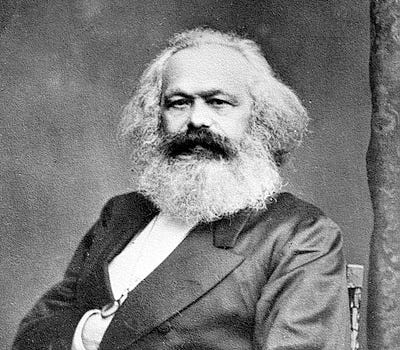
 Inthe nineteenth century, Karl Marx and Friedrich Engels developed their own economic system: communism. They wanted to replace private ownership and the free market with a state-regulated economy founded on the principles of equality.
This utopian ideal is still attractive for some people today. Yet, those with even a vague knowledge of the twentieth century know that communism was a disaster.
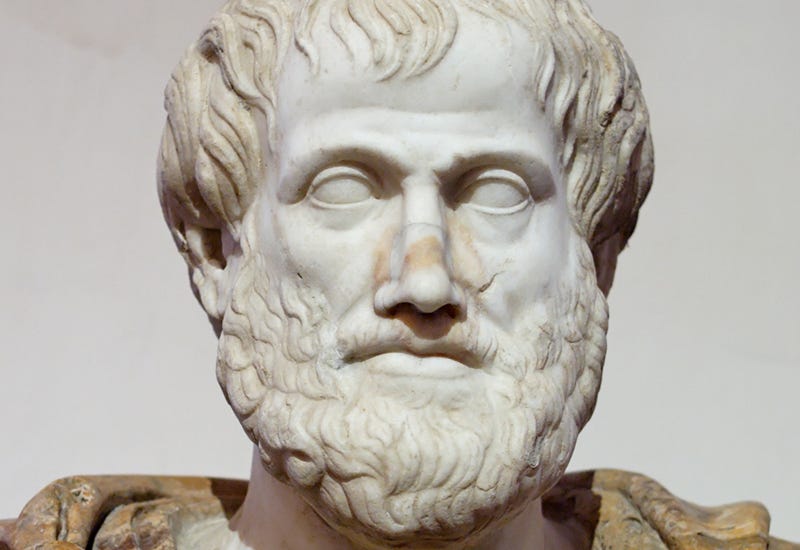
Aristotle — who is arguably the greatest philosopher of all time — knew that communal ownership and absolute equality were flawed principles. And though his ideas predate the works of Marx and Engels by more than two thousand years, there’s no doubting he would have hated communism.
The flaws of public ownership
In Politics, Aristotle’s objections to communal ownership are essentially a response to the ideas Plato proposed in The Republic.
Whilst Aristotle acknowledges the attraction of equality and how easy it is to blame society’s problems on private ownership, he doesn’t agree with either of these sentiments. Rather, he proposes that character flaws are the primary cause of societal issues.
Moreover, Aristotle argues that communal ownership would actually make things worse:
“… there will inevitably be ill-feeling between those who get a good income without doing much work and those who work harder but get no corresponding extra benefit.”— Politics, Aristotle
This passage highlights how absolute equality will favour the idle and alienate the active. Any society which encourages such behaviour is far from ideal.
Aristotle also argues that communal ownership would lead to carelessness: ‘… the greater the number of owners, the less respect for common property …’ Conversely, when people own their own property, they will have a greater motivation to take care of it.

The benefits of private ownership
Like Plato, Aristotle also talked about the best way for individuals to live. Though this is discussed at greater length in Nicomachean Ethics, it’s also addressed in Politics.
Simply put, Aristotle believes that ‘virtue’ and ‘practical wisdom’ are inherently good and that the best societies allow individuals to prosper in this manner.
Leading on from this, the issue with communal ownership is that it prevents people from being virtuous:
“… there is very great pleasure in helping and doing favours to friends and strangers and associates; and this happens when people have property of their own. None of these advantages is secured by those who seek excessive unification of the state.” — Politics, Aristotle
It’s much harder (or even impossible) to be generous when everything is owned by the state. How can we give to others if we don’t own anything ourselves?
As well as leading to alienation and mistreatment, the abolition of private ownership also prevents individuals from being virtuous. This, of course, is a disastrous foundation for any society.
Conclusion
Whilst Aristotle was undoubtedly a genius, his critiques of communal ownership are relatively simple. Even those with little interest in politics or philosophy can grasp these ideas.
The abolition of private ownership will inevitably favour the idle, alienate the active, and make people careless. And perhaps more importantly, acts of virtue will cease, for no one can be charitable if they have nothing to give.
It is important to stress, however, that Aristotle — unlike Marx and Engels — isn’t an absolutist. He acknowledges that a degree of communal ownership within a society is perfectly reasonable.
Indeed, moderation and pragmatism — rather than absolutism and idealism — are at the centre of all Aristotelian ideas.

From the times that the pyramids were raised to the end of…Follow
WRITTEN BY
Jacob Wilkins
Writer from England. Interested in fiction, history, philosophy, politics, crime, culture.
History of Yesterday
From the times that the pyramids were raised to the end of the cold war in this publication you will find it all. This is a publication that has been created to tell the stories of forgotten battles and fortunes that have crafted the world that we live in today.