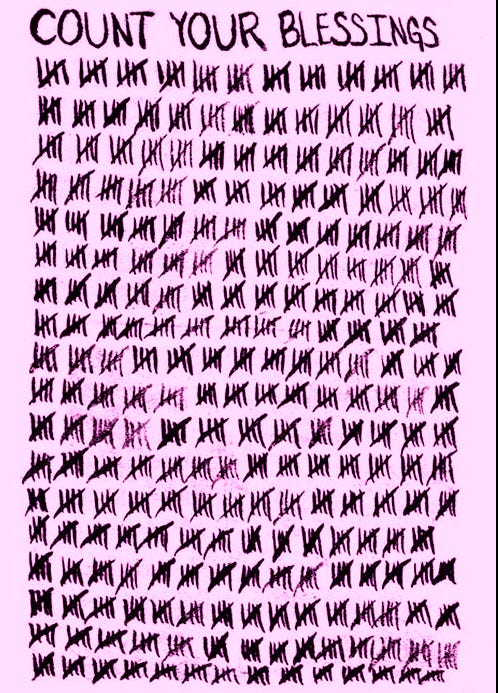
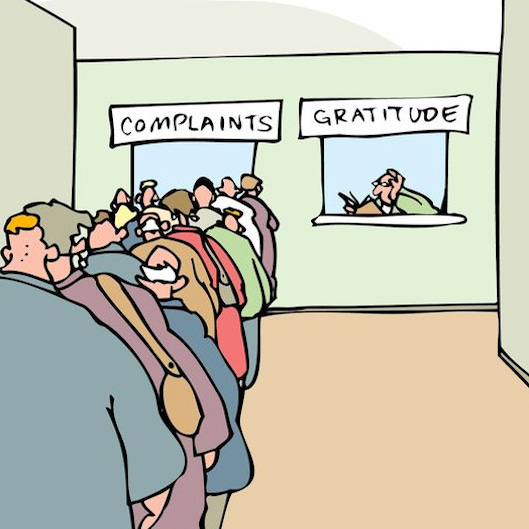
“Cultivate the habit of being grateful for every good thing that comes to you, and to give thanks continuously. And because all things have contributed to your advancement, you should include all things in your gratitude.”
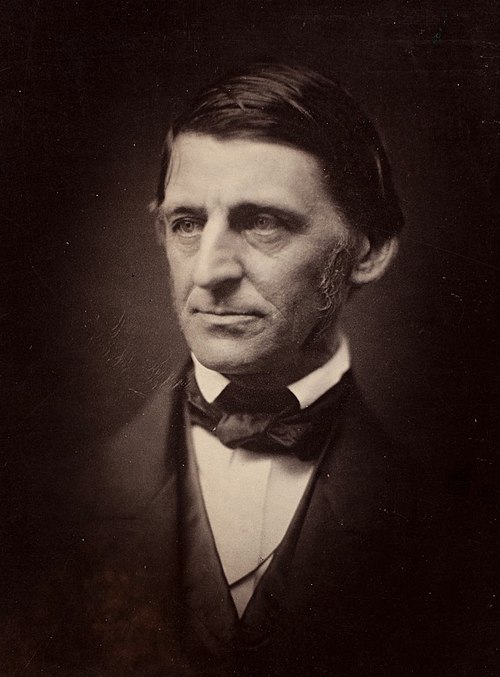
~ Ralph Waldo Emerson
Ralph Waldo Emerson was a prominent American essayist, poet, philosopher, and leader of the 19th century Transcendentalist movement. His essays and lectures, such as “Self-Reliance” and “The American Scholar”, challenged conventional thinking and promoted independence of thought and self-discovery. Emerson’s philosophy of Transcendentalism emphasized the divine presence in nature and the potential for studying nature to reveal God’s nature. (Wikipedia.org)
“I am grateful, not in order that my neighbour, provoked by the earlier act of kindness, may be more ready to benefit me, but simply in order that I may perform a most pleasant and beautiful act,” Seneca wrote two millennia ago as he contemplated gratitude and what it means to be a generous human being.
It is only from such a place of gratefulness that we can perform beautiful acts — from a place of absolute, ravishing appreciation for the sheer wonder of being alive at all, each of us an improbable and temporary triumph over the staggering odds of nonbeing and nothingness inking the ledger of spacetime. But because we are human, because we are batted about by the violent immediacies of everyday life, such gratitude eludes us as a continuous state of being. We access it only at moments, only when the trance of busyness lifts and the blackout curtain of daily demands parts to let the radiance in, those delicious moments when we find ourselves awash in nonspecific gladness, grateful not to this person, grateful not for this turn of events, but grateful at life — a diffuse gratitude that irradiates every aspect and atom of the world, however small, however unremarkable, however coated with the dull patina of habit. In those moments, everything sings, everything shimmers. In those moments, we are most alive.
Former U.S. Poet Laureate Billy Collins shines a playful sidewise gleam on this realest and most serious wellspring of gratitude in his 1998 poem “As If to Demonstrate an Eclipse,” found in his poetry collection Nine Horses (public library) and brought to life afresh, with a corona of radiance and a perfectly calibrated performance partway between wink and wonderment, by constant comedian and sometime StarTalk Radio co-host Chuck Nice at the third annual Universe in Verse, prefaced by his funny and poignant meditation on the personal gravity of gratitude and why being grateful is “one of the most powerful things that any one person can do.” Please enjoy:
AS IF TO DEMONSTRATE AN ECLIPSE by Billy Collins
I pick an orange from a wicker basket and place it on the table to represent the sun. Then down at the other end a blue and white marble becomes the earth and nearby I lay the little moon of an aspirin.
I get a glass from a cabinet, open a bottle of wine, then I sit in a ladder-back chair, a benevolent god presiding over a miniature creation myth,
and I begin to sing a homemade canticle of thanks for this perfect little arrangement, for not making the earth too hot or cold not making it spin too fast or slow
so that the grove of orange trees and the owl become possible, not to mention the rolling wave, the play of clouds, geese in flight, and the Z of lightning on a dark lake.
Then I fill my glass again and give thanks for the trout, the oak, and the yellow feather,
singing the room full of shadows, as sun and earth and moon circle one another in their impeccable orbits and I get more and more cockeyed with gratitude.
In 2022, Stacy Batten said, her “whole year was on fire.”
Her husband died of cancer, and her father died after a long battle with Parkinson’s disease. Her mother was diagnosed with cancer. And she moved across the country from Seattle to Fairfield County, Conn., after selling the home that she had lived in for 26 years.
In her devastation, she noticed that she felt better when she looked for the good parts of each day. So she took a large Mason jar and turned it into a “gratitude jar,” which she now keeps on her night stand.
Every night, she writes down a few things that she is grateful for on a scrap of paper and drops it inside. They are often as simple as “I met a new neighbor” or “I took a walk with the dog and my mom.”
“The grief is still there,” Batten, 56, said. “But writing those daily notes has helped.”
Two decades ago, a landmark study led by the psychologist Robert A. Emmons sought to understand how people benefit from gratitude, a question that scientists had rarely explored until then.
Dr. Emmons’s findings — which suggested that gratitude may improve psychological well-being — inspired a spate of additional research. To date, numerous studies have found that having a grateful outlook, “counting one’s blessings” and expressing gratitude to others can have positive effects on our emotional health as well as on interpersonal and romanticrelationships.
In addition, some studies, but notall, have shown that gratitude can benefit physical health.
“Gratitude heals, energizes and changes lives,” Dr. Emmons said. “It is the prism through which we view life in terms of gifts, givers, goodness and grace.”
Here’s more about why gratitude is so powerful, and how can we incorporate it into our daily lives.
What is gratitude?
Gratitude is a positive emotion that can arise when you acknowledge that you have goodness in your life and that other people — or higher powers, if you believe in them — have helped you achieve that goodness.
In other words, the sources of the good things “lie at least partially outside the self,” Dr. Emmons said.
You might feel gratitude when someone is kind to you, for example.
But “feeling it is only half the equation,” said Philip Watkins, a professor of psychology at Eastern Washington University and the author of “Gratitude and the Good Life.” Expressing gratitude is equally important to reap the benefits of this emotion, he said.
How does it benefit you?
Many studies have asked participants to write letters of thanks, or to list the positive things in their lives, and then measured the effects of those acts.
The resultssuggest that performing these types of activities provides mental health benefits — reducing symptoms of depression and anxiety, increasing self-esteem and improving satisfaction with daily life. But somestudies have noted that gratitude interventions are not necessarily more effective than other kinds of activities to enhance well-being, like asking people to write about the details of their day. Even so, that doesn’t make gratitude activities any less useful, the experts said.
Multiple studies have shown that expressing gratitude to acquaintances, co-workers, friends or romantic partners can offer a relationship “boost” and “helps bind us more closely,” said Sara Algoe, a psychologist at the University of North Carolina at Chapel Hill who has researched how gratitude aids relationships.
What’s more, when analyzing people’s dispositions, researchers have found that those who are more prone to experience gratitude in their daily lives have lower levels of depression and sleep better.
And not only does gratitude improve the well-being of the giver and the recipient, but it may also be good for those who witness it: Watching an act of gratitude between two people can cause an observer to feel more warmth and affinity toward them both.
“What impresses me are the objective, biologically verifiable outcomes that go beyond self-report measures,” Dr. Emmons said. For example, gratitude has also been associated with lower blood pressure, and, in one pilot study, higher levels of heart rate variability, a marker of well-being.
“Gratitude seems to be the gift that keeps on giving,” Dr. Algoe said.
One moment a day is enough.
The studies on gratitude don’t indicate how often we ought to express gratitude or how best to put it into practice. But many experts believe that a small dose of gratitude, once a day, is ideal.
“I think the benefits of gratitude activities truly unfold through long-term habits,” said Joel Wong, a professor of counseling psychology at Indiana University’s School of Education, who is studying whether expressing gratitude in a six-week group program can help people with depression.
To develop an enduring gratitude habit, try linking your gratitude practice to an already ingrained routine, Dr. Wong said. He chooses to think about what he’s grateful for in the morning.
“I try to do it when I first turn on the computer at work,” he said.
Gretchen Schmelzer, a psychologist in Philadelphia who regularly incorporates gratitude exercises into her work with clients, said it could be especially useful during difficult times. Earlier this year, she fell while hiking and broke both legs, leading her to use a wheelchair for six weeks.
To avoid spiraling into negative thoughts while she continues to heal, she tells herself each day to “be thankful for what you can do — and not let yourself focus on what you can’t do,” she said.
“Gratitude allows us to look at what we do have and to feel abundance,” she added.
Finally, although manystudies have shown the value of writing a letter expressing appreciation, it doesn’t have to be lengthy or time-consuming. A quick emailor text can do the trick.
Be specific.
Imagine that your partner is thanking you for cleaning up the kitchen after dinner. Which statement would you rather hear?
“Thank you!”
Or: “I am grateful that you took the reins and handled all the kitchen duties tonight. I love how we take turns to give one another a break.”
Specificity matters “because it deepens our experience of gratitude,” Dr. Wong said. “It intensifies our grateful emotions and thoughts.”
Dr. Wong has created a list of 100 questions that may serve as useful prompts when thinking about gratitude in a more specific way, whether you are thanking someone else or listing the things in your life that you feel grateful for.
When doing this exercise, Dr. Wong suggests putting pen to paper.
“The act of writing slows down our thinking process and allow us to ponder more deliberately,” Dr. Wong said. He added, “By writing, we retain a permanent record of our blessings; we can return to our gratitude journaling months or years later to recall what we were grateful for.”
Christina Caron is a reporter for the Well section, covering mental health and the intersection of culture and health care. Previously, she was a parenting reporter, general assignment reporter and copy editor at The Times. @cdcaron



 AS IF TO DEMONSTRATE AN ECLIPSE