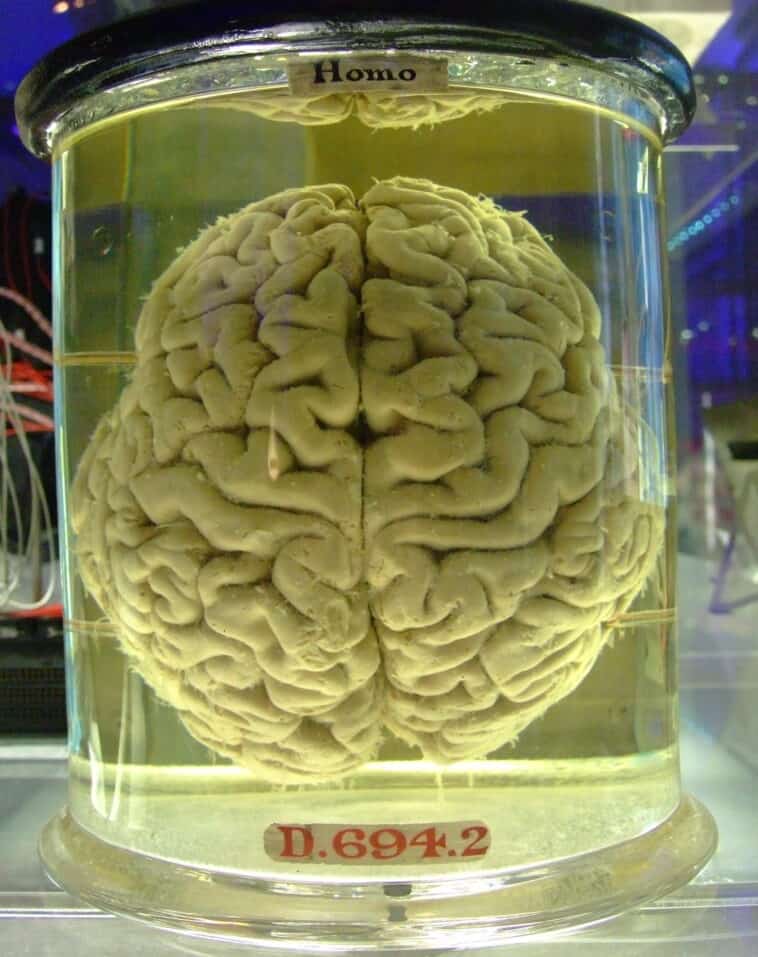
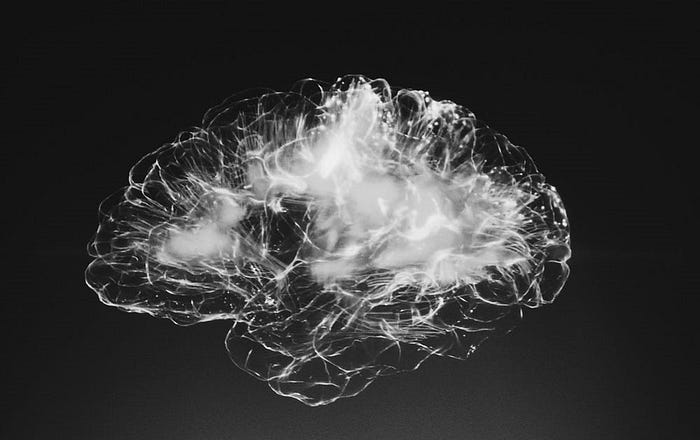
Have you ever stopped to think about what your brain is actually doing right now? For decades, standard science has told us a pretty straightforward story: your brain is a biological supercomputer, and your thoughts, feelings, and memories are basically electrical code produced by billions of neurons.
Renowned neuroscientist Christof Koch, a leading figure from the Allen Institute for Brain Science who has previously taught at MIT and Caltech, is asking a massive question: What if the brain doesn’t actually create consciousness? What if consciousness is woven right into the very fabric of reality itself?
The hard problem that won’t go away
Koch isn’t just throwing wild theories around for fun. He’s confronting what scientists call the “hard problem” of consciousness. The puzzling mystery of why physical processes in the brain give us subjective, lived experiences.
As Koch put it in an essay shared with ScienceAlert: “Nothing in science explains how three pounds of matter, a piece of furniture of the universe like any other, subjects to the same natural laws, can love, hate, dream, imagine, fear or hope for its future.”
Despite huge leaps in mapping out how neural circuits handle memories and decisions, traditional materialism still can’t bridge that gap.
Three huge challenges to standard science
At the Bial Foundation’s “Behind and Beyond the Brain” symposium in Porto, Portugal, Koch laid out three major areas where current scientific models fall short:
The reduction trap: We simply can’t reduce subjective, conscious experience entirely down to physical brain mechanisms.
The physics dilemma: Developments in modern physics keep forcing us to question what can truly be considered “real.”
Outlier phenomena: Existing scientific frameworks struggle to explain unusual experiences like near-death experiences, mystical states, or terminal lucidity (sudden moments of clarity right before death).
The brain as a filter, not a generator
So, if the brain isn’t generating awareness, what is it doing?
To answer this, Koch points toward philosophical frameworks like analytic idealism, panpsychism (the belief that consciousness is a fundamental property built into all matter), and Integrated Information Theory (IIT). Under these views, consciousness isn’t a byproduct of the brain—it’s a fundamental feature of the cosmos.
Instead of being the organ that creates awareness, your brain might be acting more like a filter that shapes and restricts a vast, underlying field of consciousness.
A 25-year-old bet and a moment on the beach
This isn’t the first time Koch has publicly questioned traditional neuroscience. Back in 2023, he famously conceded a 25-year bet to philosopher David Chalmers, admitting that science was no closer to uncovering the neural mechanics of consciousness than it was when they made the wager in 1998.
This paradigm shift didn’t just come out of a textbook for Koch; it was also shaped by a deeply personal moment. Several years ago, while sitting alone on a beach, he experienced the boundary between himself and the outside world completely dissolving. He described it as a timeless, universal reality. An experience that he says changed his view of reality and led him to rethink his scientific assumptions.
What this means for AI and the future
If consciousness isn’t just complex computation, this changes the game for artificial intelligence, too. What this means is that making a computer hyper-intelligent or super-sophisticated might not automatically make it conscious. However, this does not mean future AI systems could never become conscious.
The next step
For now, Koch acknowledges that his theory has not been fully established scientifically. However, he insists that the next big leap is translating his mind-blowing insights into testable scientific hypotheses.
Apr 27, 2026The past might be closer than we think. Scientists have found that experiences — especially stress and trauma — can change how genes are expressed, and in some cases, influence future generations. This video is an excerpt from the NOVA program Your Brain: Who’s in Control?, which originally premiered in 2023. You can watch the full show here: • Your Brain: Who’s in Control? | Full Docum…
\NOVA PBS Official May 11, 2026 Neuroscientists are uncovering how communication between different parts of the brain creates the experience of being “you.” ???? Watch the full episode here: https://www.pbs.org/wgbh/nova/video/y…
Is There a Way to Turn Off Your Reality Filter?Getty Images
“Hearst Magazines and Yahoo may earn commission or revenue on some items through these links.”
In 1956, British psychiatrist Humphry Osmond coined the word “psychedelic” from Greek roots meaning “mind-manifesting” or “soul-revealing.” The term proved fitting. Users report that seconds stretch into eternity, sounds turn into color, and you very self begins dissolving. And now, after decades in scientific exile, those same once-ostracized compounds are undergoing a dramatic scientific renaissance. Researchers are investigating them not only for depression, trauma, and addiction, but also as a potential window into one of neuroscience’s deepest mysteries: how the brain constructs reality itself. And a small, egg-shaped structure buried deep in the center of the brain, the thalamus, may play an important role in that process.
Scientists once viewed the thalamus largely as a relay station: a kind of biological switchboard routing sensory information to the cortex, the brain’s outer layer responsible for higher thought, perception, and conscious awareness. But newer theories suggest something far stranger. Increasingly, neuroscientists suspect reality may partly reflect the brain’s constantly updated “best guess” about the world—built from memory, expectation, sensory input, and context, as Michelle J. Redinbaugh, PhD, a neuroscientist at Stanford University, puts it.
In a 2024 review published in Neuron, Redinbaugh and colleagues examined evidence from anesthesia, sleep, coma studies, perception experiments, and deep brain stimulation research to better understand the thalamus’s role in awareness. They came to a striking conclusion: The structure may help shape not only whether we are conscious, but also how awareness itself feels from moment to moment: unified, continuous, and stable—rather than fragmented into disconnected sensory pieces.
“… What you are seeing, hearing, smelling, what your internal state is like, how your body feels. All these sorts of things coalesce into consciousness,” Redinbaugh says. The thalamus sits in a loop between many cortical regions, continuously coordinating integrated information across the brain. Without that stabilizing process, she says, experience could feel fragmented “like a bunch of boxes.”
“You could call it a compression in terms of data science,” Redinbaugh says, describing how this small ovoid hub condenses massive amounts of sensory information into a continuous stream of awareness. The brain’s ordinary mode of operation constantly screens and constrains perception. Evolution likely favored such filtering because processing every detail of reality in full precision would be catastrophically inefficient. If allowed in, the gargantuan soup of sensory stimuli out there could overwhelm the brain’s ability to offer us a seamless sense of self, pushing the system toward total breakdown. And the brain chose speed over perfection—or variety.
Redinbaugh points to vision itself as an example: humans only see sharply in a tiny central region of the eye, while the brain reconstructs much of the periphery using assumptions and predictions. Evolution may have selected for that tradeoff because taking in every detail of the visual world in infinite detail would be mentally chaotic and energetically unsustainable. Without these shortcuts, reality itself could arrive as an unbearable sensory avalanche.
But the thalamic gatekeeping system does have its own weak spots. Anesthesia is one of them. Under it, thalamic activity shifts into disrupted “on/off” rhythms that may destabilize the coordinated neural activity supporting awareness, Redinbaugh says. The seamless experience we normally take for granted may begin to fracture in those moments.
Psychedelics are now exposing another crack in the system.
In a massive 2026 mega-analysis published in Nature Medicine, researchers analyzing brain scans across multiple psychedelic drugs found widespread shifts in communication across large-scale brain networks, including networks involving the thalamus. Brain systems that normally remain relatively segregated appeared to interact in unusual and sometimes intensified ways.
Though Redinbaugh stresses that neuroscience is still evolving, she admits it is reasonable to think hallucinogens alter the reciprocal relationship between higher brain networks and the thalamus. These drugs generally increase cortical excitability, which then feeds back into the deep-brain structure itself. One influential theory, she explains, is that psychedelics effectively make the brain’s normal “rules” more lenient.
“If you are now tweaking how the thalamus interacts with cortex, and cortex is more excitable, and you have kind of this loosening… suddenly you’re in a situation where you can no longer use the rules to constrain your perception,” she continues. “And then you’re also increasing this sort of bottom-up activity that is telling you what you’re seeing, so all of a sudden you see a lot of weird stuff, or you experience a lot of weird stuff.”
But what exactly is this “weird stuff” psychedelics seem capable of unleashing when they tamper with the brain’s reality-gating systems? For some, they may be aspects of perception normally hidden from conscious awareness. Could they be signs of “higher consciousness?”
Redinbaugh isn’t quite ready to call it that. “But it’s certainly a very different state of consciousness,” she adds.
Others are even more skeptical of the phrase “higher consciousness.”
“It implies a single scale, and it’s not clear what that scale would measure,” says Anne-Laure Le Cunff, PhD, a neuroscientist at King’s College London. Different forms of awareness, she argues, may involve different dimensions, like attention, memory, perception, wakefulness; they don’t exist on a simple ladder from lower to higher. Psychedelics may feel expansive or meaningful, she says, but “that doesn’t make them globally higher or more conscious.”
Part of that expansiveness may stem from the way altered states appear capable of distorting some of the brain’s most fundamental organizing systems such as time—processes in which the thalamus itself may play a central role, according to James M. Shine, PhD, a professor of systems neuroscience at the University of Sydney, who worked with Redinbaugh on the 2024 Neuron review.
One reason may be biochemical, he says. This integrative node and its cortical inputs are densely covered in 5-HT2A serotonin receptors, the primary receptors through which classic hallucinogenic drugs exert many of their effects. At the same time, Shine continues, the thalamus appears deeply involved in coordinating neural activity across radically different timescales, from the milliseconds required to perceive an image to massive state changes like the transition between wakefulness and sleep.
The implications quickly become existential. If the brain actively builds stable reality by orchestrating perception, time, and prediction, what happens if humans eventually learn to deliberately tweak those systems?
“Who is to say that this isn’t already the mechanism by which we learn to navigate our perceptual [subjective world] as our brains develop over our life spans?” Shine says. Of course, neuroscience doesn’t yet understand how awareness emerges from the brain. This does not deter Shine from saying that the developing brain may already provide natural examples of what scientists call “thalamocortical gain modulation,” though—suggesting that lived experience may leave lasting biological imprints on the neural machinery through which we experience the world.
For Redinbaugh, years spent studying consciousness seem to have left their own imprint on how she views the subject. As a young researcher, she once saw consciousness as uniquely human. Now, she says, it seems increasingly likely that animals such as rats possess their own vastly different forms of experience. Mammalian brains appear capable of generating rich subjective experience with remarkable energy efficiency, something even the world’s most advanced artificial intelligence systems still struggle to replicate, she says. And the deeper scientists probe consciousness, the more the question spills beyond neuroscience into ethics, medicine, and society itself, from animals to coma patients unable to communicate their awareness.
“Consciousness has a very important sociological role… How do we protect the most vulnerable among us who cannot easily explain that they’re conscious?” asks Redinbaugh.
“The more you learn about consciousness,” she says, “the more you really equate it with life, or what gives life value.”
When told about the ancient Indian concept of Maya, which holds that the world is an illusion, most people both East and West shrug off the notion. If they ponder Maya at all, they relegate it to metaphysics, which is just as easy to disregard. But a century after the quantum revolution in physics, Maya is more relevant than ever, because its meaning pertains to something as intimate to us as our brain.
The mystery of the human brain is easily summarized: How does a watery mass of organic chemicals manage to think? I think there is an answer, which is given in my new book, Quantum Body. For a very long time, the mystery got no further than a famous quip: “What is mind? No matter. What is matter, never mind.” The quip refers to the impossibility of connecting the physical world with the non-physical domain of consciousness.
You are conscious, of which there is no doubt. Chemicals aren’t conscious, which is equally undeniable. The gap between these two statements is unbridgeable — until you consider the quantum. In the earliest days of the quantum revolution around 1900, a number of the theory’s greatest proponents traced consciousness to the quantum field. In a simple way, the quantum field provides the source for everything.
That it is the source of space, time, matter, and energy was posited then and holds true now. But “everything” must include the mind, and that was the rub. The mind isn’t quantum. No amount of data, measurement, and experimentation at the quantum level — or anywhere else — can explain what an experience is. The color of a rose expressed in wavelengths of light has nothing to do with seeing it as red.
The same is true of all five senses. Current research has traced smell, vision, and touch to quantum processes — your retina, for example, can register a single photon, the quantum particle associated with light. But photons are invisible. They become bright only through our perception.
To a neuroscientist, this fact solves the riddle of mind and brain. The brain allows us to see, and to perform every other mental process. Unfortunately, this is where Maya throws a monkey wrench into the machinery. There is no light in the brain, no brightness, no pictures, or anything but the firing of faint electrical charges and the exchange of ionized chemicals in the visual cortex.
Take away the light, brightness, and images, and the experience of seeing is gone. It stands to reason that your brain doesn’t see, and once this point is conceded, it is the opening edge of the wedge. If the brain doesn’t see, then it doesn’t possess any of the five senses. If that’s true, then the brain has no experience — and yet you do.
Maya exposes the fallacy that the brain is the same as the mind. Neuroscience would adamantly deny this, because the entire basis of brain science for 99% of neuroscientists, is that brain = mind. We are living in the golden age of fMRI and other brain imaging that can view brain activity as it occurs. Imaging has become so sophisticated that patterns of neural activity will soon be precise enough, we are told, that they can be linked to individual thoughts.
That seems to support the assumption that brain = mind, but it doesn’t. Imagine that a player piano, which plays music without a pianist, fell into the midst of a Stone Age tribe in New Guinea. They could be excused for believing that the piano understands music and is responsible for composing it (old-fashioned player pianos used paper rolls with inserted holes that triggered the instrument’s mechanism; modern ones operate electronically).
For all of its sophistication, neuroscience falls for the same illusion. It believes that the brain, since it has the machinery corresponding to thoughts, feelings, sensations, and images, must be composing our experience. The difference from a Stone Age tribe in New Guinea is that the player piano can be understood by unraveling its mechanics — the brain can’t.
But Maya and the quantum revolution have deeper ties. The elementary particles that constitute the first stage of creation aren’t like ordinary physical “things.” This was made clear by the great physicist Werner Heisenberg when he declared, “The atoms or elementary particles themselves are not real; they form a world of potentialities or possibilities rather than one of things or facts.”
Here is the vital link between mind and matter: both originate as possibilities, not things or facts. The next thought you have and the next word you utter exist beforehand only as possibilities. Therefore, you think and speak at that level all the time. The same holds true for an experience. You experience everything in the “real” world with all of its sights, sounds, smells, textures, and tastes, but that is pure illusion.
Experience begins in no specific location because the quantum field has no location in time and space. Your senses are quantum once you understand where they originate, not in the illusory physical world. Therefore, your brain, being a ting, is also illusory. Maya and quantum mechanics agree on this point.
Very quickly modern physics moved away from a theory of mind and set its course for physical experimentation, like all the other sciences. But this decision doesn’t invalidate Heisenberg’s insight. But where does this insight actually get you? Medicine needs to address maladies of the brain that correspond to depression, anxiety, and psychosis, not to mention brain tumors and other physical disorders. It seems pointless to say that medicine is being fooled by an illusion.
The reason it matters was summarized by another great quantum pioneer, Erwin Schrödinger, who was a great student of Vedic philosophy and particularly of its main documents, known as the Upanishads. “The Upanishads are the most comprehensive philosophical treatise ever written by man. They are based on an ancient idea, as old as Indian thought itself, that the most profound reality is One and that this One is identical with our own Self.”
In those words is the reason why the meeting up of Maya and the quantum field matters so much. It brings us close to understanding wholeness (the One) and seeing that wholeness is our basic nature. We are not body, mind, and spirit as if these are separate compartments. We do not have to achieve wholeness, because we are whole to begin with. The seamless joining of mind and brain is the answer, not the riddle. Once we start with wholeness as the most basic fact of existence, many old riddles are solved, and we can begin to live the mystery rather than be baffled by it.
DEEPAK CHOPRA MD, FACP, FRCP, founder of The Chopra Foundation, a non-profit entity for research on well-being and humanitarianism, and Chopra Global, a whole health company at the intersection of science and spirituality, is a world-renowned pioneer in integrative medicine and personal transformation. Chopra is a Clinical Professor of Family Medicine and Public Health at the University of California, San Diego, and serves as a senior scientist with Gallup Organization. He is the author of over 90 books translated into over forty-three languages, including numerous New York Times bestsellers. His 91st book, Total Meditation: Practices in Living the Awakened Lifeexplores and reinterprets the physical, mental, emotional, relational, and spiritual benefits that the practice of meditation can bring. Chopra has been at the forefront of the meditation revolution for the last thirty years. His latest book, Quantum Body co-authored with physicist Jack Tuszynski, Ph.D., and endocrinologist Brian Fertig, M.D. TIME magazine has described Dr. Chopra as “one of the top 100 heroes and icons of the century.” www.deepakchopra.com
Consciousness, spirituality, biography, sexuality, androgyny, futurism, space, the arts, science, astrology, democracy, humor, books, movies and more