You’re an ‘Avatar in a VR Game,’ Scientist Claims—Meaning Reality Isn’t What It Seems

Popular Mechanics

Stav Dimitropoulos

Sun, May 31, 2026 (Yahoo.com)

A dark silhouette of a person standing against a vibrant explosion of neon light trails and digital patterns.
You Ignore ‘True Reality,’ Scientist ClaimsGetty Images


“Hearst Magazines and Yahoo may earn commission or revenue on some items through these links.”

Imagine slipping into a multiplayer VR version of Grand Theft Auto, racing cars against players scattered across the world. You see a red Corvette speeding beside you. You immediately grip the steering wheel of your matte-black Porsche 911, slam the virtual gas pedal, and tear through the glowing digital streets of Los Santos chasing after it. How dare the Corvette come for your crown? Now, if someone logically asked you, after taking off the headset, whether the rival car was true reality, you’d likely laugh and say no. You can grasp, even faintly, that what you experienced existed as millions of bits being toggled in precise sequences at blinding speed somewhere inside a supercomputer. There is no actual Corvette inside that machine. For Donald Hoffman, PhD, a cognitive scientist at the University of California, Irvine, this may be the best metaphor for reality itself. “We’re playing a multiplayer game,” he says. “My body is just an avatar in a VR game. It’s not the truth.”

In Hoffman’s “interface theory” of perception, evolution shaped us not to perceive objective reality directly, but to experience a simplified survival interface. Just as a VR game hides the incomprehensible complexity of the underlying code, Hoffman argues that space-time may function more like a navigational dashboard than objective reality itself. In such an interface, our senses evolved not to reveal the truth, but simply to help us play the game of life. And after a while, the game becomes so immersive that we lose ourselves inside it, thinking our avatars are all there is.

Hoffman arrived at the theory through an unusual reading of Darwinian evolution. If natural selection rewards survival rather than truth, he wondered, why assume humans evolved to perceive “raw” reality accurately at all? Then he turned to evolutionary game theory, which is a mathematical framework for modeling survival and competition.

In these mathematical models, organisms survive not by discovering objective truth, but by maximizing what scientists call “payoff functions,” which are strategies that increase the odds of survival and reproduction. A hungry lion chasing a gazelle, for example, receives a high evolutionary payoff. A hungry lion trying to eat a rock receives almost none, Hoffman says. Over time, evolution preserves the sensory systems associated with successful payoffs, not necessarily the ones that perceive reality accurately.

That realization led him to what he considers the theory’s most radical implication. Mathematically, Hoffman says, the question becomes whether the sensory shortcuts favored by evolution preserve the true structure of reality itself. Using evolutionary game theory models, he argues they do not. “What’s the probability that, you know, I see a rock because there really is a rock? I see the tree because there really is a tree?” he asks. “The answer is 0 percent. Exactly 0 percent.”

Natural selection, he says, never shaped organisms to perceive objective reality accurately, but simply to survive long enough to reproduce. It made us competent enough to navigate the world through simplified survival shortcuts—a user interface optimized for fitness rather than truth.

“Most of us think that means we’ve been shaped to see reality, because of course seeing reality would make you more fit,” Hoffman says. “And the answer is no. Period… When you do the math, the probability that seeing the truth will help you reproduce is zero.”

But if the body is merely an avatar inside the interface, where exactly is the “real” self, the consciousness? This is a question we shouldn’t even be asking, according to Hoffman. Because the true self is “nowhere in the game.”

“The very notion of being in the game is just wrong for who you really are,” Hoffman says. Questions like “Where am I? When am I?” assume that we are thinking in terms of space and time coordinates. But this returns us back into the VR headset—the trap of space-time itself. “Whatever you really are transcends the very notions of where and when,” he says. In other words, the very interface that allows us to navigate reality may also prevent us from perceiving what we truly are beyond it.

That idea, strange as it sounds, partially overlaps with a growing crisis in modern physics. Many high-energy physicists increasingly suspect that the fabric of space and time may not be fundamental reality after all. At the smallest scales of the universe—the Planck scale—the equations underlying modern physics appear to break down mathematically. This dilemma is pushing researchers to search for deeper structures beyond both conventional quantum theory and our ordinary understanding of the cosmos. Case in point: physicist John Wheeler of Princeton, who famously proposed “It from Bit,” the idea that physical reality may ultimately emerge from underlying information rather than matter itself.

“Space-time is doomed,” believes Hoffman. “It’s not just a cognitive scientist crying wolf about spacetime. The physicists themselves are saying we need to look beyond,” he continues. But if space-time is not fundamental reality, then what is?

Theoretical physicists have long struggled to reconcile quantum mechanics with gravity, and many of the equations of modern physics begin to break down at the Planck scale. So in 2013, some researchers began stepping outside of space-time itself. What they found were enormous geometric structures with strange properties—including giant diamond-shaped objects later dubbed amplituhedrons—that could predict particle interactions without relying on conventional notions of space and time at all.

These so-called “positive geometries” are exotic mathematical structures that attempt to derive the behavior of the physical universe directly from geometry itself rather than conventional space-time equations. They are the next clue outside of the space-time headset, Hoffman says. They may not yet represent the final truth, he quickly adds, but perhaps a crucial clue pointing toward it.

However, given the relatively young age of these “magical” structures in scientific research, Hoffman says: “Nobody yet knows what they really are.”

Still, the broader possibility that humans may not perceive reality directly is increasingly spreading to fields other than theoretical physics. Mona Sobhani, PhD—a cognitive neuroscientist and author who studies consciousness and anomalous experiences—says Hoffman’s theory at least aligns with one uncomfortable implication of evolution itself: Survival and truth may not be the same thing.

“Seems like a reasonable theory that is in line with the idea of evolution,” Sobhani says. “I think we are finding more scientists open to the idea, especially younger ones, although I’d say the mainstream explanations still sway toward the physicalist,” meaning theories that still treat matter and the physical universe as fundamental.

Critics are much more skeptical, however. While evolution may simplify perception, they argue, that doesn’t necessarily mean space-time itself is merely an interface or illusion. Some philosophers have also questioned whether Hoffman’s argument becomes self-defeating: If evolution shaped human cognition for survival rather than truth, why trust the conclusions produced by that cognition in the first place? A 2021 critique of Hoffman’s interface theory further argued that under more realistic environmental conditions, organisms disconnected from objective reality would actually be pushed closer to extinction rather than survival.

Still, such criticisms have not deterred a growing number of scientists from describing perception as a heavily filtered construction—a kind of shared hallucination even. Meanwhile, theorists such as Wheeler explored whether the physical world ultimately arises from deeper informational structures beneath space-time itself. Likewise, Stephen Wolfram, PhD, of the University of Illinois has argued that reality itself may emerge from hidden computational rules.

So, what if we ditched the headset altogether, directly dug into the deeper machinery of reality itself, and confronted the truth head-on?

“If you were smart enough, you could go into the supercomputer and toggle the millions of bits really, really quickly, and that would also be a way to play the game,” says Hoffman. Almost instantaneously, he circles back to evolution and what Darwinian payoffs have taught us, though not before wishing those who attempt it “good luck.”

For the interface of reality is essentially rigged against the searcher. Take Grand Theft Auto. The winner is rarely the player who stops to wonder why the Corvette is red, the Porsche black, or who designed Los Santos. The winner is the one who plays. For Hoffman, evolution clearly favors organisms that successfully navigate the game, not those that spend their time trying to understand the code running underneath it.

“Searchers will always lose to someone who can simply turn the steering wheel and hit the fake gas pedal inside the VR headset we call reality,” Hoffman says.

(Contributed by Janet Cornwell, H.W., m.)
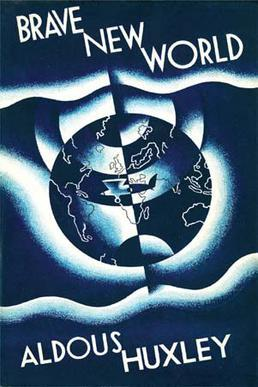
Word-built world: brave new world

First edition cover: Chatto & Windus / Wikimedia

brave new world

PRONUNCIATION:

(brayv noo/nyoo WUHRLD) 

MEANING:

noun: A radically transformed world, situation, or era, especially one with both promise and peril.

ETYMOLOGY:

After Brave New World (1932), a novel by Aldous Huxley. Earliest documented use: 1933.

NOTES:

The world in Huxley’s dystopian novel is technologically advanced, but individual freedom has been traded for stability, conditioning, consumption, and chemical contentment. The future arrives with everything included except the user’s soul.

Huxley took the title of his novel from Shakespeare’s The Tempest, in which Miranda says:
“O, wonder!
 How many goodly creatures are there here!
 How beauteous mankind is! O, brave new world,
 That has such people in ‘t!”

Surviving the Age of Abundance with Steven Kotler

New Thinking Allowed with Jeffrey Mishlove May 31, 2026 Psychology and Psychotherapy Steven Kotler is an author and entrepreneur, and a Distinguished Research Fellow at the Center for Complex Systems and Brain Sciences at Florida Atlantic University. He is the Founder and Director of the Flow Research Collective. His non-fiction books include The Art of Impossible: A Peak Performance Primer, Mapping Cloud 9, Tomorrowland: Our Journey from Science Fiction to Science Fact, and The Rise of Superman. In addition, he has written three novels. He has also coauthored a number of non-fiction books with Peter Diamandis, including The Future is Faster Than You Think, Abundance: The Future is Better Than You Think, and Bold: How to Go Big, Create Wealth, and Impact the World. He will be discussing his newest book coauthored with Peter Diamandis, We Are As Gods: A Survival Guide for the Age of Abundance. Steven discusses how humanity is rapidly entering an “Age of Abundance” driven by exponential technologies such as artificial intelligence, biotechnology, automation, and advanced communications systems. He explains that while these innovations are creating unprecedented opportunity, they are also overwhelming human biology, contributing to anxiety, burnout, cognitive overload, and social instability because the human brain evolved for scarcity rather than exponential change. Kotler argues that cultivating flow states, adaptive flexibility, curiosity, creativity, and meaningful human engagement may be essential for thriving psychologically, spiritually, and socially in the accelerating world now emerging. 00:00:00 Introduction 00:03:10 Abundance and scarcity 00:08:07 Godlike technology 00:11:22 Anxiety and overload 00:18:50 Flow as survival 00:25:22 Understanding flow 00:32:31 AI and cognition 00:42:35 Environmental renewal 00:51:48 Adaptive flexibility 01:03:45 Conclusion New Thinking Allowed host, Jeffrey Mishlove, PhD, is author of The Roots of Consciousness, Psi Development Systems, and The PK Man. Between 1986 and 2002 he hosted and co-produced the original Thinking Allowed public television series. He is the recipient of the only doctoral diploma in “parapsychology” ever awarded by an accredited university (University of California, Berkeley, 1980). He is also the Grand Prize winner of the 2021 Bigelow Institute essay competition regarding the best evidence for survival of human consciousness after permanent bodily death. He is Co-Director of Parapsychology Education at the California Institute for Human Science. (Recorded on May 16, 2026)

Matty Juniosa turns Prince’s ‘Purple Rain’ GOLDEN! | Auditions | BGT 2026

Britain’s Got Talent Mar 28, 2026 What a superstar. Arriving on stage like a bundle of energy, singer Matty has big ambitions – and an even bigger voice. Listen to the accomplished vocalist reimagine one of Prince’s biggest hits with all the vocal tricks of your favourite divas, impressing Simon and scoring his Golden Buzzer. Watch BGT on ITVX: https://www.itv.com/watch/britains-go… Watch BGT Unseen on ITVX: https://www.itv.com/watch/britains-go… See more from Britain’s Got Talent at http://itv.com/BGT

(Courtesy of Zoë Robinson, H.W., M.)

June: The Instinctive Function

(OldNewMethod.com)

June

June

The Instinctive Function

At conception, essence and the physical body conjoin. All living creatures are conceived in this way, which means all have some combination of an essence and a physical body. Essences differ considerably between species and will be discussed in the September labor. Physical bodies also differ between species, but their general utility is the same: they make it possible to move, access nourishment, avert danger, and procreate. Of our three bodies, the physical body is the one we share the most in common with the rest of the animal world. For this reason, the May and June labors, dedicated to farming the physical body, are represented by harvesting hay—hay being food for livestock.

May spanned the moving function of the physical body; June will span the instinctive function. While the abilities of the moving function obviously differ between species—one walks, another flies, a third is adapted to swim—the instinctive function of all species is fundamentally the same. It is responsible for the survival and well-being of the organism. It governs all its physiological processes, such as respiration, digestion, circulation, etc. It is also hard-coded to favor conditions or resources that aid its survival and to avoid those that constitute a threat. It formulates its priorities accordingly, even if these priorities conflict with the needs of essence and personality. This is right work from the perspective of the instinctive function, as without such priorities we would not meet the basic requirements for living. We would lack the instinct to avoid danger, lack the drive to earn our daily bread, and lack the sense of responsibility to provide for our offspring. Our species would face extinction.

The instinctive function’s priorities do not encompass inner farming. As long as we are only making brief and intermittent efforts to study the structure of our psychology and to observe its functioning in real time, it only mildly resists our anemic progress. But once we step up our efforts and attempt to introduce some form of inner discipline, some alternative government to our habitual way of manifesting, the instinctive function senses that its priorities are being threatened and increases its resistance. The specifics of how it does this vary and are material for self-observation, but the general rule is that it amplifies our bodily demands. As the brain in charge of monitoring our bodily processes, it can manipulate them to dissuade effort. It can make us feel too tired, too unwell, or too lightheaded, to invest more attention in our present activity than is strictly required for its basic, functional fulfillment. In that respect, it can be said that the instinctive function is under the law of gravity. Like a river that finds the easiest path to the sea, it always pursues the path of least resistance and greatest energy conservation. Our organism’s natural yield is quite enough, refinement is superfluous. Nature is enough, inner farming is superfluous.

We can verify our instinctive function’s competition with inner farming when we attempt to apply the disciplines of this work while performing instinctive activities. The instinctive function perceives this as an intrusion and will adamantly resist. A good area for experimentation is dining. To observe ourselves while dining, it is not enough to merely wish for it to happen; we must employ specific exercises to counteract instinctive resistance. Usually, this involves a slowing down of our natural tempo while dining. We can do this by putting our utensils down on the table between bites, or keeping our elbows from touching the table, or finishing chewing one bite before preparing the next—or all of these together. Once our habitual haste around dining is curbed, we gain the possibility of tasting our food—of bringing attention to the sense of taste—instead of swallowing and gulping like the rest of the animal world.

In applying these dining exercises, it is important to note that we are not doing anything injurious to our physical body—we are not denying it the sustenance it needs for proper functioning. We are only insisting that it partake of what it needs on different terms. The threat here is not existential; it is the usurping of a tyrant seated on the throne of our internal world—a tyrant whose existence we had not even suspected. Verifying this is in itself worthwhile, even if we find we are unable to introduce self-observation while dining, as, at least initially, will be the case. We will have taken a radical step towards revealing and understanding the psychology of our instinctive function. Replacing it with conscious government will come in due course.

This is our labor for June.


ABOUT THE SCHOOL
Our projects are undertaken with the understanding that a school must give back. It must harness the talent and resources of its members to form an expression that can outlast them.Learn more about the School of the Old New Method

WATCH AN INTRODUCTORY WORKSHOP
Learn more about the Old New Method – Watch recordings of our online gatherings that introduce the knowledge and practical methods we use.Available through purchase. View Workshops

ABOUT THE FOUNDER
I had no structural foundation at my disposal, no institution, no location, no following—only the conviction that these truths were pertinent to contemporary seekers… Drawing inspiration from the agricultural metaphor embedded in ancient wisdom, I arranged the central concepts into twelve monthly labors, creating a yearly cycle of symbolic cultivation tasks… Soon, a hundred people committed to practicing this cyclical teaching on a regular basis. This was the beginning of my school.”Read the full autobiographical note by Asaf Braverman
ABOUT THE TEACHING
Nature develops us only up to a certain point and then leaves us unfinished, just as it creates wheat but not bread, milk but not butter, grapes but not wine…Learn more about our teaching

Activating Your Intuition with Belleruth Naperstek

New Thinking Allowed with Jeffrey Mishlove May 29, 2026 This video is a special release from the original Thinking Allowed series that ran on public television from 1986 until 2002. It was recorded in about 1990. It will remain public for only one week.  Belleruth Naperstek is author of Your Sixth Sense: Unlocking the Power of Your Intuition, Staying Well with Guided Imagery, and other books.   Now you can watch all of the programs from the original Thinking Allowed Video Collection, hosted by Jeffrey Mishlove. Subscribe to the new Streaming Channel (https://thinkingallowed.vhx.tv/) and watch more than 350 programs now, with more, previously unreleased titles added weekly. Free month of the classic Thinking Allowed streaming channel for New Thinking Allowed subscribers only. Use code THINKFREELY.

Spiritual Awakening in the High Middle Ages with Betty J. Kovács

New Thinking Allowed with Jeffrey Mishlove May 30, 2026 Betty J. Kovács, PhD, taught symbolic/mythic language for twenty-five years. She has served as Chair of the Board of Directors of the Jung Society of Claremont, California, and sits on the Academic Advisory Board of Forever Family Foundation. Dr. Kovacs is author of Merchants of Light: The Consciousness That Is Changing the World, winner of The Scientific and Medical Network 2019 Book Prize and a Nautilus Silver Award. She has also written The Miracle of Death: There Is Nothing But Life. Her website is www.kamlak.com. Here she points out that the High Middle Ages, starting around 1000 AD, represented an awakening from the Dark Ages when Europe was dominated by the repressive policies of the Church. Stories of the Holy Grail inspired Europeans with a new sense of reverence for the feminine and a quest for the spiritual. Building the great cathedrals, full of esoteric symbolism, became the major economic activity of the era. New Thinking Allowed host, Jeffrey Mishlove, PhD, is author of The Roots of Consciousness, Psi Development Systems, and The PK Man. Between 1986 and 2002 he hosted and co-produced the original Thinking Allowed public television series. He is the recipient of the only doctoral diploma in “parapsychology” ever awarded by an accredited university (University of California, Berkeley, 1980). (Recorded on May 11, 2020)

“Dies Irae” Verdi Requiem

Sunjung Kim Apr 24, 2019 제주 4.3. 70주년 추념 음악회 “섬의 아픔을 뭍이 기억하다” 소프라노: 오미선 메조소프라노: 김선정 테너: 신동원 바리톤: 양준모 국립합창단, 안양시립합창단 / 참 필하모닉 프로젝트 오케스트라 지휘: 구자범 2018년 4월3일 / 성남 아트센터 콘서트 홀 주최 : 참음악친구들 (참 필하모닉 프로젝트 오케스트라는, 4.3사건 70주년 추념 음악회를 위해 만들어졌다. ‘참음악친구들’이 베르디 레퀴엠 연주를 제안하였고, 이에 전국 각지에서 현직 및 전직 음악인, 음악 전공생과 비전공생, 한국인과 외국인 등을 막론하고, 아픈 역사를 잊지 않으려는 많은 뜻있는 사람들이 자원하여 오케스트라가 구성되었다.) Soprano: Misun Oh / Mezzo soprano: Sunjung Kim Tenor: Dongwon Shin /Baritone: Junmo Yang Korean National Choir / Anyang City Choir Cham Philharmonic Project Orchestra Conductor : Jahbom Koo 2018. Apr. 3 / Seongnam Art Center Concert Hall Live The 70th anniversary of the tragic ‘Jeju April 3 Incident’ Cham Philharmonic Project Orchestra was launched just for this memorial concert. It was made up of professional and amateur musicians and students from all parts of Korea. All members participated voluntarily to perform Verdi’s Requiem for the occasion.

Jeff Burningham and Marianne Williamson: “The Last Book Written by a Human”

Marianne Williamson May 29, 2026 Author and entrepreneur Jeff Burningham joined Marianne for a Substack Live where they discussed his book THE LAST BOOK WRITTEN BY A HUMAN: Becoming Wise in the Age of AI. JeffBurningham.com JeffBurningham.Substack.com Subscribe to Marianne’s Substack: MarianneWilliamson.Susbtack.com

Consciousness, spirituality, biography, sexuality, androgyny, futurism, space, the arts, science, astrology, democracy, humor, books, movies and more

Bathtub Bulletin