Book: “Paradise Lost”

Paradise Lost

Paradise Lost

by John MiltonJohn Leonard (Editor, Contributor)

John Milton’s Paradise Lost is one of the greatest epic poems in the English language. It tells the story of the Fall of Man, a tale of immense drama and excitement, of rebellion and treachery, of innocence pitted against corruption, in which God and Satan fight a bitter battle for control of mankind’s destiny. The struggle rages across three worlds – heaven, hell, and earth – as Satan and his band of rebel angels plot their revenge against God. At the center of the conflict are Adam and Eve, who are motivated by all too human temptations but whose ultimate downfall is unyielding love.

Marked by Milton’s characteristic erudition, Paradise Lost is a work epic both in scale and, notoriously, in ambition. For nearly 350 years, it has held generation upon generation of audiences in rapt attention, and its profound influence can be seen in almost every corner of Western culture.

(Goodreads.com)

Areopagitica Summary

Milton begins his written speech for the liberty of unlicensed printing in England with a quote from The Suppliants, a play by the Greek tragedian, Euripides. “This is true liberty when free-born men / Having to advise the public may speak free,” Milton quotes. “What can be juster in a state than this?” Milton addresses his speech to the “High Court of Parliament,” which in 1643 passed a Licensing Order that mandated “no book, pamphlet, or paper shall be henceforth printed, unless the same be first approved and licensed by such.” Milton is fervently opposed to Parliament’s order—at least the part that requires pre-publication licensing. He supports the portion of the order that “preserves justly every man’s copy to himself,” and argues that “the utmost bound of civil liberty” is attained only when “complaints are freely heard, deeply considered and speedily reformed.” He begins with a look at censorship through the ages and asserts that the type of pre-publication censorship mandated by Parliament’s Licensing Order (a law Milton describes as an “authentic Spanish policy of licensing books”), was not seen until after the year 800. Until then, Milton contends, “books were ever as freely admitted into the world as any other birth: the issue of the brain was no more stifled than the issue of the womb.” Indeed, Milton contends, pre-publication licensing was born “from the most antichristian council, and the most tyrannous inquisition that ever enquired.” Of course, Milton is referring to the Roman Catholic Church and the Spanish Inquisition, and he is speaking directly to an overwhelmingly Protestant Parliament. The “inventors” of pre-publication censorship, Milton says, “be those whom ye will loath to own.”

Books and ideas weren’t censored in biblical times to such an extent either, Milton argues, unless they were found to be heretical or defamatory. The English Parliament meant to suppress books they considered bad, or evil, and Milton asserts this is not only impossible but an affront to God as well. “God uses not to captivate under a perpetual childhood of prescription,” Milton writes, “but trusts [man] with the gift of reason to be his own chooser.” Furthermore, good and evil are inextricably linked, within books and in man, so they are impossible to “sort asunder.” Milton claims “it was from out the rind of one apple tasted, that the knowledge of good and evil as two twins cleaving together leapt forth into the world. And perhaps this is that doom which Adam fell into of knowing good and evil, that is to say of knowing good by evil.” God never intended for humankind to live a life independent of evil, which is why he gave Adam “reason,” and “gave him the freedom to choose.” To eliminate evil means that each Christian’s virtue is left untested and “is but a blank virtue, not a pure.” Without evil to reject, Adam is “a mere artificial Adam, such an Adam as he is in the motions.” In addition to negatively affecting the virtue of Christians, Milton maintains that Parliament’s Licensing Order violates God’s divine authority and plan as well.Get the entire Areopagitica LitChart as a printable PDF.”My students can’t get enough of your charts and their results have gone through the roof.” -Graham S.Download it!

Milton continues his argument by pointing out how inadequate Parliament’s Licensing Order is, claiming that it “conduces nothing to the end for which it was framed.” The law means to spare citizens from evil, but it only seeks to regulate printed material. “If we think to regulate printing, thereby to rectify manners, we must regulate all recreations and pastimes, all that is delightful to man.” What about music, Milton questions, and the gestures and motions of dance? Surely these things can be evil as well and need regulation, he contends. There is even “household gluttony” to consider, and the “daily rioting” of gossip, which is most certainly to blame for the spread of evil. Milton argues that “whatever thing we hear or see, sitting, walking, traveling, or conversing may be fitly called our book,” and to suppress books only “is far insufficient to the end which [Parliament’s order] intends.” One cannot “remove sin by removing the matter of sin,” Milton posits.

Books “cannot be suppressed without the fall of learning,” Milton also claims, which too “hinders and retards the importation of our richest merchandise, truth.” According to Milton, both “faith and knowledge thrives by exercise,” and suppressing books hampers this exercise. Truth, the product of study and knowledge, “is compared in scripture to a streaming fountain; if her waters flow not in a perpetual progression, they sicken into a muddy pool of conformity and tradition.” Parliament’s Licensing Order does just that, Milton claims, by controlling and mandating what is read and learned. “A man may be a heretic in the truth; and if he believe things only because his pastor says so, or the assembly so determines, without knowing other reason, though his belief be true, yet the very truth he holds,” Milton warns, “becomes his heresy.”

Milton contends that truth “came once into the world with her divine master, and was a perfect shape most glorious to behold.” But truth did not retain its original shape, Milton claims, and the “lovely form” of “virgin truth” was “hewed” into thousands of pieces, and “scattered” from “the four winds.” Pursuit of knowledge is searching for bits and pieces of scattered truth, but all the pieces are yet to be found and likely never will be, “till her master’s second coming,” Milton says. Additionally, Milton cautions, when truth is bound, as it is by Parliament’s order, “she speaks not true” but instead “turns herself into all shapes, except her own.” It is not “impossible,” Milton contends, that truth “may have more shapes than one,” and he implores Parliament to lend equal weight to all shapes of truth and not “fall again into a gross conforming stupidity” which “is more to the sudden degenerating of a church than many subdichotomies of petty schisms.”

Of course, Milton maintains, he cannot “think well of every light separation” of the church, and while he argues for more Christian beliefs to “be tolerated, rather than compelled,” he does not mean to tolerate “popery, and open superstition, which as it extirpates all religions and civil supremacies, so itself should be extirpate.” While Milton argues against the pre-publication censorship of books, he supports the censorship and full eradication of the Catholic Church. Milton maintains that Parliament’s new practice of suppressing books “is the worst and newest opinion of all others; and is the chief cause why sects and schisms do so much abound, and true knowledge is kept at a distance from us.” He claims to know that “errors in a good government and in a bad are equally almost incident,” and he intreats Parliament “to redress willingly and speedily what hath been erred” in the passing of the Licensing Order of 1643.

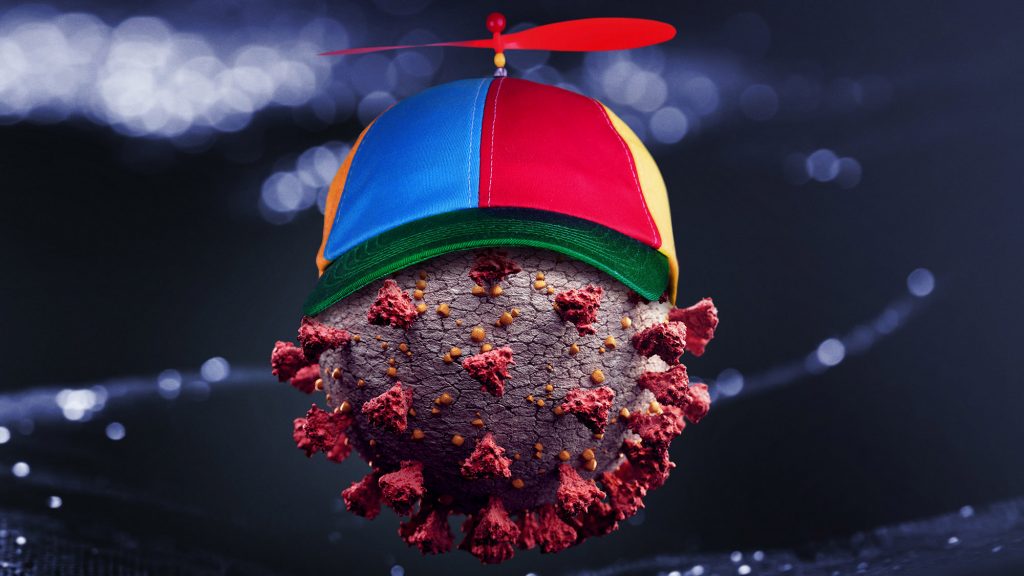
US PANDEMIC ADVISOR SAYS THE COUNTRY NEEDS TO SHUT DOWN AGAIN

“THE US RESPONSE HAS BEEN EXTRAORDINARILY DISAPPOINTING AND WRONGHEADED. WHENEVER THERE’S BEEN AN OPPORTUNITY TO DO THE RIGHT THING, WE SEEM TO HAVE DONE THE WRONG THING”

BY DAN ROBITZSKI / July 6, 2020 (Futurism.com)

According to one of the world’s foremost pandemic experts, everyone will need to stay vigilant for years in order to truly beat the coronavirus.

Eric Toner, a senior scholar at the Johns Hopkins University Center for Health Security and a prominent government advisor on pandemic preparedness, told CNET that wearing masks and some degree of social distancing will be necessary for years — and that to beat the disease, we’d need to lock down the country again.

“I think what’s important is that there’s going to be no summertime lull with a big wave in the fall,” Toner told CNET. “It’s clear that we are having a significant resurgence of cases in the summer, and they’ll get bigger. And it’ll keep going until we lock things down again.”

In Toner’s view, the U.S. government can’t act quickly enough. While other countries managed their COVID-19 outbreaks comparatively swiftly, Toner sees the American response to the pandemic as a resounding failure across the board.

“The US response has been extraordinarily disappointing and wrongheaded,” Toner told CNET. “Whenever there’s been an opportunity to do the right thing, we seem to have done the wrong thing. The US has to recognize that it is competing for first or second position of the worst affected country in the world.”

Unfortunately, mass inoculation — one of the major requirements for actually ending the pandemic — may not happen until 2022, CNET reports. So above all else, Toner says that we need to get used to the idea of wearing masks in public. And he suggests those who complain about masks get on board pronto.

“They will get over it,” he said of the anti-mask crowd. “It’s just a question of how many people get sick and die before they get over it.”

Shakespeare vs Milton: The Kings of English Literature Debate

Intelligence Squared Want to join the debate? Check out the Intelligence Squared website to hear about future live events and podcasts: http://www.intelligencesquared.com __________________________ http://www.intelligencesquared.com/ev… Filmed at the Royal Geographical Society on 22nd June 2014. Nearly four centuries after his death, no writer has come close to matching Shakespeare’s understanding of the world — or his gift for dramatic poetry. It’s not just kings and queens that he captured so uniquely in his transcendent verse. Shakespeare analysed the human condition, not just for Elizabethan England, but throughout the world and for eternity. Britain may not have matched the Continent for music or art but when it comes to literature, Shakespeare sees off all international rivals, whether it’s in the spheres of comedy, tragedy or the sonnet. Even today you and I quote Shakespeare without knowing it: if you act more in sorrow than in anger, if you vanish into thin air or have ever been tongue-tied, hoodwinked or slept not one wink, you’re speaking the Bard’s English. Milton, say his fans, works on an altogether different, higher plane. In Paradise Lost — the best poem ever written in English — Milton moved beyond the literary to address political, philosophical and religious questions in a way that still resounds strongly today. In his complex, intellectual poetry he drilled down deep into the eternal truths and sought to embody new scientific discovery in his work. His engagement with the issues of the day — with the nature of knowledge, slavery, free will, love and creation — was unparalleled. Despite complete blindness in middle age, he was the English republic’s best known, most fervent apologist, and a key civil servant for Oliver Cromwell. In his other works, notably in Areopagitica, his attack on censorship, he showed himself as much a master of prose as poetry. He defines not only his age, but our own. To help you decide who should be crowned king of English letters we brought together advocates to make the case for each writer, and they called on a cast of leading actors to illustrate their arguments with readings from the works.

Bedecked

By Victoria Redel

Tell me it’s wrong the scarlet nails my son sports or the toy
store rings he clusters four jewels to each finger.

He’s bedecked. I see the other mothers looking at the star
choker, the rhinestone strand he fastens over a sock.
Sometimes I help him find sparkle clip-ons when he says
sticker earrings look too fake.

Tell me I should teach him it’s wrong to love the glitter that a
boy’s only a boy who’d love a truck with a remote that revs,
battery slamming into corners or Hot Wheels loop-de-looping
off tracks into the tub.

Then tell me it’s fine – really – maybe even a good thing – a boy
who’s got some girl to him,
and I’m right for the days he wears a pink shirt on the seesaw in
the park.

Tell me what you need to tell me but keep far away from my son
who still loves a beautiful thing not for what it means –
this way or that – but for the way facets set off prisms and
prisms spin up everywhere
and from his own jeweled body he’s cast rainbows – made every
shining true color.

Now try to tell me – man or woman – your heart was ever once
that brave.

Victoria Redel (born April 9, 1959) is an American poet and fiction writer who lives in New York City. She is the author of five books of fiction: Before Everything, Make Me Do Things, The Border of Truth, Loverboy and Where the Road Bottoms Out and three books of poetry: Woman Without Umbrella, Swoon, and Already the World. Wikipedia

The Power of Poetry, with William Sieghart, Jeanette Winterson and Helena Bonham Carter

Intelligence Squared Want to join the debate? Check out the Intelligence Squared website to hear about future live events and podcasts: http://www.intelligencesquared.com __________________________ The Power of Poetry, with William Sieghart, Jeanette Winterson and Helena Bonham Carter For 15 years, the power of the spoken word has been at the heart of Intelligence Squared’s mission. Argument and debate, we believe, can move, persuade and create real change. Now, in these anxious and divided times, we held a special event that celebrated the positive, transformative force of another kind of spoken word – poetry. William Sieghart told the extraordinary story of his bestselling book, The Poetry Pharmacy: Tried-and-True Prescriptions for the Heart, Mind and Soul. This is no conventional collection but one created from Sieghart’s own, personal experience of prescribing real poems to real people in need. Every poem is matched to a specific condition: fear of the unknown, unrequited love, stagnation, purposelessness, convalescence, oppression Joining him in conversation were novelist and poetry devotee Jeanette Winterson. Together they explored poetry’s uncanny ability to calm, console and, above all, connect us to the minds and feelings of others. Finding the right poem at the right moment is not just a problem shared, Sieghart says, but a problem transformed. It is ‘to discover a powerful sense of complicity, and that precious realisation: I’m not the only one who feels like this.’ It is to forge a connection with ‘this stranger who understands – and what results is a sort of peace.’ Bringing the poems to dramatic life were a cast of star actors including Helena Bonham Carter, Sue Perkins, Jason Isaacs and Tom Burke.

Albert Camus on Democracy

Albert Camus

“Democracy is not the law of the majority but the protection of the minority.”

— Albert Camus

Albert Camus (November 7, 1913 – January 4, 1960) was a French philosopher, author, and journalist. He won the Nobel Prize in Literature at the age of 44 in 1957, the second-youngest recipient in history. Camus was born in Algeria to French Pieds Noirs parents. His citizenship was French. Wikipedia

The Stuff of Stars: A Stunning Marbled Serenade to the Native Poetry of Science and the Cosmic Interleaving of Life

By Maria Popova (brainpickings.org)

thestuffofstars.jpg?fit=320%2C369

“Before I was born out of my mother,” Walt Whitman wrote in Leaves of Grass, “my embryo has never been torpid… For it the nebula cohered to an orb.” Only by connecting our own birth, our own existence, to that of everything and everyone we know, to the birth of the universe itself, can we confidently and genuinely say with Whitman, who called himself a “Kosmos,” that “every atom belonging to me as good belongs to you”; only then can we not only think but feel the elemental truth in his contemporary John Muir’s insistence that “when we try to pick out anything by itself, we find it hitched to everything else in the universe.” A century and a half after Whitman and Muir, a century and a half after staggering leaps in our scientific understanding of the life of the universe and the universe of life, the great evolutionary biologist Lynn Margulis moored this poetic truth in the reality of science by observing that “the fact that we are connected through space and time shows that life is a unitary phenomenon, no matter how we express that fact.”

That atomic interleaving of existence across the sweep of space and time and individual selves is what author Marion Dane Bauer and artist Ekua Holmes celebrate in The Stuff of Stars (public library) — a serenade to the native poetry inside the science of life, inspired by the iconic Carl Saganism that “we’re made of star-stuff” (itself inspired by the legacy of the trailblazing astronomer Cecilia Payne, who discovered the chemical composition of the universe against the odds of her time and place).

thestuffofstars6.jpg?resize=680%2C784

Opening with a narrative verse evocative of Marie Howe’s stunning poem “Singularity,” the lyrical story begins before the beginning of time and unspools into the everythingness of everything. Bauer writes:

2e292385-dc1c-4cfe-b95e-845f6f98c2ec.pngIn the dark,
in the dark,
in the deep, deep dark,
a speck floated,
invisible as thought,
weighty as God.
There was yet no time,
there was yet no space.
No up,
no down,
no edge,
no center.

thestuffofstars7.jpg?resize=680%2C392
thestuffofstars13.jpg?resize=680%2C453
thestuffofstars8.jpg?resize=680%2C392

2e292385-dc1c-4cfe-b95e-845f6f98c2ec.pngNo Earth with soaring hawks,
scuttling beetles,
trees reaching for the sky.
There was no sky.
No you.
No me.
Only the speck,
waiting,
waiting…

thestuffofstars12.jpg?resize=680%2C453

Holmes’s illustrations, nebular and alive and animated by marbling — a technique of rich symbolism and cross-cultural history — furnish the perfect visual metaphor for the book’s elemental reminder that we live in a universe of constant flow, flux, and metamorphosis, and that we ourselves are but a speck of color floating into shape for a brief moment before being washed into the perpetually repatterned marbling of existence; that any one life, including our own, is as precious as it is improbable and transient, and all the more precious for its improbability and transience.

thestuffofstars9.jpg?resize=680%2C392

With a poet’s concision and precision of thought-in-image, Bauer chronicles the formation of our Solar System and the chance miracle of our own Pale Blue Dot, so improbably hospitable to life against the odds of an austere cosmos — a planet that orbits its star “from just the right distance and with just the right tilt to be sometimes warm, sometimes cool”; a planet ideally poised to foment the astonishing diversity and splendor of the marbling of matter we call life, “perfect for turning that starry stuff into mitochondria, jellyfish, spiders, into ferns and sharks, into daisies and galloping horses.”

thestuffofstars5.jpg?resize=680%2C516

2e292385-dc1c-4cfe-b95e-845f6f98c2ec.pngAgain and against
stardust
gave birth
to stardust.

Bauer goes on to trace the unstoppable rush of species and generations, fading in and out of the scene, restaging the next act with their own existence — the dinosaurs making room for the humans, our ancestors making room for us.

thestuffofstars4.jpg?resize=680%2C784

Leafing through the consummately illustrated story as it moves from the Big Bang with its near-instantaneous generation of all the matter that made everything we know to the slow, steady birth of stars and planets, of oceans and mountains, of all the creatures that tread and bloom and burrow and soar over and on and in them, I am reminded of Rachel Carson’s immortally poetic observation that “against this cosmic background the lifespan of a particular plant or animal appears, not as drama complete in itself, but only as a brief interlude in a panorama of endless change”; I am reminded of James Baldwin’s impassioned insistence that “nothing is fixed… the earth is always shifting, the light is always changing, the sea does not cease to grind down rock… the sea rises, the light fails, lovers cling to each other, and children cling to us.”

thestuffofstars14.jpg?resize=680%2C453

Bauer ends this vignette of the panorama with the birth of the reader, addressing the child directly as a child of the universe, with the Whitmanesque recognition of how “the nebula cohered” to manifest this singular existence:

2e292385-dc1c-4cfe-b95e-845f6f98c2ec.pngThen one day…
in the dark,
in the dark,
in the deep, deep dark,
another speck floated,
invisible as dreams,
special as Love.
Waiting,
waiting,
dividing,
changing,
growing.
Until at last,
YOU burst into the world.

Reminding the young reader that each breath they inhale is air once breathed by the woolly mammoths and each tear they cry is water that once lapped in the primordial seas, Bauer ends the story by inviting the voice of the parent to place the child into this glorious singularity of being — a splendid message that not only enlarges once’s own sense of being but, in celebrating this interbelonging with the rest of the living world, is the only viable seed for any real sense of the ecological responsibility that must bloom in the coming generations if this precious, precarious, shimmering world is to go on cohering into beauty and being.

thestuffofstars3.jpg?resize=680%2C392

2e292385-dc1c-4cfe-b95e-845f6f98c2ec.pngYou
and the velvet moss,
the caterpillars,
the lions.

You
and the singing whales,
the larks,
the frogs.

You,
and me
loving you.
All of us
the stuff of stars.

thestuffofstars11.jpg?resize=680%2C429
thestuffofstars10.jpg?resize=680%2C392

Couple The Stuff of Stars (not to be confused with the similarly titled grownup biography of trailblazing astronomer Maria Mitchell, about whom there also happens to be a wonderful picture-book biography) with a gorgeous animated short film of Marie Howe’s kindred-spirited poem “Singularity,” then revisit Maya Angelou’s cosmic clarion call to humanity, also inspired by Carl Sagan.

Reproductions courtesy of Candlewick Press. Photographs by Maria Popova.

Let’s Unite

Wendy Mandy
July 5, 2020
Hallo Everybody:

During my lifetime all over the world, I have witnessed the magic that happens when people unite over difficult issues and together bring about change.                                                   

But at the moment, it appears through monopoly ownership and funding that the mainstream media is mostly creating fear and unsettling people with conflicting and confusing advice.  And anyone who disagrees with or questions the narrative is in some way a “conspiracy theorist“.

Of course, some of the alternative news threads out there are sometimes highly questionable, but I truly believe in freedom of speech so that we can make our own minds up and help each other find and understand the truth.  And in many cases when people unite about a cause, there can be at first some extremism that initially creates division.  But when this dies down, true change happens.

We saw this with the #MeToo movement.  And at its height, my male patients were quite worried that they would be accused of being sexist even if they blinked.  However, out of this movement came the arrest of Weinstein and Epstein which has led to a change within Hollywood and celebrity culture and the beginning of public knowledge and awareness of the tragic cases of  sex-trafficking happening around the world.  Furthermore, it is now much harder for men to get away with sexual harassment in the workplace as both men and women have become more aware of the issue. 

And now we have the issue of Black Lives Matter.  But when this extreme phase has quietened, no one will be able to ignore the horrors of the slave trade or deny the inherent and systemic racism that we have all turned a blind eye to in one way or another.

My greatest hope now is that this lockdown will lead to a greater awareness that our bodies are our bodies.  That our bodies belong to no one else.  And I hope that we will understand more about true health – mentally, spiritually, emotionally and physically, and that we can create a new way of living in smaller communities in cities and in the countryside.  Where we value each other, have fun, and care about the land we live on.

I’ve been reading and listening during the lock down and would love for you to please take the time to listen to Leslie Manookian’s well-researched discussion about our health and the virus, so that you can too understand what we mean by true health.

Then we can help and empower the people we know and come out of fear into Love.

Thanks for listening
All my love Wendy

P.S. Starting tomorrow and continuing for 10 days, there is a Harmonic Convergence event that invites everyone to participate in a global meditation.  Check it out if you like https://www.theharmonicconvergence2020.org/

P.P.S Full Moon tonight!  Look up.
Copyright © 2020 *Wendy Mandy, All rights reserved.
You can contact me at
www.wendymandy.uk

Consciousness, spirituality, biography, sexuality, androgyny, futurism, space, the arts, science, astrology, democracy, humor, books, movies and more