For 15 years, Intelligence Squared has vigorously championed the spoken word. The finest speakers from across the globe have come to our stage — to argue, to move, to persuade and change minds. Their speeches epitomise the vital role that public speaking plays in our lives. To celebrate the power of oratory, we held a major event which will showcase how great speeches have swayed the course of history and demonstrate how, more than ever, we need them to help define our values and who we are. Barack Obama’s director of speechwriting, Cody Keenan, shared his experience of helping craft the presidential speeches that moved the hearts and minds of millions around the world. Alongside him was be Philip Collins, Tony Blair’s former speechwriter and Times columnist, whose new book argues for the importance of speeches in protecting and promoting democracy. With Newsnight’s Emily Maitlis in the chair, Keenan and Collins unpacked the tricks and techniques that have been used by the most brilliant orators down the centuries and which are still working their magic today. Bringing this all to life were star actors Carey Mulligan, Jeremy Irons and Simon Russell Beale, who will perform extracts from remarkable speeches – some familiar, others that will surprise – from different continents and eras. What is it about a great speech that can give voice to people’s intense but unarticulated feelings? What is that special alchemy of words and personal charisma that makes us as susceptible to dangerous demagogues as to the morally uplifting oratory of a Mandela, a Martin Luther King or a JFK?
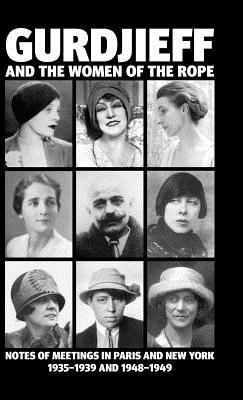
During the mid-thirties in Paris, Gurdjieff drew together four women: Solita Solano, Kathryn Hulme, Alice Rohrer and Elizabeth Gordon — and formed a special, mutually supporting work group. In allegory he explained: You are going on a journey under my guidance, an “inner-world journey” like a high mountain climb where you must be roped together for safety, where each must think of the others on the rope, all for one and one for all. You must, in short, help each other “as hand washes hand,” each contributing to the company according to her lights, according to her means. Only faithful hard work on yourselves will get you where I want you to go, not your wishing.
Among themselves they called their foursome “The Rope.”
The company around Gurdjieff’s table, his principal teaching site, soon expanded to include Louise Davidson, Margaret Anderson, Georgette Leblanc and Jane Heap
This is a pre-1923 historical reproduction that was curated for quality. Quality assurance was conducted on each of these books in an attempt to remove books with imperfections introduced by the digitization process. Though we have made best efforts – the books may have occasional errors that do not impede the reading experience. We believe this work is culturally important and have elected to bring the book back into print as part of our continuing commitment to the preservation of printed works worldwide.
Translators: Mike Zonta, Melissa Goodnight, Richard Branam, Hanz Bolen, Sarah Flynn
SENSE TESTIMONY: The pandemic causes disruption to our routines and options.
5th Step Conclusions:
1) Consciousness/Truth is sufficient unto Itself, one cause being manifested in infinite variety of personhood; the only consequence, the only outcome, the only upshot, the only outturn, the only effect, the only reaction, the only repercussion, the only reverberation, the only ramification, the only end, the only conclusion, the only termination, the only culmination, the only corollary, the only concomitant, the only aftermath, the only product, the only byproduct, the only solution, the only sequelae, the only payoff, the only issue, the only yield, the only success; all ways, always, all roads, all routes, all routines; with absolutely no disruption and with infinite certitude.
2) One Infinite Consciousness Beingness, is now and always, outpicturing with limitless freedom of expression — the universal orderly integrity, that is indivisibly/inseparably unhurt/unharmed and absolutely whole, and is the complete Truth of every possible individuated embodiment.
3) Truth is the only cause, the only effect, unbreakable wholeness expressing as the only choice, the only way, all that is.
4) Truth Individuated and One yields only Essential Self Evident Agreeable Instantaneous Well Being. Truth Yields Only Well Being.
5) Truth is the guiding Mother Nature, being One personage individualized by consciousness awareness, this Universal Principle is the all powerful democracy, I AM THOU; reasoning thinker the only effective creativity of New-ness, this spontaneous erupting ravishing joyfulness of the Infinite Heart, Mind, this ethical design, and purpose of the androgynous dialogue is the tongue of balance.
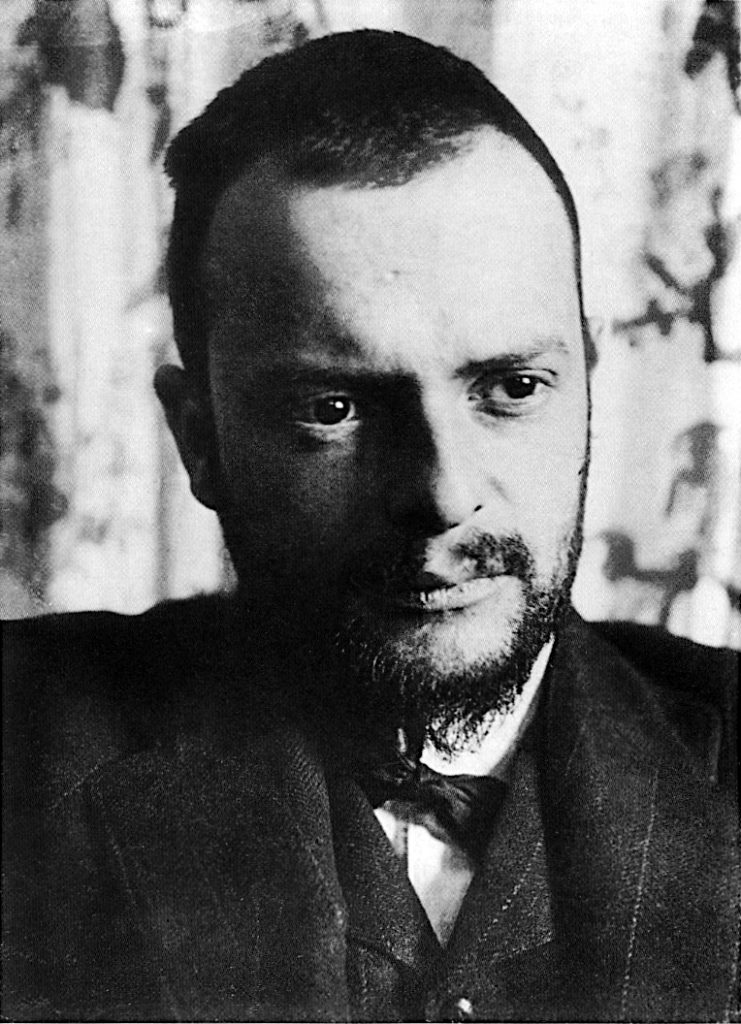
Paul Klee (German: [paʊ̯l ˈkleː]; 18 December 1879 – 29 June 1940) was a Swiss-born artist. His highly individual style was influenced by movements in art that included Expressionism, Cubism, and Surrealism. Klee was a natural draftsman who experimented with and eventually deeply explored color theory, writing about it extensively; his lectures Writings on Form and Design Theory (Schriften zur Form und Gestaltungslehre), published in English as the Paul Klee Notebooks, are held to be as important for modern art as Leonardo da Vinci‘s A Treatise on Painting for the Renaissance.[1][2][3] He and his colleague, Russian painter Wassily Kandinsky, both taught at the Bauhaus school of art, design and architecture in Germany. His works reflect his dry humor and his sometimes childlike perspective, his personal moods and beliefs, and his musicality.
Early life and training
First of all, the art of living; then as my ideal profession, poetry and philosophy, and as my real profession, plastic arts; in the last resort, for lack of income, illustrations.— Paul Klee.[4]
Paul Klee was born in Münchenbuchsee, Switzerland, as the second child of German music teacher Hans Wilhelm Klee (1849–1940) and Swiss singer Ida Marie Klee, née Frick (1855–1921).[a] Under Swiss law citizenship was defined by the father’s nationality and Klee thus inherited his father’s German citizenship. His sister Mathilde (died 6 December 1953) was born on 28 January 1876 in Walzenhausen. Their father came from Tann and studied singing, piano, organ and violin at the Stuttgart Conservatory, meeting there his future wife Ida Frick. Hans Wilhelm Klee was active as a music teacher at the Bern State Seminary in Hofwil near Bern until 1931. Klee was able to develop his music skills as his parents encouraged and inspired him throughout his life.[5] In 1880, his family moved to Bern, where they eventually, in 1897, after a number of changes of residence, moved into their own house in the Kirchenfeld district [de].[6] From 1886 to 1890, Klee visited primary school and received, at the age of 7, violin classes at the Municipal Music School. He was so talented on violin that, aged 11, he received an invitation to play as an extraordinary member of the Bern Music Association.[7]My Room (German: Meine Bude), 1896. Pen and ink wash, 120 by 190 mm (4 3⁄4 by 7 1⁄2 in). In the collection of the Klee Foundation, Bern, Switzerland
In his early years, following his parents’ wishes, Klee focused on becoming a musician; but he decided on the visual arts during his teen years, partly out of rebellion and partly because modern music lacked meaning for him. He stated, “I didn’t find the idea of going in for music creatively particularly attractive in view of the decline in the history of musical achievement.”[8] As a musician, he played and felt emotionally bound to traditional works of the eighteenth and nineteenth century, but as an artist he craved the freedom to explore radical ideas and styles.[8] At sixteen, Klee’s landscape drawings already show considerable skill.[9]
Around 1897, Klee started his diary, which he kept until 1918, and which has provided scholars with valuable insight into his life and thinking.[10] During his school years, he avidly drew in his school books, in particular drawing caricatures, and already demonstrating skill with line and volume.[11] He barely passed his final exams at the “Gymnasium” of Bern, where he qualified in the Humanities. With his characteristic dry wit, he wrote, “After all, it’s rather difficult to achieve the exact minimum, and it involves risks.”[12] On his own time, in addition to his deep interests in music and art, Klee was a great reader of literature, and later a writer on art theory and aesthetics.[13]
With his parents’ reluctant permission, in 1898 Klee began studying art at the Academy of Fine Arts in Munich with Heinrich Knirr and Franz von Stuck. He excelled at drawing but seemed to lack any natural color sense. He later recalled, “During the third winter I even realized that I probably would never learn to paint.”[12] During these times of youthful adventure, Klee spent much time in pubs and had affairs with lower-class women and artists’ models. He had an illegitimate son in 1900 who died several weeks after birth.[14]
After receiving his Fine Arts degree, Klee traveled in Italy from October 1901 to May 1902[15] with friend Hermann Haller. They visited in Rome, Florence, Naples and the Amalfi Coast, studying the master painters of past centuries.[14] He exclaimed, “The Forum and the Vatican have spoken to me. Humanism wants to suffocate me.”[16] He responded to the colors of Italy, but sadly noted, “that a long struggle lies in store for me in this field of color.”[17] For Klee, color represented the optimism and nobility in art, and a hope for relief from the pessimistic nature he expressed in his black-and-white grotesques and satires.[17] Returning to Bern, he lived with his parents for several years, and took occasional art classes. By 1905, he was developing some experimental techniques, including drawing with a needle on a blackened pane of glass, resulting in fifty-seven works including his Portrait of My Father (1906).[11] In the years 1903–05 he also completed a cycle of eleven zinc-plate etchings called Inventions, his first exhibited works, in which he illustrated several grotesque characters.[14][18] He commented, “though I’m fairly satisfied with my etchings I can’t go on like this. I’m not a specialist.”[19] Klee was still dividing his time with music, playing the violin in an orchestra and writing concert and theater reviews.[20]
Marriage and early years
Marriage
Flower Myth (Blumenmythos) 1918, watercolor on pastel foundation on fabric and newsprint mounted on board, Sprengel Museum, Hannover, Germany
Klee married Bavarian pianist Lily Stumpf in 1906 and they had one son named Felix Paul in the following year. They lived in a suburb of Munich, and while she gave piano lessons and occasional performances, he kept house and tended to his art work. His attempt to be a magazine illustrator failed.[20] Klee’s art work progressed slowly for the next five years, partly from having to divide his time with domestic matters, and partly as he tried to find a new approach to his art. In 1910, he had his first solo exhibition in Bern, which then travelled to three Swiss cities.
Affiliation to the “Blaue Reiter”, 1911
In January 1911 Alfred Kubin met Klee in Munich and encouraged him to illustrate Voltaire‘s Candide. His resultant drawings were published later in a 1920 version of the book edited by Kurt Wolff. Around this time, Klee’s graphic work increased. His early inclination towards the absurd and the sarcastic was well received by Kubin, who befriended Klee and became one of his first significant collectors.[21] Klee met, through Kubin, the art critic Wilhelm Hausenstein in 1911. Klee was a foundation member and manager of the Munich artists’ union Sema that summer.[22] In autumn he made an acquaintance with August Macke and Wassily Kandinsky, and in winter he joined the editorial team of the almanac Der Blaue Reiter, founded by Franz Marc and Kandinsky. On meeting Kandinsky, Klee recorded, “I came to feel a deep trust in him. He is somebody, and has an exceptionally beautiful and lucid mind.”[23] Other members included Macke, Gabriele Münter and Marianne von Werefkin. Klee became in a few months one of the most important and independent members of the Blaue Reiter, but he was not yet fully integrated.[24]
The release of the almanac was delayed for the benefit of an exhibition. The first Blaue Reiter exhibition took place from 18 December 1911 to 1 January 1912 in the Moderne Galerie Heinrich Thannhauser in Munich. Klee did not attend it, but in the second exhibition, which occurred from 12 February to 18 March 1912 in the Galerie Goltz, 17 of his graphic works were shown. The name of this art exhibition was Schwarz-Weiß, as it only regarded graphic painting.[25] Initially planned to be released in 1911, the release date of the Der Blau Reiter almanac by Kandinsky and Marc was delayed in May 1912, including the reproduced ink drawing Steinhauer by Klee. At the same time, Kandinsky published his art history writing Über das Geistige in der Kunst.[26]
Participation in art exhibitions, 1912–1913
The association opened Klee’s mind to modern theories of color. His travels to Paris in 1912 also exposed him to the ferment of Cubism and the pioneering examples of “pure painting”, an early term for abstract art. The use of bold color by Robert Delaunay and Maurice de Vlaminck also inspired him.[27] Rather than copy these artists, Klee began working out his own color experiments in pale watercolors and did some primitive landscapes, including In the Quarry (1913) and Houses near the Gravel Pit (1913), using blocks of color with limited overlap.[28] Klee acknowledged that “a long struggle lies in store for me in this field of color” in order to reach his “distant noble aim.” Soon, he discovered “the style which connects drawing and the realm of color.”[17]
Trip to Tunis, 1914
Klee’s artistic breakthrough came in 1914 when he briefly visited Tunisia with August Macke and Louis Moilliet and was impressed by the quality of the light there. He wrote, “Color has taken possession of me; no longer do I have to chase after it, I know that it has hold of me forever… Color and I are one. I am a painter.”[29] With that realization, faithfulness to nature faded in importance. Instead, Klee began to delve into the “cool romanticism of abstraction”.[29] In gaining a second artistic vocabulary, Klee added color to his abilities in draftsmanship, and in many works combined them successfully, as he did in one series he called “operatic paintings”.[30][31] One of the most literal examples of this new synthesis is The Bavarian Don Giovanni (1919).[32]
After returning home, Klee painted his first pure abstract, In the Style of Kairouan (1914), composed of colored rectangles and a few circles.[33] The colored rectangle became his basic building block, what some scholars associate with a musical note, which Klee combined with other colored blocks to create a color harmony analogous to a musical composition. His selection of a particular color palette emulates a musical key. Sometimes he uses complementary pairs of colors, and other times “dissonant” colors, again reflecting his connection with musicality.[34]
Military career
Paul Klee as a soldier, 1916
A few weeks later, World War I began. At first, Klee was somewhat detached from it, as he wrote ironically, “I have long had this war in me. That is why, inwardly, it is none of my concern.”[35] Klee was conscripted as a Landsturmsoldat (soldier of the reserve forces in Prussia or Imperial Germany) on 5 March 1916. The deaths of his friends August Macke and Franz Marc in battle began to affect him. Venting his distress, he created several pen and ink lithographs on war themes including Death for the Idea (1915).[36] After finishing the military training course, which began on 11 March 1916, he was committed as a soldier behind the front. Klee moved on 20 August to the aircraft maintenance company[b] in Oberschleissheim, executing skilled manual work, such as restoring aircraft camouflage, and accompanying aircraft transports. On 17 January 1917, he was transferred to the Royal Bavarian flying school in Gersthofen (which 54 years later became the USASA Field Station Augsburg) to work as a clerk for the treasurer until the end of the war. This allowed him to stay in a small room outside of the barrack block and continue painting.[37][38]
He continued to paint during the entire war and managed to exhibit in several shows. By 1917, Klee’s work was selling well and art critics acclaimed him as the best of the new German artists.[39] His Ab ovo (1917) is particularly noteworthy for its sophisticated technique. It employs watercolor on gauze and paper with a chalk ground, which produces a rich texture of triangular, circular, and crescent patterns.[29] Demonstrating his range of exploration, mixing color and line, his Warning of the Ships (1918) is a colored drawing filled with symbolic images on a field of suppressed color.[40]
In 1919, Klee applied for a teaching post at the Academy of Art in Stuttgart.[41] This attempt failed but he had a major success in securing a three-year contract (with a minimum annual income) with dealer Hans Goltz, whose influential gallery gave Klee major exposure, and some commercial success. A retrospective of over 300 works in 1920 was also notable.[42]
Klee taught at the Bauhaus from January 1921 to April 1931.[43] He was a “Form” master in the bookbinding, stained glass, and mural painting workshops and was provided with two studios.[44] In 1922, Kandinsky joined the staff and resumed his friendship with Klee. Later that year the first Bauhaus exhibition and festival was held, for which Klee created several of the advertising materials.[45] Klee welcomed that there were many conflicting theories and opinions within the Bauhaus: “I also approve of these forces competing one with the other if the result is achievement.”[46]Tropical Gardening, 1923 watercolor and oil transfer drawing on paper, The Solomon R. Guggenheim Museum, New York.
Klee was also a member of Die Blaue Vier (The Blue Four), with Kandinsky, Lyonel Feininger, and Alexej von Jawlensky; formed in 1923, they lectured and exhibited together in the US in 1925. That same year, Klee had his first exhibits in Paris, and he became a hit with the French Surrealists.[47] Klee visited Egypt in 1928, which impressed him less than Tunisia. In 1929, the first major monograph on Klee’s work was published, written by Will Grohmann.[48]Nocturnal Festivity, 1921, The Solomon R. Guggenheim Museum, New York.
Klee also taught at the Düsseldorf Academy from 1931 to 1933, and was singled out by a Nazi newspaper, “Then that great fellow Klee comes onto the scene, already famed as a Bauhaus teacher in Dessau. He tells everyone he’s a thoroughbred Arab, but he’s a typical Galician Jew.”[49] His home was searched by the Gestapo and he was fired from his job.[3][50] His self-portrait Struck from the List (1933) commemorates the sad occasion.[49] In 1933–34, Klee had shows in London and Paris, and finally met Pablo Picasso, whom he greatly admired.[51] The Klee family emigrated to Switzerland in late 1933.[51]
Klee was at the peak of his creative output. His Ad Parnassum (1932) is considered his masterpiece and the best example of his pointillist style; it is also one of his largest, most finely worked paintings.[52][53] He produced nearly 500 works in 1933 during his last year in Germany.[54] However, in 1933, Klee began experiencing the symptoms of what was diagnosed as scleroderma after his death. The progression of his fatal disease, which made swallowing very difficult, can be followed through the art he created in his last years. His output in 1936 was only 25 pictures. In the later 1930s, his health recovered somewhat and he was encouraged by a visit from Kandinsky and Picasso.[55] Klee’s simpler and larger designs enabled him to keep up his output in his final years, and in 1939 he created over 1,200 works, a career high for one year.[56] He used heavier lines and mainly geometric forms with fewer but larger blocks of color. His varied color palettes, some with bright colors and others somber, perhaps reflected his alternating moods of optimism and pessimism.[57] Back in Germany in 1937, seventeen of Klee’s pictures were included in an exhibition of “Degenerate art” and 102 of his works in public collections were seized by the Nazis.[58]
Death
Klee’s grave in Schosshalden cemetery
Klee suffered from an autoimmune disease, scleroderma, toward the end of his life, enduring pain that seems to be reflected in his last works of art. One of his last paintings, Death and Fire, features a skull in the center with the German word for death, “Tod”, appearing in the face. He died in Muralto, Locarno, Switzerland, on 29 June 1940 without having obtained Swiss citizenship, despite his birth in that country.[59][60] His art work was considered too revolutionary, even degenerate, by the Swiss authorities, but eventually they accepted his request six days after his death.[61] His legacy comprises about 9,000 works of art.[17] The words on his tombstone, Klee’s credo, placed there by his son Felix, say, “I cannot be grasped in the here and now, for my dwelling place is as much among the dead as the yet unborn. Slightly closer to the heart of creation than usual, but still not close enough.”[62] He was buried at Schosshaldenfriedhof, Bern, Switzerland.
Style and methods
Tale à la Hoffmann (1921), watercolor, ink, and pencil on paper. 31.1 × 24.1 cm. In the collection of the Metropolitan Museum of Art, New York
Klee has been variously associated with Expressionism, Cubism, Futurism, Surrealism, and Abstraction, but his pictures are difficult to classify. He generally worked in isolation from his peers, and interpreted new art trends in his own way. He was inventive in his methods and technique. Klee worked in many different media—oil paint, watercolor, ink, pastel, etching, and others. He often combined them into one work. He used canvas, burlap, muslin, linen, gauze, cardboard, metal foils, fabric, wallpaper, and newsprint.[63] Klee employed spray paint, knife application, stamping, glazing, and impasto, and mixed media such as oil with watercolor, watercolor with pen and India ink, and oil with tempera.[64]
He was a natural draftsman, and through long experimentation developed a mastery of color and tonality. Many of his works combine these skills. He uses a great variety of color palettes from nearly monochromatic to highly polychromatic. His works often have a fragile childlike quality to them and are usually on a small scale. He often used geometric forms and grid format compositions as well as letters and numbers, frequently combined with playful figures of animals and people. Some works were completely abstract. Many of his works and their titles reflect his dry humor and varying moods; some express political convictions. They frequently allude to poetry, music and dreams and sometimes include words or musical notation. The later works are distinguished by spidery hieroglyph-like symbols. Rainer Maria Rilke wrote about Klee in 1921, “Even if you hadn’t told me he plays the violin, I would have guessed that on many occasions his drawings were transcriptions of music.”[13]
Pamela Kort observed: “Klee’s 1933 drawings present their beholder with an unparalleled opportunity to glimpse a central aspect of his aesthetics that has remained largely unappreciated: his lifelong concern with the possibilities of parody and wit. Herein lies their real significance, particularly for an audience unaware that Klee’s art has political dimensions.”[65]
Among the few plastic works are hand puppets made between 1916 and 1925, for his son Felix. The artist neither counts them as a component of his oeuvre, nor does he list them in his catalogue raisonné. Thirty of the preserved puppets are stored at the Zentrum Paul Klee, Bern.[66]
Some of Klee’s early preserved children’s drawings, which his grandmother encouraged, were listed on his catalogue raisonné. A total of 19 etchings were produced during the Bern years; ten of these were made between 1903 and 1905 in the cycle “Inventionen” (Inventions),[67] which were presented in June 1906 at the “Internationale Kunstausstellung des Vereins bildender Künstler Münchens ‘Secession‘” (International Art Exhibition of the Association for Graphic Arts, Munich, Secession), his first appearance as a painter in the public.[68] Klee had removed the third Invention, Pessimistische Allegorie des Gebirges (Pessimistic Allegory of the Mountain), in February 1906 from his cycle.[69] The satirical etchings, for example Jungfrau im Baum/Jungfrau (träumend) (Virgin on the tree/Virgin (dreaming)) from 1903 and Greiser Phoenix (Aged Phoenix) from 1905, were classified by Klee as “surrealistic outposts”. Jungfrau im Baum ties on the motive Le cattive madri (1894) by Giovanni Segantini. The picture was influenced by grotesque lyric poetries of Alfred Jarry, Max Jacob and Christian Morgenstern.[70] It features a cultural pessimism, which can be found at the turn of the 20th century in works by Symbolists. The Invention Nr. 6, the 1903 etching Zwei Männer, einander in höherer Stellung vermutend (Two Men, Supposing the Other to be in a Higher Position), depicts two naked men, presumably emperor Wilhelm II and Franz Joseph I of Austria, recognizable by their hairstyle and beards. As their clothes and insignia were bereft, “both of them have no clue if their conventional salute […] is in order or not. As they assume that their counterpart could have been higher rated”, they bow and scrape.[71]
Dame mit Sonnenschirm, 1883–1885, pencil on paper on cardboard, Zentrum Paul Klee, Bern
Klee began to introduce a new technique in 1905: scratching on a blackened glass panel with a needle. In that manner he created about 57 Verre églomisé pictures, among those the 1905 Gartenszene (Scene on a Garden) and the 1906 Porträt des Vaters (Portrait of a Father), with which he tried to combine painting and scratching.[72] Klee’s solitary early work ended in 1911, the year he met and was inspired by the graphic artist Alfred Kubin, and became associated with the artists of the Blaue Reiter.[73]
Mystical-abstract period, 1914–1919
During his twelve-day educational trip to Tunis in April 1914 Klee produced with Macke and Moilliet watercolor paintings, which implement the strong light and color stimulus of the North African countryside in the fashion of Paul Cézanne and Robert Delaunays’ cubistic form concepts. The aim was not to imitate nature, but to create compositions analogous to nature’s formative principle, as in the works In den Häusern von Saint-Germain (In the Houses of Saint-Germain) and Straßencafé (Streetcafé). Klee conveyed the scenery in a grid, so that it dissolves into colored harmony. He also created abstract works in that period such as Abstract and Farbige Kreise durch Farbbänder verbunden (Colored Circles Tied Through Inked Ribbons).[74] He never abandoned the object; a permanent segregation never took place. It took over ten years that Klee worked on experiments and analysis of the color, resulting to an independent artificial work, whereby his design ideas were based on the colorful oriental world.
Fenster und Palmen, 1914, watercolor on grounding on paper on cardboard, Kunsthaus Zürich, Zurich
In den Häusern von St. Germain, 1914, watercolor on paper on cardboard, Zentrum Paul Klee, Bern
Föhn im Marc’schen Garten, 1915, watercolor on paper on cardboard, Lenbachhaus, Munich
In April 2018, I flew to Vancouver, Canada, for my first TED Conference. As a TED Fellow, I had the opportunity to give both a talk and a cello performance. As I packed my artifacts and artwork, which included three of my custom Ku Klux Klan robes made from various fabrics, the one that most stood out to me then — and still stands out to me now — was the camouflage robe.
That robe represents the stealth aspect of racism: the everyday systems that discriminate but are often difficult to prove for what they are. Whether it’s housing, jobs, health care, banking or the prison system, systemic racism is sewn into every aspect of all we do — and its power lies in its ability to hide.
The past month has focused our attention, once again, on violence by police. This time it’s the deaths of George Floyd, Breonna Taylor, Ahmaud Arbery, Tony McDade and Rayshard Brooks — along with the countless others who’ve lost their lives because of the deep-seated racism and oppression that permeates American society.
I make art as a way to spread knowledge, empathy and understanding, but art has its limitations, just like every other sector. As the protests continue on our streets, I’m hopeful that we also continue to protest both the camouflaged and blatant forms of racism in all facets of our lives: our virtual meetings, our classrooms and whenever we see a lack of representation from Black lives.
As a self-proclaimed civilized society, we need to understand that economic violence is the most socially acceptable form of racism. This can take the form of restricting access to financial resources, education or the labor market, as well as restricting access to natural resources such as safe drinking water like in Flint, Michigan.
The workplace: If the only Black coworkers in your office are janitorial staff, security or cafeteria workers, know that this matters. Economic oppression comes in many forms, including the denial of opportunity. This is a form of terrorism that must be addressed during this uprising. As a former janitor and security guard, I’ve worked at institutions that didn’t have a single Black employee across the entire administrative floor. Examine your boards, your C-suites, your hiring process, the teams you manage. Who are the decision makers?
Education: I’m hoping the protests continue when you see a lack of representation from Black lives in your classrooms when you return to school. Part of this journey of resistance is acknowledging that we have intentionally segregated our schools, neighborhoods and workplaces. These disproportionalities heighten the disparities in opportunity. This imbalance can no longer be ignored. We’ve normalized it, but this atrocity warrants additional protests and continued action.
We can feel bolstered by hopeful changes in legislation here and there, but don’t raise the “V” for victory too quickly. Four hundred-plus years of oppression is not going to be wiped out in a few weeks or through a few months of resistance. If history has taught us anything, it’s that the tendency of the oppressor is to double down.
The historical precedent: The last major pandemic in 1918 was followed by race riots and massacres in more than 36 cities in 1919, in what’s now known as “Red Summer.” That year’s violence was among the first in which a white mob attacked a Black community, and Black people fought back in large numbers.
It’s easy to see a parallel between then and now. Many point to potential positive outcomes of what the COVID-19 pandemic has exposed and this year’s global protests against police violence. But there should be caution along with the optimism and action.
During this moment and moving forward, I’m encouraging an inclusive and authentic plan that will ensure this significant moment and opportunity in history is not lost. This will require more than Truth and Reconciliation, or copious amounts of antiracist training (though it does require that too).
The shift will have to be in genuine awareness that the systems we live in are designed to help some and harm others. They are built to be brutal and detrimental, stealing the growth, opportunity, wealth and well-being from one population to reap benefits for another.
The way forward: Fully informed and factual education needs to be reflected in our school curriculums, from preschool through to graduate programs. Every class — from ethnomusicology to criminal justice, med school to MBAs — must address the systemic and structural policies that permeate each and every one of our industries. There’s not a single class that would not benefit from examining the systemic and structural racism within its subject matter. There’s not a single office that couldn’t stand to be examined and asked to do better. There’s not a single meeting where we can afford to stop these protests and conversations.
The protests in the streets must now move into our meeting rooms, classrooms and gatherings of all kinds, where racism sits comfortably incognito and in camouflage, where it has, until now, been normalized and accepted. We must continue the protests beyond the streets to where they are needed the most: everywhere.
Watch his TED talk here:
ABOUT THE AUTHOR
Paul Rucker is a visual artist, composer and musician who often combines media, integrating live performance, sound, original compositions and visual art. His work is the product of a rich interactive process through which he investigates community impacts, human rights issues, historical research and basic human emotions surrounding particular subject matter. Much of his current work focuses on the Prison Industrial Complex and the many issues accompanying incarceration in its relationship to slavery.
Let America be America again. Let it be the dream it used to be. Let it be the pioneer on the plain Seeking a home where he himself is free.
(America never was America to me.)
Let America be the dream the dreamers dreamed— Let it be that great strong land of love Where never kings connive nor tyrants scheme That any man be crushed by one above.
(It never was America to me.)
O, let my land be a land where Liberty Is crowned with no false patriotic wreath, But opportunity is real, and life is free, Equality is in the air we breathe.
(There’s never been equality for me, Nor freedom in this “homeland of the free.”)
Say, who are you that mumbles in the dark? And who are you that draws your veil across the stars?
I am the poor white, fooled and pushed apart, I am the Negro bearing slavery’s scars. I am the red man driven from the land, I am the immigrant clutching the hope I seek— And finding only the same old stupid plan Of dog eat dog, of mighty crush the weak.
I am the young man, full of strength and hope, Tangled in that ancient endless chain Of profit, power, gain, of grab the land! Of grab the gold! Of grab the ways of satisfying need! Of work the men! Of take the pay! Of owning everything for one’s own greed!
I am the farmer, bondsman to the soil. I am the worker sold to the machine. I am the Negro, servant to you all. I am the people, humble, hungry, mean— Hungry yet today despite the dream. Beaten yet today—O, Pioneers! I am the man who never got ahead, The poorest worker bartered through the years.
Yet I’m the one who dreamt our basic dream In the Old World while still a serf of kings, Who dreamt a dream so strong, so brave, so true, That even yet its mighty daring sings In every brick and stone, in every furrow turned That’s made America the land it has become. O, I’m the man who sailed those early seas In search of what I meant to be my home— For I’m the one who left dark Ireland’s shore, And Poland’s plain, and England’s grassy lea, And torn from Black Africa’s strand I came To build a “homeland of the free.”
The free?
Who said the free? Not me? Surely not me? The millions on relief today? The millions shot down when we strike? The millions who have nothing for our pay? For all the dreams we’ve dreamed And all the songs we’ve sung And all the hopes we’ve held And all the flags we’ve hung, The millions who have nothing for our pay— Except the dream that’s almost dead today.
O, let America be America again— The land that never has been yet— And yet must be—the land where every man is free. The land that’s mine—the poor man’s, Indian’s, Negro’s, ME— Who made America, Whose sweat and blood, whose faith and pain, Whose hand at the foundry, whose plow in the rain, Must bring back our mighty dream again.
Sure, call me any ugly name you choose— The steel of freedom does not stain. From those who live like leeches on the people’s lives, We must take back our land again, America!
O, yes, I say it plain, America never was America to me, And yet I swear this oath— America will be!
Out of the rack and ruin of our gangster death, The rape and rot of graft, and stealth, and lies, We, the people, must redeem The land, the mines, the plants, the rivers. The mountains and the endless plain— All, all the stretch of these great green states— And make America again!
James Mercer Langston Hughes (February 1, 1902 – May 22, 1967) was an American poet, social activist, novelist, playwright, and columnist from Joplin, Missouri. He moved to New York City as a young man, where he made his career. Wikipedia
England takes its biggest steps yet towards resumption of normal life on Saturday as people are finally allowed to drink in a pub, get a haircut or have a meal in a restaurant for the first time in over three months.
Some hairdressers were reported to have opened at the stroke of midnight while pubs will be allowed to start serving from 0500 GMT on so-called “Super Saturday”, sparking worries of pent-up over-indulgence.
Johnson said his message was to “enjoy summer safely” and not undo the progress made in knocking back the pandemic.
He said workers in pubs, restaurants, hairdressers and other businesses had made an heroic effort to prepare for reopening.
“The success of these businesses, the livelihoods of those who rely on them, and ultimately the economic health of the whole country is dependent on every single one of us acting responsibly,” he said. “We must not let them down.”
Police said they were “absolutely prepared” for the pubs reopening.
But customers might find the atmosphere inside rather different from the usual Saturday-night scrum.
The reopening pubs, restaurants and hairdressers analysed by Benedicte Paviot.
Numbers will be limited, no one will be allowed to stand at the bar and there will be no live music. Patrons will also have to give their details to allow tracers to identify them if anyone later tests positive.
JD Wetherspoon, one of the biggest chains, said it had invested 11 million pounds ($14 million) in safety measures.
Most of its pubs in England will open at the usual time of 8 a.m. on Saturday. It is not taking bookings, but said at busy times numbers would be controlled by staff.
As a spiritual guide and teacher, I’ve worked with thousands of people aspiring to realize their spiritual potential. And if I’ve learned anything in the process, it’s that to evolve on the spiritual path, we need each other.
To truly realize our highest potentials, we need to engage in transformative interactions with other people who share our aspiration to evolve.
It’s a simple idea. But its implications run deep.
Notice how this idea strikes you, and perhaps you’ll see what I mean.
For instance, this notion that we can’t walk the spiritual path alone may resonate with the part of you that longs for connection and support on your journey.
But you might also notice that another part of you finds it difficult to swallow.
In our modern world, in which independence has become almost a religion, the notion that we need other people for anything seems like heresy. Indeed, if we were to embrace such an idea, wouldn’t we be giving away our power, and our freedom?
When we think about traditional depictions of the spiritual path, the picture that often comes to mind is also of a solitary, independent journey. The lone sage on the mountaintop. The yogi alone in the cave. The hermit in a hut. The wandering pilgrim.
Even if we attend church services or classes or meditation groups, most of us still tend to think of our spiritual path as a private, internal, solo quest in which we are the sole determining factor of our own spiritual destiny.
But how independent are we really?
If you’ve ever attended a personal growth workshop or spiritual retreat, you’ve probably noticed that in an environment where everyone is focused on our higher evolutionary potentials, it’s relatively easy to experience a spiritual “high” or to break through to new ground within ourselves.
But what happens when you come home from such an event, and find yourself again surrounded by people who don’t share your higher values and aspirations?
For most of us, in the absence of a supportive social container for our awakening, we find ourselves quickly losing touch with the new potentials that had seemed so accessible in the retreat or workshop environment.
Although we like to think of ourselves as independent, the reality is that we are social creatures. Our ability to co-exist with one another depends on our willingness to abide within a matrix of shared values, assumptions and agreements about what is real, what is important, and what is acceptable behavior.
So unless we surround ourselves with others who share our highest spiritual values and aspirations, we will almost inevitably find ourselves fighting against a kind of invisible but powerful “social gravity” pulling us back into the unenlightened, unevolved “world mind” we’re trying to break free from.
It’s not impossible to generate “escape velocity” on one’s own. But, for most of us, a sustained context of “evolutionary partnership” with kindred spirits becomes essential.
Where and how do we begin to create such an environment?
Begin by asking yourself some important questions:
Of everyone I know, with whom can I truly be my highest self? Among my friends, family and colleagues, who truly shares my deepest values and highest spiritual aspirations?
Do I have any social structures in my life in which I feel free to stretch myself—and my relationships—beyond my and our comfort zones? To reach into new territory without being concerned that I’ll “rock the boat” or scare others off in my efforts to awaken and evolve?
If a number of people come to mind, count yourself among the fortunate, and then arrange a meeting with your newly identified “evolutionary partners” to begin to create a conscious container for ongoing evolutionary partnership.
In that meeting, make your shared agreements and values explicit. As a starting point, I invite you to discuss with them one of the Principles of Evolutionary Relationship I teach in my Integral Enlightenment 9-week course:
Evolutionary Relationship Principle #5: We agree that the context for our relationship will be leaning into our evolutionary edges. Rather than meeting in our limitations and problems, fears and doubts, we take a stand for meeting in the expression of our highest potential. We take up the challenge of showing up and engaging from that place, stretching to manifest that potential now, and explore that potential with each other.
This is just one of seven Principles of Evolutionary Relationship I explore in the Integral Enlightenment course. But even on its own, if engaged with sincerity, it can serve as a powerful foundation for deepening into evolutionary partnership.
If your relationship inventory does not immediately reveal a core group of potential evolutionary partners, you may need to begin searching for a new group of kindred spirits with whom you resonate at the deepest level.
You can do that in your local area, and thanks to the ever-expanding power of the Internet, you can also now find community online. More and more opportunities are emerging all the time for us to not only find loosely knit spiritual community, but true kindred souls whose aspiration and focus is deeply aligned with our own.
Wherever your spiritual journey takes you, remember: you’re not in this alone. You never will be.
So, seek a supportive context for your higher development. If you do, you may find your solitary spiritual journey being replaced by a rich and joyous relational spirituality, in which the fruits of the path begin to show up immediately as love, trust and shared inspiration with your newfound partners in evolution.
The Capricorn lunar eclipse is the last of the three summer eclipses. As a penumbral eclipse, it is partial, with the Sun appearing to blot out the top third of the Moon. With the underlying Full Moon opposition in mind, we can view this as a sign of needing to purge something from our lives, but only to a certain degree. We do not have to go the whole hog, or completely walk away from a situation, but we may feel happier with at least some amount of it gone from our lives. This could apply as much to something intangible, such as our own or another’s behavior, or to dealing with practical elements, such as physical possessions or the state of a room or outside space.
This eclipse has the strong mantle of family hanging over it, with the opposition in ancestrally and domestically oriented Capricorn and Cancer. Therefore, a scenario could emerge around family or domestic issues, which seems to eclipse other aspects of life for a while. This may be related to a specific journey, discussion, or agreement, since the Sun is close to communicative Mercury — a planet that can act as an agent for change by stimulating new ideas and perspectives that get things moving physically. We just might need to give extra thought to how we want to execute our plans to meet current requirements.
Under eclipse rays, a certain matter may have a “requirement” quality — we must comply with a request or stipulation to move forward. This is likely to be in our best interest given that the asteroid Vesta is closely conjunct the Sun (within two longitudinal minutes of exactitude), adding extra weight to her significance. Mythological Vesta, keeper of the sacred flame, was a protector, maintaining safety in the domestic vicinity of home and family life.
An example might be a situation in which you need to put satisfactory insurance in place to cover practical risks and protect a home or dwelling. Or maybe some of us need to take steps to keep family members protected from a less tangible, but nonetheless imposing threat, such as the influence of a difficult personality. Whatever the case, there are steps that can be taken towards that greater security. It is especially wise to pay attention to small prints and details with Mercury involved!
Mercury also has a natural association with the water-sign Cancer, its fluidity is more pronounced. Mars in Aries squaring Mercury suggests a desire to pin things down, which is unlikely to be easy. Like trying to nail jelly or Jell-O™ to a wall, our actions won’t stick — despite our best efforts — or may be so nebulous as to escape us. This is likely a temporary state of affairs since these are faster-moving planets that are in aspect to one another. Matters will eventually stabilize, although there might not be any clear signs of that happening until early August, when Mercury has moved past its retrograde phase and entered the fixed sign of Leo.
Meanwhile, the eclipsed Moon in Capricorn has the aura of being decidedly challenged. In traditional astrology, particularly considering the planetary classification system of the ancient Greek astrologer, Ptolemy, the Moon in Capricorn is considered “in detriment.” Within that viewpoint, the Moon in this sign might be seen like a vulnerable, impressionable child who has been placed in the care of a rather distant and stern father figure — or someone weighed down with too many duties and responsibilities. It is not in its own sign, where it could be cared for in the soft bosom of a gentle Earth Mother personality, with plenty of love and sustenance to offer. Instead, there is a focus on lack, hardship, or chilliness.
Holding with the maxim that every cloud has a silver lining — and melding ancient technique with modern planetary presence — a blessing is represented in the Moon’s trine to Uranus. This suggests that space and difference can be good things. It may relate to an unexpected turn of events that offers an escape from a sticky situation or an opportunity for a change of scene that turns out to be unexpectedly refreshing or helpful. The wisdom offered here is to remain open to options.
This article is from the Mountain Astrologer, written by Diana Collis.
Consciousness, spirituality, biography, sexuality, androgyny, futurism, space, the arts, science, astrology, democracy, humor, books, movies and more

 Ryan Stevenson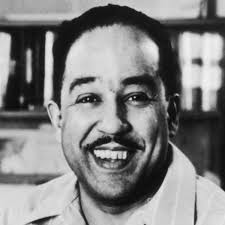


.jpg)

.jpg)


