Spontaneity through Conversation 2.0 is coming up on July 18th
The below is not required reading for the next meeting,
but is encouraged for many reasons.
Beyond that, it’s very interesting and applies to all kinds
of conversations, including those you have every day.
Details for this free Zoom meeting coming soon.
–Ben Gilberti, H.W., M.
April 28, 2021 (aeon.co)
Be brave enough to share, kind enough to listen, and you can escape the shallows of small talk to dive deep with another
by Lucy Foulkes Photo by Richard Baker/In Pictures/Getty
Lucy Foulkesis a psychologist and honorary lecturer at University College London. A former associate editor at Aeon+Psyche, she is the author of Losing Our Minds (2021). She lives in London.
Edited by Christian Jarrett
Need to know
Have you ever had a decent conversation in a lift? If not, join the club – being in a lift with a stranger is a universally awkward experience. One reason is the typical duration of a lift journey – long enough to feel the social pressure to say something, anything, but never long enough to say something worthwhile. The world over, lifts are a microcosm of that most pained aspect of social interaction – small talk.
The psychologist Matthias Mehl at the University of Arizona studies conversations, and he defines small talk on the basis of how much information is exchanged. ‘If afterwards I know nothing more about you than I knew before,’ he tells me, ‘then that will be small talk.’
The vacuousness of small talk helps to explain why it’s often so boring, but it can be worse than that. Thanks to more lift journeys than I care to remember, I can vouch that some small talk is, unfortunately, both boring and awkward. And it’s not just in lifts: whether we’re at the hairdresser’s, in a taxi, or even with our best friend, sometimes it can be painful to figure out what to say, how exactly to hit upon a topic to fill the silent, stale air between us. Many of us are crying out for help with small talk, and the internet has answered with countless articles suggesting solutions and offering advice.
Much of this guidance aims to elevate bad small talk to enjoyable small talk, for example by commenting on a shared experience or asking open-ended questions. In fact, when it goes well, small talk can be not only pleasurable, but beneficial. There’s a body of research that focuses on how relatively fleeting social interactions with people – even strangers – can boost our mood and even our beliefs about humankind. For example, for a recent, not-yet-published study during the pandemic, Gillian Sandstrom, a social psychologist at the University of Essex, paired up strangers to have chats together on Zoom about whatever they liked. Compared with how they felt before, she says that, after the call, her participants ‘reported feeling a greater sense of trust in other people and feeling like people in general are benevolent – that they’re good and kind and fair’.
But while it’s important to recognise the value of small talk and that it needn’t be painful, it still falls well short of what many of us are really craving: meaningful conversation. By this, I mean conversation where we leave behind the shallows of small talk – however pleasant they might be – and dive deeper. For Mehl, who refers to these kinds of conversations as ‘substantive’, the key feature of deeper conversations is that you learn something. ‘If people start discussing information,’ he says, ‘then it becomes substantive … the most important point is that you get absorbed in the conversation, there’s information, there’s learning.’
Of course, you can learn something from a conversation with an electrician who comes to your house, or during a doctor’s appointment. To count as truly meaningful, the nature of what you learn matters. When a conversation allows you to better understand something important about yourself, the other person or the world – then it really becomes meaningful.
We derive meaning from understanding ourselves because of the deep human need for self-expression. The social psychologist Kirsty Gardiner at the University of East London studies social interactions, and she identifies self-expression – ‘sharing key aspects of who you are as a person’ – as the first of three components that can make conversations really valuable. Most of us are hungry for an opportunity to share what we’re thinking, to clarify and explore things that matter to us. So having the chance to formulate these abstract thoughts into words, and to share them with an interested listener who validates those thoughts, helps us feel understood.
In meaningful exchanges, the role of the listener is vital (which is why a meaningful conversation can be so much more rewarding than simply writing down our thoughts, or talking to ourselves when we’re home alone). An effective listener enables us to get feedback about who we are through their eyes. And this, according to Gardiner, is the second critical part of a meaningful conversation – it enables us to better understand ourselves. ‘We often do that by having ourselves reflected back from other people,’ she says. This process of speaking, being heard, and better understanding ourselves helps to facilitate a sense of connection, which Gardiner identifies as the final step in meaningful conversations. Ultimately, such conversations make us feel connected to other people, thus satisfying a well-established, fundamental human motivation.
Of course, in a two-way conversation, we take turns at being the speaker and the listener. The other party will also speak about themselves and share what they know and think, and this provides us with an opportunity for learning something important and valuable about them. Meaningful conversations, in short, allow us to learn something important about ourselves, about the other person, or about the world – and, when this happens, we come away feeling better understood and connected with those around us.
This sense of understanding and connection feels good and is important to our wellbeing. In one study, Mehl and his colleagues asked volunteers to complete some questionnaires and then wear a recording device for several days, which allowed them to analyse the quality of their conversations. The researchers found that the more substantive their volunteers’ conversations, the higher their sense of life satisfaction. Of course, it’s possible that the happier people simply had a tendency for more substantive conversations, rather than the conversations playing a causal role. But other evidence hints at the power of meaningful conversation – for instance, research conducted in the 1990s by the American psychologist Arthur Aron found that encouraging pairs of people to talk about deeper, more personally meaningful topics, led them to feel closer to each other.
If meaningful conversations are so rewarding and beneficial, how can we have more of them? For many of us, considering the amount of time we spend around other people, these quality conversations are frustratingly rare and elusive. But the good news is, with a little effort and a few new approaches, we can find ways to enjoy them more often.NEED TO KNOWWHAT TO DOKEY POINTSLEARN MORELINKS & BOOKS
What to do
Recognise small talk as a necessary first step
To improve your conversations, don’t dismiss small talk altogether. It’s long been recognised as a universal way to set the scene and establish rapport. As the pioneering anthropologist Bronisław Malinowski put it in an essay published in 1923, these initial conversational exchanges, while they are ‘neither the result of intellectual reflection, nor do they necessarily arouse reflection in the listener’, nonetheless ‘fulfil a social function’. Through small talk, ‘ties of union are created’, he wrote.
‘I think of small talk as an inactive ingredient in a medicine,’ Mehl tells me. ‘The inactive ingredient is necessary to hold the pill together. Small talk does exactly that … you need to use small talk in order to get hopefully to the more substantive conversations.’
In other words, it’s worth tolerating a bit of small talk because it lays the foundations for something richer. Maybe when you first meet up with someone, you’ll have to talk about your journey – the traffic levels and the motorway route you chose – but you don’t have to stay there forever, and, thankfully, there are lots of things you can do to get to the meaningful stuff faster.
Ask better questions
For obvious reasons, lots of us like to talk about the topics in which we’re personally interested. But a key way to have better conversations is to step out of your head for a moment and think more about the other person. And that means asking questions. The American journalist and author Celeste Headlee, whose 2015 TED talk on ways to have better conversations has been viewed more than 23 million times, recommends using open-ended questions in the style of a journalist, starting with who, what, when, where, why or how. ‘Try asking [the other person] things like “What was that like?” “How did that feel?”,’ she tells me. ‘Because then they might have to stop for a moment and think about it, and you’re going to get a much more interesting response.’
For more inspiration, you could check out the list of 36 questions compiled by Aron and his colleagues in the 1990s, and known today as the ‘Fast Friends Procedure’. The list was later popularised in the New York Times article ‘To Fall In Love With Anyone, Do This’ (2015) but it was originally designed for a non-romantic context to see if any two strangers going through the questions would end up feeling close to each other after just 45 minutes. There are three sets of questions, each becoming more personal, culminating in questions such as: ‘If you were to die this evening with no opportunity to communicate with anyone, what would you most regret not having told someone? Why haven’t you told them yet?’ In the original study, Aron’s team found that two strangers felt closer to each other after going through the 36 questions than pairs who answered a list of ‘small talk’ questions such as ‘How often do you get your hair cut?’
Such lists don’t always provide a simple shortcut though. Asking the right questions involves judgment about your conversation partner and the context you’re in. ‘I don’t know what research article I could show you that says Here, here is how you ask the right questions,’ Mehl says. ‘That’s kind of a soft skill that people have.’ In 2013, Aron also advised caution, telling TheWall Street Journal: ‘You want to be slow and reciprocal.’ Whatever you ask, be encouraged that it’s likely to be appreciated: a study in 2017 by psychologists at Harvard University found that people who ask questions tend to be better liked by their conversation partners. And that’s no surprise really – when you ask questions, you’re giving the other person a chance to express themselves and share their opinion, which nearly all of us enjoy doing.
Listen to the answers
Asking questions is just the start. What comes up again and again on the topic of good conversations is the importance of really listening, and how rarely people do it. In his classic self-help bookThe 7 Habits of Highly Effective People (1989), Stephen Covey writes: ‘Most of us don’t listen with the intent to understand. We listen with the intent to reply.’ To correct this instinct, as well as asking good questions, you need to make a concerted effort to really listen to the response.
This effort needn’t be a chore. In fact, Sandstrom believes that part of the pleasure of better-quality conversations comes from tapping into your curiosity. ‘[Conversation] probably goes better if you’re focused on the other person and trying to learn about them,’ she says.
If you struggle to find the motivation to ask questions and listen to others, it might be useful to think again about how much the other person will appreciate it. ‘[Asking follow-up questions] makes people feel like they’re being heard and listened to,’ Sandstrom says. It’s notable too that the Harvard study showing how much we like question-asking people also found that we particularly value follow-up questions. ‘Sometimes, I need to remind myself that [asking questions] is a prosocial act, like an act of kindness, so I can trick myself into working up the nerve to talk to someone,’ Sandstrom says. Remember that meaningful conversations are good for you and for your partner – it’s a win-win experience that’s worth the extra effort.
Be willing to share something about yourself
There’s a critical moment of transition in the development of all relationships – whether it’s the shift from acquaintance to love interest, from colleague to confidante, from neighbour to friend. It’s the moment when you decide to share something more personal about yourself. Psychologists call this self-disclosure, and it’s a key step in developing intimacy. The communication experts Amanda Carpenter and Kathryn Greene at Rutgers University in New Jersey liken the act of self-disclosure to the peeling of an onion. Each time an individual shares something important about themselves, a layer is peeled back, exposing something deeper and more important, until eventually they reach the core. ‘It takes time to reach another’s “core self”, the most intimate details about another person,’ they wrote in 2016. ‘The core personality includes the most private information about a person.’
Exposing a part of your inner self – even just the first layer – can help lead to better, more meaningful conversations. And it will encourage your partner to open up too, thanks to the so-called ‘norm of reciprocity’. This is a strong unspoken social rule that says that, when one person shares something personal, the other will feel compelled to do the same in return – in order to maintain a sense of equity and balance. ‘Self-disclosure is a big thing that helps people feel close to each other,’ Sandstrom says. ‘When you disclose to someone else, it encourages the other person to disclose with you, and that mutual, escalating self-disclosure is what leads to the sense of closeness.’
If this seems a little daunting, remember that you don’t have to jump to the core of the onion right away – or ever. Self-disclosure can involve sharing a fairly small part of yourself. It might also help to recognise that it’s a brave gesture. ‘I would say, dare to go to the next level in a conversation,’ Mehl says. Gardiner agrees: ‘Maybe the simplest thing to focus on, in your existing relationships, is to be brave and share something about yourself … It could be a fear, it could be a goal, it could be a value or belief. It could be something that happened to you in the past that you haven’t told them. I think that is going to facilitate something.’
Come ready to learn
If you know in advance that you’re going to be meeting a particular person or group of people, then, to raise the chances of a more meaningful encounter, it can also be useful to adopt a learning frame of mind. This is especially germane to meaningful conversations in a work or educational context, where meaning is likely to be derived not so much from an exchange of personal information, but from having a substantive, satisfying conversation about an interesting or important topic or issue. This might involve a little preparation (eg, reading up a little on someone else’s interests or their professional background, or reading up on the topic of the planned conversation) and bringing a willingness to contribute. It also requires a touch of humility and open-mindedness – being prepared to admit what you don’t know, and being ready to learn. This attitude can provide a rich and fertile setting for you to learn about something new, which can ultimately bring you meaning.
Be prepared to give and take
The heart of good conversation is reciprocity. The magic is more likely to happen when you and the other party abide by a simple rule: I will give you the space to speak, and I will properly listen to what you have to say. ‘You engage this reciprocity principle,’ Mehl says. ‘You show interest in the other person, therefore the other person shows interest in you. And then you produce a sense of belonging through reciprocal interactions.’ In this way, meaningful conversations are a dynamic and intricate dance, a giving and taking, a constant monitoring of what the other person is saying, what you’re saying and how the other person is responding. None of this is particularly easy and it might not come naturally, which is perhaps why great conversations are so rare. But if we remember the importance of give and take, and come prepared to make an effort, there’s no reason why all of us can’t find more opportunities to enjoy more meaningful conversations.
Key points
Many social exchanges involve only small talk, in which limited information is exchanged, and they can often feel frustrating and awkward.
More desirable is meaningful conversation, in which you learn something interesting about yourself, your conversation partner or the world around you.
To have more meaningful conversations, it’s useful to see small talk as a warm-up, a necessary stepping-stone.
To move into better conversations more quickly, ask your partner open questions and follow-up questions, and really listen to their answers.
At the same time, dare to share more about yourself. It doesn’t have to be something really private – any level of self-disclosure can be a powerful way to feel closer to someone.
Be prepared to learn from your partner. In educational or work settings, this might involve a bit of advanced preparation, or simply an open mindset.
The magic of good conversations lies in the ‘reciprocity principle’, the give and take. Share with your partner and listen to them, and then they will do the same for you.
Meaningful conversations can happen with anyone. Pluck up the courage to talk to strangers – you might get more out of it than you think.
Learn more
If you’re craving more meaningful conversations, you need someone to have them with. You might be thinking that you can really have them only with people you know well, but the good news is that this isn’t strictly true.
Sandstrom is interested in the power of conversation with what the American sociologist Mark Granovetter in 1973 called the ‘weak ties’ in our lives. She gives the example of ‘the person that you see in your yoga class, or the dog walker that you always see at the park, or a colleague.’ This person is, she says, ‘someone that you know, someone who knows you, but someone you don’t necessarily feel close to, and wouldn’t by default think about confiding in.’ In other words, these people aren’t quite strangers, but they’re not yet friends either.
Crucially, if you’re looking for people with whom to have more meaningful conversations, Sandstrom believes that these weak ties can play an important role. Of course, you’re unlikely to be able to jump straight into a deep conversation from the outset, but her research suggests that even fleeting encounters with our weak ties can be beneficial to our psychological wellbeing. And the more times you make the initial effort to engage, the more chance you have of the conversation developing into something more meaningful.
What often holds people back is confidence. ‘I think people worry about awkward silences,’ Sandstrom told me. ‘The word “awkward” comes up a lot for those who study conversation.’ So, again, this is partly about being brave, but it’s also about being curious about other people. And it helps to have a few tricks up your sleeve that will maximise the chances of small talk with a weak tie developing into something more.
To break the ice with a stranger or weak tie, Sandstrom suggests one option is to ‘comment on your shared situation’. This might be about why you’re both waiting for the bus, or commenting on the conference talk you’ve both just listened to, but it could also be ‘the old classics’ such as traffic or the weather. If the prospect of these initial superficial exchanges makes you cringe, remember that they can be a necessary stepping-stone to get to the good stuff. Alternatively, try giving a compliment, or use your observational skills and curiosity to ask the other person something about themselves. ‘Often I combine observation with humour,’ Sandstrom says. ‘I once commented on a young man’s “breakfast of champions” (a packet of biscuits), and I asked two Freemasons wearing matching striped trousers if they had consulted each other on their wardrobe choices that morning.’
To take things further once the conversation begins to flow, draw on your and the other person’s shared experiences and your curiosity-driven observations. Be patient, and remember that most people will like it if you ask them questions, and especially if you really listen to their answers. Of course, you won’t hit it off with everyone. Not all strangers or weak ties will want to have a deep conversation, and that’s fine. But make a habit of getting the ball rolling, and you might find that conversations with weak ties can lead to all kinds of enriching opportunities and ideas. The next time you’re at a work event, or a party, perhaps do as Sandstrom does, and try to make yourself talk to someone you wouldn’t normally talk to. As she says: ‘That’s where the magic happens, right?’
Whoever you end up speaking to, remember that – as with so much in life – conversations can be good or bad, and everything in between. But when they’re good, they can be great, because they’re stimulating and can satisfy our fundamental human need to engage and learn. Good, deep, meaningful conversations allow us to share something about ourselves, to explore and understand who we are, and to connect with and learn from others. When we get them right, conversations are a fundamental source of pleasure. We just need to try to have them more frequently.NEED TO KNOWWHAT TO DOKEY POINTSLEARN MORELINKS & BOOKS
Links & books
Celeste Headlee’s TED talk ‘10 Ways to Have a Better Conversation’ (2015) offers plenty of easy, engaging advice.
The Art of Manliness website published the excellent article ‘How To Make Small Talk’ (updated in 2020). It provides detailed tips with sample dialogue scripts, including the ARE method (‘Anchor, Reveal, Encourage’) developed by the American communications expert Carol Fleming.
The full list of 36 questions from the Fast Friends paradigm is available for free online – this is the list that supposedly helps you to fall in love or, at the very least, helps you feel closer to someone.
The School of Life sells sets of cards containing thought-provoking questions to help get conversations started. For example, there’s the original 100 Questionskit and the 100 Questions: Love Editionset about love and relationships. For the more adventurous, there’s Pillow Talk: Cards for Intimate Conversations, a set of 60 cards to encourage people to explore sex ‘with intimacy, playfulness and intellectual curiosity’.
Useful books to help you have more meaningful conversations include It’s Not All About ‘Me’: The Top 10 Techniques for Building Rapport with Anyone (2011) by the retired FBI special agent Robin Dreeke, and Headlee’s bookWe Need to Talk: How to Have Conversations That Matter (2018).
Julian of Norwich is a medieval English mystic who celebrated “Mother Jesus.” Her feast day, May 8, always falls near Mother’s Day.
It’s not known if Julian herself was queer, but some of her ideas were. Julian is often listed with LGBTQ saints because of her genderbending visions of Jesus and God. She wrote, “As truly as God is our Father, so truly is God our Mother.”
Her discussions of Jesus as a mother sound radical even now, more than 600 years later. Her omnigendered vision of the Trinity fits with contemporary feminist and queer theology.
Mother’s Day is also a great time to honor mothers whose love for their LGBTQ children helped launch organizations such as Parents, Families, and Friends of Lesbians and Gays (PFLAG), founded by Jeanne Manford and Adele Starr.
Julian of Norwich (c.1342-1416) is the first woman to write a book in English. The book, “Revelations of Divine Love,” recounts a series of 16 visions that she experienced from May 8-13, 1373 during a severe illness when she was 30 years old. The book includes Julian’s most famous saying, “All shall be well and all shall be well and all manner of things shall be well” — words spoken to her by God in one of Julian’s visions.
She appears with this quote and her cat companion in the icon at the top of this post. It comes from Holy Spirit Art at Etsy and is available for purchase as a wooden icon plaque.
A mug shows Julian with her cat and her best-loved quote: “All shall be well and all shall be well and all manner of things shall be well.” Available from the Drinklings Coffee Mugs Etsy shop.
Later Julian went on to become an anchoress, a type of recluse who lives in a cell attached to a church and does contemplative prayer. Her hermit’s cell was at the Church of St. Julian in Norwich. The cell had two windows, one opening to the church and the other opening to the street. She became known throughout England for the spiritual counseling that she gave there.
The queer side of Julian is explored in the chapter “Queer Touch Between Holy Women: Julian of Norwich, Margery Kempe, Birgitta of Sweden, and the Visitation” by Laura Saetveit Miles of the University of Bergen, Norway, in the 2019 scholarly book “Touching, Devotional Practices, and Visionary Experience in the Late Middle Ages.” It “takes a new approach to the well-known meeting between two late-medieval English visionary women, Margery Kempe and the anchoress Julian of Norwich,” thereby revealing “the full transgressive effect of queer touch between women—or even its unspoken possibility,” according to the chapter summary.
Julian wrote of God as mother
Julian is considered the first Catholic to write at length about God as mother. Her profound ideas speak powerfully today to women and queer people of faith.
Here are a few short quotes from Julian’s extensive writings about “Mother Jesus”:“So Jesus Christ who sets good against evil is our real Mother. We owe our being to him–and this is the essence of motherhood! –and all the delightful, loving protection which ever follows. God is as really our Mother as he is our Father.“ (Chapter 59)“So Jesus is our true Mother by nature at our first creation, and he is our true Mother in grace by taking on our created nature.” (Chapter 59)“A mother can give her child milk to suck, but our dear mother Jesus can feed us with himself, and he does so most courteously and most tenderly with the holy sacrament, which is the precious food of life itself… The mother can lay the child tenderly to her breast, but our tender mother Jesus, he can familiarly lead us to his blessed breast through his sweet open side….” (Chapter 60)
“Dame Julian’s Hazelnut” by Brother Robert Lentz, OFM, Prints available at Amazon or TrinityStores.com
Julian saw God’s love in ordinary life
The sacred feminine is just one of the many revelations that have endeared Julian to the public. She also uses objects from ordinary life to illustrate God’s loving, forgiving nature. For example, in one vision God shows Julian a small object like a hazel-nut in the palm of her hand. Julian writes:“I looked at it and thought, ‘What can this be?’ And the answer came to me, ‘It is all that is made.’ I wondered how it could last, for it was so small I thought it might suddenly disappear. And the answer in my mind was, ‘It lasts and will last forever because God loves it; and in the same way everything exists through the love of God’.” (Chapter 5)
A longstanding legend tells of Julian’s friendship with her cat companion, depicted in the painting at the top of this post. As an anchoress, Julian probably lived alone. It is said that the only other being to share her room was a cat — officially for the practical purpose of keeping it free from rats and mice.
“Julian of Norwich,” a memorial drawing for his cat Betty, by Douglas Blanchard
New York painter Douglas Blanchard shows the saint with the artist’s own cat Betty in a drawing done as a memorial tribute to a beloved feline companion who died in 2013. He includes a favorite quote from Julian:
“He that made all things for love, by that same love keepeth them, and shall keep them without end.”
Blanchard is best known for his epic series “The Passion of Christ: A Gay Vision,” which is now available as a book. He teaches art and art history at the Bronx Community College of the City University of New York.
“Julian of Norwich” by Brother Robert Lentz, OFM, Prints available at Amazon or TrinityStores.com
Another icon of Julian and her cat was created by Robert Lentz, a Franciscan friar based in New York. Known for his innovative icons, he was rebuked by the church for painting LGBTQ saints and God as female.
An elderly “Julian of Norwich” was sketched against a lavender background by Tobias Haller, an iconographer, author, composer, and vicar of Saint James Episcopal Church in the Bronx. He is the author of “Reasonable and Holy: Engaging Same-Sexuality.” Haller enjoys expanding the diversity of icons available by creating icons of LGBTQ people and other progressive holy figures as well as traditional saints. He and his spouse were united in a church wedding more than 30 years ago and a civil ceremony after same-sex marriage became legal in New York.
Julian lived a long life. The date of her death is unknown, but records show that she was still alive at age 73 to receive an inheritance. She was never formally canonized, but Julian is considered a saint by popular devotion. The Episcopal and Lutheran Churches keep her feast day on May 8.
Many important writers have been influenced by Julian, including 20th-century British poet T.S. Eliot. He quotes her in his masterpiece “Four Quartets,” which led to him receiving the Nobel Prize for literature in 1948.
Julian of Norwich in song and prayer
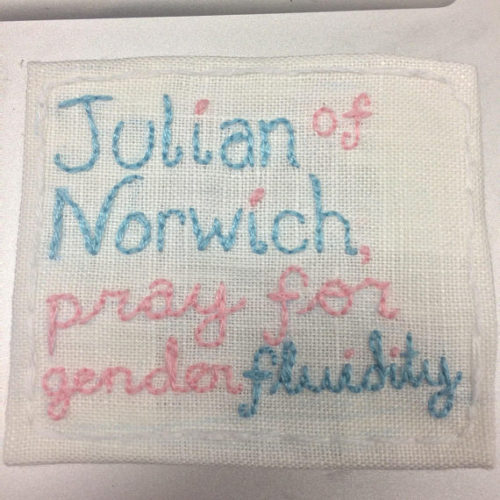
“Julian of Norwich, pray for gender fluidity” by Avery Smith of Sapphic Stiches
Various prayers related to Julian of Norwich are in circulation, including “Julian of Norwich, pray for gender fluidity.” The prayer was hand-sewn onto embroidered patch by artist Avery Smith of Louisville, Kentucky. Smith runs an Etsy shop called Sapphic Stitches that offers a variety of patches on LGBTA+ Christian and other themes.
“LGBTA+ Christians who choose to pray for the intercession of Saints deserve to have patrons whom they trust understand and support them,’ Smith affirms. “Whatever Saint or paired-Saint couple resonates with you as an LGBTA+ Christian can be made into a customizable patch.”
Julian’s famous words are set to music in the song “All Will Be Well” by Meg Barnhouse, a Texas-based Unitarian minister and singer/songwriter. The moving song comes from her album “Mango Thoughts in a Meatloaf Town” and is available on YouTube.
A longer quotation from Julian, again including “All will be well,” was set to music by 20th-century Welsh composer William Matthias in his piece “As Truly as God is Our Father.” it is sung on video by Plymouth Choir of First Plymouth Church, Lincoln Nebraska.
___ Top image credit: Julian of Norwich icon from Holy Spirit Art at Etsy. Available for purchase as a wooden icon plaque.
___ This post is part of the LGBTQ Saints series by Kittredge Cherry. Traditional and alternative saints, people in the Bible, LGBTQ martyrs, authors, theologians, religious leaders, artists, deities and other figures of special interest to lesbian, gay, bisexual and transgender and queer (LGBTQ) people and our allies are covered.
This article was originally published on Q Spirit in May 2017 and was updated for accuracy and expanded with new material on May 4,2021.
FollowKittredge CherryFounder at Q SpiritKittredge Cherry is a lesbian Christian author who writes regularly about LGBTQ spirituality.She holds degrees in religion, journalism and art history.She was ordained by Metropolitan Community Churches and served as its national ecumenical officer, advocating for LGBTQ rights at the National Council of Churches and World Council of Churches.
The Prosperos’ Summer Class Series For the first time in many years The Prosperos will present a complete series of our core curriculum this summer, beginning with Cosmic Intention Therapy in mid-May. The series provides a thorough exposition of every aspect of The Prosperos instruction.The complete schedule is :
May 15-16, Cosmic Intention Therapy by Thane, monitored with live instruction by William Fennie, H.W., M. Big picture context that brings clarity to evolutionary changes convulsing our planetary societies
June 12-13, Advance Seminar by Thane, monitored with live instruction by Heather Williams, H.W., M. “With great power comes great responsibility”. We take a close look at the onslaught of technological change and the requirements for a new identity to navigate a new world
June 26-27, Translation by Thane, monitored with live instruction by Prosperos Dean Al Haferkamp The Prosperos’ fundamental tool for unlearning false concepts / constructs that prevent us from experiencing the freedom of our innate, cosmic Self
July 17-19, Releasing the Hidden Splendour by Thane, monitored with live instruction by Anne Bollman, H.W., M. Similar to Translation, a tool focused on reviewing undigested emotional data and freeing ourselves and those around us to their unique, unpredictable good
July 31, Self Encounter taught live by Rick Thomas, H.W., M. Further training for uncovering hidden emotions
Extra !
August 21-22, Supracargo, the Paranormal Requisites of the Super Pro by Thane, monitored by Heather Williams, H.W., M. It’s been many years since this class was presented, and Heather’s presentation is sure to be engaging.
Stay tuned for detailed information about each of the classes.
Plato and Aristotle can help you resist conventional worldly success, direct your energy and find your own highest calling
by Benjamin Studebaker Illustration by Martin O’Neill (psyche.co)
Benjamin Studebakeris a graduate teaching assistant in politics and international studies at the University of Cambridge and a teaching associate at Gonville and Caius College, Cambridge.
Edited by Sam Dresser
Need to know
So you want to be excellent at something? You don’t just want to be OK at it, to be able to get by or make a living. It’s not even enough to be rich and famous. Nickelback is a big Canadian band and they’ve made a ton of money, but most people don’t think their music is excellent. They are undeniably successful – but excellent? Excellence is a whole different thing.
Most of the advice out there is either about how to survive, or how to be successful. It’s also pretty two-dimensional. On one side, there are the people who tell you to work hard and be productive. Then there’s the other side, the people who tell you to ‘practise self-care’ to avoid burnout. Many self-help writers have made a lot of money from taking one of these sides and trashing the other.
Those writers are successful, but the advice they’re giving people isn’t excellent. It’s obvious that if we spend all our time just trying to get through the day, we won’t grow. But it’s also obvious that if we become obsessed with perfect ideals, we’ll burn out. You need a sustainable balance, a workable distribution of your time and energy. But distributing your time effectively is just the first step. The second step is to use your time in a way that leads to excellence rather than mere success.
Plato and Aristotle can help you with this. The Greek philosophers were wealthy aristocrats who didn’t have regular jobs. Because they had plenty of time and plenty of money, they could spend their whole lives thinking about what excellence really means. They didn’t have to worry about survival, because they were born with an income. They weren’t interested in success because, when you’re born rich, it’s not hard to be successful. They wanted to pursue the highest good, and they wanted that pursuit to be the object of everything they did. Even though you’re likely not a wealthy Greek aristocrat, you still have much to learn from them about excellence.
The first thing they noticed about being human is that even rich people are not gods. Everyone has a body, and our bodies have needs. Plato tells a story about this in one of his dialogues called the Phaedrus. He imagines the human being as a flying chariot, pulled by winged horses. The chariot has three parts. There is the rider, interested in truth, goodness and beauty. He wants to fly the chariot high into the sky, above the clouds, where these ideals can be discovered. But the rider has no wings. To get to the heavens, he relies on two horses – one light, and one dark. The light horse wants to be well regarded, prizing honour and status above all things. It responds to blame and praise. The dark horse wants to enjoy the pleasures of the world. It wants food, sex, sleep and every kind of luxury. The dark horse has no shame, but it fears the rider’s whip. For just as the dark horse values pleasure, it fears pain.
The rider can come to know excellence only if he can get these horses to fly the chariot up above the clouds, but the horses have no deep interest in what’s up there. The rider must motivate them by giving the horses enough of what they want to get them to cooperate, but not so much as to allow them to become too strong and drag the chariot wherever they wish. Ignore the horses outright, and they grow weak and disobedient. Cater to the horses too much, and they run the show. To achieve a type of excellence that gets at genuine value, we have to go beyond pleasure and status, but we can’t leave pleasure and status behind entirely. This type of excellence incorporates our physical and social needs, but goes beyond them, approaching value itself as an abstract ideal. To get there, a balance is needed, but what does that balance look like?NEED TO KNOWTHINK IT THROUGHKEY POINTSWHY IT MATTERSLINKS & BOOKS
Think it through
Find a good social environment
Bringing balance to the chariot is a big challenge for a person. But it’s not a challenge we face alone. For Plato, the community we live in helps us take care of our horses. We don’t all grow our own food, make our own shelter, and provide our own entertainment. Other people help us meet the needs of the dark horse. And how can the light horse be satisfied without other people to make us feel valued and worthy? Plato argues that some social roles help us fly the chariot better than others. He even tries to make a list and put them all in order. Some roles barely give us enough to survive, much less thrive. Others give us comfort but aren’t respected. Some are respected but give us little comfort. A few yield comforts and respect but leave us without enough time to properly strive for excellence. When you’re choosing your work, your friends and your relationships, you have to keep all three things in mind. Miss comfort, and you’ll find yourself controlled by the need to be comfortable. Miss respect, and you’ll be controlled by the need to be respected. If you don’t leave time to strive, all you’ll do is survive.
Distribute your time well
How do we manage to obtain all three things in just one life? In the Politics, Aristotle distinguishes between ‘leisure’ and ‘play’. For him, leisure is time we spend learning and contemplating, trying to achieve excellence. Play is about rest and recovery. It might help you to think of Aristotle’s leisure as ‘growth’ and Aristotle’s play as ‘recovery’. So, for Aristotle, we spend our days doing three things – work, growth and recovery. The difficult thing is that both work and growth cost time and energy. Growing is at least as energy-intensive as working. We need time to recover from both activities.
When the eight-hour workday was first achieved, there was a slogan that went along with it:
Image supplied by the author
It sounds like we’re getting all three things. The trouble is that the time we spend sleeping isn’t enough time to recover. When we get home from work, we’re usually too tired for growth, but not tired enough to go to bed. Instead, we try to have a little bit of fun. We try to recover. We feel bad about this. Those last eight hours are for what we will! Why can’t we will ourselves to grow? But more often than not, this leads to burnout. And that’s for those of us who are working only eight hours a day and getting eight hours of sleep a night. For many of us, even that is too much to hope for. (Aristotle’s own very bad answer to the question of how to acquire more time – slavery – need not detain us here.)
These days, most people have to wait for retirement, hoping to save up enough money to spend some time on growth in later life. But by then many of us are in poor health and don’t have the energy to grow. What we have the energy to learn we often lack the energy to put to good use.
Alternatively, we can try to grow while we’re young. Some of us are lucky enough to find an area in which we’d like to pursue excellence from a very early age. With the support of a strong family and a strong public school system, we can get the time and resources we need to develop. But good families and good schools aren’t available to everyone. Plato thought that nepotism was a big problem. He didn’t believe that excellence was straightforwardly heritable. Sometimes, children with great potential would be born to parents without the ability to help them realise that potential. Sometimes, parents with a lot of ability would have children without the talent necessary to take on their parents’ roles. In the Republic, he proposed eliminating the family and raising children collectively. Aristotle thought that Plato’s approach was unnatural, that families were an inevitable part of social life. But Aristotle believed in natural hierarchies. He didn’t worry about talented people being left behind.
For some people, families work, and for other people, they don’t. To make families work, we need to ensure that they have the ability to support children as they pursue excellence, and that means we need to ensure families have enough economic stability to give their children room to grow. For those who don’t have adequate families or find the family structure alienating, we need alternative support systems. Too often, children in dysfunctional family structures are left in poor conditions because of a lack of alternatives. For those children, excellence is often out of reach before they even get to learn what the word ‘excellence’ means.
Get an education that suits your talents
The kind of schools we need depend in large part on the kind of excellence we’re pursuing. The Greek philosophers call these different areas of specialisation technê, or ‘crafts’. If we aren’t given the kind of education that’s appropriate to our craft, we won’t be able to become excellent. Many countries have public schools that favour a uniform education focused on reading, writing and arithmetic. But these schools don’t always do a good job of allowing students to find an area in which to excel. Plato points out that the kind of education we receive sets us on our path. If that education fixates too rigidly on a narrow set of crafts, we risk thinking ourselves useless merely because our talents don’t fit into what we’re being taught. We might end up with gaps in our society where very few people are able to develop excellence.
So while youth is an excellent time to grow, in youth we’re also especially vulnerable to fortune. It matters greatly whether we end up in the right kind of family and in the right kind of school for our talents and inclinations. The same family or school might suit one person well and another not at all. This means that excellence requires a society that supplies young people not just with strong families and schools, but with families and schools capable of accommodating diverse talents. For some people, suitable families and schools might look like what we generally think of as ‘good’ families or ‘good’ schools but, for others, unconventional social structures will be needed. This means it’s necessary not just to support families and schools, but to support a plurality of viable paths.
For those who miss out on the right kind of education in youth, the situation isn’t hopeless. The internet has widened the set of nonconventional options for mature students. Depending on your craft, online subscription programmes such as MasterClass and the Great Courses might be useful, and cost much less than a return to university. If you face very serious financial barriers, YouTube is full to the brim with free advice, and public libraries remain an essential and indispensable aid. The trick is to find enough time: while it’s harder to do during your prime working years, it’s by no means impossible.
Develop your creativity
Let’s say you’ve managed to find the right resources for you. What next? For Aristotle, our education begins in the forming of good habits, habits that help us grow. These habits of behaviour are initially imposed upon us by teachers and mentors. Eventually, we reach a point where we begin to question these habits. What’s the point of them? Why do we bother? This is the critical moment. The student must now discover the reason behind the habits. If the student fails to see their purpose, the habits are jettisoned, and the student potentially falls into corruption and vice. If the student sees the purpose and sticks to the habits rigidly, a level of stability is maintained. But the truly excellent student will neither abandon the habits outright nor stick to them dogmatically. This student sees the purpose behind the habits, but also sees how the habits can be improved.
Imagine you’re trying to become an excellent musician. Early in your childhood, you develop an interest in music, and you’re fortunate enough to have parents who are willing and capable of supporting your interest. They start by sending you to music lessons, where you learn the habit of practice. You begin to develop the relevant virtues necessary to become truly excellent, and become diligent and conscientious. But, at some point, you start to wonder why you bother practising all the time. You wonder whether the music teachers your parents have assigned are really the best ones for you. Now you have a choice. You might decide that music doesn’t matter, that you’ve been wasting your time. So you stop going to music lessons, you stop practising, and you begin going to parties and indulging yourself. Perhaps you’ll find satisfaction in that, but you certainly won’t become an excellent musician.
Alternatively, you might continue to practise and continue to follow the lead of your parents and instructors to the letter. You become a very good musician, but your performances are somewhat mechanical and your compositions unoriginal. Eventually, you might end up employed as a music teacher, and you might go on to have a very satisfying life. But you won’t become a truly excellent musician. Excellent musicians reach a point where they question whether their parents and their teachers really know what excellent music is. They choose new teachers for themselves, and they spend time thinking about what makes music ‘good’, debating it with anyone who’ll listen. Eventually, excellent musicians begin to develop their own notion of what it means for music to be good, to apply the concept of ‘good’ to music in new and original ways. Now they begin to play in a distinctive way, to develop their own kind of sound.NEED TO KNOWTHINK IT THROUGHKEY POINTSWHY IT MATTERSLINKS & BOOKS
Key points
Excellence requires a social environment that provides us with enough comfort, respect and time to develop our talents. Wherever possible, pick jobs, friends and partners who fit what you’re trying to do.
Keep an eye on how you distribute your time. Make a distinction between growth and recovery, and make sure you use your free time in a balanced way.
The right kind of education is essential. Don’t get discouraged if you’ve had trouble in educational environments that weren’t oriented around your craft.
Have the creativity – and the courage – to challenge teachers and authority figures without abandoning your craft. Develop your own sense of what it means to do your craft well.
NEED TO KNOWTHINK IT THROUGHKEY POINTSWHY IT MATTERSLINKS & BOOKS
Why it matters
Achieving excellence for the first time is only the beginning. Once a distinctive sound is found, the excellent musician is driven to share it with others. Aristotle draws a distinction between ‘contemplation’ and ‘action’. When we contemplate, we think about what’s good, and what it means to apply the good to a craft. When we act, we apply these ideas of the good to our craft. In this way, we share the good with others through our craft. Our craft becomes our medium for expressing excellence, our way of bringing our understanding of the good to life in the world around us. Of course, when we act, we act in front of an audience. When we perform a craft, we make something for others to experience. This means that, once we begin acting, other people get a chance to decide for themselves whether they think we’ve really found a new and better way of reaching for the good, of expressing excellence.
Sometimes, other people will like what we’re doing, and sometimes they won’t. Plato thought that most people wouldn’t know what was excellent if it came right up and bopped them on the nose. For him, if everyone likes what you’re doing, that’s a good reason to think you might be doing the wrong thing. We all know people who feel this way about pop music. For these listeners, the fact that pop music is popular is itself an argument against its excellence. Plato understood the good to be very remote from ordinary human experience. For him, the good is the one, the unity of all things.
But we live in bodies, and we tend to spend too much of our time focused on what our bodies need instead of on what’s good for our families, our communities, and the Universe as a whole. The body invites us to separate the world into ‘me’ and ‘not-me’. We constantly categorise reality, always emphasising differentness and separateness. This prevents us from seeing how everything is connected, how everything is just another aspect of the one. Grasping this oneness requires us to get beyond the perspective that grows out of our bodies, and for Plato that can be achieved only through a lot of philosophical effort. Since most of us don’t spend our time on philosophy, most of us don’t discover this oneness, and that means our human concept of the good is just a pale imitation of true goodness. The music most people believe to be good is just the music they find pleasurable, not the music that helps people discover the reality of oneness. If Plato were around today, he might say that too many pop stars sing about antagonistic relationships with former lovers, a relatable experience but one that reinforces self-other distinctions.
Aristotle thought about it differently. For him, if most people like your music, you’re probably on the right track. Many of us might not have taken the time to discover how to play great music, but we can recognise it when we hear it. Aristotle’s understanding of the good was earthier than Plato’s. For Aristotle, if something is good, it’s just the end at which other things aim. We can therefore discover what’s good by observing nature, by observing what natural processes aim at. For Plato, excellence requires us to get beyond ordinary experience. But for Aristotle, excellence is readily discoverable in the world around us, if we’re willing to slow down and look at it. This is not to say that excellence is whatever the majority of people understand it to be, but if large numbers of people think that something is excellent, then that’s a piece of information about what the Universe is driving at that we must at least take into account.
Most of us aren’t precisely sure which of these accounts is right. Even Plato and Aristotle think that we must always return to contemplation to continue to refine our understanding of excellence, of the good and how it ought to be applied to our crafts. This means that our education cannot end. We can’t simply come to a point when we’re ready to act, to practise our craft, and go on doing it for the rest of our days. Instead, we need to oscillate between periods of acting and contemplating.
If you’re an excellent musician who has made a great album – whether it’s critically acclaimed or merely very popular – you’re then in a tough situation. There’s pressure on you to tour the world, playing concerts. And there’s pressure on you to make albums that are just as good, if not better. If you go along with this and spend all your time performing and composing, eventually you’ll run out of new things to do. Your music will start to sound stale and repetitive.
To avoid being labelled yesterday’s news, you might try to experiment with new kinds of music. But because you’re spending all your time running around performing, you won’t be able to come up with new music that’s truly excellent. The first or second time you make an album that’s too derivative or disastrously experimental, your fans and critics might give you a pass. Maybe you’ll find a niche audience who will follow you no matter what you make, on the strength of your old hits. But if you want to stay excellent, you must sooner or later take a break from performing and return to the contemplative activity that made you so great in the first place. This is why the really excellent musicians have to run away to isolated places where they can get back in touch with ‘the music’. In finding the music, they find the good – they rediscover what excellence means, and fall back in love with their craft.
This, then, is the final hurdle. We need to be able to take breaks from action and return to contemplation. This means that, at the height of our fame and success, we have to remember that the goal is excellence. Of course, it also means that we have to be successful enough to be in a position where we have the resources we need to enable us to take that break.NEED TO KNOWTHINK IT THROUGHKEY POINTSWHY IT MATTERSLINKS & BOOKS
Links & books
The original Greek classics – the Nicomachean Ethics and the Politics by Aristotle, and the Phaedrus and the Republic by Plato – are all available to read online for free.
The podcast series ‘The History of Philosophy Without Any Gaps’ (2010-), hosted by the philosopher Peter Adamson, is also free to download, and does exactly what its title says.
Among the paid-for offerings online is MasterClass, which has video tutorials from the likes of Annie Leibovitz on photography and Alicia Keys on songwriting to Frank Gehry on architecture and Jeff Koons on art and creativity. Another paid-for option is the Great Courses, which offers subscribers lectures from university professors on all the scholarly subjects as well as less academic options such as cartooning and wine appreciation.
For a good discussion of how the education system perpetuates injustice, read the bookThe Cult of Smart (2020) by the US essayist Fredrik deBoer.
For more on the original thinkers behind pedagogy, there’s the bookIdeas of Education: Philosophy and Politics from Plato to Dewey (2013), edited by Christopher Brooke and Elizabeth Frazer.
Finally, the political theorist Tim Fowler’s bookLiberalism, Childhood and Justice (2020) discusses the ethical issues involved in children’s upbringing.
Mike believed he had a good life and felt lucky for all the things he had. He was married to a loving wife, had a good job, owned a nice house, and had three healthy kids.
Despite all his good fortune, Mike could not shake the nagging feeling that he wasn’t enough. “I should be more successful. I should make more money. I should be where my boss is. I should have a graduate degree. I should have a bigger house. I should have more friends.” These were some of the “shoulds” that plagued him on a daily basis.
“Could I get you curious about this part of you that feels inadequate?” I asked Mike at our initial meeting. After he consented, I suggested, “Let yourself travel back in time…back…and back…and back. How old were you when you first felt not enough?” I asked him.
He paused to reflect, “It’s definitely been with me a long time,” He said. “Maybe 6 or 8 years old? Around there.”
Mike’s father became extremely successful when Mike was 6 years old. Because of his father’s new job, his family moved to a country where most people didn’t speak English. Mike was scared and felt like a stranger. Even though he attended an international school, he had no friends for a long time. His parents pushed him hard. They meant well and were trying to encourage him. But feeling scared and overwhelmed by the many changes in his life, he misinterpreted their words as disappointment that he wasn’t enough–it was the familiar feeling he still had today.
We are not born feeling inadequate. Life experiences and emotions create that sense within us in a variety of creative ways. For example, when we were little and we felt afraid or anxious, our mind told us something was wrong with us, not with our environment. That’s why children who were abused or neglected grow up to be adults who carry so much shame. A child’s mind, not yet rational, concludes, “There must be something wrong with me if I feel so bad” or “I must be bad if I’m being treated badly.”
As adults, armed with education on emotions and how childhood adversity affects the brain, we can understand that feeling “not enough” is a byproduct of an environment that was insufficient. We are in fact enough! Yet to feel more solid in our Self, we must work to transform the not enough feeling.
One way to transform old beliefs is to work with them as separate child parts. With some mental energy, we can externalize ailing parts of us and then relate to them in healing ways.
For example, I asked Mike, “Can you imagine that your 6-year old self, who feels not enough, is sitting on my sofa over there so we can be with him and try to help?
I paused while Mike exerted the mental energy it took to visualize his child part with some distance, “What does that 6-year-old part of you look like? What do you see him wearing? Where do you see him? Is he in a specific memory?” I asked.
With practice, Mike learned to connect and communicate to that part of himself. Mike learned to listen to that little boy inside. Offering it compassion helped him feel much better, even though he had struggled with the concept initially.
I also suggested to Mike that feeling not enough might be a defense against his deeper emotions towards others who had hurt him or not been there for him when he needed support. Thinking about The Change Triangle, we slowed down to notice his feelings towards himself and his parents. Without judging his core emotions as right or wrong, he accepted that he was angry at his father for uprooting him, a move that had cost him his confidence. article continues after advertisement
Since emotions are physical sensations, another way to work with wounded parts is through the body. Mike learned to recognize how not enough felt physically. “It is like an emptiness—like a hole inside. I know I have been successful at times and I believe my family loves me. Emotionally, it doesn’t feel that way at all. Good stuff comes in but it goes right through me like a bucket with a hole. I’m never filled.”
To help patch the hole in his bucket, I also helped Mike develop his capacity to hold onto good feelings by noticing them. “If you validate your accomplishments what does that feel like inside?”
“I feel taller,” said Mike.
“Can you stay with the feeling of being taller for just 10 seconds?” I asked.
Like a form of training, he built his capacity to experience positive feelings. Going slowly, we practiced noticing sensations associated with pride, love, gratitude, and joy, getting used to them a little at a time.
What else can Mike and all of us do in the short run to help the parts of us that feel not enough?
We can remind our self again and again that the feeling of not enough was learned. It’s not an objective fact, even when it feels so viscerally true.
We can connect to that part of us that feels bad and offer it compassion like we would do for our child, partner, colleague, friend, or pet.
We can stand in a power pose 2-3 times daily to feel stronger and more confident. (See Amy Cuddy’s Ted Talk on power poses.)
We can exercise to get adrenaline flowing and create a sense of empowerment.
We can remember this very helpful phrase: Compare and Despair! When you catch yourself making comparisons to others, STOP! It doesn’t help and only hurts by fueling feelings and thoughts of not enough.
In the long run, we heal the parts of us that feel inadequate by first becoming aware of them. Once aware, we listen to them and try to fully understand the story of how they came to believe they were not enough. Over time, by naming, validating and processing the associated emotions both from the past and present, the frequency and intensity of our not enough parts diminish. article continues after advertisement
Mike learned to feel and move through the buried anger he had towards his parents both for moving and for not noticing how much he struggled. He validated the pain and sadness for what he went through without judging whether he was entitled to his feelings. When his wife hugged him and praised him for being such a great dad, he took in her love and praise as deeply as possible. He accepted himself during the times when he was too tired to fight against the feelings of not enough. By educating himself on emotions and how the brain is affected by childhood adversity, Mike learned that everyone struggled. No one is perfect, not even his father. When all else failed, just this thought brought him peace and reminded him that he was enough.
Patient details are always changed to protect privacy.
May 4, 2021 Updated: May 5, 2021 7:32 p.m. Comments 4 (SFChronicle.com)
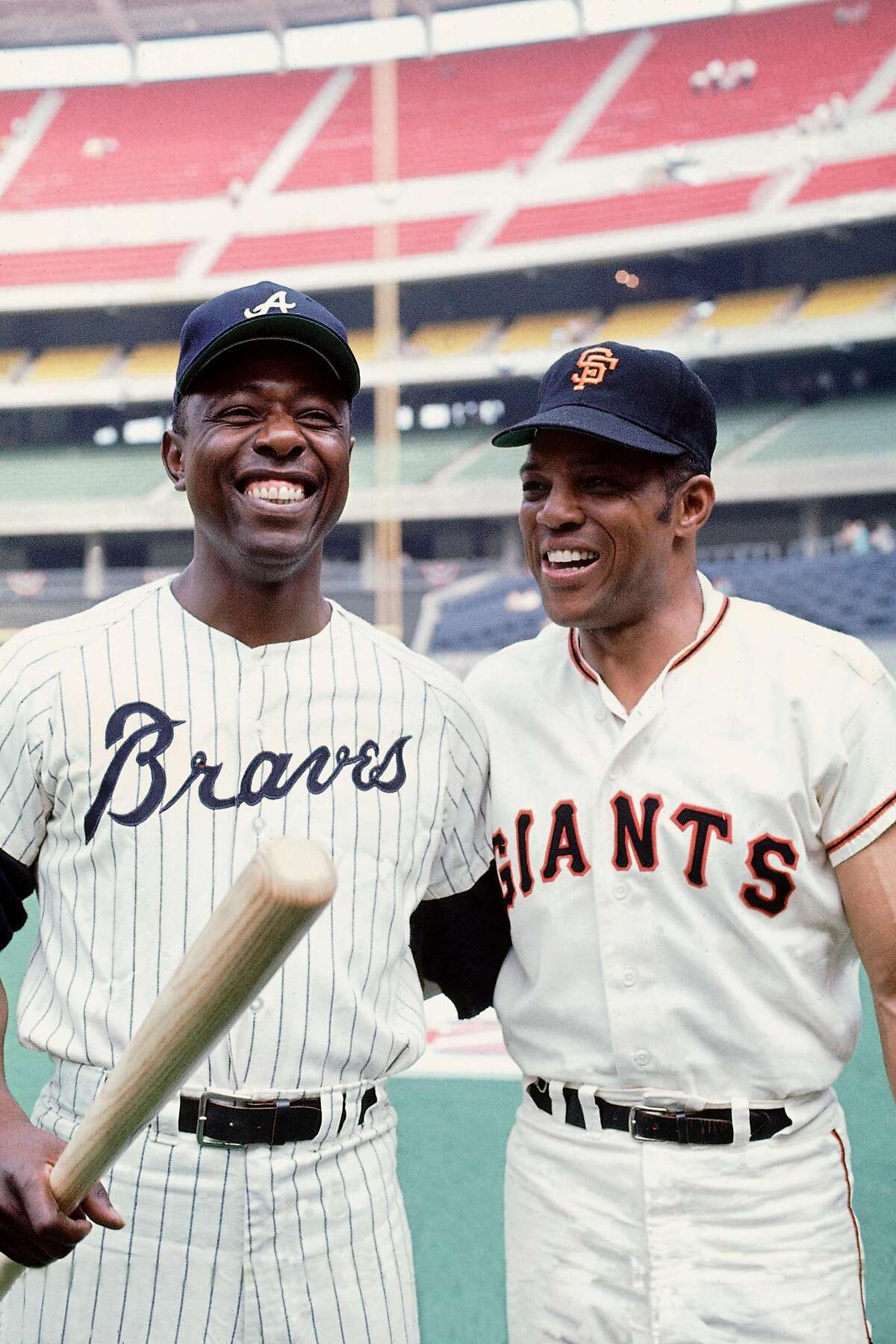
1of4Fans at the Polo Grounds in New York greet the Giants’ Willie Mays before a game in June 1962, during the Mets’ inaugural season. Mays hit his 17th home run of year that night off future Giants manager Roger Craig.New York Daily News Archive / NY Daily News via Getty Images 1962
“Ready for that Giants series? I hate those guys,” my friends clamored in ancient times as we discussed our beloved Dodgers. “You, too, right?”
Yep, sure do, I’d nod. Gotta hate those Giants. Except I really didn’t. “Hate” is a terrible word in general, and Willie Mays got me over it for good.
The marvelous thing about Mays, as we celebrate his 90th birthday, is that he stands for something deeply relevant — almost as if he’s still playing. It’s a brand of appeal that touches not just us codgers who witnessed Willie in his prime, but anyone who loves the game and cherishes those precious gems of validation.
For decades on end, Babe Ruth’s name was a staple of America’s sports conversation, even among sandlot kids who knew little more than the sound of it. I’d like to think Mays ascended to that lofty standing, as in, “Nice catch — but he’s no Willie Mays.” As much as I feared him during those games at the L.A. Coliseum and Dodger Stadium, I was quite content setting aside hatred for reverence, feeling only slightly less awed by Henry Aaron, Frank Robinson and Bob Gibson, among others.
I didn’t realize it at the time, but Mays helped prepare me for a life in sportswriting. It’s great to be a passionate fan when you’re a kid, but journalistic adulthood demands perspective, the broader stroke, an appreciation not of teams, but of stories, settings, individuals. As lucky as I was to be a Dodgers fan growing up, attending the triumphant World Series of 1959, ’63 and ’65, something came over me when I moved north to attend Cal.More for you
Now I was watching Mays in his home ballpark, along with Juan Marichal, Willie McCovey, Orlando Cepeda and the rest. It wasn’t long before the Dodgers struck me as a bunch of guys named Grabarkewitz. Whatever story loomed largest, across the entirety of the major leagues, that’s the one that mattered.
Opposing players were in awe of what Mays accomplished at Candlestick Park, for the whole of it seemed damned near impossible. The great Roberto Clemente once mused about feigning illness when his Pirates got to San Francisco, just to avoid the humbling experiences looming in the wind and chill. And Mays arrived in San Francisco during an especially rich period of the game’s history, especially in the National League, where players of color flourished and elevated the game’s appeal beyond measure.
When Maury Wills stole bases — a record 104 in 1962 — you got the feeling he could do so at will. Clemente had an arm that appeared blessed by a higher power. Willie Davis ran from first to third like a cheetah, all grace and blinding speed. Curt Flood roamed center field in a manner suggesting anything, any catch was possible. Orlando Cepeda crafted an off-field stroke to such perfection, it became his signature as a power hitter. Dick Allen, known as Richie back then, belted home runs destined for someone’s front yard.
I mention these things individually because they were all part of Mays’ theatrical showcase. They say Joe DiMaggio was this type of player, and I’d never demean the great Joltin’ Joe, especially around North Beach. But I have to think Mays was superior with his speed and arm — DiMaggio called it “the greatest I’ve ever seen” — and although DiMaggio was the unquestioned master of the strike zone, fanning about as often as a lunar eclipse, Mays really set himself apart as he set to win over highly judgmental fans in both New York and the Bay Area.
Remember that Mays was a pure showman, wanting to “give the fans a little extra,” as he once said, and thus susceptible to Ruthian moments of failure. And yet, over the stretch of six seasons crucial to his reputation — 1954 (returning from military service) through 1959 — he did not strike out more than 65 times while averaging 661 plate appearances per year. So here we find a showstopping entertainer and a fine-tuned technician. (Comparisons among players valued for their all-around skills: Mike Trout’s 184 strikeouts in 2014 and Ronald Acuña’s 188 in 2019.) For all of that priceless flair, Mays was deeply committed to staying on top of the opposition, revealing few traces of vulnerability.
I would advise every fan, even those familiar with Mays’ ascent through the Negro Leagues and minors, to entertain a thirst for more. Watch and read everything made available, and by all means devour John Shea’s biography “24,” the definitive work from Mays’ perspective. You’ll gain even more insight into what everyone knows to be true.
He was the perfect ballplayer. Hate Willie Mays? Craziest thing I ever heard.
Bruce Jenkins has written for the San Francisco Chronicle since 1973 and has been a sports columnist since 1989. He has covered 27 World Series, 19 Wimbledons and many other major events, including the Super Bowl, World Cup soccer, NBA Finals, four major golf tournaments and U.S. Open tennis championships.
He graduated from Santa Monica High School in 1966 and UC Berkeley with a B.A. in journalistic studies in 1971.
















 ©2021 Hearst