The Spiritual Side of Sports by Rupert Sheldrake – London

Downhill skier

Most people do not think of sports as spiritual practices; sports seem supremely secular. Yet in modern secular societies, sports may be one of the most common ways in which people experience the self-transcendence that can come through being in the present.

A meditator may find his mind wandering and only occasionally come back into a full sense of presence, but a football player in an important match is completely in the present, or else he is out of the game. Someone skiing downhill at sixty miles an hour has to be completely focused, as does a surfer on a gigantic wave, or a free climber on a rock face with no ropes.

The philosopher David Papineau, himself a keen sportsman, has thought more about sports than most people, and has summarized his conclusions with admirable clarity: the value of sporting achievement lies in “the enjoyment of sheer physical skill.”

Humans hone their physical abilities and take delight in exercising them. This definition explains why many sports are not games, like skiing, while some sporting skills exist only within games, like topspin tennis backhands. Other sports are based on skills that already occur in everyday life, like running, jumping, rowing, shooting, lifting, and throwing. Papineau concludes, “These ordinary activities turn into sports whenever people start performing them for their own sake, and strive for excellence in their exercise.”

What about the role of competition?

Competition plays an important part in sports, because it enables people to measure themselves against others. But some sports are not directly competitive. Mountaineers may seek to scale a particularly difficult peak, but their achievement is not primarily in competition with other people, more a challenge to themselves.

Although sports are not normally undertaken as spiritual exercises, they can have a range of spiritual effects. These effects include being intensely present, and feeling part of something greater than oneself. Michael Murphy co-founded the Esalen Institute in California in 1962 and was a pioneer of the human potential movement. He was among the first people to point out that sports are one of the most common ways in the modern world in which people experience altered states of consciousness, and even mystical experiences.

Murphy spent a year and a half at the ashram of Sri Aurobindo in Pondicherry, India, and was much influenced by Aurobindo’s evolutionary philosophy, which emphasized not only the spiritual evolution of humanity, but also its physical evolution as part of what he called Integral Yoga. Murphy, himself a keen golfer and marathon runner, came to see that sports are “the yoga of the West.”

In his 1978 book, The Psychic Side of Sports, co-authored with Rhea White, he documented many experiences of sportspeople and athletes that suggested the existence of telepathy between team members, out-of-the-body experiences, extraordinary feats of strength, and altered states of consciousness.

In the flow

Starting in the 1970s, research by positive psychologists showed that people’s best moments are not when they are being passive, receptive, or relaxed. Their most positive experiences usually occur when their body or mind is stretched to the limits in a voluntary effort to accomplish something difficult and worthwhile, summed up in the word flow. To start with, these research studies looked at artists, athletes, musicians, chess masters, and surgeons, because these were people who seemed to spend their time in activities that they enjoyed.

Their most optimal experiences depended on a sense of mastery, or of participation, in a state of flow. People enter flow states through many different kinds of activity, including playing music and dancing, but sports are one of the most common ways in which people find themselves in the flow. Factors that inhibit the state of flow include apathy and boredom, which occur when the challenges are too low for a person’s skill, and anxiety, which occurs when the challenges are too high.

Many traditional spiritual practices emphasize a need to be in the present, which can be achieved through meditation, for example, or through singing, chanting, and dancing. Sports provide an extraordinarily effective way of being fully present. One of their great advantages is that they provide clear goals and feedback. A tennis player knows what she has to do: to return the ball into the opponent’s court and every time she hits the ball, she knows whether she has done well or not. A football team has a literally clear goal, namely to score more goals than the opposing team. In some other areas of human activity, like artistic creativity, the goals are less well-defined or have to be defined by the artists themselves; the goals in sports are much clearer.

Sports also require a high degree of concentration. An avid rock climber, whose day job was as a professor of physics, said, “It is as if my memory input has been cut off. All I can remember is the last thirty seconds, and all I can think ahead is the next five minutes.”

A professional swimmer explained, “When I’ve been happiest with my performance, I’ve sort of felt one with the water and my stroke and everything.” The professional golfer Tony Jacklin revealed, “When I’m in this state, this cocoon of concentration, I’m living fully in the present … I’m aware of every inch of my swing.”

Some sportspeople explicitly describe this are moments of glory that go beyond the human expectation, beyond the physical and emotional ability of the individual. Something unexplainable takes over and breathes life into the known life … call it a state of grace, or an act of faith … or an act of God. It is there, and the impossible becomes possible … the athlete goes beyond herself, she transcends the natural, she touches a piece of heaven and becomes the recipient of power from an unknown source.”

In most religious teachings it is said that no lasting realization can be achieved without many years of steady practice… Many athletes make that kind of commitment to their sport, at least for a part of their lives. The spiritually evocative elements we have discussed—long-term commitment, sustained concentration, creativity, self-integration, being in sacred times and place, and stretching to the limits of one’s capacity—are common to both sport and religious discipline. Those similarities between the two kinds of activity often lead to the same kinds of experience.

Group Flow

In team games, players sometimes find themselves working together in ways that seem to go beyond luck or coincidence, or picking up subtle sensory clues. They seem to be telepathic with each other.

Jayne Torvill and Christopher Dean became the most famous ice-skating dancers of their generation, and were well-known for their extraordinary rapport. Their two bodies “moved as one.” As Dean himself commented, “We are telepathic on the ice. There’s simply no other way to explain it.” Sensory clues must have played a large part in their rapport, but there could well have been more to it, exactly as Dean said.

The famous Brazilian soccer player Pelé went further. It was said of him, “Intuitively, at any instant, he seemed to know the position of all the other players on the field, and to see just what each man was going to do next.” No doubt this was partly a matter of alertness, concentration and good peripheral vision, but more may be involved as well. Telepathy and the normal senses are not mutually exclusive, but may often work together.

Teams are social groups, in which the individual members become like a single organism to achieve common goals, including the scoring of literal goals. The bonds between them can serve as channels for telepathic communication, as in other social groups. But not all individuals are bonded effectively, and not all teams function well as organisms. Even within a well-established team, whose members have had much shared experience, this state may come and go. It comes as a contagious confidence spreads through the team; it goes when the members are tired or demoralized. Michael Novak, a perceptive writer about sports, expressed it as follows:

When a collection of individuals first jells as a team, truly begins to react as a fiveheaded or eleven-headed unit rather than as an aggregate of five or eleven individuals, you can almost hear the click: a new kind of reality comes into existence at a new level of human development…For those who have participated in a team that has known the click of communality, the experience is unforgettable, like that of having attained, for a while at least, a higher level of existence.

A greater understanding of the psychology of sports is itself helping to drive the evolutionary process. In highly competitive events, very small improvements in performance can give people an edge over their competitors, and some sports training programs now include meditation, “inner-game” visualization techniques, and the deliberate cultivation of flow experiences, because these can lead to the enhancement of performance.

The Flow of the Spirit

How can we understand the spiritual experiences that many people have when engaged in sports? Part of this effect depends on being in the present, rather than being taken out of it by worries, anxieties, regrets about the past, and other kinds of rumination. Meditation can help in the achievement of a state of presence, but sports often do so quicker and more effectively. But they do so in a different way.

The spiritual experiences that occur during meditation are often described as being beyond time and space. They are not so much an awareness of change as an awareness of a timeless ground of being. By contrast, in sports, people experience being in the flow, literally in a process of movement. This corresponds to a different aspect of spiritual reality. In many traditions there are three-fold models of spiritual reality: a ground of being, a principle of form, and a principle of energy and bliss.

One Hindu version of this trinity is called sat-chit-ananda, being-consciousness-bliss. In the Christian Holy Trinity, the Father is the ground of being, the Son or Logos the source of form, and the Holy Spirit the principle of flow and energy. Whereas meditation can lead to an experience of connection with the ground of being, or sat, sports are more related to experiences of flow or spirit, or ananda, which are inherently blissful.

At the physiological level, many aspects of sports that enable people to experience states of bliss or self-transcendence are associated with increased levels of hormones, such as adrenaline and testosterone, and with increases in levels of neurotransmitters in the brain, such as dopamine. Similar changes occur in many other animal species, including rats, when they are engaged in challenging physical activities.

This does not mean that the spiritual side of sports is simply biological, as opposed to spiritual. If nonhuman animals show similar physiological changes to humans when they are engaged in physical activities, they may also have spiritual experiences. Do hawks soaring in the sky experience the thrill of speed? Do dolphins leaping through the bow waves of boats experience joy in their freedom of movement? Do predators running at high speed while chasing their prey animals experience a sense of presence in the flow? Are they “in the zone”?

I think that the answer to these questions is probably “yes.” Nonhuman animals may well have experiences of being in the flow. In fact, some animals may have them more often and more intensely than humans, because they are not subject to the same distractions of thought, worry, and egotism. And many animals seem to play for the joy of playing.

Some people may disagree, and seek to confine spiritual experiences to human beings. But if a more-than-human consciousness underlies not just human nature but all nature, then spiritual experiences may be very widespread in the natural world. Many species of animals may be able to participate in the joy or bliss of the spiritual realm. Humans may differ from many other species of animals in their ability not to be in the flow, by being preoccupied with worries, ruminations, and self-centered fantasies. As practitioners of martial arts realized long ago, the physical practices of sport can help humans achieve a unity of mind and body that comes naturally to nonhuman animals, but from which we are often alienated.

Reprinted with kind permission from Ways to Go Beyond and Why They Work: Seven Spiritual Practices for a Scientific Age, by Rupert Sheldrake, published by Monkfish Book Publishing Company, Rhinebeck, NY.
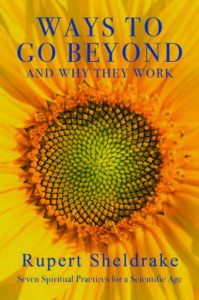
Ways to Go Beyond and Why They Work: Seven Spiritual Practices for a Scientific Age, by Rupert Sheldrake
Rupert Sheldrake

Dr. Rupert Sheldrake is a biologist and the author of more than ninety technical papers and fourteen books, including Science Set Free. After studying at Cambridge and Harvard Universities, he worked in Hyderabad, India, as principal plant physiologist at the International Crops Research Institute for the Semi-Arid Tropics, and lived for two years in the Benedictine ashram of Father Bede Griffiths. From 2005 to 2010, he was director of the Perrott-Warrick Project for the study of unexplained human and animal abilities, funded by Trinity College, Cambridge. He is currently a Fellow of the Institute of Noetic Sciences in Petaluma, CA, and of Schumacher College in Dartington, Devon, UK. He lives with his wife Jill Purce, with whom he has two sons.

Book: “How Emotions Are Made: The Secret Life of the Brain”

How Emotions Are Made: The Secret Life of the Brain

How Emotions Are Made: The Secret Life of the Brain

by Lisa Feldman Barrett 

A new theory of how the brain constructs emotions that could revolutionize psychology, health care, law enforcement, and our understanding of the human mind.

Emotions feel automatic, like uncontrollable reactions to things we think and experience. Scientists have long supported this assumption by claiming that emotions are hardwired in the body or the brain. Today, however, the science of emotion is in the midst of a revolution on par with the discovery of relativity in physics and natural selection in biology—ans this paradigm shift has far-reaching implications for us all.

Leading the charge is psychologist and neuroscientist Lisa Feldman Barrett, whose theory of emotion is driving a deeper understanding of the mind and brain, and shedding new light on what it means to be human. Her research overturns the widely held belief that emotions are housed in different parts of the brain and are universally expressed and recognized. Instead, she has shown that emotion is constructed in the moment, by core systems that interact across the whole brain, aided by a lifetime of learning. This new theory means that you play a much greater role in your emotional life than you ever thought. Its repercussions are already shaking the foundations not only of psychology but also of medicine, the legal system, child-rearing, meditation, and even airport security.

Why do emotions feel automatic? Does rational thought really control emotion? How does emotion affect disease? How can you make your children more emotionally intelligent? How Emotions Are Made answers these questions and many more, revealing the latest research and intriguing practical applications of the new science of emotion, mind, and brain. 

(Goodreads.com)

Voltaire on renouncing Satan

Voltaire

“Now, now my good man, this is no time to be making enemies.”
(Voltaire on his deathbed in response to a priest asking him that he renounce Satan.)”

― Voltaire

François-Marie Arouet, known by his nom de plume Voltaire (November 21, 1694 – May 30, 1778), was a French Enlightenment writer, historian, and philosopher famous for his wit, his criticism of Christianity—especially the Roman Catholic Church—as well as his advocacy of freedom of speech, freedom of religion, and separation of church and state. Wikipedia

Gabrielle / Coco

Katherine Hepburn – Topic Provided to YouTube by Universal Music Group Medley: Gabrielle / Coco · Katherine Hepburn · Jon Cypher Coco ℗ 1970 UMG Recordings, Inc. Released on: 1997-01-01 Producer: Andy Wiswell Studio Personnel, Engineer: Ernie Oelrich Producer: Ron O’Brien Producer, Associate Producer: Max O. Preeo Composer Lyricist: Alan Jay Lerner Composer Lyricist: André Previn Auto-generated by YouTube.

No, men don’t learn toxic masculinity from their fathers

By Cameron Duke – Live Science Contributor 

2 days ago (livescience.com)

Men don't learn toxic masculinity from their fathers. Here, a father walking his young son to school.

(Image credit: Frank Herholdt via Getty Images)

For toxic masculinity, “like father, like son,” is only part of the story.

New research suggests a different story: A man’s lack of friends may predict whether he will embrace toxic masculinity, while the presence or absence of a male role model early in life doesn’t play a role.

So-called toxic — or hegemonic — masculinity refers to a set of beliefs and negative social behaviors that are aligned with “idealized” masculine norms. Sociologists first coined the term as a way to describe a form of masculinity that directly opposes other forms of masculinity — suggesting these other forms are inferior. In this conception, “real men” are often described in macho terms such as “assertive,” “courageous” and “competitive,” but they are often also misogynistic and sexually aggressive. They see themselves as dominant in society, while they relegate subordinate roles to others, like women, gay men and those identifying as nonbinary. 

Sociologists George Van Doorn, Jacob Dye and Ma Regina de Gracia — all of Federation University in Australia — set out to explore the origins of hegemonic masculinity in a study published in the March issue of the journal Personality and Individual Differences. They wanted to understand whether a man’s relationship with his father early in life influenced his adherence to hegemonic masculinity later in life. 

“There’s literature about men, and fathers in particular, being essential in their boys’ lives and in their development,” said Van Doorn, the study’s lead author. Often, these studies don’t follow those boys to adulthood, so the long-term effects of fatherly influences haven’t really been explored scientifically. “We just tested it, and it didn’t really come out the way I expected,” Van Doorn told Live Science. 

The researchers surveyed 188 men ages 18 to 62, primarily from Australia. The three-part survey measured different aspects of the participants’ life experiences and beliefs. One part asked about the quality of social relationships, particularly those with family and friends. Another measured adverse childhood experiences and focused particularly on things such as household dysfunction and abuse. The remaining section of the survey, which included 29 statements, was an attempt to measure the participants’ adherence to hegemonic masculine norms. Participants had to rank their level of agreement or disagreement with statements that focused on: “playboy” ideology, self-reliance, emotional control, winning, violence, heterosexual self-presentation, risk-taking and power over women

When analyzing the results, they found no connection between a man’s relationship with his father and his adherence to masculine norms. Further, the mother-son relationship and adverse childhood experiences also failed to predict a man’s belief in hegemonic masculinity. 

However, one relationship did seem to predict hegemonic masculinity: the quality of a man’s relationships with his friends. As hegemonic masculinity went up, the number and quality of friendships plummeted. However, the study was correlational, meaning it couldn’t say whether lacking close friendships caused these beliefs or whether these beliefs prevented the formation or maintenance of close friendships. It was a strong correlation, and in this study, nothing else measured came close when predicting hegemonic tendencies. 

Cliff Leek, a sociologist at the University of Northern Colorado who was not involved in the study, said belief in hegemonic masculinity is most likely to come from our social circles while we’re growing up, especially gender-segregated ones, such as sports teams or fraternities, that unquestioningly reinforce stereotypes of what a “real man” is. 

But why men who hold these beliefs tend to have fewer friends than others likely has to do with the beliefs themselves. “Those traits, like competitiveness or a lack of willingness to show emotion, are the types of traits that will prevent you from forming strong relationships in the first place,” Leek told Live Science. In this way, hegemonic masculinity can become a form of self-harm, as men who hold these ideals may alienate themselves, according to a study published in 2020 in the journal . 

Whatever the cause, family makeup doesn’t seem to matter, Van Doorn said. 

“If you were raised by your grandma, your aunt, two men, two women, it doesn’t matter in this case,” Van Doorn said. While a father-son relationship is undeniably important to the development of a child, having a bad relationship with him, or no relationship at all, doesn’t set him on a particular path. 

Originally published on Live Science.

(Contributed by Suzanne Deakins, H.W., M.)

Reincarnation now

Modern mindfulness strips Buddhism of its spiritual core. We need an ethics of reincarnation for an interconnected world

NEPAL. Bodnath. Shechen Monastery. Tulku KHENTRUL LODRO RABSEL (12 years old) with his tutor LHAGYEL. At the age of 5, KHENTRUL decided that he had lived enough with his parents and that it was time for him to enter the monastery. Two or three years after their death, important lamas are reincarnated in the body of a child. The search for this child is based on the information left by the lama himself: dreams, visions and the intuition of other lamas. The Tulkus are discovered at 3 or 4 years of age, declared at about 4 or 5 and then enter the monastery at the age of 6. According to the rules of the monastery, each Tulku is instructed by a tutor and is either prevented or restricted from seeing other young monks from their age group. All the Tulkus are called Rinpoche which means “the precious one”. 1996.

Photo by Martine Franck/Magnum

Avram Alpert

is a lecturer in the Princeton Writing Program and the author of Global Origins of the Modern Self, from Montaigne to Suzuki (2019) and A Partial Enlightenment: What Modern Literature and Buddhism Can Teach Us About Living Well Without Perfection (2021).Listen here

Brought to you by Curio, an Aeon partner

7 May 2021 (aeon.co)

Edited by Nigel Warburton

Aeon for Friends

When people outside of Asia think of Buddhism, they tend to think about just philosophy and meditation. Buddhists are often said not to have gods, wars or empires. Their religion isn’t about ritual or belief, but a dedicated exploration into what causes suffering and how to end it through meditation and compassion. Although there’s some basis for this image, Buddhists and scholars of Buddhism have been at pains for decades to show that it’s largely untrue, or at least very partial. The Buddhism that non-Buddhists know today is less an accurate vision of its history than a creation of the late 19th and early 20th centuries. In that time period, Buddhists and their sympathisers created this modernised Buddhism. They discarded from it the elements of Buddhist history that didn’t fit the rational, scientific worldview that accompanied colonisation and modernisation. In a remarkable feat of historical reinvention, Buddhism went from degraded other to uplifted saviour in a matter of decades.

While there’s much wrong with colonisation forcing such changes, there’s nothing inherently wrong with Indigenous thinkers recreating their religions. Religions reinvent themselves all the time in response to changes both internal and external. What Buddhists such as D T Suzuki did wasn’t particularly different from what Martin Buber did for Judaism, Paul Tillich for Christianity, Muhammad Iqbal for Islam, or Swami Vivekananda for Hinduism. All of these thinkers returned to elements of their traditions to create a version of their religion that spoke better to the modern world. They also effectively rebutted claims from outsiders about their inferiority. Buddhists, here, were extremely successful, especially in the eyes of non-Buddhists, for whom Buddhism became the modern, rational religion par excellence. Indeed, they were so successful that Buddhism is often said to be just a philosophy that one can embody, regardless of one’s religious affiliation.

This success, however, has come with costs. At the very least, it has turned outsiders’ understandings of Buddhism into a set of rather unfortunate stereotypes, such as when the Tibetan studies scholar Robert Thurman spoke of Tibetans as ‘the baby seals of the human rights movement’. At worst, it has provided cover for atrocities committed by Buddhists in countries such as Myanmar and Sri Lanka. It has also had potentially negative effects on those who engage with modern Buddhism. Critics today write of ‘McMindfulness’, a pop version of mindfulness that, rather than overcoming suffering and delusion, in fact makes them worse by letting people believe that they can do whatever harm they want, so long as they meditate once a day. According to the philosopher Slavoj Žižek, this means that Buddhism’s advice to ‘let things go’ and focus on your breathing equates to letting go of fighting against all the cruelty and injustice in the world. By focusing on the presentness of your own breath or body posture, you might very well come to feel at ease in a world that’s full of disease and devastation.

People who want to really understand Buddhism in all of its complexity should spend time in Buddhist countries (not just at monasteries), learn ancient and modern languages, and study the works of scholars around the world who offer a more detailed history of Buddhism and Buddhists. But for those who are interested only in the modern, cleaned-up version of Buddhism, yet want to avoid the problems of modern Buddhism – both in terms of its ignorance of history and its politics of the present – I would offer this advice: take reincarnation seriously.

That probably doesn’t sound right. Reincarnation (also called transmigration or rebirth) is the idea that some part of consciousness lives on after death, and keeps returning to this or other realms of existence until liberated by Buddhist practice. And it seems like exactly the kind of thing that modern, secular Buddhists would reject, often with good reason. After all, reincarnation has often been used to justify why some people deserve good or bad things, based on the actions that they supposedly made in their past lives. But when I say that people should take reincarnation seriously, I don’t mean that they should embrace every detail of the classical doctrine. Whether or not one does is a question for practising Buddhists and others – a question about which I have neither the right nor the capacity to speak. What I mean, rather, is that we should seriously consider what a contemporary version of the idea of reincarnation would look like.

Thinking about reincarnation today is, first of all, a reminder of the complexity of Buddhism, and the fact that individual practices can’t be neatly separated from broader institutional histories. Any change in our personal lives is inseparable from change in the world around us. Second, reincarnation offers a way of thinking about the present as connected to the deep past and to any potential futures as well. We needn’t think of the specifics of the reincarnation doctrine to realise that we’re all the inheritors of a past that we didn’t create and the bequeathers of a future we won’t live to see. Third, this temporal relation is also an ethical one, because it suggests that we’re the products of other lives and the creators of other futures, and thus share a global and temporal interdependence. And fourth, it follows that part of our task as humans is to be aware of what we might accidentally replicate from our past and thus unknowingly recreate in the future.

The Buddhist ideal of ending the cycle of reincarnation has a secular corollary in the ideal of removing all traces of our past mistakes – truly living in a society without patriarchy or poverty or violence. If we take reincarnation seriously, then we can move past injunctions to just ‘be more in the present moment’ and understand how real presence means being connected to much more than our breathing. It forces us to come to terms with the possibility that we’re connected to many more lives and beings – across both time and space – than we can ever realise.

In Tibet, the doctrine of rebirth was used to identify the consciousness of a deceased monk in a newborn child

Rethinking reincarnation isn’t unprecedented. As with other elements of Buddhism, the concept has changed over time. And it’s worth recalling that part of the origin of Buddhism was to challenge prevailing theories of reincarnation in the place where Siddhartha Gautama was born – in what is now the India-Nepal border, around the 5th century BCE. In these belief systems, some part of the person (which part is interpreted differently both across and within religious movements) would live on in a cycle of rebirth called samsara. There’s also diversity of thought about the meaning of this cycle, but Gautama and his followers criticised a variety of their contemporaries’ ideas. One was the notion that only a few were able to leave this cycle and become part of the divine. Another was that the aim was, indeed, to become part of something. According to Gautama, everyone, regardless of their place of birth, is capable of exiting the cycle of reincarnation. And to do so doesn’t mean joining with something; it means disjoining entirely, or ‘extinguishing’ the fire of life. In one image, consciousness is like a flame being passed from candle to candle. After enlightenment, no more candles will be lit.

Buddhism, then, began in part as a new set of views about reincarnation. And throughout its history, Buddhists have debated and expanded the potential for what reincarnation entails. For example, in Tibet, probably beginning in the 13th century, the doctrine of rebirth took a significant twist: it was used to identify the consciousness of a deceased monk in a newborn child, and thus grant to that child the religious and political title of the previous monk. This is the background for what became the tradition of the Dalai Lamas. Although this was based on the existing doctrine that someone who had achieved nirvana could ‘emanate’ their consciousness on Earth in order to guide humans to liberation, it took on a whole new meaning and history in Tibet.

More recently, Buddhists, as well as outsiders seeking to modernise Buddhism, have continued to reinterpret the doctrine of reincarnation for their own times. From the mid-19th century, as the theory of evolution developed, thinkers such as Ralph Waldo Emerson began to suggest that the doctrine of transmigration was an intimation of the understanding of the transmutation of species. As he put it: ‘The transmigration of souls is no fable. I would it were; but men and women are only half human.’ This kind of assimilation was also advocated by Buddhists such as the Chinese reformer Taixu, who spoke of evolution as describing ‘an infinite number of souls who have evolved through endless reincarnations’. And contemporary, ecologically minded Buddhists such as Thich Nhat Hanh have extended this to the whole of the planet: ‘I know that in the past I have been a cloud, a river, and the air. And I was a rock. I was the minerals in the water … gas, sunshine, water, fungi, and plants.’ This fits within the contemporary understanding that the components of a human body pre-existed that body in the natural world. It also expresses a genuine sense of interdependence between humans and their environment.

Reincarnation has also been used to think about politics. In his essay ‘The 18th Brumaire of Louis Bonaparte’ (1852), Karl Marx wrote:

Men make their own history, but they do not make it as they please; they do not make it under self-selected circumstances, but under circumstances existing already, given and transmitted from the past. The tradition of all dead generations weighs like a nightmare on the brains of the living.

I’m not sure what Marx might have known of Indian doctrines of reincarnation. He more likely had in mind the ideas of transmigration that one can find in Pythagoras and Plato. But he was closer to the Buddhist critique of Brahmanism than anything else, because the Platonic system – like the Brahmanic one – had no particular end: people could reincarnate forever. Marx’s point wasn’t that reincarnation went on forever, but that we needed to take concrete steps to end it: we should awaken to something new, beyond the nightmare of histories of oppression.

But taking reincarnation seriously doesn’t just mean thinking about the ecological or political potential of its doctrines. It also means thinking seriously about the failure of any doctrine to realise its mission. This is another reason why we shouldn’t excise reincarnation from the modern understanding of Buddhism. Consider, as an example, the work of the writer and scholar Robert Wright and his popular book Why Buddhism Is True (2017). According to Wright, Buddhism is true because it understands something very specific about the effect of natural selection on the human condition. Namely, that evolution is driven by fleeting pleasure. Humans seek satisfaction through eating and copulating, only to find that the pleasure from these activities is remarkably evanescent. And yet, nevertheless, we get up and try to find satisfaction through them every day. Wright says that this is a neat trick of natural selection, which is driven simply by the blind will of the species to continue. If we were completely sated by our meals or sexual encounters, we wouldn’t have the same urge to keep doing them. So evolution tricks us into thinking that we’ll achieve satisfaction, when we never will. The trouble is that this cycle of pleasure, satisfaction and dissatisfaction is, well, rather unsatisfying. And this is what Buddhism understands and what mindfulness meditation can help cure. To perpetually pursue satisfaction is suffering. To become aware of this process and gain distance from it through mindfulness provides relief.

Early in his book, Wright makes a qualification about what he thinks is true in Buddhism. He writes: ‘I’m not talking about the “supernatural” or more exotically metaphysical parts of Buddhism – reincarnation, for example.’ But if we look at the story that he’s told us about the truth of Buddhism, we will actually see reincarnation at work. First, in the sense that every human bears traces of historical processes that happened long before any of us were alive. Second, in that humans are driven by a fundamental process of the endless reincarnation of pleasure. Third, that when we think we’re moving past a problem, we’re often just creating a new version of it. Thus evolution, for example, solved the problem of how to keep the species going by creating other problems of survival for that very species – whether through epidemics of obesity or the greed for pleasure that leads people to pillage and destroy others. This tendency to recreate failures was Marx’s point in his essay about the failure of revolutionaries in France. And it would later become the devastating problem of many who followed Marx himself.

To take reincarnation seriously isn’t only to develop a more sophisticated understanding of where we come from and what we owe to what comes after us, but also to face up to our tendency to bring screaming into the future the mistakes that we’ve made in the past. The hope of this reckoning is that we might better understand these conditions and awake from these nightmares. This is the point at which Gautama and Marx and many others agree: for there to be progress in ending suffering, some elements of the world – poverty, racism, hatred – simply must cease to be reincarnated.

The politics of reincarnation refuses to see the world as broken up into friends and enemies, victors and losers

The political demands to end negative reincarnations are, in part, made possible by the ethical view of human interdependence that reincarnation affords us. One of the ideas that we learn in the classical doctrine is that reincarnation links many of us across the histories of our being. In the words of Steven Collins, one of the most important Anglophone interpreters of the doctrine, stories of reincarnation are ‘narrative ways of connecting identities one to another’. Someone whom we don’t know, and might never know, could very well be part of our chain of existence. Indeed, one of the most intriguing elements of the classical view is that not everything or everyone is actually connected. Some other humans and elements are connected to us as individuals, in that we’re linked across time through our past or future selves. But some people and things always remain separate. Collins points out that, except for the enlightened few, most of us never know whether or how we’re related to others. The ethics here is thus not one in which I act kindly to others because I know that I am related to them, but rather precisely because I don’t know.

Reincarnation, then, isn’t about providing certainty, but a means of developing ethics within conditions of uncertainty. We might think of it as a kind of Pascalian wager. That is, just as the 17th-century philosopher Blaise Pascal wagered that it would be better, after this life has ended, to have believed in God, just in case God is real, the ethics of reincarnation suggests that we’re better off believing in our interconnectedness to any given person or animal or plant – whether we ever meet them or not – just in case we are. The immediate payoff of the wager is this: because I don’t know how I’m connected to the Universe, and the people, plants, animals and bacteria that I share it with, it’s best that I act kindly and calmly toward everything and everyone.

There are analogies in other traditions. In the Gospel of Matthew, for example, Jesus said that all who fed or clothed or cared for him, when he was downtrodden, would go to heaven. When someone asked how they could do this for him, he replied: ‘[J]ust as you did it to one of the least of these my brothers and sisters of mine, you did it to me.’ There’s also a Jewish tradition that speaks of 36 hidden, just people who maintain the stability of the world. The scholar of Jewish mysticism Gershom Scholem argued in 1971 that this myth led to ‘a somewhat anarchic morality: your neighbour may be one of the hidden just men.’ The version of reincarnation that I’m advocating for here adds to these traditions by urging us to extend this ethics beyond how we treat our neighbours or those we meet. Our lack of knowledge about our specific connections to the world should make us behave ethically toward the whole world. The politics of reincarnation that one can develop from this ethics refuses to see the world as broken up into friends and enemies, victors and losers. It suggests that we’re all patchworks of each other, bound together on a wheel of time. Our task in such a world can’t be to defeat each other, for there’s no one who is an other.

Of course, there are ways to arrive at all of these thoughts without engaging reincarnation. The basic ideas can be formulated through any number of traditions. And, as I mentioned at the beginning of this essay, the doctrine of reincarnation has its own potential downsides, especially when it’s used to justify people’s positions within a social order. But the value of taking reincarnation seriously is that it might lead us to grasp more readily where and how we’re recreating such troubled social formations. Perhaps we see this in today’s supposed meritocracies, which create new, caste-like justifications for hierarchy and inequality, as several recent critics have suggested. Or perhaps we see it in some modern Buddhist monasteries in the West, where histories of sexual harassment keep recurring. To take reincarnation seriously is to think about how we can end these histories of suffering. This means working not just on a personal or even national scale, but through a global ethics based on our interdependence to all creatures and the natural world. It’s hard to think of anything less ‘McMindful’ than that.

Philosophy of religionMetaphysicsCosmopolitanism

Tim Wu on the Dangers of a Return to Fascism

VIA JUST THE RIGHT BOOK

This Week on Just the Right Book Podcast with Roxanne Coady

By Just the Right Book 

May 6, 2021 (lithub.com)

In this episode of Just the Right Book with Roxanne Coady, Tim Wu joins Roxanne to discuss his book, The Curse of Bigness, out now in paperback.

From the episode: 

Tim Wu: Neither a nationalist or fascist leader really wants accountability. The one doesn’t want competition and the other doesn’t want voters. But they are in some sense similar. The danger of a return to fascism is the fear that the monopolies and the leader realize that their interests are in common. That’s what happened in Germany, Japan, and Spain pre-WWII, and that’s what we need to watch for. Antitrust law is like a safeguard. It has an incredibly important constitutional role of limiting private power.

Subscribe now on iTunesSpotifyStitcher, or wherever else you find your podcasts!

________________________________

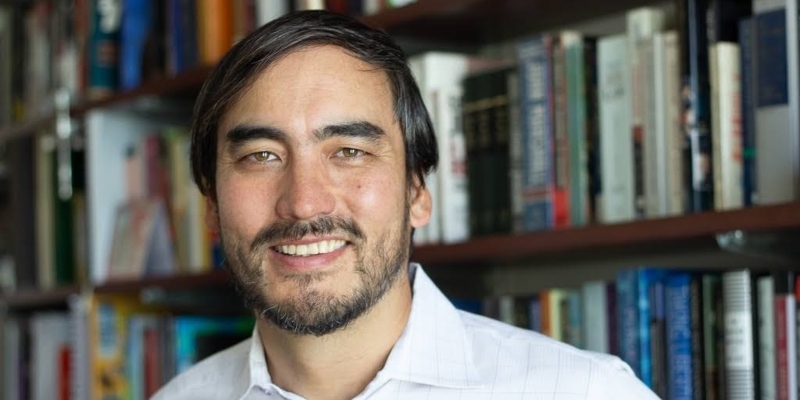
Tim Wu is a policy advocate, a professor at Columbia Law School and a contributing opinion writer for The New York Times. He is best known for coining the phrase net neutrality. He worked on competition policy in the Obama White House and the Federal Trade Commission, served as senior enforcement counsel at the New York Office of the Attorney General, and worked at the Supreme Court for Justice Stephen Breyer. His previous books are The Master Switch: The Rise and Fall of Information Empires and The Attention Merchants: The Epic Scramble to Get Inside our Heads.

Roxanne Coady is owner of R.J. Julia, one of the leading independent booksellers in the United States, which—since 1990—has been a community resource not only for books, but for the exchange of ideas. In 1998, Coady founded Read To Grow, which provides books for newborns and children and encourages parents to read to their children from birth. RTG has distributed over 1.5 million books.

Forgiving the Unforgivable

VIA FIRST DRAFT

Viet Thanh Nguyen in Conversation with Mitzi Rapkin on First Draft

By First Draft: A Dialogue on Writing 

May 3, 2021 (lithub.com)

First Draft: A Dialogue of Writing is a weekly show featuring in-depth interviews with fiction, nonfiction, essay writers, and poets, highlighting the voices of writers as they discuss their work, their craft, and the literary arts. Hosted by Mitzi Rapkin, First Draft celebrates creative writing and the individuals who are dedicated to bringing their carefully chosen words to print as well as the impact writers have on the world we live in.

This week on First Draft, Viet Thanh Nguyen joins Mitzi to discuss his new novel, The Committed, out now from Grove Press.

From the episode:

Mitzi Rapkin: One of the driving questions of The Committed, in my reading, was the question of how do you forgive the unforgivable?

Viet Thanh Nguyen: That is a very important question for the novel, for our narrator, for me. When I first came across it—and this is philosophy in Jacques Derrida’s book On Cosmopolitanism and Forgiveness—I thought, wow, Derrida is full of crap. Because Derrida, the philosopher, was saying the only thing worth forgiving is the unforgivable. And I thought, wow, that just doesn’t make any sense. How can you do that?

But I think he actually put his finger right on the problem, you know what I mean? If something is forgivable, and we forgive, is that really worth that much? And, while whatever constitutes the unforgivable is very subjective for each of us, if we cannot forgive the unforgivable, then maybe we’re not really truly capable of forgiveness. That’s the crux of the spiritual and philosophical matter that Derrida wants to get to.

I never mentioned Derrida’s name in the book, although I mentioned him in the acknowledgments. That is the problem that ultimately haunts our narrator: he’s done unforgivable things, he’s done things that other people would find unforgivable, he’s done things that he himself finds unforgivable. And he is trying to figure out a way to live with himself in these books, in these confessions. One of those crucial things is to try to figure out if he himself is forgivable. And that is contrasted with other crimes that are being done in the book, but also with historical crimes.

One of the historical crimes that is brought up is the Cambodian genocide that has just taken place a couple of years before the start of this novel and is just being revealed in newspaper reports. People are literally finding out about this around the world in the early 1980s. And that Cambodian genocide is directly connected to the Vietnamese Revolution and the French Revolution. The Cambodian revolutionaries, Pol Pot and his major allies, were all French educated in Paris. How do we hold the French responsible for that, but also hold the Khmer Rouge responsible for that? That seems really unforgivable. It seems unforgivable what the Khmer Rouge did in Cambodia, but is it any more unforgivable than what the French did in colonizing Indochina? And so, against the backdrop of these big historical political issues and questions, we have this foregrounding of our narrator and his own wrestling with his unforgivable deeds.

***

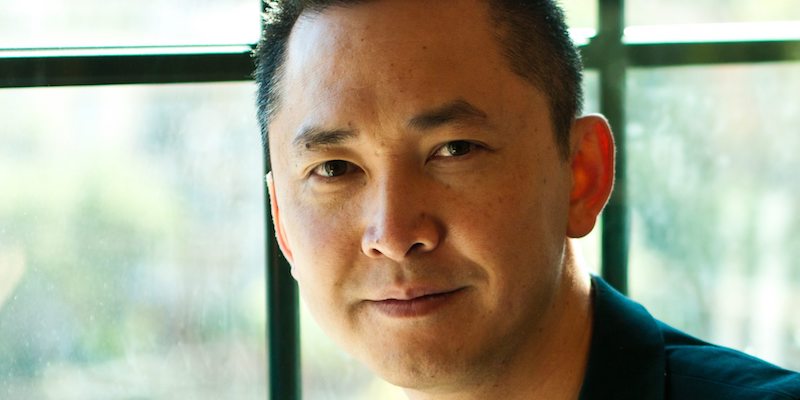
Viet Thanh Nguyen’s novel The Sympathizer is a New York Times best seller and won the Pulitzer Prize for Fiction. The sequel to this novel is The Committed and his short story collection is called The Refugees. His other books are Nothing Ever Dies: Vietnam and the Memory of War (a finalist for the National Book Award in nonfiction and the National Book Critics Circle Award in General Nonfiction) and Race and Resistance: Literature and Politics in Asian America. He is a University Professor, the Aerol Arnold Chair of English, and a Professor of English, American Studies and Ethnicity, and Comparative Literature at the University of Southern California.

Consciousness, spirituality, biography, sexuality, androgyny, futurism, space, the arts, science, astrology, democracy, humor, books, movies and more