
All posts by Mike Zonta
 An old Cherokee told his grandson, “My son, there is a battle between two wolves inside us all.”
Richard Wright on starving from a lack of self-realization

Word-Built World: craic

craic
PRONUNCIATION: (krak, pronounced as the word crack)
MEANING: noun: Good times involving pleasant company, enjoyable conversation, etc.
ETYMOLOGY: From Irish craic. It was a borrowing from English crack, respelled as craic, and then reborrowed into English. Earliest documented use: 1972.
USAGE: “‘Unbelievable golf course, brilliant craic, and stoked to record my best major finish with a T16,’ Ryan Fox said on his Instagram account.”
Fox Signs off with a Flourish; Dominion Post (Wellington, New Zealand); Jul 23, 2019.
Wordsmith (wsmith@wordsmith.org)
Lenin on capitalists

“The Capitalists will sell us the rope with which we will hang them.”
― Vladimir Ilich Lenin
Vladimir Ilyich Ulyanov, better known as Vladimir Lenin (April 22, 1870 – January 21, 1924), was a Russian revolutionary, politician, and political theorist. He served as the first and founding head of government of Soviet Russia from 1917 to 1924 and of the Soviet Union from 1922 to 1924. Wikipedia
Book: “Not Too Late: Changing the Climate Story from Despair to Possibility”

Not Too Late: Changing the Climate Story from Despair to Possibility
Rebecca Solnit (Editor), Thelma Young Lutunatabua (Editor)
An energizing case for hope about the climate comes from Rebecca Solnit, called the voice of the resistance by the New York Times, and climate activist Thelma Young Lutunatabua, along with a chorus of voices calling on us to rise to the moment.
Not Too Late is the book for anyone who is despondent, defeatist, or unsure about climate change and seeking answers. As the contributors to this volume make clear, the future will be decided by whether we act in the present–and we must act to counter institutional inertia, fossil fuel interests, and political obduracy.
These dispatches from the climate movement around the world feature the voices of organizers like Guam-based lawyer and writer Julian Aguon; climate scientists like Dr. Jacquelyn Gill and Dr. Edward Carr; poets like Marshall Islands activist Kathy Jetnil-Kijner; and longtime organizers like The Tyranny of Oil author Antonia Juhasz.
Guided by Rebecca Solnit’s typical clear-eyed wisdom and enriched by photographs and quotes, Not Too Late leads readers from discouragement to possibilities, from climate despair to climate hope.
(Goodreads.com)
Tarot Card for April 18: The Chariot
The Chariot
The Chariot is numbered seven and usually depicts a warrior driving a chariot triumphantly home. The chariot is drawn by powerful and wild creatures. These creatures are our Will – a wayward beast to control at the best of times!
The Chariot represents the principle that the human Will functions only when the whole being is behind it. This card is about the struggles we have with ourselves and with life. It promises that with diligence, honesty and perseverence we can overcome the most insurmountable of obstacles.
This is a hopeful and encouraging card, reminding us that we can climb to the heights if we want to. Here we are taught how to master the opposing forces within us, in order to bring them and thus ourselves into harmony. We are cosmic warriors, unfurling, learning and growing – divine and vital parts of the Universe.
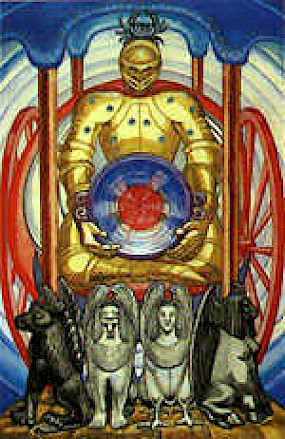
(via angelpaths.com and Alan Blackman)
Gurdjieff on War
Asaf Braverman Apr 12, 2023 From the very beginning, when he meets his first Russian students in 1912, Gurdjieff speaks of formalizing his work, of raising funds to buy equipment, and of eventually hiring a permanent place. But the political environment of Russia prevents this…
(Courtesy of Heather Williams, H.W., M.)
Book: “Tyranny from Plato to Trump: Fools, Sycophants, and Citizens”
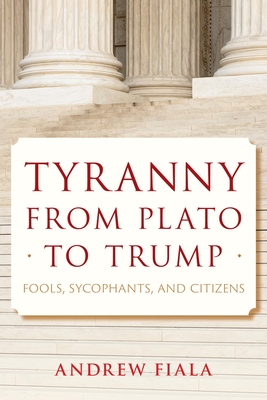
Tyranny from Plato to Trump: Fools, Sycophants, and Citizens
Andrew Fiala
Power grabs, partisan stand-offs, propaganda, and riots make for tantalizing fiction, but what do we do when that drama becomes a reality all around us? For a country founded as an escape from British tyranny, the United States seems to have devolved into a land where tyrants rise to power, sycophants blindly follow, and the entire nation suffers.As ancient Greek philosophers warned us, chaotic tragedy unfolds in the absence of reason, and the only cure is a return to wisdom and virtue. America’s founding fathers knew this lesson all too well and dreamed of an enlightened citizenry guided by better-than-ideological dictators. Using contemporary events to illuminate universal human weaknesses, Andrew Fiala charts the perennial history of tyrannical takeovers and the masses who support them and ultimately suffer under their rule. Ultimately, Fiala also points to a solution. Knowing the cyclical nature of tyranny, we can build safeguards against our worst inclinations and keep alive the freedoms our founding fathers envisioned for this nation.
How to Love the World More: George Saunders on the Courage of Uncertainty
By Maria Popova (themarginalian.org)

Nothing, not one thing, hurts us more — or causes us to hurt others more — than our certainties. The stories we tell ourselves about the world and the foregone conclusions with which we cork the fount of possibility are the supreme downfall of our consciousness. They are also the inevitable cost of survival, of navigating a vast and complex reality most of which remains forever beyond our control and comprehension. And yet in our effort to parse the world, we sever ourselves from the full range of its beauty, tensing against the tenderness of life.
How to love the world more by negotiating our hunger for certainty and our gift for story is what George Saunders explores in some lovely passages from A Swim in a Pond in the Rain: In Which Four Russians Give a Master Class on Writing, Reading, and Life (public library) — the boundlessly wonderful and layered book in which he reckoned with the key to great storytelling and the way to unbreak our hearts.
Art by Jean-Pierre Weill from The Well of Being
In consonance with neurologist Oliver Sacks’s insight into narrative as the pillar of personal identity, Saunders examines the elemental impulse for storytelling as the basic organizing principle by which we govern our lives:
The instant we wake the story begins: “Here I am. In my bed. Hard worker, good dad, decent husband, a guy who always tries his best. Jeez, my back hurts. Probably from the stupid gym.”
And just like that, with our thoughts, the world gets made.
Or, anyway, a world gets made.
This world-making via thinking is natural, sane, Darwinian: we do it to survive. Is there harm in it? Well, yes, because we think in the same way that we hear or see: within a narrow, survival-enhancing range. We don’t see or hear all that might be seen or heard but only that which is helpful for us to see and hear. Our thoughts are similarly restricted and have a similarly narrow purpose: to help the thinker thrive.
All of this limited thinking has an unfortunate by-product: ego. Who is trying to survive? “I” am. The mind takes a vast unitary wholeness (the universe), selects one tiny segment of it (me), and starts narrating from that point of view. Just like that, that entity (George!) becomes real, and he is (surprise, surprise) located at the exact center of the universe, and everything is happening in his movie, so to speak; it is all, somehow, both for and about him. In this way, moral judgment arises: what is good for George is… good. What is bad for him is bad. (The bear is neither good nor bad until, looking hungry, it starts walking toward George.)
So, in every instant, a delusional gulf gets created between things as we think they are and things as they actually are. Off we go, mistaking the world we’ve made with our thoughts for the real world. Evil and dysfunction (or at least obnoxiousness) occur in proportion to how solidly a person believes that his projections are correct and energetically acts upon them.

Art by Kay Nielsen from East of the Sun and West of the Moon. (Available as a print and as stationery cards.)
Over time, our stories harden into certainties that collide with each other every time we engage with another person, who is another story — another embodiment of the unreliable first-person narration known as skaz that permeates classic Russian literature. With an eye to the inescapable fact that “there is no world save the one we make with our minds, and the mind’s predisposition determines the type of world we see,” Saunders contours the commonplace tragicomedy of colliding in the mind-made world of skaz:
[…]
The entire drama of life on earth is: Skaz-Headed Person #1 steps outside, where he encounters Skaz-Headed Person #2. Both, seeing themselves as the center of the universe, thinking highly of themselves, immediately slightly misunderstand everything.
Trying to communicate across this fissure of understanding yields results sometimes comical and sometimes tragic, always affirming that reality is not singular but plural, not a point of view but a plane of possible vantages. With an eye to Chekhov — who was a physician by training and an excellent one, but an even better writer because a diagnosis is a forced conclusion of curiosity but art is the eternal sandbox of doubt — Saunders writes:

One of Antoine de Saint-Exupéry’s original watercolors for The Little Prince.
After a close reading of Chekhov’s short story “Gooseberries,” he reflects:
[…]
As long as we don’t decide, we allow further information to keep coming in. Reading a story like “Gooseberries” might be seen as a way of practicing this. It reminds us that any question in the form “Is X right or wrong?” could benefit from another round of clarifying questions. Question: “Is X good or bad?” Story: “For whom? On what day, under what conditions? Might there be some unintended consequences associated with X? Some good hidden in the bad that is X? Some bad hidden in the good that is X? Tell me more.”

Art by Paloma Valdivia from Pablo Neruda’s Book of Questions
This openness to more — to truth beyond story, to beauty beyond certainty — is precisely what teaches us how to love the world more. With a deep bow to Chekhov as the master of this existential art, Saunders writes:
A Swim in a Pond in the Rain remains one of my all-time favorite books. Complement these fragments from it with Virginia Woolf on finding beauty in the uncertainty of time, space, and being and Kurt Vonnegut on uncertainty as the crucible of creativity, then revisit some thoughts on figuring forward in an uncertain world.
Rupert Spira on one knowing itself

“If there is only one, then the one is always only knowing itself, for there is nothing in itself other than itself either to know or to be known.“
–Rupert Spira
Rupert Spira (born March 13, 1960) is an English spiritual teacher, philosopher and author of the Direct Path based in Oxford, UK. Wikipedia
(newsletter@rupertspira.com)