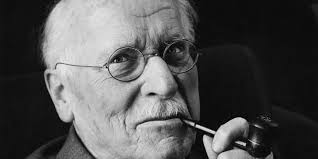
“If only a world-wide consciousness could arise that all division and fission are due to the splitting of opposites in the psyche, then we should know where to begin.” ― C.G. Jung, The Essential Jung: Selected Writings
Carl Gustav Jung (July 26, 1875 – June 6, 1961) was a Swiss psychiatrist and psychoanalyst who founded analytical psychology. Jung’s work has been influential in the fields of psychiatry, anthropology, archaeology, literature, philosophy, psychology, and religious studies. Wikipedia
Changing of the G • Mar 2, 2023 Changing of the Gods Cosmic Weather Report: World Transits 2023-2032 With Richard Tarnas, Kenny Ausubel, Luisah Teish and Becca Tarnas, moderated by Téana David This rich conversation picks up where the Changing of the Gods docuseries leaves off, so we recommend that you watch all 10 episodes. You can rent or buy Changing of the Gods on many of the major streaming platforms: Amazon, iTunes, YouTube or Vimeo via our website www.changingofthegods.com, where it available in many countries. The Changing of the Gods 10-part docuseries was a cliffhanger, ending with the tailing off of the Uranus-Pluto world transit in early 2021, marked by the storming of the US Capitol! Two years later, Uranus and Pluto have moved from the clash of the 90° square to the start of a 10-year 120° trine, the aspect of flow, confluence and harmony. What happened in the last Uranus-Pluto trine, which took place during the Roaring Twenties? What kind of archetypal weather might we anticipate? We look at the other major world transits for the next ten years, which are dynamos. We additionally examine the Pluto and Uranus returns of the U.S. birth chart. How will the country reconcile an epochal reckoning in the struggle between democracy and autocracy, between freedom and empire? As well, Ifa/Orisha priestess and lifelong African-American activist Luisah Teish shares her community’s prophecy for the coming time. How can we bring our best selves forth to meet these world-historical changes? Thank you to our partners: The Myth Salon, AstroGold, Unlock Astrology, Jennifer Freed Astrology, Astrology University, Forrest Astrology, The Astrology Podcast, Rachel Lang Astrology, Organization for Professional Astrology (OPA), and Astrology Hub Rent or buy the series at www.changingofthegods.com
In God on Psychedelics, veteran journalist Don Lattin trains his eye on some previously unexamined questions. Why do relatively few people in the burgeoning psychedelic renaissance connect chemically induced mystical states with their own religious traditions? Can sacred plant medicines be a source of renewal for Christians, Jews and other people of faith?
Some clergy and laity think they can. Judaism and Christianity each have centuries-old mystical paths. Yet since the early 1960s, and in the current psychedelic revival, countless North American psychonauts have turned to Buddhism, Hinduism or Native American spirituality to understand the revelatory experience they encountered on magic mushrooms, LSD and other psychoactive drugs.
Today, psychedelics are increasingly used as therapeutic tools to help those suffering from depression, trauma and substance abuse. Meanwhile, decriminalization campaigns and cognitive freedom crusades are sprouting up across the nation, inspiring churches and other fellowships to move beyond the divisive doctrine and denominationalism of old-time religion.
Don Lattin has been writing about altered states of consciousness since the 1970s — first as an award-winning religion reporter for daily newspapers in San Francisco and more recently as a bestselling author.
God on Psychedelics takes the reader on a magical mystery tour across the nation’s changing religious landscape, exploring a new kind of trinity that blends psychedelic insight, psychological healing and spiritual revival.
The world is in the grips of mass formation—a dangerous, collective type of hypnosis—as we bear witness to loneliness, free-floating anxiety, and fear giving way to censorship, loss of privacy, and surrendered freedoms. It is all spurred by a singular, focused crisis narrative that forbids dissident views and relies on destructive groupthink.
“Alternative voices are stigmatized by a veritable Ministry of Truth, which is crowded with “fact checkers.” Freedom of speech is curtailed by various forms of censorship and self-censorship; people’s right to self-determination is infringed upon by coercive vaccination strategies, which impose heretofore unthinkable social exclusion and segregation upon society.”
Desmet’s work on mass formation theory was brought to the world’s attention on The Joe Rogan Experience and in major alternative news outlets around the globe. Read this book to get beyond the sound bites!
Totalitarianism is not a coincidence and does not form in a vacuum. It arises from a collective psychosis that has followed a predictable script throughout history, its formation gaining strength and speed with each generation—from the Jacobins to the Nazis and Stalinists—as technology advances. Governments, mass media, and other mechanized forces use fear, loneliness, and isolation to demoralize populations and exert control, persuading large groups of people to act against their own interests, always with destructive results.
In The Psychology of Totalitarianism, world-renowned Professor of Clinical Psychology Mattias Desmet deconstructs the societal conditions that allow this collective psychosis to take hold. By looking at our current situation and identifying the phenomenon of “mass formation”—a type of collective hypnosis—he clearly illustrates how close we are to surrendering to totalitarian regimes.
With detailed analyses, examples, and results from years of research, Desmet lays out the steps that lead toward mass formation, including: – An overall sense of loneliness and lack of social connections and bonds – A lack of meaning—unsatisfying “bullsh*t jobs” that don’t offer purpose – Free-floating anxiety and discontent that arise from loneliness and lack of meaning – Manifestation of frustration and aggression from anxiety – Emergence of a consistent narrative from government officials, mass media, etc., that exploits and channels frustration and anxiety
In addition to clear psychological analysis—and building on Hannah Arendt’s essential work on totalitarianism, The Origins of Totalitarianism—Desmet offers a sharp critique of the cultural “groupthink” that existed prior to the pandemic and advanced during the COVID crisis. He cautions against the dangers of our current societal landscape, media consumption, and reliance on manipulative technologies and then offers simple solutions—both individual and collective—to prevent the willing sacrifice of our freedoms.
“We can honor the right to freedom of expression and the right to self-determination without feeling threatened by each other,” Desmet writes. “But there is a point where we must stop losing ourselves in the crowd to experience meaning and connection. That is the point where the winter of totalitarianism gives way to a spring of life.”
Mattias Desmet about Mass Formation and modern society
“If you push rational understanding to the limit, you suddenly arrive at the limit, and it’s there that the real journey of life begins.”
–Mattias Desmet
19alexander95 Sep 5, 2022 An unique interview with Mattias Desmet, (PhD Psychology, university of Ghent), on Tucker Carlson Today show.
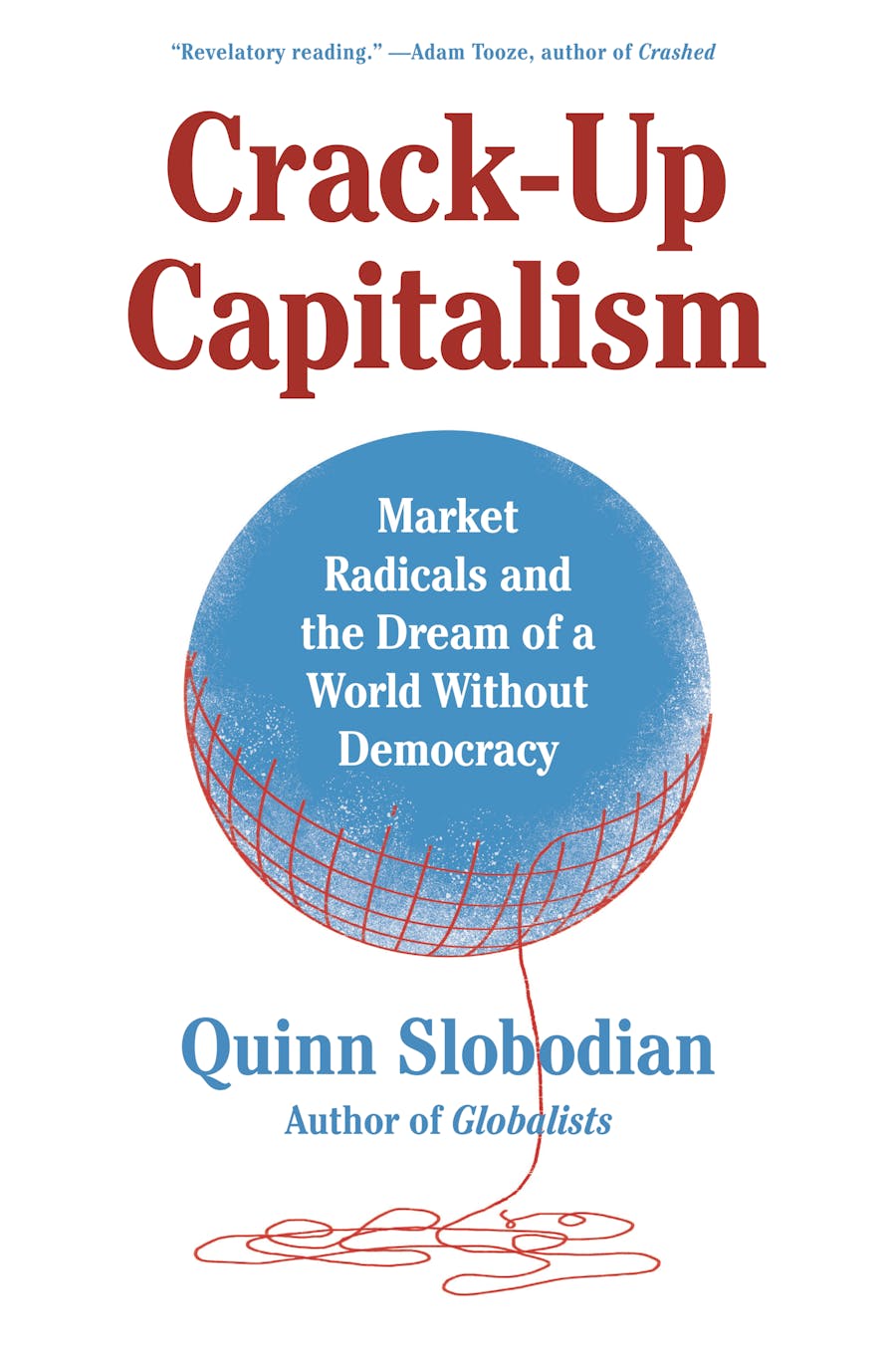
In a revelatory dispatch from the frontier of capitalist extremism, an acclaimed historian of ideas shows how free marketeers are realizing their ultimate goal: an end to nation-states and the constraints of democracy.
Look at a map of the world and you’ll see a colorful checkerboard of nation-states. But this is not where power actually resides. Over the last decade, globalization has shattered the map into different legal spaces: free ports, tax havens, special economic zones. With the new spaces, ultracapitalists have started to believe that it is possible to escape the bonds of democratic government and oversight altogether.
Crack-Up Capitalism follows the most notorious radical libertarians—from Milton Friedman to Peter Thiel—around the globe as they search for the perfect space for capitalism. Historian Quinn Slobodian leads us from Hong Kong in the 1970s to South Africa in the late days of apartheid, from the neo-Confederate South to the former frontier of the American West, from the medieval City of London to the gold vaults of right-wing billionaires, and finally into the world’s oceans and war zones, charting the relentless quest for a blank slate where market competition is unfettered by democracy.
A masterful work of economic and intellectual history, Crack-Up Capitalism offers both a new way of looking at the world and a new vision of coming threats. Full of rich details and provocative analysis, Crack-Up Capitalism offers an alarming view of a possible future.
Connecting with C Feb 26, 2023 Richard Tarnas will help you to re-enchant your world, our world. Reality is saturated with meaning. Synchronicity provides clues to the meaning around you and in you. See his documentary Changing of the Gods first episode is free. You can purchase Dr. Beitman’s new book, “Meaningful Coincidences”, here https://www.innertraditions.com/books… Richard Tarnas, PhD, is a professor of philosophy and psychology at the California Institute of Integral Studies, where he founded the graduate program in Philosophy, Cosmology, and Consciousness. He teaches courses in the history of ideas, archetypal cosmology, depth psychology, and religious evolution. He is the author of The Passion of the Western Mind, a history of the Western world view from the ancient Greek to the postmodern widely used in universities; and Cosmos and Psyche, which received the Book of the Year Prize from the Scientific and Medical Network, and inspired the documentary series The Changing of the Gods. lakegeneva@tarnas.org Our host Dr. Bernard Beitman is the first psychiatrist since Carl Jung to attempt to systematize the study of coincidences. He is Founding Director of The Coincidence Project. His book, and his Psychology Today blog, are both titled Connecting with Coincidence. He has developed the first valid and reliable scale to measure coincidence sensitivity, and has written and edited coincidence articles for Psychiatric Annals. He is a visiting professor at the University of Virginia and former chair of the Department of Psychiatry at the University of Missouri-Columbia. He attended Yale Medical School and completed a psychiatric residency at Stanford. Dr. Beitman has received two national awards for his psychotherapy training program and is internationally known for his research into the relationship between chest pain and panic disorder. Learn more at https://coincider.com
Eelco J. van Kampen • Oct 2, 2019 The Big Bang Theory season 12 episode 10. Sheldon shows how he feels about experimental Jazz. I feel exactly the same 🙂
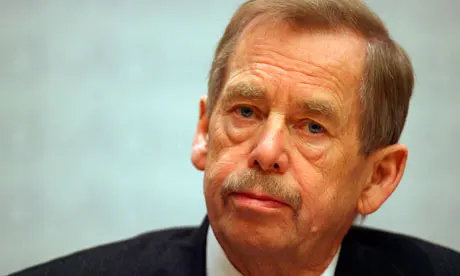
“Planetary democracy does not yet exist, but our global civilization is already preparing a place for it: It is the very Earth we inhabit, linked with Heaven above us. Only in this setting can the mutuality and the communality of the human race be newly created, with reverence and gratitude for that which transcends each of us, and all of us together. The authority of a world democratic order simply cannot be built on anything else but the revitalized authority of the universe.
Vaclav Havel
The honor I receive today from your university, this important intellectual center, presents me with an opportunity to set aside the political cares of the day and attempt to make several observations on a very general theme – the theme of civilization as a context for contemporary politics.
Recently I read a remarkable book from the pen of a Czech-American psychotherapist. In it, the author describes in great detail and veracity methods that have enabled him, over the years, to recover from the human unconscious experiences which, until recently, very few were aware of at all: The prenatal experiences of the human embryo from conception until the moment of birth. The author then demonstrates that the wealth of these experiences corresponds remarkably with all the basic archetypes and archetypal visions or stories we find – in thousands of specific forms Ñin all ancient myths, legends and fairy tales, and above all in all religions. Cultures formed many thousands of years ago, cultures that developed their myths and ritual practices quite independently of one another, operate with the same basic archetypes, the prefigurations of which modern science is now discovering in the depths of the human unconscious as prenatal experiences.
Naturally, there is no claim that this is the only source of those archetypes or of all the tidings contained in the different religions. It is probably only an incidental, secondary source of inspiration, one that helps us fill in the broader picture. Still, I was unusually taken with this finding. It shows that there exist deep and fundamental experiences shared by the entire human race, and that traces of such experiences can be found in all cultures, regardless of how distant or how different they are from one another.
This, of course, is only a single example, taken from my recent holiday reading. From many other modern studies – and even from comparisons every unprejudiced layman can make for himself – it follows that all human cultures and religions have infinitely more in common than that, infinitely more hidden somewhere deep in their sources and foundations. There are principles, experiences, and what we might call pre-scientific knowledge that are more essential and mysterious than our prenatal experiences. At the same time – somewhat paradoxically – it often happens that the leading discoveries of contemporary science themselves provide confirmation of this and so, by a circular route, bring human understanding back to something that all cultures have known intuitively since the dawn of time, something that until recently modern science has treated as no more than a set of illusions or mere metaphors. It turns out, for example, that many other experiences, far more difficult to explain, slumber in our collective unconscious. In various forms, these experiences surface again and again in the cultural achievements of humanity and often in individual human experiences. In a way that we scarcely understand, they transcend what a person could know himself or inherit from his ancestors. It seems rather as if something like an antenna were picking up signals from a physically indeterminable transmitter that contains the experience of the entire human race.
Or another thing, it would appear that the whole history of the cosmos, and especially of life, is mysteriously recorded in the inner workings of all human beings. This history is projected into man’s creations and is, again, something that joins us together far more than we think.
But something else seems to be the most essential of all: It cannot be an accident, or a mere concord of countless misperceptions if, after thousands of years, people of different epochs and cultures feel that they are somehow parts and partakers of the same integral Being, carrying within themselves a piece of the infinity of that Being, whose very relative aspects are not just categories of space and time, but of matter and consciousness as well.
I do not believe it is merely by chance or with no good reason that all cultures assume the existence of something that might be called the “Memory of Being,” in which everything is constantly recorded, and that they assume the related existence of supra-personal authorities or principles that not only transcend man but to which he constantly relates, and which are the sole, final explanation of a phenomenon as particular as human responsibility. Nor do I believe that so many modern scientists who in their work have touched on matters difficult to understand, such as the mysteries of the origin and history of the cosmos, the secrets of matter, and of space-time, and the mystery of life, have taken leave of their senses when they speak of transcendence. On the contrary: It seems to me that such philosophical speculations are an inseparable part of their findings.
I know that by saying all this here, I am running the risk that whole armies of scientists and journalists will label me a mystic who is abusing this renowned university forum to spread his obscure opinions. I will not hold it against them, because I am well aware that in the eyes of modern man thoughts of this nature inevitably carry with them a hint of obscureness, and many times this attitude brings complications into my own life: I know that to my own detriment I am too suspicious of many things. The risk of ridicule, however, is insufficient reason for me to remain silent about something I am constantly persuaded is true. But to sum up: It seems to me that one of the most basic human experiences, one that is genuinely universal and unites Ñ or, more precisely, could unite – all of humanity, is the experience of transcendence in the broadest sense of the word. In the United States, but elsewhere too, discussions are beginning to take place about the conflict of civilizations being the most probable future course of humanity. I am not sure that “civilization” is the correct term to use in this context. What we usually mean by civilization is historically and geographically defined and distinguished by high degrees of autonomy. In the traditional sense of the word, civilizations tended to have very limited mutual contact and, if they did influence one another, it happened only very slowly and indirectly. Many civilizations had no idea that others existed. Today the situation is radically different. Practically the entire world is now connected by thousands of political, economic and communication networks and bonds. We are all aware of one another, and we have thousands of common habits, technologies, modes of behavior, civilization forms and aims. It seems to me more appropriate, therefore, to understand the world of today as a single global civilization, and l would call the conflicts that loom in the future merely conflicts of individual cultures or spheres of civilization.
In any case, one of the countless sources of growing tension between these spheres clearly is the fact that they are being forced to live closer and closer together within a single civilization, and thus they are more and more clearly aware of their mutual differences or of their own particular “otherness.” I myself have compared this to life in a prison cell, in which the inmates get on each other’s nerves far more than if they saw each other only occasionally.
Let me give you an example. In Europe today, thanks to the recent liberation of a large number of its nations, the border between the world of Orthodox Christianity and the world with Catholic or Protestant traditions is suddenly becoming more obvious than before. When I travel around Greece, for instance, I clearly feel that I am surrounded by different historical, cultural and political traditions than those I know from my own country. Yet I would never dare to say that Greece belongs to a different civilization than the Czech Republic.
This modification in terminology, however, does not change the fact that the differences between individual cultures or spheres of civilization in the modern world are playing an ever-greater role and are even beginning to show up in international politics. This process was extraordinarily accelerated by the fall of communism and the end of the bipolar division of the world. The unnatural, bipolar system imposed upon the world, which concealed or directly suppressed historical and cultural differences, has collapsed. And these differences are now manifesting themselves with sudden and nearly explosive force, not just in the post-communist world but also in the West and many other areas of the globe. I fully agree with those who see in this reality the seeds of one of the most serious threats to humanity in the coming era.
The role of the intellectual is, among other things, to foresee like Cassandra various threats, horrors, and catastrophes. The role of the politician is to listen to all the warning voices, take stock of the dangers, and at the same time think intensively about ways to confront or avert them. I cannot imagine that a politician could simply live with the knowledge that everything will turn out badly and still go on being a politician. That is why I too often think about ways to avert the threat that has been called the “conflict of civilizations.”
At first glance, the solution is so simple and so obvious that it appears banal: The only salvation of the world today, now that the two biggest and most monstrous totalitarian utopias humanity has ever known – Nazism and Communism – fortunately have collapsed, is the rapid dissemination of the basic values of the West, that is, the ideas of democracy, human rights, the civil society and the free market. The most dynamic civilization of the last millennium, evolved from a blending of classical, Christian and Jewish elements, has spread and has imprinted its character on the entire global civilization. It has created and developed these values and demonstrated that respect for them will guarantee the greatest degree of human freedom, justice, and prosperity. Yet even if this blueprint appears to Western man as the best and perhaps the only one possible, it has left much of the world unsatisfied. To hope in such a situation that democracy will be easily expanded and that this in itself will avert a conflict of cultures would be worse than foolish.
It may, for instance, be observed that many politicians or regimes espouse these ideas in words but do not apply them in practice. Or they give them an entirely different content than the West gives them. Very often we hear it said that these concepts are so closely bound to the Euro- American cultural tradition, that they are simply not transferable to other milieu, or that they are only a lofty-sounding disguise for the demoralizing and destructive spirit of the West. The main source of objections would seem to be what many cultural societies see as the inevitable product or by-product of these values: moral relativism, materialism, the denial of any kind of spirituality, a proud disdain for everything supra-personal, a profound crisis of authority and the resulting general decay, a frenzied consumerism, a lack of solidarity, the selfish cult of material success, the absence of faith in a higher order of things resonates with our deepest inner nature. And if part of that nature is the experience of transcendence in the broadest sense of the word, that is, the respect of man for that which transcends him, without which he would not be and of which he is an integral part, then democracy must be imbued with the spirit of that respect if it is to have a chance of success.
In other words, if democracy is to spread successfully throughout the world and if civic coexistence and peace are to spread with it, then it must happen as part of an endeavor to find a new and genuinely universal articulation of that global human experience, which even we, Western intellectuals, are once more beginning to recollect, one that connects us with the mythologies and religions of all cultures and opens for us a way to understand their values. It must expand simply as an environment in which we may all engage in a common quest for the general good.
That of course presupposes that first, our own democracies will once more become a place for quest and creation, for creative dialogue, for realizing the common will, and for responsibility, and that they will cease to be mere battlegrounds of particular interests. Planetary democracy does not yet exist, but our global civilization is already preparing a place for it: It is the very Earth we inhabit, linked with Heaven above us. Only in this setting can the mutuality and the communality of the human race be newly created, with reverence and gratitude for that which transcends each of us, and all of us together. The authority of a world democratic order simply cannot be built on anything else but the revitalized authority of the universe. The effective expansion of democracy therefore presupposes a critical self-examination, a process that will lead to its internalization. More than that, this seems to be the key to saving today’s global civilization as a whole, not only from the danger of a conflict of cultures but from the many other dangers that threaten it. Obviously, this is easy to say but hard to bring about. Unlike many ideological utopians, fanatics and dogmatists, and a thousand more or less suspect prophets and messiahs who wander about this world as a sad symptom of its helplessness, I do not possess any special recipe to awaken the mind of man to his responsibility to the world and for the world.
Two things, however, appear to me to be certain:
In the first place: This internalization of democracy today can scarcely take the form of some new doctrine, that is a collection of dogmas and rituals. This probably would have exactly the opposite effect: To all the mutually distrustful cultural currents there would only be added others, ones that would be very artificial because they would not have grown out of the nourishing soil of myth-making eras. If a renaissance of spirituality does occur, it will far more likely be multi-leveled and multi-cultural, with a new political ethos, spirit or style, and ultimately will give rise to a new civil behavior. And secondly: Given its fatal incorrigibility, humanity probably will have to go through many more Rwandas and Chernobyls before it understands how unbelievably shortsighted a human being can be who has forgotten that he is not God.
(Maps.org)
Václav Havel (October 5, 1936 – December 18, 2011) was a Czech statesman, author, poet, playwright, and former dissident. Havel served as the last president of Czechoslovakia from 1989 until the dissolution of Czechoslovakia on 31 December 1992 and then as the first president of the Czech Republic from 1993 to 2003. Wikipedia
“The world is deep, And deeper than day can comprehend. Deep is its woe, Joy—deeper than heart’s agony: Woe says: Fade! Go! But all joy wants eternity, Wants deep, wants deep eternity.”
–Friedrich Nietzsche
Friedrich Wilhelm Nietzsche (October 15, 1844 – August 25, 1900) was a German philosopher, prose poet, cultural critic, philologist, and composer whose work has exerted a profound influence on contemporary philosophy. He began his career as a classical philologist before turning to philosophy. Wikipedia
Consciousness, spirituality, biography, sexuality, androgyny, futurism, space, the arts, science, astrology, democracy, humor, books, movies and more

![God on Psychedelics: Tripping Across the Rubble of Old-Time Religion by [Don Lattin]](https://m.media-amazon.com/images/I/51sb8hf7I-L.jpg)