
Evan McDermod • Mar 25, 2023 – James Tunney rejoins the podcast to discuss formulating a master plan for using spirituality as a means of combatting technocratic dystopia. James is an author and painter who left a successful career in law to focus on spiritual and artistic development. He is a leading voice critiquing the implications of transhumanism and collective abandonment of our spiritual consciousness. Full topic discussions include: -A summarization of where we are in the technocratic dystopian gameplan -The technocratic inversion of spirituality -The empire of scientism and quest to conquer death -Man’s devolution and domestication paving the way towards transhumanism -The key principles of spiritual evolution -Returning to spiritual traditions as a means of recognizing a common perennial philosophy Connect with James: https://www.jamestunney.com/
All posts by Mike Zonta
The Blue Horses of Our Destiny: Artist Franz Marc, the Wisdom of Animals, and the Triumph of Beauty Over Brutality
By Maria Popova (themarginalian.org)
“Do you need a prod? Do you need a little darkness to get you going?” wrote Mary Oliver in one of the masterpiece from her suite of poems celebrating the urgency of aliveness, Blue Horses (public library).
In the bleak winter of 1916, in the thickest darkness of World War I, several enormous canvases dappled in pointillist patterns of color appeared across the French countryside, as if Kandinsky or Klee had descended upon the war-torn hills to bandage the brutality with beauty. But no. The painted tarps were military camouflage, designed to conceal artillery from aerial observation — the work of the young German painter, printmaker, and Expressionist pioneer Franz Marc (February 8, 1880–March 4, 1916), who had devoted himself to parting the veil of appearances with art in order to “look for and paint this inner, spiritual side of nature.”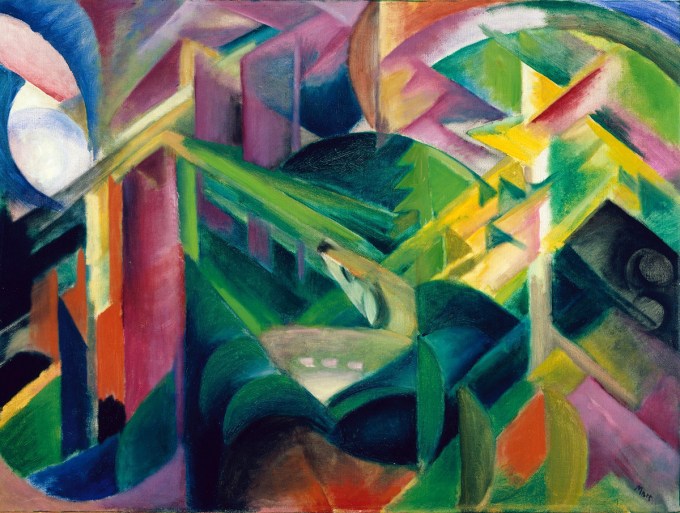
Deer in a Monastery Garden, 1912. (Available as a print and as stationery cards.)
Conscripted into the German Imperial Army at the outbreak of the war, midway through his thirties and just after a period of extraordinary creative fecundity, Marc found this improbable outlet for his artistic vitality during his military service. Unlikely to have had any practical advantage over ordinary camouflage, his colossal canvases are almost certain to have served as a psychological lifeline for the young artist drafted into the machinery of death.
Within a month of painting them, Marc was dead — a shell explosion in the first days of the war’s longest battle sent a metal splinter into his skull, killing him instantly while a German government official was compiling a list of prominent artists to be recalled from military service as national treasures, with Marc’s name on it.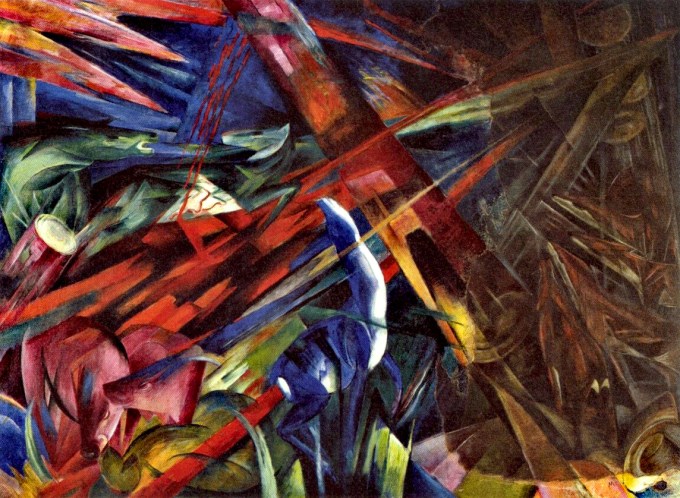
The Fate of the Animals, 1913.
Among the paintings he produced in those two ecstatically prolific years just before he was drafted was The Fate of the Animals — an arresting depiction of the interplay of beauty and brutality, terror and tenderness, in the chaos of life. An inscription appeared under the canvas in Marc’s hand: “And all being is flaming agony.”
Destroyed in a warehouse fire in 1916, The Fate of the Animals was restored by Marc’s close friend Paul Klee, who painstakingly recreated the oil canvas from surviving photographs.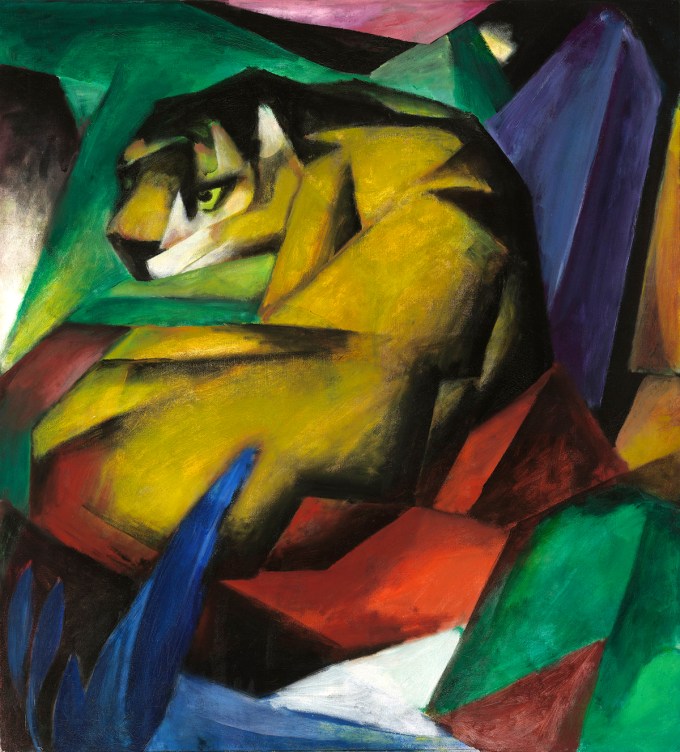
The Tiger, 1912. (Available as a print and as stationery cards.)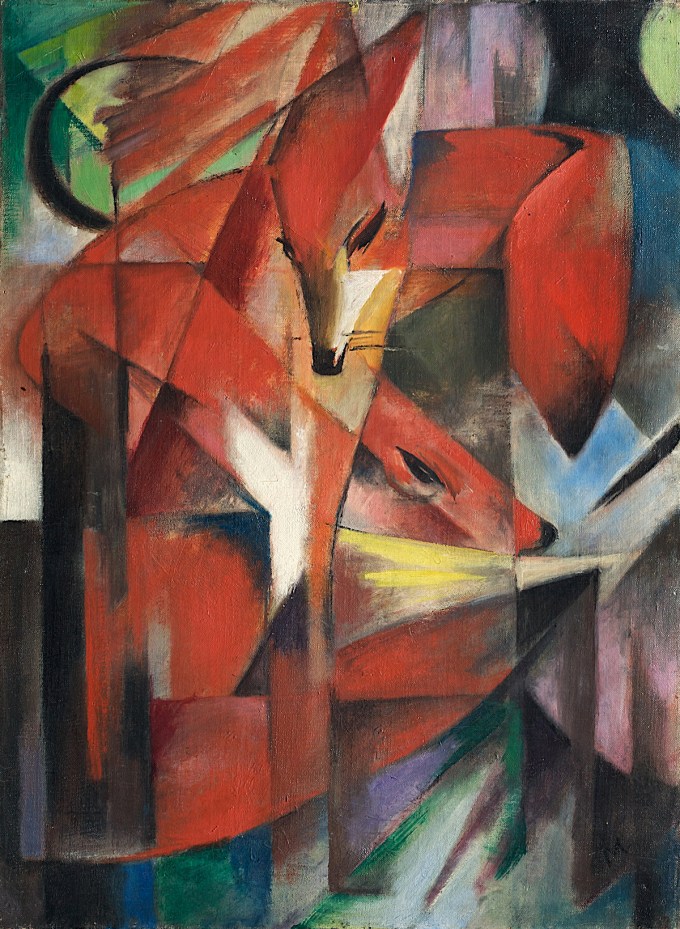
The Foxes, 1913. (Available as a print and as stationery cards.)
Animals, Marc felt, were in many ways superior to humans — more honest in their expression of their inner truths, in more direct contact with the inner truths of nature:
Animals with their virginal sense of life awakened all that was good in me.
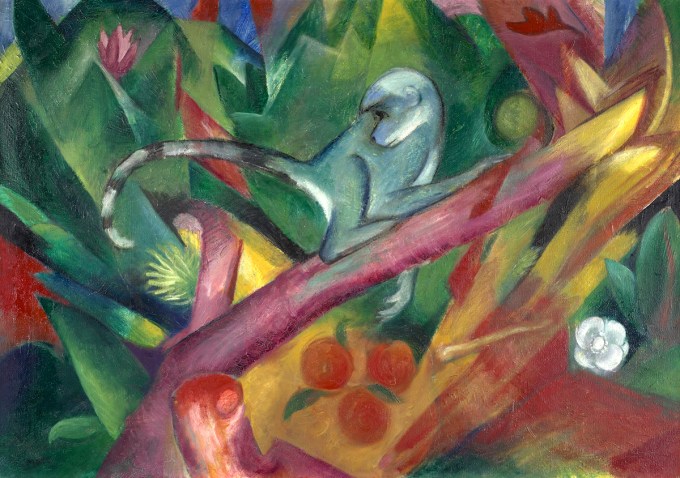
The Little Monkey, 1912. (Available as a print.)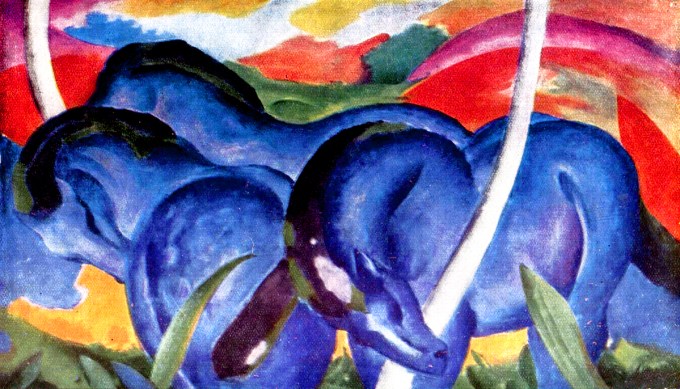
The Large Blue Horses, 1911. (Available as a print.)
In 1910, just before he turned thirty, Marc became a founding member of The Blue Rider — a journal that became an epicenter of the German Expressionist community that included artists like Kandinsky, who had just formalized his thinking on the role of the spiritual in art, and Klee. At the end of that year, Marc began corresponding with the twenty-two-year-old writer and pianist Lisbeth Macke, who was married to one of the Blue Rider artists, about the relationship between color and emotion through the lens of music. Exactly a century after Goethe devised his psychology of color and emotion, Macke and Marc created a kind of synesthetic color wheel of tones, assigning sombre sounds to blue, joyful sounds to yellow, and a brutality of discord to red. Marc went on to ascribe not only emotional but spiritual attributes to the primary colors, writing to Macke:
Further exploring the analogy between music and color, Marc envisioned the equivalent of music without tonality in painting — a sensibility where “a so-called dissonance is simply a consonance apart,” producing a harmonic effect in the overall composition, in color as in sound.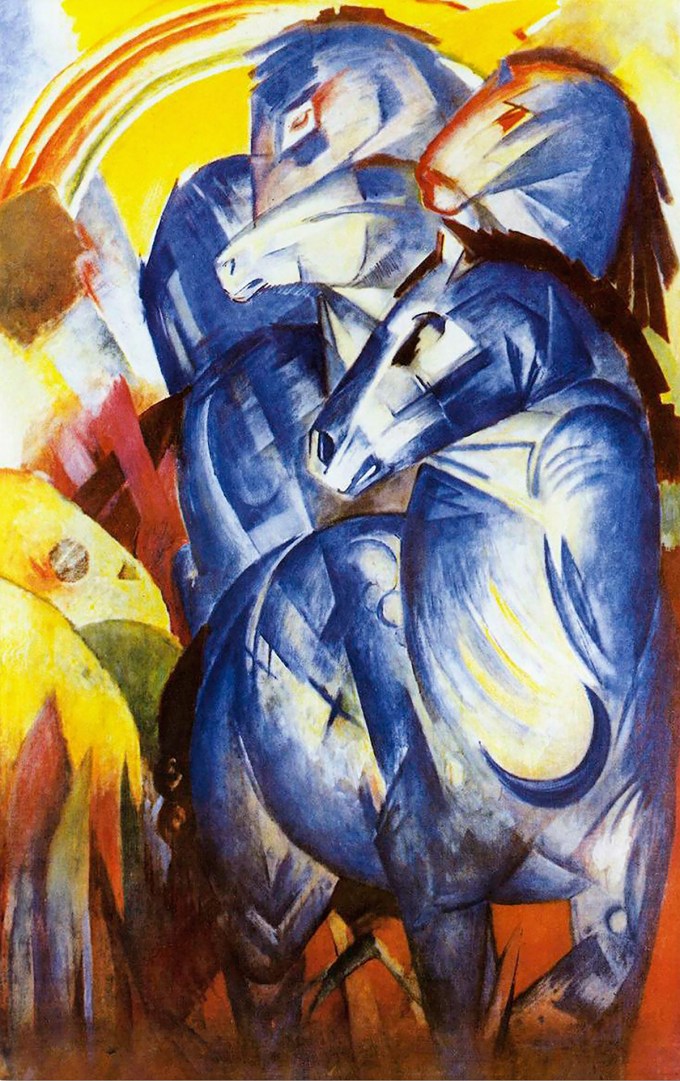
The Tower of Blue Horses, 1913. (Available as a print and as stationery cards.)
Twenty years after Marc’s death on the battlefields of the First World War, when the forces of terror that had fomented it festered into the Second, the Nazis declared his art “degenerate.” Many of his paintings went missing after WWII, last seen in a 1937 Nazi exhibition of “degenerate” art, alongside several of Klee’s paintings. Marc’s art is believed to have been seized by Nazi leaders for their personal theft-collections. An international search for his painting The Tower of Blue Horses has been underway for decades. In 2012, another of his missing paintings of horses was discovered in the Munich home of the son of one of Hitler’s art dealers, along with more than a thousand other artworks the Nazis denounced as “degenerate” in their deadly ideology but welcomed into their private living rooms as works of transcendent beauty and poetic power.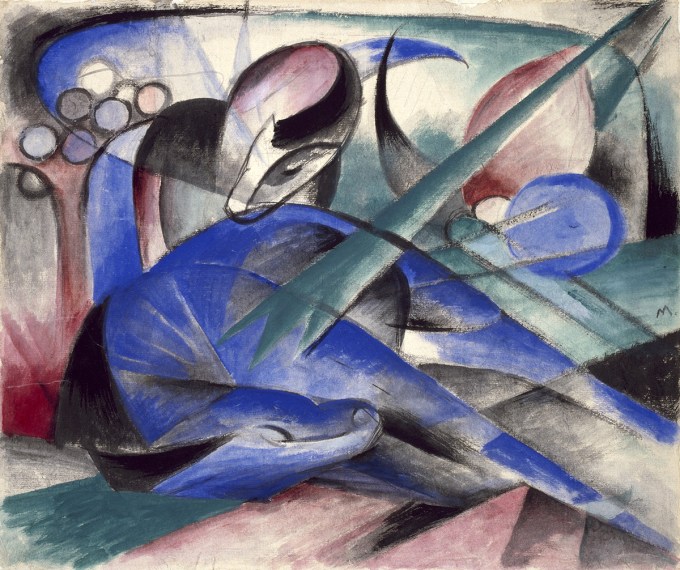
The Dreaming Horses, 1913. (Available as a print and as stationery cards.)
The title poem of Mary Oliver’s Blue Horses embodies the original meaning of empathy, which became popular in the early twentieth century as a term for projecting oneself into a work of art. The poet projects herself into Marc’s painting The Large Blue Horses, running her hand gently one animal’s blue mane, letting another’s nose touch her gently, as she reflects on Marc’s tragic, tremendous life that managed to make such timeless portals into beauty and tenderness in the midst of unspeakable brutality:
Maybe our world will grow kinder eventually.
Maybe the desire to make something beautiful
is the piece of God that is inside each of us.
Free Will Astrology: Week of April 20, 2023
APRIL 18, 2023 AT 7:00 AM BY ROB BREZSNY

Photo: Johannes Plenio
ARIES (March 21-April 19): In English, the phrase “growing pains” refers to stresses that emerge during times of rapid ripening or vigorous development. Although they might feel uncomfortable, they are often signs that the ongoing transformations are invigorating. Any project that doesn’t have at least some growing pains may lack ambition. If we hope to transcend our previous limits and become a more complete expression of our destiny, we must stretch ourselves in ways that inconvenience our old selves. I’m expecting growing pains to be one of your key motifs in the coming weeks, dear Aries. It’s important that you don’t try to repress the discomfort. On the other hand, it’s also crucial not to obsess over them. Keep a clear vision of what these sacrifices will make possible for you.
TAURUS (April 20-May 20): Satirical Taurus author Karl Kraus defined “sentimental irony” as “a dog that bays at the moon while pissing on graves.” Please avoid that decadent emotion in the coming weeks, Taurus. You will also be wise to reject any other useless or counterproductive feelings that rise up within you or hurtle toward you from other people, like “clever cruelty” or “noble self-pity” or “sweet revenge.” In fact, I hope you will be rigorous about what moods you feed and what influences you allow into your sphere. You have a right and a duty to be highly discerning about shaping both your inner and outer environments. Renewal time is imminent.
GEMINI (May 21-June 20): In his poem “October Fullness,” Pablo Neruda says, “Our own wounds heal with weeping, / Our own wounds heal with singing.” I agree. I believe that weeping and singing are two effective ways to recover from emotional pain and distress. The more weeping and singing we do, the better. I especially recommend these therapeutic actions to you now, Gemini. You are in a phase when you can accomplish far more curative and restorative transformations than usual.
CANCER (June 21-July 22): After careful analysis of the astrological omens and a deep-diving meditation, I have concluded that the coming weeks will be a favorable time for you to indulge in an unprecedented binge of convivial revelry and pleasure. My advice is to engage in as much feasting and carousing as you can without completely ignoring your responsibilities. I know this may sound extreme, but I am inviting you to have more fun than you have ever had—even more fun than you imagine you deserve. (You do deserve it, though.) I hope you will break all your previous records for frequency and intensity of laughter.
LEO (July 23-Aug. 22): In 1886, Vincent van Gogh bought a pair of worn-out shoes at a Paris flea market. When he got home, he realized they didn’t fit. Rather than discard them, he made them the centerpiece of one of his paintings. Eventually, they became famous. In 2009, a renowned gallery in Cologne, Germany, built an entire exhibit around the scruffy brown leather shoes. In the course of their celebrated career, six major philosophers and art historians have written about them as if they were potent symbols worthy of profound consideration. I propose that we regard their history as an inspirational metaphor for you in the coming weeks. What humble influence might be ready for evocative consideration and inspirational use?
VIRGO (Aug. 23-Sept. 22): Gliding away from the routine for rendezvous with fun riddles? I approve! Delivering your gorgeous self into the vicinity of a possibly righteous temptation? OK. But go slowly, please. Size up the situation with your gut intuition and long-range vision as well as your itchy fervor. In general, I am pleased with your willingness to slip outside your comfortable enclaves and play freely in the frontier zones. It makes me happy to see you experimenting with AHA and WHAT-IF and MAYBE BABY. I hope you summon the chutzpah to find and reveal veiled parts of your authentic self.
LIBRA (Sept. 23-Oct. 22): The German word Sehnsucht refers to when we have a profound, poignant yearning for something, but we quite don’t know what that something is. I suspect you may soon be in the grip of your personal Sehnsucht. But I also believe you are close to identifying an experience that will quench the seemingly impossible longing. You will either discover a novel source of deep gratification, or you will be able to transform an existing gratification to accommodate your Sehnsucht. Sounds like spectacular fun to me. Clear some space in your schedule to welcome it.
SCORPIO (Oct. 23-Nov. 21): Most of us have at some time in the past been mean and cruel to people we loved. We acted unconsciously or unintentionally, perhaps, but the bottom line is that we caused pain. The coming weeks will be a favorable time for you to atone for any such hurts you have dispensed. I encourage you to be creative as you offer healing and correction for any mistakes you’ve made with important allies. I’m not necessarily suggesting you try to resume your bond with ex-lovers and former friends. The goal is to purge your iffy karma and graduate from the past. Perform whatever magic you have at your disposal to transform suffering with love.
SAGITTARIUS (Nov. 22-Dec. 21): The blues singer-songwriter B. B. King wasn’t always known by that name. He was born Riley B. King. In his twenties, when he began working at a Memphis radio station, he acquired the nickname “Beales Street Blues Boy.” Later, that was shortened to “Blues Boy,” and eventually to “B. B.” In the spirit of B. B. King’s evolution and in accordance with astrological omens, I invite you to identify areas of your life with cumbersome or unnecessary complexities that might benefit from simplification.
CAPRICORN (Dec. 22-Jan. 19): Proboscis monkeys live in Borneo and nowhere else on earth. Their diet consists largely of fruits and leaves from trees that grow only on Borneo and nowhere else. I propose we make them your anti-role model in the coming months. In my astrological opinion, you need to diversify your sources of nourishment, both the literal and metaphorical varieties. You will also be wise to draw influences from a wide variety of humans and experiences. I further suggest that you expand your financial life so you have multiple sources of income and diversified investments.
AQUARIUS (Jan. 20-Feb. 18): It’s challenging to track down the sources of quotes on the Internet. Today, for instance, I found these words attributed to the ancient Greek philosopher Plato: “I enjoy the simple things in life, like recklessly spending my cash and being a disappointment to my family.” That can’t be right. I’m sure Plato didn’t actually say such things. Elsewhere, I came upon a review of George Orwell’s book “Animal Farm” that was supposedly penned by pop star Taylor Swift: “Not a very good instructional guide on farming. Would NOT recommend to first-time farmers.” Again, I’m sure that wasn’t written by Swift. I bring this up, Aquarius, because one of your crucial tasks these days is to be dogged and discerning as you track down the true origins of things. Not just Internet quotes, but everything else, as well—including rumors, theories and evidence. Go to the source, the roots, the foundations.
PISCES (Feb. 19-March 20): In accordance with astrological omens, I’m turning over this horoscope to Piscean teacher Esther Hicks. Here are affirmations she advises you to embody: “I’m going to be happy. I’m going to skip and dance. I will be glad. I will smile a lot. I will be easy. I will count my blessings. I will look for reasons to feel good. I will dig up positive things from the past. I will look for positive things where I am right now. I will look for positive things in the future. It is my natural state to be a happy person. It’s natural for me to love and laugh. I am a happy person!”
Homework: Make a guess about when you will fulfill your number one goal. Newsletter.FreeWillAstrology.com
Tarot Card for April 20: The Priestess
The Priestess
The Priestess (or High Priestess, Papess, Pope Joan, Isis) is numbered two. This is the representation of the Goddess. She is the complementary partner of the Magician, possessing all his skill and ability, but with far more insight and psychism. She is more subtle yet somehow far more noticeable.
She is almost always shown with the Lunar Crescent, conveying her natural affinity with the forces of Nature and natural cycles. The Magician generates his own power, whereas the Priestess draws upon the forces of life itself.
She sits between two pillars with veils suspended between them – it is the Priestess who allows us to penetrate the innermost secrets of life. She is also the bridge between our conscious and Higher selves, by teaching us through our dreams and our subconscious. It is in our subconscious that we hold the keys to the Universe.
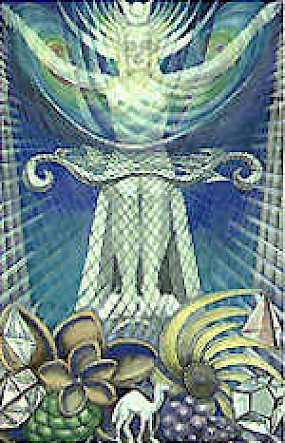
(via angelpaths.com and Alan Blackman)
I REGRET NOTHING Edith Piaf
Peter Ferrera • Apr 12, 2016 Thank you for allowing embellishment of this copyright not my own
TRANSLATION
No-nothing on nothing____________________________Non-rien de rien No-i regret nothing__________________________Non-je ne regrette rien Not the good___________________________________________Ni le bien Done to me_________________________________________Qu’on ma fait Not the bad_____________________________________________Ni le mal To me it’s all equal________________________Tout ca m’est bien egal No-nothing of nothing___________________________Non-rien de rien No-i regret nothing_________________________Non-je ne regrette rien I’ve paid it_____________________________________________J’ai payee Swept it__________________________________________________Balaiee Forgot it_________________________________________________Oubliee I don’t care about the past__________________Je m’en fout du passe With my memories___________________________Avec mes souvenirs I lit the fire_______________________________________J’ai allume le feu My fears, my pleasures_________________Mes chagrins, mes plaisirs I don’t need them anymore_______________J’e n’ai plus besoin d’eux Swept away my loves___________________________Balaie les amours With their tremours___________________________Avec leurs tremolos Sweep away for forever_____________________Balaier pour toujours I restart at zero___________________________________Je repart a zero No, nothing on nothing__________________________Non, rien de rien No, I regret nothing________________________Non, je ne regretted rien Because my life________________________________________Car ma vie Because my joys____________________________________Car mes joies Today_________________________________________________Aujourdh’ui It all starts with with________________________Ca commence avec toi
Everything desires you
| 12/15/2020 (flamingseed.com) |
Everyone has desire, whether it’s for enlightenment, espresso or Facebook likes. Given this, it seems natural that we go toward what we want and avoid what we don’t want. Yet this automatic orientation causes tremendous dissatisfaction and loss of freedom. We become predators going after the next hit, wanting to possess and then rid ourselves of people, experiences and objects in an endless cycle — with only little bursts of satisfaction. To address this addictive circle, some have recommended blocking desire altogether, but that doesn’t work unless we don’t mind losing our juice for life.
| The ancient yogis of Kashmir had a different approach. They didn’t see desire as a problem at all. To them, it was life force — the energy that fills the universe, propels us forward and makes us feel alive. The problem as they saw it wasn’t with desire itself, but with how we make ourselves the source of it and then connect it to specific objects. In his book Desire, author Daniel Odier describes a simple perceptual practice that these yogis used to turn this habit on its head. By doing it regularly, you can train yourself to get tremendous satisfaction from things that you would usually overlook. It works like this: For a few minutes at a time, instead of being the one who does the desiring, imagine instead that everything desires you. |
- Your morning coffee really wants you to taste it.
- The trees are yearning for you to notice the bright green of their leaves.
- The breeze wants you to enjoy it’s soft touch on your cheek.
- Even the ground under your shoes is waiting for you to notice the lively sensation it creates as you walk.
Suddenly, the world lights up — and so do you.When we feel wanted, it’s natural to feel enlivened in response. Our desire takes its rightful place as the fire of presence and enjoyment of what is, instead of the burning need to get what’s not here. Doing this practice, we will derive satisfaction from a whole variety of ordinary things that we normally overlook, since our attention won’t be occupied with waiting for a specific object to please us. Now, there is no need to wait, because everything we encounter has satisfaction built into it. With desire spread out all over the world, its enlivening quality is no longer confined to one object that we may or may not get.
This little game can trick you into mindful presence, even as it helps wear down your usual relationship to desire. It is a simple, playful way to meditate as you go about your daily life. Try it for short little bursts — and rather than thinking of it as a task, let the enjoyment that comes be the fuel that naturally makes you want to do it more and more.

| Jane Brunette | originally published on the Huffington Post |
Be in love or at least act like it
Photographer admits prize-winning image was AI-generated
German artist Boris Eldagsen says entry to Sony world photography awards was designed to provoke debate
@JamieGriersonMon 17 Apr 2023 12.49 EDT (TheGuardian.com)
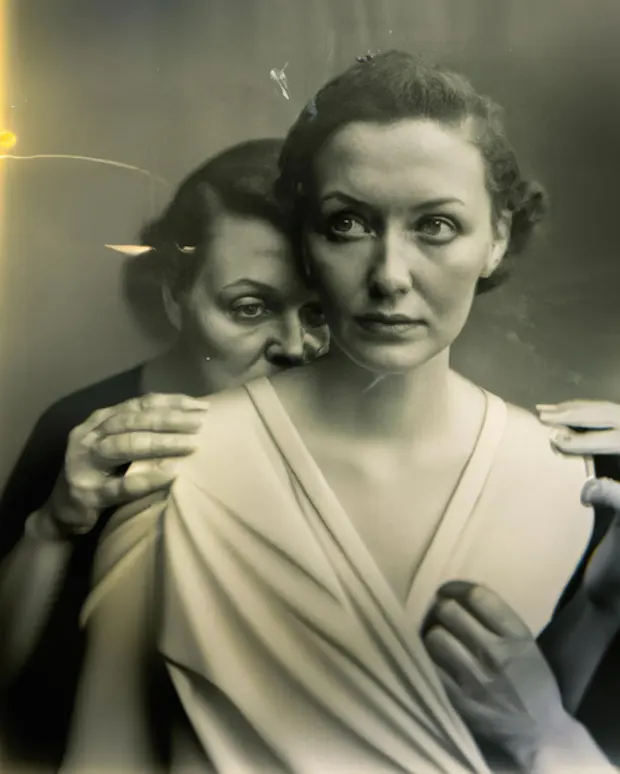
Boris Eldagsen’s award-winning picture.
A photographer is refusing a prestigious award after admitting to being a “cheeky monkey” and generating the prize-winning image using artificial intelligence.
The German artist Boris Eldagsen revealed on his website that he was not accepting the prize for the creative open category, which he won at the Sony world photography awards.
The winning photograph depicted two women from different generations in black and white.
In a statement on his website, Eldagsen, who studied photography and visual arts at the Art Academy of Mainz, conceptual art and intermedia at the Academy of Fine Arts in Prague, and fine art at the Sarojini Naidu School of Arts and Communication in Hyderabad, said he “applied as a cheeky monkey” to find out if competitions would be prepared for AI images to enter. “They are not,” he added.
“We, the photo world, need an open discussion,” said Eldagsen. “A discussion about what we want to consider photography and what not. Is the umbrella of photography large enough to invite AI images to enter – or would this be a mistake?
“With my refusal of the award I hope to speed up this debate.”
He said this was a “historic moment” as it was the first time an AI image had won a prestigious international photography competition, adding: “How many of you knew or suspected that it was AI generated? Something about this doesn’t feel right, does it?
“AI images and photography should not compete with each other in an award like this. They are different entities. AI is not photography. Therefore I will not accept the award.”
Eldagsen suggested donating the prize to a photo festival hosted in Odesa, Ukraine.
The stunt comes at a time of intense debate over the use and implications of AI with some issuing apocalyptic warnings that the technology is on the brink of irreversibly damaging the human experience.
Recent advancements in the use of AI in chatbots, driverless cars, song-writing software and the development of pharmaceuticals has spurred the discussion. Google’s chief executive, Sundar Pichai, said concerns about AI had kept him awake at night and warned that the technology can be “very harmful” if incorrectly deployed.
A spokesperson for the World Photography Organisation said Eldagsen had confirmed the “co-creation” of the image using AI to them before he was announced as the winner.
“In our correspondence, he explained how following ‘two decades of photography, my artistic focus has shifted more to exploring creative possibilities of AI generators’ and further emphasising the image heavily relies on his ‘wealth of photographic knowledge’. As per the rules of the competition, the photographers provide the warranties of their entry.
“The creative category of the open competition welcomes various experimental approaches to image making from cyanotypes and rayographs to cutting-edge digital practices. As such, following our correspondence with Boris and the warranties he provided, we felt that his entry fulfilled the criteria for this category, and we were supportive of his participation.
“Additionally, we were looking forward to engaging in a more in-depth discussion on this topic and welcomed Boris’ wish for dialogue by preparing questions for a dedicated Q&A with him for our website.
“As he has now decided to decline his award we have suspended our activities with him and in keeping with his wishes have removed him from the competition. Given his actions and subsequent statement noting his deliberate attempts at misleading us, and therefore invalidating the warranties he provided, we no longer feel we are able to engage in a meaningful and constructive dialogue with him.
“We recognise the importance of this subject and its impact on image-making today. We look forward to further exploring this topic via our various channels and programmes and welcome the conversation around it. While elements of AI practices are relevant in artistic contexts of image-making, the awards always have been and will continue to be a platform for championing the excellence and skill of photographers and artists working in the medium.”
Maurice Freehill on who is more foolish


When the Fascists Arrive Holding Hands With the Oligarchs

Former U.S. President Donald Trump is greeted by Florida Governor Ron DeSantis at Southwest Florida International Airport October 16, 2020, in Fort Myers, Florida.
(Photo by Brendan Smialowski/AFP via Getty Images)
Once the Nazis took power in Germany they banned books, outlawed drag shows, and homosexuality, changed school curricula to remove mention of their atrocities in WWI, and rewrote election laws so they’d never again lose an election. Sound familiar?
Apr 18, 2023 Common Dreams
My wife Louise and I just finished watching the Netflix short series Transatlantic, and it prompted us to consider what happens when a rightwing social movement takes over a country, as we’re currently experiencing in the US with more than a third of our states openly embracing fascism.
Transatlantic is a gripping drama about a group of Jewish refugees — including Hannah Arendt and Marc Chagall — who are trapped in Marseilles trying to flee the Nazis as they sweep across France in late 1940. Complicating their flight, the American envoy and the head of the local French police are both in agreement with the Nazis that the Jewish refugees are “degenerates” and “animals” who should appropriately end up in the Nazi camps.
The parallels to today’s America are startling. The Republican rhetoric about the queer and Black communities — and, often, about Jews (usually coded as “George Soros”) — is startlingly similar to that of the Nazis and the Vichy French about Jews. Donald Trump, for example, is openly calling Alvin Bragg an “animal.”
But how do things get this far? How and why did it happen in Germany, and how and why is it happening here today?
After Hitler’s failed beer hall putsch, he was legally banned from public speaking and mass rallies. In 1930, however, German media mogul Alfred Hugenberg — a rightwinger who owned two of the largest national newspapers and had considerable influence over radio — joined forces with Hitler and relentlessly promoted him, much like the Murdoch media empire and billionaire-owned rightwing radio helped bring Trump to power in 2016.
The billionaire-funded movement to pass anti-voting, anti-trans, anti-Black history, anti-gay marriage, anti-abortion, and anti-public school legislation and policy is roaring down the track, as is the billionaire-owned media campaign to promote fascism.
While politically independent, German President Paul von Hindenburg’s sympathies lay with the conservatives and monarchists. Like Reagan’s GOP, Hindenburg’s coalition favored Germany’s morbidly rich (Hindenburg’s father was an aristocrat) and industry, but was always just short of achieving total power over the German state.
Hitler, on the other hand, didn’t seem to care much at first about Germany’s aristocrats; he led a populist evangelical movement dedicated to “purifying” Germany of the “filth” of Jews, homosexuals, Gypsies, and socialists. While Hindenburg and the German conservative movement looked down on Hitler and his followers as ignoble rabble rousers, they were more than enthusiastic about getting their votes.
As German industrialist Fritz Thyssen writes in his apologetic book I Paid Hitler, he pressured German President von Hindenburg to appoint Hitler as chancellor, and then lobbied the Association of German Industrialists, that country’s and era’s version of the US Chamber of Commerce, to donate 3 million Reichsmarks to the Nazi Party for the 1932 election.
While Thyssen did it primarily because he wanted tax cuts for morbidly rich people like himself and government contracts for his company, his efforts combined with Hugenberg’s media empire brought Hitler and his bigots to power.
Hitler’s sales pitch to the German people was grounded in the idea that average German working people were victims and Hitler was their champion.
He claimed Jews, homosexuals, and socialists had “stabbed Germany in the back” by participating in negotiations for the Treaty of Versailles that imposed punitive conditions on the country, producing widespread poverty and an economic crisis.
If the German people were victims, Hitler told them, the villains were German minorities, promoting degeneracy like jazz and swing music, tolerance of homosexuality and transgender people, and the “international Jewish conspiracy.”
Once the Nazis took power they banned books, outlawed drag shows, and homosexuality, changed school curricula to remove mention of their atrocities in WWI, and rewrote election laws so they’d never again lose an election.
The transformation of Germany was swift. Former German Nazis I knew well in the 1980s when I lived in that country often commented to me on how “a party of bullies” threatened violence and intimidated people to the point that the average person gave up resisting or even joined along for fear of ending up a victim themselves.
Thus, a minority party that never took more than a third of the national vote before seizing power began a process that inevitably led to the death of 73 million human beings.
Once you build your party’s political base on hate and fear it’s pretty much impossible to one day say, “You know, those Jews and Blacks and queer people we were vilifying aren’t really such bad people after all.”
This is all echoed in the crisis today facing both the GOP and the Democratic Party’s opposition to it.
As former Labor Secretary Robert Reich recently wrote:
“My friends, the Republican Party is no longer committed to democracy. It is rapidly becoming the American fascist party.”
Rightwing American billionaires, parroting Fritz Thyssen, have spent the past decade pouring money into Republican-aligned groups working to change school textbooks, ban library books, outlaw healthcare for queer people, criminalize trans participation in civil society, and make it harder for college students and Black people to vote.
Like Thyssen, most probably aren’t all that bigoted themselves: their primary motivation is lowering their own taxes and increasing their companies’ government purchases and subsidies.
But to get there they must have Republicans in power, and the GOP’s base — while they don’t much care about billionaire’s taxes or corporate deregulation — are fervent bigots.
Democrats, meanwhile, face the same crisis the Social Democrats did in Germany in the 1930s.
They believe in the free speech and free flow of political ideas associated with democracy, so are wary of using government power to squelch the rise of the current fascist movement within the GOP. Yet they see the direction things are moving and are frequently — but impotently — calling it out.
Holding bullies to account for their crimes and their intimidation tactics is really and truly difficult, as the German Social Democrats discovered in 1933 and Manhattan DA Alvin Bragg is realizing today. Typically the only thing that stops bullies is to punch them in the face, which can reduce one to their level.
There are signs that a few of the billionaires funding the modern neofascist wing of the GOP’s rise to power are having second thoughts, much as Fritz Thyssen ultimately did in Germany.
Billionaire DeSantis backer Thomas Peterffy (the second richest man in Florida at $26 billion) told The Financial Times last week:
“I have put myself on hold. Because of (DeSantis’) stance on abortion and book banning … myself, and a bunch of friends, are holding our powder dry.”
So far, Peterffy is the outlier. The billionaire-funded movement to pass anti-voting, anti-trans, anti-Black history, anti-gay marriage, anti-abortion, and anti-public school legislation and policy is roaring down the track, as is the billionaire-owned media campaign to promote fascism.
And since five corrupt Republicans on the Supreme Court legalized political bribery with Citizens United, the deck remains stacked in their favor.
There is no Democratic equivalent to Fox “News,” 1500 rightwing radio stations, hundreds of subsidized rightwing podcasts and media sites, The Wall Street Journal, ALEC, Heritage Foundation, Musk’s rightwing reinvention of Twitter, Facebook’s GOP-leaning algorithms, or the hundreds of other state and national policy operations and think tanks.
The American people, however, seem to be waking up even in the face of this onslaught of billionaire-owned and -funded media and political infrastructure.
The velocity with which Republican governors are leaving ERIC so they can quietly purge people from their voting rolls (now that five corrupt Republicans on the Supreme Court legalized that in 2018) and passing over 400 new make-it-harder-to-vote laws shows how concerned they are about this trend.
So, to the question about what’s really behind the war Republicans are waging against American democracy, the answer is simple: rightwing billionaires who want more, more, more money and are willing to make common cause with bigots, fascists, and wannabee killers to get it.
Our work is licensed under Creative Commons (CC BY-NC-ND 3.0). Feel free to republish and share widely.
Thom Hartmann is a talk-show host and the author of “The Hidden History of Monopolies: How Big Business Destroyed the American Dream” (2020); “The Hidden History of the Supreme Court and the Betrayal of America” (2019); and more than 25 other books in print.