
17,111 views May 12, 2020Audio recording of The Thunder, Perfect Mind (without music) from The Nag Hammadi Library. “The Thunder, Perfect Mind is an exhortatory poem discovered among the Gnostic manuscripts in the Nag Hammadi library in 1945. The Thunder, Perfect Mind (the title may alternately be translated The Thunder, Perfect Intellect) takes the form of an extended, riddling monologue, in which an immanent divine saviour speaks a series of paradoxical statements alternating between first-person assertions of identity and direct address to the audience. These paradoxical utterances echo Greek identity riddles, a common poetic form in the Mediterranean. Moreover, it is a non-epistolic, non-narrative unmediated divine speech.” (SOURCE: Wikipedia) The translation of this poem is by George W. MacRae Voiceover by Jennifer Sodini: http://www.jennifersodini.com + http://www.amentioracle.com TRANSCRIPTION SOURCE: http://www.gnosis.org/naghamm/thunder…
All posts by Mike Zonta
Letter to the Editor: Arizona is Cool
Word-Built World: Nocebo
From Wikipedia, the free encyclopedia
For the film, see Nocebo (film). For the album, see Nocebo (album).
A nocebo effect is said to occur when negative expectations of the patient regarding a treatment cause the treatment to have a more negative effect than it otherwise would have.[1][2] For example, when a patient anticipates a side effect of a medication, they can experience that effect even if the “medication” is actually an inert substance.[1] The complementary concept, the placebo effect, is said to occur when positive expectations improve an outcome. The effect is also said to occur in someone who falls ill owing to the erroneous belief that they were exposed to a toxin, or to a physical phenomenon they believe is harmful, such as EM radiation.[3]
Both placebo and nocebo effects are presumably psychogenic, but they can induce measurable changes in the body.[1] One article that reviewed 31 studies on nocebo effects reported a wide range of symptoms that could manifest as nocebo effects, including nausea, stomach pains, itching, bloating, depression, sleep problems, loss of appetite, sexual dysfunction, and severe hypotension.[1]
Etymology and usage
The term nocebo (Latin nocēbō, ‘I shall harm’, from noceō, ‘I harm’)[4] was coined by Walter Kennedy in 1961 to denote the counterpart to the use of placebo (Latin placēbō, ‘I shall please’, from placeō, ‘I please’)[5] a substance that may produce a beneficial, healthful, pleasant, or desirable effect). Kennedy emphasized that his use of the term nocebo refers strictly to a subject-centered response, a quality inherent in the patient rather than in the remedy”.[6] That is, Kennedy rejected the use of the term for pharmacologically induced negative side effects such as the ringing in the ears caused by quinine.[6] That is not to say that the patient’s psychologically induced response may not include physiological effects. For example, an expectation of pain may induce anxiety, which in turn causes the release of cholecystokinin, which facilitates pain transmission.[7]
Response
In the narrowest sense, a nocebo response occurs when a drug-trial subject’s symptoms are worsened by the administration of an inert, sham,[8] or dummy (simulator) treatment, called a placebo. According to current pharmacological knowledge and the current understanding of cause and effect, a placebo contains no chemical (or any other agent) that could possibly cause any of the observed worsening in the subject’s symptoms. Thus, any change for the worse must be due to some subjective factor. Adverse expectations can also cause the analgesic effects of anesthetic medications to disappear.[9]
The worsening of the subject’s symptoms or reduction of beneficial effects is a direct consequence of their exposure to the placebo, but those symptoms have not been chemically generated by the placebo. Because this generation of symptoms entails a complex of “subject-internal” activities, in the strictest sense, we can never speak in terms of simulator-centered “nocebo effects”, but only in terms of subject-centered “nocebo responses”. Although some observers attribute nocebo responses (or placebo responses) to a subject’s gullibility, there is no evidence that an individual who manifests a nocebo/placebo response to one treatment will manifest a nocebo/placebo response to any other treatment; i.e., there is no fixed nocebo/placebo-responding trait or propensity.[10]
McGlashan, Evans & Orne found no evidence in 1969 of what they termed a placebo personality.[11] Also, in a carefully designed study, Lasagna, Mosteller, von Felsinger and Beecher in 1954,[12] found that there was no way that any observer could determine, by testing or by interview, which subject would manifest a placebo reaction and which would not. Experiments have shown that no relationship exists between an individual’s measured hypnotic susceptibility and their manifestation of nocebo or placebo responses.[13][14][15]
Effects
Side effects of drugs
It has been shown that, due to the nocebo effect, warning patients about side effects of drugs can contribute to the causation of such effects, whether the drug is real or not.[16][17] This effect has been observed in clinical trials: according to a 2013 review, the dropout rate among placebo-treated patients in a meta-analysis of 41 clinical trials of Parkinson’s disease treatments was 8.8%.[18] A 2013 review found that nearly 1 out of 20 patients receiving a placebo in clinical trials for depression dropped out due to adverse events, which were believed to have been caused by the nocebo effect.[19] A 2018 review found that half of patients taking placebos in clinical trials report intervention-related adverse events.[20]
In January 2022, a systematic review and meta-analysis concluded that nocebo responses accounted for 72% of adverse effects after the first COVID-19 vaccine dose and 52% after the second dose.[21][22]
Electromagnetic hypersensitivity
Evidence suggests that the symptoms of electromagnetic hypersensitivity are caused by the nocebo effect.[23][24]
Pain
Verbal suggestion can cause hyperalgesia (increased sensitivity to pain) and allodynia (perception of a tactile stimulus as painful) as a result of the nocebo effect.[25] Nocebo hyperalgesia is believed to involve the activation of cholecystokinin receptors.[26]
Ambiguity of medical usage
Stewart-Williams and Podd argue that using the contrasting terms “placebo” and “nocebo” to label inert agents that produce pleasant, health-improving, or desirable outcomes versus unpleasant, health-diminishing, or undesirable outcomes (respectively), is extremely counterproductive.[27] For example, precisely the same inert agents can produce analgesia and hyperalgesia, the first of which, from this definition, would be a placebo, and the second a nocebo.[28]
A second problem is that the same effect, such as immunosuppression, may be desirable for a subject with an autoimmune disorder, but be undesirable for most other subjects. Thus, in the first case, the effect would be a placebo, and in the second, a nocebo.[27] A third problem is that the prescriber does not know whether the relevant subjects consider the effects that they experience to be desirable or undesirable until some time after the drugs have been administered.[27] A fourth problem is that the same phenomena are being generated in all the subjects, and these are being generated by the same drug, which is acting in all of the subjects through the same mechanism. Yet because the phenomena in question have been subjectively considered to be desirable to one group but not the other, the phenomena are now being labelled in two mutually exclusive ways (i.e., placebo and nocebo); and this is giving the false impression that the drug in question has produced two different phenomena.[27]
Ambiguity of anthropological usage
Some people maintain that belief kills (e.g., voodoo death: Cannon in 1942 describes a number of instances from a variety of different cultures) and belief heals (e.g., faith healing).[29] A self-willed death (due to voodoo hex, evil eye, pointing the bone procedure,[30][31] etc.) is an extreme form of a culture-specific syndrome or mass psychogenic illness that produces a particular form of psychosomatic or psychophysiological disorder which results in a psychogenic death. Rubel in 1964 spoke of “culture bound” syndromes, which were those “from which members of a particular group claim to suffer and for which their culture provides an etiology, diagnosis, preventive measures, and regimens of healing”.[32]
Certain anthropologists, such as Robert Hahn and Arthur Kleinman, have extended the placebo/nocebo distinction into this realm in order to allow a distinction to be made between rituals, like faith healing, that are performed in order to heal, cure, or bring benefit (placebo rituals) and others, like “pointing the bone”, that are performed in order to kill, injure or bring harm (nocebo rituals). As the meaning of the two inter-related and opposing terms has extended, we now find anthropologists speaking, in various contexts, of nocebo or placebo (harmful or helpful) rituals:[33]
- that might entail nocebo or placebo (unpleasant or pleasant) procedures;
- about which subjects might have nocebo or placebo (harmful or beneficial) beliefs;
- that are delivered by operators that might have nocebo or placebo (pathogenic, disease-generating or salutogenic, health-promoting) expectations;
- that are delivered to subjects that might have nocebo or placebo (negative, fearful, despairing or positive, hopeful, confident) expectations about the ritual;
- which are delivered by operators who might have nocebo or placebo (malevolent or benevolent) intentions, in the hope that the rituals will generate nocebo or placebo (lethal, injurious, harmful or restorative, curative, healthy) outcomes; and, that all of this depends upon the operator’s overall beliefs in the harmful nature of the nocebo ritual or the beneficial nature of the placebo ritual.
Yet it may become even more terminologically complex, for as Hahn and Kleinman indicate, there can also be cases where there are paradoxical nocebo outcomes from placebo rituals, as well as paradoxical placebo outcomes from nocebo rituals (see also unintended consequences).[33] Writing from his extensive experience of treating cancer (including more than 1,000 melanoma cases) at Sydney Hospital, Milton in 1973 warned of the impact of the delivery of a prognosis, and how many of his patients, upon receiving their prognosis, simply turned their face to the wall and died a premature death: “there is a small group of patients in whom the realization of impending death is a blow so terrible that they are quite unable to adjust to it, and they die rapidly before the malignancy seems to have developed enough to cause death. This problem of self-willed death is in some ways analogous to the death produced in primitive peoples by witchcraft (‘pointing the bone’)”.[34]
Ethics
A number of researchers have pointed out that the harm caused by communicating with patients about potential treatment adverse events raises an ethical issue. In order to respect autonomy, one is required to inform a patient about what harms a treatment is likely to cause. Yet the way in which potential harms are communicated could cause additional harm, which may violate the ethical principle of non-maleficence.[35] It may be possible that nocebo effects can be reduced while respecting autonomy using different models of informed consent, including the use of a framing effect[36] and the authorized concealment. In fact, it has been argued that forcing patients to learn about all potential adverse events against their will could violate autonomy.[37]
More at: https://en.wikipedia.org/wiki/Nocebo
Dostoevsky on not lying to yourself
Today (November 11), Dostoevsky turns 201 years old & he has not aged one bit…
In honor of his birthday, these timeless words from his masterful final novel, The Brothers Karamazov:
“Above all, don’t lie to yourself. The man who lies to himself and listens to his own lie comes to a point that he cannot distinguish the truth within him, or around him and so loses all respect for himself and for others. And having no respect he ceases to love.”
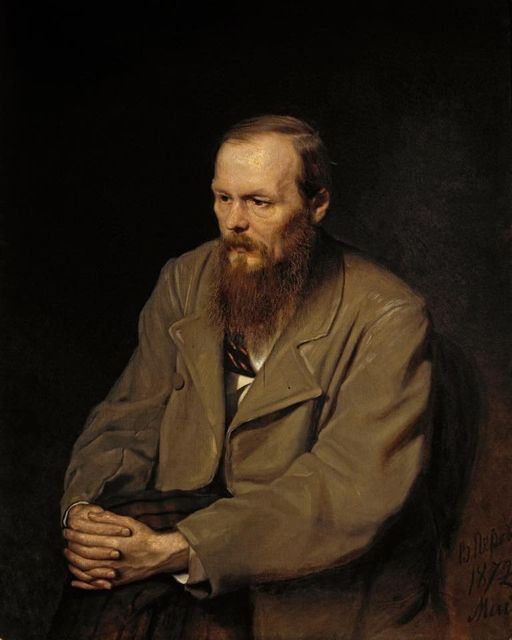
Fyodor Mikhailovich Dostoevsky, sometimes transliterated as Dostoyevsky (November 11, 1821 – February 9, 1881), was a Russian novelist, short story writer, essayist and journalist. Wikipedia
Buckminster Fuller: The Man Who Saw The Future
Joe Scott Apr 25, 2019 Buckminster Fuller wasn’t the massive success that he wanted to be, but he became a defining influence on the engineering, architecture, and design that shapes our world today.
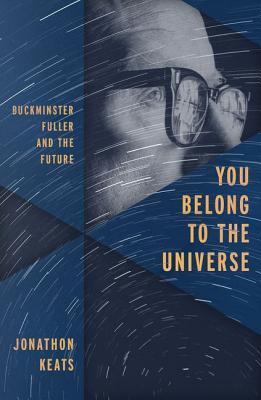
You Belong to the Universe: Buckminster Fuller and the Future
Jonathan Keats
A compelling call to apply Buckminster Fuller’s creative problem-solving to present-day problems
A self-professed comprehensive anticipatory design scientist, the inventor Buckminster Fuller (1895-1983) was undoubtedly a visionary. Fuller’s creations often bordered on the realm of science fiction, ranging from the freestanding geodesic dome to the three-wheel Dymaxion car to a bathroom requiring neither plumbing nor sewage. Yet in spite of his brilliant mind and life-long devotion to serving mankind, Fuller’s expansive ideas were often dismissed, and have faded from public memory since his death.
You Belong to the Universe documents Fuller’s six-decade quest to make the world work for one hundred percent of humanity. Critic and experimental philosopher Jonathon Keats sets out to revive Fuller’s unconventional practice of comprehensive anticipatory design, placing Fuller’s philosophy in a modern context and dispelling much of the mythology surrounding Fuller’s life. Keats argues that Fuller’s life and ideas, namely doing the most with the least, are now more relevant than ever as humanity struggles to meet the demands of an exploding world population with finite resources. Delving deeply into Buckminster Fuller’s colorful world, Keats applies Fuller’s most important concepts to present-day issues, arguing that his ideas are now not only feasible, but necessary.
From transportation to climate change, urban design to education, You Belong to the Universe demonstrates that Fuller’s holistic problem-solving techniques may be the only means of addressing some of the world’s most pressing issues. Keats’s timely book challenges each of us to become comprehensive anticipatory design scientists, providing the necessary tools for continuing Fuller’s legacy of improving the world.
(Goodreads.com)
Polish cow swims to freedom

Bhagavad Gita on the dweller in these bodies

Rupert Spira on the depths of the ocean
It is always still in the depths of the ocean; likewise, the heart of awareness is always silent and at peace.
–Rupert Spira
Rupert Spira (born March 13, 1960) is an English spiritual teacher, philosopher and author of the Direct Path based in Oxford, UK. Wikipedia
NASA’s new mega moon rocket, Orion crew capsule
MARCIA DUNN, AP Aerospace Writer
Nov. 15, 2022 (SFGate.com)


CAPE CANAVERAL, Fla. (AP) — NASA is kicking off its new moon program with a test flight of a brand-new rocket and capsule.
Liftoff was slated for early Wednesday morning from Kennedy Space Center in Florida. The test flight aims to send an empty crew capsule into a far-flung lunar orbit, 50 years after NASA’s famed Apollo moonshots.
The project is years late and billions over budget. The price tag for the test flight: more than $4 billion.
A rundown of the new rocket and capsule, part of NASA’s Artemis program, named after Apollo’s mythological twin sister:
ROCKET POWER
At 322 feet (98 meters), the new rocket is shorter and slimmer than the Saturn V rockets that hurled 24 Apollo astronauts to the moon a half-century ago. But it’s mightier, packing 8.8 million pounds (4 million kilograms) of thrust. It’s called the Space Launch System rocket, SLS for short, although a less clunky name is under discussion. Unlike the streamlined Saturn V, the new rocket has a pair of side boosters refashioned from NASA’s space shuttles. The boosters peel away after two minutes, just like the shuttle boosters. The core stage keeps firing before crashing into the Pacific. Less than two hours after liftoff, an upper stage sends the capsule, Orion, racing toward the moon.
MOONSHIP
NASA’s high-tech, automated Orion capsule is named after the constellation, among the night sky’s brightest. At 11 feet (3 meters) tall, it’s roomier than Apollo’s capsule, seating four astronauts instead of three. For the test flight, a full-size dummy in an orange flight suit occupies the commander’s seat, rigged with vibration and acceleration sensors. Two other mannequins made of material simulating human tissue — heads and female torsos, but no limbs — measure cosmic radiation, one of the biggest risks of spaceflight. Unlike the rocket, Orion has launched before, making two laps around Earth in 2014. For the test flight, the European Space Agency’s service module was attached for propulsion and solar power via four wings.
FLIGHT PLAN
Orion’s flight is set to last 25 days from its Florida liftoff to Pacific splashdown, about the same as astronaut trips. It takes nearly a week to reach the moon. After whipping closely around the moon, the capsule enters a distant orbit with a far point of close to 40,000 miles (64,000 kilometers). That would put Orion about 270, 000 miles (435,000) from Earth, farther than Apollo. The big test comes at mission’s end, as Orion hits the atmosphere at 25,000 mph (40,000 kph) on its way to a splashdown in the Pacific. The heat shield uses the same material as the Apollo capsules to withstand reentry temperatures of 5,000 degrees Fahrenheit (2,750 degrees Celsius). But the advanced design anticipates the faster, hotter returns by future Mars crews.
HITCHHIKERS
Besides three test dummies, the test flight includes a slew of stowaways for deep space research. Ten shoebox-size satellites pop off once Orion is hurtling toward the moon. NASA expects some to fail, given the low-cost, high-risk nature of these mini satellites. In a back-to-the-future salute, Orion carries a few slivers of moon rocks collected by Apollo 11’s Neil Armstrong and Buzz Aldrin in 1969, and a bolt from one of their rocket engines, salvaged from the sea a decade ago.
APOLLO VS. ARTEMIS
More than 50 years later, Apollo still stands as NASA’s greatest achievement. Using 1960s technology, NASA took just eight years to go from launching its first astronaut, Alan Shepard, and landing Armstrong and Aldrin on the moon. By contrast, Artemis already has dragged on for more than a decade, despite building on the short-lived moon exploration program Constellation. Twelve Apollo astronauts walked on the moon from 1969 through 1972, staying no longer than three days at a time. For Artemis, NASA will draw from a diverse astronaut pool and is extending the time crews spend on the moon to at least a week. The goal is to create a long-term lunar presence that will grease the skids for sending people to Mars.
WHAT’S NEXT
There’s a lot more to be done before astronauts step on the moon again. A second test flight will send four astronauts around the moon and back, perhaps as early as 2024. A year or so later, NASA aims to send another four up, with two of them touching down at the lunar south pole. Orion doesn’t come with its own lunar lander like the Apollo spacecraft did, so NASA has hired Elon Musk’s SpaceX to provide its Starship spacecraft for the first Artemis moon landing. Two other private companies are developing moonwalking suits. The sci-fi-looking Starship would link up with Orion at the moon and take a pair of astronauts to the surface and back to the capsule for the ride home. So far, Starship has only soared six miles (10 kilometers).
___
The Associated Press Health and Science Department receives support from the Howard Hughes Medical Institute’s Department of Science Education. The AP is solely responsible for all content.