The light was always there — our star is a hundred million years older than our planet — but it was learning to see it, to harness it, to transform it, that made this rocky planet a living world: photoreceptors converting sunlight to sugar to green the Earth, eyes co-evolving with consciousness to give us books and beauty and blue.
On the smallest daily scale of our tiny transient lives, our experience of life still hinges on how we see the light of the world and how we refract it through the lens of the mind.
The light of sunrise streaming through the rustling leaves of the maple to cast a dancing flame on your kitchen floor.
The glowing blade of grass backlit by the late-morning light.
The light of sunset on the smiling face of the person you don’t yet know, yet know, will become your lover.
The ten thousand flickering lights you see when you are landing home, each a human life both unaware of and indivisible from all the others.
Midway through the lyrical record of her pioneering expedition to Labrador, Mina Hubbard (April 15, 1870–May 4, 1956) breaks into what can best be described as part prose poem reverencing the light, part prayer for a way of seeing that never loses sight of it:
Sometimes towards evening in dreary November, when the clouds hang heavy and low, covering all the sky, and the hills are solemn and sombre, and the wind is cold, and the lake black and sullen, a break in the dark veil lets through a splash of glorious sunshine. It is so very beautiful as it falls into the gloom that your breath draws in quick and you watch it with a thrill. Then you see that it moves towards you. All at once you are in the midst of it, it is falling round you and seems to have paused as if it meant to stay with you and go no farther. While you revel in this wonderful light that has stopped to enfold you, suddenly it is not falling round you any more, and you see it moving steadily on again, out over the marsh with its bordering evergreens, touching with beauty every place it falls upon, forward up the valley, unwavering, without pause, till you are holding your breath as it begins to climb the hills away yonder. It is gone. The smoke blue clouds hang lower and heavier, the hills stand more grimly solemn and sombre, the wind is cold, the lake darker and more sullen, and the beauty has gone out of the marsh. Then — then it is night. But you do not forget the Light. You know it still shines — somewhere.
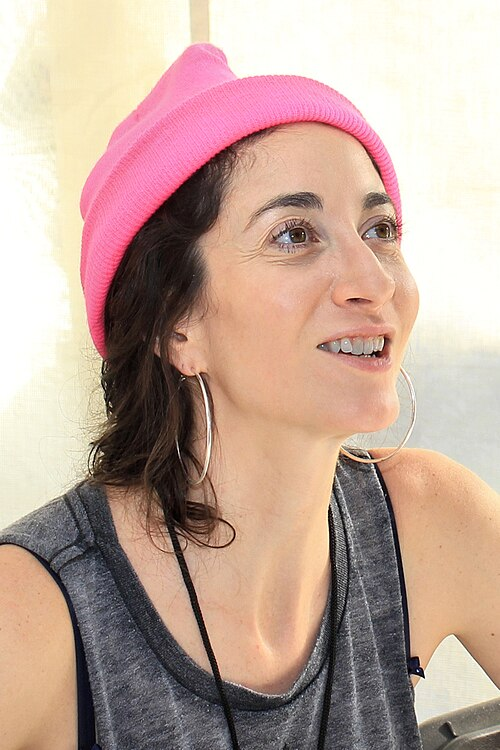
“I shiver, thinking how easy it is to be totally wrong about people-to see one tiny part of them and confuse it for the whole, to see the cause and think it’s the effect or vice versa”
~ Lauren Oliver
Lauren Oliver (born 1982) is an American author of numerous young adult novels including Panic; the Delirium trilogy: Delirium, Pandemonium, and Requiem; and Before I Fall, which became a major motion picture in 2017. Panic was also turned into a series by Amazon studios. Wikipedia
In Part 1 of the “Evolution of Sex,” I described a few of the major problems facing boys and men said that what boys and men need more than anything else is to reconnect with the community of life on planet Earth. In Part 2, I said that the ancient philosophical dictum to “know thyself” must start with understanding the biological basis of maleness and the importance of evolutionary science. In Part 3, we delved more deeply into the importance of our sex chromosomes and how they help us understand and who we are and how we can heal ourselves.
In Part 4, we will address the truth that humanity has become so disconnected from the community of life on planet Earth that we are in grave danger of destruction. Thomas Berry, the geologian and historian of religions, warned us.
“We never knew enough. Nor were we sufficiently intimate with all our cousins in the great family of the earth. Nor could we listen to the various creatures of the earth, each telling its own story. The time has now come, however, when we will listen or we will die.”
The core problem we face and the hope for our future is Berry’s recognition that a large part of humanity has come to see itself as existing outside the great family of life on planet Earth. Dr. Christine Webb is primatologist at Harvard’s Department of Human Evolutionary Biology. In her book, The Arrogant Ape: The Myth of Human Exceptionalism and Why It Matters, she reminds us:
“Darwin considered humans to be one part of the web of life, not the apex of a natural hierarchy. Yet today many maintain that we are the most intelligent, virtuous, successful species that ever lived. This flawed thinking enables us to exploit the earth toward our own exclusive ends, throwing us into a perilous planetary imbalance.”
She concludes saying, “TheArrogant Ape shows that human exceptionalism is an ideology that relies more on human culture than on our biology, more on delusion and faith than on evidence. What’s at stake is a better, sustainable way of life with the potential to rejuvenate our shared planet.”
The Vision of the Sinking Ship of Civilization and Introduction to Father Earth
In 1993 I attended a Men’s Leaders’ Conference in Indianapolis, Indiana. One of the activities offered was a traditional Native-American sweat lodge ceremony where we ask for guidance and support for ourselves and our communities. In the sweat-lodge I experienced a vision where I saw “the sinking of the Ship of Civilization” and the launching of “lifeboats for humanity.” You can read about what I learned in this article, “How You Can Survive and Thrive as The Ship of Civilization Sinks.”
That same year, I remember sitting with 200 men and women at the Palace of Fine Arts in San Francisco. My wife, Carlin, and I were attending a special workshop for women and men, appropriately titled “Ovarios y Cojones: Labyrinths of Memory and Danger Within Women and Men,” with author Clarissa Pinkola Estés and mythologist and storyteller, Michael Meade.
Towards the end of the day, Clarissa shared a few poems, including, “Father Earth.” As soon as she shared the title, the hairs on the back of my neck began to tingle. I knew I was going to hear something special. Here’s what she shared:
Father Earth! There is a two-million-year-old men, no one knows. They cut into his rivers. They peeled wide pieces of hide from his legs. They left scorch marks on his buttocks. He did not cry out. No matter what they did to him. He did not cry out. He held firm. Now he raises his stabbed hands and whispers that we can heal him yet. We begin the bandages, the rolls of gauze, the cut, the needle, the grafts. Slowly, carefully, we turn his body face up. And under him, his lifelong lover, the old woman is perfect and unmarked. He has laid upon his two-million-year-old lover all this time Protecting her with his old back, with his old, scarred back. And the soil beneath her is fertile and black with her tears.
Both experiences occurring thirty-three years ago had a profound impact on my understanding of humanity, my place in the community of life, and what we need to do to reconnect with our biological and evolutionary roots as males. Here are a few of the most important things I learned from these two experiences:
1. “Civilization” is a misnomer. Its proper name is the “Dominator Model.”
In her international best-selling book, The Chalice & The Blade: Our History. Our Future, originally published in 1987, historian Riane Eisler said,
“Underlying the great surface diversity of human culture are two basic models of society. The first I call the dominator model, what is popularly termed either patriarchy or matriarchy — the ranking of one half of humanity over the other. The second, in which social relations are primarily based on the principle of linking may best be described as the partnership model.”
In 1992, I was given the book Ishmael, by Daniel Quinn. I got a clear sense of the two worlds that are competing for our attention: A world where hierarchy and dominance rule (Quinn calls it the world of the Takers) and a world where equality and connection rule (Quinn calls it the world of the Leavers. In his book, Beyond Civilization: Humanity’s Next Great Adventure, Quinn says,
“The tribal life and no other is the gift of natural selection to humanity. It is to humanity what pack life is to wolves, pod life is to whales, and hive lives is to bees. After three or four million years of human evolution, it alone emerged as the social organization that works for people.”
Returning to our tribal roots reconnects us with the community of life on Planet Earth and our best hope for the future.
3. Becoming fully human means we must reconnect with the earth.
In her book, The Arrogant Ape, Dr. Christine Webb asks the question “what does it mean to be human?” Her reply offers us all hope for the future.
“Our first hint might come from the world ‘human’ itself — which derives from the root word humus, meaning ‘earth.’ To be human thus means to be of the earth, not apart from or better than any of the other beings with whom we share this planet.“
4. In her wonderful poem, Clarissa Pinkola Estés offers a wonderful new vision of the healing that is needed.
When women changed their vision of God from a hierarchical one headed by a male deity to one that included female goddesses it gave women a more engaged view of their spiritual essence. It was no longer God the father and mother Earth. Now men were being given a more masculine connection with the Earth and a new integration of the male and female essences.
Our job as men has been as a protector and our role now is to create a new partnership as the last lines of the poem, “Father Earth” remind us:
He has laid upon his two-million-year-old lover all this time Protecting her with his old back, with his old, scarred back. And the soil beneath her is fertile and black with her tears.
Author and philosopher Sam Keen offered a simple, yet powerful, call to action:
“The radical vision of the future rests on the belief that the logic that determines either our survival or our destruction is simple:
The new human vocation is to heal the earth.
We can only heal what we love.
We can only love what we know.
We can only know what we touch.”
If we want to survive and thrive, it begins with our getting in touch with ourselves, the other creatures of the earth, and the earth itself.
I look forward to your feedback. Drop me a note to Jed@MenAlive.com and put “The Evolution of Sex” in the subject line. If you are not already a subscriber to my free weekly newsletter, you can sign up here.
Best Wishes,
Jed Diamond
Founder and VHS (Visionary Healer Scholar) of MenAlive
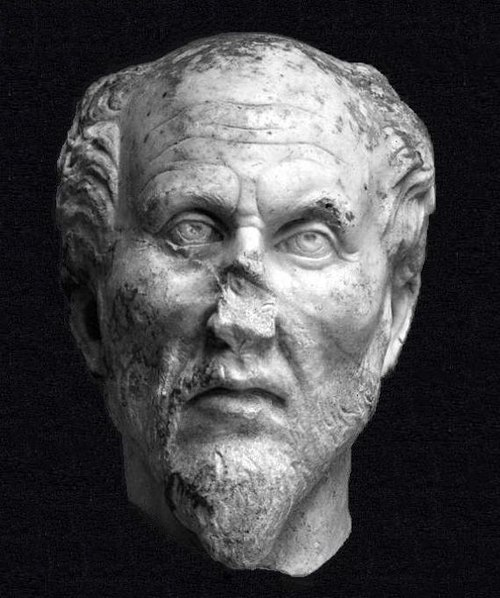
Head in white marble. The identification as Plotinus is plausible but not proven.
“The stars are like letters inscribing themselves at every moment in the sky. Everything in the world is full of signs. All events are coordinated. All things depend on each other. Everything breathes together.”
Plotinus (204-270A.C.E.)
Plotinus (204-270 A.D.) was a Hellenised Egyptian Platonist philosopher, born and raised in Roman Egypt. Plotinus is regarded by modern scholarship as the founder of Neoplatonism. His teacher was the self-taught philosopher Ammonius Saccas, who belonged to the Platonic tradition. Wikipedia
New Thinking Allowed with Jeffrey Mishlove Jan 11, 2026 Ronnie Pontiac was the personal research assistant for Manly P. Hall at the Philosophical Research Society in Los Angeles. He is author of American Metaphysical Religion: Esoteric and Mystical Traditions of the New World. He is coauthor with Tamra Lucid of The Magic of the Orphic Hymns: A New Translation for the Modern Mystic. He explores the true origins of Rosicrucianism, arguing that the famous manifestos were a radical literary and cultural intervention rather than an ancient secret order. Pontiac situates their emergence within the religious, political, and intellectual upheavals of 17th-century Europe, particularly during the Thirty Years’ War. Ronnie reframes Rosicrucianism as a decentralized countercultural movement that spread ideas through symbolism, imagination, and culture rather than hierarchy or initiation. 00:00:01 Introduction: Rosicrucian origins and misconceptions 00:09:38 Religious conflict and the Holy Roman Empire 00:18:20 Emperor Rudolph II and Hermetic culture 00:28:22 The Rosicrucian manifestos and public reaction 00:38:33 Alchemical marriage and political mythology 00:47:56 Defeat of Bohemia and shattered hopes 00:56:10 Counterculture and horizontal transmission 01:05:48 The dangers of intellectual hierarchy 01:14:21 Living Rosicrucian principles in practice 01:28:49 Conclusion New Thinking Allowed host, Jeffrey Mishlove, PhD, is author of The Roots of Consciousness, Psi Development Systems, and The PK Man. Between 1986 and 2002 he hosted and co-produced the original Thinking Allowed public television series. He is the recipient of the only doctoral diploma in “parapsychology” ever awarded by an accredited university (University of California, Berkeley, 1980). He is also the Grand Prize winner of the 2021 Bigelow Institute essay competition regarding the best evidence for survival of human consciousness after permanent bodily death. He currently serves as Co-Director of Parapsychology Education at the California Institute for Human Science. (Recorded on December 26, 2025)
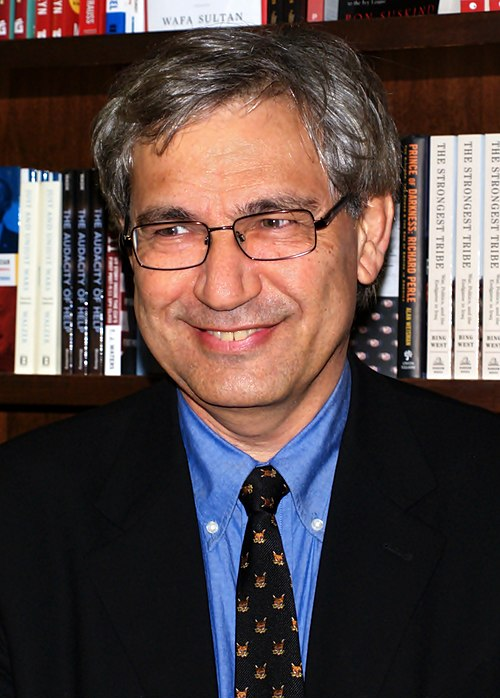
“I don’t want to be a tree; I want to be its meaning.”
~ Orhan Pamuk
Ferit Orhan Pamuk (born 1952) is a Turkish novelist, screenwriter, academic, and recipient of the 2006 Nobel Prize in Literature. One of Turkey’s most prominent novelists, he has sold over 13 million books in 63 languages, making him the country’s best-selling writer. Wikipedia
New Thinking Allowed with Jeffrey Mishlove Jan 7, 2026 Psychology and Psychotherapy Rev. Karen E. Herrick, PhD, is an interfaith minister and also a psychologist. She is author of The Psychology of the Soul and the Paranormal as well as You’re Not Finished Yet and Grandma, What Is a Soul? Her therapy practice focuses on adult children from dysfunctional homes. Her website is https://www.karenherrick.com/. Here she acknowledges that early childhood trauma typically leads to dissociative states of consciousness that can be conducive to psychic functioning. She describes her own process of dealing with an alcoholic parent and husband, as well as incest. She also describes a powerful spiritual rebirth experience that took place within the context of a holotropic breathing workshop. She explains the role of spiritual experiences within a psychotherapeutic context. New Thinking Allowed host, Jeffrey Mishlove, PhD, is author of The Roots of Consciousness, Psi Development Systems, and The PK Man. Between 1986 and 2002 he hosted and co-produced the original Thinking Allowed public television series. He is the recipient of the only doctoral diploma in “parapsychology” ever awarded by an accredited university (University of California, Berkeley, 1980). He is also the Grand Prize winner of the 2021 Bigelow Institute essay competition regarding the best evidence for survival of human consciousness after permanent bodily death. He is Co-Director of Parapsychology Education at the California Institute for Human Science. (Recorded on May 14, 2020)
New Thinking Allowed with Jeffrey Mishlove Jan 8, 2026 Betty J. Kovács, PhD, taught symbolic/mythic language for twenty-five years. She has served as Chair of the Board of Directors of the Jung Society of Claremont, California, and sits on the Academic Advisory Board of Forever Family Foundation. Dr. Kovács is author of Merchants of Light: The Consciousness That Is Changing the World, winner of The Scientific and Medical Network 2019 Book Prize and a Nautilus Silver Award. She has also written The Miracle of Death: There Is Nothing But Life. Her website is www.kamlak.com. Here she maintains that, throughout the world, original myths describe our connection with an invisible world in which we partake of immortality. This is expressed in ancient cave cultures and shamanistic traditions. It can be found is esoteric culture worldwide. In particular she focuses on myths concerning the Tree of Life. She suggests that this myth was inverted by the Deuteronomists around 620 BCE and that this inversion has shaped Western culture, and caused much suffering. New Thinking Allowed host, Jeffrey Mishlove, PhD, is author of The Roots of Consciousness, Psi Development Systems, and The PK Man. Between 1986 and 2002 he hosted and co-produced the original Thinking Allowed public television series. He is the recipient of the only doctoral diploma in “parapsychology” ever awarded by an accredited university (University of California, Berkeley, 1980). He is also the Grand Prize winner of the 2021 Bigelow Institute essay competition regarding the best evidence for survival of human consciousness after permanent bodily death. He is Co-Director of Parapsychology Education at the California Institute for Human Science. (Recorded on May 11, 2020)
New Thinking Allowed with Jeffrey Mishlove Jan 9, 2026 This video is a special release from the original Thinking Allowed series that ran on public television from 1986 until 2002. It was recorded in about 1990. It will remain public for only one week. Pir Vilayat focuses on the details of Sufi meditation practices which lead to inner self-awareness, unfurling the potential being and divine realization. He discusses exercises that allow our consciousness to become one with nature and to share the awareness of other human beings. The late Pir Vilayat Inayat Khan, initiate of an Indian Sufi Order, was author of Toward The One, Call of the Dervish, The Message in Our Time: The Life and Teaching of the Sufi Master Pir-O-Murshid Inayat Khan and Introducing Spirituality into Counseling and Therapy.
Consciousness, spirituality, biography, sexuality, androgyny, futurism, space, the arts, science, astrology, democracy, humor, books, movies and more

Sometimes towards evening in dreary November, when the clouds hang heavy and low, covering all the sky, and the hills are solemn and sombre, and the wind is cold, and the lake black and sullen, a break in the dark veil lets through a splash of glorious sunshine. It is so very beautiful as it falls into the gloom that your breath draws in quick and you watch it with a thrill. Then you see that it moves towards you. All at once you are in the midst of it, it is falling round you and seems to have paused as if it meant to stay with you and go no farther. While you revel in this wonderful light that has stopped to enfold you, suddenly it is not falling round you any more, and you see it moving steadily on again, out over the marsh with its bordering evergreens, touching with beauty every place it falls upon, forward up the valley, unwavering, without pause, till you are holding your breath as it begins to climb the hills away yonder. It is gone. The smoke blue clouds hang lower and heavier, the hills stand more grimly solemn and sombre, the wind is cold, the lake darker and more sullen, and the beauty has gone out of the marsh. Then — then it is night. But you do not forget the Light. You know it still shines — somewhere.