As we view the achievements of aggregated capital, we discover the existence of trusts, combinations, and monopolies, while the citizen is struggling far in the rear or is trampled to death beneath an iron heel. Corporations, which should be the carefully restrained creatures of the law and the servants of the people, are fast becoming the people’s masters. — President Grover Cleveland
Behind the ostensible government sits enthroned an invisible government owing no allegiance and acknowledging no responsibility to the people. To destroy this invisible government, to dissolve the unholy alliance between corrupt business and corrupt politics is the first task of the statesmanship of the day. — President Theodore Roosevelt
We had to struggle with the old enemies of peace: business and financial monopoly, speculation, reckless banking, class antagonism, sectionalism, war profiteering. They had begun to consider the Government of the United States as a mere appendage to their own affairs. We know now that Government by organized money is just as dangerous as Government by organized mob. — President Franklin D. Roosevelt
UCSF researchers say they have found a treatment for HIV that shows potential as a long-term solution for the chronic disease that up until this point has been held at bay in patients through the use of a lifetime regimen of antiviral medications.
Though limited to 10 patients with HIV, researchers say they believe the results — published Monday, on World AIDS Day — show a new treatment approach that could prove effective at staving off the virus.
“The study was designed to look at a combination of multiple different immunotherapies together,” said Dr. Rachel Rutishauser, an associate professor with UCSF’s Division of Experimental Medicine and the co-senior author of the paper published on Monday in Nature.
“It was incredibly complex to bring together all of these different interventions that each of which had been tested individually in people, but never brought together,” Rutishauser said in an interview with The Examiner on Monday.
Antiretroviral therapy has been the standard treatment for HIV since the early 1990s, years after the AIDS epidemic began claiming lives in the early 80s. Improvements have been made and different versions of the drug therapies have been introduced in the decades since, but those living with HIV must use them for the rest of their lives to keep their viral load low.
UCSF’s study took patients off their ARTs after implementing a new treatment program to see how long it would take for their viral loads — the amount of viruses in their blood — to spike.
The 10 people living with HIV studied received a three-pronged treatment approach. First, the researchers administered a vaccine aimed at stimulating the patients’ T cells — part of the body’s immune response to viruses — to target residual HIV in their systems. Next, they received “antibody cocktails” to reduce the remaining HIV in their bodies before finishing with a final round of anti-HIV antibodies before being taken off ART.
In past studies, a rebound in viral loads is usually seen quickly after patients stop receiving ART, Rutishauser said. But among the study’s patients, it took more than 16 weeks for six people to see their viral loads rebound — and even then, they were at much lower levels than previously seen. One person’s viral load did not rebound.
“Even before they had started their therapy, they had much higher viral loads, typically kind of in the 10,000-200,000 range of copies per [milliliter],” she said.
There is no normal viral load, according to the Cleveland Clinic, but viral loads can range from 20 copies per milliliter to more than 100,000 copies. Undetectable levels are between 20 to 50 copies.
Rutishauser said the patients whose viral loads slowly rebounded did so after more than four months to around 1,000 to 2,000 copies — much lower than what they were at before the experimental treatments.
“That is not something that we typically see,” she said. “If someone’s been on antiretroviral therapy, and you take them off, they’ll go up near to where they were before.”
While acknowledging the small sample size and the lack of a control group, Rutishauser said that the results were incredibly promising as a “proof of concept” as to how the three therapies can work together in people. Prior studies had mainly been conducted with primates.
“The combination of those was thought to maybe reduce the reservoir of HIV while ART was continuing,” Rutishauser said. “Then the third addition of the antibodies at the time of treatment interruption was intended, maybe to slow the rate at which the virus was emerging, and maybe give the immune system a chance to catch up and potentially also to directly stimulate the immune system.”
Ultimately, Rutishauser said she and her fellow researchers see the results as a potential strategy to “retrain the immune system” to better respond to and control the virus without having to rely on the constant medication currently used.
“It didn’t control the virus to undetectable levels, and it didn’t get rid of the virus,” she said. “But we think we moved the needle towards better control than what the person would have had if they didn’t get these therapies.”
The study was released to coincide with World AIDS Day, which has been observed since 1988 to commemorate the lives lost due to the epidemic. Zuckerberg San Francisco General Hospital held a panel discussion Monday of leading HIV-research experts and provided remarks from local elected officials on advances in treatment over the last 40 years.
Dr. Diane Havlir, the director of the UCSF AIDS Research Institute, described in a speech the early days of the AIDS crisis and the progress made in San Francisco.
“What we did not have was knowledge,” she said. “What we really needed was research. What we needed was treatment.”
The new study was highlighted during the panel, with moderator Dr. Paul Volberding referring to it as the “kitchen sink” because it included a vaccine as part of the therapy.
The paper’s co-senior author, Dr. Steven Deeks, said during the panel discussion that the 10-year research process was incredibly complicated. Patients had to deal with new challenges being thrown at them and other departments on campus getting involved, including pathology and gastrointestinal medicine.
“Nobody complained, no one asked for money … it was like this team,” he said. “It could not have been done anywhere else.”
Deeks said the therapy is not a cure, but “we actually are making progress,” with vaccines and other therapies aimed at improving the immune response that combats the virus.
“That mechanism is now something that we can target with the next generation of cures,” he said.
But despite the advances in addressing the virus over the last 40 years, “the work is definitely not done,” said Dr. Susan Erlich, the CEO of Zuckerberg San Francisco General, at Monday’s event.
As of the end of 2024, there were 11,552 people living with HIV in San Francisco, according to the annual San Francisco Department of Public Health HIV Epidemiology Report released in September. The City recorded a slight increase in the number of new diagnoses, from a record low of 140 new cases in 2023 to 146 in 2024.
The increase in cases was highest among people of color, with 40 among Black and African American residents in 2024 compared to 27 in 2023. Cases in cisgender women nearly doubled from 14 to 26.
“We must confront these inequities head on,” Erlich said.
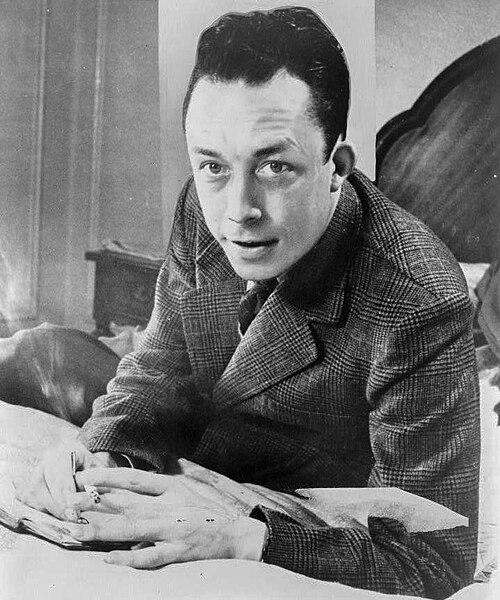
“You will never be happy if you continue to search for what happiness consists of.”
~ Camus
Albert Camus (November 7, 1913 – January 4, 1960) was a French philosopher, novelist, author, dramatist, journalist, world federalist, and political activist. He was the recipient of the 1957 Nobel Prize in Literature at the age of 44, the second-youngest recipient in history. Source: Wikipedia
\NOVA PBS Official Dec 1, 2025 The edge of a black hole isn’t what you think. Astrophysicist Janna Levin dives into the event horizon, the one-way transition where space and time warp so much that escape becomes as impossible as reversing the clock. For more, check out the extended interview with Janna Levin: • Interview: Black Holes and Quantum Weirdne… Janna Levin is a professor of physics and astronomy at Barnard College of Columbia University, where she explores the profound mysteries of black holes, cosmology, and the nature of the universe. She is also the founding scientific director of Pioneer Works, a nonprofit cultural center in Brooklyn that fosters collaboration across science, art, and education. An award-winning author and renowned science communicator, Levin has written several acclaimed books, including Black Hole Blues and Other Songs from Outer Space, and has spent her career making the strange and beautiful realities of the cosmos accessible to a wide audience. She is host of NOVA’s two-part special Black Hole Apocalypse. “Particles of Thought” is hosted by Hakeem Oluseyi, an astrophysicist, author, STEM educator, multi-patented inventor, science journalist, TV personality, science communicator, and inspirational speaker. His research is based on “hacking stars” to understand our universe better and develop innovative new technologies. Oluseyi’s work has resulted in 11 patents and more than 100 publications covering contributions to astrophysics, cosmology, and plasma physics and the development of space missions, observatories, focal plane instruments, detectors, semiconductor manufacturing, and ion propulsion.
MELBOURNE, AUSTRALIA—Tracing the unique behavior back to the dawn of civilization, researchers at Monash University announced Wednesday that lowering one’s voice to discuss a person’s sexual orientation is a physiological trait that evolved in humans over thousands of years. “The fossil record shows the human larynx completing a transformation around 11,000 years ago, which coincides with the time period when Homo sapiens appear to have begun speculating about their fellow clan members’ sexual preferences in fevered whispers,” said Dr. Raif Gonzales, who added that evidence from archaeological sites in the Indus valley suggests that, around this time, ancient humans developed the ability to gather in small groups to privately discuss their friends and neighbors, sneak glances over their shoulders, and drop their voices to a hushed, barely audible level when intoning the word “gay.” “Recently unearthed fragments of skull bones suggest eyebrow-raising evolved during this period for much the same purpose. While these are largely vestigial traits nowadays, they are reminders of our ancestors’ evolutionary tendency to keep this kind of information hush-hush.” Researchers stressed that the behavior of lowering one’s voice should not be confused with the ability to speak in loud, accusatory tones about a person’s sexual orientation, a phenomenon that can be traced back to the first proto-linguistic bellows of angry, insecure primates.
A version of this essay appears in the final chapters of Figuring.
As if classifying platonic relationships weren’t complex enough a task — one that requires a taxonomy of friendship types — what happens when the platonic and the romantic begin to blur? In an exquisite love letter, Sartre spoke of “turning abruptly from friendship to love.” And yet what if friendship and love weren’t opposite points between which to pivot but loci that overlap in varying degrees? Under the Romantic ideal of love, we have come to expect that every great romance should also contain within itself, in addition to erotic passion, a robust friendship. But we hold with deep suspicion the opposite — a platonic friendship colored with the emotional hues of romantic love, never given physical form but always aglow with an intensity artificially dimmed by the label of plain friendship. Perhaps we need not label these kaleidoscopic emotional universes after all; perhaps resisting the urge to classify and contain is the only way to do justice to their iridescent richness of sentiment and feeling.
A heartening testament to that possibility comes from the life of the pathbreaking marine biologist, conservationist, naturalist, and wonder-wielderRachel Carson (May 27, 1907–April 14, 1964), who has contributed more than any other person to awakening the modern environmental consciousness — her 1962 book Silent Spring, published eighteen months before her life was cut short, led to the creation of Earth Day and the founding of the U.S. Environmental Protection Agency, and sparked the environmental movement as we know it today.
Rachel Carson’s senior portrait
But beneath Carson’s blazing intellect and her protective affection for the natural world lay an interior world as rich and passionate, animated by the same intensity of intelligent love.
In late 1952, just before Carson moved to Maine’s Southport Island with her mother, a local housewife named Dorothy Freeman wrote her a warm letter welcoming her to the close-knit island community. (Carson was already a famous author — her 1951 book The Sea Around Us had broken records by remaining on best-seller lists for eighteen months.) Their correspondence blossomed into a fast friendship aglow with anticipation of their first in-person meeting.
On December 30, 1953, Rachel visited the Freemans’ home and stayed for a night. “Reality can so easily fall short of hopes and expectations, especially where they have been high,” she wrote to Dorothy as soon as she returned home. “My dear one, there is not a single thing about you that I would change if I could!” She enclosed a Keats verse — “A thing of beauty is a joy forever: / its loveliness increases; it will never / pass into nothingness; but still will keep / a bower quiet for us, and a sleep / full of sweet dreams.” — and added:
I am certain, my dearest, that it will be forever a joy, of increasing loveliness with the years, and that in the intervals when being separated, we cannot have all the happiness of Wednesday, there will be, in each of our hearts, a little oasis of peace and ‘sweet dreams’ where the other is.
Rachel Carson at her microscope, 1951
Dorothy was married and devoted to her husband, but she soon took on unparalleled centrality in Rachel’s life. Although their relationship was mostly epistolary, it grew replete with such intense tenderness and was articulated in such romantic language that the label “friendship” fails to contain it — Rachel addressed Dorothy as “darling,” often “my very own darling.” The closing sentiment of a letter penned in February of 1954 — “Darling — always and always — I love you so dearly” — was typical of their mutual tenderness. In another letter planning their first visit since that initial meeting, Rachel exhales: “But, oh darling, I want to be with you so terribly that it hurts!”
Rachel Carson with Dorothy and Stanley Freeman, Southport Island
And yet their relationship was never a secret. Dorothy shared their letters with her husband, to which Rachel responded with sincere gladness:
How dear of him to say what he did. Perhaps this is the final little touch of the perfection in the whole episode… It means so very much to me to know that you have such an understanding, loving and wonderful husband… I want him to know what you mean to me.
For the remaining twelve years of Rachel Carson’s life, it was Dorothy’s love and daily devotion that warded off the scientist’s aching loneliness and her struggles with depression, fomented her creative and intellectual imagination, and nourished her visionary spirit as she gave form to some of the most influential ideas of the twentieth century in her writing. In early February of 1954, she articulated Dorothy’s centrality in her world in an immeasurably beautiful letter, found in Always, Rachel: The Letters of Rachel Carson and Dorothy Freeman, 1952–1964 (public library):
I don’t suppose anyone really knows how a creative writer works (he or she least of all, perhaps!) or what sort of nourishment his spirit must have. All I am certain of is this; that it is quite necessary for me to know that there is someone who is deeply devoted to me as a person, and who also has the capacity and the depth of understanding to share, vicariously, the sometimes crushing burden of creative effort, recognizing the heartache, the great weariness of mind and body, the occasional black despair it may involve — someone who cherishes me and what I am trying to create… The few who understood the creative problem were not people to whom I felt emotionally close; those who loved the non-writer part of me did not, by some strange paradox, understand the writer at all! And then, my dear one, you came into my life! … I knew when I first saw you that I wanted to see much more of you — I loved you before you left Southport — and very early in our correspondence last fall I began to sense that capacity to enter so fully into the intellectual and creative parts of my life as well as to be a dearly loved friend. And day by day all that I sensed in you has been fulfilled, but even more wonderfully than I could have dreamed…
I feel such a joyous surge of wonder every time I stop to think how in such a dark time and when I least expected it, something so lovely and richly satisfying came into my life.
This letter was intended as an answer to one penned a few days earlier, in which Dorothy had contemplated their relationship and asked Rachel in transcendent astonishment: “Don’t you ever marvel at yourself, finding yourself in such an overpowering emotional experience?” A week later, Rachel revisited the question and offered an even more direct answer:
I have wondered since … whether I may have forgotten to make it clear that — besides all the intellectual satisfaction I perhaps dwelt on at great length — it truly is for me, as for you, “an overpowering emotional experience.” If I didn’t, I think I can now trust that your heart knows it. I was thinking today, with what depth of gratitude I hope you know, how wonderfully sustaining is the assurance of your constant, day-and-night devotion and concern. Without it, I truly don’t know what I would be doing now, when there are a good many otherwise dark days.
Perhaps the most beautiful aspect of their relationship was its deep mutuality and the enormous generosity of spirit with which each beheld the other. With a grateful eye to the immensity of what Freeman is contributing to her life, Rachel wonders what she is contributing to Dorothy’s in turn:
Since one of the things about you that impressed me from the beginning was the lovely quality of your family life, I knew … that it was not lack of love. No one could be with you and Stan even a short time without realizing how devoted and congenial you are. And I wonder whether the very fact that you have experienced, and have yourself poured out, so much love, has not made you all the more receptive to the devotion offered by this newcomer in your life. You wrote so beautifully, weeks ago, of how one’s capacity to give love grows with the exercise of it, so perhaps the more love we have received, the more we are able to absorb and in that sense no one ever has enough. And I do know that the facts that we are, to an incredible degree “kindred spirits,” and that for many reasons we need all that we mean to each other, probably lie at the heart of our love. But the more I think about all we both have said, the more I feel that there is something that perhaps will always remain elusive and intangible — that the whole is something more than the sum of the various “reasons.” Henry Beston [one of Carson’s favorite authors and heroes, who had recently reviewed her book Under the Sea-Wind] says in the review I’m sending you today: “the sun — is always more than a gigantic mass of ions, it is a splendor and a mystery, a force and a divinity, it is life and the symbol of life.” Our analysis has been beautiful and comforting and satisfying, but probably it will never be quite complete — never encompass the whole “splendor and mystery.”
This “splendor and mystery” continued to unfold and expand between them, growing only richer with time. Two years later, Rachel writes to Dorothy:
My own darling,
For your birthday, this is to tell you — as if you didn’t know — how dearly and tenderly I love you. You have come to occupy a place in my life that no one else could fill, and it is strange now to contemplate all the empty years when you weren’t there. But perhaps we shouldn’t regret those years — perhaps instead we should just give ourselves over to wonder and gratitude that a friendship so satisfying and so full of joy and beauty could come to each of us in the middle years — when, perhaps, we needed it most!
[…]
Darling, do you know how wonderful it is to have you? I hope you do.
I love you.
Rachel
In the spring of 1960, just as she was finishing the draft of the two chapters in Silent Spring dealing with the carcinogenic effects of chemicals, Rachel Carson was diagnosed with breast cancer. By December, despite surgery, it had metastasized. She continued to work tirelessly on the book and other projects through increasingly debilitating illness.
In September of 1963, shortly after her testimony before President John F. Kennedy’s Science Advisory Committee became instrumental in the first regulatory policies on pesticides, she wrote a stunning letter to Dorothy. It contained a contemplation of her own mortality so profound, so poignant, so tenderhearted and transcendent that it could only be articulated to the person who knew her heart most intimately. She writes:
Dear One,
This is a postscript to our morning at Newagen, something I think I can write better than say. For me it was one of the loveliest of the summer’s hours, and all the details will remain in my memory: that blue September sky, the sounds of the wind in the spruces and surf on the rocks, the gulls busy with their foraging, alighting with deliberate grace, the distant views of Griffiths Head and Todd Point, today so clearly etched, though once half seen in swirling fog. But most of all I shall remember the monarchs, that unhurried westward drift of one small winged form after another, each drawn by some invisible force. We talked a little about their migration, their life history. Did they return? We thought not; for most, at least, this was the closing journey of their lives.
But it occurred to me this afternoon, remembering, that it had been a happy spectacle, that we had felt no sadness when we spoke of the fact that there would be no return. And rightly — for when any living thing has come to the end of its life cycle we accept that end as natural.
For the Monarch, that cycle is measured in a known span of months. For ourselves, the measure is something else, the span of which we cannot know. But the thought is the same: when that intangible cycle has run its course it is a natural and not unhappy thing that a life comes to an end.
That is what those brightly fluttering bits of life taught me this morning. I found a deep happiness in it — so I hope, may you. Thank you for this morning.
Rachel
In another letter written three months before her death but delivered posthumously, she revisits the subject of her mortality from the perspective of her relationship with Dorothy, the great gift of her life:
Darling,
[…]
When I think back to the many farewells that have marked the decade (almost) of our friendship, I realize they have almost been inarticulate. I remember chiefly the great welling up of thoughts that somehow didn’t get put into words — the silences heavy with things unsaid. But then, we knew or hoped, there was always another chance — and always the letters to fill the gaps.
With a lucid and almost shockingly serene awareness of her imminent mortality, she adds:
I have had a rich life, full of rewards and satisfactions that come to few and if it must end now, I can feel that I have achieved most of what I wished to do. That wouldn’t have been true two years ago, when I first realized my time was short, and I am so grateful to have had this extra time.
My regrets, darling, are for your sadness, for leaving Roger [the eleven-year-old orphan son of Carson’s niece, whom she had adopted], when I so wanted to see him through manhood, for dear Jeffie [Carson’s cat] whose life is linked to mine.
[…]
But enough of that. What I want to write of is the joy and fun and gladness we have shared — for these are the things I want you to remember — I want to live on in your memories of happiness. I shall write more of those things. But tonight I’m weary and must put out the light. Meanwhile, there is this word — and my love will always live.
Rachel
In her final letter, written as Freeman was en route to a deathbed visit but only delivered two weeks after Rachel Carson’s death, she writes:
My darling,
You are starting on your way to me in the morning, but I have such a strange feeling that I may not be here when you come — so this is just an extra little note of farewell, should that happen. There have been many pains (heart) in the past few days, and I’m weary in every bone. And tonight there is something strange about my vision, which may mean nothing. But of course I thought, what if I can’t write — can’t see to write — tomorrow? So, a word before I turn out the light.
[…]
Darling — if the heart does take me off suddenly, just know how much easier it would be for me that way. But I do grieve to leave my dear ones. As for me, however, it is quite all right. Not long ago I sat late in my study and played Beethoven, and achieved a feeling of real peace and even happiness.
Never forget, dear one, how deeply I have loved you all these years.
UPDATE: Carson — her epoch-making cultural contribution as a scientist, and the courage to love outside society’s predetermined boxes that sprang from the same unusual source as her visionary science — is the crowning and closing figure in my book Figuring.
New Thinking Allowed with Jeffrey Mishlove Dec 3, 2025 Leslie Kean is an independent investigative journalist and author of Surviving Death: A Journalist Investigates Evidence for an Afterlife. In 2010, her book UFOs: Generals, Pilots, and Government Officials Go on the Record was a New York Times bestseller in 2010. She is also coauthor of Burma’s Revolution of the Spirit: The Struggle for Democratic Freedom and Dignity as well as Henry Hyde’s Moral Universe. She describes the many historical descriptions of spirit materialization, observed under well-controlled conditions by experienced researchers such as Nobel laureate Charles Richet. She acknowledges that such phenomena are ostensibly unbelievable, no matter how well-attested. She describes her own experience witnessing such phenomena in the presence of the spiritualist circle in England centered on the physical medium, Stewart Alexander. She describes levitations, matter passing through matter, materializations, and direct voice manifestations. New Thinking Allowed host, Jeffrey Mishlove, PhD, is author of The Roots of Consciousness, Psi Development Systems, and The PK Man. Between 1986 and 2002 he hosted and co-produced the original Thinking Allowed public television series. He is the recipient of the only doctoral diploma in “parapsychology” ever awarded by an accredited university (University of California, Berkeley, 1980). He is also the Grand Prize winner of the 2021 Bigelow Institute essay competition regarding the best evidence for survival of human consciousness after permanent bodily death. He is Co-Director of Parapsychology Education at the California Institute for Human Science. (Recorded on June 9, 2020)
New Thinking Allowed with Jeffrey Mishlove Dec 1, 2025 Bernard Carr, PhD, is emeritus professor of mathematics and astronomy at Queen Mary College, University of London. He is coauthor of the book Quantum Black Holes and he is also editor of the anthology Universe or Multiverse? He is a past-president of the Society for Psychical Research and is also currently president of the Scientific and Medical Network. Here he shares his passion for parapsychology and psychical research and describes several of his own experiments. He also reviews the history of these disciplines from his unique perspective as a physicist and astronomer. The discussion touches on questions of postmortem survival, reincarnation, telepathy, and UFOs. He shares his memories of the late Professor Ian Stevenson as well as his admiration for Sir Oliver Lodge. New Thinking Allowed host, Jeffrey Mishlove, PhD, is author of The Roots of Consciousness, Psi Development Systems, and The PK Man. Between 1986 and 2002 he hosted and co-produced the original Thinking Allowed public television series. He is the recipient of the only doctoral diploma in “parapsychology” ever awarded by an accredited university (University of California, Berkeley, 1980). He is also the Grand Prize winner of the 2021 Bigelow Institute essay competition regarding the best evidence for survival of human consciousness after permanent bodily death. He is Co-Director of Parapsychology Education at the California Institute for Human Science. (Recorded on July 10, 2020)
New Thinking Allowed with Jeffrey Mishlove Dec 2, 2025 Philosophy Deepak Chopra, MD, FACP, FRCP, is a consciousness explorer and a world-renowned pioneer in integrative medicine and personal transformation. Dr. Chopra is co-founder of DeepakChopra.ai, his AI twin and well-being advisor. He also co-founded Cyberhuman.ai, a transformative suite of personalized health and well-being solutions. He is a Clinical Professor of Family Medicine and Public Health at the University of California San Diego, and serves as a senior scientist with Gallup Organization. He is also an Honorary Fellow in Medicine at the Royal College of Physicians and Surgeons of Glasgow. TIME Magazine has described Dr. Chopra as “one of their top 100 most influential people.” He is the author of over 95 books, translated into over forty-three languages, including numerous New York Times bestsellers. His bestselling books include The Seven Spiritual Laws of Success; Ageless Body, Timeless Mind; Quantum Healing; The Book of Secrets; You Are the Universe; Life After Death; and The Way of the Wizard. His most recent book is Digital Dharma: How AI Can Elevate Spiritual Intelligence and Personal Well-Being. His mission is to create a more balanced, peaceful, joyful, and healthier world. His website is DeepakChopra.com. Deepak shares how artificial intelligence (AI) can become a tool for awakening rather than destruction. While acknowledging that technological progress has surpassed our emotional and spiritual evolution, he offers insight into how we can utilize AI to support our own movement toward wisdom, compassion, and dharma. Used consciously, it can help us remember who we are, deepen our spiritual intelligence, and live in greater alignment with our higher self. 00:00 Introduction 03:48 AI for personal evolution 07:26 Dharma – Who are you? 12:03 Deepak’s twin and digital avatars 14:46 Pros and cons of AI 17:48 Improving self-awareness with AI 20:04 The nature of reality and consciousness 25:10 Superintelligence vs. consciousness of AI 27:31 Love as the highest form of consciousness 29:39 Tips to live a long and healthy life 31:18 Conclusion New Thinking Allowed CoHost, Emmy Vadnais, OTR/L, is an intuitive healer and health coach based in St. Paul, Minnesota. Emmy is the founder of the Intuitive Connections and Holistic OT communities. She is the author of Intuitive Development: How to Trust Your Inner Knowing for Guidance With Relationships, Health, and Spirituality. Her website is https://emmyvadnais.com (Recorded on November 5, 2025)
Consciousness, spirituality, biography, sexuality, androgyny, futurism, space, the arts, science, astrology, democracy, humor, books, movies and more





 I am certain, my dearest, that it will be forever a joy, of increasing loveliness with the years, and that in the intervals when being separated, we cannot have all the happiness of Wednesday, there will be, in each of our hearts, a little oasis of peace and ‘sweet dreams’ where the other is.