The details of Kelvin’s memories provide a window into the development of his own personality traits, and those of some well-known historical characters. Studying those traits as they developed reveals similarities in behavioral and emotional patterns that could help you understand your own personality better too, while also providing a more comprehensive vision of our place in the universe.
Is there a lineage of goddesses that claims the evolutionary power of female sexuality? And if so, why were they pushed to the shadows and demeaned as harlots? Was Mary Magdalene one of them, and what were her teachings? Dr. Joanna Kujawa argues that in the process of recovering the healing power of the Goddess we have focused solely on the mother archetype and left out the other Goddess, who is often represented in mythical, historical, and Gnostic sources as wise, mysterious, and in the possession of the healing power of Eros.
An extraordinary 13-year journal in which scientist Angela Thompson Smith documents the collision between ordinary life and emerging memories of anomalous, possibly non-ordinary events. Blending clinical curiosity with personal vulnerability, Smith invites readers to examine how memory, trauma, and extraordinary experience intersect at the boundaries of psychology. This compelling narrative challenges professionals to reconsider assumptions about perception, dissociation, and the ways individuals construct meaning amid experiences that resist conventional frameworks.
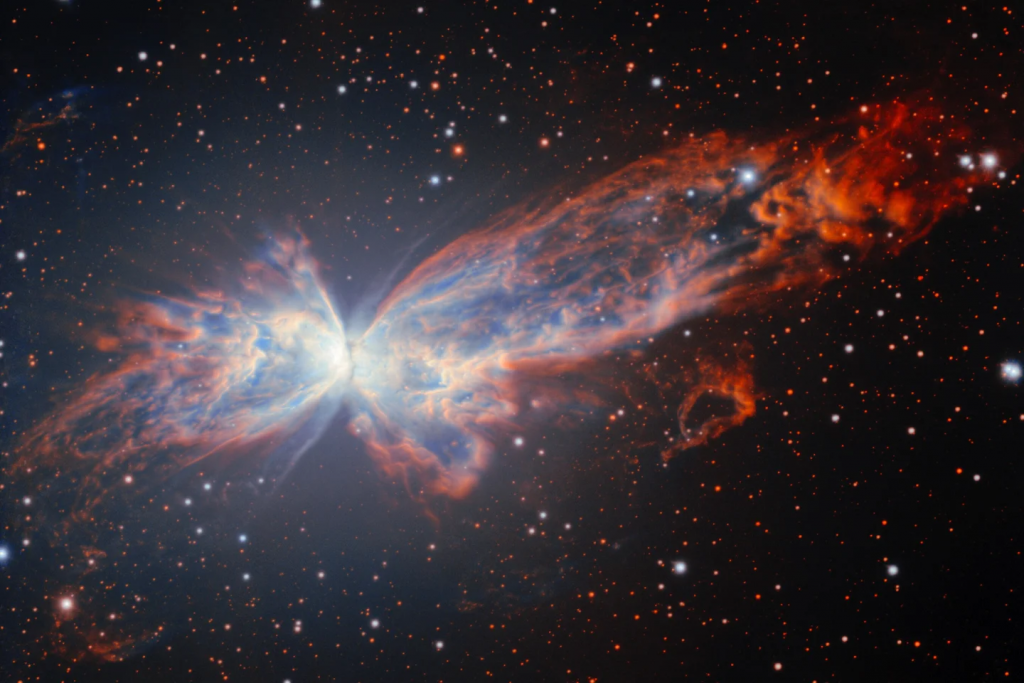
The Butterfly Nebula is located between 2,500 and 3,800 light-years away in the constellation Scorpius. The nebula was formed when a dying star shed its outer layers of gas, which billow out like butterfly wings. At the heart of the nebula is a super-hot white dwarf star, one of the hottest known, whose intense ultraviolet radiation causes the discarded gas to glow in a range of colors. The distinctive “butterfly” shape is a result of a dense, doughnut-shaped ring of dust and gas around the star’s equator, which restricts the outflow of material and forces the gas to shoot out in opposite directions. (Featured Image from New Thinking Allowed)
(AOn December 4th or 5th, 2025 (depending on where you are on the globe), we have a Full Moon at 13° Gemini.
This Full Moon is square the Lunar Nodes, bringing us to a crossroads.
Our mind finally catches up with our soul’s direction, as we get a clearer understanding of what our hero’s – or heroine’s – task ahead is about – and what our journey might look like.
Full Moon In Gemini – Mutable Action
At the Full Moon in Gemini, all mutable signs are activated. The Moon is in Gemini, the Sun in Sagittarius, and the Lunar Nodes in Virgo and Sagittarius.
Mutable signs are dual signs – and duality is a key quality that explains the very essence of mutability in astrology.
Gemini is the twins – the 2 siblings. Pisces is the 2 fish. Sagittarius is the 2 beings – half man, half animal.
With Virgo, we might not see the duality immediately – the maiden with the grain – but if we remember the myth of Persephone, we’re reminded of her dual setup – 6 months in the land of the living, 6 months in the underworld.
There’s something in mutable signs that often looks like they can’t quite make up their mind.
The 2 fish swimming in opposite directions. The Sagittarius centaur who wants to reach the stars with his arrow, but is bound to earth by his animal body. Virgo/Persephone who never fully belongs to one world – where is her real home?
But it’s in this duality that movement happens. It’s in this apparent contradiction that a higher understanding can take shape.
Let’s look at Gemini’s Castor and Pollux myth for further clues, and even before that, let’s start with the Sabian Symbol of the Full Moon in Gemini, which is “Bridging physical space and social distinctions, 2 men communicate telepathically”.
Already we sense the theme: connection across distance, duality that communicates, 2 separate entities linked by an invisible thread.
Full Moon In Gemini – Castor And Pollux
Now, let’s return to the myth of Castor and Pollux – the foundation of the Gemini archetype.
Castor and Pollux were twins born from 2 different fathers, one mortal, one divine. When Castor (the mortal twin) was killed, Pollux was devastated, and chose to share his immortality with him.
This arrangement allowed them to alternate between the world of the living and the realm of the dead. They could never be in the same place at the same time, but they both got to experience both realms. Castor and Pollux found a creative solution, even though they were not quite together.
In this, the Gemini archetype speaks about the paradox of existence. A duality that still communicates. A split that still belongs to a single whole.
Gemini teaches us the essence of duality – that some things cannot be experienced simultaneously, and yet they can still inform each other and work together as one.
There can be either light, or darkness, not both at once. The Sun is either above the horizon, or below. Yet both states define the cycle. Both are necessary. Both are part of the same truth.
Consciousness arises when we can step outside the immediate stimulus and observe it. To make sense of something, we have to momentarily ‘remove’ ourselves from it – to create a small separation where the mind can actually see what is happening.
That temporary split is what allows integration to happen.
And even when these 2 parts of ourselves are not “on” at the same time, they still communicate.
There is a vibrational channel between them, an invisible thread, just like the telepathic exchange in the Sabian Symbol.
Or like Castor and Pollux, moving between realms but always connected.
Full Moon in Gemini – At The Cross Roads
The Full Moon in Gemini is square the Lunar Nodes. There’s the South Node on the right in Virgo, and the North Node on the left in Pisces.
Crossroads are about the weight of making a choice – a reminder that action has consequences.
When we stand at a crossroads, we can go left or right – but not both. Choosing one direction means the other 50% of our options dissolve instantly. With every decision, we say YES to something – and by default, NO to something else.
And this very human, very ancient fear of loss – the “what if I choose wrong?” – can lead to action paralysis.
What do we do when we can’t make up our mind? When the fear of what we might lose is so overpowering that we don’t choose anything?
Taking personal responsibility for a choice can feel heavy – so then the alternative becomes: letting the path make the decision FOR us.
People with strong mutable energy in their charts often share this pattern. Philosophers, seekers, travelers, wanderers – all carry a psychological tendency toward:
“If I don’t choose A or B… I’ll just keep moving. I’ll wander. I’ll explore. I’ll let the path choose for me”.
Whether the path is a train that takes them somewhere unexpected, or a train of thought that shifts their perspective.
Being torn between 2 options is not a bad thing; it’s actually a necessary psychological tension. We need that friction – the psyche’s attention, the comparison of opposites, the juxtaposition of “this” vs. “that.”
Because only through holding both sides long enough does the higher understanding arise – a synthesis we couldn’t access at the beginning, because it can only emerge through the process of comparing, contrasting, and sitting with both possibilities.
Full Moon in Gemini – Thesis. Antithesis. Synthesis.
In the end, whether we choose A or B is less relevant, as long as the thesis-antithesis tension has been held long enough for a higher synthesis to emerge.
When the synthesis appears – when we truly understand how A and B relate, how they’re just 2 sides of the same coin, 2 expressions of the same underlying pattern – then choosing becomes easier.
Because we know: whichever path we take, it will always carry the intelligence of the other. A will contain the seed of B – and B will contain the seed of A.
But to get to the point where we feel comfortable choosing – left or right, yes or no – we have to walk enough ground to understand where we are, and how the landscape subtly reveals where we’re heading.
So when we say we let the path make the decisions for us is not as simple as outsourcing responsibility to the path. It’s not just saying “hey you path, tell me where to go, right or left”.
It’s not only the road making the decision for us.
It’s a conversation with the road itself. We notice. We respond. We participate.
Maybe the path on the right looks more inviting because there’s shade, or water, or a view we didn’t expect – so we go right. But we wouldn’t have known that if we hadn’t actually walked there.
The ambivalence mutable signs are often accused of is not necessarily indecision. It’s simply the awareness that decisions must be lived into. Choices become clearer through movement, not through mental pressure.
For mutable signs, intuition doesn’t come from a still, silent place – it comes from observation, experimentation, and being in relationship with the environment.
So the essence of Gemini and mutable energy is being in tune with the environment, as if engaged in a subtle, almost telepathic communication – just like the Sabian symbol of this Full Moon suggests.
Full Moon In Gemini – Trusting The Journey
We don’t know what we don’t know. We find out by getting out there, by paying attention, by allowing the world to respond to us.
And little by little, we gain enough confidence to make the next step. And then the next. And the next.
Whether this experiential Gemini process is natural for you – if you have mutable energy in your chart – or something you’re still exploring, the Full Moon in Gemini invites all of us to become a little more “in tune,” a little more observational, a little more responsive to the signs around us.
Whether that’s making a choice now – if it feels natural – or waiting for the moment when the choice becomes obvious.
To trust the movement itself. To trust that the journey will reveal the destination when the time is right.
Sometimes, all we need to do is let the journey answer.
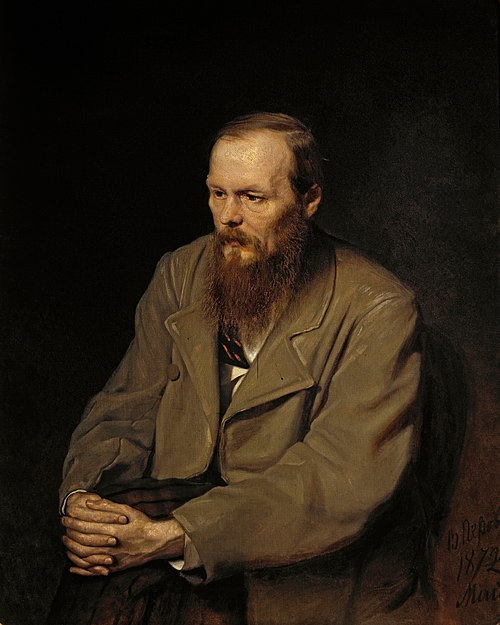
“The greatest happiness is to know the source of unhappiness.”
~ Dostoyevsky
Russian novelist (October 30, 1821 – February 9, 1881), short story writer, essayist and journalist. He is regarded as one of the greatest novelists in both Russian and world literature, and many of his works are considered highly influential masterpieces. Wikipedia
Under New Law, Any Glance At Partner Must Be Brief And Passionless
Published: December 4, 2025 (TheOnion.com)
SALT LAKE CITY—With top lawmakers championing the measure as a restoration of Christian values currently under attack in mainstream America, the Utah State Legislature passed a bill Monday that bans all eye contact during sex. “Looking directly into another person’s eyes while being physically intimate is a sick and unholy act,” said Utah Gov. Spencer Cox, who criticized the “perversion” of locking eyes during sex and argued that it had led directly to rising rates of crime and drug abuse. “This is a Christian state, and emotionless sex is a part of our heritage worth preserving. The only eyes you should be staring into during sex are Christ’s. Maintaining a deep, mutual gaze with a lover is an immoral and repulsive practice that corrupts our traditional method of procreation. They may accept this kind of degeneracy in California, but in Utah, we close our eyes and get it over with as the Lord intended. If your spouse tries to run their hands through your hair and look you in the eye while having sex, we recommend averting your gaze, saying a silent prayer, and contacting the authorities immediately.” Addressing the concerns of Utah residents worried they might, in a moment of weakness, succumb to the temptation of intimate eye contact, Gov. Cox recommended “hitting it from the back.”
In a crisis — any crisis — The Prosperos offers Translation. Translation Saturday Meeting is a weekly series of Translation presentations by veteran Translators, live and up to date on the issues of the day.
It is not a Translation workshop, It is not a Translation class. It is not a group Translation, though group participation is encouraged.
It is, however, restricted to those who have taken Translation class. So if you have never taken Translation class, check the calendar tab on The Prosperos website (TheProsperos.org) or get in touch with us and we will schedule a class.
Last week our lead Translator was Steve Hines and our sense testimony was: “People suffer.” Our conclusion: “Consciousness is experience of ever-present fullness in the present moment.” This week John Atwater, H.W., will be our lead Translator.
Translation is a 5-step process of “straight thinking in the abstract” comparing and contrasting what seems to be truth with what you can syllogistically, axiomatically and mathematically (using word equations) prove is the truth. It is not an effort to change, alter or heal anything other than our consciousness.
The claims in a Translation should be outrageous and mind-blowing, but they are always (or should always be) based on self-evident syllogistic reasoning. Here is one Translation from this week.
1) Truth is that which is so. That which is not truth is not so. Therefore Truth is all that is. Truth being all that is is therefore all that exists, therefore all that happens, therefore all that occurs, therefore all that lives, moves, has being. I think therefore I am. Since I am and since Truth is all that is, therefore I, being, am Truth. Since I, being, am Truth, therefore I, being, have all the attributes of Truth. Therefore I, being, am all that exists, all that happens, all that occurs, all that lives, moves, has being. Since I am mind (self-evident) and since I (being) am Truth, therefore Truth is Mind. (Euclid’s axiom: things equal to the same thing are equal to each other.) Since Truth is Mind, therefore Mind has all the attributes of Truth. Therefore Mind is all that exissts, all that occurs, all that happens, all that lives, moves, has being.
2) My negative imagination thinks that all that can go wrong will go wrong.
Word-tracking: negative: to say No, not so, refuse, deny imagination: image, likeness, not the real article think: thought, thoughtful, thank, thankful, considerate can: possible, able, ability, to possess, own, have, will: future prediction wrong: wrench, deceit, lie
3) Truth being all that is, there can be no lies, deceit or wrong in Truth, therefore there are no lies or liars in Truth. Truth being all that is, there is no past or future in “is,” therefore Truth cannot be predicted (said beforehand) ’cause there is no beforehand, there is only now. Therefore all that can be said about Truth is that Truth is the timeless Now. Since Truth is all that is, Truth possesses all, has all that is, therefore Truth has all abilities OR Truth is omni-able. Truth being Mind and Truth being all, therefore limitless, therefore infinite, therefore Truth is infinite thoughtfulness. Truth being real, therefore genuine, and an image being a likeness or not genuine, therefore there is no imagination (fakeness) in Truth OR Truth is always the genuine article. Truth being all that is cannot refuse or deny Itself, therefore Truth always says YES to Itself.
4) There are no lies or liars in Truth.\ All that can be said about Truth is that Truth is the timeless Now. Truth has all abilities OR Truth is omni-able. Truth is infinite thoughtfulness. There is no imagination (fakeness) in Truth OR Truth is always the genuine article. Truth always says YES to Itself.
5) Truth, omni-able and infinitely thoughtful, always says YES to Itself.
Weekly Invitational Translation Group invites your participation. If you would like to submit a Translation on any subject, feel free to send your weekly Translation to zonta1111@aol.com and we will anonymously post it on the Bathtub Bulletin on Friday.
ARIES (March 21-April 19): Here are two of your birthrights as an Aries: to be the spark that ignites the fire and the trailblazer who doesn’t wait for permission. I invite you to embody both of those roles to the max in the coming weeks. But keep these caveats in mind: Your flame should provide light and warmth but not rouse scorching agitation. Your intention should be to lead the way, not stir up drama or demand attention. Be bold and innovative, my dear, but always with rigorous integrity. Be sensitive and receptive as you unleash your gorgeous courage. In my vision of your future, you’re the wise guide who inspires and includes, who innovates and reflects. You fight for interdependence, not dominance.
TAURUS (April 20-May 20): Here’s a key theme: microdoses of courage. You don’t need to summon splashy acts of epic heroism. Subtle rebellions against numbness and ignorance may be all that’s required. Your understated superpowers will be tactful surges of honesty and gentle interventions in challenging transitions. So be brave in ways that feel manageable, Taurus. Don’t push yourself to be a fearless warrior. The trembling truth-teller is your best role model. As an experiment to get started, say yes to two things that make you nervous but don’t terrify you.
GEMINI (May 21-June 20): Your inner ear contains three canals filled with fluid. They act like gyroscopes, telling you which way is up, how fast you’re moving, and when to stop. Your ability to maintain your balance depends on their loyal service. Without them, you couldn’t orient yourself in space. Moral of the story: You stabilize yourself through constant adjustment. Let’s make this a metaphor for your current assignment. Your ability to remain poised, centered and grounded will require ongoing adaptations. It won’t work to remain still and fixed. You will have to keep calibrating and adapting.
CANCER (June 21-July 22): Let’s extol the value of productive confusion: the disorienting state when your old maps no longer match the territory. Your beloved certainties shudder and dissipate, and you don’t know what you don’t know. This isn’t a failure of understanding, but the ripe precondition for a breakthrough. The caterpillar doesn’t smoothly or instantly transition into a butterfly. First it dissolves into chaotic goo and simmers there for a while. Conclusion: Stay in the not-knowing a little longer.
LEO (July 23-Aug. 22): Coffee from Java, orchids from Iceland and grapes from Vesuvius, Italy: What do these bounties have in common? They flourish in the extra fertile soil created by volcanic eruptions. The molten lava that initially leveled everything in its path later cooled and became a repository of rich nutrients. I expect a milder version of this theme for you, Leo. Events and energies that at first cause disruption will eventually become vitalizing and even healing. Challenges will lead to nourishment.
VIRGO (Aug. 23-Sept. 22): Gardeners in Japan spend years training bonsai trees to grow into elegant shapes. The process requires extraordinary patience, close listening and an intimate relationship with an ever-changing life form. I invite you to approach your current projects with this mindset. You may feel tempted to expedite the growth that’s unfolding. You might feel pressure to “complete” or “optimize.” But the flourishing of your work depends on subtle attunement, not brute progress. Pay tender attention to what wants to emerge slowly. Tend to it with care. Time is your collaborator, not your enemy. You’re weaving lasting beauty.
LIBRA (Sept. 23-Oct. 22): The Swedish concept of lagom means “not too much, not too little, but just right.” It suggests that the best option may be in the middle rather than in the extremes. Yes, sometimes that means an uneasy compromise. But more often, it’s how the power and virtue come fully alive and thrive. Many people don’t like this fact of life. They are fixated on the delusion that more is always better. In the coming weeks, Libra, I invite you to be a connoisseur of lagom. To do it right, you may have to strenuously resist peer pressure and groupthink.
SCORPIO (Oct. 23-Nov. 21): In Bangkok markets, elderly women sell caged birds. Why? For the specific purpose of releasing them. Those who buy a captive sparrow or dove immediately open the cage door and let the creature fly away in a symbolic gesture of compassion and spiritual aspiration. It’s a Buddhist act believed to bring good karma to the person who sets the bird free. I invite you to imagine yourself performing this sacrament, Scorpio, or perhaps conducting an actual ritual with the equivalent purpose. Now is a fun and fertile time to liberate an outdated belief, a conversation you keep replaying, or a version of yourself that’s no longer relevant. Take your cue from the signs that appear in the Bangkok market: Letting go is a form of prayer.
SAGITTARIUS (Nov. 22-Dec. 21): The world’s oldest known musical composition is the Hurrian Hymn No. 6. It was discovered etched on clay tablets in Syria, dating back to 1400 BCE. When finally decoded and performed, it revealed harmonies that still resonate with modern listeners. Your projects in the coming months could share this timeless quality, Sagittarius. You will have an enhanced power to bridge your past and your future. A possibility you’ve been nurturing for months or even years may finally ripen into beautiful completion. Watch for opportunities to synergize tradition with innovative novelty or deep-rooted marvels with sweet, breezy forms of expression.
CAPRICORN (Dec. 22-Jan. 19): I’m taking a risk here by urging you cautious Capricorns to at least flirt with the Finnish tradition of drinking alcohol at home alone in your underwear with no intention of going out. I’m certainly not encouraging you to get so hammered that you can’t safely wander outdoors. My point is to give yourself permission to celebrate your amazing, mysterious, beautiful life with a bout of utterly uninhibited relaxation and totally indulgent contentment. I authorize you to be loose and free and even slightly irresponsible. Let your private pleasures reign supreme.
AQUARIUS (Jan. 20-Feb. 18): In the Quechua language, the word ayllu refers to a kinship system not just of people, but of animals, ancestors, dreams and nature. To be aligned with one’s ayllu is to live in reciprocity, in the ongoing exchange of care and meaning among the entire web of life. “We belong to what we love,” the Quechua elders say. Aquarius, I believe you’re being asked to focus on your ayllu. Who or what comprises your circle of belonging? Which beings, places and unseen presences help weave the pattern of your treasured destiny? Whom do you create for—not as audience, but as kin who receive and answer your song? As you nourish your connections in the coming weeks, pay special attention to those who respect your idiosyncrasies. It’s not your birthright to simply fit in. Your utter uniqueness is one of your greatest gifts, and it’s your sacred duty to give it.
PISCES (Feb. 19-March 20): In Yoruba cosmology, the divine spirit Oshun presides over rivers, love, beauty and sweet water. But her sweetness isn’t a weakness. It’s a sublime power, as evidenced by how her waters once restored life to the barren earth when every other force had failed. You Pisceans are now channeling extra strong currents of Oshun energy. Your tenderness is magnetic. Your imaginative flourishes are as valuable as gold. And your love, when rooted in your sovereign self-respect, is healing. But don’t let your nurturing be exploited. Choose wisely where you share your bounty. The right people will honor your flow, not judge it or try to change it. Your duty is to be uninhibitedly yourself and let your lyrical truths ripple freely.
December 1, 2025 (archive.ph from The Atlantic magazine)
In the Middle Ages, prophecies of a coming global collapse proliferated across Europe. Conditions were ripe for a powerful strain of apocalypticism to take hold: Population growth, the rise of industry, increasing inequality, and an onslaught of natural disasters and plagues had made life feel more difficult and precarious than it had ever been. The poor and itinerant classes bore the brunt of these developments, while the wealthy were more insulated from their assault. Self-styled messiahs appeared in towns and cities promising healing and redemption to the oppressed. During this period, the historian Norman Cohn has written, parts of Western Europe witnessed the emergence of what he called “messianic movements of the poor.” In almost every instance, he argued, “a collective sense of impotence and anxiety and envy suddenly discharged itself in a frantic urge to smite the ungodly”—to seize wealth and power, and hold it for “all eternity.”
Today the conditions for apocalypticism—gaping inequality, pandemics, rapid technological development—are amply present. So perhaps it isn’t surprising that, over the past several years, a number of scholars and political figures have warned of a coming collapse, by which they tend to mean the destruction of the basic elements of society. The philosopher Toby Ord has claimed that humanity has a one-in-six chance of being wiped out this century, and the author Jared Diamond has argued that there is a 49 percent chance of doomsday arriving by 2050. Commentators discern strong “end of the world vibes” in many domains of politics and culture. An apocalyptic impulse to destroy the federal bureaucracy and reestablish patriarchal, Christian supremacy has been blamed for fueling the rise of the MAGA movement. Peter Thiel recently spoke of the coming anti-Christ to sold-out audiences in San Francisco; Donald Trump is viewed among some of his supporters as a “religious hero” who will smite the political establishment. “What is notable now is that apocalyptic angst has become a constant,” the British writer Dorian Lynskey argues: “all flow and no ebb.”
In his new book, Goliath’s Curse: The History and Future of Societal Collapse, Luke Kemp, a researcher affiliated with the University of Cambridge Centre for the Study of Existential Risk, addresses this moment not by debunking the idea that the apocalypse might happen but by showing that something like it already has, many times over. Surveying 5,000 years of human civilization, Kemp identifies commonalities among recurring societal collapses. He argues that these events are not only potential learning experiences, but also inflection points in the history of humanity, many of which have been, in certain ways, productive.
“Crises can be good for you,” Kemp writes, because out of widespread devastation comes a possibility to rebuild. “The destruction of capital—temples, palaces, manors, monuments, bathhouses, and wealthy properties—all disproportionately hurt the rich.” Though calamities such as disease and famine tend to bring greater harm to the poor, those who manage to survive the wipeout event, Kemp suggests, are left with “more bargaining power with bosses and landlords” because there are fewer people with whom to compete. In the Late Bronze Age, when a combination of earthquakes, drought, and trade disruption ended the Egyptian, Mycaenaean, and Hittite empires, those who survived began to get healthier and taller, Kemp writes. And those who made it through the Black Death found that they “now had twice as much of everything, from ships to land to grain.”
The evidence for these simplistic claims is mixed. Skeletal remains do suggest that people gradually became taller after the Bronze Age collapse, in part because diminished agriculture required them to eat more meat. But Kemp’s conclusions about the Black Death are debatable: Though some scholars have argued that the plague caused wages to increase, others have found that it led to the concentration of power within bigger businesses. Kemp offers many more examples of rebirth, a number of them overly general. Together they offer something like a hopeful history of collapse: If we cannot avoid the cycles of structural devastation that have brought down societies since prehistoric times, Kemp suggests, we might as well try to look on the bright side.
But alongside his sweeping tour of declining civilizations from Mesopotamia through 20th-century Somalia, Kemp doesn’t argue that people should simply surrender to catastrophe. He encourages readers not to regard the remains of empires as “splendid ruins” but rather to understand the lethal cocktail of inequality, alienation, competition, and extraction that hastened their demise. Readers learn of the city of Cahokia, which stood in present-day Illinois a thousand years ago until it was abandoned, possibly because of flood and drought (though new archaeological findings suggest it was soon repopulated); the Mesoamerican city of Monte Albán, which disappeared after its inhabitants “voted with their feet” and abandoned it around the seventh century C.E.; and the urban complex of Jenne-Jeno, an ancient city in present-day Mali that disappeared around 1400 C.E., after a long slide toward top-down rule. The Egyptian, Incan, Roman, and Chinese empires, in Kemp’s telling, were undone by similar causes. No two collapses are exactly alike, Kemp cautions, but almost all of them share telltale characteristics of decline: fighting among dynastic rivals, stockpiling of weapons, imperial overextension, diminishing returns in agriculture and industry.
These civilizations were both built and destroyed by what Kemp calls the “Goliath,” his shorthand term for “a collection of hierarchies in which some individuals dominate others to control energy and labour.” He describes how in Jenne-Jeno, the Goliath emerged when the city’s inhabitants built a wall around the urban center, separating those on the inside from those on the agrarian perimeter. A chief eventually took control over the walled compound and built a palace, which he then moved to nearby Djenné, just as flooding hit. Some families followed him, submitting to his rule, but most left the area, and within a few centuries it was deserted. Kemp argues that the “Goliath” has felled virtually every society that ever existed and now threatens to destroy the framework of modern life around the world. The titular “curse,” he argues, is that societies built upon domination, wealth, and power contain the “seeds of their own demise.”
One of Kemp’s central arguments—that some early societies were relatively democratic, and that hierarchical rule is not humanity’s default setting—closely echoes the theory advanced by David Graeber and David Wengrow in The Dawn of Everything: A New History of Humanity. That book, published in 2021, generated heated debate about the origins of inequality and the reliability of the archaeological record, and it was ultimately admired more for the force of its argument than for its account of the earliest societies.
Much the same could be said of Kemp’s work, which is a manifesto for radical change thinly veiled by social history. He moves quickly from the death of the Mediterranean civilizations in 1100 B.C.E. to the 2008 financial crisis, arguing that both events, though devastating, came with health benefits. (Some research has found that the Great Recession did decrease mortality, due in part to reduced air pollution and traffic deaths. Kemp only glancingly acknowledges that economic downturns are also linked to spikes in suicide and mental illness. Job loss has also been found to harm health.) The economic and social reform after the horrors of both world wars led, he argues, to “a world in which many of the most powerful countries” have been, “by historical standards, inclusive and democratic.” Meanwhile, he warns that the current consolidation of cultural, economic, and political clout in the hands of people such as Elon Musk and Jeff Bezos is creating an environment comparable to the excesses of the Gilded Age and the interwar period. “The record is simply replaying today,” he writes.
The historical record does not “simply” replay, though elements of past political and economic forces may reappear in new forms. Kemp does warn his readers to be skeptical of truisms about the nature of history and the odds of apocalypse. Estimations of global catastrophic risk that offer up “suspiciously round figures and clichés, such as 50/50, a quarter, or Russian roulette,” he writes, “aren’t to be trusted.” Yet in his final chapter, he indulges in a similar kind of rhetoric. “What we have done with violence is to shift the risk distribution much more towards a game of Russian roulette,” he argues. Although the average person might enjoy a relatively peaceful life, he writes that the overall risk of low-probability, very bad events—such as a nuclear war or an engineered pandemic—is at an all-time high.
Despite its shortcomings, Goliath’s Curse is best read as a call to channel apocalyptic angst into a productive political project, an appeal to combat oppression and inequality. At times, Kemp’s language distinctly recalls the social movements of the Middle Ages: “We are passengers on a journey that looks likely to end in chains or evolutionary suicide. Our Global Goliath will die explosively unless we kill it first,” he writes. He argues that “a new Silicon Goliath is emerging,” composed of mass-surveillance technology, data centers, AI, and data themselves—“a crucial new lootable resource.” He worries that unless citizens rise up as an army of Davids, democracy will perish, as could the world itself.
He offers some ideas, such as rejecting for-profit artificial-intelligence models in favor of decentralized and collaborative ones, or at least paying people fairly when their intellectual property is used as training data. Another route would be to refuse to work for entities that Kemp calls “agents of doom,” be they an artificial-general-intelligence lab, “a fossil-fuel company, or an arms manufacturer.” Anyone who says they might be reforming these entities from the inside, he argues, is kidding themselves. Every person who doesn’t go to work for the agents of doom, or who joins a union, or who refuses domination and tries to protect democracy, he writes, “is another stone flung at Goliath, and each crack in its skull is a doorway to freedom.”
Today there is ample evidence that we live in a dark, ever more undemocratic, frighteningly unequal, and possibly doomed world. At a time like this, Kemp’s invitation to imagine what a better society could look like—and to believe that we might still avoid the worst outcomes—sounds a welcome note.
When you buy a book using a link on this page, we receive a commission. Thank you for supporting The Atlantic.