
Monthly Archives: September 2025
Swami Chitananda on the bliss of the self

Was Jesus Christ a Real Historical Figure?
By Rob Brezsny
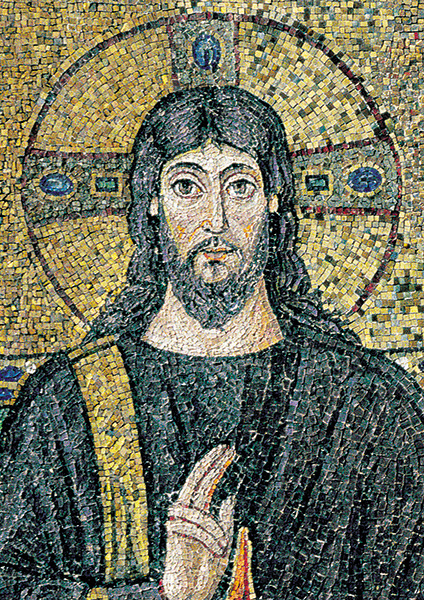
(Image from biblicalarchaeology.org)
Why do historians overwhelmingly agree that Jesus was historically a real person?
All the below is written by Talon Dearg
First, we need to address one key issue that most people don’t understand, so people on both sides of this argument like to take certain things out of context. It needs to be known that we have practically no primary sources for many secondary (non-monarchs or major political figures) characters in antiquity.
This is what the historical Jesus was (a secondary character in his day). If we simply say “we have no archeological evidence, so he doesn’t exist” then we need to say that Aristotle and Socrates did not exist because, like Jesus’ story, we are left with written accounts that have been repeatedly copied through various generations.
Now when it comes to the historical Jesus (and what we know of him), it’s simple in a few ways. The first, is that although the gospels and other New Testament books were all written decades after Jesus died (however Paul started writing between 45-49 CE), they are independently attested. Yes, from a historical perspective the miracles and resurrection are considered embellishments to help encourage early people convert to this new Jewish sect.
What does this mean?
Now although much of this information cannot be relied upon for historical purposes, some of it can pass the test of historical plausibility.
What do I mean by that? Well, every historian, when examining evidence, has a set of criteria they must use when comparing written accounts of any event.
Part of doing this, is taking these four accounts, and cross examining with each other and seeing if any of the minor details (things that lack religious implications that would be less likely for people to make up) correspond to most or all of the documents.
What you’ll find is that many of these minor details correspond consistently in ways that you wouldn’t expect– this is something you almost never see with mythical figures.
You’ll also see that the early Gospel writers likely had to create explanations for certain things about Jesus because his name was likely somewhat known around the time of his death. I’ll give a brief example:
Two of the gospels deal with the birth of Jesus. Without going into too much detail, it’s easy to make the argument that both Matthew and Luke did not get their information for this narrative from the same source.
They are constantly at odds with each other over many specific areas of this story (example: in Matthew, Mary and Joseph already lived in Bethlehem and then had to move to Egypt and then, years later, move to Nazareth. In Luke, Mary and Joseph lived in Nazareth, traveled to Bethlehem for a theoretical tax registration, waited there for 32 days after Jesus was born, and then returned immediately to Nazareth).
Most historians believe it is likely that both of them made up nearly all (if not all) of the parts to their stories because they were trying to fulfill the prophecies from the Old Testament. See, in the book of Micah, it was predicted that a savior would be born in the city of David (Bethlehem), so these writers wanted to make sure that Jesus fulfilled this prophecy.
But wait, they had a real issue to deal with. It was probably well-known that Jesus was from some small town called Nazareth, thus he didn’t fulfill that part of the prophecy. So, to deal with this, early gospel writers created these narratives to explain how this person from Nazareth could have still been from the city of David.
If Jesus was a mythological figure that sprung up out of thin air, there would be no reason to say he was from Nazareth, they would have said he was from Bethlehem and just left it at that. This is what we typically see for made up figures. Keep in mind that this is one of dozens of examples where the writers did this to meet personal agendas of their time.
What historians also find is that it is nearly impossible for a sect or cult to immediately spring up without a founding figure. After Jesus’ death, the remaining followers were probably a group of people of about 20-30 people, and it expanded rather quickly — probably hitting the hundreds within the decade after his death and by 50 CE, they had spread throughout the Roman Empire.
Most scholars believe that the book of Mark, written between 65-70 CE, was actually written in the city of Rome for a local church there.
This type of growth and expansion is, by historical standards, incredibly fast. The rapid rate of growth suggests, for historians, that a real figure of Jesus existed, had a few followers who immediately disbanded after his death. Yet, for those whom remained, they started preaching about his life and resurrection, which was likely very enticing for their day. From:
+
Non-Christian references
Pliny the Younger, writing in 112 AD, letter 10, discusses the issue of Christians gathering together, illegally. He knows a few facts about early Christian practice, and so by the early second century we know that Christians exist and believe in a Christ figure.
Suetonius,115 AD, in his Lives of the Caesars, discussing Claudius (41-54), mentions the deportations of Jews after riots “on the instigation fo Chrestus”. There is a possibility that he means a Jew named Chrestus, a not uncommon name, but more likely this is a common misspelling for Christus. At best, Suetonius supports that Christians were living in Rome in the 50s AD.
Tacitus, in his Annales (15.44) written in 115, covers history from 14-68AD. He treats the fire in Rome under Nero in 64CE, and discusses Nero’s blaming of the Christians. He mentions “The author of this name, Christ, was put to death by the procurator, Pontius Pilate, while Tiberius was emperor; but the dangerous superstition, htough suppressed for the moment, broke out again not only in Judea, the origin of this evil, but ieven in the city”
So Tacitus claims that there were Christians in Rome in the 60s, that the sect originates in Judea, that they are named for a figure/founder ‘Christ’, and that Pontius Pilate executed him.
There are claims by mythicists that this passage in Tacitus is an interpolation, but there is no evidence for this and almost no serious classicist supports it.
Tacitus’ information is clearly second-hand, and he is incorrect in that Pilate was prefect, not procurator. At the same time, in those circumstances prefect and procurator were virtually equivalent.
+
Jewish sources
Josephus is a Jewish aristocrat and military leader. Lost in battle during the 66 uprising and ultimately surrendered to the Romans. He was later used as an interpreter during the siege of Jerusalem, then taken to Rome and where he became a writer of history.
He makes 2 references to Jesus. 1 in Antiquities book 20, referring to the death of James, the brother of Jesus (Antiquities 20.9.1). The other passage is known as the Testimonium Flavianum, in Antiquities 18.3.3. This passage refers to Jesus as a miracle worker, a leader of Jews and Greeks, the Messiah, condemned by Pilate to the Cross, appearing alive on the third day, and his followers continue until the present.
The major problem with this passage is that Josephus is a Jew, and shows no evidence of being a Christian, and so this depiction is inconsistent with Jospehus.
There are three possibilities – that the text is entirely made-up (the Mythicist position), that the text is entirely genuine (the hyper-conservative Christian position), that the text is original but altered (the position taken by most scholars). For my part, a less sensational version of the text with obviously Christian elements removed is more likely to be original.
+
Christian sources
We still need to treat these as historical documents. They are not more or less reliable because they are Christian.
So we have Mark, written around 70AD, then we have Matthew and Luke, based in large degree upon Mark, written probably in the 80-85 period. And yet Matthew and Luke share common material not found in Mark, which is typically referred to as Q (from quelle, German for ‘source’), besides material distinct to Matthew (M) and Luke (L), so you have in fact 4 likely documentary sources. Plus you have John written in the 90s AD, an independent source from the other canonical gospels.
There are also non-canonical gospels written after John, some of which show independence from the canonical gospels. For example Thomas, dated to 110-120AD. Thomas is primarily a collection of sayings, it is not a narrative text. Similarly the fragmentary Gospel of Peter. Bart Ehrman also likes to highlight Papyrus Egerton 2 as a non-parallel independent account.
Similarly the fragmentary Gospel of Peter. There are two documents by this title, the extant one is not of much help in historical Jesus studies; it is usually dated to late 2nd century, which is too late to be of much usage. However, there is another “Gospel of Peter” which Origen refers to, existing only in two papyrus fragments (P.Oxy 4009 and 2949; both of these may not actually come from the supposed ‘Gospel’). This lost gospel would be earlier, and like the next text, possible attest to Jesus.
Bart Ehrman also likes to highlight Papyrus Egerton 2 as a non-parallel independent account. The Egerton Papyrus is generally dated to ca. 200 (though Stanley Porter supports an earlier, ca.150 date). It contains four short fragments, one of which has no parallel in the canonical Gospels]
There are many other gospels but most are significantly later, and show development of miraculous and legendary accounts, often disconnected to the earlier documents.
So, on scholar Bart Ehrman’s count, you have at least 7, maybe 8 early independent accounts about Jesus of Nazareth.
Furthermore, while no doubt that there is oral tradition behind these texts, there are almost certainly written sources. For example the Q material in Matthew and Luke is frequently identical, enough that you would suspect it was a written document, not merely oral material. Matthew and Luke almost certainly used other documentary sources, whether one or several, we simply don’t know.
Then you should factor in how you account for other early Christian literature, including the other NT documents, and documents written shortly after, for example Papias, quoted later in Eusebius’ Ecclesiastical History, claims to have directly inquired about the apostles’ teaching, and so is about a 3rd generation source.
So, to conclude, there is a considerable amount of documentary evidence to support the supposition that Jesus existed as a historical human being. This write-up is drawn from my notes on introduction to historical Jesus studies. I’m happy to go on to discuss individual issues, primary documents, or provide a further bibliography for secondary reading.
+
Short Bibliography
• Borg, Marcus, “Jesus A New Vision. Spirit, Culture, and the Life of Discipleship”
•
• Ehrman, Bart “Did Jesus Exist?: The Historical Argument for Jesus of Nazareth”
•
• Ehrman “The New Testament: A istorical Introduction to the Early Christian Writings”
•
• Crossan, John Dominic, “The Historical Jesus: The Life of a Meditarranean Jewish Peasant”
• Fredriksen, Paula “From Jesus to Christ: The Origings of the New Testament Images of Jesus”
• Meier, John, “A Marginal Jew: Rethinking the Historical Jesus”
• Sanders, E.P, “The Historical Figure of Jesus”
• Thiessen & Merz “Studying the Historical Jesus: A Guide to Sources and Methods”.
• Vermès, Géza, “Jesus the Jew: A Historian’s Reading of the Gospel”
• Marshall, I.H. “I believe in the Historical Jesus”
Krishnamurti on love and security
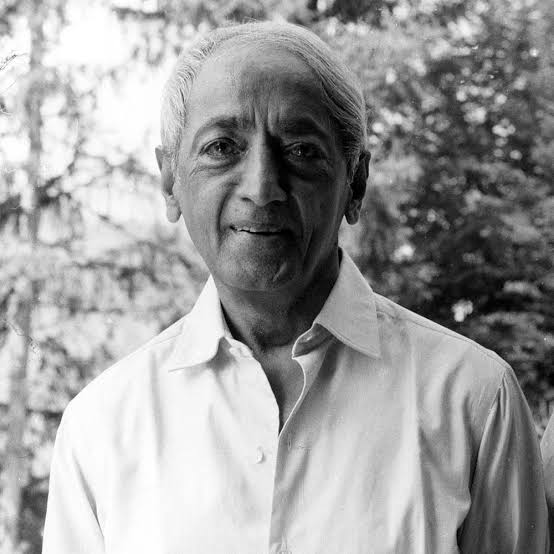
“The demand to be safe in relationship inevitably breeds sorrow and fear. This seeking for security is inviting insecurity. Have you ever found security in any of your relationships? Have you? Most of us want the security of loving and being loved, but is there love when each one of us is seeking his own security, his own particular path? We are not loved because we don’t know how to love.”
“When you love, you are not lonely. The sense of loneliness arises only when you are frightened of being alone and of not knowing what to do. When you are controlled by ideas, isolated by beliefs, then fear is inevitable; and when you are afraid, you are completely blind.”
~ Krishnamurti.
Jiddu Krishnamurti (May 11, 1895 – February 17, 1986) was an Indian spiritual speaker and writer. Adopted by members of the Theosophical Society as a child because of his aura as perceived by Theosophic leader Charles Leadbetter, “without …
Source: Wikipedia
Nation’s Nipples Severely Under-Clamped, U.S. Bureau Of Masochism Reports
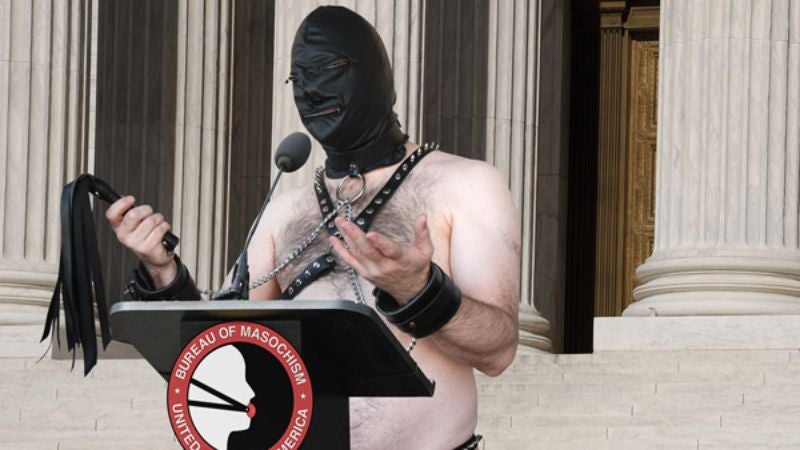
Published: January 5, 2010 (TheOnion.com)
WASHINGTON—A new study released this week by the U.S. Bureau of Masochism has concluded that American nipples are critically under-clamped, bolstering long-held suspicions that the nation is rapidly losing interest in the thin, delectable line between pleasure and pain.
According to the study, which surveyed a wide swath of citizens who have been very, very bad, 78 percent of all U.S. nipples are not being pinched, tweaked, or otherwise constricted in a severe enough manner. In addition, the study found that nearly 90 percent of all Americans are not currently down on their hands and knees, begging for more.
“The vast majority of U.S. citizens are just not receiving the physical punishment they deserve,” said Masochism Bureau director Geoff Knowlton, who was permitted by his mistress, Alexandria, to meet with reporters despite being unfit for anything but groveling at her boot heels. “Unless something is done—whether with a riding crop, a stiff wooden paddle, or a series of humiliating commands to bark like a dog—this problem will only get worse.”
“We are sniveling, spineless scum,” Knowlton continued. “And it’s time we were taught a lesson.”
Though disconcerting to many, the Masochism Bureau’s findings regarding nipple-abuse were not unexpected. Hooded sources confirmed the cruelty of erotically charged acts has dropped sharply in the past decade, which has also seen declines in the overall use of bondage gear, the tightness of leather harnesses, and the number of instances of naked, dominated citizens screaming out in delight while being flogged repeatedly against the hindquarters.
The use of hot, ripe eggplants has also reportedly fallen off.
“Most Americans we spoke to indicated that they had never engaged in any form of formalized nipple torture,” said Masochism Bureau researcher Brian Henley. “Furthermore, only 3 percent of citizens indicated that they were likely to dangle heavy weights from their outstretched areolas while being ordered to crawl inside of a small metal cage.”
Added Henley, “I’m sorry, but that’s just a frightening statistic.”
Despite the pessimistic conclusions of the study, researchers said that robust nipple-clamping and flagellation were still occurring in small pockets across the country, giving them hope that there could be a national masochism resurgence someday.
“For whatever reason, certain regions have bucked the trend,” Knowlton said. “If we can figure out why a suburb like Coral Springs, FL, with its predominantly elderly and conservative population, has actually seen its rate of urolagnia and other water sports increase, we could potentially use that information to stage a turnaround.”
Many have praised the study as an urgently needed wake-up call, saying they hope it will encourage more direct government involvement in the public’s eroticized pain needs.
“With any luck, this study is just the beginning,” Topeka, KS submissive Glenn Lange said. “Unless we want to live in a nation where you’ll only find nipple vices or welting rods in a museum, the government needs to step up.”
However, citizens like Nathan Cardozzi of Boston disagreed, claiming that increased government regulation would only stymie what has always been a private act of exquisite torture between two or more consenting adults.
“Mmmph mmmph mrrrr mmmmph,” Cardozzi said through the ball gag he was forced to wear to plug his filthy voice hole. “Mmmmrh mrrrhhhhh mmmph mummm.”
“Mmmrphmphmmhmmmrh,” he added, slowly shaking his head.
The Bureau of Masochism study offered several recommendations aimed at reversing the downward trend in nipple-clamping, all of which were redacted by their superiors at the Department of Sadism, who ordered them to shut up at once and get back to licking the floors clean.
27-Year-Old Lies About Every Single Aspect Of His Life To Keep Parents From Worrying

Published: October 29, 2013 (TheOnion.com)
BOSTON—While speaking with his mother over the phone Monday evening, sources confirmed that 27-year-old marketing coordinator Daniel Hewitt lied about every single detail of his life in order to keep his parents from worrying about him.
Hewitt reportedly updated his mother with a litany of false information throughout the 18-minute conversation and, in an attempt to spare her from any distress, blatantly distorted the truth about his job, finances, social life, living situation, and overall level of happiness.
“Everything’s good here,” said Hewitt in the first of what would amount to over three dozen flat-out lies. “Work has been going well. It’s fun, and everyone at the office is really nice. I’m learning a lot.”
“I really love it out here,” Hewitt continued. “It’s great.”
Hewitt, who moved this past September from Bloomington, IL to Boston for a new job, is said to receive a phone call from home about once a week and has reportedly struggled to adjust to his new surroundings, feeling increasingly lonely and isolated. However, sources confirmed that the man who regularly questions whether he made a poor decision by relocating across the country has yet to report even one negative aspect of his life to his parents.
“My apartment’s great—it’s nice and big, so I have plenty of room,” said Hewitt, adding that his monthly rent is “pretty reasonable” and that he lives in “a really safe area” of the city. “Yeah, the heat works well, Mom—it’s nice and warm in here. And if there’s ever any problem, my landlord is very responsive and fixes things right away.”
“So, what have you and Dad been up to these days?” added Hewitt in a desperate attempt to steer the conversation away from himself.
According to reports, in order to prevent his parents from fretting about his financial situation, Hewitt vaguely claimed to be “making enough money” and “saving a little bit each month.” The 27-year-old went on to stress that he was in no need of any extra finances and neglected to mention that he currently has less than $400 in his savings account.
Hewitt, who has reportedly eaten frozen pizza for dinner four times this week and spends virtually every night after work zoning out in front of his television, then told his mother that he “started going to a gym recently.” Sources said that after he was asked about his company’s health care plan, Hewitt remained totally silent for several seconds before quickly muttering, “It’s good, really good.”
“I’ve made plenty of friends here in the last few months,” said Hewitt, reportedly doing his best to hide his congested voice so as not to alert his mother that he recently caught a cold. “I hang out with them all the time. We go out together and do all sorts of stuff. I’m definitely having a lot of fun.”
“I’m doing fine,” Hewitt added. “I’m really fine.”
Rather than explain that he spent the past weekend alone in his apartment sleeping until the late afternoon and then playing video games, Hewitt went on to say that he has “been seeing all the sights in Boston,” claiming that he has already visited a museum and that he went to a Bruins game the other week.
Fearing that she would discover the actual, authentic realities of his life, Hewitt then politely rejected his mother’s offer to come visit him, reportedly claiming that “now isn’t the best time, but maybe in a few months.”
“I’ll be sure to call you if I need anything,” lied Hewitt as the phone call drew to a close. “I actually have to get going, though. I have plans with some friends tonight.”
Prosperos communion
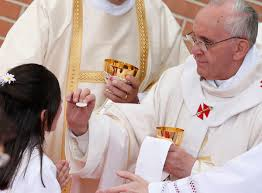
(Image from churchlifejournal.nd.edu)
Oh Christ, Thou Son of God.
My own Eternal Self.
Live Thou Thy Life in me.
Do Thou Thy Will in me.
Be Thou made flesh in me.
I have no will but Thine.
I have no self but Thee.
James Dillet Freeman, a poet laureate of the Unity Church, wrote this prayer, which first appeared in the book Be! The Christ Self Revealed.
Book: “Take Hold of Our History: Make America Radical Again”

Take Hold of Our History: Make America Radical Again
Harvey J. Kaye
The eighteen essays and speeches in Take Hold of Our History render a manifesto – a call to remember, redeem, and embrace the American radical story and tradition in favor of cultivating American historical memory and imagination and making America radical once again. For too long we have allowed the right to hijack the past and suppress, efface, lie about, and/or appropriate the essentially radical story of America from the struggles of the Revolution to those of the Age of Roosevelt and the 1960s. And no less tragically, we on the left, apparently haunted by the worst of our national experience, have turned our back on our own story and deferred to the tales of conservatives and reactionaries. Fleeing from the past, we merely compound the tragedies and ironies of American history, for we turn our backs on both the nation’s democratic creed and radical imperative, but also the struggles from the bottom up, the struggles in which working people and others have laid hold of America’s revolutionary promise and succeeded in making the United States freer, more equal and more democratic, at times, radically so. As Bill Moyers put it in 2008: “Here in the first decade of the twenty-first century the story that becomes America’s dominant narrative will shape our collective imagination and our politics for a long time.” The time has come for us to advance that narrative.
(Goodreads.com)
Book: “On Borrowed Time: How World War II Began”

On Borrowed Time: How World War II Began
Leonard Mosley
A detailed narrative of the diplomatic, political and military maneuvers that occurred between the Munich Agreement in September 1938, and the invasion of Poland in September 1939.
Acknowledgments
1 Aide-mémoire. Incident at Eger; Prophets of Armageddon; The antipathetic alliance
2 The road to Prague. “How long will this burlesque last?”; “Don’t you see?…It’s the German insurance companies that will have to pay!”; Hitler over Bohemia
3 Warsaw or Moscow? The Führer is sick; The panic pact; Hitler briefs his generals; The conspirators are worried; “You must think we are nitwits & nincompoops!”; Slow boat to Leningrad
4 Moment of truth. The walrus; Stalin makes up his mind; Hitler takes a hand; Ribbentrop’s hour of triumph
5 The sands run out. Mussolini reneges; The indefatigable Swede; Operation “Canned Goods”
6 World War II. Common action or another conference?; At last
Epilogue
Sources
Notes
Index
Maps
About the author
Leonard Mosley
Leonard Oswald Mosley OBE OStJ (11 February 1913 – June 1992) was a British journalist, historian, biographer and novelist. His works include five novels and biographies of General George Marshall, Reich Marshall Hermann Göring, Orde Wingate, Walt Disney, Charles Lindbergh, Du Pont family, Eleanor Dulles, Allen Welsh Dulles, John Foster Dulles and Darryl F. Zanuck. He also worked as chief war correspondent for London’s The Sunday Times.
President Reagan on immigration on his last full day in office

(Image from Histroy.com)
“If we ever closed the door to new Americans, our leadership in the world would soon be lost.”
–President Ronald Reagan
January 19, 1989 (reaganlibrary.gov)
“Now, tomorrow is a special day for me. I’m going to receive my gold watch. And since this is the last speech that I will give as President, I think it’s fitting to leave one final thought, an observation about a country which I love. It was stated best in a letter I received not long ago. A man wrote me and said: ‘You can go to live in France, but you cannot become a Frenchman. You can go to live in Germany or Turkey or Japan, but you cannot become a German, a Turk, or a Japanese. But anyone, from any corner of the Earth, can come to live in America and become an American.’
“This, I believe, is one of the most important sources of America’s greatness. We lead the world because, unique among nations, we draw our people — our strength — from every country and every corner of the world. And by doing so we continuously renew and enrich our nation. While other countries cling to the stale past, here in America we breathe life into dreams. We create the future, and the world follows us into tomorrow. Thanks to each wave of new arrivals to this land of opportunity, we’re a nation forever young, forever bursting with energy and new ideas, and always on the cutting edge, always leading the world to the next frontier. This quality is vital to our future as a nation. If we ever closed the door to new Americans, our leadership in the world would soon be lost.”
Full speech at: https://www.reaganlibrary.gov/archives/speech/remarks-presentation-ceremony-presidential-medal-freedom-5
(Courtesy of Thom Hartmann)