Cancer medication turned me nonbinary

Terminal cancer sent Jim Morris on an unexpected gender journey. Now they’re identifying as “Leela” and embracing their newfound femininity.

Daniel Villarreal

August 14, 2025,· Updated on August 15, 2025 (lgbtqnation.com)


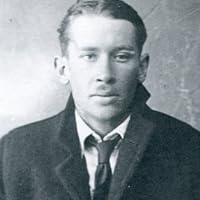
Jim MorrisJim Morris has started identifying as “Leela” amid their gender journey | Jim Morris, used with permission

When Jim Morris was 67 years old, their doctor diagnosed them with prostate cancer and suggested that they undergo radiation treatment. The doctor also prescribed them medication to stop their body’s production of testosterone, a sex hormone that’s found in higher levels in people assigned male at birth, because it can fuel the growth of cancer cells.

Morris began taking testosterone blockers and “hated every minute of it,” they told LGBTQ Nation. After one month, their body’s estrogen (a sex hormone that, while found in both men and women, is responsible for the development of female secondary sex characteristics) quickly took effect, lowering their sex drive, reducing their muscle tone, and giving them exhausting hot flashes, especially at night.


Related

Hormone therapy reduces depression in trans & nonbinary adults, new study says


“It was emotionally painful, because I saw my body change dramatically and it was feminizing: My genitals shrunk. I lost virtually all hair, except for the hair on my head, eyebrows, and lashes. I gained weight in all the places that women gain weight,” Morris said. “I missed looking at my body in a way that made me feel good, because the body I’d grown up with was gone. I just really felt like it wasn’t me. I was a wreck for most of the time.”

“I was screaming at people in the car on my way to work. I was like, ‘Ah god, I remember this, but this is not what I want.”Jim Morris

After about 18 months, Morris convinced their doctor to stop the hormone therapy and requested to be given testosterone injections, “which was real controversial,” Morris said. “His colleagues thought it was a bad idea, but I had walked in prepared with these studies from Harvard and Yale saying that it was okay, so he did it.”

Morris spent the next nine months taking testosterone injections and began seeing male aspects of their body once again, with some weight loss and hair growth. Morris also found that they became “just absolutely obsessed with sex… like a teenage kid again.

“It was like, ‘I see it, I feel it,’” Morris said of their male characteristics. “I was screaming at people in the car on my way to work. I was like, ‘Ah god, I remember this, but this is not what I want.’”

Soon after, medical tests revealed that Morris’s cancer had metastasized to their spine, so their doctor suggested the resumption of testosterone blockers. Morris refused and asked if they could reconsider the possibility in six months. But their doctor said, “In six months, you will have hundreds of tumors, and you will be really, really sick and in pain.”

So Morris reluctantly resumed the testosterone blockers. But this time, they changed their outlook about the physical and emotional changes caused by their body’s estrogen. “My heart had opened,” they said. “I was a lot more calm and loving and kind… and [had] the ability to be close and vulnerable with other people.” That led to discussions about gender with their therapist.

Morris had always considered themselves a “swishy and feminine” gay man. But instead of fighting the feminizing side effects of the medication, they leaned into it and began exploring what femininity meant to them.

“I’m really sort of trying to pull gender out of [my experience] entirely, because I’m terminal — before too long, this cancer will get me,” they said. “The medication I’m on will quit working in about one to three years, and I’m in year three now, and there’s nothing they can do after this medication quits working. And I realize I’m not going to take gender with me. So I’m just really trying to just allow [my gender journey] to be totally neutral and just whatever I’m feeling at the moment.”

“I feel like a grandmother, watching the grandkids being harmed with such pain and badness. The trans people in this country right now are being subjected to the very same things that we were in the early days of the gay rights movement.”Jim Morris

It’s difficult to say how common Morris’ experience is. While the Centers for Disease Control and Prevention (CDC) estimates approximately 18,000 men are diagnosed with advanced metastatic prostate cancer annually, an oncologist told LGBTQ Nation that only a small percentage of these men will take medications to block testosterone production, and not all of them will experience or embrace the medication’s feminizing effects.

Some of these men may feel anxious and depressed about any bodily changes they experience, especially any erectile dysfunction and growth of breasts, the oncologist added, but others may not internalize any shift in their gender identity, let alone explore a newfound trans or nonbinary identity.

In Morris’ case, during their second time on the testosterone blockers, they began using psychedelics to explore their feelings around their terminal cancer and their gender shift.

Jim Morris at a coffeeshop
Jim Morris at a coffeeshop | Jim Morris

“In those psychedelic journeys, the spirit that talks to me tends to be pretty drive a pretty hard bargain,” Morris said. “During one of my fairly recent psychedelic journeys, the message to me was just loud and clear that gender is something we made up, and that it’s immaterial and unimportant.”

The spirit also had another message for Morris: “You can’t die until you are grandmother.” Initially confused by the message, Morris came to associate their current being with that of The Crone, the final of the three-part “maiden mother crone” archetype, representing the different stages of a woman’s life.

“The Crone has this unique relationship of death,” Morris said. “She’s an old woman who’s seen it all. She doesn’t judge right or wrong. She just knows that she’s seen death and life and pain and joy, and she just kind of lives, so that led me to think, ‘That’s kind of the space I want to be in.’”

Amidst their complicated feelings about death, Morris also felt inspired by the Indian guru Sadhguru’s teachings on the Hindu god Krishna and the concept of “Leela,” a playful engagement with life’s most profound and serious aspects.

“To explore the most profound dimensions of life in a playful way, you must be willing to play with your awareness, with your imagination, with your memory, with your life, with your death,” Sadhguru wrote. “If you are willing to play with everything, only then there is Leela.”

Wanting to embrace this more lighthearted and playful attitude, Morris began using the name “Leela” amongst members of Portland, Oregon’s radical faeries, a community of queer spiritualists who embrace healing, open-hearted communication, and counter-cultural self-expression.

Morris’ experience is unique from other trans and nonbinary people because they weren’t seeking to transition between genders. But now, having spent the last few years embracing the feminizing effects of estrogen, they’ve gained insights into their male and female experience, they said.

Native American culture has Two-Spirits, honored individuals who embody both masculine and feminine spirits. Queer Western culture has designated similar individuals as “gender outlaws,” “nonbinary people” (which Morris identifies as), or “the third sex.” But while nonbinary and gender-fluid people have existed throughout history (and in several notable works of fiction), they’ve only begun to appear more frequently in mainstream media, often as actors, leaving Morris and others without models for such an existence.

Since embracing their femininity, Morris has begun noticing how hormones affect their male friends, who they believe are being held captive “by desire, wanting and obsessing, and most of it is image — maybe it’s power or position, whatever. Yeah, I think testosterone is at the core of most of that.”

Morris always enjoyed the presence of women in their life. They were married to a woman for several years during their young adulthood, and—after divorcing—surrounded themselves with many lesbian friends. But during Morris’ own late-stage gender journey, they began spending time with a nonbinary pal who gave them feminine clothing and treated them to their first pedicure and manicure. Morris now wears flowing garments and jewelry in their daily life.

They’ve also begun to feel a growing concern over the Republican rhetoric and policies attacking transgender and nonbinary people.

“I feel like a grandmother, watching the grandkids being harmed with such pain and badness,” they said. “The trans people in this country right now are being subjected to the very same things that we were in the early days of the gay rights movement. And it’s even more harsh because this has serious health effects, as they deny health coverage, et cetera.”

Morris, who used to work closely with the statewide LGBTQ+ rights organization Basic Rights Oregon, feels encouraged seeing younger LGBTQ+ people attend a monthly open mic event (arranged by their husband of 27 years, Richard Colombo) at Artichoke Community Music, a local performance venue attached to a music store.

“There are a number of trans folks that show up there, and I’m just so amazed at the courage that they bring,” Morris said. “It’s incredible.”

Subscribe to the LGBTQ Nation newsletter and be the first to know about the latest headlines shaping LGBTQ+ communities worldwide.


Daniel Villarreal is a longtime, award-winning journalist and editor who has written for NBC News, NewsweekVoxSlateVice NewsThe Seattle StrangerThe Dallas Voice and numerous other LGBTQ+ publications. He has spoken at SXSW, Creating Change, Netroots Nation, GaymerX, and is a graduate of GLAAD’s Voices of Color program and of the Poynter Institute’s 2024 Power of Diverse Voices seminar. He is also the founder of QueerBomb Dallas, an annual non-corporate Pride event; CinéWilde, the nation’s longest running monthly LGBTQ film series. He is available for interviews and educational talks.
A Tiny Press Took a Big Risk on Experimental Books. It Paid Off.

The British publisher Tilted Axis specialized in innovative translated literature. It won them major awards. Now they’re coming to the U.S.

Kristen Vida Alfaro sits on a folding ladder in front of a bookshelf, looking at the camera.
“The kind of literature we’re publishing, it can be a risk for major publishers,” said Kristen Vida Alfaro, Tilted Axis’s publisher. “These are stories written in languages that often hadn’t been translated into English before.”Credit…Jeremie Souteyrat for The New York Times
Alexandra Alter

By Alexandra Alter

Published Feb. 15, 2025 Updated May 29, 2025 (NYTimes.com)

A few years ago, the translator Jeremy Tiang was browsing in a bookstore in Singapore when he came across an unusual book of stories.

Written in Chinese under a pen name, the book, “Delicious Hunger,” drew on the author Hai Fan’s 13 years fighting in the jungles of Malaysia and southern Thailand as a guerrilla soldier with the Malayan Communist Party.

Tiang knew it might be hard to land an English-language publisher for a story collection from a Singaporean author writing under a pseudonym. But there was one publisher, a small press in Britain called Tilted Axis, that was known for seeking out subversive, experimental works in translation. Tiang submitted a sample, and Tilted Axis snapped it up.

Tiang’s translation, released in Britain last fall, won an English PEN Translates Award, becoming the first book from Singapore to win the prize.

Publishing it in the United States proved more difficult. “Delicious Hunger” was submitted to 29 American publishers, but none made an offer.

So Tiang was elated when he learned that Tilted Axis is expanding its footprint to North America. “Delicious Hunger” will go on sale here this June, one of nearly 20 titles from the Tilted Axis catalog coming out in the United States this year. The first batch arrives this month.

“I don’t know that the book would have found its way into translation or into the U.S. or U.K. distribution without someone like Tilted Axis to give it a platform,” said Tiang, who has translated more than 30 books from Chinese into English. “All too often it’s small, scrappy presses that take these risks, and they pay off.”

The title of this book is “Delicious Hunger.” The author is Hai Fan, and the translator is Jeremy Tiang.

Since its founding a decade ago, Tilted Axis has gained a reputation for bringing out a wide range of groundbreaking, genre-defying literature in translation. With only eight employees working part-time on a tight budget, it has published 42 books translated from 18 languages, including Indonesian, Thai, Vietnamese, Hindi, Telugu, Tamil, Eastern Armenian, Kazakh, Kannada, Bengali, Uzbek and Turkish.

Publishing works from languages, regions and subcultures that have long been overlooked, they face little competition from bigger houses, which tend to gravitate toward established trends and books with a proven market (see Scandinavian noir and Japanese healing fiction). Perhaps for that reason, Tilted Axis has carved out a unique literary niche, and has caught the attention of critics and prize juries, landing major awards and winning acclaim for writers who were unknown in the Anglophone world.

“There are so many different forms of literature that people don’t even know exist because we don’t have access to them,” said Kristen Vida Alfaro, Tilted Axis’ publisher. “Every translation from different parts of the world has the potential to give you not just a different perspective, but a window into an entirely different imagination.”

At a moment when nationalism and isolationism are rising in both Europe and the United States, the window that literature can provide into other cultures feels essential, Alfaro said.

“What we publish, and who we are and the community that we’ve created, it’s exactly what this climate is trying to eradicate,” she said.

With its emphasis on overlooked languages and narratives that often have a queer or feminist bent, Tilted Axis has helped to transform the landscape for translated fiction, which makes up just a small fraction of the work published in English, and remains heavily Eurocentric.

Editors’ Picks

In Norway, Are ‘Coolcations’ Taking a Toll?Review: ‘Long Story Short’ Does Time Travel, Family StyleThe Makers of ‘BoJack Horseman’ Take Family Matters by the Reins

The number of translated titles released in the United States has hovered around just a few hundred titles a year for much of the past decade.

Five women are posing in front of a book shelf. Four of them are holding books in their hands and reading, one of them standing and looking straight at the camera.
Kristen Vida Alfaro, Tilted Axis’s publisher, with some of the press’s staffers and authors — Khairani Barokka, Phương Anh, Meera Ghanshamdas and Trà My Hickin — at the Libreria bookstore in London.Credit…Jeremie Souteyrat for The New York Times

“Literature from Asia was generally ignored before specialist publishers like Tilted Axis,” said Anton Hur, whose translations include the Tilted Axis title “Love in the Big City,” Sang Young Park’s novel about a young gay man’s romantic escapades in Seoul.

Translators and authors say Tilted Axis is also helping to transform the field of translation — bucking longstanding conventions around not only what gets translated, but who gets to translate, and how.

For decades, the profession was dominated by white translators who came from academic backgrounds. Tilted Axis often hires translators from the global south, many of whom grew up steeped in the language and cultures of the books they are working on. Ten of their translators published their debut translations with the press, and several more first-time translators have books under contract.

Tilted Axis put translators’ names prominently on its covers from the start, well before it became more common. It also gives them a cut of royalties and sub-licensing deals, which is still not the standard. Its small staff includes several translators who collectively speak more than a half dozen languages.

To draw more people into the field, Tilted Axis has organized translation workshops, including two programs in London last year that focused on Vietnamese and Filipino literature. It published a book on the art of translation, which explores the way colonial legacies have shaped literary translation, and features essays from 24 writers and translators. The anthology, “Violent Phenomena,” is now taught at university translation programs in the United States and Britain.

“What translations get published, who gets to translate, all these issues are still a huge problem,” said Khairani Barokka, a writer who also translates from Bahasa Indonesia into English, and who contributed to the anthology.

The title of this book is “Strange Beasts of China,” and it is by Yan Ge. The translator is Jeremy Tiang.

The Chinese writer Yan Ge said she was surprised to find an English-language publisher for her novel, “Strange Beasts of China,” a surreal story about an amateur cryptozoologist who studies otherworldly creatures. Since its release in China in 2006, it had never drawn any offers from Western publishers.

When Tilted Axis released the translation by Jeremy Tiang in 2020, it drew admiring reviews and comparison to works by Jorge Luis Borges and Italo Calvino.

Tilted Axis embraced the novel’s weirdness, and helped her find “space where I can exist as a writer in the English language,” Yan said.

“They don’t try to shoehorn anything to fit into this imaginary English reader’s taste,” she said. “They respect how it’s done in its original language and how it relates to its own cultural values.”

The novelist and translator Thuận, who writes in Vietnamese and French and lives in Paris, had published seven translations of her books in France before any of her fiction made it into English. In 2022, Tilted Axis published her English-language debut, a translation by Nguyễn An Lý of her novel, “Chinatown,” which unfolds in a single unbroken paragraph and takes place on a stalled Metro in Paris, where a Vietnamese woman gets lost in her past.

Thuận, who was born in Hanoi during the Vietnam War, had long wanted to see her books in English — not only to reach more readers, but to counter stereotypes about Vietnam that persist in Western literature and film.

At an event held by Tilted Axis in London last September to celebrate “Elevator in Sài Gòn,” Thuận’s latest English-language release, a mostly young crowd packed into Libreria, a small bookstore near Brick Lane, occasionally posing questions in Vietnamese.

Speaking through an interpreter, Thuận described how having her work released in English has taken her fiction in new directions, and gave her an idea for her new novel, “B-52,” she said.

“When I learned that my books would be translated and published by Tilted Axis Press in English, I immediately had the idea for a war novel for Anglophone readers,” she said. “There’s still very little written from the perspective of North Vietnamese on the topic, and I believe the Americans still don’t understand the war if they don’t understand how North Vietnamese people experienced the war.”

The title of this book is “Elevator in Sài Gòn,” and it is by Thuận. It was translated by  Nguyễn An Lý.

From the start, Tilted Axis stood out for its unconventional taste and willingness to publish quirky, boundary-pushing work.

The press was co-founded in 2015 by the translator Deborah Smith, who made a name for herself when her translation of Han Kang’s novel, “The Vegetarian,” won the International Booker Prize. It was Smith’s first full-length translation, and the first English publication of a novel by Han, a Korean novelist who won the Nobel Prize for literature last year.

Its first books included Prabda Yoon’s surreal, postmodern short story collection “The Sad Part Was,” translated from Thai by Mui Poopoksakul, “Panty,” Sangeeta Bandyopadhyay’s erotic novel about a young woman’s sexual awakening in Kolkata, translated from Bengali by Arunava Sinha, and Hwang Jungeun’s fantastical novel “One Hundred Shadows,” about a rundown neighborhood in Seoul whose residents’ shadows detach from the ground and rise, translated from Korean by Jung Yewon.

Within a few years of its founding, the press caught the attention of prize committees and foreign publishers. In 2022, Tilted Axis had three of its books on the longlist for the International Booker Prize, and won with Daisy Rockwell’s translation of Geetanjali Shree’s “Tomb of Sand,” a formally daring Hindi novel about an elderly woman who won’t get out of bed.

Still, surviving as a small press has often been a struggle. To fund its translations, the press, a nonprofit, often relies on grants. The budget is so tight that its eight employees all have other jobs. Even its publisher, Alfaro, who took over when Smith left in 2022, works part-time at a publishing house specializing in art and children’s books.

Alfaro hopes the press’s fortunes will improve this year with Tilted Axis’ expansion into North America, which will give them access to a much larger market.

Until now, Tilted Axis has had to license its translations to American publishers to get its books into the United States, and just nine of its titles were acquired. Now that it can sell directly through American bookstores, Tilted Axis is bringing out a mix of new books and older works that never landed a U.S. publisher.

The first batch of 11 titles arriving this month offers a sampling of the press’s stylistic and geographic range, with works like “Again I Hear These Waters,” a collection featuring poetry by 21 Assamese writers, translated by Shalim M. Hussain; “I Belong to Nowhere,” a poetry collection by the Dalit feminist activist Kalyani Thakur Charal, translated from Bengali by Mrinmoy Pramanick and Sipra Mukherjee, and Hamid Ismailov’s novel “The Devils’ Dance,” translated from Uzbek by Donald Rayfield.

Ismailov, who fled Uzbekistan under threat of arrest in 1992 and settled in Britain, originally published “The Devils’ Dance” in Uzbek on Facebook, chapter by chapter, after finishing it in 2012. A sample translation caught the attention of Tilted Axis, which published it in 2018.

The novel — which interweaves the story of the Uzbek writer Abdulla Qodiriy, who was executed in 1938 during Stalin’s purges, and the historical novel that Qodiriy was unable to finish — became the first major literary work from Uzbekistan to be translated into English. Its success led to the translation of several more of his books.

Ismailov credits the press with “giving voice to the silenced, making the unheard heard, and supporting banished writers from all over the world,” he said in an email.

“To this day, I remain banned in Uzbekistan as a writer, as a name,” Ismailov said. “Tilted Axis was bold enough to publish my work.”

Alexandra Alter writes about books, publishing and the literary world for The Times.

(Contributed by Michael Kelly, H.W.)

The Psychology of The Hated Child

Kee Aug 20, 2025 ✪ Members first on August 20, 2025 The Psychology of The Hated Child “The Psychology of the Hated Child” explores one of the most painful and overlooked realities of human development — growing up feeling unwanted, unseen, or rejected. In this powerful deep dive, we look at: Why some children grow up feeling like the “hated child.” The long-term psychological effects of rejection and neglect. How childhood wounds shape self-esteem, relationships, and adult life. The hidden strengths that can emerge from rejection. The path toward emotional healing, resilience, and self-acceptance. Whether you’ve experienced this pain yourself or want to understand it better, this video will give you both emotional resonance and scientific insight. ???? Subscribe for more psychology and self-development content. ???? Share your story in the comments — you’re not alone. This video explores the emotional impact of feeling invisible within a family, drawing on themes of the wounded child and inner child healing. It touches upon the challenges of family communication and the potential presence of narcissistic parents. Gain insights into emotional healing and begin your journey to self-acceptance.

Science and Spiritual Traditions with Charles T. Tart (1937 – 2025)

New Thinking Aug 22, 2025 Psychology and Psychotherapy This video is a special release from the original Thinking Allowed series that ran on public television from 1986 until 2002. It was recorded in about 1990. It will remain public for only one week.  Western science and traditional spiritual practice are both dedicated to the search for truth. The late Charles Tart, PhD, was professor of psychology at the University of California at Davis and author of Transpersonal Psychologies. He suggests that in the future we may be able to specify which types of individuals are likely to benefit most from particular spiritual disciplines. Now you can watch all of the programs from the original Thinking Allowed Video Collection, hosted by Jeffrey Mishlove. Subscribe to the new Streaming Channel (https://thinkingallowed.vhx.tv/) and watch more than 350 programs now, with more, previously unreleased titles added weekly. Free month of the classic Thinking Allowed streaming channel for New Thinking Allowed subscribers only. Use code THINKFREELY.

e.e. cumming on the hardest challenge


“The hardest challenge is to be yourself in a world where everyone is trying to make you be somebody else.”

— e.e. cummings

Edward Estlin Cummings, commonly known as e e cummings or E. E. Cummings 9October 14, 1894 – September 3, 1962), was an American poet, painter, essayist, author, and playwright. During World War I, he worked as an ambulance driver and was imprisoned in an internment camp, which provided the basis for his novel The Enormous Room. Wikipedia

Book: “The Secrets & Mysteries of Hawaii: A Call to the Soul”

The Secrets & Mysteries of Hawaii: A Call to the Soul

Pila Chiles

Hawaii — a place all the world knows as paradise and one of the most remote places on earth — may hold a clue for all humanity during our very defining moment in history. Pila explains why Hawaii is the crossroads of all our mysteries. The Hawaiian people, their legends and culture, even the location of the islands themselves hold a key that could unlock a giant door and reveal the path to our future. Pila of Hawaii will take you on a journey through time and captivate your soul with the life-transforming power that the islands’ sacred sites, folklore and myths bring to those who are willing to seek it. Whether you are planning a trip to this tropical paradise or searching for greater insights into your own spirit, this book will open you to a world of exquisite beauty and power.

(Goodreads.com)

New Moon In Virgo – I Was Just Trying To Help

(Astrobutterfly.com)

How many times:

  • You gave or were given unsolicited advice
  • Felt the need to ‘correct’ someone or were ‘corrected’ usually too quickly, and with incomplete arguments?
  • Flagged “data” or “research” (or had it flagged at you) to justify a point of view, even if the information was oversimplified or cherry-picked?

… and the justification was “ I was just trying to help” when the help being offered didn’t quite match what’s really needed.

Welcome to the New Moon in Virgo! The New Moon in Virgo on August 23rd, 2025, occurs at 0° Virgo, the quintessential Virgo energy degree. 

This New Moon is as Virgo as it gets, yet at the same time, that’s not our usual Virgo New Moon.

This New Moon is square Uranus, which complicates? (or maybe not) things a little bit and brings a twist to the classic Virgo story. 

new moon in virgo square Uranus

New Moon In Virgo – I Was Just Trying To Help

Coming back to “I was just trying to help”. 

When someone says “I’m just trying to help” to justify criticism, they’re not really trying to help. 

There are 2 things going on here:

1. Cognitive Bias

One is insular thinking and cognitive bias. In a world of conflicting information and constant noise, our brains crave certainties. And the default position is to trust our own perspective, right?

So, if we believe we’re right – if we think we know the ‘truth’ – then everyone else must be wrong

That’s where the urge comes from to cut others short, dismiss different points of view, or correct ‘mistakes’ on the spot. We’re especially prone to this when we’re young. Later in life, if we develop a more nuanced understanding, we slowly grow out of this reflex.

Whenever you catch yourself quickly jumping in, or cutting someone’s train of thought with a “yes, but” – where is that “but” coming from? What’s the underlying tension or discomfort that drives the need to correct?

And just to be clear, this doesn’t mean you should never point out when someone’s made a factual error or share information they haven’t considered. That’s real help – a healthy, grounded expression of Virgo energy.

“Yes, but”, or “I was just trying to help” are rooted in something else. 

Of course, we’re absolutely convinced we’re ‘right’. Our Mercury brains are smart – and tricky.

They’ll justify almost any cognitive bias with just enough ‘data’ or ‘evidence’ to make us feel certain.

Remember the “researchers” who decades ago told us that smoking is good (later: it’s not) or that margarine is better than butter (later: it’s not)?  They had data to prove their statements … but they didn’t have ALL the data

Decades later, new information came in and overturned those assumptions.

new moon in virgo

And that’s not to say we now know “for sure” what’s good or bad – who knows, maybe more data will come along and change these conclusions again.

Healthy questioning, by contrast, is not “yes, but.” It comes from a deeper place – a place of genuine curiosity, humility, and openness to learning, rather than the need to assert or defend our existing beliefs.

“I was just trying to help” instead is rooted in cognitive bias. 

In addition to cognitive bias, there’s a second reason this pattern shows up – one that’s cultural rather than purely psychological.

2. Utilitarian Drive

The 2nd reason this pattern shows up might be rooted in our society’s utilitarian drive – which is a core Virgo theme. We do this to get that. If we put in some input, we expect an output. Everything has to serve a purpose and provide measurable value. 

But this also means we sometimes force ourselves to reach a ‘conclusion’ or produce an ‘outcome’ where there isn’t one… yet.

We do it to justify the time, energy, or money spent on something that’s expected to deliver a concrete ‘result’. A certain outcome. “I’ve been to that retreat and I learned THIS about myself. I’m a changed person.” In this way, we justify the money, energy, and effort invested in that retreat, right?

But profound change rarely happens in 3 days, 1 week, or even one month.

Sure, the process of change might be initiated during that retreat… but our tendency to wrap things up and have something to show for it often leads to a premature ending – missing where the real gold lies: in the ongoing journey of exploration.

Uranus in Gemini, with its talent for breaking old patterns, is square the New Moon in Virgo, challenging our need for tidy answers and inviting us to stay open-minded. 

At the New Moon, Uranus in Gemini throws down the gauntlet:

Instead of rushing to reach a conclusion, focus on listening.

Choose “curiosity” over “certainty”.

Pay attention to information that keeps coming your way, even if it seems random or meaningless at first – it may hold an overlooked but important message.

Follow the breadcrumbs. Let it take you on different tangents, detours, and discoveries. 

Don’t dismiss new information, even if it’s not what you want to hear.

Perhaps there’s no conclusion yet… and that’s fine. 

New Moon In Virgo Square Uranus – Brainstorming

So if we should not rush to conclusions and force an outcome, what should we do at this New Moon?

New Moon in Virgo square Uranus in Gemini is the quintessential “brainstorming” New Moon. 

new moon in virgo and brainstorming

Brain because both Virgo and Gemini are ruled by Mercury, the planet of the mind.

… and storming because Uranus is here to shake things up, shuffle ideas around, and break up stagnant patterns.

Brainstorming, when done well, is an incredibly valuable exercise because it introduces us to things we would have never considered.

When there’s no premature filtering, you get surprisingly valuable ideas that might not ‘fit’ your initial expectations but later prove to be game-changers.

One key rule – and perhaps the only rule – is “no judgment.” This no-judgment approach is at the heart of Mercury’s (Virgo’s ruler) function: to perceive and analyze, not to judge (that’s Jupiter’s job). 

The New Moon in Virgo square Uranus is an invitation to pause before making quick judgments – and instead, stay open, curious, and experimental.

You can brainstorm with others – ask for input (for example, if you’re planning a community event, invite everyone to pitch ideas, no matter how unconventional – like holding a picnic at midnight or hosting a “silent disco” in the library), and welcome even the most offbeat suggestions.

… or brainstorm by yourself: jot down wild ideas, let your mind wander, and see what comes up when you remove the pressure to make sense of things on the spot or find a single ‘right’ conclusion.

The reason brainstorming ‘works’ is not just about the quality of the ideas you come up with – but about how the mind can relaxfollow unbeaten paths, and break out of rigid patterns.

Give it a try! 

The New Moon in Virgo – energized by Uranus – helps us break free from cognitive biases that cloud perception, guiding us back to Mercury and Virgo’s essence: neutrality, discernment, and a willingness to explore and improve.

Stay curious; this New Moon, the missing piece might not look like what you were searching for… but it might be exactly what you need.

Plato on the man who invented God

“He was a wise man who invented God.”

~ Plato

Plato (/ˈpleɪtoʊ/ PLAY-toeGreek: Πλάτων, Plátōn; born c. 428–423 BC, died 348/347 BC) was an ancient Greek philosopher of the Classical period who is considered a foundational thinker in Western philosophy and an innovator of the written dialogue and dialectic forms. He influenced all the major areas of theoretical philosophy and practical philosophy, and was the founder of the Platonic Academy, a philosophical school in Athens where Plato taught the doctrines that would later become known as Platonism.

Plato’s most famous contribution is the theory of forms (or ideas), which aims to solve what is now known as the problem of universals. He was influenced by the pre-Socratic thinkers PythagorasHeraclitus, and Parmenides, although much of what is known about them is derived from Plato himself.

Along with his teacher Socrates, and his student Aristotle, Plato is a central figure in the history of Western philosophy.

Featured Books from New Thinking Allowed

Charles T. Tart: Seventy Years of Exploring Consciousness and Parapsychology offers a compelling portrait of one of the most influential figures in the study of altered states of consciousness and human potential. A pioneer in both parapsychology and transpersonal psychology, Charles T. Tart helped shape modern understandings of meditation, dreaming, hypnosis, psychedelics, and extraordinary human experiences.


Philip Mantle’s book continues where the last one left off and documents even more information. The alien abduction encounter that took place on the Pascagoula River, Mississippi on October 11th, 1973 is now probably the best documented case of its kind. There is of course a summary of the events of October 1973 which involved Charles Hickson and Calvin Parker. Like previous books this one yet again puts even more first-hand eyewitness accounts on the record.


In this, his sixth book, Russell Targ explores the scientific as well as the spiritual implications of remote viewing and offers detailed exercises to assist readers in cultivating their own psychic abilities. Russell offers several techniques and exercises to overcome all of this clatter and to develop remote-viewing skills. Remote-viewing offers a path of self-inquiry and self-realization and expands our limited awareness of the consciousness shared by all humans.


Unfolding Consciousness: Exploring The Living Universe and Intelligent Powers In Nature and Humans (Vol I – IV), author Edi Bilimoria heralds the new science of consciousness and offers the readers a roadmap and necessary tools to achieve future growth. Presented in three volumes, plus volume IV contains references, resources & further reading, they reveal the unity of the Eastern and Western branches of our perineal wisdom.