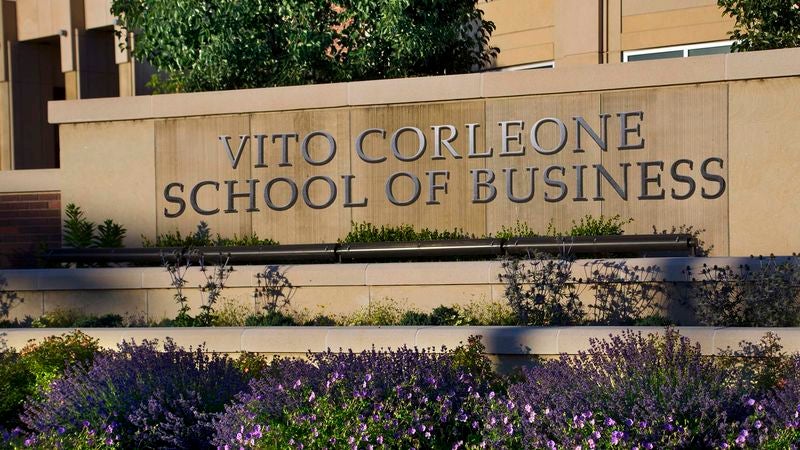
RENO, NV—Saying any suggestion of criminal activity was incompatible with the school’s values, the University of Nevada announced Tuesday that it will rename the Vito Corleone School of Business in the wake of accusations against the benefactor, the late Michael Corleone. “While we will forever be grateful to the Corleone family for more than 60 years of generous support, we cannot allow our institution to remain in the shadow of these allegations,” said University of Nevada president Marc Johnson, who acted in response to widespread community pressure following newly uncovered evidence that Corleone, heir to the Genco Pura Olive Oil fortune, was involved in money laundering, bribery of state officials, and the 1955 disappearance of Manhattan bookkeeper Carlo Rizzi. “This is indeed a sad day for the community as we must cut ties with a family that has provided so much for our university, including the recent expansion of Sonny Field and the continued funding of the Peter Clemenza Endowed Chair in Neuroscience. However, we believe this action is in the best interest of our university, and we wish the Corleone family the best in their future endeavors.” Sources confirmed that the decision to part ways with the school’s largest donor comes at a time when it is already struggling with the substantial spending cuts that were the cornerstone of the latest budget signed by Governor Pat Geary Jr.
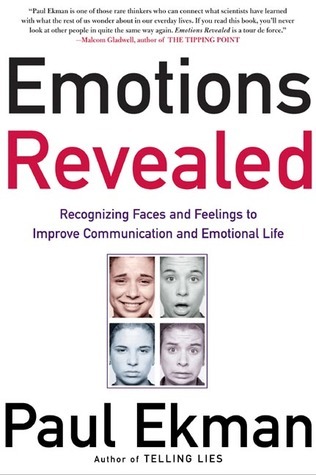
A renowned expert in nonverbal communication, Paul Ekman led a revolution in our scientific understanding of emotions. In Emotions Revealed, he assembles his research and theories to provide a comprehensive look at the evolutionary roots of human emotions, including anger, sadness, fear, disgust, and happiness.
Drawing on decades of fieldwork, Ekman shows that emotions are deeply embedded in the human species. In the process, he answers such questions as: What triggers emotions and can we stop them? How does our body signal to others whether we are slightly sad or anguished, peeved or enraged? Can we learn to distinguish between a polite smile and the genuine thing? Can we ever truly control our emotions? Unique exercises and photographs help readers identify emotions in themselves and others.
Emotions Revealed is a practical, mind-opening, and potentially life-changing exploration of science and self.
New Thinking Aug 21, 2025 Jim Semivan — co-founder and Vice President of Operations for To The Stars and a 25-year veteran of the CIA’s National Clandestine Service — shares his rare vantage point on UFO/UAP disclosure. Speaking with Jeffrey Mishlove, Semivan reflects on his own extraordinary encounters, his cautious stance on full disclosure, and the delicate interplay between national security, public perception, and non-human intelligence. He discusses his early involvement with To The Stars alongside Tom DeLonge, Hal Puthoff, Lou Elizondo, Chris Mellon, and others, and explains why societal readiness, narrative control, and psychological impact remain key concerns in how — and whether — disclosure unfolds. The conversation also delves into Semivan’s support for experiencers such as Chris Bledsoe, the possible interconnectedness of UFO phenomena with parapsychology, and the enduring “trickster” element behind the mystery. [00:00] Introduction [02:01] CIA career, To The Stars, and personal UFO encounters [10:19] Parapsychology connections and higher-dimensional reality [12:27] Supporting experiencer Chris Bledsoe [16:24] Founding To The Stars and challenges in research funding [24:51] Disclosure debates — limited vs. catastrophic [28:36] Why the technology is clearly non-human [33:56] Potential societal and psychological impacts of disclosure [42:57] The “trickster” element and need for caution [48:09] Grassroots disclosure, historical secrecy, and today’s whistleblowers [1:26:06] Conclusion New Thinking Allowed host, Jeffrey Mishlove, PhD, is author of The Roots of Consciousness, Psi Development Systems, and The PK Man. Between 1986 and 2002 he hosted and co-produced the original Thinking Allowed public television series. He is the recipient of the only doctoral diploma in “parapsychology” ever awarded by an accredited university (University of California, Berkeley, 1980). He is also the Grand Prize winner of the 2021 Bigelow Institute essay competition regarding the best evidence for survival of human consciousness after permanent bodily death. He currently serves as Co-Director of Parapsychology Education at the California Institute for Human Science. (Recorded on July 26, 2025)
New Thinking Aug 22, 2025 Psychology and Psychotherapy This video is a special release from the original Thinking Allowed series that ran on public television from 1986 until 2002. It was recorded in about 1990. It will remain public for only one week. Western science and traditional spiritual practice are both dedicated to the search for truth. The late Charles Tart, PhD, was professor of psychology at the University of California at Davis and author of Transpersonal Psychologies. He suggests that in the future we may be able to specify which types of individuals are likely to benefit most from particular spiritual disciplines. Now you can watch all of the programs from the original Thinking Allowed Video Collection, hosted by Jeffrey Mishlove. Subscribe to the new Streaming Channel (https://thinkingallowed.vhx.tv/) and watch more than 350 programs now, with more, previously unreleased titles added weekly. Free month of the classic Thinking Allowed streaming channel for New Thinking Allowed subscribers only. Use code THINKFREELY.
New Thinking Aug 24, 2025 Russell Targ is a parapsychological genius. He is one of the most successful and insightful parapsychologists in history. He is a man of magic! Last April, he celebrated his 91st birthday. The second book in the New Thinking Allowed Dialogues series is titled “Russell Targ: Ninety years of ESP, Remote Viewing, and Timeless Awareness.” It contains transcripts of fifteen conversations between Russell and Jeffrey Mishlove. Targ, a laser physicist, cofounded the remote viewing research program at SRI International. He is coauthor of Mind Reach, The Mind Race, Miracles of Mind, The Heart of the Mind, and The End of Suffering. He is author of Limitless Mind and The Reality of ESP: A Physicist’s Proof of Psychic Abilities. He is also coeditor of the anthology, Mind At Large.
Marianne Williamson Aug 21, 2025 Each of us can be a conduit of repair should we be willing to rise above our own neurotic patterns. Each of us contains a piece of the problem, and each of us a piece of the solution. Choosing between the two in our own lives helps us collectively heal the world. More from Marianne at: https://substack.com/@mariannewilliamson
Bill Gates, Marc Andreessen, and Even Akon Are Envisioning Utopias Without Considering How They’ll Be Governed
By Joe Mathews August 19, 2025 (ZocaloPublicSquare.org)
Many visionary cities—without clear governance—will never be anything more than dreams, writes columnist Joe Mathews. | Rendering of California Forever’s city project in Solano County. Credit: California Forever
In 2020, the rapper Akon secured 136 acres of land to build his own eponymous city on the site of the coastal village of Mbodiène, not far from where he grew up in Senegal.
Akon envisioned Akon City as a real-life Wakanda, the Afrofuturist utopia from Marvel’s Black Panther. But his extensive plans—100% solar power, Africa’s most advanced hospital, a high-tech university, an economy running on Akon’s personal cryptocurrency—omitted one crucial detail:
How Akon City would be governed.
Akon’s failure to plan for governance of his own city created questions about the project that he never could answer. Last month, the Senegalese government confirmed the project no longer exists.
Akon’s combination of ambition, and disinterest in governance, is remarkably common. With the world seeming stuck, a growing number of celebrities, oligarchs, and governments are seeking to create futuristic, paradigm-shifting new cities. From the seaside cliffs of Borneo to the deserts of Saudi Arabia to the swampy delta of Northern California, the rich and famous and powerful are proposing visionary metropolises that advance new aesthetics, pioneer technologies, or surpass previous milestones in sustainability or energy efficiency.
But for all their awesome grandeur, these proposals typically fall down for the same reason. They offer no new ideas—and often no details at all—about how their dream cities will be governed.
Why this void? Some urban creators are authoritarians, who offer no vision of government because they believe they can dictate to the future residents of their grand cities. Others see governance questions as difficult and divisive, and thus avoided in service of completing projects.
But the bigger problem is ignorance. In failing to include governance in their future visions, the world’s rulers demonstrate that the planet Earth is suffering from a lack of imagination when it comes to local democracy and government.
This fundamental failure to think about governance is perhaps most evident in the project known as California Forever. An enterprise called California Forever, backed by venture capitalists who pride themselves on world-changing ideas—including LinkedIn’s Reid Hoffman, Netscape co-founder Marc Andreessen and Emerson Collective’s Laurene Powell Jobs—secretly purchased land in Solano County, on the eastern outskirts of the Bay Area.
When the purchases became public, Jan Sramek, the founder and CEO of California Forever, promised a 21st-century city (population 400,000) to embody the “California Dream”—and prove that great things can be built here. His plans include North America’s largest site for advanced manufacturing, job centers integrated with plentiful housing, and the most walkable and sustainable neighborhoods possible.
What Sramek has yet to offer is any clear idea on how this city would be governed. In response to questions, California Forever has said they needed to get the city built first. But that failure to figure out governance has already stalled the project. At first, they sought voter approval for an unincorporated community, only to drop that idea when it appeared a ballot initiative might lose. More recently, they’ve been exploring having California Forever combine with existing cities.
But many visionary cities, without clear governance, will never be anything more than dreams.
It’s a similar trajectory to Bill Gates’ cutting-edge tech city of Belmont, proposed for Arizona in 2017, and stalled since. Gates’ plans are heavy on tech innovations to reduce traffic, and light on any governance plans that go beyond the billionaire’s personal beliefs. (Belmont also has never found a reliable source of water.)
To be fair, California Forever at least is operating in the mostly democratic realm of local government. Other technology visionaries reject democratic governance as they pursue their own utopias. Among them is Larry Ellison, the Oracle co-founder who purchased most of the Hawaiʻian island of Lanai, to turn it into an even more exclusive place.
Then there’s Peter Thiel—a Trump supporter who declared, “I no longer believe that freedom and democracy are compatible”—and provided the seed funding for the Seasteading Institute, which supports the building of cities that float in international waters, beyond democratic accountability. Thiel also backed the corporate island-state of Próspera, which the Honduran government wants to shut down because it won’t follow the country’s laws.
One of Próspera’s investors was San Francisco venture capital firm Pronomos, which invests in “prosperous cities that grow to empower entire nations.” Pronomos’ most high-profile project, the network state Praxis, has registered more than 2,200 citizens but has yet to find a territorial home (it’s looking in the Mediterranean, Greenland, and Ukraine). Perhaps that’s because its plans—which don’t describe governance but declare a commitment to “vitality” and opposition to “mediocrity”—have been called fascist by critics.
The narrator of a promotional video for Praxis offers this rebuttal: “Contemporary media proclaims that having any ideals is fascist. Everything of conviction is fascist.”
To be fair, it isn’t just tech bros who foreswear democratic governments for their dream cities. National governments have shown the same distaste for democracy in new metropolitan developments.
Indonesia is a decentralized democracy with strong local governments, but its increasingly autocratic national government has decided that the country’s new capital, now under construction on the east coast of Borneo, will have no local government at all. It will be administered by an agency of the national government, under rules as yet undrafted. Meanwhile, construction is dogged by delays and scandals.
China’s government is developing a series of future cities—most notably, Chengdu Future Science and Technology City—that are supposed to demonstrate new ways of living, but don’t include any new methods of governance. Mexico and Malaysia have proposed new “forest cities” to demonstrate a more ecological future, but the plans skip the governance details.
Saudi Arabia has said not a word about the governance structure of The Line, a planned city in the northwest region of Tabuk. Renderings of The Line are mesmerizing—two skyscrapers that stretch 100 miles across the desert, with space to house 9 million people—but they do not include any sign of local autonomy. The best bet is that The Line will be governed by a corporation owned by the Saudi ruling family.
Not all visions of future cities exclude governance. Plans for the former Walmart executive Marc Lore’s city of Telosa call for transparency in all government decision-making, participatory democracy, and an inclusive economic system in which residents would share in the city’s wealth. One caution: you would have to survive an application process to become a resident.
At smaller scales, a few new places have experimented with new ideas in liberal democracy. One pop-up city, Zuzalu, which appeared on Montenegro’s coast for a few months, had its residents create laws to encourage longer lifespans. Mexico City’s award-winning “utopias”—experimental neighborhood developments in the borough of Iztapalapa—are models of shared participatory governance, with authority divided among the mayor’s office, civil society groups, and local residents.
Democratic eco-villages, where small groups of people create democratic and environmental alternatives to civilization, are also on the rise. In Schloss Tempelhof in Germany (which I’ve visited), all 150 residents make decisions and share the work.
But many visionary cities, without clear governance, will never be anything more than dreams. Indeed, in Switzerland, the packaging mogul Daniel Model’s Avalon, the libertarian town-republic he declared within the rural village of Müllheim, remains imaginary.
Akon’s city in Senegal is not a total fiction. But the rap star managed to build only a welcome center and a basketball court, which is why the Senegalese government reclaimed most of Akon city’s land. On a small remaining patch, Akon may build a resort.
Perhaps someone can hold a giant conference there, to think up the new models of city governance that elude today’s would-be urban visionaries.
Joe Mathews writes the Connecting California column for Zócalo Public Square and is founder-columnist of Democracy Local, a planetary publication.
The New Moon in Virgo on August 22, 2025, at 11:07 PM MDT brings a grounded, practical energy that influences each zodiac sign differently, encouraging focus on organization, self-improvement, and service. Below is a bulleted list detailing how this New Moon may affect each sign, based on astrological insights:
Aries:
Focus on daily routines and health. This is a great time to start a new fitness plan or organize your work schedule. Channel Virgo’s precision to boost efficiency.
Potential challenge: Avoid overanalyzing details, which could lead to impatience.
Taurus:
Sparks creativity and self-expression. Use this energy to refine artistic projects or hobbies with a practical approach. Romance may also get a structured glow-up.
Potential challenge: Don’t let perfectionism stifle your natural flow.
Gemini:
Emphasis on home and family. De clutter your living space or set intentions for a more harmonious domestic life. Emotional grounding is key.
Potential challenge: Over thinking domestic details could cause restlessness.
Cancer:
Highlights communication and learning. Start a new writing project, refine your communication style, or organize your thoughts through journaling.
Potential challenge: Avoid scattering energy across too many tasks.
Leo:
Focus on finances and self-worth. Create a budget, reassess your resources, or set practical goals for material stability. Virgo’s energy supports financial clarity.
Potential challenge: Don’t obsess over minor financial details.
Virgo:
A powerful personal reset. This New Moon in your sign boosts self-awareness and personal growth. Set intentions for self-improvement and authenticity.
Potential challenge: Avoid self-criticism; embrace your strengths.
Libra:
Encourages introspection and spiritual growth. Meditate, journal, or explore subconscious patterns. This is a time to release what no longer serves you.
Potential challenge: Facing inner truths may feel uncomfortable.
Scorpio:
Activates social connections and long-term goals. Network strategically or refine your vision for the future. Collaborate with like-minded people.
Potential challenge: Don’t overanalyze group dynamics.
Sagittarius:
Shines a light on career and public image. Set professional goals, organize your work, or take practical steps toward long-term ambitions.
Potential challenge: Avoid micromanaging your professional path.
Capricorn:
Inspires growth through learning and exploration. Start a new course, plan a meaningful trip, or set intentions for expanding your perspective.
Potential challenge: Don’t let perfectionism hinder your curiosity.
Aquarius:
Focus on transformation and shared resources. Dive into financial partnerships, emotional healing, or releasing old baggage with practical steps.
Potential challenge: Avoid getting stuck in intense emotional details.
Pisces:
Highlights relationships and partnerships. Set intentions for healthier dynamics or organize joint ventures. Virgo’s energy brings clarity to connections.