Free Will Astrology: Week of July 31, 2025

BY ROB BREZSNY | JULY 29, 2025 (NewCity.com)

Photo: Maria Kovalets

ARIES (March 21-April 19): For many bamboo species, nothing visible happens for years after the seeds are sowed. Beneath the surface, though, the plants are developing an extensive underground root system. This is referred to as the “sleep” or “creep” phase. Once the preparatory work is finished, the above-ground growth explodes, adding as much as three feet of stalk per day. Dear Aries, I sense you have been following a similar pattern. Soon you will launch a phase of vigorous evolution and expansion. It might feel unsettling at first, but I predict you will come to adore it.

TAURUS (April 20-May 20): You are very close to uncovering interesting information about yourself—some new, some forgotten. But you will have to be brave and strategic to actually find it. If you manage to pull off this demanding-but-not-impossible trick, a series of breakthroughs may stream your way. Like what? Here are the possibilities. 1. A distorted self-image will fade. 2. An adversary’s hex will dissolve. 3. An inhibition will subside, freeing you to unite with a fun asset. 4. You will knock down a barrier that has been so insidious you didn’t know how strong it was.

GEMINI (May 21-June 20): In medieval music, “organum” refers to passages that feature two voices. One is sung in long, sustained notes, and the other performs intricate, faster-moving melodic lines above it. This is an apt metaphor for the roles I invite you to take on in the coming weeks, Gemini: both the drone and the melody. One way to do it is to hold steady in one realm as you improvise in another. Another is to offer your allies doses of stability and inspirational dreams. Welcome the duality! You are capable of both deep-rooted rhythm and visionary risk; both fortifying truth and playful fun.

CANCER (June 21-July 22): Cancerian author Ernest Hemingway had a reputation for bravado, but he was adept at wielding the protective, self-nourishing skills your sign is renowned for. He was sensitive about his works-in-progress, refusing to discuss unfinished stories. He understood that raw creative energy needed to be sheltered from kibitzing until it could stand on its own. “The first draft of anything is shit,” he said, but he also knew that defending the right to write that mediocre first draft was essential for him to thrive. Hemingway’s ability to channel his emotional vulnerability into moving prose came from establishing firm boundaries around his generative process. I recommend you do all that good stuff in the coming weeks, dear Cancerian.

LEO (July 23-Aug. 22): In ancient China and ancient Greece, the lion was not the king of beasts, but the guardian of gates. The threshold keeper. The one who asked, “Are you ready?” Now is a good time to bring this aspect of Leonine symbolism to your attention. You may soon feel a surge of leadership radiance, but not necessarily the stage-commanding kind. It will be more like priest and priestess energy. Gatekeeper presence. People and situations in your orbit are on the verge of transformation, and you can be a midwife to their transitions—not by fixing or moralizing, but by witnessing. So I invite you to hold space. Ask potent questions. Be the steady presence ready to serve as a catalyst.

VIRGO (Aug. 23-Sept. 22): The love-fakers and promise-breakers and delusion-makers are no fun, but I think you will ultimately be grateful they helped you clarify your goals. The reverse healers and idea-stealers and greedy feelers are perilous to your peace of mind in the short run, but eventually they will motivate you to create more rigorous protections for your heart, health and stability. In conclusion, Virgo, it’s one of those odd times when people with less than pure intentions and high integrity can be valuable teachers.

LIBRA (Sept. 23-Oct. 22): The Svalbard Global Seed Vault is built into a Norwegian mountain near the Arctic. It’s humanity’s backup garden. It stores over a million seed varieties from all over the world, serving as a safeguard for biodiversity. In accordance with astrological omens, Libra, I invite you to imagine yourself as resembling a seed vault. What valuable capacities are you saving up for the future? Are there treasures you contain that will ensure your long-term stability and security? Which of your potentials need to get extra nurturing? Bonus: Now is a good time to consider whether you should activate any of these promises.

SCORPIO (Oct. 23-Nov. 21): There’s a myth in Gnostic traditions that Sophia, the Goddess of Divine Wisdom, split herself apart and dispersed into the material world. She became embedded in every stone, plant and drop of blood. And she’s still here, murmuring truth from within every part of the material world. In Sophia’s spirit, Scorpio, here is your message: Wisdom isn’t elsewhere. It’s embedded in your body; in your grief; in the wood grain of your table and the ache behind your eyes. More than ever, you have a mandate to celebrate this gift. So for now, refrain from thinking that spirituality is about transcendence and ascendance. Instead, greet the sacred in the dust and mud. Listen for Sophia in the ordinary. She speaks in sighs and sparks, not sermons.

SAGITTARIUS (Nov. 22-Dec. 21): When I do tours to promote the books I write, the range of encounters can be wide. On one trip, over 300 people came to see me at a bookstore in New York City. They listened raptly, posed interesting questions, and bought seventy-one books. In Atlanta three days later, I was greeted by nine semi-interested people at a small store in a strip mall. They purchased three books. But I gave equal amounts of energy at both gigs. The crowd in Atlanta got my best, as did the audience in New York. I invite you to regard me as a role model, Sagittarius. Proceed as if every experience deserves your brightest offerings. Express yourself with panache no matter what the surroundings are.

CAPRICORN (Dec. 22-Jan. 19): In ancient Egyptian cosmology, ka is the vital essence and the double of a person that lives on after death. But it also walks beside you while you live. It drinks, eats and dreams. It is both you and more than you. Dear Capricorn, I invite you to tune in to your ka in the coming days, and any other spiritual presences that serve you and nourish you. Be alert for visitations from past selves, forgotten longings and future visions that feel eerily familiar.

AQUARIUS (Jan. 20-Feb. 18): “Dear Rob Brezsny: I wonder what you are like in person. Sometimes I get a Gen X vibe, like you wear vintage t-shirts from obscure bands, are skeptical but not cynical, and remember life before the internet, but are tech savvy. Other times, you seem like a weird time-traveler visiting us from 2088. It’s confusing! Are you trying to be a mystery? When’s your next public appearance? I want to meet you. —Aquarian Explorer.” Dear Aquarian: I’m glad I’m a riddle to you. As long as I avoid being enmeshed in people’s expectations and projections, I maintain my freedom to be my authentic self, even as I continually reinvent my authentic self. By the way, I recommend you adopt my attitude in the coming weeks.

PISCES (Feb. 19-March 20): In Norse mythology, the god Odin plucked out one of his eyes and hung himself upside down from the World Tree for nine days. Why would he do such a thing? The ancient stories tell us this act of self-sacrifice earned him the right to learn the secret of the runes, which held the key to magic, fate and wisdom. You don’t need to make a sacrifice anywhere near that dramatic, Pisces. But I do suspect you are primed for a comparable process. What discomfort are you willing to endure for the sake of revelation? What illusions must you give up to see more clearly? I dare you to engage in an inner realignment that brings metamorphosis, but not martyrdom.

Homework: Something dear that you left behind can now be retrieved. What? Newsletter.FreeWillAstrology.com

Book: “The Shining of Being”

Dear Friend,

My new book, The Shining of Being, is now available online worldwide, as both a print and an ebook.

This book points to the still, silent core of your being, which remains untouched by the vicissitudes of life. Your being does not need to be healed, perfected or enlightened. It is already whole, complete and at peace. Nor does your being need to be liberated from the illusion of separation. It is already the one being you share with everyone and everything. This recognition brings your longing to an end. It is the homecoming of the heart.

I hope you enjoy the book.

With love,

Rupert

North American deliveries:amazon.comamazon.caamazon.com.mx

UK deliveries:amazon.co.uk

European deliveries:amazon.deamazon.framazon.itamazon.es

Asian deliveries:  amazon.inamazon.jpamazon.sg

Australian deliveries:  amazon.com.au

South American deliveries:  amazon.com.br

Sahaja Publications

The Shining of Being is published by Sahaja Publications. Sahaja Publications is an independent publishing company founded in Oxford by Rupert Spira in 2013 producing works that point clearly and directly to the truth of non-duality, celebrated by sages and mystics throughout history. Sahaja Publications books, digital publications and audiobooks are available at www.rupertspira.com.

A betrayal of the victims of the Holocaust

A view from Israel

ROBERT REICH JUL 29, 2025

Friends,

The world’s leading hunger monitor, Integrated Food Security Phase Classification, said Gaza is in a famine that has “worsened dramatically” in the last few months. The number of Palestinians killed has officially surpassed 60,000. A new Gallup poll shows six in 10 Americans disapprove of Israel’s military actions in Gaza.

Occasionally I come across an article in the foreign press that’s strikes me as so important that I want to share it with you. The following was originally published on July 27 in Haaretz, the longest-running newspaper currently in print in Israel. It was published in Hebrew.

Orit Kamir is an Israeli professor of law who drafted Israel’s law against sexual harassment and its law prohibiting bullying in the workplace (which was adopted by Israel’s labor courts). He is the author of “Betraying Dignity: The Toxic Seduction of Social Media, Shaming and Radicalization,” published in 2020. I am grateful for his permission to republish this.

Silence in the Face of Gaza’s Starvation is Absolute Betrayal of Holocaust Victims

By Orit Kamir

In her childhood, my mother was starved by a dark regime. When the Nazi army occupied Poland and Jews were pushed into ghettos, they were forced to make do with less and less food. Eventually, food disappeared almost entirely. My mother was seven years old when the Lvov ghetto closed in on her. Fortunately, both her parents were alive and did everything to ensure her survival. The nutrition they managed to obtain for her was very meager: lengthy searches in the streets and trash cans sometimes yielded potato peels or edible plants. My grandmother would cook them and the water was drunk as soup. Proteins, sourced from various insects, were rare. Nevertheless, my mother was lucky. Other children wasted away and died.

The Nazi regime reduced the ghetto’s boundaries and squeezed its residents, whose numbers dwindled daily, into increasingly smaller areas. My mother and her parents found themselves sharing an apartment with a family named Mintzer, consisting of two parents and four children. Both parents and the eldest son were captured in aktions and sent to extermination. Another son, hungry and weak, fell ill and languished for many days until he breathed his last. My grandparents tried to revive the two orphaned children who remained, but they couldn’t help: they had nothing to give. The entire Mintzer family was annihilated. Bella, the youngest daughter, was ten years old when she died.

My mother somehow survived the starvation and the war, but the Mintzer children who wasted away before her eyes remained with her always. They accompany me to this day. The survivors’ guilt doesn’t dissipate and the scar still burns. On my first visit to Lvov, I searched for that building in the ghetto and lit memorial candles for them. Who would have believed that eighty years after they were starved to death, my country, the Jewish state, would decree that I bear real guilt for the starvation and extermination of tens of thousands of children like them. The state that arose from the ruins of that destruction has brought a hundred thousand children in Gaza to the danger of death from starvation.

Whether our mother was there in body or not – we are all second, third, and fourth generation to victims of starvation and extermination. And the one commandment the victims left us, all of us, is simple: never again. Because every person, as a human being, has absolute and inviolable value, “human dignity,” and our supreme duty is to recognize and ensure it. Simply because they are human. All the more so for children. They are always entitled to life, to protection, without question and without qualification. This is the entire Torah and there is nothing else. And it dictates our responsibility and our moral duty.

But in 2025, the Israeli army, on orders from the political echelon, is destroying Gaza and exterminating its population. Neighborhood after neighborhood and city after city in the Strip are destroyed to the foundations, and people are expelled with nothing and pushed to crowd into increasingly smaller areas. Like then. After we destroyed all infrastructure, including hospitals, the mortality is relentless. Families constantly shrink and thousands have already been erased from the face of the earth. Others leave behind hopeless orphans, abandoned to their fate. Like then.

Since Israel broke the ceasefire in March, Gaza’s besieged population has also been deliberately and systematically starved. Israel allows only very little food to enter the Strip, and what little is allowed in is brought in a way that cannot reach all residents. Children, the sick, the elderly, people weakened by hunger – cannot reach the four food distribution stations Israel created, instead of the 400 stations that operated before. We have decreed their fate to languish until they die of hunger, weakness, and disease. Relatively strong young people who do reach the distribution stations to get some relief are shot to death daily by Israeli soldiers.

There is no electricity, no gas, no clean water; if someone finds a potato peel – there isn’t even a way to cook it. And all this time, Israel prevents the entry of food, medicine, and other vital supplies that could save lives, and which are available in large quantities at hand (because they are held by UN organizations that Israel decided to boycott), and denies its actions – even now, as it tries to make minor corrections at the margins.

This is conduct of incomprehensible cruelty. It creates horror beyond the ability to imagine, and this allows most Israelis to deny it: if it’s too terrible to be true – it’s probably not true. And so they allow the horror to continue happening.

What value does our freedom have if we don’t use it to stop dispossession, killing, and starvation? What do we need the rule of law for if not to ensure human dignity?

The Israeli public’s silence is a betrayal not only of the entire world of values it claims to hold; it is an absolute betrayal of Holocaust victims, in whose name we demanded a state for ourselves where we could ensure our existence. It is a betrayal of the Mintzer family and the millions of other families who were slaughtered and perished throughout Jewish history. It is a betrayal of the entire long legacy of Jewish existence as a persecuted minority. It is a betrayal of humanity in general – and of our collective identity in particular. It is such a monumental betrayal that it’s hard to contain.

I don’t usually invoke the name of the Holocaust, because too many bear it in vain, but now it’s unavoidable.

Those who rejoice in Gaza’s destruction and annihilation, those who justify or rationalize the horror with talk of revenge for the terrible massacre of October 7 – have lost their souls. But those who can still feel human emotion must wake from the paralyzing slumber and shake off this unforgivable betrayal.

You who cry out against the firing of the Shin Bet chief and the attorney general and the chairman of the Foreign Affairs and Defense Committee – but fill your mouths with water regarding the extermination and starvation we are carrying out in Gaza: your concern for Israeli democracy and the future of the state pales against your silence in the face of mass extermination. What value does our freedom have, which you fight for, if we don’t use it to stop dispossession, killing, and starvation? What do we need the rule of law for if not to ensure human dignity?

You who organize rallies to bring back the hostages, whom the government wickedly abandons with unbearable evil – but don’t address the destruction of the lives of another two million women and men who are also languishing in Gaza alongside the hostages: what kind of human solidarity is this, that applies only to the twenty “our” hostages, and closes its eyes to the fate of millions?

You who run WhatsApp groups with many participants and broadcast hope for a healthier and saner future – and close your eyes to the unforgivable crime: what rosy future can there be here, when the tens of thousands of children who died through our fault will accompany us wherever we go?

And you who presume to lead, in various ways, the sane public – but are careful not to say “controversial” things that might upset someone: shame on you. If children dying of hunger don’t disturb you enough to cry out without political calculations, what alternative are you offering? What leadership?

Where are the Holocaust researchers from Yad Vashem? The Medical Association? The nurses? Professional associations – of psychologists, sociologists, lawyers, social workers? Where are the student organizations? When children become Muselmänner and die in agony because of us – don’t you think it’s your duty to cry out until the horror stops? So what are you here for?

If a million Israeli women and men took to the streets, as one person, with an uncompromising demand to end the war immediately – this horror would end. Even a monstrous and disconnected government cannot ignore the entire public. When a million Israelis took to the streets, the hostages will finally be returned to their homes; the lives of soldiers, 896 of whom have already been sacrificed, will be saved; their souls will be saved from the insane trauma their state imposes on them; and two million people in Gaza will be rescued from the inferno Israel has trapped them in.

The Metaphysical Foundations of Buddhism

Owen Flanagan explores how Buddhism reconciles meaning and science — without a creator, a soul, or supernatural scaffolding.

Photo credit: Yibo Wang, via Unsplash

By: Owen Flanagan

July 28, 2025 (thereader.mitpress.mit.edu)

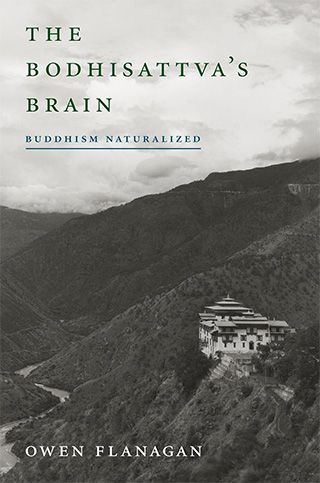
In “The Bodhisattva’s Brain: Buddhism Naturalized,” philosopher Owen Flanagan explores whether a major spiritual tradition can be reconciled with a thoroughly scientific worldview. Rejecting supernaturalism, Flanagan presents a version of Buddhism that remains both ethically serious and existentially rich, while remaining fully compatible with contemporary science and philosophy. In the excerpt that follows, he examines how Buddhism diverges sharply from theistic traditions by denying the existence of a creator God and a permanent self. Drawing on metaphysical concepts like dependent origination and anatman (no-self), he argues that these doctrines not only make internal sense within Buddhist thought but also resonate with modern scientific understandings of consciousness and the cosmos.


Buddhism originated in 500 BCE when Siddhartha Gautama, or simply Buddha, gave his inaugural address at Deer Park, near the outskirts of Benares, India (now called Varanasi). Depending on how one understands the orthodox Vedic or Indic spiritual tradition of that time, Buddhism was either a complete break with that tradition or a development of it.1 Buddhism rejects the caste system on ethical grounds. More interesting to those who think of religion as requiring belief in divinity, Buddhism rejects both the idea of a creator God and an immutable, indestructible soul (atman), on logical and empirical grounds.

The Bodhisattva's Brain: Buddhism Naturalized
This article is excerpted from Owen Flanagan’s book “The Bodhisattva’s Brain: Buddhism Naturalized.”

That said, traditional Buddhism is chock full of ghosts, spirits, devils, deities, heaven and hell realms, and rebirths according to karmic laws that govern the universe. Even if contemporary secular Westerners see Buddhism as compatible with Enlightenment philosophy, many Asian Buddhists, especially the Tibetan variety, do not.

Buddhism rejects the reigning Vedic conception of Brahman as the prime mover,2 and it also rejects the idea that each individual houses an unchanging self or soul. Beyond this, many familiar Indian ideas are retained and developed in Buddhism — although, in certain quarters, and only recently, with hesitancy. This legacy includes the deep importance of the appearance-reality distinction, the idea of reward for virtuous action (karma), the idea that suffering (dukkha) defines the human predicament (samsara) and that liberation is possible (nirvana) through enlightenment (panna; Sanskrit: prajnabodhi) and virtue (silakaruna), as well as the ideas of reincarnation or rebirth.

Let me stick with the two metaphysical beliefs that Buddhism rejects: a creator God and a permanent self or soul. First, Buddhism sees right through the familiar problems with cosmological and design arguments for the existence of God. Such arguments beg the question of the origin of the creator or designer. To say that the prime mover always was or is self-creating and self-sustaining is to accept the infinite regress of causes (this one a causa sui) that such arguments are designed to make evaporate, which they reject as a possibility. If God always is and shall be, then God itself is infinitely regressive.

When the Dalai Lama listens to the story of the Big Bang occurring 14 billion years ago, he says fine “but not, of course, the first Big Bang.” This response is hardly a rejection of our theory of the Big Bang. The Dalai Lama sees the Big Bang theory as itself inadequate because it is not deeply causal enough. Some scientists themselves are now wondering if a better story doesn’t involve less of a singular, original bang than an origin for this universe that involves an open wormhole from another parallel universe, with these other universes or their ancestors — possibly comrades in a vast, even infinite, multiverse — being beginningless.

Buddhism sees right through the familiar problems with cosmological and design arguments for the existence of God.

Cosmologists will sometimes say one can’t ask what there was before the singularity banged or how the singularity got there. What they mean is that “time,” as physics understands it, begins (or becomes a useful concept) with the Big Bang. But this hardly makes the sense behind the question go away. Thus other cosmologists will admit the legitimacy of the question and say they have no clue as to how to answer it. Buddhism is comfortable with an infinite regress of natural causes. Indeed, the idea fits well with the metaphysical idea of dependent origination, according to which everything that happens depends on other things happening.3

The rejection of the Vedic (Indic) doctrine of atman, the idea that humans are possessors of an immutable, indestructible self or soul, comes from two lines of thought. First, there is the idea of dependent origination that I have just mentioned. Everything is in flux and all change is explained by prior change. The principle is universal and thus applies to mind. Next bring in experience or phenomenology: One will see that what one calls “the self” is like many other natural things, partaking of certain relations of continuity and connectedness. My conscious being is much more streamlike than it is like Mount Everest (which is also part of the flux, just less visibly so). Conventional speech allows us to reidentify each person by her name as if she is exactly the same over time.

But in fact identity is not an all-or-nothing thing. Personhood is one kind of unfolding. The Himalayas are a very slow unfolding (one answer to how long it takes to reach final enlightenment is as long as it would take for a mountain range 84,000 times larger that the Himalayas to erode if touched once a day with a soft cloth!); humans are a faster unfolding than the ordinary Himalayas; drosophila unfold much more quickly. Each kind of thing in the cosmos is an unfolding in the cosmos, the eternal Mother of all unfoldings, and has a temporal span during which it can be said to be what it is — a mountain range, a person, a fruit fly — and after which it ceases to have enough integrity to be said to be the same thing, itself. At such a transition point, we say the thing, event, or process is gone, over, dead, that it has passed, passed on, or passed away.

This is the doctrine of anatman, no-self. Nothing is permanent, even things that seem so, aren’t. If properly understood the view is not nihilistic. One of my students once asked in a very disturbed manner, “If I am not myself who the fuck am I?” I am happy to report that further therapy about the meaning of the doctrine of anatman calmed him. Indeed, in the West a very similar view is widely held from Locke to the present. And it fits nicely with contemporary mind science. Furthermore, the doctrine of anatman suits Buddhist ideas that persons can in fact transform themselves, become enlightened, and so on. If one’s nature is, as it were, immutably fixed, it is hard to see how self-transformation is possible.


Owen Flanagan is a professor of philosophy and neurobiology emeritus at Duke University. He is the author of several books, including “The Bodhisattva’s Brain,” from which this article is excerpted.

  1. The oldest Vedas date to 1500 BCE and do not include the Upanishads and the Bhagavad Gita. The Upanishads date from the sixth century BCE. The Bhagavad Gita is included in the Mahabharata Epic, written from the fourth century BCE to the fourth century CE, but the Bhagavad Gita is thought by many, perhaps most scholars, to be a late text composed possibly entirely in the Common Era. In any case, the latter are the key texts of what came to be known as Hinduism. Hindus don’t typically call their religion Hinduism (although they may call themselves Hindus as a sort of ethnic attribution). The name originates most likely in the desire of British colonialists to name their—the Indians’—religion/spiritual practices something. So Buddhism did not come from Hinduism, because whatever exactly Hinduism is or names, it comes after Buddhism. To make matters worse, the English word Hindu is almost certainly based on a mispronunciation that relates to the importance of the Indus (not Hindus’!) river. To describe their spiritual practice, Hindus sometimes use the word darshana, which is best translated as “philosophy.” Often they refer to their way as Santana Dharma, the eternal way of truth. There is no Hindu Pope. It is not a creedal faith with a single orthodox doctrine. There is no Buddhist Pope either. Buddhism is also not a creedal faith with a single orthodox doctrine. That said, every spiritual tradition has some commitments that constitute the minimal conditions of being a member, advocate, and so on. A traditional Tibetan textbook, Cutting through Appearances, says, “The definition of a proponent of Buddhist tenets is: a person who asserts that the four seals which are the views testifying that a doctrine is Buddha’s. The four seals are: 1. All compounded phenomena are impermanent; 2. All contaminated things are miserable; 3. All phenomena are selfless; and 4. Nirvana is peace.”
  2. Brahman is the name for the ultimate, self-sustaining source of all creation. But “it” is not a person. Furthermore, many Hindus conceive their elaborate pantheon of gods, even high Gods like Brahma (creator of earth but not everything; that is Brahman’s role), Vishnu (loving protector), and Shiva (fierce protector) as “aspects” on the one and only God, Brahman. Hints of Spinoza.
  3. The Dalai Lama (2005, 92–93) writes: “Even with all these profound scientific theories of the origin of the universe, I am left with questions, serious ones: What existed before the Big Bang? Where did the Big Bang come from? What caused it? Why has our planet evolved to support life? What is the relationship between the cosmos and the beings that have evolved within it? Scientists may dismiss these questions as nonsensical, or they may acknowledge their importance but deny that they belong to the domain of scientific inquiry. However, both these approaches will have the consequence of acknowledging definite limits to our scientific knowledge of the origin of our cosmos. I am not subject to the professional or ideological constraints of a radically materialistic worldview.… And in Buddhism the universe is seen as infinite and beginningless, so I am quite happy to venture beyond the Big Bang and speculate about possible states of affairs before it.”

POSTED ON JUL 28

Book: “LOVE: The Heroic Stories of Marriage Equality”

LOVE: The Heroic Stories of Marriage Equality

LOVE: The Heroic Stories of Marriage Equality

Author Frankie Frankeny, with John Casey, Foreword by Jim Obergefell and Evan Wolfson

Celebrating the history of the LGBTQ+ community’s marriage equality movement from the 1950s until today, this triumphant journey is presented in compelling stories of the pioneering couples, along with winning photographs.

This beautiful, moving tome honors the brave LGBTQ+ couples, activists, and allies who fought for and ultimately gained the right to marry. The chronological presentation of 100 inspiring stories of these dauntless partners up to the strategists of today, recount how they were instrumental in bringing about this basic civil right. Beginning in the pre-1970s era when gay couples were nearly invisible, the story then shifts to the growing activism of the 1980s and 1990s, continues with the landmark Supreme Court ruling in 2015, which granted full marriage equality across the nation, and concludes with an exploration of current issues. These moving profiles, along with archival images, feature couples from major court cases, such as Jim Obergefell and John Arthur, along with well-known personalities whose narratives helped draw attention to marriage equality, including Cynthia Nixon and Christine Marinoni, George and Brad Takei, and Ellen DeGeneres and Portia de Rossi.

About The Authors

Frankie Frankeny is the founder of GoodDoxie Studios and a photographer/director. She has documented the marriage equality movement since 2004. Frankeny has also produced numerous award-winning books. John Casey is the senior editor/writer of The Advocate. Civil rights activist Jim Obergefell’s court case won marriage equality nationwide. Evan Wolfson is the author of Why Marriage MattersMarc Solomon and others were involved in the fight for marriage equality.

(rizzoliusa.com)

KIDS WHO SIDE WITH THE ABUSER, PART 1

(lundybancroft.com)

Several weeks ago, I wrote a post about kids who see through the abuser. To my surprise, it was the most popular piece I’d put up in a long time; a lot of my readers are trying to see through kids’ eyes. How do young people form their understandings of what is happening when their father (or step-father) abuses their mother? And how can they learn to see through the abuser’s lies and manipulations?

In the discussion that grew out of that post, many mothers shared their stories of children who weren’t seeing through the abuser. Unfortunately, that experience is a common one also. I’m going to examine some of the reasons in this post, which will be in two parts.

(In order to keep my language as simple as possible, I’m going to refer to the abuse perpetrator as a “batterer,” even if his abuse is almost entirely about emotional battering rather than physical or sexual violence. I’m using this term because I’m discussing homes where the primary source of trauma to the kids is Dad’s abuse of Mom, not either parent’s abuse of them directly — which is a different subject.)

1) The pursuit of safety

Kids who grow up around domestic abuse are afraid. The primary thing they live in dread of is the next time that their father will verbally rip Mom to shreds. They hate watching that happen; people who haven’t lived it tend to underestimate how awful these incidents are for kids. For most kids living with a batterer, the number one source of their trauma is this accumulation of acts of psychological cruelty towards their mothers that they’ve had to witness.  It eats them up inside to watch Mom sent into misery and robbed of her dignity over and over again.

But they’re scared about other things too, mostly emotional dangers. They’re scared that Dad is going to rip into them directly, or into one of their siblings. They’re scared that he’s going to ruin mealtimes, ruin birthdays, ruin Christmases and other key holidays. They’re scared that he’s going to punish them by taking key freedoms away, causing them to miss out on things they really wanted to be part of. (And a large proportion of batterers punish the whole family when they’re mad at Mom, or when they’re mad at one of the kids. So everyone knows they could pay a big price when he explodes, regardless of which family member he’s actually upset with.)

If he becomes physically frightening at times – as most domestic abusers do – then the kids have all of that additional fear. And as with his cruelty and verbal abuse, the kids usally worry about Mom most of all, since she’s his favorite target. But they worry about all of it.

So kids are scrambling internally, desperate for emotional – and sometimes physical or sexual – safety. And there’s no safe place to stand, so they tend to keep trying different positions over the years, hoping to find a good one.

Position 1: Side with Mom

There are two key advantages on this side. First, you have the emotional benefits of feeling closer to Mom, and in a home where Dad is a batterer she’s your key hope for nurturing and genuine comfort. (As opposed to the self-serving, manipulative form of comfort that comes from the abuser).

Second, you feel better because you know you’re doing the right thing. Kids care a lot about right and wrong, and about fair and unfair, from a very young age. Standing against injustice matters to them. On a deep level, kids feel better about themselves if they stand with Mom.

But there are also costs. The abuser stops giving you much attention when he perceives your bond with Mom, and may be target you for outright insults and other mistreatment. It hurts to be on the outs with him, especially because he’s the one with the power. (Abuse creates a huge power imbalance in the abuser’s favor.) He’s the one who determines who gets which freedoms and privileges; he can make your day go well or terribly. Plus he may shame you about being close to Mom, and if you’re a boy he may call you a Mama’s Boy.

If any of your siblings are allied with the abuser, they start to look down on you. You’re a Loser, siding with Mom; Dad is the cool and powerful one, Winners side with him.

Position 2: Side with the abuser

So at some point you’re likely to try standing here. Now you’re linked to power, which feels good; that’s why kids try to be accepted by the Cool Crowd at school. Some concrete things are likely to go better, because Dad isn’t targeting you. More freedom, more privileges. You’re feeling less afraid for yourself (though you may still worry about Mom or your siblings); if Dad gets scary or violent, you know it’s not likely to be directed at you.

And on a superficial (and therefore addictive) level, you’re feeling good about yourself. You’re a Winner now. And that burning pain of witnessing injustice starts to ease up, because when you’re on Dad’s team you get to decide that Mom deserves what she gets. What a relief.

But there are also losses. You miss feeling closer to Mom, and you long for her nurturing and affection. She hasn’t necessarily withdrawn those things from you – she’s much less likely than the abuser to reject you for being on the wrong team. But you’ve done the withdrawing yourself, because you can’t be in good with the abuser if he sees that you’re still deeply connected to Mom.

Plus, there’s a problem brewing with that superficial feeling of being on the Cool Team; on a deeper level, perhaps unconscious but rumbling somewhere down inside, you know you’re on the side that’s mean and selfish. You know that this side is wrong, that’s it’s unjust. And you’re beginning to hate yourself for being on the wrong side.

Position 3: Stand in the middle

Because both of the positions above come with high prices, at some point you’re likely to try seeing if you can be on both sides’ good list. You’ll remain close to Mom, but try hard simultaneously to win Dad’s approval. You butter him up, cater to him, and see if you can craft yourself into the kind of person he seems to like. When he’s getting nasty, you try to get Mom to give into his bullying, because that will keep the peace. You see if you can mediate their conflicts, see if you can be a third adult in the house. You’ll try to sneak in your cuddly times with Mom when the abuser isn’t around or isn’t noticing.

And for periods of time this may appear to work fairly well.

But here, too, there are serious problems. The stress is overwhelming; your insides are likely to be twisted with anxiety. You’re trying to stay aware of both parents’ moods and desires, anticipate problems before they arise, and watch out for your siblings’ well-being as well; the way to keep the peace is to keep everybody happy. That’s an overwhelming load. Your childhood is disappearing into trying to parent the whole family.

Plus, the abuser isn’t always satisfied with the way you’re catering to him; there are times when he requires your outright loyalty and demands that you participate in rejecting and demeaning Mom. (He won’t say these things aloud, but he’ll make it painfully clear what you have to do to avoid being put back on the bad list.)

As you can see, there’s no great place to be. Kids who witness abuse try out all three of these positions, and stay in them for varying lengths of time as they experience the advantages and the wounds of the spot they’re occupying.

2) Trying to escape the pain of how wrong it all is

I referred to this above, but I want to go into more detail. Adults in general, including people in the helping professions, tend to greatly underestimate how deeply children feel the pain of injustice. There is a highly mistaken — but widely held — belief that children are self-focused, and therefore they experience the world primarily in terms of how things affect them personally. This view leads to the erasure of huge portions of children’s inner experience, including some of their deepest pain. Kids hate seeing people suffer (and hate seeing other animals suffer). Their hearts, in the emotional sense, are no smaller than adult hearts. And kids get super upset when they perceive unfairness happening to anyone, not just to them personally. And if that cruelty or injustice is happening to someone they love, it eats them up inside.

What’s more, children experience their mothers almost as extensions of themselves. So when she is being treated wrongly, they feel that pain both as a wrong to her and as a wrong directly to them. It hurts them double.

In this context of severe distress, it becomes potently tempting to kids to decide that Mom is largely, or even primarily, at fault for what’s being done to her. If they choose to see it that way, they can relieve some of that intense pain, because if she deserves it then it isn’t injustice.

And the abuser never stops reminding them – without saying it directly, of course, but he always has ways to get his messages across – that this escape path is open to them. His unspoken message is, Look at me, I don’t feel your mother’s pain, so you don’t need to either. Just join me and you’ll be away from all that.

This relief comes on top of all the other benefits of siding with the abuser.

So notice this striking point: one of the main reasons why kids side with the abuser is because they’re in so much pain about what he has done. This appears contradictory on the surface, but when you use your imagination to put yourself in the child’s position, it starts to make sense. And it helps to explain why some kids who have been allied with Mom for years will abruptly – and heartbreakingly – pop over to the dark side, a topic I’ll come back to.

     In Part 2 of this post I’ll look at several other reasons why kids can end up on the abuser’s team. And we’ll look at ways to help them find their way back to Mom.

Is there an edict by the Pope to allow extermination of Native Americans?

Google AI Overview

While not an explicit edict for the extermination of Native Americans, a series of 15th-century papal decrees, collectively known as the 

Doctrine of Discovery, laid the groundwork for European colonization and its devastating consequences for Indigenous populations. These decrees, including Dum Diversas (1452), Romanus Pontifex (1455), and Inter Caetera (1493), granted Christian nations the right to claim and exploit lands inhabited by non-Christians, justifying the displacement, enslavement, and violence against Indigenous peoples in Africa and the Americas. 

The Doctrine of Discovery became a legal and ideological justification for European claims in the Americas and for the dispossession and subjugation of Indigenous peoples. Although later popes and even the Vatican itself acknowledged and apologized for the historical mistreatment of Indigenous peoples and the role of the Church in assimilation policies and residential schools, the Doctrine of Discovery’s harmful legacy continues to be felt in various aspects of society, including land rights and legal systems. 

It is important to note that the Vatican formally repudiated the “Doctrine of Discovery” in 2023, stating that it “is not part of the teaching of the Catholic Church”. However, the repudiation does not diminish the historical impact of the doctrine and its contribution to the suffering of Indigenous peoples. 

Morning Meditation

I place my sadness in the hands of God

JUL 28, 2025

Jos Buurmans / 500px

I place my sadness in the hands of God

Only in feeling my sadness can I learn from it, and deepen through it. My sadness is often my teacher, as I learn to outgrow its causes within myself.

I will not anesthetize myself today. I will not distract myself from the pain of seeing what is difficult to see yet important to look at. Rather, I will look with open eyes on the things I have done to attract my sadness, and commit myself to changing them.

Dear God,
Please remove my sadness
By removing its causes.
Reveal to me what I need to see
That I shall be sad no more.
Amen.

I place my sadness in the hands of God