Beyond DNA: The Bioelectric Revolution

How cellular communication through electricity is transforming science and medicine

Thom Hartmann's avatar

THOM HARTMANN

MAY 28, 2025 (wisdomschool.com)

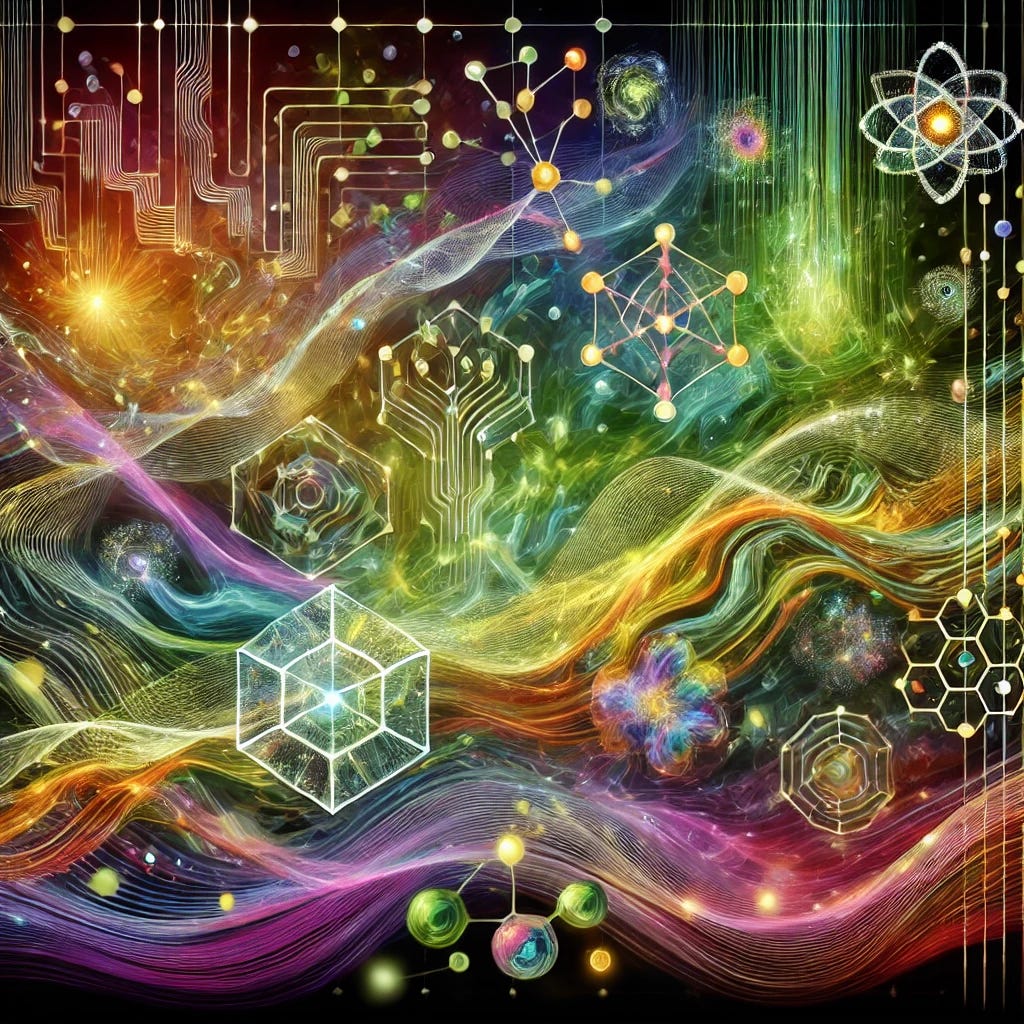
An abstract and symbolic illustration inspired by the concept of bioelectric fields influencing biological development. The image features colorful, dynamic energy patterns resembling electrical waves and gradients, interacting with abstract representations of cells and tissues. The foreground includes vibrant neural networks and geometric shapes symbolizing cellular communication. The background is a blend of soft lights and interconnected lines, evoking the harmony of biological systems. The color palette uses greens, golds, and purples to evoke life, energy, and scientific wonder, with an overall abstract and artistic style.

Share

In recent years, the field of developmental biology has been revolutionized by the work of Dr. Michael Levin, whose research on bioelectric fields is challenging long-held assumptions about the role of genes in shaping life. Levin’s groundbreaking experiments with tadpoles have revealed that bioelectric signals—the electrical gradients and patterns that cells use to communicate—play a critical role in determining biological outcomes.

His findings suggest that these fields might be even more influential than genes in shaping the structure and function of living organisms. Moreover, they open up profound questions about the role of bioelectric fields in human identity and development, potentially extending to ideas about the influence of external factors or even past lifetimes.

To understand Levin’s work, it’s important to grasp the concept of bioelectricity. All living cells generate electrical charges by moving ions across their membranes. These charges create electrical fields that allow cells to communicate with one another, much like neurons in the brain transmit information.

In addition to guiding immediate cellular activity, these bioelectric signals influence large-scale processes such as tissue regeneration, wound healing, and embryonic development.

In one of his most famous experiments, Levin and his team manipulated the bioelectric fields in developing tadpoles. Normally, a tadpole’s eyes grow in specific locations dictated by its genetic blueprint. However, by altering the bioelectric signals in the embryos, Levin’s team was able to induce eyes to grow in entirely new locations—even on the tadpole’s back or tail.

Remarkably, these ectopic eyes were functional, connecting to the nervous system and responding to visual stimuli. This demonstrated that the instructions for eye growth were not entirely locked within the DNA but were significantly influenced by the bioelectric field.

This discovery has profound implications for our understanding of biology. Genes, long considered the ultimate blueprint for life, may act more like components in a larger system guided by the bioelectric field.

In this view, the field acts as a kind of “master architect,” using genetic instructions as tools to build structures and systems. This challenges the gene-centric model of biology and suggests that manipulating the bioelectric field could lead to breakthroughs in regenerative medicine, cancer treatment, and even bioengineering.

Levin’s work also hints at deeper philosophical and metaphysical questions. If a bioelectric field can override genetic instructions to determine an organism’s development, could a similar “field” influence who we are at birth?

In humans, this might extend beyond physical traits to include aspects of personality, behavior, and consciousness. What shapes this field? Is it purely a product of the physical environment, or could it be influenced by more enigmatic factors, such as collective human experience or even past lifetimes?

The idea of fields shaping life is not new. In the early 20th century, biologist Rupert Sheldrake proposed the concept of “morphic fields”—invisible organizing principles that guide the development and behavior of living systems.

Levin’s research offers a concrete, scientific basis for exploring such ideas, grounding them in observable bioelectric phenomena. It raises the possibility that these fields could extend beyond the physical body, linking individual organisms to larger systems of influence.

One intriguing implication is that our personal bioelectric field might be shaped by the world around us. Environmental factors such as diet, stress, and exposure to toxins are already known to influence epigenetics—the way genes are expressed.

Levin’s work suggests that these factors could also alter the bioelectric field, thereby influencing development and health in ways that go beyond genetic changes. For example, a nurturing environment might promote a healthy bioelectric field, fostering resilience and well-being, while a toxic environment could disrupt the field, leading to developmental anomalies or disease.

Another provocative idea is that the bioelectric field could carry information from past lifetimes. While this notion lies outside the realm of traditional science, it resonates with concepts from reincarnation and karmic philosophy.

If consciousness is linked to a universal field, as some theories of quantum consciousness propose, it’s conceivable that aspects of identity and experience could be “imprinted” onto the bioelectric field and carried forward into new life forms. While speculative, this idea aligns with Levin’s findings by emphasizing the primacy of the field over the genome in shaping life.

Critics of these ideas point out that much remains unknown about the mechanisms and limits of bioelectric influence. While Levin’s experiments demonstrate remarkable plasticity in development, they do not fully explain how bioelectric fields interact with other biological systems or how such fields might extend beyond the organism. Nevertheless, his work has sparked a paradigm shift in biology, encouraging researchers to look beyond genes and explore the broader systems that guide life.

The practical applications of Levin’s research are vast. In medicine, bioelectric field manipulation could revolutionize treatments for conditions ranging from birth defects to cancer. For instance, by reprogramming the bioelectric signals in damaged tissues, it might be possible to regenerate organs or even limbs.

In bioengineering, Levin’s findings could pave the way for creating complex structures without relying solely on genetic modification. The ability to control bioelectric fields could also advance artificial intelligence, robotics, and synthetic biology, bridging the gap between biology and technology.

Perhaps the most exciting aspect of Levin’s work is its potential to deepen our understanding of human identity. If a bioelectric field plays a central role in shaping who we are, it challenges the reductionist view of humans as mere collections of genes and cells.

Instead, it paints a picture of life as a dynamic interplay between fields, genes, and environment—a holistic system in which every component influences the whole. This perspective invites us to reconsider our relationship with nature, each other, and the larger systems of which we are a part.

Levin’s research on bioelectric fields and tadpole eyes offers a profound reminder that the mysteries of life are far from solved. By revealing the hidden influence of bioelectricity, it encourages us to look beyond the visible and measurable, opening the door to new possibilities for science, medicine, and philosophy.

It challenges us to embrace a more integrated view of life, where fields, not just genes, shape the essence of who we are and who we might become.

Saturn Has Entered Aries – Now What?

(Astrobutterfly.com)

Saturn has entered Aries on May 25th, 2025. 

Saturn starts a new 29-year chapter, which is significant on its own; however, what’s special this time is that it’s happening alongside Neptune’s entry into Aries.

Neptune has recently moved into Aries as well, so we’re not looking at a standalone Saturn influence, but a combined dynamic that needs to be interpreted together.

It’s super important we interpret Saturn in Aries not in isolation – but in the larger context of Neptune in Aries.

If we were to analyze Saturn in Aries alone, we might be more focused on the restrictive and disciplined side of Saturn – structure, responsibility, or self-control.

Say Saturn In Aries and you think of restrictive (Saturn) initiatives (Aries), or or the challenge of balancing caution (Saturn) with courage (Aries).

This time is different.

Saturn In Aries and neptune in aries

Neptune (also in Aries, and only 1 degree away) deeply influences the expression of Saturn.

In Aries, Saturn operates under Neptune’s guidance – the goal here is not just to enforce or contain, but to turn the personal (Aries) dream (Neptune) into reality (Saturn).

No more “I can’t.” Fueled by Neptune’s longing for something greater, Saturn in Aries becomes unstoppable.

Saturn And Neptune In Aries – Not Your Usual Conjunction

Saturn and Neptune meet in a conjunction every 36 years, and their cycles have always coincided with pivotal shifts in ideologies (Neptune) taking form through new systems or structures (Saturn).

  • 1989 in Capricorn – Cold war ends, walls fall, institutions crack – but everything still passes through hierarchical filters
  • 1953 in Libra – Post-WWII world order stabilized through diplomacy, alliances, and social contracts
  • 1917 in Leo – The fall of monarchies, rise of state-centered ideologies. Power was dramatic, visible, myth-driven

So the Saturn-Neptune conjunction alone is a big deal. But what about when it occurs at 0 degrees Aries – the very 1st degree of the zodiac?

We are talking about a MASSIVE new beginning, on a scale we haven’t witnessed in thousands of years – certainly not within a human lifetime.

The last time Saturn and Neptune conjuncted at 0 degrees Aries is believed to have occurred more than 9,000 years ago, around 7,000 BC – a period that coincided with the birth of agriculture and the rise of settled human life.

Can we highlight enough the magnitude of this unique event?

From the Capricorn and Pisces era to the Aquarius and Aries era

Of course, it’s not only the uniqueness of the timing that matters, but also the shift in the nature of these transits – specifically, the qualities of the sign they ingress into.

Neptune and Saturn shifted from the last sign of the zodiac – Pisces – into the first sign of the zodiac – Aries. From Omega to Alpha. From 360 to 0.

Together, Neptune and Saturn moving into Aries is bringing a huge paradigm shift – from the Piscean age of connectivity and globalization to an Aries age of self-leadership, initiative, and decentralized power.

This is already happening – we see it in the news, in the local policy shifts, and in our everyday life – and it will only accelerate from here.

Focusing on Neptune in Aries and Saturn in Aries alone could pretty much explain the quality of the shift.

However, when we introduce our RESET frameworks – and include all outer planets -, a whole new level of understanding and big-picture coherence emerges.

According to Astro Butterfly’s WHY-WHAT-HOW framework, Pluto is the WHY, Neptune the WHAT, and Uranus is the HOW.

So if we apply the WHY-WHAT lens, we can clearly see how the dominant forces of the past reflected the Pluto in Capricorn + Neptune in Pisces dynamic.

● The WHY was Pluto in Capricorn: the need to control, organize, and centralize power at the top – through governments, corporations, and traditional systems.

● The WHAT was Neptune (and Saturn) in Pisces: globalization, spiritual escapism, mass idealism, and dissolving into collective dreams – sometimes without clear direction or agency.

But now, with Pluto in Aquarius and Neptune and Saturn in Aries, the dynamic has completely shifted.

● The WHY is now driven by Pluto in Aquarius: the push to decentralize power, to build horizontal systems, and to empower networks and people rather than hierarchies.

● The WHAT is Neptune (and Saturn) in Aries: stepping into our own power, having the courage to take action, and following a dream that feels true to us – not one shaped by outside expectations.

The Aquarius-Aries storyline is radically different from the Capricorn-Pisces one.

We are no longer passive. We are no longer drifting in someone else’s vision. We are no longer just consumers of systems. We are becoming active participants, inventors, collaborators, and creators.

We can already see the shift taking shape: more and more people are turning to independent work, starting online businesses, and building personal brands. Self-sovereignty and financial independence are becoming the new aspirational goals.

The idea of “going off-grid” whether literally or symbolically – is gaining ground. Many people are choosing to opt out of systems they no longer trust, and to build lives based on self-sufficiency and personal alignment.

And then we also have the HOW – Uranus in Gemini – while Jupiter in Cancer will help set the concrete direction for the next 12 months of this incredibly important journey.

This is the kind of insight we will explore in the RESET program – and the kind of insight that will allow us to truly connect the dots and make sense of the bigger picture.

Each week, we’ll take one planetary ingress, dive into what it means, and then connect it to the bigger picture – so you not only understand each transit individually, but also how they all work together to shape what’s coming.

Once that big picture is clear, we’ll conclude with an implementation webinar where we apply everything we’ve learned to our natal charts.

Storytelling and the Art of Tenderness: Olga Tokarczuk’s Magnificent Nobel Prize Acceptance Speech

By Maria Popova (themarginalian.org)

“I have always felt that a human being could only be saved by another human being,” James Baldwin observed as he offered his lifeline for the hour of despair. “I am aware that we do not save each other very often. But I am also aware that we save each other some of the time.”

When we do save each other, it is always with some version of the mightiest lifeline we humans are capable of weaving: tenderness — the best adaptation we have to our existential inheritance as “the fragile species.”

Like all orientations of the spirit, tenderness is a story we tell ourselves — about each other, about the world, about our place in it and our power in it. Like all narratives, the strength of our tenderness reflects the strength and sensitivity of our storytelling.

That is what the Polish psychologist turned poet and novelist Olga Tokarczuk explores in her Nobel Prize acceptance speech.

Olga Tokarczuk by Harald Krichel

Tokarczuk recounts a moment from her early childhood that deeply moved her: Her mother, inverting Montaigne’s notion that “to lament that we shall not be alive a hundred years hence, is the same folly as to be sorry we were not alive a hundred years ago,” told her small daughter that she missed her even before she was born — an astonishing gesture of love so total that it bends the arrow of time. Across the abyss of a lifetime, along the arrow of time that eventually shot through her mother’s life, Tokarczuk reflects:

A young woman who was never religious — my mother — gave me something once known as a soul, thereby furnishing me with the world’s greatest tender narrator.

Our present bind, Tokarczuk observes, is that the old narratives about who we are and how the world works are untender and clearly broken, but we are yet to find tender new ones to take their place. Observing that in our sensemaking cosmogony “the world is made of words” yet “we lack the language, we lack the points of view, the metaphors, the myths and new fables,” she laments the tyranny of selfing that has taken their place:

We live in a reality of polyphonic first-person narratives, and we are met from all sides with polyphonic noise. What I mean by first-person is the kind of tale that narrowly orbits the self of a teller who more or less directly just writes about herself and through herself. We have determined that this type of individualized point of view, this voice from the self, is the most natural, human and honest, even if it does abstain from a broader perspective. Narrating in the first person, so conceived, is weaving an absolutely unique pattern, the only one of its kind; it is having a sense of autonomy as an individual, being aware of yourself and your fate. Yet it also means building an opposition between the self and the world, and that opposition can be alienating at times.

This optics of the self, the way in which the individual becomes “subjective center of the world,” is the defining feature of this most recent chapter of the history of our species. And yet everything around us reveals its illusory nature, for as the great naturalist John Muir observed, “when we try to pick out anything by itself, we find it hitched to everything else in the universe.”

Art by Arthur Rackham from Peter Pan in Kensington Gardens. (Available as a print.)

With an eye to her lifelong fascination with “the systems of mutual connections and influences of which we are generally unaware, but which we discover by chance, as surprising coincidences or convergences of fate, all those bridges, nuts, bolts, welded joints and connectors” — the subject of her Nobel-winning compatriot Wisława Szymborska’s poem “Love at First Sight” — Tokarczuk reflects on our creativity not as some separate and abstract faculty but as a fractal of the living universe:

We are all — people, plants, animals, and objects — immersed in a single space, which is ruled by the laws of physics. This common space has its shape, and within it the laws of physics sculpt an infinite number of forms that are incessantly linked to one another. Our cardiovascular system is like the system of a river basin, the structure of a leaf is like a human transport system, the motion of the galaxies is like the whirl of water flowing down our washbasins. Societies develop in a similar way to colonies of bacteria. The micro and macro scale show an endless system of similarities.

Our speech, thinking and creativity are not something abstract, removed from the world, but a continuation on another level of its endless processes of transformation.

We sever this dazzling indivisibility whenever we contract into what she calls “the uncommunicative prison of one’s own self” — something magnified in all the compulsive sharing on so-called social media with their basic paradigm of selfing masquerading as connection. Instead, she invites us to look “ex-centrically” and imagine a different story — one tasked with “revealing a greater range of reality and showing the mutual connections.” Amid a world riven by “a multitude of stories that are incompatible with one another or even openly hostile toward each other, mutually antagonizing,” accelerated by techno-capitalist media systems that prey on the greatest vulnerabilities of human nature, Tokarczuk reminds us that literature is also an invaluable tool of empathy — an antidote to the divisiveness so mercilessly exploited by our “social” media:

Literature is one of the few spheres that try to keep us close to the hard facts of the world, because by its very nature it is always psychological, because it focuses on the internal reasoning and motives of the characters, reveals their otherwise inaccessible experience to another person, or simply provokes the reader into a psychological interpretation of their conduct. Only literature is capable of letting us go deep into the life of another being, understand their reasons, share their emotions and experience their fate.

Century-old art by the adolescent Virginia Frances Sterrett. (Available as a print and stationery cards.)

She calls for something beyond empathy, something achingly missing from our harsh culture of dueling gotchas — a literature of tenderness:

Tenderness is the art of personifying, of sharing feelings, and thus endlessly discovering similarities. Creating stories means constantly bringing things to life, giving an existence to all the tiny pieces of the world that are represented by human experiences, the situations people have endured and their memories. Tenderness personalizes everything to which it relates, making it possible to give it a voice, to give it the space and the time to come into existence, and to be expressed.

Echoing Iris Murdoch’s unforgettable definition of love as “the extremely difficult realisation that something other than oneself is real,” Tokarczuk adds:

Tenderness is the most modest form of love. It is the kind of love that does not appear in the scriptures or the gospels, no one swears by it, no one cites it. It has no special emblems or symbols, nor does it lead to crime, or prompt envy.

It appears wherever we take a close and careful look at another being, at something that is not our “self.”

Tenderness is spontaneous and disinterested; it goes far beyond empathetic fellow feeling. Instead it is the conscious, though perhaps slightly melancholy, common sharing of fate. Tenderness is deep emotional concern about another being, its fragility, its unique nature, and its lack of immunity to suffering and the effects of time. Tenderness perceives the bonds that connect us, the similarities and sameness between us. It is a way of looking that shows the world as being alive, living, interconnected, cooperating with, and codependent on itself.

Literature is built on tenderness toward any being other than ourselves.

Complement with Ursula K. Le Guin on storytelling as a force of redemption, then revisit Toni Morrison’s superb Nobel Prize acceptance speech about the power of language.

Yeats in NYC

A Terrible Beauty Is Born: The Timeless and the Timely in the Poetry of W. B. Yeats

In-Person Event
Join us as we explore what a selection of poems by the great Irish poet has to say about facing the challenges of our own day in the light of a wider vision of reality. Ample opportunity for discussion will be provided. No prior study of Yeats’s work is required.
Date & Time: Saturday, June 7 PM. In-person 
Location: Laughing Man Café – 184 Duane St. NYC
Fee: $25
Presenters: Chris Travis, Paul Sheppard & Seamus Kennedy.

6pm bar opens
7-8:15pm presentation
8:15-9pm informal discussion 

This presentation will be video recorded. 

Register

AN OPPORTUNITY FOR DAILY REFLECTION BROUGHT TO YOU BY THE SCHOOL OF PRACTICAL PHILOSOPH

Pelmanism

From Wikipedia, the free encyclopedia

Pelmanism was a system of brain training which was popular in the United Kingdom during the first half of the twentieth century.

History

Originally devised as a memory system in the 1890s by William Joseph Ennever, the system was taught via correspondence from the Pelman Institute in London (named after Christopher Louis Pelman). It was advertised as a system of scientific mental training which strengthened and developed one’s mind just as physical training strengthened your body. It was developed to expand “Mental Powers in every direction” and “remove those tendencies to indolence and inefficiency”.

The system promised to cure a range of problems such as “grasshopper mind”, forgetfulnessdepressionphobiaprocrastination and “Lack of System”.[1] One of the techniques taught as late as the 1950s in Britain was the Method of loci, recorded since ancient Roman rhetoric, to remember 20 or 100 items in order, keyed to a particular house or geographic route familiar to the student.

Pelmanism was practised and promoted by former British prime minister H.H. AsquithSir Robert Baden-Powell (founder of the Boy Scout movement), novelist Sir Rider Haggard, playwright Jerome K. Jerome and composer Dame Ethel Smyth as well as thousands of other Britons.[2][3]

In the context of modern psychology, Pelmanism may have only limited academic interest. It remains of interest as a self-help tool, but is seen by some as quirky and eccentric.[4]

More at: https://en.wikipedia.org/wiki/Pelmanism_(system)

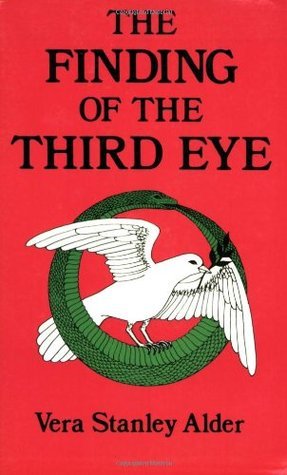
Book: “Finding of the Third Eye”

Finding of the Third Eye

Vera Stanley Alder

During her successful career as a portrait painter, the author began to investigate the Ancient Wisdom, and this revolutionized her life. She made it her task to simplify and summarize this knowledge in order to present it to others. She offers a guide to attainment through the path outlined by Ancient Wisdom which she summarizes in relation to man, comparing it with the discoveries of modern science. She surveys the philosophies of breathing, color, sounds, numbers, diet and exercsie. Finally she discusses the functions of the Third Eye, Astrology, Meditation, and thier ultimate aims.

About the author

Vera Stanley Alder

Vera Dorothea Stanley Alder, sometimes published as V.S. Alder, was a mystic and founder of the World Guardian Fellowship.

(Goodreads.com)

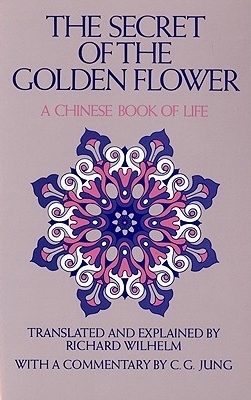
Book: “The Secret of the Golden Flower: A Chinese Book of Life”

The Secret of the Golden Flower: A Chinese Book of Life

Lü DongbinRichard Wilhelm (Editor)Cary F. Baynes (Translator)C.G. Jung (Commentary)Salome Wilhelm (Foreword) …less

The ancient Taoist text that forms the central part of this book was discovered by Wilhelm, who recognized it as essentially a practical guide to the integration of personality.

(Goodreads.com)

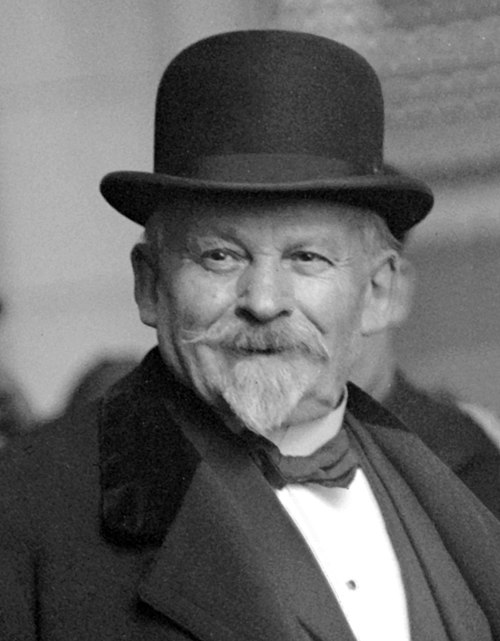
Bio: Émile Coué

From Wikipedia, the free encyclopedia

Émile Coué
Born26 February 1857
TroyesSecond French Empire
Died2 July 1926 (aged 69)
Nancy, France
Occupation(s)Pharmacist; psychologist
SpouseLucie Lemoine (1858–1954)
Hypnosis
showApplications
showOrigins/History
hideKey figuresTheodore Xenophon BarberDeirdre BarrettHippolyte BernheimAlexandre BertrandGil BoyneJames BraidJohn Milne BramwellWilliam Joseph BryanJean-Martin CharcotRobert Hanham CollyerÉmile CouéJohn Bovee DodsBaron du PotetDave ElmanWilliam Collins EngledueMilton H. EricksonJames EsdaileJohn ElliotsonSigmund FreudErika FrommErnest HilgardJosephine R. HilgardClark L. HullPierre JanetIrving KirschAmbroise-Auguste LiébeaultFranz MesmerMartin Theodore OrneCharles PoyenMorton PrinceMarquis of PuységurAndrew SalterTheodore R. SarbinNicholas SpanosCharles Lloyd TuckeyAndré Muller WeitzenhofferMichael D. Yapko
showRelated topics
vte

Émile Coué de la Châtaigneraie (French: [emil kue də la ʃɑtɛɲʁɛ]; 26 February 1857 – 2 July 1926) was a French psychologistpharmacist, and hypnotist who introduced a popular method of psychotherapy and self-improvement based on optimistic autosuggestion.[1][2]

It was in no small measure [Coué’s] wholehearted devotion to a self-imposed task that enabled him, in less than a quarter of a century, to rise from obscurity to the position of the world’s most famous psychological exponent. Indeed, one might truly say that Coué sidetracked inefficient hypnotism [mistakenly based upon supposed operator dominance over a subject], and paved the way for the efficient, and truly scientific.

— Orton (1935).[3]

Coué’s method was disarmingly non-complex—needing few instructions for on-going competence, based on rational principles, easily understood, demanding no intellectual sophistication, simply explained, simply taught, performed in private, using a subject’s own resources, requiring no elaborate preparation, and no expenditure.

— Yeates (2016).[4]

Most of us are so accustomed … to an elaborate medical ritual … in the treatment of our ills … [that] anything so simple as Coué’s autosuggestion is inclined to arouse misgivings, antagonism and a feeling of scepticism.

— Duckworth (1922).[5]

Coué’s method was based upon the view that, operating deep below our conscious awareness, a complex arrangement of ‘ideas’, especially when those ideas are dominant,[6] continuously and spontaneously suggest things to us; and, from this, significantly influence one’s overall health and wellbeing.[7]

We possess within us a force of incalculable power, which, when we handle it unconsciously is often prejudicial to us. If on the contrary we direct it in a conscious and wise manner, it gives us the mastery of ourselves and allows us not only to escape … from physical and mental ills, but also to live in relative happiness, whatever the conditions in which we may find ourselves.

— Coué, 1922b, p. 35.[8]

As long as we look on autosuggestion as a remedy we miss its true significance. Primarily it is a means of self-culture, and one far more potent than any we have hitherto possessed. It enables us to develop the mental qualities we lack: efficiency, judgment, creative imagination, all that will help us to bring our life’s enterprise to a successful end. Most of us are aware of thwarted abilities, powers undeveloped, impulses checked in their growth. These are present in our Unconscious like trees in a forest, which, overshadowed by their neighbours, are stunted for lack of air and sunshine. By means of autosuggestion we can supply them with the power needed for growth and bring them to fruition in our conscious lives. However old, however infirm, however selfish, weak or vicious we may be, autosuggestion will do something for us. It gives us a new means of culture and discipline by which the “accents immature”, the “purposes unsure” can be nursed into strength, and the evil impulses attacked at the root. It is essentially an individual practice, an individual attitude of mind.

— Brooks, 1922[9]

Life and career

Coué’s family, from the Brittany region of France and with origins in French nobility, had only modest means. A brilliant pupil in school, he initially intended to become an analytical chemist; however, because his father, who worked for the Eastern Railway Company, was in a precarious financial state, he eventually abandoned these studies. Coué then decided to become a pharmacist and graduated with a degree in pharmacology in 1876.

Working as an apothecary at Troyes from 1882 to 1910, Coué quickly discovered what later came to be known as the placebo effect. He became known for reassuring his clients by praising each remedy’s efficiency and leaving a small positive notice with each given medication. In 1886 and 1887, he studied with Ambroise-Auguste Liébeault and Hippolyte Bernheim, two leading exponents of hypnotism, in Nancy.

In 1910, Coué sold his business and retired to Nancy, where he opened a clinic that continuously delivered some 40,000 treatment-units per annum (Baudouin, 1920, p. 14) to local, regional, and overseas patients over the next sixteen years.[10] In 1913, Coué and his wife founded The Lorraine Society of Applied Psychology (FrenchLa Société Lorraine de Psychologie appliquée). His book Self-Mastery Through Conscious Autosuggestion was published in England (1920), and in the United States (1922). Although Coué’s teachings were, during his lifetime, more popular in Europe than in the United States, many Americans who adopted his ideas and methods, such as Elsie Lincoln BenedictMaxwell MaltzNapoleon HillNorman Vincent PealeRobert H. Schuller, and W. Clement Stone, became famous in their own right by spreading his words.

Considered by Charles Baudouin to represent a second Nancy School,[11][12] Coué treated many patients in groups and free of charge.[13][14]

The Coué Method: General

The Coué Method

Continuously, unjustly, and mistakenly trivialised as just a hand-clasp, some unwarranted optimism, and a ‘mantra’, Coué’s method evolved over several decades of meticulous observation, theoretical speculation, in-the-field testing, incremental adjustment, and step-by-step transformation.
It tentatively began (c.1901) with very directive one-to-one hypnotic interventions, based upon the approaches and techniques that Coué had acquired from an American correspondence course.
As his theoretical knowledge, clinical experience, understanding of suggestion and autosuggestion, and hypnotic skills expanded, it gradually developed into its final subject-centred version—an intricate complex of (group) education, (group) hypnotherapy, (group) ego-strengthening, and (group) training in self-suggested pain control; and, following instruction in performing the prescribed self-administration ritual, the twice daily intentional and deliberate (individual) application of its unique formula, “Every day, in every way, I’m getting better and better.”

— Yeates (2016c), p.55.

The application of his mantra-like conscious autosuggestion, “Every day, in every way, I’m getting better and better” (FrenchTous les jours à tous points de vue je vais de mieux en mieux) is called Couéism or the Coué method.[15] Some American newspapers quoted it differently, “Day by day, in every way, I’m getting better and better.” The Coué method centered on a routine repetition of this particular expression according to a specified ritual—preferably as many as twenty times a day, and especially at the beginning and at the end of each day.[16] When asked whether or not he thought of himself as a healer, Coué often stated that “I have never cured anyone in my life. All I do is show people how they can cure themselves.”[17] Unlike a commonly held belief that a strong conscious will constitutes the best path to success, Coué maintained that curing some of our troubles requires a change in our unconscious thought, which can be achieved only by using our imagination.

Although stressing that he was not primarily a healer but one who taught others to heal themselves, Coué claimed to have effected organic changes through autosuggestion.[15]

Self-suggestion

Coué identified two types of self-suggestion: (i) the intentional, “reflective suggestion” made by deliberate and conscious effort, and (ii) the involuntary “spontaneous suggestion“, that is a “natural phenomenon of our mental life … which takes place without conscious effort [and has its effect] with an intensity proportional to the keenness of [our] attention”.[18] Baudouin identified three different sources of spontaneous suggestion:A. Instances belonging to the representative domain (sensations, mental images, dreams, visions, memories, opinions, and all intellectual phenomena);B. Instances belonging to the affective domain (joy or sorrow, emotions, sentiments, tendencies, passions);C. Instances belonging to the active or motor domain (actions, volitions, desires, gestures, movements at the periphery or in the interior of the body, functional or organic modifications).[19]

Two minds

According to Yeates, Coué shared the theoretical position that Thomson Jay Hudson had expressed in his Law of Psychic Phenomena (1893): namely, that our “mental organization” was such that it seemed as if we had “two minds, each endowed with separate and distinct attributes and powers; [with] each capable, under certain conditions, of independent action”.[20]

Further, argued Hudson, it was entirely irrelevant, for explanatory purposes, whether we actually had “two distinct minds”, whether we only seemed to be “endowed with a dual mental organization”, or whether we actually had “one mind [possessed of] certain attributes and powers under some conditions, and certain other attributes and powers under other conditions”.[21]

Dr. Couê audio and more at: https://en.wikipedia.org/wiki/%C3%89mile_Cou%C3%A9

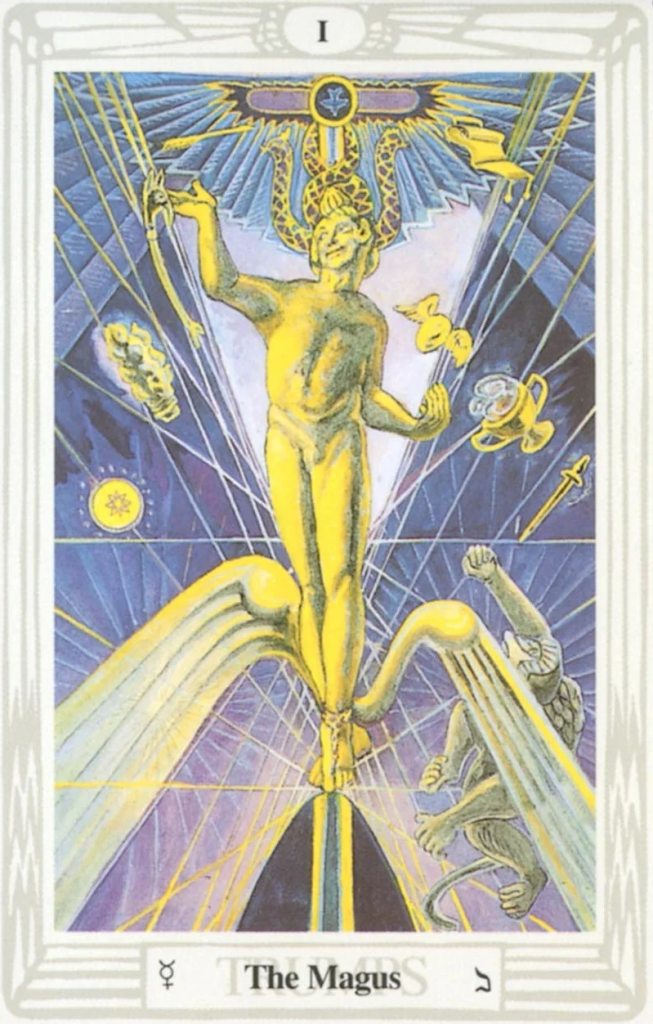
Tarot Card for May 29: The Magus

The Magus

The Magus, at his highest level of interpretation, indicates the intricate and complex web of influences that binds the Universe to itself, and to all else. This is essentially a card about communication, but on the subtle levels beyond the material world.If you want to manifest your heart’s desire into the mundane world, you will have to come to terms with the actuality, the workings and the efficient manipulation of this web, understanding its laws and vagaries.This web is what causes so-called ‘coincidences’, or those freak connections that we make right when we most need them. It is this system that brings the teacher to the student at exactly the right time, puts the very book we need on the bookshelf just when we needed it, draws the right person into our lives at the opportune moment.You can see, therefore, how essential it is if you want to achieve your highest possible destiny, that you develop your understanding of the web of life. And in so doing, become a magus of sorts yourself.So on a day ruled by the Magus, we need to be experimenting with the way this web works. We need to look at the thoughts we are transmitting ourselves – because what goes around comes around, remember? What we put out eventually finds its way back to us – coloured by everything it has touched along the way. This is the single most practical reason for positive thinking!!We need to consider our overall direction and the things we are doing to fulfil our aspirations. We need to look at how every single action we take can be made into an act of magick. People miss this concept all the time. Yet holding the idea in the forefront of your mind changes the way that you approach your daily activities.So acting with intent is another thing we can practise on the day of the Magus. For instance, if you cook a meal, cook it with the intention that it will sustain the very spirit of those who eat it. If you do the washing up, do it remembering that you are washing away the stains of the world. If you are driving to see a friend, regard the journey as another step in your growth and development. Get the idea? Practise everything with intent. From personal experience, let me tell you it really gets the mundane stuff done quickly, efficiently and with a full heart.Also when working the affirmation for today, remember one thing – if you aren’t happy with your life the way you’ve made it so far, the Magus releases the power within you to make it something happier and more satisfying. All you have to do is begin……..

Affirmation: “My life is everything I make it.”

(Angelpaths.com)