What does it actually mean to be a “real man” these days? In a personal talk packed with actionable advice, youth advocate Davonte Green challenges age-old stereotypes about masculinity, showing that emotional intelligence and self-control — not aggression — are the keys to moving through the world with confidence and strength.
“People wish to be settled; only as far as they are unsettled is there any hope for them,” Emerson wrote in contemplating the key to personal growth. Hardly anything does this for us more powerfully than art — it unsettles us awake, disrupts our deadening routines, enlarges our reservoir of hope by enlarging our perspective, our grasp of truth, our capacity for beauty.
In a roaming conversation over tea, “with only momentary interruptions by Lorenzo the cat or chimes from the grandfather clock,” Le Guin tells White:
The daily routine of most adults is so heavy and artificial that we are closed off to much of the world. We have to do this in order to get our work done. I think one purpose of art is to get us out of those routines. When we hear music or poetry or stories, the world opens up again. We’re drawn in — or out — and the windows of our perception are cleansed, as William Blake said. The same thing can happen when we’re around young children or adults who have unlearned those habits of shutting the world out.
Our culture doesn’t think storytelling is sacred; we don’t set aside a time of year for it. We don’t hold anything sacred except what organized religion declares to be so. Artists pursue a sacred call, although some would buck and rear at having their work labeled like this. Artists are lucky to have a form in which to express themselves; there is a sacredness about that, and a terrific sense of responsibility. We’ve got to do it right. Why do we have to do it right? Because that’s the whole point: either it’s right or it’s all wrong.
In a sentiment reminiscent of Albert Camus’s reflection on the lacuna between truth and meaning, Le Guin — who spent the last sixty-five years of her life married to a historian — considers the lacuna between the events of the past and their selective retelling in what we call history:
History is one way of telling stories, just like myth, fiction, or oral storytelling. But over the last hundred years, history has preempted the other forms of storytelling because of its claim to absolute, objective truth. Trying to be scientists, historians stood outside of history and told the story of how it was. All that has changed radically over the last twenty years. Historians now laugh at the pretense of objective truth. They agree that every age has its own history, and if there is any objective truth, we can’t reach it with words. History is not a science, it’s an art.
The paradox, of course, is that because our notion of history is rooted in the written record, words are both our instrument of truth and our weapon of distortion. We use them both to reveal and to conceal — a duality which Hannah Arendt so memorably dissected in her meditation on lying in politics. Le Guin — who has written beautifully about the transformational potential of words — echoes Toni Morrison’s Nobel Prize acceptance speech on the power and responsibility of language, and reflects on the challenging task of those who limn reality in words:
As a writer, you want the language to be genuinely significant and mean exactly what it says. That’s why the language of politicians, which is empty of everything but rather brutal signals, is something a writer has to get as far away from as possible. If you believe that words are acts, as I do, then one must hold writers responsible for what their words do.
We can’t restructure our society without restructuring the English language. One reflects the other. A lot of people are getting tired of the huge pool of metaphors that have to do with war and conflict [and] the proliferation of battle metaphors, such as being a warrior, righting, defeating, and so on. In response, I could say that once you become conscious of these battle metaphors, you can start “fighting” against them. That’s one option. Another is to realize that conflict is not the only human response to a situation and to begin to find other metaphors, such as resisting, outwitting, skipping, or subverting. This kind of consciousness can open the door to all sorts of new behavior.
What literature does, Le Guin points out, is enlarge our understanding of our own experience by enriching its container in language:
One of the functions of art is to give people the words to know their own experience. There are always areas of vast silence in any culture, and part of an artist’s job is to go into those areas and come back from the silence with something to say. It’s one reason why we read poetry, because poets can give us the words we need. When we read good poetry, we often say, ‘Yeah, that’s it. That’s how I feel.’
Storytelling is a tool for knowing who we are and what we want, too. If we never find our experience described in poetry or stories, we assume that our experience is insignificant.
ARIES (March 21-April 19): To create microgardens, you plant vegetables and herbs in small containers placed on your porch, balcony, window sills and kitchen counter. Lettuce, peas, spinach and basil might be among your small bounties. I encourage you to use this practice as a main metaphor in the coming weeks. In other words, gravitate away from huge, expansive visions, and instead work creatively within existing constraints. For now, at least, “less is more” should be your operative motto. Meditate on how apparent limitations might lead to inviting innovations. Seek out abundance in unlikely places.
TAURUS (April 20-May 20): Taurus author Nellie Bly (1864–1922) was a daring trailblazer. It was almost impossible for a woman to be a journalist in the nineteenth century, but she did it anyway. One of her sensational groundbreaking stories came when she did an undercover assignment in New York’s Women’s Lunatic Asylum. Her reporting on the neglect and brutality there prompted major reforms. I nominate Bly as your role model for the foreseeable future. You are, I believe, poised for epic, even heroic adventures, in service to a greater good. (PS: Bly also made a solo trip around the world and wrote fifteen books.)
GEMINI (May 21-June 20): Gemini painter Henri Rousseau (1844–1910) never saw a jungle in person. In fact, he never left his native country of France. But he painted some of modern art’s most vivid jungle scenes. How did that happen? Well, he visited zoos and botanical gardens, perused images of tropical forests in books, and heard stories from soldiers who had visited jungles abroad. But mostly, he had a flourishing imagination that he treated with reverent respect. I urge you to follow his lead, Gemini. Through the joyful, extravagant power of your imagination, get the inspiration and education you need. The next three weeks will be prime time to do so.
CANCER (June 21-July 22): No, ruby-throated hummingbirds don’t hitch rides on airplanes or the backs of geese. They make their epic migrations completely under their own power. To get to their wintering grounds, many fly alone from the southern United States to the Yucatan Peninsula, crossing the 500-mile expanse of the Gulf of Mexico in twenty hours. I don’t recommend you attempt heroic feats like theirs in the coming weeks, Cancerian. More than usual, you need and deserve to call on support and help. Don’t be shy about getting the exact boosts you require. It’s time to harvest the favors you are owed and to be specific in articulating your wishes.
LEO (July 23-Aug. 22): The golden pheasant is dazzling. Among the bright colors that appear in its plumage are gold, red, orange, yellow, blue, black, green, cinnamon and chestnut. In accordance with astrological omens, I name this charismatic bird to be your spirit creature for the coming weeks. Feel free to embrace your inner golden pheasant and express it vividly wherever you go. This is a perfect time to boldly showcase your beauty and magnificence, even as you fully display your talents and assets. I brazenly predict that your enthusiastic expression of self-love will be a good influence on almost everyone you encounter.
VIRGO (Aug. 23-Sept. 22): Virgo poet and visual artist Dorothea Tanning (1910–2012) had a few mottoes that endlessly nurtured her abundant creative output. Here’s one: “Keep your eye on your inner world and keep away from ads, idiots and movie stars.” As excellent as that advice is, it’s a challenge to follow it all the time. If we want to function effectively, we can’t always be focused on our inner worlds. However, I do believe you are now in a phase when you’re wise to heed her counsel more than usual. Your soul’s depths have a lot to teach you. Your deep intuition is full of useful revelations. Don’t get distracted from them by listening too much to ads, idiots and celebrities.
LIBRA (Sept. 23-Oct. 22): Ribonucleic acid (RNA) is essential for the functioning of your body and every other animal’s. It carries instructions about how to build proteins, and your cells are full of it. We humans can’t edit this magic substance, but octopuses can. They do it on the fly, enabling them to adapt quickly to changing environmental conditions. Even though you Libras can’t match their amazing power with RNA, you do have a substantial capacity to rewrite your plans and adjust your mindset. And this talent of yours will be especially available to you in the coming weeks. Your flexibility and adaptability will not only help you navigate surprises but may also open up exciting new opportunities.
SCORPIO (Oct. 23-Nov. 21): Is there a sanctuary you can retreat to? A relaxing oasis where you can slip away from the world’s colorful madness? I would love for you to be bold enough to seek the precise healing you need. You have every right to escape the rotting status quo and give yourself full permission to hide from pressure, demands and expectations. Is there music that brings you deep consolation? Are there books and teachers that activate your profound soul wisdom? Keep that good stuff nearby. It’s time for focused relief and regeneration.
SAGITTARIUS (Nov. 22-Dec. 21): The chemical element known as arsenic is notoriously toxic for humans, but has long been useful in small amounts. Ancient Chinese metallurgists discovered that blending it with copper and tin made the finest, strongest bronze. In modern times, arsenic fortifies the lead in car batteries. People in the nineteenth century sometimes ingested tiny doses as a stimulant. In this spirit, Sagittarius, I invite you to transform potentially challenging elements in your life into sources of strength. Can you find ways to incorporate iffy factors instead of eliminating them? I assure you that you have the power to recognize value in things others may neglect or reject.
CAPRICORN (Dec. 22-Jan. 19): Renowned Capricorn author Henry Miller (1891–1980) had to wait far too long before getting readers in his home country, the United States. American censors regarded his explosive texts as too racy and sexy. They forbade the publication of his books until he was sixty-nine years old! His spirit was forever resolute and uncrushable, though. In accordance with astrological omens, Capricorn, I recommend you adopt his counsel on the subject of wonders and marvels. Miller wrote, “The miracle is that the honey is always there, right under your nose, only you were too busy searching elsewhere to realize it.” Here’s another gem from Miller: He advised us “to make the miracle more and more miraculous, to swear allegiance to nothing, but live only miraculously, think only miraculously, die miraculously.”
AQUARIUS (Jan. 20-Feb. 18): For now, everything depends on your foundation, your roots and your support system. If I were you, I would devote myself to nurturing them. Please note that you’re not in any jeopardy. I don’t foresee strains or tremors. But your graduation to your next set of interesting challenges will require you to be snugly stable, secure and steady. This is one time when being thoroughly ensconced in your comfort zone is a beautiful asset, not a detriment to be transcended.
PISCES (Feb. 19-March 20): The coming weeks are a favorable time for you to build symbolic bridges. I hope you will link resources that aren’t yet linked. I hope you will work to connect people whose merger would help you, and I hope you will begin planning to move from where you are now to the next chapter of your life. I advise you to not model your metaphorical bridges after modern steel suspension bridges, though. Instead, be inspired by the flexible, natural and intimate bridges made by the ancient Incas. Woven from ichu grass via community efforts, they were strong enough to span rivers and canyons in the Andes mountains.
ITHACA, NY—In an effort to help Americans get a better night’s rest, sleep experts from Cornell University issued a recommendation Wednesday to cut back on God’s light before bed. “The Lord’s divine grace can put the body into a state of religious excitement, so we typically suggest avoiding His holy light for two hours before your regular bedtime,” said sleep researcher Edna Hardy, who added that the disruption of circadian rhythms caused by basking in the abundant glory of the Lord while in bed could lead to depression and cardiovascular problems down the line. “Personally, I never pray after 8 p.m. The brilliant light of God shining down upon you can confuse your body into thinking it’s time to make a pilgrimage in service of the Almighty when it should be winding down for rest. Ideally, you should keep any Bibles or crucifixes out of your bedroom entirely so your mind only associates that space with sleep and sex and not the everlasting salvation of eternal life through Christ.” Hardy added that people struggling to avoid God’s light close to bedtime could purchase special glasses designed to block it by selling their soul to the devil.
PRINCETON, NJ—According to a groundbreaking new study published Thursday in The Journal Of Natural And Applied Sciences, people who are far away from you are actually not, as once thought, physically smaller than you.
The five-year study, conducted by researchers at Princeton University, has shattered traditionally accepted theories that people standing some distance away from you are very small, and people close-by are very big.
“The data was irrefutable in demonstrating that when someone standing directly in front of you begins walking away, their body does not, as previously assumed, gradually shrink before eventually disappearing entirely,” said Dr. David Pinard, lead author of the study. “Rather, our findings indicate that they maintain their original size regardless of how tiny they may appear.”
“Indeed, people who are far away may, in actuality, be larger than you are,” Pinard added.
Pinard explained to reporters that through the use of highly accurate computerized measurement systems and advanced cameras capable of photographing test subject at a rate of 2,500 frames per second, researchers were able to disprove the long-held presumption that one is able to physically alter the size and stature of any person by moving either closer or further away from them.
Pinard also confirmed that one’s vertical distance from another person likewise had no measurable effect on that person’s size, and that people on the street are not, in fact, the size of ants when you look down from the top of a tall building.
“In what was probably our most telling experiment, we positioned two 5-foot-10-inch tall male subjects opposite one another at a distance of approximately 800 feet,” said Pinard. “We found that, though appearing no more than 4 centimeters in size to their respective counterpart, each subject remained at their original height of 5-feet and 10-inches at all times. In the next phase of the trial, the subjects began walking toward each other, and again, the results indicated that they were not growing taller and taller at exponential rates with every step, but instead once again remained at a constant height of 5 feet and 10 inches, with absolutely no variation in physical stature.”
“The experiment was further complicated when the two began walking toward one another at the same time,” Pinard added. “But after several hundred trials, we eventually concluded that a person, in fact, does not grow or shrink any faster depending upon the speed at which they move closer or further from you. In fact, as with our previous findings, we determined that they do not grow or shrink at all.”
The study has reportedly been met with some fierce criticism from both the general public and those within the scientific community, with several experts staunchly maintaining that not only do people get smaller when they move further away, but their voices also drastically diminish in volume to the point that they can no longer speak.
Many critics also remain adamant that a person ceases to exist if they are no longer visible in your line of sight, or if you close your eyes.
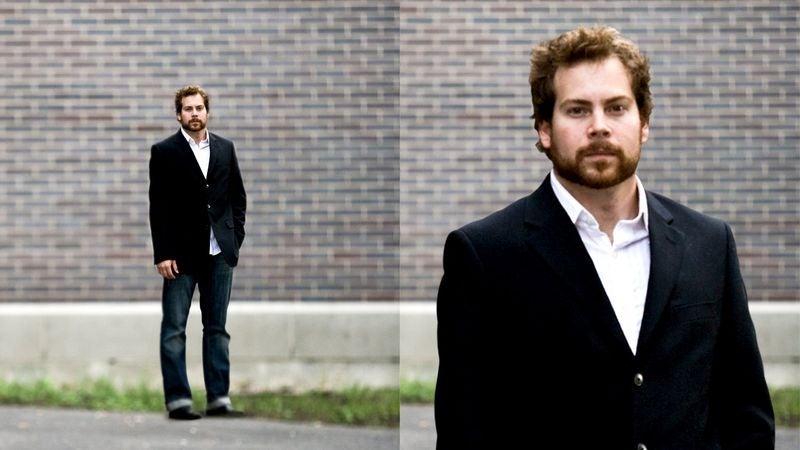
To demonstrate his team’s findings, Pinard provided reporters with a visual diagram of two people, depicting their size at varying points of distance.
“As you can see from this image, subject A appears to be twice the size of subject B,” said Pinard, adding that researchers have yet to determine a cause for the inexplicable phenomenon. “However, as subject B moves closer, he does not, as it would otherwise appear, grow larger than subject A. He is, in fact, taller than subject A regardless of where he stands.”
“It is, of course, astonishing, but the evidence is indisputable,” added Pinard. “And furthermore, we actually now believe that two people walking side-by-side do not eventually merge into a single body once they reach a certain distance from you. However, we are still in the process of analyzing that data to make sure it is 100 percent conclusive.”
Pinard stressed to reporters that the new discovery only applies to human beings who are far away from you, as researchers have yet to test the theory on inanimate objects such as chairs, streetlights, park benches, cars, or buildings.
Pinard did confirm, however, that airplanes do indeed get infinitesimally smaller as they fly into the sky.


 The daily routine of most adults is so heavy and artificial that we are closed off to much of the world. We have to do this in order to get our work done. I think one purpose of art is to get us out of those routines. When we hear music or poetry or stories, the world opens up again. We’re drawn in — or out — and the windows of our perception are cleansed, as William Blake said. The same thing can happen when we’re around young children or adults who have unlearned those habits of shutting the world out.