CAMBRIDGE, MA—Uncovering a troubling disruption of America’s ecological systems, a study published Friday by researchers at Harvard University found that plants have become increasingly reliant on gig workers for pollination. “Freelance pollen transfer has always been a part of seed plant reproductive strategies, but we were shocked to discover that the number of gig pollinators has nearly quadrupled from where it was a decade ago,” said the study’s lead author, Shelby Haskins, adding that stable, well-compensated positions pollinating a single plant had become virtually nonexistent in today’s more cutthroat ecosystem. “We found bees working 18-hour days for three, sometimes even four different plant genera just to make ends meet. And bats have been so hard hit by these bare-bones contracts lasting only a few weeks that a lot of them have stopped pollinating altogether. It’s unsustainable. These contract pollinators are working twice as hard only to have a lower standard of living than their great-great-great-great-great-great-great-great-great-great-great-great-grandparents did just a few years ago.” At press time, Haskins added that efforts by gig pollinators to organize for better conditions had so far been hampered by the wind’s willingness to pollinate for free.
Today I will not burden myself by thinking I need to run the universe. I needn’t control anyone or anything. I need only to show up fully with my heart, committed to my excellence. I surrender everything to God, Who lives within me. Every burden and decision I place in His hands. I know that as I do so I will be led to divine right thought and action. The universe will arrange itself on my behalf.
How wonderful it is to relax at last and fall back into the arms of God. It is not a stiff neck but a soft heart that will guide my course of action. I will not forget to trust in God today.
Imagine my surprise when in the spring of 1939 a letter arrived at my house inviting me to dinner at the Old Chancellery with the world’s most reviled man, Adolf Hitler. I had been a vocal critic of his on the radio from the beginning, pretty much predicting everything he was going to do on the road to dictatorship. No one I knew encouraged me to go. “He’s Hitler. He’s a monster.” But eventually I concluded that hate gets us nowhere. I knew I couldn’t change his views, but we need to talk to the other side — even if it has invaded and annexed other countries and committed unspeakable crimes against humanity.
Two weeks later, I found myself on the front steps of the Old Chancellery and was led into an opulent living room, where a few of the Führer’s most vocal supporters had gathered: Himmler, Göring, Leni Riefenstahl and the Duke of Windsor, formerly King Edward VIII. We talked about some of the beautiful art on the walls that had been taken from the homes of Jews. But our conversation ended abruptly when we heard loud footsteps coming down the hallway. Everyone stiffened as Hitler entered the room.
He was wearing a tan suit with a swastika armband and gave me an enthusiastic greeting that caught me off guard. Frankly, it was a warmer greeting than I normally get from my parents, and it was accompanied by a slap on my back. I found the whole thing quite disarming. I joked that I was surprised to see him in a tan suit because if he wore that out, it would be perceived as un-Führer-like. That amused him to no end, and I realized I’d never seen him laugh before. Suddenly he seemed so human. Here I was, prepared to meet Hitler, the one I’d seen and heard — the public Hitler. But this private Hitler was a completely different animal. And oddly enough, this one seemed more authentic, like this was the real Hitler. The whole thing had my head spinning.
He said he was starving and led us into the dining room, where he gestured for me to sit next to him. Göring immediately grabbed a slice of pumpernickel, whereupon Hitler turned to me, gave me an eye roll, then whispered, “Watch. He’ll be done with his entire meal before you’ve taken two bites.” That one really got me. Göring, with his mouth full, asked what was so funny, and Hitler said, “I was just telling him about the time my dog had diarrhea in the Reichstag.” Göring remembered. How could he forget? He loved that story, especially the part where Hitler shot the dog before it got back into the car. Then a beaming Hitler said, “Hey, if I can kill Jews, Gypsies and homosexuals, I can certainly kill a dog!” That perhaps got the biggest laugh of the night — and believe me, there were plenty.
But it wasn’t just a one-way street, with the Führer dominating the conversation. He was quite inquisitive and asked me a lot of questions about myself. I told him I had just gone through a brutal breakup with my girlfriend because every time I went someplace without her, she was always insistent that I tell her everything I talked about. I can’t stand having to remember every detail of every conversation. Hitler said he could relate — he hated that, too. “What am I, a secretary?” He advised me it was best not to have any more contact with her or else I’d be right back where I started and eventually I’d have to go through the whole thing all over again. I said it must be easy for a dictator to go through a breakup. He said, “You’d be surprised. There are still feelings.” Hmm … there are still feelings. That really resonated with me. We’re not that different, after all. I thought that if only the world could see this side of him, people might have a completely different opinion.
Two hours later, the dinner was over, and the Führer escorted me to the door. “I am so glad to have met you. I hope I’m no longer the monster you thought I was.” “I must say, mein Führer, I’m so thankful I came. Although we disagree on many issues, it doesn’t mean that we have to hate each other.” And with that, I gave him a Nazi salute and walked out into the night.
Larry David is a comedian, writer and actor who created “Curb Your Enthusiasm” and was a co-creator of “Seinfeld.”
The Times is committed to publishing a diversity of letters to the editor. We’d like to hear what you think about this or any of our articles. Here are some tips. And here’s our email: letters@nytimes.com.
A version of this article appears in print on , Section A, Page 22 of the New York edition with the headline: My Dinner With Adolf. Order Reprints | Today’s Paper | SubscribeREAD 1.4K COMMENTS
Marcus Porcius CatoUticensis (“of Utica“; /ˈkeɪtoʊ/, KAY-toe; 95 BC – April 46 BC), also known as Cato the Younger (Latin: Cato Minor), was an influential conservative Roman senator during the late Republic. A staunch advocate for liberty and the preservation of the Republic’s principles, he dedicated himself to protecting the traditional Roman values he believed were in decline. A noted orator and a follower of Stoicism, his scrupulous honesty and professed respect for tradition gave him a political following which he mobilised against powerful generals of his day, including Julius Caesar and Pompey.
Before Caesar’s civil war, Cato served in a number of political offices. During his urban quaestorship in 63 BC, he was praised for his honesty and incorruptibility in running Rome’s finances. He passed laws during his plebeian tribunate in 62 BC to expand the grain dole and force generals to give up their armies and commands before standing in elections. He also frustrated Pompey’s ambitions by opposing a bill brought by Pompey’s allies to transfer the military command to Pompey against the Catilinarian conspirators. He opposed, with varying success, Caesar’s legislative programme during Caesar’s first consulship in 59 BC. Leaving for Cyprus the next year, he was praised for his honest administration and after his return was elected as praetor for 54 BC.
He supported Pompey’s sole consulship in 52 BC as a practical matter and to draw Pompey from his alliance with Caesar. In this, he was successful. He and his political allies advocated a policy of confrontation and brinksmanship with Caesar; though it seemed that Cato never advocated for actual civil war, this policy greatly contributed to the start of civil war in January 49 BC. During the civil war, he joined Pompey and tried to minimise the deaths of his fellow citizens. But after Pompey’s defeat and his own cause’s defeat by Caesar in Africa, he chose to take his own life rather than accept what he saw as Caesar’s tyrannical pardon, turning himself into a martyr for and a symbol of the Republic.
His political influence was rooted in his moralist principles and his embodiment of Roman traditions that appealed to both senators and the innately conservative Roman voter. He was criticised by contemporaries and by modern historians for being too uncompromising in obstructing Caesar and other powerful generals. Those tactics and their success led to the creation of the First Triumvirate and the outbreak of civil war. The epithet “the Younger” distinguishes him from his great-grandfather, Cato the Elder, who was viewed by ancient Romans in similar terms as embodying tradition and propriety.
Early life
Cato was born in 95 BC, the son of his homonymous father and Livia.[2] He was descended from Cato the Elder – this Cato’s great-grandfather[3] – who was a novus homo (“new man”) and the first of the family to be elected to the consulship.[4] The elder Cato was famed for his austerity and traditional Roman values,[5] which was affected for political reasons[6] and meant to embellish his reputation as “the foremost representative of the mos maiorum“.[7]
Stories of Cato’s early childhood are broadly unreliable and told mainly to suggest that Cato’s character as an adult had been established in childhood.[12] They include claims that Cato was a poor student, a dubious tale that Quintus Poppaedius Silo – one of the Italian leaders during the Social war – once threatened to hang Cato out of a window unless he voiced support for Italian citizenship (Cato supposedly remained silent), and a claim that Cato asked his tutor for a sword with which to assassinate Sulla during Sulla’s proscription.[13]
Around the age of 16, Cato was inducted into the quindecimviri sacris faciundis, the board of priests in charge of consulting and interpreting the Sibylline Oracles.[14] This was a prestigious honour, for which he was likely selected on the initiative of his uncle Mamercus Lepdius, and it put Cato into the centre of the senatorial elite.[15]
Statue of Cato the Younger in the Louvre Museum. He is about to kill himself while reading the Phaedo, a dialogue of Plato which describes the death of Socrates. The statue was begun by Jean-Baptiste Roman (Paris, 1792–1835) using white Carrara marble. It was finished by François Rude (Dijon, 1784 – Paris, 1855).
Final campaign and death
A 1797 depiction of Cato’s death by Pierre Narcisse Guérin.[209]
Cato was given command of the city of Utica after convincing Metellus Scipio to spare the town’s inhabitants when they attempted to defect to Caesar. He successfully expanded the city’s defences, raised troops, and stockpiled supplies while waiting for Caesar’s eventual arrival. During his time in Africa, however, Cato became convinced that victory for his own cause under Metellus Scipio would be accompanied by appalling reprisals.[210]
When Cato pushed for a strategy of attrition against Caesar, Metellus Scipio accused Cato of cowardice for being unwilling to risk battle.[211] Around this time, Cato privately confided that the war was hopeless and that he would abandon Rome regardless of the victor.[212] Metellus Scipio ignored Cato’s relatively pacific advice and engaged in a decisive battle at Thapsus, where his forces were annihilated.[212]
Cato, garrisoning Utica, received news of the defeat three days later, which drove the city into a panic.[213] Knowing that the city would likely defect, Cato evacuated any Roman citizens who wished to flee.[213] He also sent an embassy consisting of his family and allies, headed by one of Caesar’s kinsmen, Lucius Julius Caesar, to seek pardon for themselves.[214] Cato himself prepared for death.[214]
After righting the city’s financial accounts and disbursing the remaining monies to the city’s inhabitants, Cato discussed with his friends at dinner the Stoic belief that a truly free man would never become a slave.[215] After he demanded his sword, which had been removed from his room, his family and friends begged him not to kill himself. Dismissing them, he asked for a report on the ships fleeing the city. Satisfied that all was well, he stabbed himself in the abdomen.[215] The specific details of Cato’s suicide were greatly embellished after his death, especially in Plutarch’s account,[215] which states:
Cato drew his sword from its sheath and stabbed himself below the breast. His thrust, however, was somewhat feeble… [and] he did not at once dispatch himself… His servants heard the noise and cried out, and his son at once ran in, together with his friends… [A] physician went to him and tried to replace his bowels, which remained uninjured, and to sew up the wound. Accordingly, when Cato recovered and became aware of this, he pushed the physician away, tore his bowels with his hands, rent the wound still more, and so died.[216]
Caesar is said to have responded to his death by lamenting that Cato’s death meant Caesar could not pardon him.[217]
Cato’s death triggered a series of eulogies, of which both Cicero and Brutus were authors, starting to identify Cato as a great Stoic philosopher.[218] Caesar responded with an Anticato, which has not survived.[219]
Political legacy
The traditional political culture of the middle republic was one built around aristocratic compromise, political debate, and reform.[220] The extent of Cato’s obstruction broke down the traditional republican norms of compromise and discussion; escalation in response to that obstruction proved dangerous to the republic and ran contrary to its ethos.[221][105] His policies with regard to stopping powerful politicians such as Pompey, Caesar, and Crassus alienated – through its very success – them from the rest of the senatorial class, leading to the formation of their alliance in 59 BC.[222]
Many scholars believe that Cato’s political strategy before 49 BC contributed significantly in starting the civil war that was the proximate cause of the collapse of the Roman republic, even if he did not intend for conflict.[223][224][225][226][227] While his strategy – convincing senators that Caesar was a threat to the republic and wanted to make himself king – was successful, that success backfired when those senators then gambled everything on defeating Caesar, whom they saw as an existential threat to liberty, in civil war.[179]
During most of his political career, he consistently obstructed powerful military figures to the fullest extent possible.[223] This uncompromising position had him push strongly, before the civil war, for further confrontation with Caesar, seemingly to pressure Caesar to back down.[228] Cato and his allies also pushed Pompey away from the various olive branches and compromises before the civil war. Up to the last, when Pompey was close to accepting an offer where Caesar would give up all his legions except one and provinces except Illyricum, Cato played on Pompey’s paranoia by painting Pompey as a Caesarian mark.[229] To the extent that Caesar may have feared prosecution, conviction, and exile – a claim no longer accepted without controversy[230][231][232] – Cato was one of the few pushing strongly for Caesar’s political destruction via prosecution.[191]
Posthumously, Cato’s opposition to Caesar was cast in predominantly ideological terms, with Cato serving as a heroic symbol of republican values amid its collapse.[233] His life was also appropriated by Augustus as a symbol of republican values.[234]
Some scholars point to how Cato acted in ways profoundly inconsistent with Stoic tenets: his anger at the breaking of his betrothal to Aemilia Lepida, breakdown over the death of his half-brother Caepio, his visible despair at the sight of casualties from the civil wars, etc.[237] For such scholars, Cato’s actions fit into the mould of a traditional Roman acting in line with traditional Roman values rather than Stoic ones.[238] On the other hand, others point out that Cato’s contemporaries noted his Stoic behaviours and positions explicitly. Cicero lampooned it in Pro Murena, and also mentioned it in letters and contemporaneous philosophical texts.[239]
Modern scholars such as Kit Morell note that “the ‘Stoic martyr’ tradition[definition needed] has distorted or distracted from the historical Cato”.[239]
Translation is a 5-step process of “straight thinking in the abstract” comparing and contrasting what seems to be truth with what you can syllogistically, axiomatically and mathematically (using word equations) prove is the truth. It is not an effort to change, alter or heal anything.
The claims in a Translation may seem outrageous, but they are always (or should always be) based on self-evident syllogistic reasoning. Here is one Translation from this week.
1) Truth is that which is so. That which is not truth is not so. Therefore truth is all that is. Truth being all is therefore total, therefore whole, therefore complete, therefore otherless, therefore one, therefore united, therefore harmonious, therefore orderly, therefore unlimited, therefore free. I think therefore I am, Since I am and since Truth is all that is, therefore I, being, am Truth. Since I, being, am Truth, therefore I, being, have all the attributes of Truth. Therefore I, being, am total, whole, complete, otherless, one, united, harmonious, orderly, unlimited, free. Since I am Truth and since I am mind (self-evident), therefore Truth is Mind. (Two things being equal to a third things are equal to each other.) Since Truth is Mind, therefore Mind has all the attributes of Truth. Therefore Mind is total, whole, complete, otherless, one, united, harmonious, orderly, unlimited, free.
2) If I dissociate from myself, other people will dissociate from me.
Word-tracking: I: ego, self, self-awareness, sober, personality, characteristics, attributes dissociate: to regard something as distinct, separate or disconnected from something or somebody, defense mechanism
3) Truth being one is therefore one ego, one self, one personality whose characteristics or attributes are wholeness, completeness, oneness, unity, harmony, order, limitlessness and freedom. Truth being one ego, one self, one personality, there is no dissociation (division, separating, distinction) in Truth, therefore Truth is not dissociated. Since I, being, am Truth, therefore I, being, am a Universal I. Since I, being, am a Universal I, and since the Universal I is all that is, therefore I, Universal I, am always comfortable in my own skin, however that might manifest.
4) [Truth is] one ego, one self, one personality whose characteristics or attributes are wholeness, completeness, oneness, unity, harmony, order, limitlessness and freedom. Truth is not dissociated. I, being, am a Universal I. I, Universal I, am always comfortable in my own skin, however that might manifest.
5) I, Universal I, am always comfortable in my own skin, however that might manifest.
Weekly Invitational Translation Group invites your participation. If you would like to submit a Translation on any subject, feel free to send your weekly Translation to zonta1111@aol.com and we will anonymously post it on the Bathtub Bulletin on Friday.
noun: A hypocritical person who pretends to have high moral principles.
ETYMOLOGY:
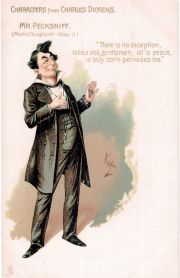
After Seth Pecksniff, a character in Charles Dickens’s novel Martin Chuzzlewit (serialized 1843-1844). Earliest documented use: 1844. The adjectival form is pecksniffian.
NOTES:
Pecksniff sounds like a man who moralizes in public and misbehaves in private. Which, spoiler alert, he does.
But Pecksniff, seriously? If a character’s name is Pecksniff, his moral downfall feels less like a character arc and more like a destiny. With a name like this, you have given them no hope. They’re doomed from page one. See nominative determinism.
It’s not just Dickens. The Harry Potter world has Voldemort (from French vol de mort: flight of death), 101 Dalmatians has Cruella de Vil, and so on. Heroes, on the other hand, get regular names like Oliver Twist or Harry Potter.
“If you can’t respect the basic fundamental underlying principles with which we order society — which is ‘Do not steal’ — then what are you left with?” asks investigative journalist Carole Cadwalladr. Following her TED2025 talk, Cadwalladr is in conversation with Chris Anderson, head of TED, to warn about surveillance fascism. What happens when big Silicon Valley companies take over communication platforms and weaponize intellectual property against you? She suggests that when you feel powerless, it’s often actually because you are powerful — and explores why it’s so important to fight information chaos by supporting independent media and journalists.
VATICAN CITY—In a stunning discovery that revealed the full extent of the pontiff’s addiction, Vatican coroner Fernando Ruini released a report Thursday confirming Pope Francis died of a eucharistic overdose. “Our autopsy found the Holy Father had a substantial amount of Eucharist in his system— roughly four times the legal limit—at the time of death,” said Ruini, who added that measurements of the pope’s blood of Christ (BOC) were consistent with those from someone who had communed with Jesus for decades. “It’s a wonder he lived as long as he did given his clear dependency on letting God into his heart. By the end, he was probably getting the Blessed Sacrament once or twice every day just to function. There are also some signs he was mixing in other sacraments—penance, the anointing of the sick, or whatever he needed to hit that spiritual high he got off his first communion wafer.” The coroner added that he wouldn’t let anyone he loved get behind the wheel of the popemobile with the late pontiff’s level of blessedness.
Consciousness, spirituality, biography, sexuality, androgyny, futurism, space, the arts, science, astrology, democracy, humor, books, movies and more











.jpg)