
Monthly Archives: March 2025

Total Lunar Eclipse in Virgo March 13-14th 2025
Pam Gregory
Mar 1, 2025
252,776 views • Mar 1, 2025Pam discusses the first half of March and the Total Lunar Eclipse that we have in Virgo on the 13-14th. What does this mean for you? You can download a free birthchart from my website www.pamgregory.com, then purchase this two-part tutorial video series that explains how to find these points in your chart and what it means for you: https://gumroad.com/l/FHjOZ. Sunday Meditation video: • Sunday Meditation to Magnetise New Earth . Themes for 2025: • Themes for 2025 . Yogic Baby Belly Breath: • Yogic Baby Belly Breath .
(Courtesy of Zoê Robinson, H.W., M.)
Prosperos Translation Class April 26 & 27
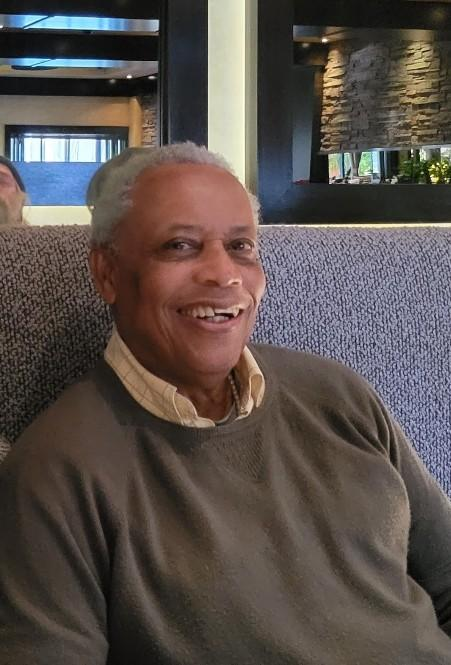
ALOHA,
I am excited to announce that The Prosperos School of Ontology’s Foundation Class, Translation®, will be presented this Spring, in Tulsa Oklahoma, by Prosperos Mentor Calvin Harris.
This Foundation Class is a curated collection of lessons which encapsulates research and expertise that has stood the test of time, spanning over 50 years. Providing a technique which magnifies the authentic Self, Going beyond human behaviorism and programming.
This is your invitation to a retreat, to set aside a space-in-time for an event for clarity; of mystery; and self-mastery.
This is a Top-tier Professional Seminar using the ancient method of Storytelling. These lessons when applied will give you step-by-step instructions that can make a big impact for you:
- Gain a 50-year-old, field-tested blueprint to analyze, understand, and influence your perception in any situation.
- Master the powerful tools to guide and change inner conversations, decode human behavior, and influence outcomes—whatever the perceived stakes are.
- Eliminate self-doubt and rewire your mindset to show up with unshakable confidence in Truth.
- Learn how to consciously read your motives, emotions, and intentions accurately, giving you an edge not experienced before.
- Develop a presence newly identified to you as your Authentic Being.
- Workshops will be made available to gain proficiency and mastery in the use of this skill.
If you have read this far thank you and here are further details.:
This Seminar will be a Two-Day Event
You will be learning using a classroom modality, a mix of audio/visual as well as live classroom formatted lesson.
Dates and Times:
Saturday, April 26, 2025, starting at 9:00 am and ending at 5 pm Central Time
Sunday, April 27, 2025, starting at 10 am and ending at 5 pm Central Time
Location:
Oklahoma State University – Tulsa Conference Center
700 N Greenwood Ave
Tulsa, Oklahoma 74106
Tulsa Room
Fees: New to class $195.00
Review Student $75.00
Registration link:
https://www.theprosperos.org/prosperos-events/translation202504
If you have any questions, please feel free to call:
Mara Pennell H.W.,m. 816-305-4789
Blessings
Calvin
Book: “The Final Choice: Death or Transcendence?”
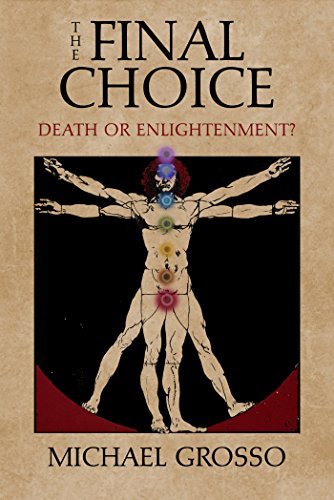
The Final Choice: Death or Transcendence?
Michael Grosso
This book was originally published under the title, “The Final Playing the Survival Game.”
These are dangerous times and history seems to be accelerating—toward what? It’s starting to look like a big crash. No, not a clash of civilizations but civilization itself crashing.
There are world trends propelling us towards the lunacy of nuclear brinkmanship, the inexorable march toward climate catastrophe, the savage economic inequality that reigns over a suffering Earth—none of these bode well for the future. The more pronounced these trends, the greater the need to take stock of our options.
This book looks at consciousness facing the threat of annihilation.
Beyond politics, it examines some forgotten forces at our disposal in the quest for transcendence. It attempts to sketch a mythology of transcendence, based on the raw materials of human experience, ordinary and extraordinary.
The meaning of death changes from culture to culture, and is evolving as we speak. The modern near-death experience transforms the meaning of death into something quite different from the mainline view of death as the extinction of consciousness.
Near-death phenomena imply new dimensions of meaning—and as well, a new dimension of existence. It opens the door into an expanded world of consciousness, upending scientific physicalism.
The NDE is a discovery as revolutionary in psychology as quantum mechanics was in physics. In both cases we have an enigma, a window to alternate realities, and metaphysical shock therapy.
The Final Choice goes behind the surface-meaning of death. The search leads to the re-discovery of the ancient philosopher, Heraclitus, who said that no matter how far you search, you will never find the boundaries of Mind.
Facing the looming collapse of world civilization, the question of a possible global near-death experience arises. Major world-trends today force us to reflect on these awesome possibilities.
(Goodreads.com)
P. D. Ouspensky and the Gurdjieff Work with Gary Lachman
New Thinking • Mar 11, 2025 Gary Lachman is the author of twenty-one books on topics ranging from the evolution of consciousness to literary suicides, popular culture and the history of the occult. He has written a rock and roll memoir of the 1970s, biographies of Aleister Crowley, Rudolf Steiner, C. G. Jung, Helena Petrovna Blavatsky, Emanuel Swedenborg, P. D. Ouspensky, and Colin Wilson, histories of Hermeticism and the Western Inner Tradition, studies in existentialism and the philosophy of consciousness, and about the influence of esotericism on politics and society. In this interview, rebooted from 2019, he describes how, prior to meeting George Gurdjieff, Peter D. Ouspensky had achieved acclaim in Russia as a writer, journalist, and lecturer. He had been active in the Theosophical movement. His encounter with Gurdjieff changed his life. The relationship was not an easy one, and at one time Ouspensky suspected that Gurdjieff had gone mad. The two personalities were very different. Even after he broke away from Gurdjieff, Ouspensky continued to teach his system. New Thinking Allowed host, Jeffrey Mishlove, PhD, is author of The Roots of Consciousness, Psi Development Systems, and The PK Man. Between 1986 and 2002 he hosted and co-produced the original Thinking Allowed public television series. He is the recipient of the only doctoral diploma in “parapsychology” ever awarded by an accredited university (University of California, Berkeley, 1980). He is also the Grand Prize winner of the 2021 Bigelow Institute essay competition regarding the best evidence for survival of human consciousness after permanent bodily death. He is Co-Director of Parapsychology Education at the California Institute for Human Science. (Recorded on February 13, 2019)
Local Teen Invents Masturbation | Onion News Network
The Onion • Mar 11, 2025 Shane O’Donnell might seem like an ordinary teenager. But after countless hours of research and experimentation, what he’s discovered is anything but ordinary. Have a written record of society’s collapse. Become A Member. Get The Paper. https://membership.theonion.com/?camp…
Ramana Maharshi on the Self

Tarot Card for March 12: The Hermit
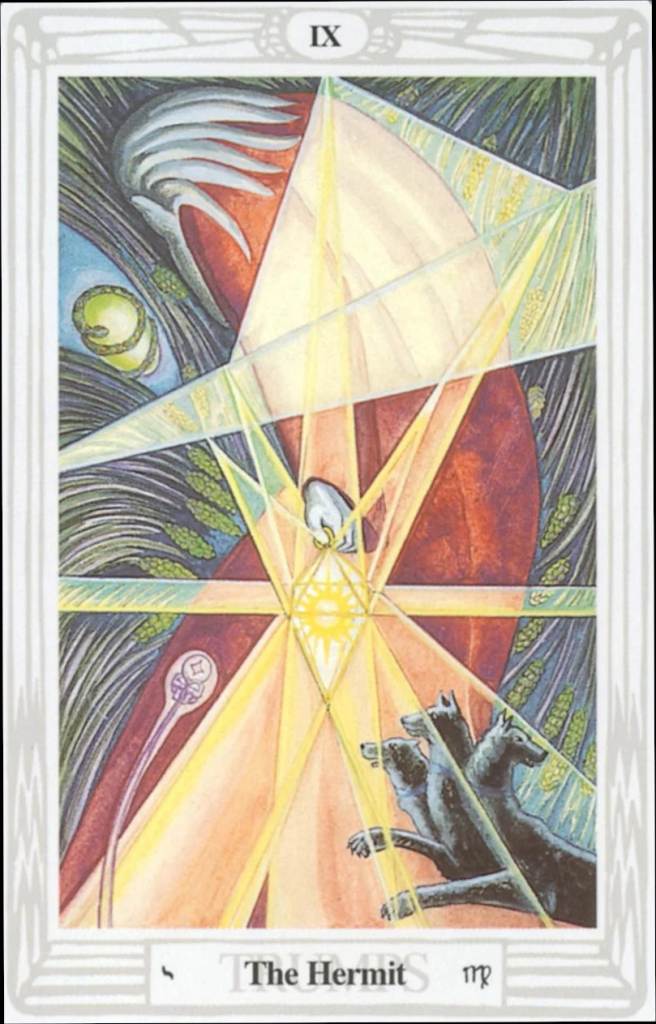
| The Hermit This is a lovely card, but one which can often be misunderstood. You’ll sometimes see him interpreted to indicate loneliness, withdrawal or isolation – and it’s true that his appearance can mean those things. But at an inner level, the mystery of the Hermit is much more spiritual and re-assuring..for he symbolises the withdrawal into one’s own centre point, where the directions of the still inner voice may be clearly heard and interpreted.The Hermit lives in the quiet place we retreat to when we meditate, or dream. He is the philosopher within, the spiritual guide who leads us to the higher realms. He encapsulates the untapped wisdom and realisation within every one of us.through him we touch our Higher Self, and the wealth of energy and power in the Universe.So on a day ruled by the Hermit, make a point of spending a little while resting in your own centre – meditate, ruminate, let your mind wander, disengage (even if only briefly) from the everyday concerns that occupy so much of your time, and instead give yourself room to be awestruck, delighted, inspired.If you have not yet found the place you feel is your centre (and believe me… you know it when you find it;-) then practise exploring yourself a little. Sit down comfortably, close your eyes, and look inwardly at yourself. Observe your thoughts as though they were external to you. Pick them up as though they were stones, and look beneath them. If you do not like what you find then throw it away!!It’s often the case in the early stages of this procedure people find several things they aren’t happy with… but for every unhelpful, critical or murky rock you mentally throw away, new growth will spring up in its place. Eventually you’ll discover that thoughts are tools that we invest with far too much importance a lot of the time. They are peripheral, and often interfere with growth. Behind them reside your dreams, hopes, aspirations, needs, emotions and your soul… Affirmation: “I dwell at the centre of myself.” |
(Angelpaths.com)
Book: “Pensées”

Pensées
Blaise Pascal, T.S. Eliot, A.J. Krailsheimer (Translator)
Blaise Pascal, the precociously brilliant contemporary of Descartes, was a gifted mathematician and physicist, but it is his unfinished apologia for the Christian religion upon which his reputation now rests. The Penseés is a collection of philosohical fragments, notes and essays in which Pascal explores the contradictions of human nature in pscyhological, social, metaphysical and – above all – theological terms. Mankind emerges from Pascal’s analysis as a wretched and desolate creature within an impersonal universe, but who can be transformed through faith in God’s grace.
About the author
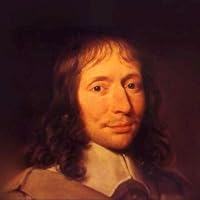
Blaise Pascal
Early work of Blaise Pascal of France included the invention of the adding machine and syringe and the co-development with Pierre de Fermat of the mathematical theory of probability; later, he, a Jansenist, wrote on philosophy and theology, notably as collected in the posthumous Pensées (1670).
This contemporary of René Descartes attained ten years of age in 1633, when people forced Galileo Galilei to recant his belief that Earth circled the Sun. He lived in Paris at the same time, when Thomas Hobbes in 1640 published his famous Leviathan (1651). Together, Pascal created the calculus.
A near-fatal carriage accident in November 1654 persuaded him to turn his intellect finally toward religion. The story goes that on the proverbial dark and stormy night, while Pascal rode in a carriage across a bridge in a suburb of Paris, a fright caused the horses to bolt, sending them over the edge. The carriage, bearing Pascal, survived. Pascal took the incident as a sign and devoted. At this time, he began a series, called the Provincial Letters , against the Jesuits in 1657.
Pascal perhaps most famously wagered not as clearly in his language as this summary: “If Jesus does not exist, the non Christian loses little by believing in him and gains little by not believing. If Jesus does exist, the non Christian gains eternal life by believing and loses an infinite good by not believing.”
Sick throughout life, Pascal died in Paris from a combination of tuberculosis and stomach cancer at 39 years of age. At the last, he confessed Catholicism.
(Goodreads.com)
Book: “Night Train to Lisbon”
“It is a mistake to believe that the decisive moments of a life when its direction changes for ever must be marked by sentimental loud and shrill dramatics… In truth, the dramatic moments of a life-determining experience are often unbelievably low-key. It has so little in common with the bang, the flash, or the volcanic eruption that, at the moment it happens, the experience is often not even noticed. When it unfolds its revolutionary effect, and ensures that a life is revealed in a brand-new light, with a brand-new melody, it does that silently and in this wonderful silence resides its special nobility.”
— Pascal Mercier, Night Train to Lisbon—
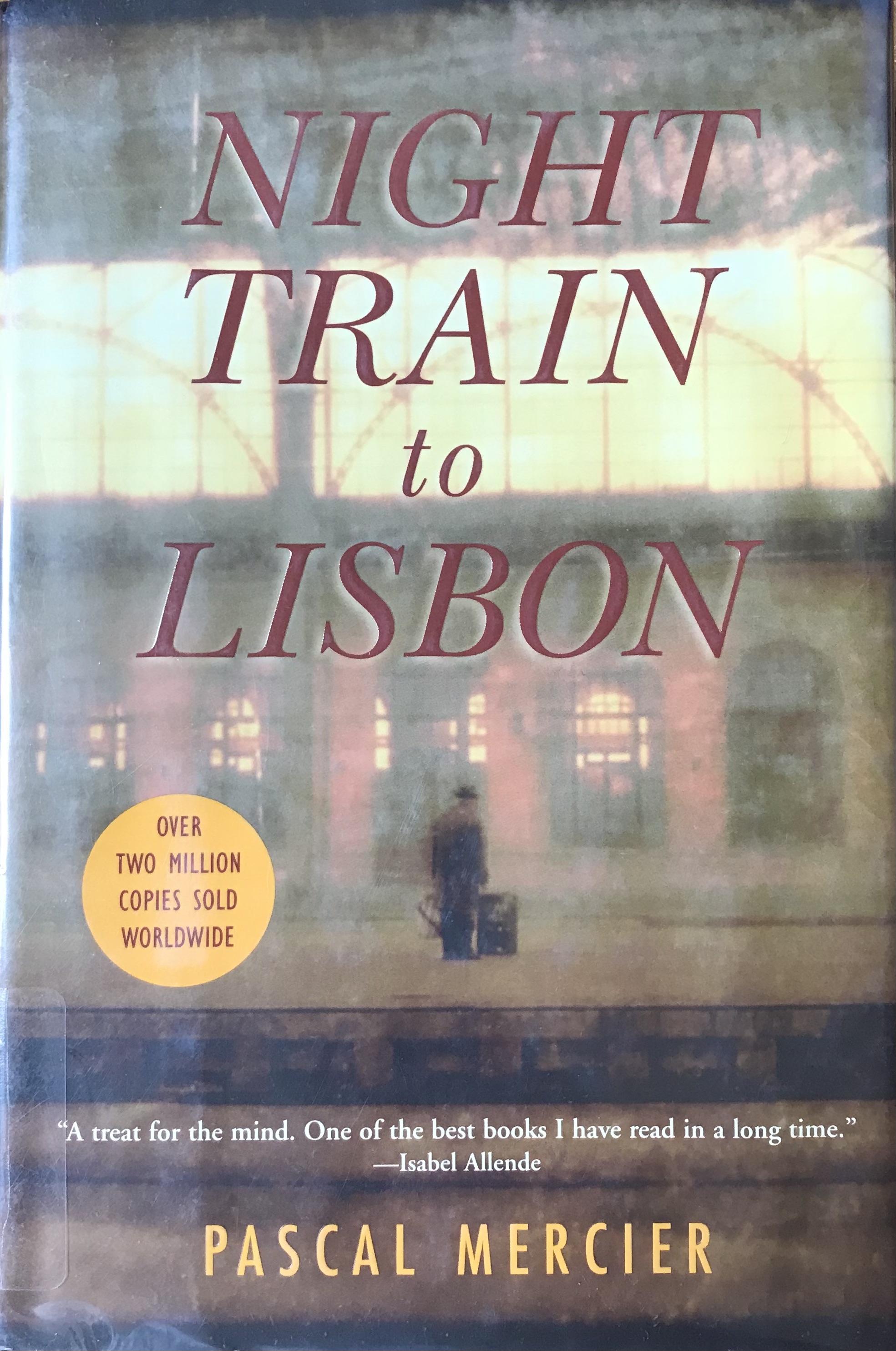
Night Train to Lisbon
Pascal Mercier, Barbara Harshav (Translator)
A huge international best seller, this ambitious novel plumbs the depths of our shared humanity to offer up a breathtaking insight into life, love, and literature itself. A major hit in Germany that went on to become one of Europe’s biggest literary blockbusters in the last five years, Night Train to Lisbon is an astonishing novel, a compelling exploration of consciousness, the possibility of truly understanding another person, and the ability of language to define our very selves. Raimund Gregorius is a Latin teacher at a Swiss college who one day—after a chance encounter with a mysterious Portuguese woman—abandons his old life to start a new one. He takes the night train to Lisbon and carries with him a book by Amadeu de Prado, a (fictional) Portuguese doctor and essayist whose writings explore the ideas of loneliness, mortality, death, friendship, love, and loyalty. Gregorius becomes obsessed by what he reads and restlessly struggles to comprehend the life of the author. His investigations lead him all over the city of Lisbon, as he speaks to those who were entangled in Prado’s life. Gradually, the picture of an extraordinary man emerges—a doctor and poet who rebelled against Salazar’s dictatorship.
About the author
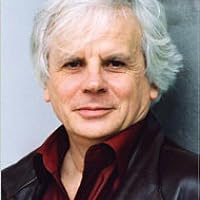
Pascal Mercier
Pascal Mercier is the pseudonym of Peter Bieri, a Swiss writer and philosopher.
Bieri studied philosophy, English studies and Indian studies in both London and Heidelberg.