
Philomena C • Dec 22, 2024 Christmas, is it just tinsle and a long dr who?
Monthly Archives: December 2024
Reminder: Moon Wobble Peaks December 24
 |
| Moon Wobble Peaks December 24, 2024 Click here to see the Moon Wobble Chart If this is useful to you please consider a contribution below: Contribute! *** General suggestions / observations *** • This cycle is based on empirical data meaning enough data was observed and recorded to make it possible to suggest attitudes and reactions. Keep in mind that we all have free will and thus results will vary from one individual to another. • The graph shows the energy high at the beginning of the cycle (not unlike any other astrological aspect) followed by a slow down before it gets strong and again this reflects years of tracking and noting feedback from our many students. • If you are making a decision during this time you might want to let it set for a day or two then check your decision again to see if it still makes sense. However, you can feel into the ebb and flow and find good times to work on self emotionally in both the low and high points. Impatience, emotion and acts without thinking are common. • With practice you can feel when the energy is there to help bring completion to tasks, goals and projects you may be working on. Aloha, The Prosperos |
We’re STUCK in a Looped Reality… Gurdjieff’ Proof Was SILENCED by the FBI
Philosophical Essence • Nov 30, 2024 Everything is energy. Did you know that everything you believe about your reality could be an illusion? This video dives deep into the forbidden teachings of Gurdjieff, a man whose ideas were so powerful that the FBI took notice. Gurdjieff revealed how humanity is stuck in a state of ‘waking sleep,’ living in a scripted illusion we mistake for reality. But his groundbreaking discoveries were silenced… until now. In this video, you’ll learn: ✅ The truth behind the ‘looped dream’ we live in. ✅ Why the FBI buried Gurdjieff’s teachings. ✅ Powerful self-awareness techniques to break free from the illusion. ✅ How our false personality keeps us trapped in an autopilot existence. If you’ve ever felt like something is “off” about the world, you’re not alone. Watch to uncover the shocking truth about our reality and what you can do to escape it. ___________ ???? Sources ???? Andrillon, T., & Kouider, S. (2016). Implicit memory for words heard during sleep. Neuroscience of Consciousness, 2016(1), niw014. https://doi.org/10.1093/nc/niw014 Gurdjieff, G. I. (1984). Views from the Real World: Early Talks in Moscow, Essentuki, Tiflis, Berlin, London, Paris, New York and Chicago as Recollected by His Pupils. Penguin (Non-Classics). Gurdjieff, G. I. (1985). Meetings with Remarkable Men. Penguin UK. Gurdjieff, G. I. (1999). Beelzebub’s tales to his grandson: All and Everything, First Series. Penguin Books. Hu, P., Stylos-Allan, M., & Walker, M. P. (2006). Sleep facilitates consolidation of emotional declarative memory. Psychological Science, 17(10), 891–898. https://doi.org/10.1111/j.1467-9280.2… Ouspensky, P. D. (1971). The Fourth Way. Vintage. Ouspensky, P. D., & Uspenskiĭ, P. D. (2001). In search of the miraculous: Fragments of an Unknown Teaching. Houghton Mifflin Harcourt. Purcell, S., Mullington, J., Moffitt, A., Hoffmann, R., & Pigeau, R. (1986). Dream Self-Reflectiveness as a learned cognitive skill. SLEEP, 9(3), 423–437. https://doi.org/10.1093/sleep/9.3.423 Rodrigues, G. S., & Jaeger, A. (2018). Source Memory and cognitive control in Gurdjieff meditators. Mindfulness, 9(6), 1736–1747. https://doi.org/10.1007/s12671-018-09… Siclari, F., LaRocque, J. J., Postle, B. R., & Tononi, G. (2013). Assessing sleep consciousness within subjects using a serial awakening paradigm. Frontiers in Psychology, 4. https://doi.org/10.3389/fpsyg.2013.00542
Handel’s ‘Hallelujah!’ Chorus live at the Sydney Opera House
ABC Classic • Dec 23, 2019 600 singers from the Sydney Philharmonia Choirs join the Sydney Philharmonia Orchestra to perform Handel’s jubilant “Hallelujah!” chorus from the Messiah, live at the Sydney Opera House. Performed by Celeste Lazarenko (soprano), Nicholas Tolputt (countertenor), Andrew Goodwin (tenor), Christopher Richardson (bass-baritone), Sydney Philharmonia Choirs and Christmas Choir, Sydney Philharmonia Orchestra, Brett Weymark (conductor)
“Christ in the Rubble”: Palestinian Pastor Delivers Powerful Christmas Sermon from Bethlehem
Democracy Now! • Dec 26, 2023 Support our work: https://democracynow.org/give In the occupied West Bank city of Bethlehem, the birthplace of Jesus, city and church leaders canceled all Christmas festivities this year to mourn the more than 20,000 Palestinians killed in Gaza. We feature the Christmas sermon, “Christ in the Rubble: A Liturgy of Lament,” delivered Saturday by Reverend Munther Isaac at the landmark Evangelical Lutheran Church in Bethlehem, which has received international attention for a nativity scene depicting the figure of baby Jesus in a keffiyeh, surrounded by rubble. “If Jesus were to be born today, he would be born under the rubble in Gaza,” preached Isaac, who condemned using theology to justify Israel’s killing of innocent civilians. “If we, as Christians, are not outraged by the genocide, by the weaponization of the Bible to justify it, there is something wrong with our Christian witness, and we are compromising the credibility of our gospel message.”
Greg Brown’s “Christmas Song”
Neil p • Dec 20, 2018 Was surprised one of my favorite Christmas Songs could not be found on YouTube. So I made a quick slideshow.
In Brown’s song—which you are welcome to listen to here—the story of Jesus is subtly inverted. Rather than a story of miraculous birth—”It was the night before Christmas,” the song begins, “but nobody was really noticing that”—it is a story about the routine of birth (“something women do” and that “men kinda, sorta, a little bit . . . help”) in which the only miracle is the gift of life that we’ve all been granted.
| Just getting born is such an amazing thing. You’d think we’d all just be nice forever after— Just to get to be a part of it. You’d think that anybody that ever held a little baby in their arms Would be so careful not to ever do any damage To another human being—or to the creation Of which we are so obviously a part. |
| The song presents a story of Jesus that escapes Christianity, which is perhaps why I find it so lovely and piercing. It opens the door to thinking about the hidden promise of a holiday that too often asks us “what we want” rather than reflecting on the joys of what we’ve been given. The story in the song is not about a boy who grew up to “found any big religions, with shiny churches, gold, and swords” but rather a story “about a world so much better than this one.” In this story, the unnamed boy “was just a child full of love, who went around and talked about love.” And so it follows that the lesson of such a child is not that he was exemplary (though perhaps he was), but that we too often fail to recognize the potent and profound goodness of so many people among us, past and present—not children of God, but examples of humility and decency. |
| Sometimes when I get distraught About our world and what we’re doing to it I remind myself that little children like that are being born every day. They may not make a lot of big news But in their life, they’re kind;They take care of people;They don’t blow things all out of proportion. They spread the news that this life,So mysterious and hard, is a wonderful enterpriseThat should be cherished. |
| And Brown, led all along by the slow strum of guitar, speaks sorrowfully but clearly as he tells his listener: |
| So Christmas, if it’s anything at all,It’s every day. It’s every night. And even when things look dark, way down…In the human heart,That we all share… There’s a light. |
Test by Jon Queally
Managing Editor
on behalf of the entire Common Dreams team
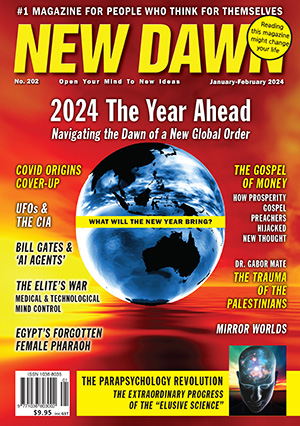
The Gospel of Money: How Prosperity Gospel Preachers Hijacked New Thought
BY MARIE JONES

From New Dawn 202 (Jan-Feb 2024)
I do not put my eyes on men, but on God who gives me the power to get wealth.
– Robert Tilton
God wants you well. God wants you prosperous. God wants you a whole person.
– Oral Roberts
When you focus on being a blessing, God makes sure that you are always blessed in abundance.
– Joel Osteen
The Judeo-Christian Bible is full of contradictions, especially when it comes to the pursuit of wealth. Some passages tell us we cannot enter Heaven if we have wealth, such as Luke 18: 24-25: “Jesus looked at him and said, ‘How hard it is for the rich to enter the kingdom of God!Indeed, it is easier for a camel to go through the eye of a needle than for someone who is rich to enter the kingdom of God’.”
We are also told to ask and we shall receive, and that God wishes for us the abundant life. In Proverbs 3:9-10 we are encouraged to tithe for increased wealth.
Honour the Lord with your wealth, with the first fruits of all your crops; then your barns will be filled to overflowing, and your vats will brim over with new wine.
Does God want Christians to be rich and prosper or to be poor and downtrodden? Does the Bible promise Christians wealth, luxury, fabulous health, perfect relationships, and spiritual healing if they keep their covenant with God? Does the Kingdom of Heaven include all that a Christian could ever desire?
It depends on how one interprets biblical teachings, but for Prosperity Gospel and Word of Faith Christians, a prosperous and abundant life might only be a prayer or two away.
The Gospel of Prosperity
A New Thought movement called Unity blends traditional Christian concepts with older New Thought ideals. Its founder, Charles Fillmore, once rewrote Psalm 23 to read, “The Lord is my banker/my credit is good.” It focuses on teachings of abundance and on asking and receiving.
New Thought encourages people to use forms of prayer to “align with the divine” and the power of belief, faith, and consistent visualisation of a desire or goal to make it a physical reality (for more on this, see my article ‘New Thought Movement Revolution 2.0’ in New Dawn 197). These teachings tell us that we have access to the same ‘source’ materials that create worlds and that we connect to this source to co-create our reality. Source has been equated with God, the divine, and the Universe, among other names, and is the invisible field of potentiality and possibility from which physical reality manifests. That manifestation depends on our desires, beliefs, and attitudes and on properly using the power of our minds when connecting with Source.
Perhaps it was only a matter of time before New Thought concepts were integrated into biblical teachings. The love of money is universal, after all. But that integration has not always been a smooth one.
We are told in the Old Testament’s Deuteronomy 8:17-18 that God gives us the ability to produce wealth, so how can it be bad?
8:17 You may say to yourself, “My power and the strength of my hands have produced this wealth for me.”
8:18 But remember the Lord your God, for it is he who gives you the ability to produce wealth, and so confirms his covenant, which he swore to your ancestors, as it is today.
Like New Thought teachings that encourage us to see ourselves aligned with Source, the Bible suggests that if we work on the side of God, we can be rich. Yes, it would appear that God wants good for us in this material realm, but it gets a bit more complicated than just believing and receiving.
A whole breed of Christian pastors, ministers, and teachers have created their own evangelical version of Christianity that sounds more like New Thought/New Age ‘Law of Attraction’ but immersed in Pentecostal and charismatic beliefs. This ‘Bible-based’ ‘Prosperity Gospel’ promises lavish financial abundance to those who follow it and has made more than a few millionaires out of those who teach it.
The Prosperity Gospel movement, led by mega-preachers of mega-churches, has caused much controversy among traditional Christians who see the focus on money and wealth as contradicting Christ’s teachings.
According to historian Kate Bowler, author of Blessed: A History of the American Prosperity Gospel, these teachings formed from three different streams: Pentecostalism, the New Thought movement, and “an American gospel of pragmatism, individualism, and upward mobility.”
The commonalities with New Thought are not coincidental, as these teachings have been in circulation since the 1880s, promoting the power of the mind to achieve prosperity. These concepts served as a foundation for Christian movements to come.
Word of Faith
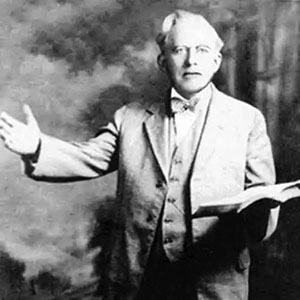
Word of Faith is a neo-charismatic prosperity theology with roots in the writings and teachings of Baptist minister E.W. Kenyon (1867–1949). He influenced Kenneth Hagin (1917–2003), who later became known as the father of the Word of Faith movement in the United States. Kenyon attended the Emerson College of Oratory, where he was immersed in older New Thought teachings and later wrote about positive declarations and the power of the mind. He denied his New Thought origins, but they were obvious. He taught that to receive the blessings of God, one must use positive, faith-filled speech. He also taught his followers to demand healing and prosperity because it was their divine right. They were entitled to it.
Hagin took these teachings and founded the Kenneth H. Hagin Evangelistic Association, started a magazine in 1966 called Word of Faith, and built a seminary for Word of Faith ministers to train, teach, and spread the prosperity gospel. This claims that if a person keeps their covenant or word with God in full faith, they will be blessed with healing – physical, emotional, spiritual, and/or financial. One could also achieve this promise of total healing by simply becoming a believer and asking for atonement.
Interestingly, as in New Thought teachings of affirmative prayer and using intention to speak of desires as if one already has it (all New Thought prayers end with “And so it is”), Word of Faith teaches that healing should be prayed for and accepted as if it is already done. Doubt and fear that it will not manifest only serves to delay the healing and manifestation. Anything negative such as illness, death, pain, or suffering, is considered an attempt by Satan to prevent or deny total healing in believers. The fix? Praying and strengthening one’s faith even more.
Word of Faith preaches that those who follow these teachings must “decree and declare” their faith in order to create what they seek to gain. Again, this mirrors the New Thought and Law of Attraction teachings that rely on visualising and speaking only of what is desired, not of what is not desired, and demanding the Universe/Source/God fulfil their personal order like someone dining out at a restaurant. One’s order is put in writing or spoken aloud to give it more ‘power’.
The spoken word has creative, generative power in both movements through prayer, affirmations, spiritual mind treatments (intensive, structured affirmative prayer), and the stating of intentions. This spoken declaration in prosperity theology is known as a “faith confession” or “positive confession” and is the key to claiming and affirming healing as already fulfilled.
Kenneth Hagin believed that because God spoke the universe into existence (“In the beginning was the Word”), God’s believers have been given this same creative power, even going so far as to call believers “little gods.”
Prosperity Theology
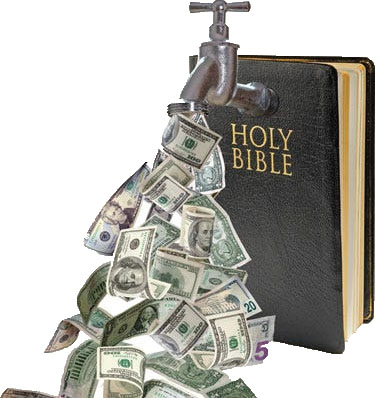
Kate Bowler writes that the movement was also influenced by mesmerists, faith healers, business oracles, revivalists, Pentecostal healers, and metaphysical sages. This variety can be seen in the different styles of those who have risen in its ranks. Modern Christians may call it the “Name It and Claim It” movement or Health and Wealth, but it is all under the umbrella of prosperity theology, which is today embraced by millions of adherents all over the world.
Bowler argues that the central thesis of the New Thought movement is present in Christian prosperity theology: “People shaped their own worlds by their thinking, just as God had created the world using thought. Positive thoughts yielded positive circumstances, and negative thoughts yielded negative circumstances.”
Historical events such as World War II prompted a spread of these prosperity teachings and caught on quickly as evangelicals sought miraculous healings and money blessings as a way to appeal to those struggling with post-war problems such as homelessness, poverty, and joblessness.
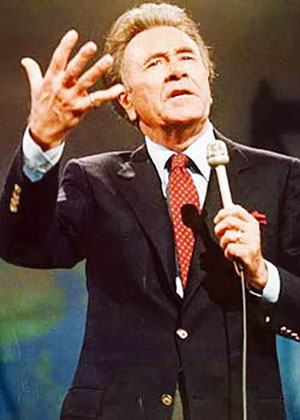
Modern proponents such as Oral Roberts (1918–2009), the famous American Charismatic televangelist – considered one of the first propagators of prosperity theology – pull their beliefs from a host of Bible passages to back up their claims. They also tend to interpret these passages to support their teachings. Some of the more widely used are:
I am come that they might have life, and that they might have it more abundantly. (John 10:10)
Ask, and it shall be given you; seek, and ye shall find; knock, and it shall be opened unto you:For every one that asketh receiveth; and he that seeketh findeth; and to him that knocketh it shall be opened. (Matthew 7:7-8)
Beloved, I wish above all things that thou mayest prosper and be in health, even as they soul prospereth. (3 John 1:2)
My God shall supply all your needs according to his riches in glory by Christ Jesus. (Philippians 4:19)
Roberts amassed a huge following with his televised ministry that helped introduce Pentecostalism into the mainstream. He pioneered the use of television to reach millions and founded the Oral Roberts Evangelistic Association and Oral Roberts University.
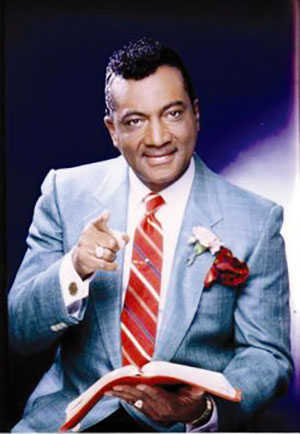
Other Word of Faith and prosperity theology preachers who took to the airwaves include Juanita Bynum with “Weapons of Power” on the Trinity Broadcasting Network; Kenneth and Gloria Copeland with “Believer’s Voice of Victory;” Jan and Paul Crouch, who founded Trinity Broadcasting Network (TBN); Creflo Dollar with “Changing Your World;” Benny Hinn with “This is Your Day,” currently seen in almost 200 countries; Marilyn Hickey with “Today with Marilyn” on TBN and Black Entertainment Television; Robert Tilton who has shows on Black Entertainment Television; T.D. Jakes with “The Potter’s House;” Joyce Meyer with “Enjoying Everyday Life;” and New York’s Reverend Ike (Frederick J. Eikerenkoetter II), who preached up a storm in the US before his death in 2009 with his motto, “You can’t lose with the stuff I use!”
Then there was Jim and Tammy Faye Bakker, who took television evangelism to a whole new level with their flamboyant looks and extravagant lifestyles. Their Heritage USA theme park was a hugely popular destination for Christians and non-Christians alike, and their Praise the Lord (PTL) Ministries incredibly successful. Many will remember that scandals eventually brought down the Bakkers.

Television allowed these prosperity preachers to reach new audiences far beyond the confines of just one church in one town or city, and many started running ‘megachurches’ with thousands of followers. Today, the internet and social media offer even more outlets for profitable preaching to extend beyond national borders. Although the prosperity gospel has its origins in the United States, there are now many multimillionaire preachers and pastors benefitting from its teachings all over the world.
Criticisms of Prosperity Theology
What if these promised money miracles do not occur? What if someone follows these teachings and remains poor? Dr. Andrew Spencer in “What is the Prosperity Gospel?” for the Institute for Faith Works and Economics, says these failings are “blamed on the lack of faith in those seeking the miracles.” They were at fault for unfulfilled prayers, not the preachers promising them that miracles would manifest. “If wealth and health are a result of the degree of faith a person has, this leads to the conclusion that the poor are poor because they are spiritually deficient,” writes Spencer.
People often refer to one of the Beatitudes of Christ’s Sermon on the Mount, blessed are the poor, for theirs is the kingdom of heaven, as a way to validate being poor, but Jesus actually said, “Blessed are the poor in spirit” (emphasis added) (Matthew 5:3). The statement has nothing to do with money but with the spirit, implying that the sad, depressed, and downtrodden will be given the keys to the heavenly kingdom. Even rich people can be sad, depressed, and spiritually downtrodden.
This clearly contradicts where prosperity preachers like to place the blame – on the person asking for help. This victim-shaming and blaming is one of the key criticisms many people have of religious leaders pushing material and financial wealth. They can never seem to explain why it doesn’t work for everyone else, so they blame… everyone else.
Baptist preacher Russell H. Conwell is famously quoted as telling his poor congregation in 1915, “I say you ought to be rich; you have no right to be poor.” This same line about the rich and poor has been repeated, ad nauseam, in prosperity gospel preaching for over 100 years, implying that Jesus placed emphasis on this when he clearly did not focus his teachings on material riches. Rather than blame society or inequality in the workplace, the blame is shifted to the failures of the poor, who very well may be hard-working individuals with good hearts.
Crimes & Misdemeanours
In 2007, United States Senator Chuck Grassley probed the financials of televangelism ministries that promote prosperity theology, including Kenneth Copeland Ministries, Creflo Dollar Ministries, Benny Hinn Ministries, Bishop Eddie Long Ministries, Joyce Meyer Ministries, and Paula White Ministries. The probe concluded in 2011, with Grassley stating that self-regulation was preferable to government oversight of these ministries. All six televangelists insisted they would comply with tax regulations for religious non-profits. Only Joyce Meyer Ministries and Benny Hinn Ministries told Grassley they had changed how they govern their ministries or set compensation. The other four refused to provide full information to Grassley, and a few accused Grassley of violating their religious freedom.
In the early 1990s, Jim Bakker asked for forgiveness for his prosperity teachings from a prison cell after being convicted for mail and wire fraud associated with his ministry’s various fundraising activities. He was also involved with a highly publicised sex scandal involving a woman named Jessica Hahn that eventually brought down his powerful PTL Ministries.
There have been numerous media hit pieces on the extravagant lifestyles of these preachers, suggesting that they fell prey to the materialism the Bible teaches against. Not all flaunt their lavish possessions and massive bank accounts. Mainstream evangelicals such as Rick Warren and Jerry Falwell have come out opposing prosperity theology as heretical to the true teachings of Christ.
“Capitalism Christianity” has been called an abuse of faith as well as a way for the preachers to become rich at the hands of their congregants who want to believe so badly that they, too, can be rich if they have faith or tithe ten per cent or more of their income to the men and women making those grand promises from atop a gaudy stage. There are many sad stories of people giving all of their money over to their church leaders, only to be left destitute while the preachers buy mansions and expensive toys or run off to another country, never to be heard from again.
As noted by Cathleen Falsani in her 2013 piece “The Worst Ideas of the Decade” for The Washington Post, these teachings conflict with the basic tenets of Christianity. “Jesus was born poor, and he died poor. During his earthly tenure, he spoke time and again about the importance of spiritual wealth and health. When he talked about material wealth, it was usually part of a cautionary tale.”
To Be Or Not To Be
Is it spiritual to be poor? Do Christians have to give up everything they own and be homeless on the streets in order to achieve the grace and abundance of God?
Those who prosper can easily become ego-maniacs and materialists, using their money to buy power and influence over others, or they can be meek, merciful, and pure in heart. They are, after all, human. Some might argue that millionaire preachers who become rich off their much poorer congregants will have one hell of a time, pun intended, threading the needle and getting into Heaven.
Money itself is not the root of all evil, although lust, greed, and how someone makes all that money can play a big role. It’s not wealth that makes the person, but what they do with it and whether or not it changes them for better or worse.
Those who are blessed can no doubt bless many others in ways being poor cannot. Money can bring happiness and it can bring despair. It favours no one. It’s neutral.
Prosperity preachers and their eager adherents might remember that acquiring true wealth may be more about getting right in spirit first. Whatever comes after that is just icing on the cake.
This article was published in New Dawn 202.
If you appreciate this article, please consider subscribing to help maintain this website.
Sources
“5 Errors of the Prosperity Gospel” by David W. Jones, thegospelcoalition.org/article/5-errors-of-the-prosperity-gospel
Katie Bowler, Blessed: A History of the American Prosperity Gospel, Oxford University Press, 2018
“Prosperity Gospel” by Bryn Donovan, britannica.com/topic/prosperity_gospel
“The Prosperity Gospel, Explained: Why Joel Osteen Believes that Prayer Can Make You Rich” by Tara Isabella Burton, vox.com/identities/2017/9/1/15951874/prosperity-gospel-explained-why-joel-osteen-believes-prayer-can-make-you-rich-trump
“The Worst Ideas of the Decade” by Cathleen Falsani, washingtonpost.com/wp-srv/special/opinions/outlook/worst-ideas/prosperity-gospel.html
“What is the Prosperity Gospel?” by Dr. Andrew Spencer, tifwe.org/what-is-the-prosperity-gospel
© New Dawn Magazine and the respective author.
For our reproduction notice, click here.
Support New Dawn
Minimal Ads, No Paywall, No Clickbait – help us
keep this website free with new articles regularly posted.
Show your appreciation & gratitude.
About the Author

Marie D. Jones is the author of numerous non-fiction books, most recently for Visible Ink Press, including Disinformation and You: Identify Propaganda and Manipulation. She has contributed to dozens of magazines and has appeared on the History Channel and over 2,000 radio shows worldwide. Her website is www.mariedjones.com.
© Copyright New Dawn Magazine, www.newdawnmagazine.com. Permission granted to freely distribute this article for non-commercial purposes if unedited and copied in full, including this notice.
No el, No el

Image: gasolinealleyantiques
A.Word.A.Daywith Anu Garg
In Dutch it is kerst (short for Kerstmis), in German Weihnachten (sacred night), in Hindi bada din (big day, referring to the start of days getting bigger), and in Spanish Navidad (birth).
You may have guessed which event I’m referring to above. Yes, it’s Xmas. Now, here’s a quiz for you. Just what is the word for it in French?
Here’s a hint: so far, I have used every character, except one.
Why? Because No el.
Joyeux Noël!
Stepping Out Of The Body

BY STUART KESTENBAUM • FEBRUARY 2003 (TheSunMagazine.org)
Like someone stepping
from a pair of dirty overalls,
turned inside out on the bathroom floor,
I step from my body.
Words spill out, a pocketful of
nearly, almost, close, rattling on the ground.
I rise up and I am eye to eye
with the ceramic insulators on the power lines.
They glisten and I can see
a fish-eye reflection
of the stony landscape and worn blacktop.
I touch the wire
and the current passes through me.
I float above the trees
like children’s soap bubbles
on a spring day. Everyone I love
is below me. I see the tops of their heads
as they go about their business.
The school bus arrives
and swallows my children.
I am about to join everything,
the way bubbles burst
with a quiet pop, the tiny
strands of soap vanishing into the air.
There are souls around me
pushing, pushing. There is the world
below me, caught by surprise in a spring storm.
There is the ocean embracing each rock.
I look down and can see
the inside of my skull,
the graffiti of dreams,
the rust of education.
Should I come back and inhabit this vehicle?
Under the sign at the Redemption Center
people are returning their bottles,
with the thin sour smell of beer and milk.
Do we reuse the vessel or do we
crush the can so that it becomes something else?
Someone is embracing me
with both arms, whispering,
Come home, all is forgiven.
Am I coming or going?
Between this world and the next
all I can tell you is this:
Something is about to be born.
Santa Confirms Everyone Getting Bag Of Glitter Labeled ‘Fairy Dust’ His Sister-In-Law Sells On Etsy

Published: December 23, 2024 (TheOnion.com)
LAS VEGAS—Stressing how much it meant to Mrs. Claus’ sister to be included for the first time in the family business, Santa Claus confirmed Monday that as their present this year, all children would be receiving one of the bags of glitter labeled “fairy dust” that his sister-in-law sells on Etsy. “We’re excited that on Christmas morning good little boys and girls all over the world will reach into their stockings and find a hand-embroidered pouch filled with pure holiday magic,” Santa said of the bags that contain approximately 1.5 ounces of glitter and sell for $29.99 plus shipping on the e-commerce site. “While this may not be what they asked for in the letters they sent me at the North Pole, children on Santa’s ‘nice’ list surely know the importance of being thankful for what they are given! They should remember to be polite too, because Mrs. Claus says her sister has been going through a hard time lately and could really use our support. Ho, ho, ho!” Santa went on to state that Christmas would come a little late this year, as his sister-in-law needed more time to make enough bags for all the children on Santa’s route, having completed only 20 so far.