A siddhi is a supernatural, paranormal, or magical power, ability, or attainment that is said to be gained through advanced spiritual practices like yoga and meditation:
Meaning The Sanskrit word siddhi means “fulfillment,” “accomplishment,” or “success”.
Explanation Siddhis are said to be the result of perfect spiritual achievement and are accessible to all humans. They can be powers to control the self, others, and the natural world.
Examples Siddhis can include the power to fly, become invisible, or walk on water.
Importance Siddhis are an important concept in Buddhism, Hinduism, and yogic teachings. In Buddhism, the term ṛddhi (Pali: iddhi, “psychic powers”) is often used interchangeably with siddhi.
Origin The word siddhi comes from the Sanskrit verbal root sidh, which means “to achieve one’s goal”.
Uberboyo • Nov 3, 2024 Is the financial system about to implode? Well lets go through a full breakdown on what the financial system is…. and what might be next…
Is embracing your inner teenager the key to thriving in adulthood? Neuroscientist Adriana Galván shares three powerful lessons from decades of research into adolescent brain development, exploring what teens can teach us about embracing uncertainty, challenging the status quo and taking strategic risks — all tools for a bold, brave life.
TED Salons welcome an intimate audience for an afternoon or evening of highly-curated TED Talks revolving around a globally relevant theme. A condensed version of a TED flagship conference, they are distinct in their brevity, opportunities for conversation, and heightened interaction between the speaker and audience.
Learning New Communication and Relationship Skills
We’re born alone, we live alone, we die alone. Only through our love and friendship can we create the illusion for the moment that we’re not alone. — Orson Welles
Good communicators know a few things that incompetent communicators don’t. The primary three are pacing, matching, and building rapport. Very often people have been spending so much time just trying to keep up with the world, or struggling with schools and jobs that don’t suit their temperament, that they’ve failed to learn these lessons of good communication. But they’re easy to learn, and don’t take a lot of practice to become second nature.
Natural communicators — people who are intuitively good at conveying their ideas and thoughts to others — usually do these things by instinct, whether in person, on the phone, or even in writing. Nobody told them to, but somewhere along they way they picked the skills up. Odds are they had an early role model — a teacher or parent or older sibling — who was a master communicator and they simply modeled that person, picking up the techniques by practicing them without knowing that there were words or names for any of them. Perhaps they modeled a remote person they didn’t even know personally, such as a writer or TV personality.
However they did it, they became good at communicating, and the more they did it the better they got.
The concept of breaking these skills out and naming them is just from the last century, although again the ancient Greeks had more than a few words to say on the overall concepts. Numerous people over the years, and in particular Richard Bandler and John Grinder, observed highly effective communicators in a number of different settings and then asked: “What is it that they’re all doing in common that makes them so effective?” From this questioning process came the core concepts of pacing, matching, and building rapport.
When you master these skills you can be comfortable and effective in virtually any social or business situation, from talking one-on-one to giving a speech to a room full of people. You’ll find that others have a better understanding of what it is you’re trying to communicate, and — perhaps most interestingly — you’ll discover that you have a clearer and more solid grasp of what they’re trying to say.
Pacing and matching
Here’s a tip for people who have trouble communicating or getting their way when it’s important. I remember a few years ago I was stuck in the Salt Lake City airport because of a huge snowstorm that had started in the Midwest and then swept all the way down to Atlanta. I’d been waiting at the airport for a flight out for most of the day, and I wasn’t alone in my situation: the airport was crowded with people whose flights, like mine, had been delayed, rerouted, or outright cancelled. The snowstorm was echoing through the entire air traffic system, having already shut down several cities.
Sitting in my airline’s frequent flyer lounge, I took a glass of wine and a book to a seat near the reservations desk, where I could keep my eye out for possible changes in flights. From the desk, I could hear a man progressively raising his voice.
“When can you get me out of here? I have business to do! This is a disaster for me!” A man with a red face wearing a dark pin-stripe suit was leaning over the counter, speaking rapidly with short, clipped words and a faint New York accent.
“Well, sir, you see we don’t here have any control…” said the man behind the desk, sitting at a computer, his voice slow and soft with a thick southern drawl.
The New Yorker interrupted him. “I don’t care what you can’t do! Tell me what you can do! I know you can find a plane to put me on, you just don’t want to pay another airline to fly me!”
“No, sir,” the agent said, his voice soft and deliberate. “The situation is that none of the airlines have capacity right now…”
“Get somebody to bump somebody!” the man barked.
And on it went for a few minutes, until the New Yorker stomped away angrily, leaving the reservations agent shaking his head at the man’s bad manners.
I made a mental note. Ten minutes or so later, I walked over to the reservations agent, and speaking at the same speed I’d heard him talk with earlier, asked him how it looked for my flights. He brightened right up, and energetically began searching for new flight options for me.
I wish I could say that my having paced the man’s speaking speed got me the flight I wanted, but it didn’t. The point, though, was that he felt that I understood him, that I was on his wavelength. I found myself relaxing into his cadence of speech, and it made me feel like I was closer to him, too. We understood each other. Sympatico. Brothers in slow speech.
If I’d had to talk with the New Yorker, I would have sped up my speech to match his. Sometimes I even find myself picking up people’s accents without realizing I’m doing it. Years ago when I first discovered myself doing it, it seemed odd. Now it’s just there.
I remember being in a meeting with one of the larger clients for an advertising agency I used to own in Atlanta. There were eight or ten people in the room, and I was answering questions about a job we were working on, as well as offering suggestions on their marketing plans. I’d discovered that this committee in this company had their own pace, which largely followed the natural pace of the VP who ran the meeting. Everybody pretty much followed his pace, except one woman who, because of her slow and deliberate style, irritated everybody as she raised her voice to finish her long-winded (to them) sentences. The room had a pace. Those who didn’t keep up with it fell to the side.
Pacing isn’t just about speed. Notice how your voice changes when you speak with different people. I find that my voice changes as much as an octave between different people, depending in some part on how they’re speaking.[1] Pacing and matching their speed, tone of voice, use of language (slang, regionalisms, use of obscenity, etc.)
Pacing is also about the type of speech used, the predicates and other words. Is the person using simple sentences and short words, or complex sentences and polysyllabic words? Are they talking primarily in visual metaphors or auditory ones or kinesthetic ones?
This last point of predicates is a crucial one. If the other person is describing their experience using visual predicates, for example, and you use auditory or kinesthetic ones, you not only run the risk of not communicating, but you may even cause them to feel irritated with you (although they would probably never be able to say why). I’ve seen this happen in many situations over the years, and it’s particularly critical in intimate or highly personal communications.
A therapist, for example, who responds to a client saying, “I just feel like the world is crushing me: life is so rough,” with a statement like, “Well, let’s see if we can get a better focus on that — what do you see as the main problem?” is doomed. If, on the other hand, the therapist were to match the person’s predicates (e.g. “Let’s try to get a handle on that situation. What do you find is your biggest source of pain?”), there’s a very good chance that positive and productive change could take place. When you match people’s predicates, they believe that you understand their representation of reality, as if you can read their minds or have had similar experiences as them.
When you’re not synchronous with their predicates, they get the feeling that you don’t understand them or their world.
Pacing and matching also have to do with body posture, rate of breathing, and gestures. Sit in a room full of people and pick one person you don’t know in the room and imitate their body posture. You’ll notice shortly your target person will react, either changing their body posture away from you and your posture, or else moving toward you in some way, either moving physically closer or else pointing their body in some way toward you. If you copy them too closely, they may become irritated; if it’s too far off, they won’t notice it. In any case, all of their “noticing” will probably be on an unconscious level.
The unconscious mind is acutely aware of these subtle cues, a remnant from our evolution as mammals and social animals, even when the conscious mind is otherwise occupied.
The greater the extent to which you can pace and match these subtleties of speech, the more in-synch your listener(s) will believe you are with him, her, or them. Out of this sense of synchronicity, of understanding, comes a sense of rapport, the first key element to effective communication.
Leading
After you’ve paced a person for a while, you may want to try leading them. Make small changes in your language, body posture, rate of speech, or even speed of breathing. If they’re really feeling in synch with you, they’ll unconsciously follow your changes. When you see that happen, you know that they’re in a highly receptive state and will attend carefully to your communications.
This is a strategy that good public speakers use, whether they realize it or not. They start out with a pace, tempo, cadence, tone, and vocabulary that’s as baseline, common-denominator as possible. From there, they escalate to progressively stronger and more intense states of emotion and insight, using their body language, tone of voice, speed of speech, and complexity of language to bring their audience along with them.
As with any tools, communications tools like this are most useful if you practice with them until you’re comfortable using them. The more effectively you can attend to the people around you, catching the nuances of their speech, posture, language, and so on, the more quickly you can “enter their world” by pacing, and matching them, and help them to enter your world by leading them.
Working with children
Pacing and leading children may seem like an adult would have to act like a child in order to step into their world. In fact, your matching, pacing, and leadings can be much more subtle. Speaking at the same speed is useful, and trying to — in your own and natural way — mirror their emotional state is a good way of beginning.
But instead of behaving childlike, you’re expressing the adult version of the child’s state. This way it feels natural to both you and the child, and your modeling the child’s world in an adult way can also provide a good role model for, “This is what it looks like when you grow up.”
When I was the executive director of the children’s village in New Hampshire, one of the kids in our care fell off a horse and split open her lip on the ground. She was crying loudly.
My first instinct was to try to calm her down, but I also knew that this was an instinct that arose from my own personal and internal sense of alarm at another person being in pain, and came out of my needs, not hers. She needed somebody to step into her world, and then lead her out of it.
So instead of saying, “Everything will be ok,” or, “Don’t cry,” I ran over to her and said, “Wow, I’ll bet that really hurts!” She looked up, stopped crying almost immediately, and through hiccupping sobs said, “Yeah, it does!”
“It always hurts a lot when you first injure yourself,” I said. “And you’re bleeding, too. That probably hurt the most when you first hit the ground.” (Notice the presupposition here: by talking about the past — when she hit the ground — I’m helping her unconscious mind begin the process of putting the hurt into the past. The statement really said, “At one time it hurt more than it does now.”)
“It did!” she said, sitting up, wiping the blood on the back of her arm.
“You’ve cut yourself before, or skinned your knee and it’s bled, right?”
“Yeah,” she said.
“And then the bleeding stopped?”
“Yeah, then I get a scab.”
“I wonder how many minutes it’ll take for your lip to stop bleeding and for it to stop hurting?” I said, noticing that the bleeding had already mostly stopped.
She touched herself gently and said, “It seems like it’s stopping now.”
Notice here what had happened up to this point — I’d stepped into her world of pain, and then moved her attention from the pain to the healing. I helped her remember times when she’d been injured and had healed, and even helped her to point out to herself that it always happened that way. Now for the final step.
“I wonder if you’re strong enough to get back on the horse again now?” I said. (She was a girl who valued her own strength: if her main value had been pride or bravery or something else, I would have used that word instead of “strong enough.”)
She stood up and dusted herself off, looking at the horse with a smile. “I can do it now.”
“Are you sure?” I said, using a tonality that implied I knew she could do it. “I know you’re strong and it looks to me like your lip is much better now. But are you strong enough to get back up on that horse?”
“Just watch,” she said, flipping herself back up into the saddle.
[1] There are also issues of command that have to do with voice. Just like someone who extends a hand to shake with their palm down is signifying their intent to dominate, and a person who extends a hand with the palm up shows their willingness to be dominated, voice tone can convey relative power positions. Generally the lower the tone of voice in comparison to others, the more power a person is claiming for themselves.
Published: 3 Dec 2024 Updated: 7 Dec 2024 (scmp.com
On January 29, 2025, the celestial dragon will make way for the earthly snake in the Chinese lunisolar calendar.
There are 12 zodiac animals in Chinese astrology, and each possesses a set of unique qualities. Each year, an animal is paired with one of the five elements – metal, wood, water, fire and earth. The elements complement and clash with one another, but it is this constant interplay that is believed to promote harmony, balance and order in the natural world.
The unique qualities of an elemental zodiac are often used to describe the personality traits of individuals born in that year.
In 2025, we welcome the Year of the Wood Snake. It is also known as the Year of the Green Snake, as wood is associated with the colour green according to the Chinese theory of five elements, so you can expect to see a lot of snake decorations and motifs in that vibrant hue.
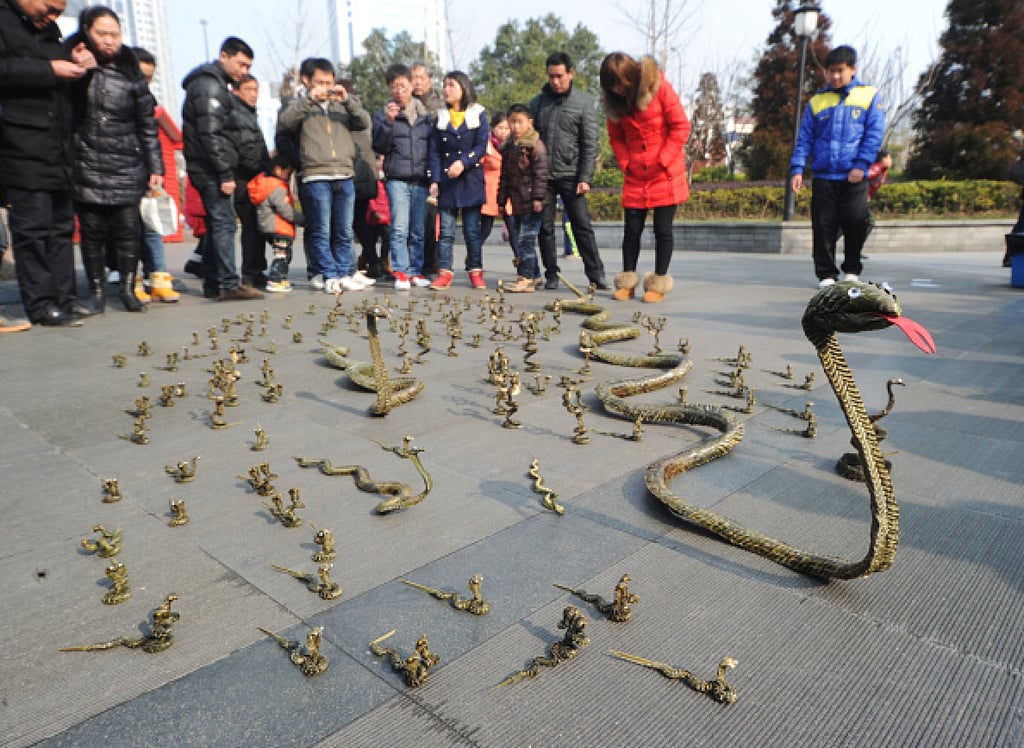
Snakes made of palm leaves are displayed in Shanghai to celebrate the previous Year of the Snake in 2013. Photo: Getty Images
While the snake may symbolise evil and treachery in some traditions – the serpent represents the devil and temptation in the Christian Bible, for instance – in Chinese culture it symbolises wisdom and agility.
Wood stands for growth, flexibility and tolerance. At the same time, it also nurtures the element of fire, which represents vitality and change.
If history is anything to go by, the year ahead will be a time of dynamic change – much as the world experienced in the previous Year of the Wood Snake. Since each elemental animal follows a 60-year cycle, the last Year of the Wood Snake was in 1965.
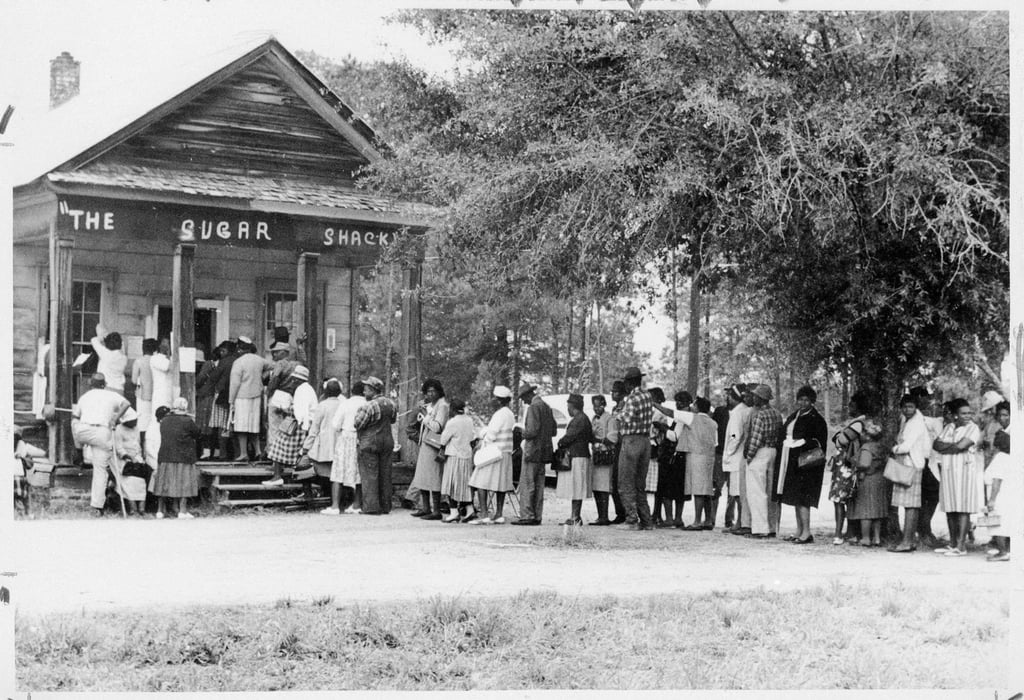
That year was pivotal and momentous in many aspects. It saw the passage of the Voting Rights Act in the United States, spurred by peaceful marches that faced violent backlash. The landmark legislation aimed to overcome the legal barriers preventing the black community from exercising their right to vote.
Mass in the Catholic Church was celebrated in local languages instead of Latin for the first time, and Soviet cosmonaut Alexei Leonov became the first person to walk in space.
Also in 1965, Singapore was separated from Malaysia to become an independent and sovereign state.
Following the passage of the Voting Rights Act of 1965, people line up to vote, most for the first time, in Alabama in the US in 1966. Photo: Getty Images
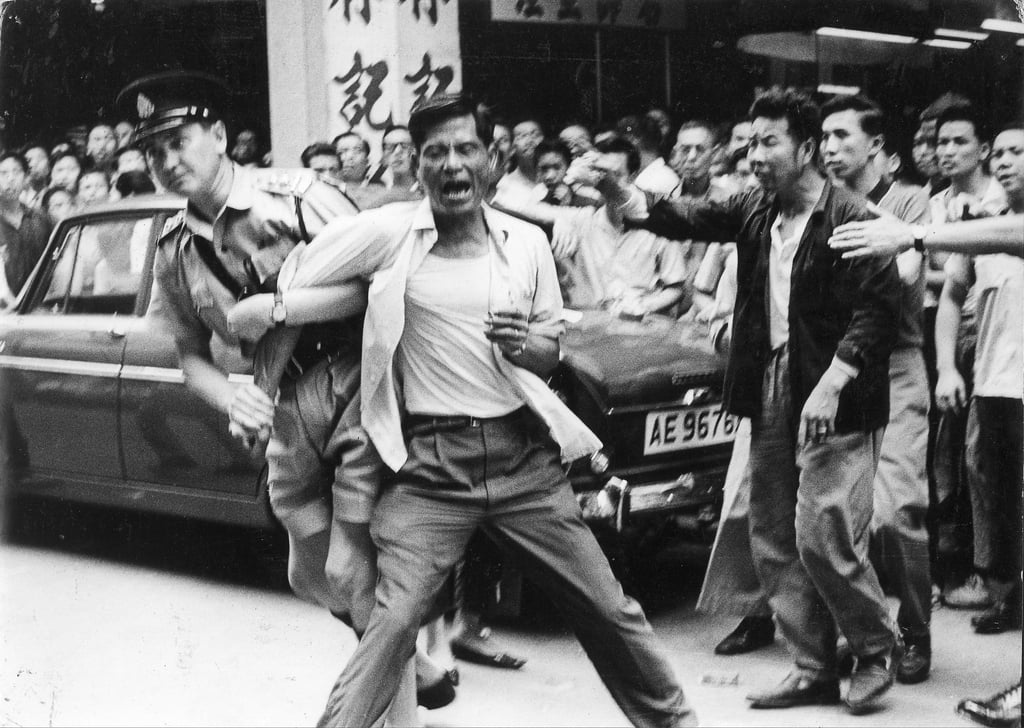
But the year was not without its challenges. Hong Kong saw a series of bank runs, including the collapse of the Canton Trust and Commercial Bank; elsewhere, the US ’ increasingly active military involvement escalated the Vietnam war (1954–1975).
We may be in luck, and in line for a more favourable year this time round, however, as the coming Lunar New Year is one of “double spring”, with two occurrences of the beginning of spring (lichun) in one Chinese lunar calendar year.
The first lichun falls on February 3 in 2025, the sixth day of the Lunar New Year, while the second falls on February 4 in 2026, over a week before the Year of the Snake ends on February 16, 2026.
In Chinese tradition, spring represents new life and fresh starts. The number two is considered to be lucky, as reflected in the Chinese proverb that good things come in pairs.
When there are two springs in a year, it is believed to amplify blessings and good fortune, making it particularly auspicious for major decisions like marriage.
The Chinese zodiac corresponds to a 12-year cycle, with each year assigned to one of twelve animals: rat, ox, tiger, rabbit, dragon, snake, horse, goat, monkey, rooster, dog and pig, in that sequence.
Angry depositors protest and clash with police outside the office of the chairman of the Canton Trust and Commercial Bank in 1965, the previous Year of the Wood Snake in the Chinese lunisolar calendar. Photo: Chan Kiu
Interestingly, a snake year is sometimes referred to as a “little dragon” year, since the mythical dragon is thought to have been modelled after the snake, according to traditional Chinese belief.
The term also serves to relieve any feelings of inadequacy among those born under the snake sign, as the snake is not usually celebrated in as grand a manner as the dragon.
Xinyi joined the Post in 2024. She previously covered business news in Singapore and taught writing at a university in Shanghai. She graduated with a degree in anthropology from Yale-NUS
Imagine receiving the gift of a wonderfully moving poem a second time, 14 years after the giver first gave it. And knowing this gift is meant to be broadcast as ever-present Tidings from Suzanne Deakins, H.W., M.
Odd, I don’t remember receiving Suzanne’s poem, ” Glory unto the Heavens”, through email in 2010, when she sent it to her Prosperos friends including me. Yet I valued it enough then to print it and place it in my paper file.
If you could see the state of my files today, you too would see this as an amazing Christmastime surprise, also known as a miracle. I found it last week in that same old paper file folder, giving no clue it contained this poem. The timing of re-discovering this, following Suzanne Deakins’ recent death and our tribute to her, could only be synchronicity.
Read it; breathe it in; recite it to your pet, partner, or simply the atoms around and in you.
Her poem to me is reflecting One Powerful Truth continuing on in infinite expression. May you uncover your own unique meaning of it this season.
In remembrance . . . Suzanne Deakins is the gift who keeps on giving.
In the Spirit of Gratitude, Sara Walker, H.W., m.
Note: Thank you to Alanna Fennie who re-typed this poem for legibility.
GLORY UNTO THE HEAVENS
Silence in my soul
silence, falling softly
song in my heart
falling softly upon the life.
Thundering silence in your soul, falling softly upon life.
Glory in the heavens
Filled with silence of your soul.
Glory in the heavens
Filled with the songs of your heart.
Glory in the heavens
The birth shall be…
Glory in the heavens the LIGHT will arrive.
Thundering silence in your soul
The LIGHT will arrive,
Glory in the heavens the silence has been known.
Glory in the heavens the birth shall be . . .
Silence softly falling in your soul, song softly playing in your heart. . . . Glory in the heavens.
The birth shall be.
Thundering silence falling softly upon the life that is to be
Song filling, the heavens. . . For the life that is
Silence on the velvet darkness that shall know the song of LIGHT.
Song in the heavens for the Glory that shall be. . .
The thundering silence
Falling upon the shepherds. . .
Song of the LIGHT that is to be.
Song filling their heart with Glory. . .
for that which has been told.
Silence upon the soul for the life that will be born.
Song of LIGHT filling their harps
as they sit upon the silence
Thundering silence of the soul known
unto the Glory that they behold.
Song of life filling their harps as the heart shall be known. . .
Glory to the heavens for the birth that shall be told.
Glory to the heavens
For the star that has appeared.
Glory unto the Earth
For the LIGHT that has been told
Thundering silence falling softly upon the mountains of old.
Thundering silence of the soul
knowing all that that has been told.
Glory to the mountains,
for the life that will be born. . .
Glory to the stars for the life that has to be. . .
Thundering silence falling softly
upon the mother that has been told.
Song of her heart filling the life that is to be.
Glory to the heavens, for the mother has been told. . . Glory to the heavens for the life she shall behold. . .
Thundering silence falling softly upon my soul.
Song of my heart upon the heavens. . .
for the LIGHT that is to be.
Glory to the father for the life that is to be.
Glory to the heavens for the song that has been known.
Glory to the father for the seeds that will be sung.
Glory to the mother for the song upon her heart.
Thundering silence in the universe as the LIGHT has come to be.
Stars and Angels herald
as the thundering silence of my soul
falls upon the shepherds on bended knee. . .
Thundering silence in the universe for the LIGHT has come to be
The song of ages has come to be
The LIGHT that was to be has come upon the earth.
Songs of heaven brings Glory to the soul. . . The Life of LIGHT has come to be.
Glory to the Mother for she has brought forth in LOVE,
Glory to the Father for he has known the song of LIFE.
Glory to the heavens for they have heard the silence of the soul.
Glory to the song that will fill the LIGHT with LIFE.
Glory to silence for it brought forth in LOVE.
Glory to the LIGHT for it has been known as LOVE.
Glory to the LIGHT for it shall be forever and ever upon our mind and soul.
Glory to the LIGHT for it was brought forth in LOVE. . . And it shall reign forever in our soul and heart.