It’s time for our periodic update of good news from Angus Hervey, founder of Fix the News, an independent publication that reports stories of global progress. In a quick talk, he shares three major updates of recent human progress on eradicating ancient diseases, establishing massive new ocean sanctuaries and transforming children’s rights. (This conversation was recorded on December 2, 2024.)
In the acclaimed new book Gaza Faces History, historian Enzo Traverso challenges Western attitudes toward Israel’s ongoing genocide in Gaza by reckoning with the larger historical context of the Holocaust and the Nakba. Traverso details how memorializing the Holocaust became a sort of “civil religion” that honored human rights and the values of Western liberal democracies after the Second World War. However, in recent decades, Traverso warns, “the memory of the Holocaust experienced a paradoxical metamorphosis, and it was weaponized by Israel and by most Western powers in order to become a policy of an unconditional support of Israeli occupation of the Palestinian territories.” Witnessing this distortion of history, “I was shocked by the way in which many words, many concepts had been abused and misunderstood,” says Traverso. “Now we are facing a paradoxical situation in which the perpetrator is Hamas and the Palestinians, and the victims are the Israelis. And this is a reversal of reality.”
Transcript
This is a rush transcript. Copy may not be in its final form.
AMY GOODMAN: This is Democracy Now!, democracynow.org, “War, Peace and the Presidency.” I’m Amy Goodman, broadcasting from PBS12 in Denver. Nermeen Shaikh is in New York.
NERMEEN SHAIKH: We end today’s show with the acclaimed historian Enzo Traverso, author of the new book Gaza Faces History. One reviewer has said the book offers, quote, “a devastating indictment of the rhetorical subterfuge by which Israel and its supporters in the West have justified Gaza’s slaughter.”
AMY GOODMAN: Enzo Traverso joins us from Ithaca, New York, where he teaches at Cornell University. His other books include The Origins of Nazi Violence and The New Faces of Fascism: Populism and the Far Right.
Professor Enzo Traverso, welcome to Democracy Now! Your field of study has been fascism, the Nazis. Talk about why you’re now taking on Gaza.
ENZO TRAVERSO: Thank you. Thank you for having me.
Yeah, I’m a historian of modern European history. I was deeply affected by what is happening in Gaza now, like everyone, but I am not a scholar of the Middle East. And at the beginning, I did not think to write a book on this war and this genocide. But I quickly realized that history, and even a lot of words, a semantic, related to the history of wars, the history of violence and genocides, and that European history itself was hugely mobilized in order to interpret the Gaza war. And I was shocked by the way in which many words, many concepts had been abused and misunderstood, and mislead, concepts like pogroms, Holocaust, antisemitism, Zionism. And so, facing such misunderstanding of reality, so I thought it was important to clarify the meaning of such concepts.
NERMEEN SHAIKH: Professor Traverso, you begin the book by citing Sebald’s extraordinary work, On the Natural History of Destruction, in which he tries to understand, in part, why after the devastating aerial bombardments of German cities at the end of the Second World War, there was scarcely a word spoken by German survivors of those aerial assaults. Could you speak about how you use this as a kind of premise and how that one should interpret what’s happened after October 7th through that lens, the way in which victims and perpetrators have represented — how victims and perpetrators have been represented in the conflict?
ENZO TRAVERSO: Yeah. I open my book quoting this great German writer, W. G. Sebald, who pointed out how at the end of the Second World War Germans were silent about their own sufferings, which were uncontestable. So, German civil society had been destroyed by the Allied bombings. But this silence was related to the awareness that when Germans suffered these war crimes, Nazi Germany was perpetrating the Holocaust and worse crimes in Europe, particularly on the Eastern Front. And, well, at the end of the Second World War, the Nuremberg trial judged the Nazi crimes. And only many decades later, the German suffering during the Second World War were acknowledged, without appearing as a kind of exculpation or of relativization of Nazi crime.
Now we are facing a paradoxical situation in which the perpetrator is Hamas and the Palestinians, and the victims are the Israelis. And this is a reversal of reality. It’s like a Nuremberg trial in which, instead of the Nazi crimes, were judged the Allied atrocities perpetrated by the U.S. and the U.K. aircrafts.
NERMEEN SHAIKH: And, Professor Traverso, could you explain why you think that this memory of the Holocaust, the way in which the Holocaust has been deployed since October 7th, is actually a desecration of the Holocaust itself? If you could elaborate on that point and why you think it’s been used for these ends by so many?
ENZO TRAVERSO: Yeah. The memory of the Holocaust was subterranean and underground, an occulted memory for decades after the Second World War. But through a very difficult and painful process of working through the past, the memory of the Holocaust became a central element of, a pillar of the, not only Western, but global memorial landscape. We cannot think of the 20th century without locating the Holocaust at the center of this picture. And the memory of the Holocaust had — so, I write in my book that it became a kind of civil religion of our liberal democracies and used in order to celebrate human rights and some fundamental values of our democracies. The Holocaust memory was extremely important as a kind of paradigm in order to elaborate the memory of other forms of violence and genocide.
But during the last decades — I would say two last two decades — the memory of the Holocaust experienced a paradoxical metamorphosis, and it was weaponized by Israel and by most Western powers in order to become a policy of an unconditional support of Israeli occupation of the Palestinian territories. And this has extremely dangerous consequences, because today we are facing a dramatic, a tragic situation in which the memory of the Holocaust is invoked and claimed in order to justify a war in Gaza which is taking genocidal features. And this means that the memory of the Holocaust is completely perverted.
And think of the possible consequences of that. Those who are protesting against this genocidal war are accused of antisemitism. But if the memory of the Holocaust is mobilized to defend unconditionally a genocidal policy, maybe people could think that the memory of the Holocaust is intrinsically bad. If criticizing a genocide is antisemitism, many people would think that antisemitism is not so bad. And finally, many people would start thinking that the Holocaust itself is a myth invented by Israel in order to justify its politics of occupation of the Palestinian territories and of oppression. So, I fear, I worry that in the long view, maybe not immediately, but people who are claiming an unconditional defense of Israeli occupation and war in the name of the struggle against antisemitism and in the name of the memory of the Holocaust are preparing a new wave of antisemitism.
AMY GOODMAN: Professor Enzo Traverso, before we end today’s show, I wanted to ask you about the victory of Trump. You’ve said what astonished you was not his winning, but the extent of his winning. One of your previous books is titled The New Faces of Fascism: Populism and the Far Right. If you could elaborate on this?
ENZO TRAVERSO: Yeah, in this book, I proposed the category of post-fascism in order to depict this very large and heterogeneous constellation of radical right, extreme right, fascist and radical nationalist movements and parties, which are rising on a global scale. And Trump is not an exception. Trump is part of this global phenomenon. And I used this concept of post-fascism because, for evident reasons, we live in a different context with respect to the age of classical fascism, and because there are many uncontestable differences between Donald Trump or Milei in Argentina or Marine Le Pen in France or Giorgia Meloni in Italy and classical fascism, from this point of view, so it’s something different with respect to fascism. But at the same time, we cannot approach and interpret this new political phenomenon without comparing it with classical fascism. It’s something transitional between fascism and something unknown, which is emerging. Well, there is a debate in the United States about —
AMY GOODMAN: We just have 20 seconds, I hate to say to you. Professor, we just have 20 seconds.
ENZO TRAVERSO: Yeah. So, I said I have no difficulties to depict Trump as a fascist. He proved that he is ready to transgress the basic features of democracy, contesting the outcome of the election. But this kind of fascism is not a meteor that’s suddenly falling —
AMY GOODMAN: We have to leave it there, but we are looking forward to doing an extended interview when you come to New York City. Cornell professor Enzo Traverso is author of the new book Gaza Faces History.
And that does it for today’s show. We’ve been broadcasting here in Denver at the studios of PBS12 at the Five Points Media Center, which is also home to Free Speech TV. Thanks to the folks here at PBS12: Bobby Springer, Mary Latsis and the whole crew. Next week, we’ll be broadcasting from Baku, Azerbaijan, the U.N. climate summit. I’m Amy Goodman, with Nermeen Shaikh.
Christmas celebrations are canceled in the West Bank and the city of Bethlehem, Jesus Christ’s birthplace, for the second year in a row in response to Israel’s genocidal attack on Gaza and ethnic cleansing of the Occupied Palestinian Territories. We feature an excerpt of the Christmas sermon of Reverend Munther Isaac of the Evangelical Lutheran Christmas Church in Bethlehem, titled “Christ Is Still in the Rubble,” referencing a sermon he gave at this time last year titled “Christ in the Rubble,” about the loss of Palestinian life to Israel’s assault of Gaza. We also go to Bethlehem to speak with Reverend Isaac. He shares his message to the U.S. and the rest of the world. “Our fear here in Bethlehem is that there is no one who’s going to hold Israel accountable,” he says. “We’re tired and sick of these wars, which are enabled by American tax money and American politics.”
Transcript
This is a rush transcript. Copy may not be in its final form.
AMY GOODMAN: This is Democracy Now!, democracynow.org. I’m Amy Goodman.
We turn now to Palestine, where Christians are preparing for a second Christmas under ongoing Israeli attacks as the number killed in Gaza has risen to 45,317, though the toll is likely so much higher. In the past 24 hours alone, dozens of Palestinians have been killed in Israeli strikes in Gaza.
On Friday, the Palestinian theologian and pastor Reverend Munther Isaac delivered a Christmas sermon at the Evangelical Lutheran Christmas Church in Bethlehem, in occupied West Bank, the birthplace of Jesus, called “Christ Is Still in the Rubble.” He’ll join us in a minute. First, this excerpt of his address.
REV. MUNTHER ISAAC: “Never again” should mean never again to all peoples. “Never again” has become “yet again” — yet again to supremacy, yet again to racism and yet again to genocide. And sadly, “never again” has become yet again for the weaponization of the Bible and the silence and complicity of the Western church, yet again for the church siding with power, the church siding with the empire.
And so, today, after all this, of total destruction, annihilation — and Gaza is erased, unfortunately — millions have become refugees and homeless, tens of thousands killed. And why is anyone still debating whether this is a genocide or not? I can’t believe it. Yet, even when church leaders simply call for investigating whether this is a genocide, he is called out, and it becomes breaking news. Friends, the evidence is clear. Truth stands plain for all to see. The question is not whether this is a genocide. This is not the debate. The real question is: Why isn’t the world and the church calling it a genocide?
It says a lot when you deny and ignore and refrain from using the language of genocide. This says a lot. It actually reveals hypocrisy, for you lectured us for years on international laws and human rights. It reveals your hypocrisy. It says a lot on how you look at us Palestinians. It says a lot about your moral and ethical standards. It says everything about who you are when you turn away from the truth, when you refuse to name oppression for what it is. Or could it be that they’re not calling it a genocide? Could it be that if reality was acknowledged for what it is, that it is a genocide, then that it would be an acknowledgment of your guilt? For this war was a war that so many defended as “just” and “self-defense.” And now you can’t even bring yourself to apologize. …
We said last year Christ is in the rubble. And this year we say Christ is still in the rubble. The rubble is his manger. Jesus finds his place with the marginalized, the tormented, the oppressed and the displaced. We look at the holy family and see them in every displaced and homeless family living in despair. In the Christmas story, even God walks with them and calls them his own.
So, today, let us reflect on the child Jesus, the child of Bethlehem. At the heart of the incarnation, there is a child. And this child, in his weakness, he is our hope. He is our consolation. He is our strength. This child — let us remember, this child shook Herod’s throne when he was born. And while there are some who talk about the “Roman Empire” or glorify Herod as “great,” we are the ones who think of a child born to refugees escaping a massacre. …
Yes, it has been 440 days. It is 440 days of Palestinians’ resilience, sumud. Indeed, it is 76 years of sumud. But we have not and will not lose hope. Yes, it is 76 years of an ongoing Nakba, but it is also 76 years of Palestinian sumud, clinging to our rights and justice of our cause, 76 years of praying and singing for peace. I was thinking about it. We are stubborn people. We continue to pray for peace year after year after year, and sing about peace, and we will continue to do so. And we will continue to echo the words of the angels, “Glory to God in the highest, peace on Earth.”
AMY GOODMAN: Excerpts of this year’s Christmas sermon from pastor Reverend Isaac Munther at the Evangelical Lutheran Christmas Church in Bethlehem, in the occupied West Bank, in Palestine. Reverend Isaac’s forthcoming book is titled Christ in the Rubble: Faith, the Bible, and the Genocide in Gaza.
The pope has just repeated his call for a ceasefire in Gaza. He also unveiled this year’s nativity scene at the Vatican, portraying a baby Jesus in a crib lined with a Palestinian keffiyeh. The Israeli government has now denounced the pope for calling for an international inquiry into Israel’s assault on Gaza to see if it constitutes a genocide.
The pastor Munther Isaac is joining us now from occupied Bethlehem.
Your thoughts on what’s happening, on the pope being condemned by Israel, on what’s happening in Bethlehem, the second year that Christmas activities have been canceled because of the more than 45,000 Palestinians killed in Gaza? Reverend Isaac, thank you for joining us.
REV. MUNTHER ISAAC: Thank you for having me.
Well, if Israel was true that they are engaging within the rules of war, then why should they be concerned if anyone, not just the pope, calls for investigation into whether war crimes are taking place or not? Israel is clearly committing a genocide. I mean, the evidence is very clear. And of course they should be concerned, because if an investigation takes place, it’s going to reveal truly what is taking place.
And even here Bethlehem, it’s not easy. It’s another Christmas with isolation, with Bethlehem being completely isolated from Bethlehem, more blockades, more gates, checkpoints outside of Bethlehem. And my fear and our fear here in Bethlehem is that there is no one who’s going to hold Israel accountable. And that’s why statements like this from his holiness the pope make a difference, because Israel needs to know that we live within a community that respects the rule of law; otherwise, chaos will prevail if everyone just does what they can. And if the rule of “might is right” rules, then is this the kind of future we want to leave for our children?
AMY GOODMAN: Reverend Isaac, we spoke to you in our studio in New York. You came here to New York. You went to Washington, D.C. As the Biden administration wraps up and President Trump is about to become president again, what are you demanding of the United States?
REV. MUNTHER ISAAC: That it respects the international law. I mean, it cannot be the United States and Israel versus the rest of the world, as every United Nations vote reveals. Again, if the United States is honest about its call for freedom, ideas, human rights, then they should respect that and that they should abide by the international law. My message is that they are enabling Israel into politics that’s leading the whole region into chaos and destruction. There can be other ways. There are other ways. And we’re tired and sick of these wars, which are enabled by American tax money and American politics.
AMY GOODMAN: Tell us more about “Christ in the Rubble” and that image that you created in the manger last year, that you continue this year. We said well over 45,000 Palestinians have died in Gaza. Close to 800 have died in the West Bank under Israeli assault. Talk about the situation where you are.
REV. MUNTHER ISAAC: Yeah, I mean, we’re still seeing images of children pulled from under the rubble. It’s unthinkable to me that it’s been more than 14 months now into this genocide, and we’re still seeing the same images. It seems like we’re powerless, and it seems that the world is content with letting this go on. And here in the West Bank, as we watch from Bethlehem what’s happening in Ramallah or Hebron, we wonder, “Are we next?” Israel has made it clear they plan to annex the West Bank next year. What would this mean on the ground? Again, we live in this moment of anticipation, of anxiety. And at the same time, we’re broken by the fact that the world seems content with letting this go, without serious efforts to make it stop or put accountability and restraint on those who commit war crimes.
AMY GOODMAN: Reverend Munther Isaac, we thank you so much for being with us, Palestinian Christian theologian, pastor at the Evangelical Lutheran Christmas Church in occupied Bethlehem, where his Christmas sermon this year was titled “Christ Is Still in the Rubble.” He was speaking to us from Palestine.
That does it for our show. A happy birthday to Yusra Razouki! Democracy Now! is produced with Renée Feltz, Mike Burke, Deena Guzder, Messiah Rhodes, Nermeen Shaikh, María Taracena, Tami Woronoff, Charina Nadura, Sam Alcoff, Tey-Marie Astudillo, John Hamilton, Robby Karran, Hany Massoud, Hana Elias. I’m Amy Goodman. Thanks for joining us.
“Cancer is not rational. If it were, then it wouldn’t kill you. It would grow just enough so that you could keep living. And thus the cancer could keep living too. But that’s not how cancer works.”
DarkMatter2525 • Dec 20, 2024 An open letter to the powerful. Please listen before it’s too late.
We live in a state of perpetual dissociation from the almost unbearable wonder of being alive. Wonder is always an edge state, its edge so sharp it threatens to rupture the mundane and sever us from what we mistake for reality — the TV, the townhouse, the trauma narrative. If we fell asleep each night remembering “the singularity we once were” and awoke each morning with the bright awareness that every atom in our bodies can be traced to one of the first stars — a particular star in the infant universe that made this particular body to sinew this particular soul across billions and billions of blind steps each one of which could have gone otherwise — we would be too wonder-struck by the miraculousness of it all to deal with the mundane. But the dishes have to be washed and the emails have to be written, so we avert our eyes from the majesty and mystery of a universe that made them in order to look at itself, from the majesty and mystery of what we are.
Azita Ardakani offers a lyrical antidote to this self-expatriation from our cosmic inheritance in this breathtaking piece she has kindly let me publish on The Marginalian — part poem and part lullaby, part compact history of science and part creation myth, radiating the revelatory simplicity of a children’s book and the causal complexity of a cosmogony.
Azita writes:
Once upon a time,
In a place far far away,
The darkness drifted.
The darkness knew no time.
Reaching for infinity, only knowing beyond.
One day in the web of inky forever, it asked itself, can I see you?
It waited, and waited, and then, answered, a star.
And then another, and another, and, another.
Another was where it began,
and as the star beings asked to be born to meet the darkness from which they came, one particular planet created water so it too could reflect the stars back to themselves.
The stars seeing their reflection were filled with joy and delight.
Curiosity was born in their light millions of years away.
One by one they made their way down, to touch the ocean, to see themselves.
The soil darkness watched with awe as the stars arrived,
A heart’s desire asked: Can I see you closer?
The water stars stretched onto the soil, and mixed into the clay, and became,
everything.
Yes you too, coyote who hears this, wise owl, mouse and rabbit, you too sleeping fawn, you too tree and root and seed, you too nested flight, and you too, sitting two legged.
Mixed from clay and star, flesh and life, a hollow canal opened so breath too could reach back to the darkness.
Missing the beginning, it exhaled a bridge, home.
The star water became everything we know, and you? The story of us?
Well, to experience the closest thing to the very beginning of star meeting water, we learned to create a small ocean inside of us, where it could all be felt, all over again.
Once upon a time, in a place far far away, the darkness drifted, and you drifted inside it.
You were the wish you once wished for.
Art by Derek Dominic D’souza from Song of Two Worlds by physicist Alan Lightman
“Enough is so vast a sweetness, I suppose it never occurs, only pathetic counterfeits,” Emily Dickinson sighed in one of her love letters to Susan an epoch before Kurt Vonnegut, in a short and lovely poem, distilled happiness to the knowledge that you have enough. It is not an easy knowledge to live with amid the commodified counterfeits of happiness that light up these sunset days of Western civilization, with its mesmerism of maximums and its cult of more, materially and spiritually — capitalism goads us to do more in order to own more while the secular church of self-improvement goads us to be more in order to do more.
Against this backdrop, to take a sabbath is a radical act, an act of countercultural act of courage and resistance, none more radical than a sabbath taken in nature — that eternal pasture of enoughness, which knew from the outset to create just enough more matter than antimatter for the first small seed of something to bloom into everything; which knows daily to make everything, from the electron to the elephant, take up just as much space and energy as it needs to be exactly what it is; which made every life finite and set a limit even to the speed of light.
To be in nature, without doing, is to be reminded that we are nature, too; that we cannot force the creative force that made us; that we need not keep breaking our own hearts on expectation’s cold hard edge of not-enough.
Art from The Fate of Fausto by Oliver Jeffers — a modern fable about the existential triumph of enoughness, inspired by Vonnegut
The poet, farmer, and wise elder Wendell Berry, who once defined wisdom as “the art of minimums,” takes up these immense and intimate questions throughout his wonderful collection This Day (public library) — his series of sabbath poems composed between 1979 and 2013, celebrating the sabbath as a “rich and demanding” idea that “gains in meaning as it is brought out-of-doors and into a place where nature’s principles of self-sustaining wholeness and health are still evident,” a place where “the natural and the supernatural, the heavenly and the earthly, the soul and the body, the wondrous and the ordinary, all appear to occur together in the one fabric of creation.”
In the preface, Berry considers how nature calibrates expectation — even in the creative act itself, where inspiration is not a reach for more but a letting be of what is, a surrender to reality, which is miracle enough:
On Sunday mornings I often attend a church in which I sometimes sat with my grandfather, in which I sometimes sit with my grandchildren, and in which my wife plays the piano. But I am a bad-weather churchgoer. When the weather is good, sometimes when it is only tolerable, I am drawn to the woods on the local hillsides or along the streams… In such places, on the best of these sabbath days, I experience a lovely freedom from expectations — other people’s and also my own. I go free from the tasks and intentions of my workdays, and so my mind becomes hospitable to unintended thoughts: to what I am very willing to call inspiration. The poems come incidentally or they do not come at all. If the Muse leaves me alone, I leave her alone. To be quiet, even wordless, in a good place is a better gift than poetry.
In how it thrives on the freedom from expectation, in how it demands a total surrender and breaks the moment it is demanded of, creativity has a lot in common with love. It may be that nature invented love to teach us the art of enoughness — to learn how to open the heart to another without condition or expectation, to be fully welcomed in another heart in order to learn the hardest axiom of being: that we are, and always were, enough.
Love’s salutary alchemy of enoughness comes alive in the second part of Berry’s eight-part sabbath poem of 1994:
Finally will it not be enough, after much living, after much love, after much dying of those you have loved, to sit on the porch near sundown with your eyes simply open, watching the wind shape the clouds into the shapes of clouds?
Even then you will remember the history of love, shaped in the shapes of flesh, ever-changing as the clouds that pass, the blessed yearning of the body for body, unending light. You will remember, watching the clouds, the future of love.
Because life is a cosmos of connection, because to be alive is to be in relationship with the world, because (in the immortal words of John Muir) “when we try to pick out anything by itself, we find it hitched to everything else in the universe,” how we relate to anything is how we relate to everything. There is always a choice in the way we orient to any object of attention — a person, a practice, a song, a stone: the choice to consecrate or commodify the object, to routinize or ritualize the relationship.
Take the Christmas tree. Rooted in pagan solstice rituals that made the evergreen a symbol and a celebration of resilience and eternal life, the modern Christmas tree originated in present-day Germany, around the time Kepler was formulating the laws of planetary motion while defending his mother in a witchcraft trial — that liminal epoch between the age of superstition and the age of science, which, like all transitional times, confused humanity’s ability to understand itself and its place in the universe. In such times, the ready-made answers fall apart and reality itself becomes an arena for power struggles. The Catholic church began splintering along the fault lines of conflicting ideologies, hurling the Western world into endless religious wars. With the need to reaffirm the foundational biblical myths, the naked Christmas tree emerged as an analogue of the tree anchoring Adam and Eve’s story.
It was Martin Luther who, with his genius for selling salvation that powered the Protestant Reformation, dressed the tree in the symbology of the immortal soul — legend has it that a walk through a starlit forest inspired him to adorn the Christmas tree with lights to symbolize the stars, thought to be immortal. (We would eventually lean on Kepler’s science to realize that we are only alive because stars die.)
Suddenly, here was something people could take into their homes to keep their faith and light up their harsh winter nights with the warmth of belonging, their war-torn lives with the promise of immortality.
But it took another quarter millennium and the birth of mass media for the Christmas tree to leave the religious realm and colonize secular life: In 1848, an engraving of the young Queen Victoria and her German cousband Albert appeared in The Illustrated London News — the world’s first illustrated weekly magazine — depicting the royal couple delighting in a lavishly decorated Christmas tree.
Queen Victoria and Prince Albert at the royal Christmas tree. (The Illustrated London News, 1848.)
The image went, as it were, viral — papers across the British Empire reprinted it, sparking a craze for the bedazzled conifer, making it an emblem of the two things human nature most yearns for: love and power. Within a century, capitalism — the religion of our epoch, predicated on packaging our yearnings and selling them back to us at the price of the product — had made of the Christmas tree a commodity, grown like industrial corn and disposed of as garbage.
So here we find ourselves facing that choice of how to relate to the Christmas tree, nested within which is the choice of how to relate to our lives in this world we have not chosen for ourselves but must live in — the choice in which lie our power and our freedom. To find in this commodity the vestige of something ancient and true is to reclaim love as the counterweight to consumerism and the meaning of our mortality.
Putting up ye old fir tree last night, and pondering why again we slay a perfectly healthy tree ten years of age, not even a teenager yet, and prop up the body, and drape it with frippery… I saw the quiet pleasure of ritual, the actual no-kidding no-fooling urge to pause and think about other people and their joy, the anticipation of days spent laughing and shouldering in the kitchen, with no agenda and no press of duty. I saw the flash of peace and love under all the shrill selling and tinny theater; and I was thrilled and moved. And then I remembered too that the ostensible reason for it all was the Love being bold and brave enough to assume a form that would bleed and break and despair and die; and I was again moved, and abashed; and I finished untangling the epic knot of lights, shivering yet again with happiness that we were given such a sweet terrible knot of a world to untangle, as best we can, with bumbling love. And so: amen.
Christmas Tree by Frances Hodgkins, New Zealand, 1940s. (Available as a print and as stationery cards.)
This “bumbling love” that consecrates the commodified ritual is, in the end, what consecrates any relation, what returns us to the original responsibility of being alive — something Doyle addresses in another of his “uncommon prayers,” aimed at the Catholic Church and its “thirst for control and rules and power and money rather than the one simple thing the founder insisted on.” Centuries and civilizations after Rumi versed the art of choosing love over not-love, Doyle writes:
Granted, it’s a tough assignment, the original assignment. I get that. Love — Lord help us, could we not have been assigned something easier, like astrophysics or quantum mechanics? But no — love those you cannot love. Love those who are poor and broken and fouled and dirty and sick with sores. Love those who wish to strike you on both cheeks. Love the blowhard, the pompous ass, the arrogant liar. Find the Christ in each heart, even those. Preach the Gospel and only if necessary talk about it. Be the Word. It is easy to advise and pronounce and counsel and suggest and lecture; it is not so easy to do what must be done without sometimes shrieking. Bring love like a bright weapon against the dark… And so: amen.
This way of relating is, of course, a countercultural act of resistance, evocative of Leonard Cohen’s antidote to anger and of Walt Whitman’s instruction for life — resistance to cynicism and all the other species of despair, resistance to the power struggles that fray the cosmos of connection, resistance to anything and anyone who has forgotten and is trying to make us forget that the secret of life is simply to love anyway.
“Account of a Visit From St. Nicholas” is published anonymously; it will soon become widely known as “The Night Before Christmas.”
On December 23, 1823, a poem entitled “Account of a Visit From St. Nicholas” was published anonymously in the Troy, New York Sentinel. It began like this:
‘Twas the night before Christmas, when all through the house
Not a creature was stirring, not even a mouse
Oh, so you’ve heard of it? The poem—which has had an outsize influence on the American iconography and mythology around Christmas and Santa Claus, not least by naming, for the first time, all the reindeer (except Rudolph, who was invented in 1939)—was reprinted many times, in the Sentinel and elsewhere, before anyone claimed authorship. Even years later, in 1829, when a reader wrote into the paper asking who had written the poem, the editors demurred:
[The poem] came to us from a manuscript copy in possession of a lady in this city. We have been given to understand that the author of them belongs, by birth and residence, to the city of New York, and that he is a gentleman of more merit as a scholar and a writer than many of more noisy pretensions.
By 1837, Clement Clarke Moore had been identified as the author in print, and in 1844, he included the poem in his collection, Poems. However, some now believe that it was in fact not written by Moore but by the poet Henry Livingston Jr. (And some, of course, do not.) Either way, the poem, now generally referred to as “Twas the Night Before Christmas,” has reached the pinnacle of cultural saturation, spawning parodies, adaptations, and so, so many low-quality books for toddlers that somehow wind up in the houses of otherwise tasteful people. Tis the season!
I was never much of a fan of It’s a Wonderful Life (1946) or classic holiday movies. If my partner and I watched anything, it was Mixed Nuts (1994) a dark comedy directed by Norah Ephron and starring Steve Martin. The film chronicles one long Christmas Eve at a suicide hotline in Venice Beach, California. The phone-bank workers are comically inept, more lost than the callers, and during the night they face eviction, a serial killer and an unwanted, constantly regifted fruit cake. A stream of visitors, including Adam Sandler and a “transvestite” played by Liev Shreiber, show up on the doorstop.
For years my partner and I overlooked the transphobic jokes—among some problematic depictions of mental illness—as we laughed through the raunchy movie. But we haven’t seen it since my partner came out as trans and started transitioning. So now we’re in search of a new holiday movie tradition… So I reached out to some writers I admire for recommendations.
Predictably, a number of writers mentioned It’s a Wonderful Life, but they renewed my interest in the film with fresh perspectives. One of the annual viewers was Julia Phillips, the 2019 National Book Award finalist and author of Disappearing Earth, a stunning collection of interconnected stories about the Kamchatka Peninsula of Russia. Philips shared that she’s been “…delighted as an adult to go deeper each year into its extremely dark, weird, rageful vibes, as Jimmy Stewart absolutely crackles with thwarted passions and lashes out at everyone around him. What a wild character study.”
This description piqued my interest in returning to a childhood classic that I remembered as saccharine. We might not seek out “rageful” Christmas stories, but perhaps we experience catharsis in seeing characters come unhinged in holiday movies, which is how my wife and I experienced Mixed Nuts.
Jenn Bouchard, author of First Course (2021), a coastal Maine romance about a woman’s second act in life, reminded me that Home for the Holidays (1995) with Holly Hunter, is also about a woman coming undone at Thanksgiving. I will always remember the scene where Hunter is restoring a museum painting with gold leaf, feeling ecstatic about finally mastering a skill. Her boss wishes her a happy Thanksgiving, then fires her. She responds completely inappropriately—first by hugging and kissing him, then sneezing in his face. She spends the whole sniffly holiday weekend with her parents pretending to be happy while wrestling with personal and professional failure. It was the first unsentimental holiday movie I’d ever seen, and I loved it.
Next, I reached out to Kim Coleman Foote, who emailed me during a break from a fast-paced writing fellowship at the Fine Arts Works Center of Provincetown, Massachusetts. Foote described annual family screenings of A Christmas Story (1983). “I think what resonated… was that it was one of the first visualizations we’d seen on screen of my mother’s childhood in the 1940s,” she said. Foote’s forthcoming fictionalized family history, Coleman Hill, follows her family’s Great Migration journey from the South to New Jersey from 1916 to the 1980s. The novel will be published in September by Sarah Jessica Parker’s SLP Lit imprint of Zando.
Besides offering an opportunity to “vicariously experience” her mom’s nostalgia, Foote adds that A Christmas Story is “downright hilarious, with an imperfect and relatable family.” The family’s furnace chugs with smoke, and their Oldsmobile is always breaking down, but the little boy named Ralphie still presses his face against the toyshop window, salivating over a BB Gun. His mom’s response to his Christmas dream: “No, you’ll shoot your eye out.”“There’s something about the holidays that makes me want to take a break from the usual grit and violence that plagues my brain.”
The fantasy sequence in which Robbie imagines mowing people down with his rifle may not sit well with today’s audiences. Still, there are many memorable scenes, such as the one where Ralphie pressures his friend to lick a frozen flagpole. When I saw the boy with his tongue stuck to the pole, and a mouth full of bloody tissues, I had a visceral memory of seeing the movie in a theater with my dad at age four. The flagpole-tongue scene is an unforgettable—if not a particularly Christmassy—moment.
Meredith Hambrock, author of Other People’s Secrets (2022), a crime novel about a woman called Baby (who was abandoned in a dumpster as an infant), plans to divide her holiday viewing time between mystery-thrillers and lighter entertainment. “There’s something about the holidays that makes me want to take a break from the usual grit and violence that plagues my brain. However, I do find it’s impossible to turn that side of my mind completely off.” She’s looking forward to the new horror Santa flick, Violent Night, and plans to rewatch Gremlins, especially for one particular Christmas carol scene.
Another Gremlins fan is Ananda Lima, author of Mother/Land (Black Lawrence Press), winner of the Hudson Prize, and the story collection, Craft, forthcoming from Tor/Macmillan Books. The first Gremlins movie is Christmas-themed, but the second one is her favorite as an innovative storyteller because it’s “so over the top, postmodern, and meta.” When she was growing up in Brazil, Gremlins was often on TV and dubbed in Portuguese. In the story “Tropicália” in Craft, she reflects on an immigrant’s experience of buying the Gremlin Gizmo’s keychain in a vintage store:
“When the woman said the word ‘gremlins,’ it took a second for my brain to map the word as she pronounced it to the way the word had lived in my head as a child. We said ‘gremilins’ in Portuguese, that extra i added like a drop of water to the back of a mogwai, giving rise to an additional syllable. When I realized the keychain was Gizmo, I reached for it immediately. I estimated how many times I’d watched Gremlins 2 in ‘Sessão da Tarde’’ reruns in Brazil.
Every afternoon I ate lunch with my brother and sister and watched the soap operas. After the novelas came the few movies TV Globo had dubbed in Portuguese. The same recognizable voices regurgitated out of the mouths of different characters, over and over in all the movies they showed. How strange to feel at that moment that the little Gizmo was more rightly mine than theirs, that American couple who clearly missed the movie’s brilliance.”
The poet Darrel Alejandro Holnes, author of Stepmotherland and Migrant Psalms, recommended I check out Elf (2003). Will Ferrel plays a 6’3’’ human named Buddy who was raised by elves. When he learns he was adopted, he searches for his biological father in a “magical place”—New York City—with nothing but an Empire State Building snow globe to guide him. Holnes said the movie appealed to him as someone who migrated to New York from Panama.
As he studied in different universities in the US, he felt as if he was “…looking to fulfill the version of the US that I saw on TV when I was growing up.” For him, Elf “encapsulates… the wild sense of serendipity” from his childhood and the more “hard-edged” cynicism he’s also experienced living in New York. The intersection of these two New Yorks felt deeply satisfying during the holidays, a time when we are often reflecting on who we are, and where we came from. He identified with Buddy as someone who felt like a fish out of water. But, he said with a laugh, “I hesitate to call Buddy an immigrant because he comes from the North Pole, which isn’t a country that exists.”
Tara Stillions Whitehead, a novelist and former TV writer, watches television during the holidays to help her remember her roots. “I will binge watch an entire season of Roseanne just to remember what it felt like to be a kid from a working class family.” The show gives her comfort, reminding her how “humor is a necessary ingredient in managing the crises of the home.” In one show, there’s a joke about Roseanne, the mom, being 36 years old. It hit Whitehead hard. For the first time in her life, she wasn’t Becky, the daughter, she was Roseanne. “I absolutely lost it,” she reflects. “I’m actually older than Roseanne.”
Movies can help us connect with who we are, but sometimes we need layers of media, film and music, to help us remember who we are. For Holnes, the perfect holiday cocktail is a blend of Elf , Mariah Carey and Toni Braxton. He also throws in some listening sessions of Christmas in Jamaica with Shaggy. Although he didn’t grow up in Jamaica, the lyrics about Christmas in a hot, sunny climate help him remember holidays in Panama. “All the other holiday stuff is about how cold it is outside,” he said. So that album satisfies an itch that Elf does not.
Holnes noted that immigrants may not always be able to carry physical objects or heirlooms into the future. When these family treasures have gone missing during migration, movies can serve as a bridge across the generations. Films can become family’s touchstones, and with digital media, “there’s always room on the mantel for new heirlooms” Holnes said.
Jess deCourcy Hinds is a fiction writer, Pushcart Prize Nominee and New York Times Modern Love columnist who has recently completed a novel. Sign up for her free quarterly newsletter: I’m an Open Book: On Love, Libraries and Life-Building. Hinds’ work has been featured on NPR and a wide variety of news outlets and literary journals, from Ms. to Newsweek to Insider to Quarterly West. She works as a children’s librarian in NYC, and teaches graduate-level children’s literature online next generation of librarians.
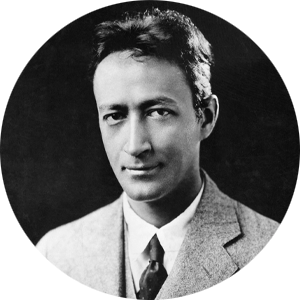
Jean Toomer (December 26, 1894 – March 30, 1967) was an American poet and novelist commonly associated with the Harlem Renaissance, though he actively resisted the association, and with modernism. His reputation stems from his novel Cane, which Toomer wrote during and after a stint as a school principal at a black school in rural Sparta, Georgia. Wikipedia
Learning the ropes
Not surprisingly, the origin of the idiom “learn the ropes” is nautical. Before the days of ships powered by steam or fossil fuel, almost all ships had sails. New recruits had to learn how to tie knots and manipulate the ropes that moved the sails to capture wind most effectively; this series of lessons was termed “learning the ropes.”

 Once upon a time,