What was your favorite toy when you were a kid? Your answer might reveal more about you than you expect, says toy historian Chris Byrne. From Matchbox cars and Barbie to Rubik’s Cube and Squishmallows, he explores how playthings reflect cultural values and influence who you become as an adult.
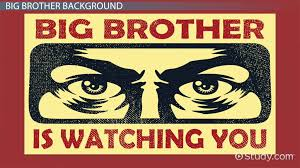
War is peace. Freedom is slavery. Ignorance is strength.
— Official motto of the Big Brother government in George Orwell’s 1984
Newspeak is a fictional language in George Orwell’s 1949 novel Nineteen Eighty-Four that is designed to limit a person’s ability to think critically:
Restricted vocabulary: Newspeak has a limited vocabulary and simplified grammar.
Ambiguous and confusing: Newspeak is intentionally confusing and ambiguous.
Parts of speech are interchangeable: Words can be used as any part of speech, such as a noun, verb, adjective, or adverb. For example, the word “knife” could be used as both a noun and a verb.
Euphemisms: Newspeak uses euphemisms, such as “uncold” instead of “warm”.
New words: Newspeak creates words for political purposes, such as “goodthink” which means “orthodoxy”.
Suffixes: Newspeak uses suffixes, such as “-wise”, to turn words into adverbs. For example, “quickly” becomes “speedwise”.
The purpose of Newspeak is to limit the range of thought and prevent people from expressing complex ideas. The government of Oceania uses Newspeak to control society and prevent people from thinking “illegal” thoughts.
The term “newspeak” has also come to be used in general to describe confusing or deceptive bureaucratic jargon.
MOSCOW—Just days after rebels seized Damascus, deposed Syrian President Bashar al-Assad reportedly returned to practicing ophthalmology at a Moscow LensCrafters, sources confirmed Tuesday. “Which one is better—one or two?” said the former brutal dictator who had imprisoned, tortured, and killed tens of thousands of his own people and was now standing behind a phoropter as he conducted a routine eye exam on a 26-year-old Russian graduate student. “Now the good news, Ms. Komarova, is that your vision has only changed a tiny bit since your last appointment. The bad news is you do have a touch of dryness in your left eye. Eye drops can run a tad expensive, but I do have a few free samples you can try.” At press time, Assad was threatening the front desk receptionist with sarin gas after she made a mistake with the scheduling software.
“We can be sure our ancestors of 4000 years ago found it far easier to induce peak experiences, for they were relaxed and close to nature. Then came the ‘Fall’ into left-brain consciousness, which induces a kind of tunnel vision.”
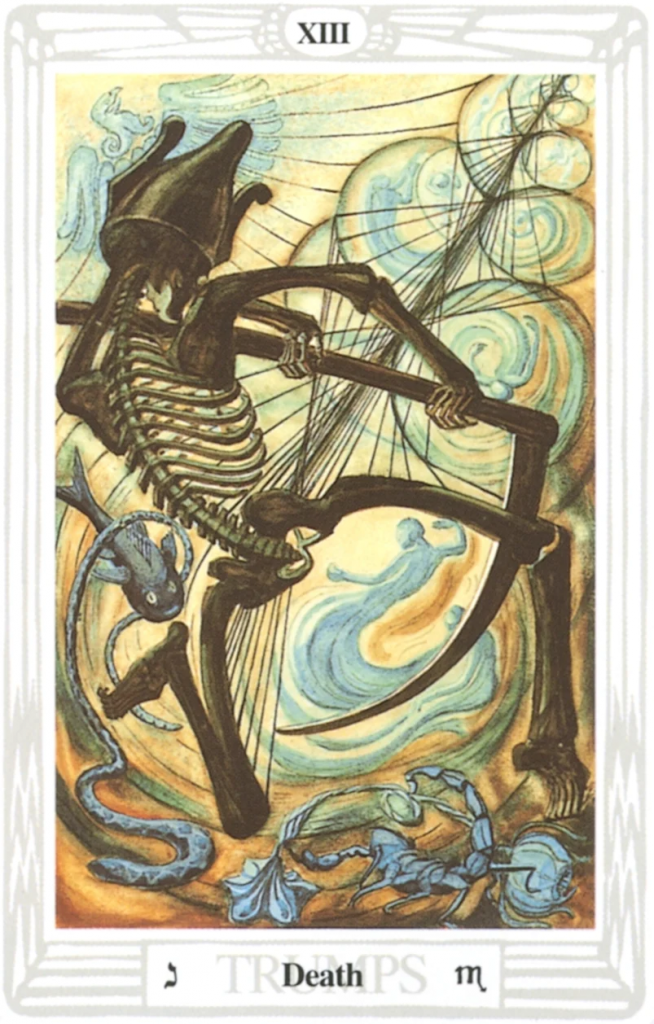
I wonder if there is a more-feared card in the Tarot deck? Yet Death is, in many ways, a hopeful and refreshing influence if only we will let it be. It is the major card for change and alteration in the entire deck. Since life itself changes constantly, in order to harmonise ourselves more completely with it, we too must be in a state of constant change – working toward our goals, attempting to fulfil our dreams and developing the quality of our spiritual understanding.When Death comes up as Card of the Day, the first question we need to ask ourselves is – what is it that needs to be changed or finished up? What situations have been lingering on well past their sell-by date? What should we have dealt with before, that this day challenges us to face and finish?Imagine, for a moment, that your life is a plot of land. If it is completely overgrown, covered with unwanted and untended undergrowth, you cannot plant something beautiful and fruitful in it can you?The Death card requires that we spend a bit of dedicated time cutting away the undergrowth, and clearing the debris so that our lives are clear and open, ready for fresh planting.Sometimes a Death card day won’t be one in which we need to do, so much as one in which we need to think. Most peoples’ lives are very busy indeed these days. So busy, in fact, that we often tend to put off thinking about the difficult or demanding issues in our lives. Yet often it is exactly this type of issue that causes emotional and mental deadwood to accumulate, if we allow it.If life is created by what we think, what we expect and how we feel about things, our deepest emotional urges, our wildest dreams, our highest ideals require a great deal of thinking about, don’t they? If not, we stagnate, never creating new channels through which to direct our energies, never determining when a habitual action has run its course, never assessing what is useful, and what is not.So, sometimes, a Death card day needs to be a day in which you re-evaluate the general patterns of your daily existence, and re-appraise your goals. You’ll know if it’s that kind of day by measuring how dissatisfied you currently feel. If you are largely happy and comfortable, then the Death card day is one for clearing the decks in a physical sense.
Affirmation: “I welcome change into my life, embracing it fearlessly and hopefully.”
I am pleased to announce the publication of my book “Alcove of Dreams”.
This volume, the 1st of 3 planned for the next couple of years, concentrates on various collage pieces that I have produced over the last 25 years, along with some other examples of my art… 6 years in the making, several iterations and stylistic changes, I hope this volume captures your attention to the possibilities of collage in the present era.
Nearly 200 pages of art, Alcove of Dreams also includes several pieces of my writings spanning events over the last 58 years.
I want to thank Mike Crowley, P.D. Newman & Rob Schultheis for their encouragement given in this process.
In the weeks before and after the U.S. presidential election, many of us are asking about the role of empathy in American politics. Does it matter whether candidates express care for their constituents, and what does a person’s vote says about their ability or willingness to empathize with others?
Empathy is important to democracy—but it’s complicated to understand, as scientists and philosophers have long tried to study in practice. I am one of those scientists. As we use it in our day-to-day lives, we often mean sharing others’ emotions, such as feeling someone else’s sorrow or joy, but can also mean showing compassion or concern for their suffering or understanding and believing their hurt or joy.
In terms of the November election, how much did empathy matter? And in a challenging, exhausting, and polarized political environment, how do we remain empathetic? Do we even need to? Here, I argue that we need to remember our responsibility to choose and control the expanse of our empathy—and we can do so by reflecting on why we care and engage, whether that be to uphold our values, feel good, or better know the world. As research in my lab and in my field has shown, callousness is a decision—we are the authors of our empathy, and numbness isn’t a foregone conclusion.
I believe that showing empathy is a choice. We must be mindful of social pressures that might steer these choices in particular directions if we don’t take the effort to manage our empathy ourselves. Extending empathy across political divides can be important, but so too can sustaining motivations to empathize with the most marginalized, particularly if they are targeted by other political groups. Common ground may risk minimizing such harms.
To me, empathy is a strength, not weakness—a way to attend to the people we value most. If we let ourselves become callous to others’ needs, we risk losing sight of democracy and the importance of treating each other with dignity. Especially in the current climate, we should double down on desires to empathize, and remember that the willingness to empathize may be just as important as the ability to do so. The effort matters.
Exit polls tell us that having empathetic leaders may not be as important to many voters. Of four qualities ascribed to candidates in the 2024 U.S. presidential election, only 18 percent ranked empathy (“cares about people like me”) as most important. Though perhaps surprising, this is consistent with findings that people value leaders who care impartially, and who exhibit schadenfreude and relish pain in political opponents. Of that 18 percent that prioritized empathy, only one quarter supported Trump. Yet the pressing question may not be for whom empathy mattered most, as our research has shown that voters can overestimate partisan differences in concern.
What matters more is how we sustain willingness to empathize, as a value and social norm. How do we avoid numbness, as in the New Yorker cartoon about isolation as self-care?
Before politics enters the picture, we know that people find empathy to be exhausting and effortful. My team has found that people typically choose to avoid empathizing with strangers, finding it taxing. If empathy is like complex math, then people might take the easy road and avoid the problem set. But it matters who these feelings are about, as people choose empathy and compassion more for close others. When adding in political dynamics—such as what political opponents or peers think of our empathizing—it may make the calculus of empathy even more challenging.
Post-election, there have been increases in harassment of Black people and girls and women. Such incidents suggest we need to be mindful that we not normalize counter-empathy, especially for marginalized populations. Others suggest we empathize with working classvoters, and learn more about those who may feel they haven’t been heard. Norms can shape how we think about empathy. For instance, when parents demonstrate who is worth their empathy, children often follow. People who are motivated to empathize with marginalized communities should reflect on and defend those values.
Lastly, electoral outcomes prompt the question of whether people should empathize across party lines. Again, motivations matter. When people believe that empathy across partisan lines is useful for political dialogue, they show reduced hostility and increased support for democracy. Yet would people find it appropriate to empathize with others who express counter-empathy in return? Such empathy might seem risky in a world with much schadenfreude. Take the Daily Wire TikTok on “liberal tears,” or an unconfirmed, yet viral Reddit post (over 48,000 upvotes on the “Leopards Ate My Face” Reddit forum) about Trump supporters learning about possible negative consequences of their vote. People can learn from consequences of empathizing, and if they are punished instead of rewarded, they may withdraw.
So how do we sustain empathy in the face of exhausting headwinds? First, in order to continue cultivating empathy—especially for the most vulnerable—we can remind ourselves of the prosocial power of shared adversity. Shared experiences can build common ground. But it is important to not forget that finding common ground across partisan lines can mask real differences of opinion about how marginalized groups are considered and treated. Encouragements for cross-partisan empathy should not assume that different political groups all express their values in the same way.
Another point is that empathy and compassion can refresh us on what we value. Compassion for those in need can associate with and cause outrage and punishment on their behalf. Moral outrage, in turn, can support collective action to help those in need, and people lean into moral outrage when their commitments are clearly defined. Being able to harness outrage wisely may be key to political engagement and democratic dialogue. Handling empathy strategically may facilitate outrage and civic participation (e.g., after Roe v. Wade was overturned). By reminding ourselves of why we care to begin with, we can support sustainable choices to engage rather than grow callous.
This is an opinion and analysis article, and the views expressed by the author or authors are not necessarily those of Scientific American.
C. DARYL CAMERON is an associate professor of psychology, senior research associate in the Rock Ethics Institute, and Sherwin Early Career Professor in the Rock Ethics Institute at Penn State University. He directs the Empathy and Moral Psychology Lab, where he studies why and how people choose to engage in empathy and prosocial actions toward others. He also directs the Consortium on Moral Decision-Making, an interdisciplinary network of researchers who study ethical and moral decisions. You can find him on Bluesky.
Back-formation from resurrection, from Anglo-French resurrectiun, from Latin resurgere (to rise again), from re- (again) + surgere (to rise). Earliest documented use: 1772.
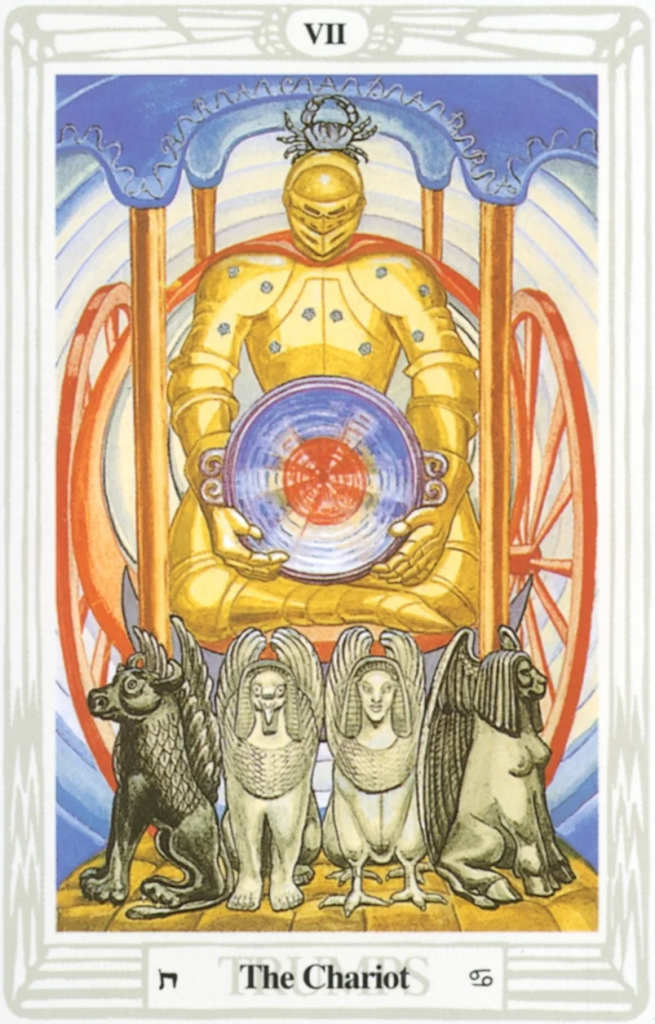
This is a card which contains within it great dynamism, strength and power. Often, when it comes up, it indicates a period where we feel we have struggled through a difficult and demanding time, battling against long odds to achieve the things that we need out of life. It does confirm that we have emerged victorious, though we may feel a bit battered and weary.So in one sense the Chariot marks the time of respite and peace after the battle is won. But it indicates something else very important too. After every battle, once we have rested and recuperated, it becomes necessary to begin a new flow of energy – we have to clean up the debris of the struggle, plan our next move, determine the direction we intend to move in now.But when the Chariot emerges it indicates something else as well – as a result of the difficulties and struggles now at an end, we shall need to change some of the features of our lives. So it also indicates big changes, and promises that these will be beneficial and rewarding, bringing further triumph and success with them.So on a day ruled by the Chariot, allow yourself a big sigh of relief, and know that recent problems are coming to an end. Then consider what might be left to be finished up with regard to those events. And once you’ve done that, turn your face to the future and decide what would be the best new direction for you.Try to think through each step of this new impulse, so that your plans are carefully laid. It’s important now to pay close attention to detail, because once these changes begin, life will be moving very fast indeed and there will be no room for catching up on things (I write this sighing somewhat, because I’m already having trouble keeping up with the speed of my life at the minute ;-).
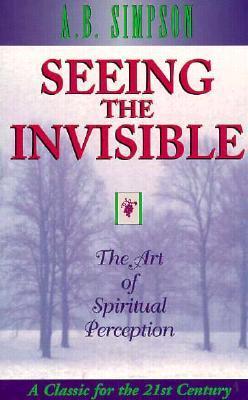
Originally published as In the School of Faith, this is one of Simpson’s greatest works. He did not affirm that “seeing is believing” but that faith believes where it cannot see. This is a study of the faith of 17 Old Testament characters and Jesus, written by a man who himself saw the invisible.
Albert Benjamin “A.B.” Simpson (December 15, 1843 – October 29, 1919) was a Canadian preacher, theologian, author, and founder of the Christian and Missionary Alliance (C&MA), an evangelical Protestant denomination with an emphasis on global evangelism.
Simpson was born in Cavendish, Prince Edward Island, Canada as the third son and fourth child of James Simpson, Jr. and Janet Clark. Author Harold H. Simpson has gathered an extensive genealogy of Cavendish families in Cavendish: Its History, Its People. His research establishes the Clark family (A.B. Simpson’s mother’s side) as one of the founding families of Cavendish in 1790, along with the Simpson family, and he traces common ancestors between Albert B. Simpson and Lucy Maud Montgomery, the author of Anne of Green Gables.
The young Albert was raised in a strict Calvinistic Scottish Presbyterian and Puritan tradition. His conversion of faith began under the ministry of Henry Grattan Guinness, a visiting evangelist from Ireland during the revival of 1859. Simpson spent some time in the Chatham, Ontario area, and received his theological training in Toronto at Knox College, University of Toronto. After graduating in 1865, Simpson was subsequently ordained in the Canada Presbyterian Church, the largest of the Presbyterian groups in Canada that merged after his departure for the United States. At age 21, he accepted a call to the large Knox Presbyterian Church (closed in 1971) in nearby Hamilton, Ontario.
In December 1873, at age 30, Simpson left Canada and assumed the pulpit of the largest Presbyterian church in Louisville, Kentucky, the Chestnut Street Presbyterian Church. It was in Louisville that he first conceived of preaching the gospel to the common man by building a simple tabernacle structure for that purpose. Despite his success at the Chestnut Street Church, Simpson was frustrated by their reluctance to embrace this burden for wider evangelistic endeavor.
In 1880, Simpson was called to the Thirteenth Street Presbyterian Church in New York City where he immediately began reaching out to the world with the gospel. Beside active evangelistic work in the church, he published a missionary journal, The Gospel in All Lands, the first missionary journal with pictures. Simpson also founded and began publishing an illustrated magazine entitled The Word, Work, and World. By 1911, this magazine became known as The Alliance Weekly, then Alliance Life, and is now called a.life. It is the official publication of The Christian and Missionary Alliance, in the USA and Canada.
By 1881, after only two fruitful years at Thirteenth Presbyterian, he resigned in order to begin an independent gospel ministry to the many new immigrants and the neglected masses of New York City. Simpson began informal training classes in 1882 in order to reach “the neglected peoples of the world with the neglected resources of the church”. By 1883, a formal program was in place and ministers and missionaries were being trained in a multi-cultural context (This school was the beginning of Nyack College and Alliance Theological Seminary). In 1889, Simpson and his church family moved into their new home at the corner of 44th St. and 8th Av. called the New York Tabernacle. This became the base not only of his ministry of evangelism in the city but also of his growing work of worldwide missions.
(Goodreads.com)
Consciousness, spirituality, biography, sexuality, androgyny, futurism, space, the arts, science, astrology, democracy, humor, books, movies and more