The Virgo New Moon spotlights adaptability and cleverness, and administering detailed work that might otherwise seem annoying or overwhelming. Virgo’s association with service gives space for handling the most taxing or intricate task, particularly if it delivers a sense of satisfaction! This could be the ideal time for tackling those jobs we more often try to run from.
Given that this is a New Moon, it’s also the perfect moment for reviewing schedules and routines, assessing if they work for us, and considering adjustments for improvement, whether in the professional sphere, at home, or personally. Maybe we benefit from reviewing plans for physical movement, eating habits, and medications or supplements. Perhaps we discern whether our schedule allows for adequate rest and sufficient productivity, and particularly whether our sleep pattern is supportive to our needs.
The Moon is conjunct Vesta, continuing the theme from last month of considering what lights the fire or what feeds the soul — and what promotes our sense of safety and wellbeing. This could be the moment for considering insurance options or simply getting different systems and boundaries in place. The core theme is looking at what enlivens us and supports our creativity. Sometimes we can only access this part of us when we aren’t busy fighting fires elsewhere — when there is less external conflict to handle or fewer demands to deal with.
The Moon opposite Saturn in Pisces points to keeping things as simple and basic as possible. We may even be up against stiff limitations, which we really do have to work with; otherwise, we may face greater hardship in the long term, given that this is an applying aspect, effectively pointing at what’s to come. If we cannot apply strong boundaries immediately, maybe we find ways to do so gradually, but the planetary symbolism supports the notion of stemming a flow. It’s worth a reminder that new routines can take some getting used to.
For instance, if we’re cutting back on a few luxuries, we might need to negotiate alternative arrangements to maintain them in some form. I’m reminded of when an associate chose to reduce a health club membership down a tier, which lowered benefits and saved money, but they struggled to fit in with the restricted hours it imposed. We discussed how, over a long period, it could become second nature and wouldn’t pose such a problem.
Cutting back can promote a feeling of deprivation. And there can be a risk of actually pinging to the other extreme and wanting even more than we had become used to before! This is echoed in the Moon’s square to Jupiter in Gemini. As Gemini, Virgo, and Pisces are mutable signs, there’s a sense of negotiation for a while. Maybe we try a new path and find it’s not quite right, so then we try another one.
We will eventually find the right balance! But Jupiter in Gemini could represent a kind of dissociation, where we aim to live in two worlds concurrently. One part of us is sticking to a strict plan, whilst the other is desperately trying to escape and relax, or at least have more fun. Perhaps, if we’re lucky — which Jupiter sometimes is — we can have the best of both worlds. It might be worth finding a way to tune into what others are doing, as Gemini often is brilliant at picking up information and running with it.
The Moon, separating from a trine to Ceres in Capricorn, increases focus on the need for change from familiar systems. They did, no doubt, sustain us well previously, but we now need to heed new sources and procedures to perpetually meet our needs in a new climate.
This article is from the Mountain Astrologer by Diana McMahon Collis
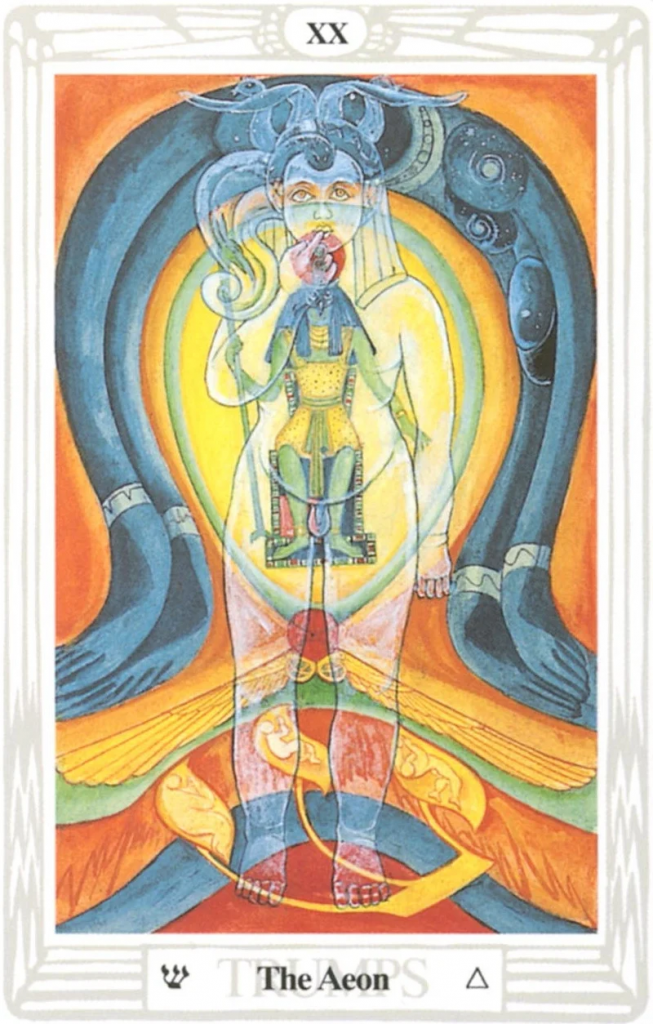
The Aeon is another of those cards which indicate that we have reached a turning point – from this moment forward everything changes. There will often be big decisions to be made (which will later be executed with the Universe, the Arcanum which naturally follows this one). Sometimes we’ll find ourselves weary after struggling through a tough patch, but at the same time, now we see light at the end of the tunnel.When we make life-changing decisions, we will often spend quite a long time thinking before we make up our minds. And during that period, we often berate ourselves for our indecisiveness and uncertainty.When we do that, we are missing something so simple, and yet vitally important – that every decision we take has its moment. And if we are not sure now, perhaps that’s because we have not yet reached this particular decision’s moment in time. There will come a moment, if we are true to ourselves, when we know exactly what we need to do. And when that moment comes there will be no further prevarication, no doubt, no fear.This is because time itself has enormous power. To find the right time for anything is a really useful life skill. When a choice comes to its own moment, it becomes empowered by its own momentum, and at that moment we can move forward with confidence. Sometimes, then, just of itself, this card will bring about changes on the day that it rules.The Aeon is also about directing our lives in accordance with what we have already learned. So when this card rules the day, try examining your wealth of experience – in any area you choose to. Look at what you know, what you understand, what you need and how far you’ve already come. And give yourself a great big pat on the back! You already have a treasure house!Affirmation: “I trust myself in this moment”
New Thinking Allowed with Jeffrey Mishlove Sep 2, 2024 Beverly Rubik, PhD, a biophysicist, is president and founder of the Institute for Frontier Science in Emeryville, California. She has authored dozens of scientific papers regarding the human biofield, psychotronics, psychic healing and other aspects of cutting-edge science. She is author of Life At The Edge of Science. She is a lead faculty member of the California Institute for Human Science. Her website is https://www.brubik.com/ In this video from 2017, she addresses many aspects of biological energy fields, including electromagnetic and photonic. She also describes a subtle energy detector that she has developed in her laboratory that is capable of registering human emotions, even when shielded from all known forms of electromagnetic or acoustical radiation. She also describes her work with high voltage, digital photography of the corona discharge from human fingertips. Edited subtitles for this video are available in Russian, Portuguese, Italian, German, French, and Spanish. New Thinking Allowed host, Jeffrey Mishlove, PhD, is author of The Roots of Consciousness, Psi Development Systems, and The PK Man. Between 1986 and 2002 he hosted and co-produced the original Thinking Allowed public television series. He is the recipient of the only doctoral diploma in “parapsychology” ever awarded by an accredited university (University of California, Berkeley, 1980). He is also the Grand Prize winner of the 2021 Bigelow Institute essay competition regarding the best evidence for survival of human consciousness after permanent bodily death. (Recorded on December 15, 2017)
In Human Form – Psy • Jun 16, 2024 In this video, we analyze three powerful psychological methods commonly used by the propaganda machine to shape public opinion. These tactics exploit cognitive biases, bypass logical analysis, and manufacture consent. We’ll also discuss media coverage of the Iraq War and feature a clip of Noam Chomsky talking about media corporations’ institutional structure. Thanks, as always, for watching my channel if you’re a returning viewer. If you’re new, please remember to subscribe for more insights into media, psychology, and the structural forces that shape our world.
In her stunning space-bound ode to the human condition inspired by Carl Sagan, Maya Angelou wrote of us as cosmically lonesome creatures “traveling through casual space past aloof stars, across the way of indifferent suns” — and yet these selfsame stars made us; out all this indifference arose all our capacity for feeling, our poems and our postulates. That every single atom in your body, if tagged and traced back in time, would lead to the core of a particular star in the early universe is a truth pulsating with transcendence, a truth Nick Cave channels beautifully in one of my favorite songs, singing of the stars as “bright, triumphant metaphors of love.”
An epoch ago, before we set foot on the Moon and sent rovers to Mars, before we built supercolliders to search for the “God particle” and heard the sound of spacetime in a gravitational wave, the cosmically curious English marine biologist N.J. Berrill (April 28, 1903–October 16, 1996) took up the eternal question of how to harmonize our cosmic smallness with the immensity of our creaturely experience in his slender, splendid 1958 book You and the Universe (public library).
Pillars of Creation, Eagle Nebula, Messier 16. Infrared photograph. NASA / Hubble Space Telescope. (Available as a print and as stationery cards.)
Berrill — a writer partway between Rachel Carson and Carl Sagan in both subject and poetic sensibility — begins with the basic question of being alive:
Just what are we doing here, spinning on a tilted planet swinging round a star? … Where do we stand, with our few pounds of flesh and bones and our fleeting lives?… Only a short while ago we were all God’s children, holding most of His attention, and the world was exclusively ours for better or for worse. The sun shone to give us warmth and light, the moon to bewitch us, the stars were there to be born under, and the volcanic depths to serve as hell. Now paradise is lost and we find ourselves in limbo, inhabiting one of the minor planets of a middle-class star drifting in the outer arm of a spiral galaxy no different from a hundred million more that are visible through our telescopes. Space and time and stellar systems are overwhelming and to face the twinkling sky of night with any sense of what you see requires either courage or a great amount of faith. Stars are no longer baleful or beneficial, an have no concern with us, but they leave a lonely terror striking at the heart. So here we stand, looking wistfully into the void and nostalgically back into time, for knowledge has put us outside our house.
And yet, in consonance with Richard Feynman’s poetic meditation on the relationship between knowledge and mystery, Berrill insists that greater intimacy with the raw reality of the universe, rather than further evicting, would reopen the door to our sense of belonging:
Perhaps in the end we can rediscover the reality of our home with a greater sense of wonder and a more mature appreciation.
He places at the heart of this possibility “the need to join outward observation with inner intuition.” In a passage that calls to mind the French paleontologist, Jesuit priest, and philosopher Pierre Teilhard de Chardin’s elegant case for bridging the scientific and the sacred, Berrill writes:
It is the aim of science to coordinate all observable phenomena within a single natural order and it is its faith that such is possible. Hence the basic objection to acceptance of the supernatural. If the scientific stand is justified, then everything, whether of matter, energy, mind or spirit, belongs to one vast scheme — it is all one and every part has meaning in relation to the whole. This is as much a tenet of faith as any other belief, but it forms the working hypothesis of all real scientific endeavor.
Rather than being in conflict with the miraculousness of life, our material nature is the miracle itself:
Put together in the proper way and we all turn out to be a rather weak watery solution of salts and carbon compounds, more or less jellified. You and I, with all that we eat and the various bacteria, fungi and viruses that live so happily within us, are a mingling of the wind and water and dust that constitute the surface of the earth. The miracle is that such stuff as we are made of should walk and talk and know such things as song and sadness.
Life… is not something set in motion long ago to get along as best it can ever since, whether by some sort of divine intervention or a peculiar concatenation of circumstances: it must be maintained and incessantly driven along its path of freedom, hour by hour and year by year throughout the ages, coerced into being from moment to moment and forced willy-nilly into the channels of time.
For us humans, he observes, “life is a dance of hydrogen and electrons along the atomic pathways of the body” — but life abounds and insists on itself, in every living form:
In every second of time the visible beings, large and not so large, vegetable and animal, are growing out of the invisible with a force so subtle yet so irresistible they can break a rock or split an atom. Out of almost nothing came the leviathans of trees and beasts, inexorably expanding to a destined size. Out of a almost nothing, almost but not quite — for there is the fact we tend to overlook or take for granted: the capacity of the smallest unit of living matter to grow into stupendous and bewilderingly complicated wholes. It goes on around us all the tim; it is the world we live in, and it is ourselves, you and I. We are the event itself, or at least a very significant part of it — giant examples of expansion, marvelously elaborated, and of exceptionally long duration.
Duration is hard to achieve, not that which belongs to crystals and rock but duration of the transcendent form and sparkle that belong to life. Hence the need for continual renewal, of birth from death, of the corn king who dies and the spring queen who brings forth life again. Life is forever being resurrected, not from nothing but from that speck of continuity that breaks off as a bud or seed or egg, leaving the old blown-up construction of the body lagging behind in time to stumble and die. Each fragment that begins anew, no matter what we call it, has time built into it.
Nature, in the intimate and in the vast, is not designed. It is designing. Our own nature confirms it.
[…]
The merging qualities of hope, courage, love, intellectual quest and the sense of beauty, as represented to some degree in every human being, are emergent qualities of all that the universe is made of… Whether you wish to call this the path to God or to use some other term is not important, for the meaning if far older than any language and is both supernal and transcendent. At this level the spiritual and scientific ventures become one, and any experience derived from either source must be scrutinized in the light of the other. Above all we need not be afraid, either of the universe at large in all its oneness and multiplicity, or of our own nature which has itself been created by a star.
In soulful defiance of the materialist reductionism with which some apprehend the elemental nature of the universe, Berrill anticipates physicists Alan Lightman and Sean Carroll’s respective notions of “spiritual materialism” and “poetic naturalism,” and adds:
If mind and spirit grow out of matter they are nonetheless what they have been thought to be. It is our conception of matter that needs revision. All that is included in thought, perception and spiritual harmony belong as naturally in the universe as visible energy and tangible matter, and it is our peculiarly human task at the moment to see them all as facets of a whole.
[…]
The universe is as we find it and as we discover it within ourselves.
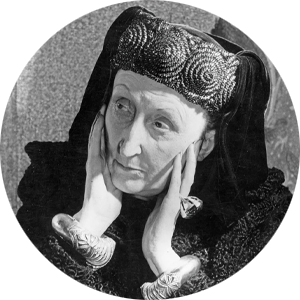
“The public will believe anything, so long as it is not founded on truth.”
–EDITH SITWELL
Dame Edith Louisa Sitwell (September 7, 1887 – December 9, 1964) was a British poet and critic and the eldest of the three literary Sitwells. She reacted badly to her eccentric, unloving parents and lived much of her life with her governess. Wikipedia
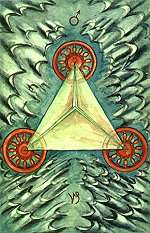
The Lord of Works is about concentrated effort in a specific area, which yields unexpected fruits as a reward. When we concentrate our energies and direct them skilfully at a single point, or hoped for end result, we create a stream of force to which most things must eventually surrender.The Three of Disks should be taken as a command to examine all areas of life, until we come across the apparently immovable object – then lean on it with all our might. In so doing, we take advantage of influences beyond ourselves which act as a lever to assist us in our endeavours.Often, the things which we need to focus on during periods like this will be ones where we feel negative, or thwarted, for we stand a much better chance of making good progress. Look for areas where you feel overwhelmed, overworked or inadequate, and then target them all day! You’ll be amazed at what it’s possible to achieve.Affirmation: “My Will flows in a perfect stream of force.”
“The Self is just beneath the surface of our protective parts, such that when they open space for it, it comes forward spontaneously, often quite suddenly.”
“Like the sun, the Self can be temporarily obscured, but it never disappears.”
“Notice … the sense of well-being and enoughness–that you are enough. Also notice the feeling that there’s nothing to do right now and everything is okay. Some people spontaneously feel a vibrating energy running through their body, making their fingers and toes tingle. This is what some people call chi or kundalini or prana, but we call it Self energy.”
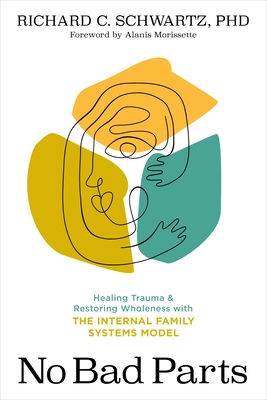
–from No Bad Parts: Healing Trauma & Restoring Wholeness with The Internal Family Systems Model, by Richard C. Schwartz, Ph.D.
Consciousness, spirituality, biography, sexuality, androgyny, futurism, space, the arts, science, astrology, democracy, humor, books, movies and more




 Just what are we doing here, spinning on a tilted planet swinging round a star? … Where do we stand, with our few pounds of flesh and bones and our fleeting lives?… Only a short while ago we were all God’s children, holding most of His attention, and the world was exclusively ours for better or for worse. The sun shone to give us warmth and light, the moon to bewitch us, the stars were there to be born under, and the volcanic depths to serve as hell. Now paradise is lost and we find ourselves in limbo, inhabiting one of the minor planets of a middle-class star drifting in the outer arm of a spiral galaxy no different from a hundred million more that are visible through our telescopes. Space and time and stellar systems are overwhelming and to face the twinkling sky of night with any sense of what you see requires either courage or a great amount of faith. Stars are no longer baleful or beneficial, an have no concern with us, but they leave a lonely terror striking at the heart. So here we stand, looking wistfully into the void and nostalgically back into time, for knowledge has put us outside our house.