
After Skool • Mar 29, 2022 Ram Dass first went to India in 1967. He was still Dr. Richard Alpert, a prominent Harvard psychologist and psychedelic pioneer with Dr. Timothy Leary. He continued his psychedelic research until that fateful Eastern trip in 1967, when he traveled to India. In India, he met his guru, Neem Karoli Baba, affectionately known as Maharajji, who gave Ram Dass his name, which means “servant of God.” Everything changed then – his intense dharmic life started, and he became a pivotal influence on a culture that has reverberated with the words “Be Here Now” ever since. Ram Dass’ spirit has been a guiding light for three generations, carrying along millions on the journey, helping to free them from their bonds as he works through his own. Since 1968, Ram Dass has pursued a panoramic array of spiritual methods and practices from potent ancient wisdom traditions, including bhakti or devotional yoga focused on the Hindu deity Hanuman; Buddhist meditation in the Theravadin, Mahayana Tibetan, and Zen Buddhist schools, and Sufi and Jewish mystical studies. Perhaps most significantly, his practice of karma yoga or spiritual service has opened up millions of other souls to their deep, yet individuated spiritual practice and path. Ram Dass continues to uphold the boddhisatva ideal for others through his compassionate sharing of true knowledge and vision. His unique skill in getting people to cut through and feel divine love without dogma is still a positive influence on many people from all over the planet. Learn more at https://www.ramdass.org/ Full lecture of this audio can be heard here • Sacred in the Everyday – Ram Dass Ful…
Monthly Archives: May 2024
“You don’t want to piss Trump off, you know.”
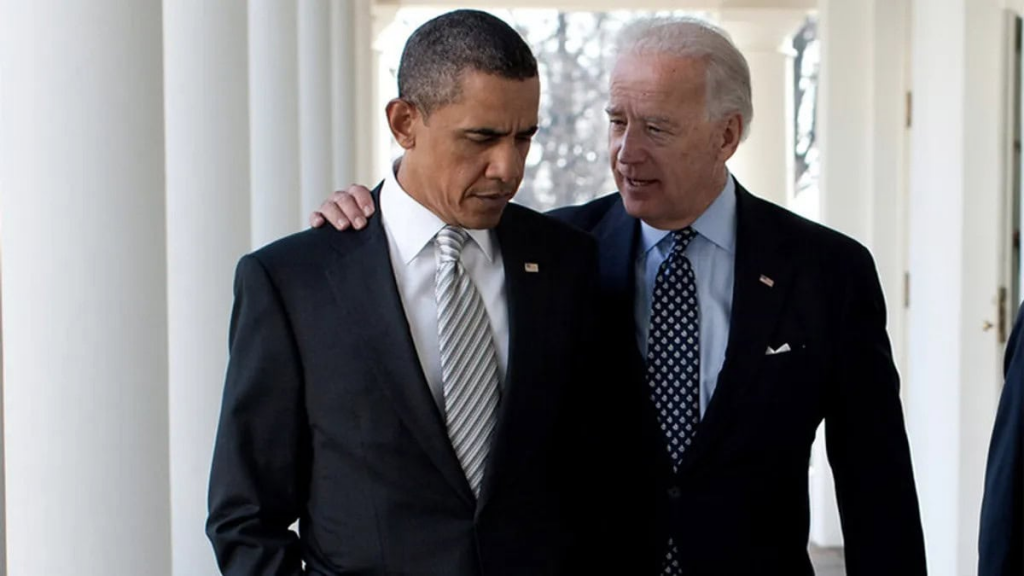
On Love, Politics, and Violence (Channeling Hannah Arendt)
Our wisdom season continues with two special notes
| THE ON BEING PROJECT MAY 25 |
Today we bring you the third episode in our Wisdom Season.Krista is in conversation with Lyndsey Stonebridge, author and Hannah Arendt scholar, and Lucas Johnson, who leads our social healing initiatives at The On Being Project. And they’ve both offered some reflections, for Pause readers, below.
- Lucas on a life dedicated to working towards non-violence.
- Lyndsey on Arendt’s wisdom on violence for this time.
  | Lyndsey Stonebridge and Lucas Johnson — On Love, Politics, and Violence (Channeling Hannah Arendt)On Being with Krista Tippett1:15:21 |
Or listen wherever podcasts are found.
Source: onbeing@substack.com
Bio: Polybius
From Wikipedia, the free encyclopedia
For other uses, see Polybius (disambiguation).
| Polybius | |
|---|---|
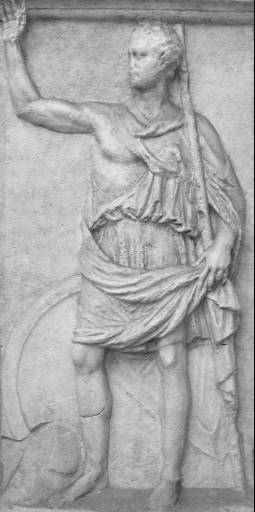
| The stele of Kleitor depicting Polybius, Hellenistic art, 2nd century BC, Museum of Roman Civilization[1] | |
| Born | c. 200 BC Megalopolis, Arcadia |
| Died | c. 118 BC (aged approx. 82) Roman Greece |
| Nationality (legal) | Greek |
| Occupation | Historian |
| Notable work | The Histories (events of the Roman Republic, 220–146 BC) |
| Main interests | History, philosophy of history |
| Notable ideas | Anacyclosis |

Polybius (/pəˈlɪbiəs/; Greek: Πολύβιος, Polýbios; c. 200 – c. 118 BC) was a Greek historian of the middle Hellenistic period. He is noted for his work The Histories, a universal history documenting the rise of Rome in the Mediterranean in the third and second centuries BC. It covered the period of 264–146 BC, recording in detail events in Italy, Iberia, Greece, Macedonia, Syria, Egypt and Africa, and documented the Punic Wars and Macedonian Wars among many others.
Polybius’s Histories is important not only for being the only Hellenistic historical work to survive in any substantial form, but also for its analysis of constitutional change and the mixed constitution. Polybius’s discussion of the separation of powers in government, of checks and balances to limit power, and his introduction of “the people”, all influenced Montesquieu‘s The Spirit of the Laws, John Locke‘s Two Treatises of Government, and the framers of the United States Constitution.[2]
The leading expert on Polybius for nearly a century was F. W. Walbank (1909–2008), who published studies related to him for 50 years, including a long commentary of his Histories and a biography.[3]
Polybius was a close friend and mentor to Scipio Africanus the Younger, and had a lasting influence on his decision making and life.
Early life
Polybius was born around 200 BC in Megalopolis, Arcadia,[4] when it was an active member of the Achaean League. The town was revived, along with other Achaean states, a century before he was born.[5]
Polybius’s father, Lycortas, was a prominent, land-owning politician and member of the governing class who became strategos (commanding general) of the Achaean League.[6] Consequently, Polybius was able to observe first hand during his first 30 years the political and military affairs of Megalopolis, gaining experience as a statesman.[4] In his early years, he accompanied his father while travelling as ambassador.[7] He developed an interest in horse riding and hunting, diversions that later commended him to his Roman captors.
In 182 BC, he was given the honour of carrying the funeral urn of Philopoemen, one of the most eminent Achaean politicians of his generation. In either 170 BC or 169 BC, Polybius was elected hipparchus (cavalry officer) and was due to assist Rome militarily during the Third Macedonian War, although this never came about.[7] This office was the second highest position of the Achaean League and often presaged election to the annual strategia (chief generalship). Polybius’s political career was cut short in 168 BC, however; as a consequence of the final defeat of the Antigonid kingdom in the Third Macedonian War, 1,000 Achaeans (including Polybius) with suspect allegiances were interned in Rome and its surrounding area.
Personal experiences
Polybius’s father, Lycortas, was a prominent advocate of neutrality during the Roman war against Perseus of Macedon in 171-168 BC. Lycortas attracted the suspicion of the Romans, and Polybius subsequently was one of the 1,000 Achaean nobles who were transported to Rome as hostages in 167 BC, and was detained there for 17 years. In Rome, by virtue of his high culture, Polybius was admitted to the most distinguished houses, in particular to that of Lucius Aemilius Paullus Macedonicus, the conqueror in the Third Macedonian War, who entrusted Polybius with the education of his sons, Fabius and Scipio Aemilianus (who had been adopted by the eldest son of Scipio Africanus). Polybius remained on cordial terms with his former pupil Scipio Aemilianus and was among the members of the Scipionic Circle.
When Scipio defeated the Carthaginians in the Third Punic War, Polybius remained his counsellor. The Achaean hostages were released in 150 BC, and Polybius was granted leave to return home, but the next year he went on campaign with Scipio Aemilianus to Africa, and was present at the Sack of Carthage in 146, which he later described. Following the destruction of Carthage, Polybius likely journeyed along the Atlantic coast of Africa, as well as Spain.
After the destruction of Corinth in the same year, Polybius returned to Greece, making use of his Roman connections to lighten the conditions there. Polybius was charged with the difficult task of organizing the new form of government in the Greek cities, and in this office he gained great recognition.
At Rome
In the succeeding years, Polybius resided in Rome, completing his historical work while occasionally undertaking long journeys through the Mediterranean countries in the furtherance of his history, in particular with the aim of obtaining firsthand knowledge of historical sites. He apparently interviewed veterans to clarify details of the events he was recording and was similarly given access to archival material. Little is known of Polybius’s later life; he most likely accompanied Scipio to Spain, acting as his military advisor during the Numantine War.
He later wrote about this war in a lost monograph. Polybius probably returned to Greece later in his life, as evidenced by the many existent inscriptions and statues of him there. The last event mentioned in his Histories seems to be the construction of the Via Domitia in southern France in 118 BC, which suggests the writings of Pseudo-Lucian may have some grounding in fact when they state, “[Polybius] fell from his horse while riding up from the country, fell ill as a result and died at the age of eighty-two”.
The Histories
Main article: The Histories (Polybius)
The Histories is a universal history which describes and explains the rise of the Roman Republic as a global power in the ancient Mediterranean world. The work documents in detail political and military affairs across the Hellenistic Mediterranean between 264 and 146 BC, and in its later books includes eyewitness accounts of the sack of Carthage and Corinth in 146 BC, and the Roman annexation of mainland Greece after the Achaean War.[8]
While Polybius’s Histories covers the period from 264 BC to 146 BC, it mainly focuses on the years 221 BC to 146 BC, detailing Rome’s rise to supremacy in the Mediterranean by overcoming their geopolitical rivals: Carthage, Macedonia, and the Seleucid empire. Books I-II are The Histories‘ introduction, describing events in Italy and Greece before 221/0 BC, including the First Punic War, Rome’s wars with the Gauls, the rise of the Achaean League (Polybius’s own constitution), and the re-establishment of Macedonian power in Greece under Antigonus III Doson and Philip V of Macedon.[9] Books III-XXXIX describe in detail political and military affairs in the leading Mediterranean states, including affairs in ancient Rome and ancient Carthage, ancient Greece and ancient Macedonia, and the Seleucid empire and Egypt, explaining their increasing “συμπλοκή” (symplokē) or interconnectedness and how they each contributed to Rome’s rise to dominance. Unfortunately, only books I-V survive in full; the rest are in varying states of fragmentation.
Three discursive books on politics, historiography and geography break up the historical narrative:
- In Book VI, Polybius outlines his famous theory of the “cycle of constitutions” (the anacyclosis) and describes the political, military, and moral institutions that allowed the Romans to defeat their rivals in the Mediterranean. Polybius concludes that the Romans are the pre-eminent power because they currently have customs and institutions which balance and check the negative impulses of their people and promote a deep desire for noble acts, a love of virtue, piety towards parents and elders, and a fear of the gods (deisidaimonia).
- In Book XII, Polybius discusses how to write history and criticises the historical accounts of numerous previous historians, including Timaeus for his account of the same period of history. He asserts Timaeus’ point of view is inaccurate, invalid, and biased in favour of Rome. Christian Habicht considered his criticism of Timaeus to be spiteful and biased,[10] However, Polybius’s Histories is also useful in analyzing the different Hellenistic versions of history and of use as a more credible illustration of events during the Hellenistic period.
- Book XXXIV discussed geographical matters and the importance of geography in a historical account and in a stateman’s education. Unfortunately, this book has been almost entirely lost.
Sources
Polybius held that historians should, if possible, only chronicle events whose participants the historian was able to interview,[11] and was among the first to champion the notion of factual integrity in historical writing. In the twelfth volume of his Histories, Polybius defines the historian’s job as the analysis of documentation, the review of relevant geographical information, and political experience. In Polybius’s time, the profession of a historian required political experience (which aided in differentiating between fact and fiction) and familiarity with the geography surrounding one’s subject matter to supply an accurate version of events.
Polybius himself exemplified these principles as he was well travelled and possessed political and military experience. He consulted and used written sources providing essential material for the period between 264 BC to 220 BC, including, for instance, treaty documents between Rome and Carthage in the First Punic War, the history of the Greek historian Phylarchus, and the Memoirs of the Achaean politician, Aratus of Sicyon. When addressing events after 220 BC, he continued to examine treaty documents, the writings of Greek and Roman historians and statesmen, eye-witness accounts and Macedonian court informants to acquire credible sources of information, although rarely did he name his sources (see, exceptionally, Theopompus).
As historian
Polybius wrote several works, most of which are lost. His earliest work was a biography of the Greek statesman Philopoemen; this work was later used as a source by Plutarch when composing his Parallel Lives; however, the original Polybian text is lost. In addition, Polybius wrote an extensive treatise entitled Tactics, which may have detailed Roman and Greek military tactics. Small parts of this work may survive in his major Histories, but the work itself is lost as well. Another missing work was a historical monograph on the events of the Numantine War. The largest Polybian work was, of course, his Histories, of which only the first five books survive entirely intact, along with a large portion of the sixth book and fragments of the rest. Along with Cato the Elder (234–149 BC), he can be considered one of the founding fathers of Roman historiography.
Livy made reference to and uses Polybius’s Histories as source material in his own narrative. Polybius was among the first historians to attempt to present history as a sequence of causes and effects, based upon a careful examination and criticism of tradition. He narrated his history based upon first-hand knowledge. The Histories capture the varied elements of the story of human behavior: nationalism, xenophobia, duplicitous politics, war, brutality, loyalty, valour, intelligence, reason and resourcefulness.
Aside from the narrative of the historical events, Polybius also included three books of digressions. Book 34 was entirely devoted to questions of geography and included some trenchant criticisms of Eratosthenes, whom he accused of passing on popular preconceptions or laodogmatika. Book 12 was a disquisition on the writing of history, citing extensive passages of lost historians, such as Callisthenes and Theopompus. Most influential was Book 6, which describes Roman political, military, and moral institutions, which he considered key to Rome’s success; it presented Rome as having a mixed constitution in which monarchical, aristocratic and popular elements existed in stable equilibrium. This enabled Rome to escape, for the time being, the cycle of eternal revolutions (anacyclosis) faced by those with singular constitutions (i.e. many of the Greeks and the Macedonians). While Polybius was not the first to advance this view, his account provides the most cogent illustration of the ideal for later political theorists.
A key theme of The Histories is good leadership, and Polybius dedicates considerable time to outlining how the good statesman should be rational, knowledgeable, virtuous and composed. The character of the Polybian statesman is exemplified in that of Philip II, who Polybius believed exhibited both excellent military prowess and skill, as well as proficient ability in diplomacy and moral leadership.[12] His beliefs about Philip’s character led Polybius to reject the historian Theopompus‘ description of Philip’s private, drunken debauchery. For Polybius, it was inconceivable that such an able and effective statesman could have had an immoral and unrestrained private life as described by Theopompus.[13] The consequences of bad leadership are also highlighted throughout the Histories. Polybius saw, for instance, the character and leadership of the later Philip V of Macedon, one of Rome’s leading adversaries in the Greek East, as the opposite of his earlier exemplary namesake. Philip V became increasingly tyrannical, irrational and impious following brilliant military and political success in his youth; this resulted, Polybius believed, in his abandonment by his Greek allies and his eventual defeat by Rome in 197 BC.[14]
Other important themes running throughout The Histories include the role of Fortune in the affairs of nations, how a leader might weather bravely these changes of fortune with dignity,[15] the educational value of history and how it should demonstrate cause and effect (or apodeiktike) to provide lessons for statesmen, and that historians should be “men of action” to gain appropriate experience so as to understand how political and military affairs are likely to pan out (pragmatikoi).
Polybius is considered by some to be the successor of Thucydides in terms of objectivity and critical reasoning, and the forefather of scholarly, painstaking historical research in the modern scientific sense. According to this view, his work sets forth the course of history’s occurrences with clearness, penetration, sound judgment, and, among the circumstances affecting the outcomes, he lays special emphasis on geographical conditions. Modern historians are especially impressed with the manner in which Polybius used his sources, particularly documentary evidence as well as his citation and quotation of sources. Furthermore, there is some admiration of Polybius’s meditation on the nature of historiography in Book 12. His work belongs, therefore, amongst the greatest productions of ancient historical writing. The writer of the Oxford Companion to Classical Literature (1937) praises him for his “earnest devotion to truth” and his systematic pursuit of causation.
It has long been acknowledged that Polybius’s writings are prone to a certain hagiographic tone when writing of his friends, such as Scipio, and subject to a vindictive tone when detailing the exploits of his enemies, such as Callicrates, the Achaean statesman responsible for his Roman exile.[16]
As a hostage in Rome, then as client to the Scipios, and after 146 BC, a collaborator with Roman rule, Polybius was probably in no position to freely express any negative opinions of Rome. Peter Green advises that Polybius was chronicling Roman history for a Greek audience, to justify what he believed to be the inevitability of Roman rule. Nonetheless, Green considers Polybius’s Histories the best source for the era they cover. For Ronald Mellor, Polybius was a loyal partisan of Scipio, intent on vilifying his patron’s opponents.[17] Adrian Goldsworthy, while using Polybius as a source for Scipio’s generalship, notes Polybius’s underlying and overt bias in Scipio’s favour. H. Ormerod considers that Polybius cannot be regarded as an ‘altogether unprejudiced witness’ in relation to his bêtes noires; the Aetolians, the Carthaginians and the Cretans.[18] Other historians perceive considerable negative bias in Polybius’s account of Crete;[19] on the other hand, Hansen notes that the same work, along with passages from Strabo and Scylax,[20] proved a reliable guide in the eventual rediscovery of the lost city of Kydonia.[21]
Cryptography
Polybius was responsible for a useful tool in telegraphy that allowed letters to be easily signaled using a numerical system, called “the Polybius square,” mentioned in Hist. X.45.6 ff..[22] This idea also lends itself to cryptographic manipulation and steganography. Modern implementations of the Polybius square, at least in Western European languages such as English, Spanish, French, German and Italian, generally use the Roman alphabet in which those languages are written. However, Polybius himself was writing in Greek, and would have implemented his cipher square in the Greek alphabet. Both versions are shown here.
| 1 | 2 | 3 | 4 | 5 | |
|---|---|---|---|---|---|
| 1 | A | B | C | D | E |
| 2 | F | G | H | I/J | K |
| 3 | L | M | N | O | P |
| 4 | Q | R | S | T | U |
| 5 | V | W | X | Y | Z |
| 1 | 2 | 3 | 4 | 5 | |
|---|---|---|---|---|---|
| 1 | A | B | Γ | Δ | E |
| 2 | Z | H | Θ | I | K |
| 3 | Λ | M | N | Ξ | O |
| 4 | Π | P | Σ | T | Y |
| 5 | Φ | X | Ψ | Ω |
In the Polybius square, letters of the alphabet were arranged left to right, top to bottom in a 5 × 5 square. When used with the 26-letter Latin alphabet two letters, usually I and J, are combined. When used with the Greek alphabet, which has exactly one fewer letters than there are spaces (or code points) in the square, the final “5,5” code point encodes the spaces in between words. Alternatively, it can denote the end of a sentence or paragraph when writing in continuous script.
Five numbers are then aligned on the outside top of the square, and five numbers on the left side of the square vertically. Usually these numbers were arranged 1 through 5. By cross-referencing the two numbers along the grid of the square, a letter could be deduced.
In The Histories, Polybius specifies how this cypher could be used in fire signals, where long-range messages could be sent by means of torches raised and lowered to signify the column and row of each letter. This was a great leap forward from previous fire signaling, which could send prearranged codes only (such as, ‘if we light the fire, it means that the enemy has arrived’).
Other writings of scientific interest include detailed discussions of the machines Archimedes created for the defense of Syracuse against the Romans, where Polybius praises the ‘old man’ and his engineering in the highest terms, and an analysis of the usefulness of astronomy to generals (both in the Histories).
Influence
| Part of the Politics series |
| Republicanism |
|---|
| showConcepts |
| showSchools |
| showTypes |
| showPhilosophers |
| showHistory |
| showNational variants |
| showRelated topics |
| Politics portal |
| vte |


Polybius was considered a poor stylist by Dionysius of Halicarnassus, writing of Polybius’s history that “no one has the endurance to reach [its] end”.[23] Nevertheless, clearly he was widely read by Romans and Greeks alike. He is quoted extensively by Strabo writing in the 1st century BC and Athenaeus in the 3rd century AD.
His emphasis on explaining causes of events, rather than just recounting events, influenced the historian Sempronius Asellio. Polybius is mentioned by Cicero and mined for information by Diodorus, Livy, Plutarch and Arrian. Much of the text that survives today from the later books of The Histories was preserved in Byzantine anthologies.

His works reappeared in the West first in Renaissance Florence. Polybius gained a following in Italy, and although poor Latin translations hampered proper scholarship on his works, they contributed to the city’s historical and political discourse. Niccolò Machiavelli in his Discourses on Livy evinces familiarity with Polybius. Vernacular translations in French, German, Italian and English first appeared during the 16th century.[24] Consequently, in the late 16th century, Polybius’s works found a greater reading audience among the learned public. Study of the correspondence of such men as Isaac Casaubon, Jacques Auguste de Thou, William Camden and Paolo Sarpi reveals a growing interest in Polybius’s works and thought during the period. Despite the existence of both printed editions in the vernacular and increased scholarly interest, however, Polybius remained an “historian’s historian”, not much read by the public at large.[25]
Printings of his work in the vernacular remained few in number—seven in French, five in English (John Dryden provided an enthusiastic preface to Sir Henry Sheers’ edition of 1693) and five in Italian.[26] Polybius’s political analysis has influenced republican thinkers from Cicero to Charles de Montesquieu to the Founding Fathers of the United States.[27] John Adams, for example, considered him one of the most important teachers of constitutional theory. Since the Age of Enlightenment, Polybius has in general held appeal to those interested in Hellenistic Greece and early Republican Rome, while his political and military writings have lost influence in academia. More recently, thorough work on the Greek text of Polybius, and his historical technique, has increased the academic understanding and appreciation of him as a historian.
According to Edward Tufte, he was also a major source for Charles Joseph Minard‘s figurative map of Hannibal‘s overland journey into Italy during the Second Punic War.[28]
In his Meditations On Hunting, Spanish philosopher José Ortega y Gasset calls Polybius “one of the few great minds that the turbid human species has managed to produce”, and says the damage to the Histories is “without question one of the gravest losses that we have suffered in our Greco-Roman heritage”.
The Italian version of his name, Polibio, was used as a male first name—for example, the composer Polibio Fumagalli—though it never became very common.
The University of Pennsylvania has an intellectual society, the Polybian Society, which is named in his honor and serves as a non-partisan forum for discussing societal issues and policy.
Stephen Mitchell on the physical body, personal drama and pure radiance
“The physical body is acknowledged as dust, the personal drama as delusion. It is as if the world we perceive through the senses were the breath-thin surface of a bubble, and everything else is pure radiance.”
Stephen Mitchell (b.1943)
American Translator and Poet

AN OPPORTUNITY FOR DAILY REFLECTION BROUGHT TO YOU BY THE SCHOOL OF PRACTICAL PHILOSOPHY
Releasing the Hidden Splendour™ on June 8 and 9

Emotional blocks present us with challenges that can lead to the most profound insights. Releasing the Hidden Splendour™ teaches how to trade in painful or unpleasant feelings for insight and freedom by practicing the Joseph Technique. Employing the principles of Translation in a practice of loving and thoughtful self reflection we come to release the past and embrace our true heritage of freedom and grace.
This Foundation class will be presented by one of The Prosperos most experienced instructors:
Heather C. Williams, H.W., M.
‘A TRUER REALITY BEYOND REALITY’: HANNAH ARENDT’S WARNING ABOUT HOW TOTALITARIANISM TAKES ROOT
[This post about emerging fascism in our country was removed by Facebook from our BathtubBulletin page on May 21, 2024, because it violated Facebook community standards. Sounds pretty fascistic to me. –Mike Zonta, BB editor]
A Q&A with a leading Arendt scholar adapts the philosopher’s ideas to today’s politics.

Illustration by Bill Kuchman/POLITICO (source images via Creative Commons, AP, Getty Images)
By JOANNA WEISS
05/19/2024 (politico.com)
Joanna Weiss is a writer in Boston and a contributing writer for POLITICO Magazine.
A growing body of research warns that the United States is experiencing a loneliness crisis. The U.S. surgeon general has cited loneliness as a public health risk. Researchers have found that loneliness makes people more likely to be angry and resentful, and more vulnerable to extremism.
Loneliness could represent a political threat, as well: a pathway to demagogues, mobs and destructive ideologies. That was an argument the German-born philosopher Hannah Arendt made in 1951 in The Origins of Totalitarianism, which examined the social elements that led to Stalinism and Nazism. And it’s an argument that some readers and scholars of Arendt are recirculating today.
Samantha Rose Hill is a professor at the Brooklyn Institute for Social Research and a leading interpreter of Arendt’s thinking, particularly as it relates to loneliness. She notes that The Origins of Totalitarianism became a bestseller in 2016 because it helped explain an aspect of Donald Trump’s election: how economic and social conditions create feelings of loneliness and rootlessness and lead people to seek out belonging and meaning in political movements. Today, Hill says, Arendt might have connected loneliness not just to the rise of Trump, but also the actions of groups like Moms for Liberty on the right and the fervor of identity politics on the left.
Arendt described loneliness not as a physical or emotional state but as a state of mind, Hill says. It’s an inability to question our beliefs or adjust our thinking to reflect our own experience and the experience of others — a kind of mental isolation and rigidity that one can observe, for instance, in today’s social media pile-ons and pressures for ideological conformity. “Arendt says that wherever people desire simple solutions to complex problems, totalitarianism will always be a threat,” Hill says.
We discussed Arendt, modern politics and social media over email and Zoom from Paris and London — where Hill, who authored an Arendt biography and edited a book of Arendt’s poems, has been working on a book about loneliness for Yale University Press. This interview has been condensed and edited for clarity.
Arendt defines loneliness differently from the way we often think of it. Can you talk about the German word that she used, verlassenheit? What’s the meaning of that word and what did she mean by it?
Hannah Arendt doesn’t talk about feelings, in the sense that we would talk about loneliness as a feeling. She’s talking about loneliness as a way of thinking. Verlassenheit, which there is no good English translation for, literally means a sense of “abandonness.” Of feeling abandoned in the world. She says that it is “the closing of thinking.”
Loneliness, for Arendt, is the closing of the mind. That’s how she relates it to isolation: in that very literal sense of the mind being isolated, and that it does not move.
So how, in Arendt’s thinking, would this sense of loneliness or “abandonness” lead to totalitarianism?
The definition of loneliness today, in the social scientific literature, is about being physically isolated from others and having few or no close meaningful relationships. This corresponds nicely with Arendt’s understanding of loneliness as isolated thought. When a person feels isolated, a political movement offers them a sense of belonging, purpose and meaning.
This is why totalitarian movements have to first succeed in destroying the fabric of society by which we take our bearings of being in the world with one another. Because it is only then, when there is no longer basic kindness, trust and human decency, and people feel thrown into the world to make it on their own, that they will go looking for a movement to belong to. A movement invites one to not just belong to something bigger than themselves, but to become a part of history.
How would Arendt have looked at a phenomenon like MAGA?
Arendt did not like political movements, left or right. In Origins she argued that Stalinism was a more advanced form of Hitlerism. She placed the emphasis on the word “movement” itself in her critique. To be part of a movement is to be caught in a tide, an ideological tide, which has the effect of divorcing thinking from experience by creating an alternate reality — and that teaches people that they don’t have to think for themselves. The point of ideology is to tell people what to think — not to teach them how to think, or offer them alternative ways of thinking. Ideology demands conformity.
MOST READ

- ‘Are you staring me down right now?’: Key Trump defense witness draws judge’s wrath
- Lawyers found classified docs in Trump’s bedroom 4 months after Mar-a-Lago search
- Trump’s social media account shares video referencing ‘unified reich’
- Trump says he will ‘never advocate’ for contraception restrictions after earlier saying he’s ‘looking at’ them
- The one thing US fears after Iranian president’s death
Can you clarify what you mean by “alternate reality”? What would that look like in a real-life scenario?
Ideology teaches people that there is a truer reality beyond reality. Think of QAnon, Pizzagate and the many Americans who believe Donald Trump won the last presidential election. Another example that comes to mind is Trump’s inauguration. It was very clearly raining. You could see the rain. People were holding umbrellas. And yet, Trump said, “It isn’t raining.” Many people affirmed his statement, because the point of the statement wasn’t to reflect upon the experience as it was, but to assert his ideology of dominance.
The movement also gives people a prefabricated response — determined by the leader — to any political issue or question, without needing to think on their own, so they always have something to say backed by a source of authority.
When people object to Trump or a politician like him, it seems what they’re often concerned about is authoritarianism, as opposed to totalitarianism. What’s the relationship between the two? Does totalitarianism lead to authoritarianism? Or is it the other way around?
In Arendt’s account, it would be the other way around. She distinguishes between authoritarianism, fascism, tyranny and totalitarianism. Totalitarianism, she argued, depended upon the radical atomization of the whole, the absolute elimination of all spontaneity. One lived in absolute fear all the time, even those in the party, and the aim of totalitarianism was total world domination.
Within an authoritarian system, you still have limited political freedom. There isn’t a totalizing state of fear, but there is domination: domination that aims at political control within a state, without the means of persuasion. So if we were to think of Trump trying to overturn the election results of 2020, that I think we can read as a kind of authoritarian grab.

Are there other politicians or phenomena you see today that raise similar concerns about authoritarianism or totalitarianism?
Ron DeSantis, and the book bans in Florida and the laws that he has attempted to pass to regulate what students can and cannot study in college. And Moms for Liberty in the same vein. I think this trend in American politics emerges out of the cultural conservative movement of the 1980s, which targeted multiculturalism, liberalism traditionally defined, while raising a moral panic about communism and the left and socialism.
I don’t think that lays the groundwork in itself for totalitarianism. There’s a nice quote buried in Arendt’s correspondence from the 1970s where she says something like, “let us not jump to totalitarianism too quickly.” This is not 1933. The phrase “it can happen here,” assumes an identifiable “it.” There is no identifiable “it.” Our world today is remarkably different from the world of the mid-20th century. It has been radically reshaped by technology and trade. If and when a form of fascism emerges in America, it is not going to look the same as it did in Europe.
Would Arendt be concerned about phenomena we’re seeing on the left, as well? Are there other orthodoxies of thought she would be worried about?
Those arguing against identity politics — or what I would call the tyranny of individualism — are not wrong to point out the ways in which forms of hyper-individualism destroy the common fabric of humanity. At the same time, these arguments are also fodder for MAGA politicians, and they are helping them to win elections while fueling real political violence.
At the end of the day, I’m not sure that MAGA supporters are any more tribal than liberals. One of the identifying features of tribalistic thought is believing one is absolutely on the right side of history. And to believe that is to believe that the other side is absolutely wrong.
MAGA is a reflection of very real political problems: economic stagnation, loss of mobility, alienation from the Democratic and Republican parties. Arendt says that wherever people desire simple solutions to complex problems, totalitarianism will always be a threat. That’s what we’re experiencing now. We’re also experiencing the collapse of the Democratic and Republican parties as we’ve known them in our lifetimes. Historically, this is not exceptional, but politically, right now, it is destabilizing. Many people don’t feel like they can look to a party to represent their interests, and so movements are appearing in those cracks.

Want to read more stories like this? POLITICO Weekend delivers gripping reads, smart analysis and a bit of high-minded fun every Friday. Sign up for the newsletter.
Would you agree that people are becoming more tribal and ideological than ever before, because they’re living in these self-reinforcing filter bubbles?
I wouldn’t say the problem is bubbles. I would say it’s appearances. Technology has transformed the nature of appearance and being in the world so that one’s everyday experiences are mediated through some form of device or apparatus, which creates a baseline level of alienation.
The other side of this is a loss of privacy. Even when one is alone, they are never really alone, and this means that the space necessary for thinking is lost. And when one loses that space for thinking, one is driven further away from themselves and more likely to get carried away by the tide.
The social media mob is another modern phenomenon where we see people carried away. How does that connect to Arendt’s warnings? Does a lack of thinking make people susceptible to joining an online mob?
Sometimes social media mobs are mobilized by ideological political movements. Sometimes they’re mobilized by what we might want to call an ideology. Sometimes they’re a collection of isolated individuals who find some pleasure, excitement or relief from the boredom of everyday life in collectively ganging up on someone for no particular reason.
I might argue that the phenomenon of social media mobs is a prelude to joining a political movement. There’s an interesting fact in the data on social media and loneliness: the more time someone spends on social media, the more likely they are to report feeling lonely. At the same time, the more time someone spends on social media, the more likely they are to participate in a real-life political movement.
We recently emerged from a strange social experiment in which we experienced physical isolation at the same time political and cultural forces were leading us toward single-minded thought. Did the pandemic make our loneliness problem worse?
Maybe this is a good place to distinguish between solitude and loneliness. Solitude is the pleasurable experience of keeping company with oneself. Solitude is a retreat from the world of appearing before others. The phone is off, the computer is off, the television is off, the company is gone and one is actually alone with themselves.
The pandemic worsened an already dire mass addiction to technology. The average American spends 7 to 8 hours a day with the television on and another 5 to 6 hours a day in front of a computer screen. There is constant noise. Loneliness is very loud. People often turn on the TV or reach for the phone to avoid the voice in their head, but it is that voice that allows one to think for themselves, hold themselves accountable and make changes where changes need to be made in their lives. Listening is a vital habit for democracy.
Source: https://www.politico.com/news/magazine/2024/05/19/mag-weiss-samantharosehill-q-a-00158439
Lincoln’s letter to Joshua Speed
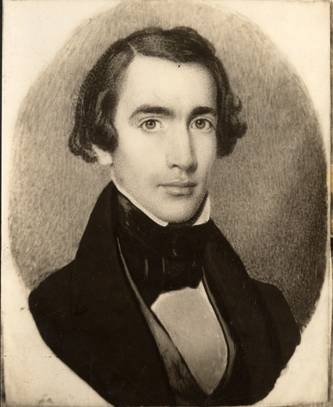
Joshua Fry Speed
Courtesy of The Filson Historical Society
As a nation, we began by declaring that “all men are created equal.” We now practically read it “all men are created equal, except negroes” When the Know-Nothings get control, it will read “all men are created equal, except negroes, and foreigners, and Catholics.” When it comes to this I should prefer emigrating to some country where they make no pretence of loving liberty — to Russia, for instance, where despotism can be taken pure, and without the base alloy of hypocracy [sic].
Abraham Lincoln and Joshua Speed met in Springfield, Illinois, during the 1830s. Although Speed returned to his native Kentucky, they remained friends throughout life. In this letter, Lincoln expresses his thinking about slavery, which contrasted with Speed, who grew up on a plantation and owned slaves. The year before Lincoln wrote this letter, the Kansas-Nebraska Act passed Congress, repealing the Missouri Compromise of 1820, and opened the territories to slavery. The passage of this bill proved a turning point in Lincoln’s career. As he observed, “I was losing interest in politics, when the repeal of the Missouri Compromise aroused me again.”
Springfield, Illinois
August 24, 1855
Link to whole letter: https://www.abrahamlincolnonline.org/lincoln/speeches/speed.htm
Mysticism of Flowing, Flirting, F***ing with Mechthild of Magdeburg
ESOTERICA • May 24, 2024 The Middle Ages produced some of the most amazing women mystics in western history. But rarely do we get insight into the entire mystical life of a person in the way that we do for the 13th century German Mechthild of Magdeburg. Her “Flowing Light of the Godhead” is an amazing – if not at times shocking – record of the experiencing being taken into the luminous relationship of the Trinity, the courtship and blissful consummation of love with the Divine and yet finally falling into the very hellish pits of alienation from, and yet, with the Divine. Mechthild’s work is a true surviving treasure of mystical piety, phenomenology and literature: explore it in this episode!
Companies are ‘unbossing’ the workplace, and millennial managers are getting axed
May 21, 2024 (businessinsider.com)
- Companies are cutting middle-management roles, and millennials are likely to be most affected.
- Work culture has changed, and some companies see middle managers as obsolete.
- It could mean that junior staff won’t receive the mentorship to climb the ladder.
Companies are increasingly ditching middle-management positions, and it could be millennials who find their jobs are most at risk.
The great “unbossing” has been brought on by several factors, including cost cutting, Gen Z’s distaste for management, remote working, and increased pressure on performance.
The repercussions may be that as future generations enter the workforce, they’ll receive less mentorship and feel more stress coming from above.
But it’s not just junior employees that could be worse off.
Lara Milward, a neuroleadership coach — which involves harnessing neuroscientific findings to improve how managers operate — with expertise in how workplace culture is changing, told Business Insider it’s the 30-somethings who are buying houses, starting to have children, and juggling “career progression and family life” who may find their jobs suddenly axed.
“It could well be that that’s the generation that takes this hit,” she said.
Millennial middle managers are at risk
Joe Galvin, the chief research officer of the executive-coaching organization Vistage, told BI the unbossing trend had come about because of the normalization of working from home, advances in tech and artificial intelligence, and generational shifts.
“In the analog era, going back to, let’s say, the ’80s, you had to communicate manually to be able to align your workforce,” he said. “Today, technology has made that all possible. And the behavior change that we saw during the pandemic was an accelerant to that.”
In 2021, Steven Baert, then the chief people and organization officer of Novartis, told Gallup that traditional leadership was “becoming redundant.” He said the company’s goal was to have a workforce that’s motivated and encouraged to be effective rather than told what to do.
It’s now rarer to see the traditional version of a boss who walks around an office and checks in on what all their employees are doing.
“That boss’ job has changed tremendously,” Galvin said. “How you manage relationships in a more digital environment is much more difficult.”
While Galvin said the intent of reducing middle management was to streamline communication between employees and senior executives, the impact could be unfairly balanced.
Middle-management positions accounted for almost one-third of layoffs in 2023, an analysis for Bloomberg found — an increase from 20% in 2018.
The analysis, by Live Data Technologies, also found that manager-level or higher roles made up almost 50% of all layoffs in 2023, a jump of 57.6% compared with five years ago.
Amid cost cutting, layoffs, and more demanding performance reviews, confidence levels of middle managers have dropped significantly, research from Glassdoor found.
It just so happens that a lot of middle managers are millennials.
Between ages 28 and 43, millennials are often in their first management positions or on their way to climbing to more senior roles.
They were also hit the hardest during the “Big Firing” of 2022, making up 94% of laid-off workers, according to data from Revelio Labs and Layoffs.fyi.
“Since millennials make up a large portion of middle management, they, along with some Gen X, are most likely to be affected by this trend,” Chris Lovell, a careers expert at SoFi Technologies and the founder of Careers by Chris, told BI.
“These are also the generations that were most likely taught to follow a traditional career path: Go to school, earn a degree, and climb the corporate ladder,” Lovell said.
Work-life balance has changed
Ironically, millennials are “less interested in corporate bureaucracies or hierarchies,” Lovell said, which could be part of why middle-management roles are being cut.
Data suggests that both millennials and Gen Zers are turning away from management positions, with a lack of trust in senior leadership, a perceived limited financial reward, and a greater focus on a work-life balance and time off.
Many middle managers are also burned out, with their teams being downsized and an increased workload.
Gen Zers could also be shifting the culture of the workforce, putting more emphasis on their boundaries, their mental health, and their desire for more autonomy.
“I think this collides with economies and the way that the world is going, that companies are cutting costs,” Milward said.
“If we’re thinking about a world of diversity, inclusivity, and including new generations, they are trying to move towards a more flat structure and less of the old-school parent-child sort of relationship,” Milward added.
However, Joel Wolfe, the founder and president of the customer-service agency HiredSupport, told BI he believed this attitude from younger generations may be backfiring.
There’s pressure on managers to constantly do better than they did the previous quarter, but millennials aren’t necessarily performing at that high level. Millennial managers, Wolfe said, can be “difficult to work with.”
“They have fixed schedules and aren’t flexible, which is something difficult to adapt to, especially when you are working with different time zones,” he said.
Millennials and Gen Zers are increasingly opting out of working overtime and going above and beyond for promotions, instead favoring more time off and leaving work at the door when they go home.
Wolfe said this may make them seem inflexible and thus vulnerable when layoffs happen.
“I prefer employees working when they have some tasks to do,” he said. “I don’t want them to sit in front of the screen and wait for the clock to strike 5 p.m.”
The impact on zoomers
Shoshanna Davis, the founder of Fairy Job Mother and a consultant who helps young people with their careers, told BI she’s not convinced unbossing was a direct response to how younger generations perceive the world of work.
But it’s likely to disproportionately affect Gen Zers in their first or second jobs.
“They are new to the world of work, and they do really need managers to help them find the ropes,” Davis said. “Ultimately, eliminating this kind of middle-management position means less guidance, less coaching, and less mentoring, which I feel like is still desperately needed in a post-COVID world.”
Zoomers are already unenthused by management. They are the generation that coined the term “lazy-girl jobs” and seem to strongly believe in the benefits of “quiet quitting.”
Will fewer management positions be replaced by higher salaries? Will career progression stagnate for Gen Zers if they have no millennial managers to look up to? What does this mean for the generations after them? Davis isn’t sure.
“If it’s just truly a way to cut costs, and there’s going to be no replacements, then what incentive is there for people to perform at work?” Davis said.
She added: “I don’t really see how that’s going to pan out.”
Correction: May 22, 2024 — An earlier version of this story misstated Steven Baert’s current employment and position. He currently works at GE Vernova, not Novartis. His position at Novartis in 2021 was chief people and organization officer, not CEO.
- * Copyright © 2024 Insider Inc. All rights reserved. Registration on or use of this site constitutes acceptance of our Terms of Service and Privacy Policy.