The human hippocampus creates new neurons throughout a person’s lifetime—but most scientists thought that this process doesn’t happen as readily to older people past middle age.
3D modeling technique used to represent neural tracts in the human brain
Despite what you might think, older people in their 70s are just as capable of generating new brain cells as teenagers.
The human hippocampus creates new neurons throughout a person’s lifetime—but most scientists thought that this process, called neurogenesis, does not happen as readily to older people past middle age. That’s because experts have been analyzing almost exclusively brains of people who had brain disease, end-of-life stress, or had been deceased for more than 24 hours. Scientists had not paid close attention to neuron growth in people who died in the past 24 hours.
To find out for sure, Columbia University’s Maura Boldrini removed the hippocampus from 28 recently deceased people between ages 14 and 79.
Here’s Helen Thomson, reporting for New Scientist:
They analysed the number of new neurons, the number of glial cells, which support neurons, as well as molecular markers that are expressed when brain cells form new connections or migrate around the brain—a sign of neuroplasticity.
They found similar numbers of new neurons throughout the hippocampus, as well as comparable numbers of glial cells, regardless of the age of the person the sample had come from. The team estimates that each person was producing about 700 new neurons per day when they died.
The scientists believe that they might be able to promote healthy aging if they can pinpoint what is happening in this group of people that keeps them sprouting neurons—for example, people who exercised more may have retained high levels of neurogenesis even into old age.
Negativity poisons my mind and positivity restores it
I have a choice whether to join in the darkness of the world, its petty judgments, and constant blame. When I do so I inject my psyche with poison, and today I choose a healthy mind.
I replace all negativity with a positive attitude, in which I seek to find, and to articulate, the good in others. If I disagree, I will disagree with respect. If I debate a point, I will debate fairly. If I need to draw a boundary for the sake of justice, I will do so with honor for the dignity of all.
I will no longer be careless with the working of my mind. Rather, I will use it as it was created to be used, as a conduit for love and as a gateway to peace. May everyone, including myself, feel the tenderness of my approval and not the harshness of my unkindness.
Negativity poisons my mind and positivity restores it
Democracy Now! • Mar 30, 2023 • We speak with writer and filmmaker Jennifer Fox, whose 2018 movie The Tale dealt with childhood sexual abuse. She has now come forward to name her abuser. The film is a narrative memoir based in part on Fox’s own life experience about being abused by a coach as a young girl. While the main character is named Fox, the name of the abusive coach was fictionalized. Now Fox has revealed the man who abused her as Ted Nash, the legendary Olympic rower and coach who died in 2021. Nash took part in 11 Olympic teams as a rower or coach, and USRowing, the national governing body for the sport, is now investigating the allegations. Fox recently revealed Nash’s name to The New York Times and tells _Democracy Now!_, in her first broadcast interview since the story, that he began abusing her when she was 13. She says her inner voice told her she could not rest until she publicly named Nash. “It’s very important to bring this other story out to the world now and to show this other part of the man that people put on a pedestal and made into a god,” says Fox, who adds that more women may still come forward about Nash. “It’s a very important act to stand up to power in this way, for me and for others.”
One of the most common interpretation of this card is that it represents a dangerous or treacherous man – which, IMHO, is a very superficial way of looking at a Court card.Certainly this Prince can be sly, dishonest and untrustworthy – but only when badly dignified by the cards around him. The card can also sometimes come up to mark a person who is angry, or vengeful.But the pure Prince of Swords type is a highly intellectual and usually well-educated person, with a rapid fire mind and a great capacity for abstract thinking. He produces ideas with astonishing speed, but often moves on too quickly to follow through or elaborate on them. He can be challenging, entertaining, stimulating – and completely exhausting!The card represents a private person, who defends his inner space quite determinedly. This is some-one who is hard to get to know – in fact, you’ll probably not succeed entirely no matter how long you know him. He is a thinker, and chooses those he shares his thoughts with carefully. He’s usually also very independent, and often appears unemotional and cold.Sometimes the Prince of Swords will come up to represent somebody who is embarking on a serious course of occult study – with the Knight indicating the dedicated initiate.The bad reputation comes from one peculiarity of this card and the Knight of Swords, I think. They both tend to appear when a man is angry, violent or vicious. However this is a function of the Suit – Swords deal with conflict and pain quite extensively. So don’t imagine that every Prince of Swords you see is bad – most of them aren’t.
By Jean Houston (info@sourceofsynergyfoundation.org)Image: Solar Eclipse 04 08 2024 NASA
April 8th was a day unlike any before it. Millions of people looked towards the heavens to discover what many called a spiritual experience. For in the dance between light and dark, we had come together as citizens of a powerful and humbling cosmos.
All that had divided us, was subsumed by a rare and precious sense of belonging to an extraordinary home of land, and sea and stars. We were drawn into the mystery of light and dark by a childlike awe that initiated us into an unexpected relationship of community, reverence and possibilities.
I couldn’t help but feel this sky ritual as a metaphor for the light of your presence often being overcome with events that challenge the belief in yourselves, each other, and in our societies’ futures. We witnessed the symbolic dance of light and dark, just as our lives alternate between promise and anxiety.
Spontaneous cheering welcomed back the return of our brilliant sun. Those joyous voices were the sounds of the victory of light, hope and the return of all that sustains our collective lives.
For me, you are that light, offering yourself, against all odds, against all challenges, to a holy world. It’s time for a newer, more powerful Light.
Sometimes your light may be overshadowed by outdated old patterns, by challenging situations, by witnessing unnecessary tragedies or by an overwhelming fatigue at the foolishness of decisions being made at every level.
When your Light emerges again it can be filled with a powerful new energy, one creatively and spiritually prepared for this extraordinary time of transformation. Against all odds, you can help wisdom and good prevail, and use your imagination, experiences, allies and actions to make your visions a reality and help create a better world.This year I will open my home as the Jean Houston Master Mentoring Center. This Center will mentor small groups of students for an intimate learning experience.
In my upcoming program, Against All Odds, students will learn how to expand their consciousness, step into interdependent relationships with the physical and non-physical worlds, grow new dimensions of intuition and creativity, and explore deeper responses to the critical choices and challenges of our times.
Reflections on the EclipseBy Anita Sanchez Yesterday, many of us in Mexico, Canada, and the USA experienced a total solar eclipse – a phenomenon that will not recur until 2044.
A total solar eclipse occurs when the new moon traverses between the sun and the Earth and, for a short time, completely blocks the sun, placing us into darkness.No matter what your identity, business/government/nonprofit leader, Indigenous person, parent, teenager, or child, you might have found a place to experience this occurrence that is often viewed as a ‘once-in-a-lifetime, must-see’ event.
“However, in ancient cultures as well as in some current indigenous cultures, solar eclipses found their place in ancestral mythology and were not considered festive nor positive events. Because the sun, moon, and stars were extremely important to people in agrarian and Earth-based cultures for their survival, stories were created to explain why the sun disappeared. A lot of cultures explained solar eclipses in terms of an animal or mythical figure consuming the sun. For example, over 4,000 years ago, Chinese people believed a dragon was devouring the sun. In South America, the leopard was the sun-eater; in Norse mythology, a giant wolf swallowed the sun; and for the Native American Cherokees, a giant frog dined on the sun. In other cultures and faiths, such as the Hindu, eclipses were interpreted as battles between the sun god and other demigods.” ~ Junia Imel, Divine Adventures
My friends from the Diné (Navajo) say that an eclipse is deeply rooted in the respect of the cosmos and serves as an event of renewal and contemplation. Dr. David Begay, a Navajo astronomer, explained: “Our elders tell us that the sun, the moon, and the Earth go through constant renewal by aligning themselves… It’s one of the natural laws that’s been observed over the years and the sun rebalances itself with the alignment… When there’s an eclipse, they tell people, ‘Go inside.’ Respect the cycle and let time pass.”
Some traditions, including Aztec, Toltec, Mayan, create spiritual ceremonies or rituals to restore the harmony within the universe and the connection between living beings and the celestial realm. This strengthens our bond with the cosmic order and preserves our cultural knowledge, spiritual and physical connection to the natural world. The First Peoples, the first scientists, believe it is important for us to observe this phenomenon with humility, reverence, and gratitude for Mother Earth. The eclipse is a time to go within and reflect, to pray, to be in community, participate in rituals. As the sun undergoes its ‘rebirth,’ it is a sacred time of transformation that needs to be honored as members of the Hoop of Life.
How did you mark the total solar eclipse? (a celestial moment…with frivolity and/or with reverence?)
Did you come together with others? (family, friends, co-workers, strangers…)
However you decided to mark the solar eclipse, it did bring people together, no matter what their ages, race, gender, physical abilities, or beliefs to participate in a ‘shared-consciousness’ experience that, for a few moments, connected us in a state of awe, unity, and oneness.Photo credit: @sarahleejs
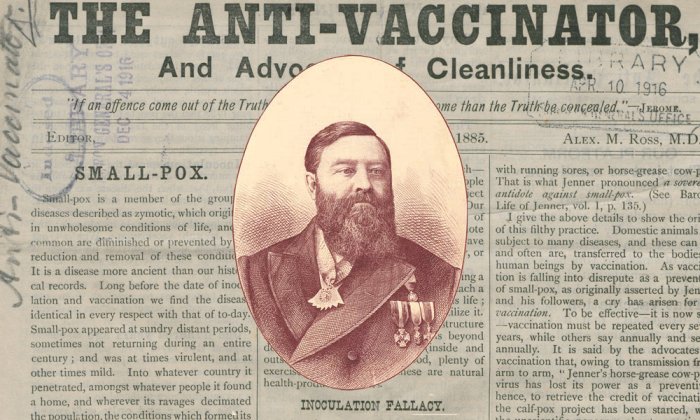
Alexander Milton Ross’s tale reveals striking similarities to today’s vaccine hesitancy and the enduring challenge of combating misinformation campaigns.
Misinformation about diseases is a timeless human challenge. Images: A page out of the 19th-century Anti-Vaccinator magazine; naturalist and anti-vaccination activist Alexander Milton Ross.
By: Sabrina Sholts (thereader.mitpress.mit.edu)
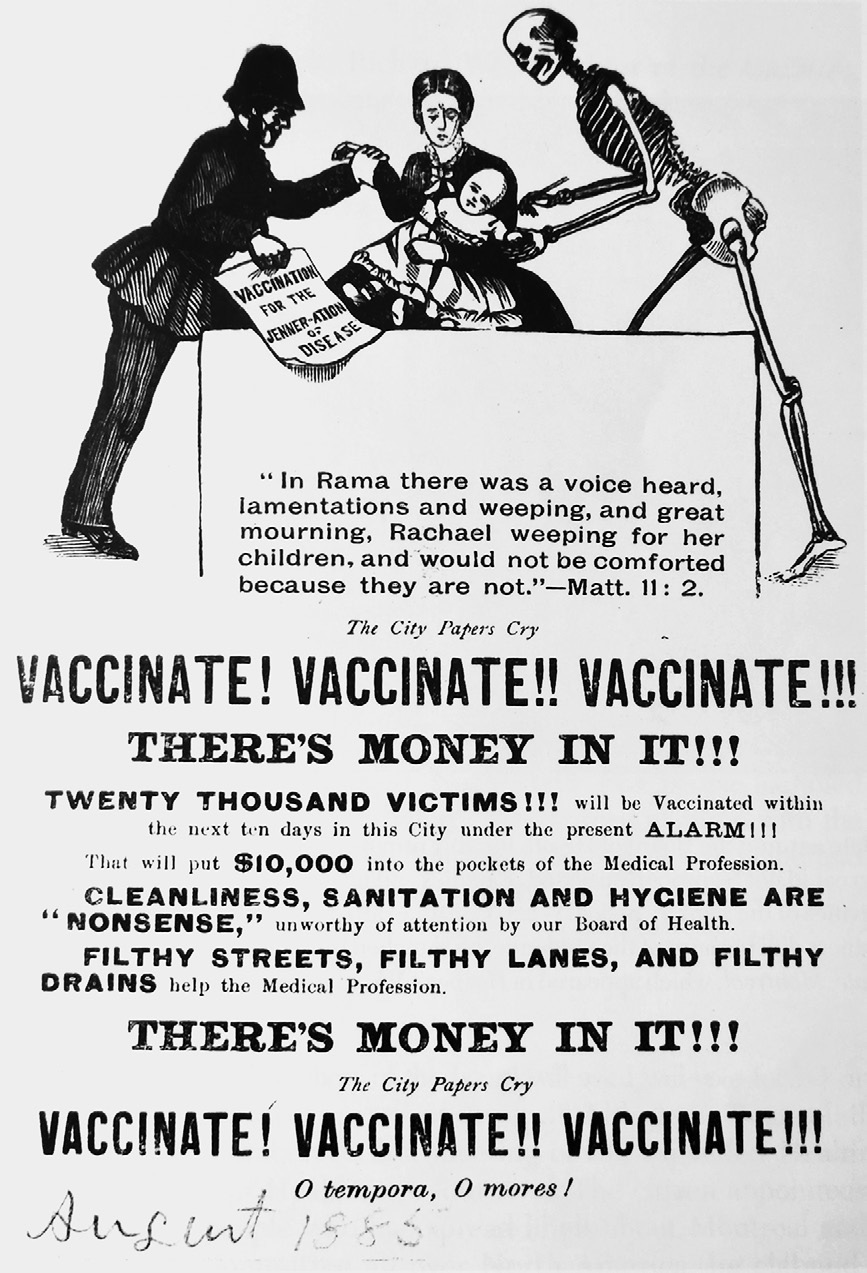
“VACCINATE! VACCINATE!! VACCINATE!!! THERE’S MONEY IN IT!!! TWENTY THOUSAND VICTIMS!!! will be Vaccinated within the next ten days in this City under the present ALARM!!! That will put $10,000 into the pockets of the Medical Profession.” In case all the exclamation points and capitalized letters didn’t do the trick, Alexander Milton Ross embellished his poster with a large drawing of a police officer restraining a mother while Death vaccinated her child. It was terrifying, no doubt. For extra emphasis, the police officer held a piece of paper that read “Vaccination for the Jenner-ation of Disease,” a reference to the English physician Edward Jenner, who developed and promoted vaccination.
In 1885, Canada had no greater adversary of smallpox vaccination than Ross, an Anglo-Canadian physician and naturalist whose medical training was informed by the sanitary movement of the 19th century. Opposed to the germ theory emerging in Europe (that same year, Louis Pasteur’s rabies vaccine was announced to the world), Ross believed that smallpox was a filth disease and its only antidote was cleanliness. And though it’s true that smallpox could spread through soiled fabrics used by smallpox patients (such as bedding and clothing), its primary route of transmission was virus-laden respiratory droplets. The real danger thus lay in close and prolonged contact with smallpox patients, independent of how clean the setting was.
Vaccination, in Ross’s mind, was poisonous. He wanted everyone to know it too. Besides papering the city of Montreal with antivaccination posters and pamphlets, writing letters to newspapers and professional journals, and founding a magazine called the Anti-Vaccinator, he formed the Canadian Anti-Vaccination League as part of an international antivaccination crusade. “Though Police and the Profession cry Vaccinate! Vaccinate!! Vaccinate!!! and people in thousands follow their blind leaders, — I still say, DON’T,” Ross urged in a circular that he distributed throughout the city.
Ross believed that smallpox was a filth disease and its only antidote was cleanliness.
At the time, Montreal was struggling to fight off the largest epidemic of smallpox that it would ever face. For almost a century, smallpox vaccination had been widely used to prevent the disease, but many of the city’s inhabitants had refused the procedure.
Some of the holdouts were surely persuaded by Ross and his English-only propaganda. But most of the unvaccinated population and therefore the bulk of the cases consisted of French Canadians. To convince them of the evils of vaccination, French Canadian physician Joseph Emery Coderre formed the first Canadian antivaccination society in Montreal and published numerous antivaccination pamphlets in French in the 1870s. His ardent antivaccination views fed the fervor of protesters who attacked the city council in 1875, halting efforts to enact mandatory smallpox vaccination in Montreal and leaving the city vulnerable to devastating disease 10 years later. When compulsory vaccination was attempted again in 1885, the riot was even bigger. Shortly thereafter, Coderre and colleagues created an antivaccination journal, L’Antivaccinateur canadien-français, the Francophone counterpart to Ross’s magazine.
Antivaccination poster in 1885. Created by Alexander Milton Ross during the smallpox epidemic in Montreal, the text accuses medical doctors of profiting from smallpox vaccination and urges citizens to refuse it, while the image suggests that the smallpox vaccine is deadly. Source: Michael Bliss, “Plague: The Story of Smallpox in Montreal” (Toronto: HarperCollins, 1991).
The misinformation promoted by Ross, Coderre, and their contemporaries should be familiar to anyone with a social media account in the 21st century. First off, they downplayed the threat of the epidemic in Montreal. Francophone newspapers wrote little about it, except to dismiss the panic, while Ross stressed in one of his pamphlets, “CAUTION. Do not be alarmed by the smallpox.” Simultaneously, they insisted that vaccination was the true danger. In the Anti-Vaccinator, Ross explained that vaccination didn’t prevent smallpox and actually infected people with the smallpox virus, along with other equally lethal pathogens. Coderre likewise insisted that victims of vaccination were everywhere. His writings included pages of individuals whom he believed were sickened or killed by the vaccine, either from contracting smallpox or some other malady such as gangrene and syphilis.
And then, of course, they spouted conspiracy theories. Provaccination doctors were accused of profiting from the practice, as Ross broadcast in his poster. One French Canadian doctor, in an open letter to Coderre published by the medical journal L’Union Médicale du Canada in 1875, laid out the same charge. He also perceived another conspiracy among English physicians in particular, attributing their advocacy of the smallpox vaccine to nationalistic conflicts of interest given that English physician Jenner was associated with it. Coderre replied in agreement, affirming that English doctors and public vaccinators practiced vaccination par intérêt — purely out of self-interest. These beliefs were consistent with a general distrust of the Anglophone elite, whose vaccines were seen as both poisoning and punishing the French Canadian community, which mostly lived in overcrowded tenements in the poorest quarters of the city.
Their arguments are reminiscent of misinformation during subsequent epidemics and pandemics, all the way up to the present. It’s also noteworthy that while Ross thought sanitation was the answer to smallpox, Francophone newspapers printed recipes for at-home remedies, such as buckwheat root or mixtures of zinc sulfate, digitalis, and sugar. (A cure was never found for smallpox before its eradication, and treatments generally consisted of cleaning the wounds and easing the pain of the ill.) These ideas are akin to the popularization in the United States of non-FDA-approved treatments for COVID-19, such as ivermectin (an antiparasitic agent used to treat patients with certain worm infections and head lice) and hydroxychloroquine (a medication used for malaria and autoimmune conditions such as lupus and rheumatoid arthritis), which many people learned about through the internet, social media, and celebrity testimonials. Despite early hopes, neither of them turned out to be effective for preventing or treating COVID-19. But without any specific treatments for COVID-19 until long into the pandemic, it’s not surprising that some patients opted to take risks with these unproven remedies rather than heed public health warnings against them. Some physicians even participated in misinformation about the efficacy of these drugs and continued to prescribe them for COVID-19. And although many studies haven’t observed that ivermectin and hydroxychloroquine cause serious adverse effects in COVID-19 patients, they can still be dangerous if the patients forgo evidence-based COVID-19 treatments or vaccination against SARS-CoV-2 as a result of using them, as editors at the Journal of the American Medical Associationpointed out last year.
To be fair, smallpox vaccination was far from perfectly safe in the late 19th century. Even Jenner himself couldn’t explain how his vaccine worked, and some methods (such as passing infectious material directly from the arm of a vaccinated person to an unvaccinated one) undoubtedly had the potential to introduce other infections. There were also some cases where children may have died as a result of faulty vaccine preparations. Furthermore, even if the vaccination was successful, it didn’t guarantee complete or lifelong immunity. Antivaccinationists, though, were incorrect about the risks and effects of the vaccine. And their dishonesty, at least in the case of Ross, raised questions about their own motives.
One State Board of Health report called him “a monster in human form who desired that a most terrible disease should decimate his patrons, that he might grow fat on their putrid bodies.”
Ross, the bombastic pamphleteer, was apparently a hypocrite at heart. In October 1885, while the smallpox epidemic was still raging in Montreal, he boarded a train to Toronto. As reported afterward by the Gazette, a medical inspector at the Ontario border asked Ross to show proof of recent smallpox vaccination, either in the form of a certificate or scar. It was a standard policy for travelers, but Ross tried his best to get out of it. Then when he couldn’t produce a certificate, he reluctantly took off his coat, rolled off his sleeve, and revealed “three perfect vaccination marks” on his arm. One of them was relatively fresh, and the others were from infancy and childhood, according to Ross. The article about the incident offered little by way of commentary, except to note the long history of doctors who believed in the efficacy of vaccination but opposed the practice since they would lose a source of revenue if smallpox declined. (Similarly, during the COVID-19 pandemic, the Fox News channel was a top broadcaster of vaccine skepticism in the United States, even though nearly all of the corporation’s employees were vaccinated.)
The news about Ross reached the United States, where it was met with outrage among the public health community. One State Board of Health report called him “a monster in human form who desired that a most terrible disease should decimate his patrons, that he might grow fat on their putrid bodies.”
By the end of the smallpox epidemic in Montreal in 1886, more than 3,200 people had died from the disease. The city lost almost 2 percent of its total population in 1885 alone, and more than 3 percent of its French Canadian community. Most of them were children. There were numerous blunders that helped the disease spread, as historian Michael Bliss recounts in his book “Plague: How Smallpox Devastated Montreal,” and the large population of unvaccinated children created by fear and ignorance was a major factor. Every one of the deaths could have been prevented, Bliss emphasizes. Unfortunately, it wasn’t until the disease ran out of unvaccinated or otherwise vulnerable hosts that the epidemic finally waned.
Misinformation about diseases is a timeless human challenge. Some opinions offered about the antivaccination riot in Montreal, such as in a New York Times editorial in 1875, ring a bell 150 years later. With shock that anyone would harbor such an absurd preconception against vaccination, a triumph of modern medicine, the editorial lamented that “in spite of all our boasted progress, curious revelations of popular ignorance and superstition are constantly showing us how little progress has been made.” But after laying blame on the fortune tellers in large cities, the quacks in medicine that flourished everywhere, and even the scientific research and scholarly writings that went above the heads of the public, there was still optimism: “When knowledge is more evenly distributed, there will be less of this fantastic and ignorant prejudice.”
Evenly distributed knowledge? That sounds a lot like the internet to me.
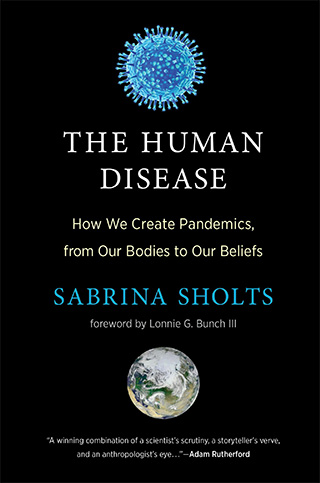
Sabrina Sholts is the curator of biological anthropology at the Smithsonian’s National Museum of Natural History, where she developed the major exhibit “Outbreak: Epidemics in a Connected World.” She is the author of “The Human Disease,” from which this article is excerpted.
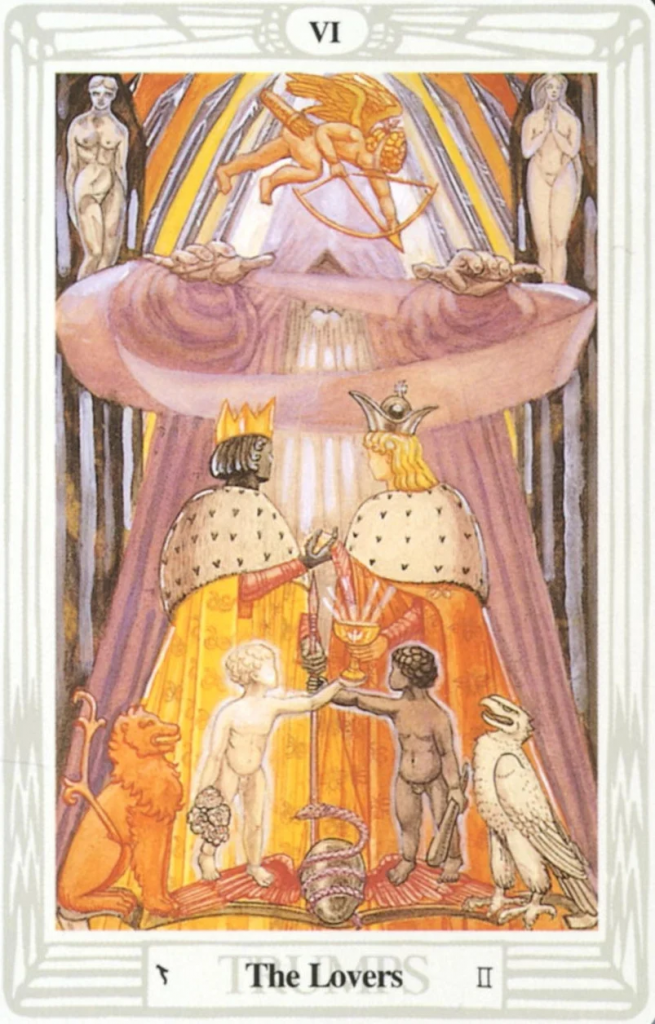
The Lovers is numbered six and is a card of innocence, trust, exhileration and joy. The couple (often seen intertwined or standing side by side) are soulmates, each being one half of a perfect union. The figure flying above them is Cupid, blessing them with the might of Universal Love.The Lovers are the embodiment of the harmony of opposites. This is how we are before the fear and prejudices of life intervene. We give our love freely to others and we need no other to make us whole.Love is much misunderstood. It is subjective and the word ‘love’ is so overused that it has almost lost its original meaning. We are all capable of the immense power of deep feelings. Love happens when we step out of the darkness of fear, pain and doubt into the light. Love can move mountains. Love breeds love – a happy smile breaking through another’s melancholy proves this.Loving ourselves is the first step to touching the mighty power of Universal Love. We must live each moment as though it were the only one – rejoicing and celebrating, loving the soul within us rather than fighting with the reflection the rest of the world sees.
Eye Of The Storm Podcast • May 1, 2024 This podcast is released alongside the acclaimed new docuseries ‘In The Eye Of The Storm — The Political Odyssey Of Yanis Varoufakis’. Watch it here: http://www.eyeofthestorm.info Dr. Gabor Maté is a renowned speaker and bestselling author, highly sought after for his expertise on a range of topics including addiction, stress and childhood development. To find out more, go to: https://drgabormate.com/about/ Yanis Varoufakis is an economist, politician, author and the former finance minister of Greece. To find out more, go to: https://www.yanisvaroufakis.eu/ Raoul Martinez is a philosopher, author and filmmaker. To find out more, go to: http://www.creatingfreedom.info ‘Eye Of The Storm Podcast’ will release new episodes each week with renowned guests from the world of politics and the arts. Our first episode, however, kicks off with an in-depth interview with Yanis Varoufakis. Please like and subscribe.
Consciousness, spirituality, biography, sexuality, androgyny, futurism, space, the arts, science, astrology, democracy, humor, books, movies and more




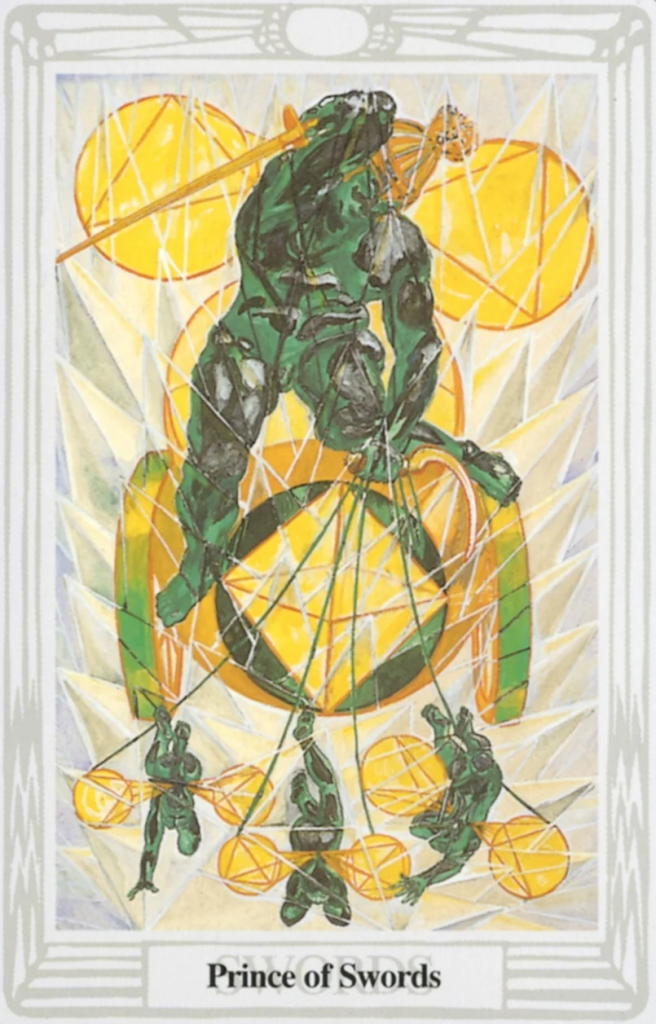

 Image: Solar Eclipse 04 08 2024 NASA
 No matter what your identity, business/government/nonprofit leader, Indigenous person, parent, teenager, or child, you might have found a place to experience this occurrence that is often viewed as a ‘once-in-a-lifetime, must-see’ event.