Free Will Astrology: Week of May 9, 2024

BY ROB BREZSNY | MAY 7, 2024 (NewCity.com)

Photo: Denis Ismailaj

ARIES (March 21-April 19): When my friend Jessalyn first visited Disneyland as a child, she was smitten by its glimmering, unblemished mystery. “It was far more real than real,” she said. “A dream come true.” But after a few hours, her infatuation unraveled. She began to see through the luster. Waiting in long lines to go on the rides exhausted her. The mechanical elephant was broken. The food was unappetizing. The actor impersonating Mickey Mouse shucked his big mouse head and swilled a beer. The days ahead may have resemblances to Jessalyn’s awakening for you. This slow-motion jolt might vex you initially, although I believe it’s a healthy sign. It will lead to a cleansed perspective that’s free of illusion and teeming with clarity.

TAURUS (April 20-May 20): “Keizoku wa chikara nari” is a Japanese proverb that means “To continue is power.” I propose you make that your motto for the next four weeks. Everything you need to happen and all the resources you need to attract will come your way as long as your overarching intention is perseverance. This is always a key principle for you Tauruses, but especially now. If you can keep going, if you can overcome your urges to quit your devotions, you will gain a permanent invigoration of your willpower.

GEMINI (May 21-June 20): Do you believe there are divine beings, animal spirits and departed ancestors who are willing and able to help us? If not, you may want to skip this horoscope. I won’t be upset if you feel that way. But if you do harbor such views, as I do, I’m pleased to tell you that they will be extra available for you in the coming weeks. Remember one of the key rules about their behavior: They love to be asked for assistance; they adore it when you express your desires for them to bring you specific blessings and insights. Reach out, Gemini! Call on them.

CANCER (June 21-July 22): I’m taking a gamble here as I advise you to experiment with the counsel of visionary poet and painter William Blake (1757–1827). It’s a gamble because I’m asking you to exert a measure of caution as you explore his daring, unruly advice. Be simultaneously prudent and ebullient, Cancerian. Be discerning and wild. Be watchful and experimental. Here are Blake’s directions: 1. The road to excess leads to the palace of wisdom, for we never know what is enough until we know what is more than enough. 2. If the fool would persist in his folly, he would become wise. 3. The pride of the peacock is the glory of God. The lust of the goat is the bounty of God. 4. No bird soars too high if it soars with its own wings. 5. Exuberance is Beauty.

LEO (July 23-Aug. 22): Cosmic energies are staging a big party in your astrological House of Ambition. It’s a great time to expand and intensify your concepts of what you want to accomplish with your one wild and precious life. You will attract unexpected help as you shed your inhibitions about asking for what you really want. Life will benevolently conspire on your behalf as you dare to get bolder in defining your highest goals. Be audacious, Leo! Be brazen and brave and brilliant! I predict you will be gifted with lucid intuitions about how best to channel your drive for success. You will get feelers from influential people who can help you in your quest for victory. (PS: The phrase “your one wild and precious life” comes from poet Mary Oliver.)

VIRGO (Aug. 23-Sept. 22): Is it possible to be too smart for your own good? Maybe, although that won’t be a problem for you anytime soon. However, you may temporarily be too smart for some people who are fixated on conventional and simplistic solutions. You could be too super-brilliant for those who wallow in fear or regard cynicism as a sign of intelligence. But I will not advise you to dumb yourself down, dear Virgo. Instead, I will suggest you be crafty and circumspect. Act agreeable and humble, even as you plot behind the scenes to turn everything upside-down and inside-out—by which I mean, make it work with more grace and benefit for everyone concerned.

LIBRA (Sept. 23-Oct. 22): In my fairy tale about your life in the coming weeks and months, you will transform from a crafty sleuth to an eager explorer. You will finish your wrestling matches with tricky angels and wander off to consort with big thinkers and deep feelers. You will finish your yeoman attempts to keep everyone happy in the human zoo and instead indulge your sacred longings for liberation and experimentation. In this fairy tale of your life, Libra, I will play the role of your secret benefactor. I will unleash a steady stream of prayers to bless you with blithe zeal as you relish every heart-opening, brain-cleansing moment of your new chapter.

SCORPIO (Oct. 23-Nov. 21): In the coming months, I will encourage you to keep deepening and refining the art of intimacy. I will rejoice as you learn more and more about how to feel close to people you care for and how to creatively deal with challenges you encounter in your quest to become closer. Dear Scorpio, I will also cheer you on whenever you dream up innovations to propitiate togetherness. Bonus blessings! If you do all I’m describing, your identity will come into brighter focus. You will know who you are with greater accuracy. Get ready! The coming weeks will offer you novel opportunities to make progress on the themes I’ve mentioned.

SAGITTARIUS (Nov. 22-Dec. 21): You could offer a workshop on the perks of wobbliness. Your anxious ruminations and worried fantasies are so colorful that I almost hesitate to tell you to stop. I’m wondering if this is one of those rare phases when you could take advantage of your so-called negative feelings. Is it possible that lurking just below the uneasiness are sensational revelations about a path to liberation? I’m guessing there are. To pluck these revelations, you must get to the core of the uneasiness.

CAPRICORN (Dec. 22-Jan. 19): During the last eleven months, life has offered you unprecedented opportunities to deepen and ripen your emotional intelligence. You have been vividly invited to grow your wisdom about how to manage and understand your feelings. I trust you have been capitalizing on these glorious teachings. I hope you have honed your skills at tapping into the power and insights provided by your heart and gut. There’s still more time to work on this project, Capricorn. In the coming weeks, seek out breakthroughs that will climax this phase of your destiny.

AQUARIUS (Jan. 20-Feb. 18): Naturalist and author Henry David Thoreau declared, “We need the tonic of wildness.” Amen! In my view, you Aquarians especially need this sweet, rugged healing power in the coming weeks. Borrowing more words from Thoreau, I urge you to exult in all that is mysterious, unsurveyed and unfathomable. Like Thoreau, I hope you will deepen your connection with the natural world because “it is cheerfully, musically earnest.” Share in his belief that “we must go out and re-ally ourselves to Nature every day. We must take root, send out some little fiber.”

PISCES (Feb. 19-March 20): I have four questions and homework assignments for you, Pisces. 1. Is there a person in your inner circle who is close to ripening a latent talent that would ultimately benefit you? I suspect there is. What can you do to assist them? 2. Is there a pending gift or legacy that you have not yet claimed or activated? I think so. What would be a good first step to get it fully into your life? 3. What half-dormant potency could you call on and use if you were more confident about your ability to wield it? I believe you now have the wherewithal to summon the confidence you need. 4. What wasteful habit could you replace with a positive new habit?

Homework: What’s your favorite subject to fantasize about? Newsletter.FreeWillAstrology.com

The fusion of two sisters into a single woman suggests that human identity is not in our DNA

With your agreement, we and our partners use cookies or similar technologies to store, access, and process personal data like your visit on this website. You can withdraw your consent or set your preferences at any time by clicking on “Configuration” or in our Cookies Policy on this website.View our 835 partners

We and our partners process data for the following purposesPersonalised advertising and content, advertising and content measurement, audience research and services development , Precise geolocation data, and identification through device scanning, Sharing data and profiles for analysis and personalised advertising for advertisers and advertising companies on the Internet. , Sharing data and profiles for analysis and personalised advertising from advertisers for our advertising campaigns, Storage and access to informationConfigurationAccept

Select:

EL PAÍS

The biologist Alfonso Martínez Arias defends that genes do not define the uniqueness of a person, citing the example of Karen Keegan, who has two genomes

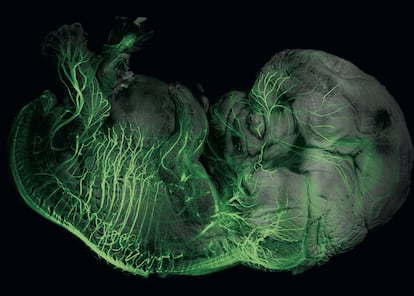
Feto de ocho semanas
Image of an eight-week-old fetus taken with the imaging technique of the neurobiologist Alain Chédotal.ALAIN CHÉDOTAL Y MORGANE BELLE / INSTITUTO DE LA VISIÓN
Manuel Ansede

MANUEL ANSEDE

Madrid – MAY 08, 2024 – (english.elpais.com)

Two eggs fertilized by two sperm coincided in a uterus and, instead of giving rise to two sisters, they fused to form a single person: Karen Keegan. When she was 52 years old, this woman from Boston suffered very serious kidney failure, but luckily she had three children willing to donate a kidney to her. The doctors did genetic tests to see which offspring was most compatible and they got a major surprise: the test said that two of them were not her children. The reality was even more astonishing: Karen Keegan had two different DNA sequences, two genomes, depending on the cell you looked at. Biologist Alfonso Martínez Arias maintains that this chimeric woman is conclusive proof that DNA does not define a person’s identity.

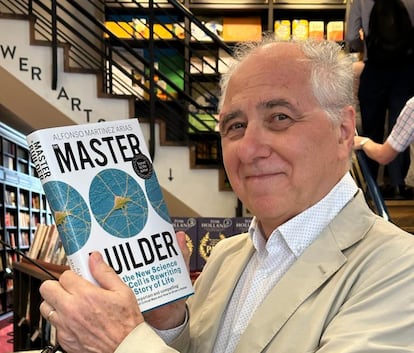
The most inspiring science book of all time is The Selfish Gene, according to a survey carried out by the Royal Society of the United Kingdom. In this famous work from 1976, British biologist Richard Dawkins defended that the DNA molecule uses the human being as a mere envelope in order to be transmitted to the next generation and become immortal. “We are survival machines, robot vehicles blindly programmed to preserve the selfish molecules known as genes,” Dawkins stated. Almost half a century later, Martínez Arias refutes this perspective of the selfish gene and proposes a much more romantic alternative: the altruistic cell. “An organism is the work of cells. Genes merely provide materials for their work,” he says in The Master Builder, a fascinating and provocative book from the London publisher Basic Books that will also be published in Spanish this year.

Martínez Arias, 68, argues that the DNA sequence of an individual is not an instruction manual or a construction plan for their body, but a box of tools and materials for the true architect of life: the cell. The Madrid-born biologist argues that there is nothing in the DNA molecule that explains why the heart is located on the left, why there are five fingers on the hand or why twin brothers have different fingerprints. Cells are what “control time and space,” he proclaims. They are the ones who know where right and left are, and where exactly a person’s foot or an elephant’s trunk should end.

The biologist spent four decades at the University of Cambridge, investigating how a solitary cell with a unique DNA sequence — the fertilized egg — is capable of multiplying and becoming an individual with billions of cells specialized in various tasks. “The question often arises as to how it is possible that such similar genomes can build such different animals as flies, frogs, horses and humans. However, the real wonder is how the same genome can build structures as different as an eye and a lung in the same organism. Let’s give the cells the credit they deserve,” says Martínez Arias, who in 2021 left his chair of Genetics at Cambridge to join Pompeu Fabra University in Barcelona.

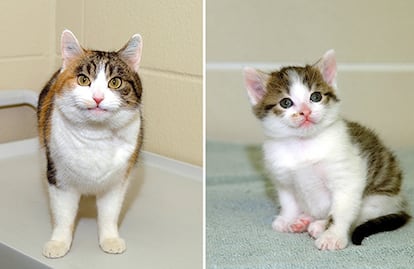
The first cloned cat (right) lost the orange color of the cat from which the DNA was copied (left).
The first cloned cat (right) lost the orange color of the cat from which the DNA was copied (left).UNIVERSIDAD DE TEXAS A&M

The scientist remembers the global surprise after the birth of the first cloned cat, called Copy Cat, on December 22, 2001. Her DNA was identical to that of a calico cat — white, orange and black — yet Copy Cat had white and tabby fur. The two supposed clones looked nothing alike. The researchers had copied the genetic information from a cell that had the orange gene inactivated. The American company that sought to enrich itself by selling identical clones, Genetic Savings & Clone, had to close down in 2006. “People didn’t want a cat with the same genes as their pet, they wanted a cat that was exactly the same and behaved in the same way,” notes Martínez Arias. “That is simply impossible.”

The researcher uses a legendary phrase from his British colleague Lewis Wolpert (1929-2021): “It is not birth, marriage, or death, but gastrulation which is truly the most important time in your life.” Martínez Arias compares this phase of embryonic development to a cellular dance with a perfect choreography. About 14 days after a sperm and an egg come together, the resulting ball, of about 400 cells, will begin gastrulation: a dance that lasts six days and ends with the tiny sphere becoming the first sketch of the individual. In this new 20-day structure, the three axes of the future person are already distinguishable: left and right, up and down, belly and back.

The biologist Alfonso Martínez Arias at a London library.
The biologist Alfonso Martínez Arias at a London library.JAIME MARSHALL

These first days of pregnancy are an enigma, due to the obvious physical and ethical barriers to directly observing the process, but Martínez Arias’ team in Cambridge overcame the difficulties in 2020 with an ingenious alternative. The Spaniard and his lab colleagues used a chemical cocktail to induce embryonic stem cells — derived from leftover embryos from fertility clinics — to form a three-dimensional structure similar to the result of gastrulation: a sketch of a person, but without the seed of the brain or the tissues that would generate the placenta. This historic advance was announced in Nature, a repository of the best world science.

Martínez Arias believes that these structures that partially imitate the human embryo, called gastruloids, “unequivocally show that cells are the masters of construction, and that there is no blueprint in the genome to direct what they do.” The biologist marveled, for the first time in history, at something very similar to what happens in a mother’s womb: a perfect choreography in which cells communicate with each other, through forces and chemical signals, and end up occupying their place as if they knew exactly what their destination was. “This ability to self-organize could be a fundamental property of cells,” hypothesizes the researcher, who cites the spectacular techniques of the French neurobiologist Alain Chédotal to visualize the cellular structure of embryos.

A 20-day-old human embryo (left) and a gastruloid.
A 20-day-old human embryo (left) and a gastruloid.KATHLEEN KAY SULIK

The Pompeu Fabra researcher notes that his colleague Susanne van den Brink discovered that gastruloids were only formed if a specific number of cells were used: about 400. Cells know how to count. If the 400 are not there, the dance of gastrulation does not begin. They all have the same DNA molecule in their nucleus, but each cell reads only a few sections, specializing in certain tasks. That is why a brain cell will not look anything like a skin cell, despite having the same DNA and descending from the same fertilized egg. “Gastruloids are proof that a confederation of cells has the ability to work together, interpret signals from each other and the environment and choose which genes to use and when,” says the biologist. “Genes are not our identity,” he repeats over and over again.

For Martínez Arias, the new science of the cell is rewriting the story of life. “We still don’t know much about how cells are organized to use the genome, but the answers are out there, starting to manifest in our embryo-like cellular wonders or organoids. The century that is already underway is, and will be, the century of the cell,” he proclaims.

Sign up for our weekly newsletter to get more English-language news coverage from EL PAÍS USA Edition

MORE INFORMATION

Alzheimer

Researchers identify new genetic form of Alzheimer’s that is present in millions of people

NUÑO DOMÍNGUEZ

Espina bífida

Researchers discover the genetic cause of the most common brain malformation

NUÑO DOMÍNGUEZ

ARCHIVED IN

Adheres to

The Trust Project

More information

If you are interested in licensing this content, please contact ventacontenidos@prisamedia.com

NEWSLETTER

Sign up to EL PAÍS in English Edition bulletinAPÚNTATE

MOST VIEWED

  1. The fusion of two sisters into a single woman suggests that human identity is not in our DNA
  2. Disney heiress blasts entertainment empire’s poverty wages in new documentary
  3. ‘Nirvana from the hood’: How The Offspring sold 40 million albums with no one’s help but their own
  4. Javier Milei: How the Argentine presidential candidate plagiarized three Mexican scientists
  5. Cuba sentences 22-year-old mother to 15 years in prison for publishing videos of protests

(Contributed by Gwyllm Llwydd)

How to tell if a conspiracy theory is probably false

Conspiracy theories can muddle people’s thinking. Natalie_/iStock / Getty Images Plus

Published: May 7, 2024 (theconversation.com)

Author

  1. H. Colleen SinclairAssociate Research Professor of Social Psychology, Louisiana State University

Disclosure statement

H. Colleen Sinclair receives funding from multiple foundations, national scientific groups, and government organizations.

Partners

View all partners

CC BY NDWe believe in the free flow of information
Republish our articles for free, online or in print, under a Creative Commons license.

Republish this article

Conspiracy theories are everywhere, and they can involve just about anything.

People believe false conspiracy theories for a wide range of reasons – including the fact that there are real conspiracies, like efforts by the Sackler family to profit by concealing the addictiveness of oxycontin at the cost of countless American lives.

The extreme consequences of unfounded conspiratorial beliefs could be seen on the staircases of the U.S. Capitol on Jan. 6, 2021, and in the self-immolation of a protestor outside the courthouse holding the latest Trump trial.

But if hidden forces really are at work in the world, how is someone to know what’s really going on?

We believe good journalism is good for democracy and necessary for it.

Learn more

That’s where my research comes in; I’m a social psychologist who studies misleading narratives. Here are some ways to vet a claim you’ve seen or heard.

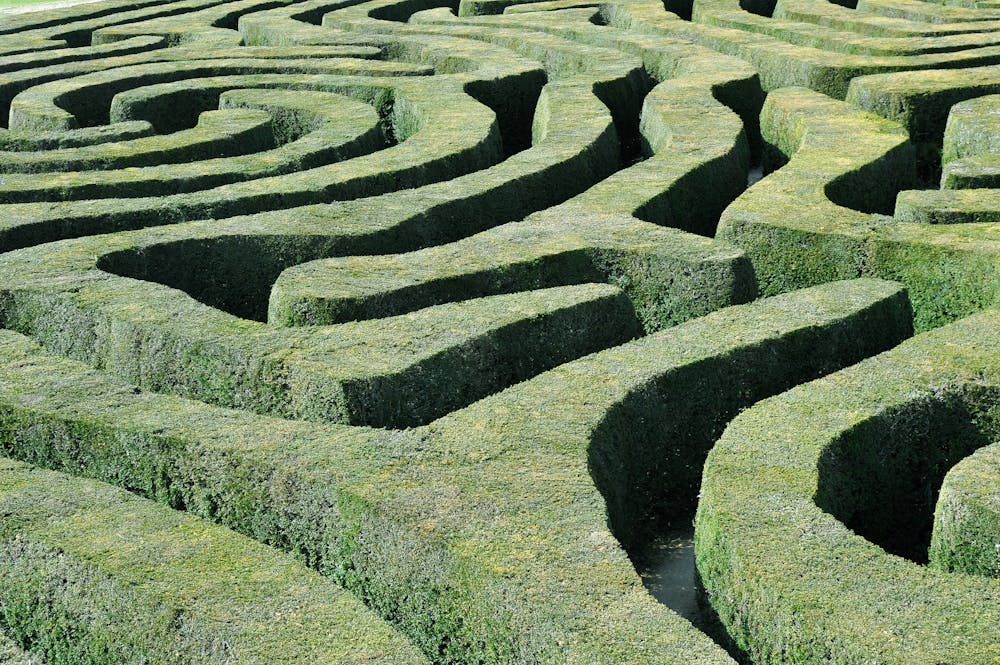
An overview of a maze of passages between shrubs.
Sometimes there’s nothing but the maze itself. oversnap/E+ via Getty Images

Step 1: Seek out the evidence

Real conspiracies have been confirmed because there was evidence. For instance, in the allegations dating back to the 1990s that tobacco companies knew cigarettes were dangerous and kept that information secret to make money, scientific studies showed problematic links between tobacco and cancer. Court cases unearthed corporate documents with internal memos showing what executives knew and when. Investigative journalists revealed efforts to hide that information. Doctors explained the effects on their patients. Internal whistleblowers sounded the alarm.

But unfounded conspiracy theories reveal their lack of evidence and substitute instead several elements that should be red flags for skeptics:

  • Dismissing traditional sources of evidence, claiming they are in on the plot.
  • Claiming that missing information is because someone is hiding it, even though it’s common that not all facts are known completely for some time after an event.
  • Attacking apparent inconsistencies as evidence of lies.
  • Overinterpreting ambiguity as evidence: A flying object may be unidentified – but that’s different from identifying it as an alien spaceship.
  • Using anecdotes – especially vaguely attributed ones – in place of evidence, such as “people are saying” such-and-such or “my cousin’s friend experienced” something.
  • Attributing knowledge to secret messages that only a select few can grasp – rather than evidence that’s plain and clear to all.

Step 2: Test the allegation

Often, a conspiracy theorist presents only evidence that confirms their idea. Rarely do they put their idea to the tests of logic, reasoning and critical thinking.

While they may say they do research, they typically do not apply the scientific method. Specifically, they don’t actually try to prove themselves wrong.

So a skeptic can follow the method scientists use when they do research: Think about what evidence would contradict the explanation – and then go looking for that evidence.

Sometimes that effort will yield confirmation that the explanation is correct. And sometimes not. Like a scientist, ask yourself: What would it take for you to believe your perception was wrong?

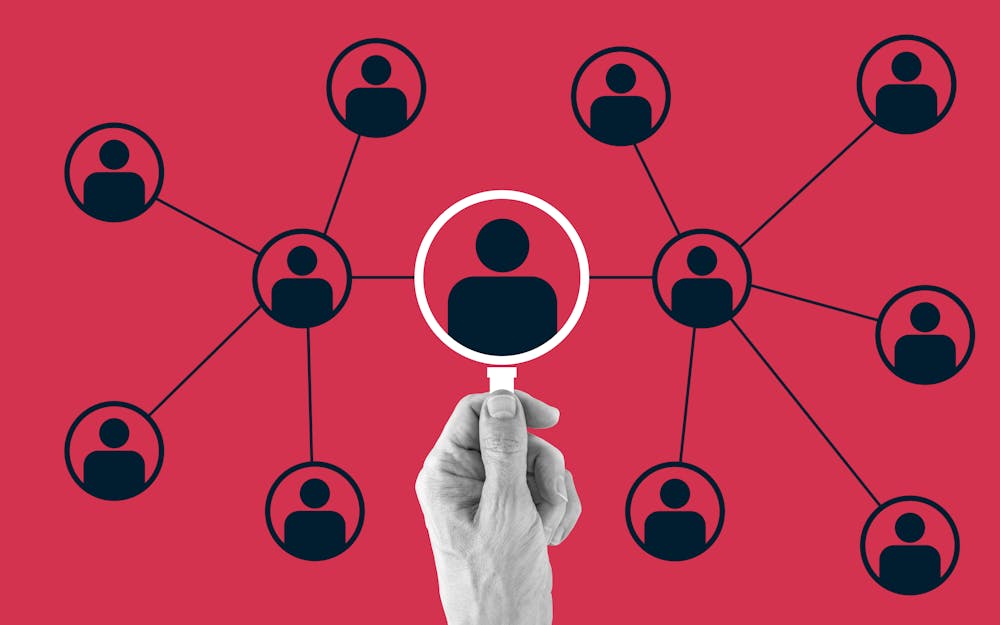
A hand holds a magnifying glass over one silhouetted figure, which is connected in a diagram to other figures.
Look closely at allegations of massive conspiracies. Boris Zhitkov/Moment via Getty Images

Step 3: Watch out for tangled webs

When theories claim large groups of people are perpetrating wide-ranging activities over a long period of time, that’s another red flag.

Confirmed conspiracies typically involve small, isolated groups, like the top echelon of a company or a single terrorist cell. Even the alliance among tobacco companies to hide their products’ danger was confined to those at the top, who made decisions and enlisted paid scientists and ad agencies to spread their messages.

False conspiracies tend to implicate wide swaths of people, such as world leaders, mainstream media outlets, the global scientific community, the Hollywood entertainment industry and interconnected government agencies.

The online manifesto of Max Azzarello – the man who self-immolated on the steps of a New York courthouse in April 2024– railed against a conspiracy allegedly including every president since Bill Clinton, sex offender Jeffrey Epstein, even the writers of “The Simpsons.”

Remember that the more people who supposedly know a secret, the harder it is to keep.

Step 4: Look for a motive

Confirmed conspiracies tell stories about why a group of people acted as they did and what they hoped to gain. Dubious conspiracies involve a lot of accusations or just questions without examining what real benefit the conspiracy nets the conspirators, especially when factoring in the costs.

For instance, what purpose would NASA have to lie about the existence of Finland?

Be particularly suspicious when conspiracies allege an “agenda” being perpetrated by an entire sociodemographic, which is often a marginalized group, such as a “gay agenda” or “Muslim agenda.”

Also look to see whether those spreading the conspiracy theories have something to gain. For example, scholarly research has identified the 12 people who are the primary sources of false claims about vaccinations. The researchers also found that those people profit from making those claims.

Step 5: Seek the source of the allegations

If you can’t figure out who is at the root of a conspiracy allegation and thus how they came to know what they claim, that is another red flag. Some people say they have to remain anonymous because the conspiracists will take revenge for revealing information. But even so, a conspiracy can usually be tracked back to its source – maybe a social media account, even an anonymous one.

Over time, anonymous sources either come forward or are revealed. For instance, years after the Watergate scandal took down Richard Nixon’s presidency, a key inside source known as “Deep Throat” was revealed to be Mark Felt, who had been a high-level FBI official in the early 1970s.

Even the notorious “Q” at the heart of the QAnon conspiracy cult has been identified, and not by government investigators chasing leaks of national secrets. Surprise! Q is not the high-level official some people believed.

Reliable sources are transparent.

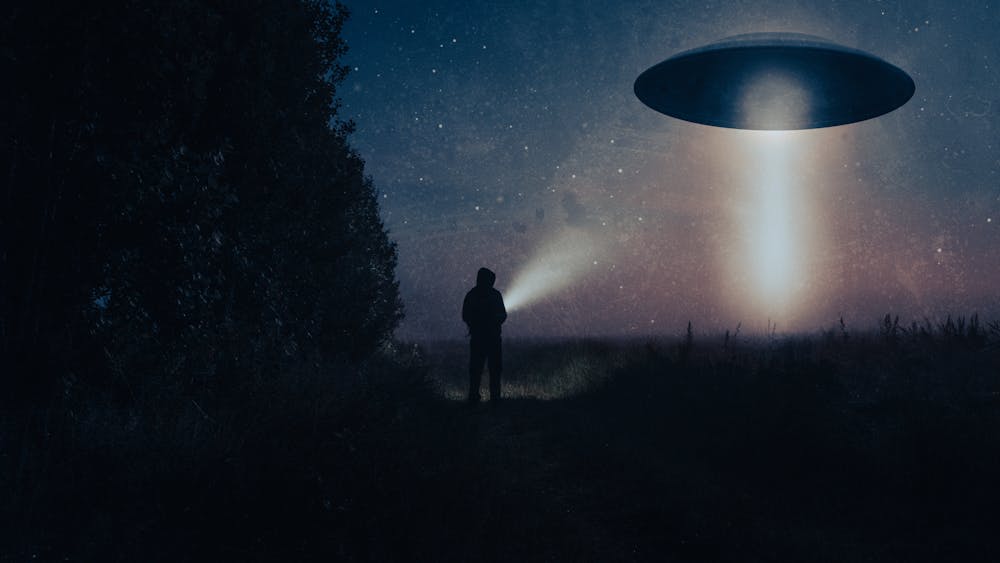
A view of a person holding a flashlight standing in a dark field while a circular shape hovers overhead, beaming a light down.
This didn’t happen. David Wall/Moment via Getty Images

Step 6: Beware the supernatural

Some conspiracy theories – though none that have been proven – involve paranormal, alien, demonic or other supernatural forces. People alive in the 1980s and 1990s might remember the public fear that satanic cults were abusing and sacrificing children. That idea never disappeared entirely.

And around the same time, perhaps inspired by the TV series “V,” some Americans began to believe in lizard people. It may seem harmless to keep hoping for evidence of Bigfoot, but the person who detonated a bomb in downtown Nashville on Dec. 25, 2020, apparently believed lizard people ran the Earth.

The closer the conspiracy is to science fiction, the closer it is to just being fiction.

Step 7: Look for other warning signs

There are other red flags too, like the use of prejudicial tropes about the group allegedly behind the conspiracy, particularly antisemitic allegations.

But rather than doing the work to really examine their conspiratorial beliefs, believers often choose to write off the skeptics as fools or as also being in on it – whatever “it” may be.

Ultimately, that’s part of the allure of conspiracy theories. It is easier to dismiss criticism than to admit you might be wrong.

Before you go…

The world is complicated, but The Conversation helps you understand it. Our editors identify experts on topics in the news, and work with them to help them write clear, engaging and fascinating articles. Each weekday, we publish eight to 12 of these stories, ranging from health to political science, from technology to business and from history to ethics. Sign up for our free newsletter to get these articles in your inbox each day.

Subscribe now

Joel Abrams

Director of Outreach

(Contributed by Gwyllm Llwydd)

Morning Meditation

Mohamed Abdulla Shafeeg

The universe intends that I be loved. All is planned for my greater good.

As the handwriting of God, the universe both self-organizes and self-corrects. Through love I am connected to a pattern of perfection. All problems in the world – from the subtle to the immense – derive from someone having lost connection to the love within their hearts.

Today I plant myself within love’s universe, that I may dwell within the miraculous matrix. As I align my thoughts and actions with love, I experience my greater good. I trust the universe to create through me ever-increasing dimensions of peace and joy.

I do not know how to control the universe, nor do I need to. The universe is controlled by love and love alone. Outside love’s embrace the world is chaos, but within it all is safe and secure. Today I choose the arms of love in which to rest my soul.

The universe intends that I be loved. All is planned for my greater good.

The Professor of UFOlogy: Confessions of a Catholic Prof with James Madden

New Thinking Allowed with Jeffrey Mishlove • May 7, 2024 “How do we tell the truth about something that we’re not designed to talk about?” Perhaps the last place one might find a college course on UFOlogy would be at a conservative, midwestern Catholic school. Dr. James Madden, author of “Unidentified Flying Hyperobject: UFOs, Philosophy, and the End of the World” is a professor of philosophy at Benedictine College in Kansas, discusses “re-thinking UFO/UAP phenomenon” with guest host Christopher Naughton. Madden’s central claim is that understanding the UFO will require a re-thinking of ourselves and our standing in what is revealed as a much wider cosmos. Here, he explores the openness to the odd and the supernatural within Catholicism and what impact UFOs are having on religion and politics. The discussion also examines the potential consequences of disclosure, and the reaction of students to UFO studies, as well as the concept of the “end of the world” and its connection to technology. Chapters 00:00 Welcome and Intro 01:50 Religious background, early UFO interest 04:54 Catholicism’s openness to the odd and supernatural 09:06 UFOlogy as a religion, a new spiritual movement? 13:16 Rethinking the UFO phenomena: myths & symbols 16:42 The death of fundamentalism? 22:40 The impact of UFOs on religion and politics 29:59 Government suppression and political institutions 32:57 The implications of disclosure 38:58 Carl Jung, UFOs and what they represent to the soul 42:01 The reaction of students to UFO studies 49:50 The “end of the world” and the role of technology To order Dr. James Madden’s book “Unidentified Flying Hyperobject: UFOs, Philosophy, and the End of the World” go to https://a.co/d/2hhHWot

Flying Saucers: A Modern Myth of Things Seen in the Skies

C.G. JungR.F.C. Hull (Translator)

While Jung is known mainly for his theories on the nature of the unconscious mind, he did have an interest in the paranormal. In this essay, Jung applies his analytical skills to the UFO phenomenon. Rather than assuming that the modern prevalence of UFO sightings are due to extraterrestrial craft, Jung reserves judgment on their origin & connects UFOs with archetypal imagery, concluding that they have become a “living myth.” This essay is intriguing in its methodology & implications as to the nature of UFOs & their relation to the human psyche.

About the author

Profile Image for C.G. Jung.

C.G. Jung

Carl Gustav Jung (/jʊŋ/; German: [ˈkarl ˈɡʊstaf jʊŋ]), often referred to as C. G. Jung, was a Swiss psychiatrist and psychotherapist who founded analytical psychology. Jung proposed and developed the concepts of extraversion and introversion; archetypes, and the collective unconscious. His work has been influential in psychiatry and in the study of religion, philosophy, archeology, anthropology, literature, and related fields. He was a prolific writer, many of whose works were not published until after his death.

The central concept of analytical psychology is individuation—the psychological process of integrating the opposites, including the conscious with the unconscious, while still maintaining their relative autonomy. Jung considered individuation to be the central process of human development.

Jung created some of the best known psychological concepts, including the archetype, the collective unconscious, the complex, and synchronicity. The Myers-Briggs Type Indicator (MBTI), a popular psychometric instrument, has been developed from Jung’s theory of psychological types.

Though he was a practising clinician and considered himself to be a scientist, much of his life’s work was spent exploring tangential areas such as Eastern and Western philosophy, alchemy, astrology, and sociology, as well as literature and the arts. Jung’s interest in philosophy and the occult led many to view him as a mystic, although his ambition was to be seen as a man of science. His influence on popular psychology, the “psychologization of religion”, spirituality and the New Age movement has been immense.

Bertrand Russell on fear

“Fear is the main source of superstition and one of the main sources of cruelty. To conquer fear is the beginning of wisdom.”

Bertrand Russell (1872-1970)
British Philosopher

AN OPPORTUNITY FOR DAILY REFLECTION BROUGHT TO YOU BY THE SCHOOL OF PRACTICAL PHILOSOPHY

Non-Violence is a bronze sculpture of a 45-calibre revolver with its barrel tied in a knot. The gun is cocked, but the knot makes it clear that it cannot shoot. Artist Carl Frederk Reutersward made the sculpture in 1980 after his friend, John Lennon, was murdered. It is located outside UN headquarters in New York City.

Morning Meditation

Biletskiy_Evgeniy

Today I say yes to new beginnings

Our very cells respond to the thoughts we think. With every word, silent or spoken, we influence the body’s functioning. We participate in the life of the universe itself. If my consciousness grows lighter, then so does everything within and around me. This means, of course, that with every thought, I can start to re-create my life. In saying yes to new beginnings, I begin to bring them forth.

Today I am open to a life reborn, arisen from the ashes of my wounded self and any limits born of circumstances that are no more. I am willing to be renewed and repaired by the spirit of God’s love. I am willing to forgive.

Amen.

Today I say yes to new beginnings

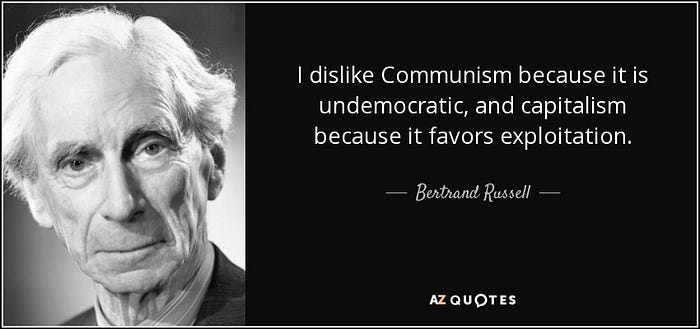
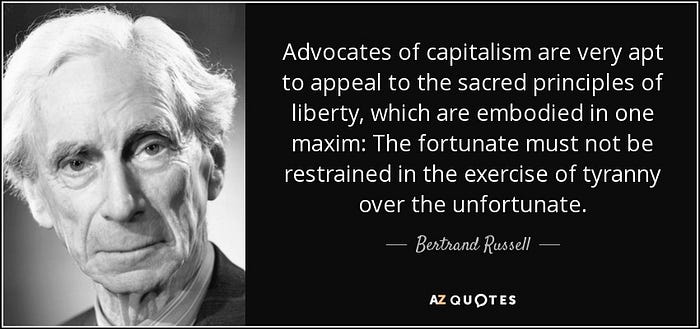
Individualism: A Scam of Capitalism

Companies Do Not Want You To Live In Families

Som Dutt ☯

Som Dutt ☯

Published in Psychology Simplified

3 days ago (Medium.com)

AZ Quotes

There was a time when people used to live in families and money was not a big factor among people. People had fewer desires. There were very less options regarding luxuries. People had money but only luxury was only accessible to wealthy people.

With the rise of technology, capitalism, and industrialization, there came some greedy people who tried to play with human psychology. They tried to feed the thoughts in their mind that was beneficial for their growth.

They indoctrinated the entire society. They came up with the concept of the credit system, EMIs, loans, and credit cards.

In this blog, I will try to explain how the modern world is moving toward solitude and individualism with a strategically planned conspiracy.

People Want To Live Alone Even It S*cks

Humans are social animals and we feel better when we live together with our family members and loved ones. Time spent with our soul mate and life partner always feels great.

But with the rise of the modern world and capitalism, we have started counting our minutes and hours. We have started calculating and measuring everything.

We have started judging things based on our time spent. Capitalism has taught us that our time is a currency before industrialization, people were not aware of such things.

They used to go on long vacations. They used to read books one after another. But in the modern world people even cannot focus for a long time. Because they have to prioritize it. They only spend time on things that can benefit them in their career and or give them psychological satisfaction.

“When we have started becoming busy in making money, we are destined to live alone.”

-Som Dutt

People have become more intolerant these days, they cannot tolerate negative words from anyone. Even if it comes with constructive feedback. People do not want to listen to that.

Az Quoes

That is why they start living alone because the world has become too much sensitive and judgment. If you give your list of preferences to someone they will immediately judge you and calculate the amount of attention and time, they can afford to give you.

That is why the modern world is moving toward loneliness but most people have named it solitude. They think living alone is an act of freedom and represent strength.

But sometimes cowardly and weak people also live in solitude.

If you live alone you have to spend more

In earlier days, people used to live in families or join families. They used to buy fewer home appliances and most of them used to share each other’s appliances.

“Sharing is caring.”

People used to share their cars, houses, lands, money, and even food.

Nowadays, people have started living alone. Wives have started filing for divorces. As a result. Each person has to buy their own house, car, home appliances, AC, refrigerator and other things.

This has become a big problem. Things that can be easily shared, but people do not want to share.

With sharing and care, we can minimize lots of problems in the life of others. But nobody wants to share anything.

People love to donate their money to poor people instead of helping their loved ones when they need it the most.

That is why our suffering and mental problems like stress, depression, and anxiety are increasing every year.

People have stopped trusting each other. I still remember that, when I was a kid, there were 9 members who used to live in our rented house. They were all struggling in the city.

My mom used to cook for all 9 members. My father used to share rent with them, they had a single kitchen, single refrigerator, single tv, etc.

But after around 20 years from now, each of them has their own kitchen, refrigerator TV, etc.

They have struggled a lot to buy these things. These things can still be shared in the modern day but our mindset has been changed.

For example, in every home, there is a TV, that remains unused for many hours and days. There are many people who have lots of cars or more than 1 car that they do not use too often. But still, nobody wants to share it with their family members, that is why everybody purchases it.

Shopping

Our mindset has changed a lot in terms of shopping. In earlier times man used to have only 2 or 3 pairs of shoes. 1 shoe is for daily work, 1 is for emergency and 1 is for the party.

Their jeans and pants quantity was also limited. But nowadays, people have lots of clothes. They have clothes that even they have not worn more than 10 times a year.

Still, everybody needs more clothes every year. Our habits have been changed due to aggressive advertising strategies.

I can give you huge lists of where capitalism has affected us and promoted individualism.

Yes, I support individualism, but it is only for rare people. I love it but we all have a huge desire to get social. But nowadays we are conditioned to live alone.

Solitude is like an addiction. When we used to live with families. Our family members used to tell us when we were making any mistakes in our life.

Their suggestions were like a feedback loop for us. But now we need privacy and think that freedom is a luxury. But people do not know that freedom can be easily turned into a disastrous way of living.

Nowadays, there is no one to tell us our mistakes, because we do not like to be told. Sometimes, our family members want to give us constructive feedback but we do not even want to listen to them.

As a result, there is no one to stop us from scrolling Instagram reels nonstop. Nobody is there to remind us that we have to take our medications and supplements on time. Nobody is there to cook for us. Nobody is there to stop our binge-watching and emotional eating.

There is no one, who can help us when we get sick, there is no one who can take us to the hospital. There is no one to stop us from smoking and drinking alcohol. No one to stop our masturbation and watching porn addiction. There is no one to stop us from spending time online in watching YouTube videos, and using social media. There is no one to stop us from excessive shopping.

I love freedom and I always support it. But with freedom, responsibility comes. We perform better when there is someone to keep reminding us of our failures and mistakes. This is how children learn because their teachers and parents are there to give them constructive feedback. But when we become adults and older than that.

We think that nobody has the right to tell us what to do. I think there are many people who still need guidance irrespective of their age. But they do not want it because of their ego and mindset.

Everybody thinks that they are perfect and that is our biggest problem. This is our weakness. And the big companies are taking advantage of this.

Have you ever noticed, that if you go shopping with 3–4 friends you will always buy something good because here, 4 people’s minds is working together.

For example, they can tell you which shirt, pants, and clothes combination is looking good at you. But when you are shopping alone. You do not know. And you buy things and then you show up at the party and your same 3–4 friends tell you that clothes are not suiting for you.

Then you never dress up in those clothes again. In this process, the companies were in profit and you were in loss because you have spent money on something that you never dress up again.

The no. 1 sign of a scam is when the scammer manipulates you to not discuss it with anyone. When he promotes you to not discuss this thing with anyone else. So that he can easily fool you when you are alone because you have no one to take advice from.

Scammers are looking for people who live alone and are gullible by nature. This is how they can easily manipulate your mind.

With the rise of capitalism, we are force to buy unnecessary things that can be easily shared. Every year, the world is producing more and more single men and women.

The room can be easily shared by couples and nowadays only 1 person lives in it. Everybody needs their kitchen and other things too. So everybody is forced to buy every single kitchen appliance.

Children do not want to live with their parents. Parents do not want to live with children. In a family of 5 people everybody needs their own things including cars, a house, and a kitchen.

If you have enjoyed reading my article, remember to comment, clap, and highlight. It will encourage me to write more content daily.

✔️ Please follow me (Som Dutt)

✔️ Please follow our publication Psychology Simplified

✔️ Please subscribe here to receive latest insightful stories by email

If you are interested in reading my long, and detailed analysis on similar topics please check out my website Embrace Inner Chaos

Som Dutt ☯

Written by Som Dutt ☯

·Editor for Psychology Simplified

Top writer in Philosophy & Psychology Since 2021. I make people Think, Relate, Feel & Move. For My Detailed Long Essays visit — https://embraceinnerchaos.com

Ayahuasca-Tripping God Underwhelmed To See Himself

Published Yesterday (TheOnion.com)

Image for article titled Ayahuasca-Tripping God Underwhelmed To See Himself

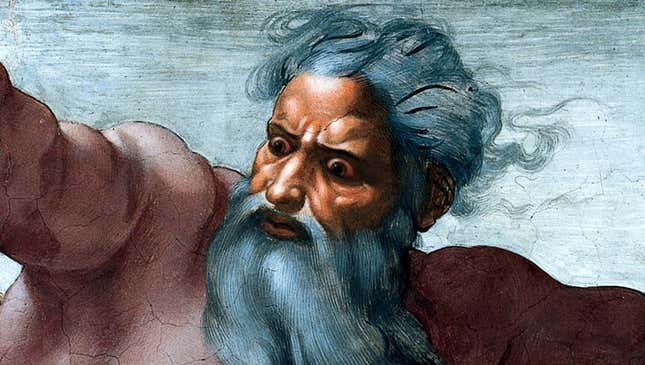
IQUITOS, PERU—Disappointed by the limitations of the psychotropic medicine, an ayahuasca-tripping God, Our Lord and Heavenly Father, told reporters Tuesday how underwhelmed He was to see Himself. “I don’t know what I was expecting, but I sort of figured I’d see something more awe-inspiring than the face of Me,” said the Almighty Creator, who asked the shaman in charge of the retreat if there was something wrong with the hallucinogenic tea He had received during the ayahuasca ceremony, eventually realizing that gazing upon His own Divine Form would be the extent of the trip. “I thought maybe I would transcend to a higher plane of existence, but instead I had a vision where I saw all of creation and how everything is connected to everything else—which, I gotta say, felt like pretty run-of-the-mill stuff. What a bust. I could have had the same experience by looking in the mirror, and then I wouldn’t have had to puke.” At press time, God was reportedly panicking after His trip took a bad turn and He suddenly found Himself confronting Lucifer, Prince of Darkness.

Taurus New Moon, May 7th, 2024

Wendy Cicchetti

Taurus New Moon

The Taurus New Moon spotlights security, stability, and loyalty across time, with Sun and Moon descriptive of both offering and receiving these facets. We may do so in exchanges with others, or simply by being in contact with physical symbols (personal possessions or external structures, for example).

With Taurus connected to the sensual, pleasurable aspects of life, we especially value aesthetics. Positive responses to what we see, hear, touch, smell, and taste may affect our feelings more than we realize, making instant impressions when entering buildings or being greeted by others.

We may also be affected just as much at home by our senses, or through the energies of close company with others. Whether and how we remain attached to certain places and people may be heightened now. When taking in home comforts, travel lodgings, or real estate, we immediately know whether we feel happy or not. The same applies to food, with our systems clearly signaling whether a meal is “good” or “bad.” While internal feedback probably goes on without our thinking about it, sensory triggers communicate right at the core of our survival needs. If an experience goes well, we subscribe to it, feeling safe and happy to sign up for more. Where things go badly, or feel neutral, we move on, sensing no bond for us there.

A process of detachment, where we feel less safe and secure, echoes through the New Moon’s conjunction with Uranus, associated with fractures and distance. We are more likely to sever bonds or sense situations no longer aligning with who and where we are under this hard aspect.

Jupiter’s conjunction with Uranus, Sun, and Moon adds an extra bid for freedom and awareness of wider choices. Yet our sense of security may be rocked as we shift loyalties elsewhere. We can find peace in knowing any jarring changes point toward improvements, as we start building a fresh feel-good factor.

Venus is in a stellium with Moon, Sun, Uranus, and Jupiter, highlighting attraction alongside needs for love and rapport. Conduct and connections matter as much as standards with people hoping to be treated kindly through any difficult processes of change, whether in business or personal realms.

We can draw on the lucidity of Venus in a sign she naturally belongs in, trusting our attraction instincts. Confusion is reduced when we know what we like and want. If outer circumstances mirror our preferences, we need not hesitate to move forward, as we sense we will thrive.

The stellium echoes themes of the Tower card in tarot, leaving a difficult scenario with safety and stability under threat. Our world may feel rocked during the New Moon cycle; we cannot carry on comfortably as normal and must take a leap toward further protection. Jupiter in Taurus hints we can trust the process, as there’s a larger, more benevolent force in front of us.

The Moon separates from a close Saturn sextile, suggesting a change is sanctioned, but also limiting — for now. Perhaps we withstand a short delay, while a new foundation is laid. We may play a creative role, such as rebuilding a website or part of our home, involving either Saturnine discipline, patience, or hard labor. The change moves everything to a better arrangement, even if we trimmed down along the way.

Limited time and other resources are trials of Saturn. Yet their very nature helps us get more focused. With careful application, we can soon have a less cluttered, shinier proposal to put forward. En route, in Jupiter– Uranus style, we may learn more about technology or tools that help us engage more fluently and fluidly with the shape of the future. Overall, we can still win!

This article is from the Mountain Astrologer by Diana McMahon Collis