Eight years after a national ban on skin-whitening products came into force in Ivory Coast, the trend continues to boom despite its health risks. Half of Abidjan’s women are known to engage in skin depigmentation, which can lead to serious health issues such as diabetes and hypertension. NGOs are denouncing what they see as a lack of political will from authorities to tackle the problem. FRANCE 24’s Julia Guggenheim, Damien Koffi, M’ma Camara and Justice Baidoo report, with Antonia Kerrigan.
The complete darkness of the Aries total solar eclipse may be seen in some of the US, Canada, and Mexico, with partial eclipsing in North America and Western Europe. Eclipses reveal something significant or keep it hidden; which one depends on the current state of play. The motives for any cover-up, whether inadvertent or on purpose, are typically at the heart of the matter.
With an Aries focus, swift action is also an issue at stake. We may have operated without the necessary scope to consider alternatives. A cover-up may also take the guise of turning a blind eye, whether to external situations or internal affairs. If our thoughts have been closed off to a particular idea or potential, we might suddenly see a fuller picture beyond the eclipse rays.
The Moon closely conjuncts Chiron points powerfully to healing something neglected. Aries-style anger issues may mean we left a trail of smoke from flare-ups in the past, or even failed to take needed action. The New Moon embedded in the eclipse indicates making a new start — even as simple as deciding to act differently in the future.
A focus on rebirthing, or being reborn, recalls the Fool card in tarot: an opportunity to jump into a new scenario. The card’s number zero can be seen as a pool of water in which we are cleansed and blessed, like in a baptism ritual; or as the wheel of life with its karmic experiences, suggesting a special moment where we symbolically cast off our old life and emerge anew, releasing past patterns and forging a path that changes our personal storyline. Chiron’s healing may help balance the karmic books, whether we owe it to ourselves or others to act differently, or simply keep the best of our old ways.
This can relate to both physical and emotional conditions and encouragement to seek better ways forward, assisting in managing a health challenge or healing a carried trauma. Aries spotlights trying new options, helping us seek out exciting and appealing therapies. If invited to be a practice client for a friend’s healing apprenticeship or training course, then the desire to assist, alongside the carrot of free therapy, gives courage to say yes to the unknown! It is a win-win, as their novice status progresses while we experience fresh potential solutions.
The conjunction of Moon–Chiron to Eris–Mercury hints that emotional and mental healing could incorporate embracing darker material from the deeper reaches of the psyche — which Henry Seltzer points to in his Eris-focussed book The Tenth Planet, referencing Chiron and the Tree of Life. Harnessing our natural survival instincts while applying our spiritual nature offers a key to peace.
The Moon squares dwarf planet Ceres, linked to fertility, agriculture, and in Greek and Egyptian mythology, the great mother figures Demeter and Isis. In her protection of daughter Persephone from the hands of Hades, Demeter’s distress led to famine while she neglected the harvest. We may look to heal issues around food availability and digestion, especially where psychological or ancestral traumas underpin; we make the best adjustments we can, down the line, to counter historic lack or suffering.
The Moon’s dispositor, Mars in Pisces, emphasizes the power of fire in water. Steam therapies could help to dislodge trapped energy in key body areas, or we find a way to safely “let off steam” over an issue that’s affecting our functioning; ritual cleansing assists in an energy shift.
This article is from the Mountain Astrologer by Diana McMahon Collis
Narcissus and Goldmund tells the story of two medieval men whose characters are diametrically opposite: Narcissus, an ascetic monk firm in his religious commitment, and Goldmund, a romantic youth hungry for knowledge and worldly experience. First published in 1930, Hesse’s novel remains a moving and pointed exploration of the conflict between the life of the spirit and the life of the flesh. It is a theme that transcends all time.
Many works, including Siddhartha(1922) and Steppenwolf(1927), of German-born Swiss writer Hermann Hesse concern the struggle of the individual to find wholeness and meaning in life; he won the Nobel Prize for literature in 1946.
Other best-known works of this poet, novelist, and painter include The Glass Bead Game, which, also known as Magister Ludi, explore a search of an individual for spirituality outside society.
In his time, Hesse was a popular and influential author in the German-speaking world; worldwide fame only came later. Young Germans desiring a different and more “natural” way of life at the time of great economic and technological progress in the country, received enthusiastically Peter Camenzind, first great novel of Hesse.
Throughout Germany, people named many schools. In 1964, people founded the Calwer Hermann-Hesse-Preis, awarded biennially, alternately to a German-language literary journal or to the translator of work of Hesse to a foreign language. The city of Karlsruhe, Germany, also associates a Hermann Hesse prize.
The novella, ‘The Transposed Heads’ is Thomas Mann’s philosophical version of an Indian legend about the conflict between mind and body. In a twinned paroxysm, two friends, the intellectual Shridaman and the earthy Nanda, behead themselves. Magically, their severed heads are restored – but to the wrong body, and Shridaman’s wife, Sita, is unable to decide which combination represents her real husband. The story is further complicated by the fact that Sita happens to be in love with both men.
Mann retells the tale from a metaphysical, yet ironic viewpoint. He strongly reacts to the axiomatic assumption that there is a dichotomy between spirit and life, mind and body. He, like many 20th century writers felt the necessity of reshuffling the present scale of values and meanings by constantly juxtaposing them with older ones.
TIME • Started streaming 2 hours agoWatch TIME’s livestream as we trace the solar eclipse’s path of totality across North America. Columbia University Astronomy Prof. David Helfand will answer your questions on air in the YouTube Live Chat.
2024 Total Solar Eclipse: Through the Eyes of NASA (Telescope Feed)
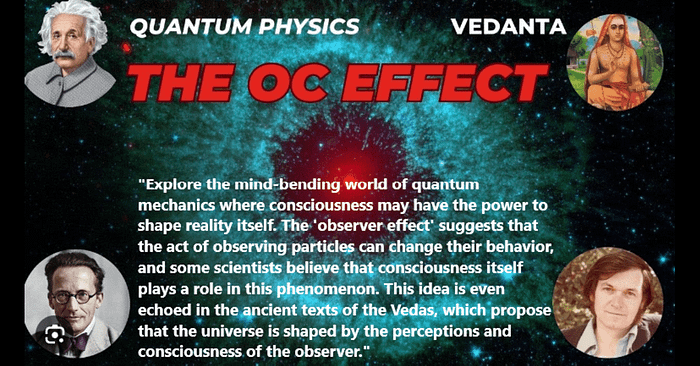
This image is from the YouTube video ‘The Observer Consciousness Effect’. The words embedded within it are from the introduction to this video. The physicists in the image are Albert Einstein, Erwin Schrödinger and Roger Penrose.
“Browse through any bookshop’s new-age section [] and you’ll find wild claims confidently asserted about the uncertainty principle [or observer effect], such as that its implications are ‘psychedelic’ and that it heralds ‘cultural revolution.’ [] Consider the following conversation, published in *American Theatre*, between the well-known theatre director Anne Bogart and Kristin Linklater, the noted vocal coach:
Linklater: ‘Some thinker has said that the greatest spiritual level is insecurity.’ Bogart: ‘Heisenberg proved that. Mathematically.’ Linklater: ‘There you are.’
[] The uncertainty principle sprang from a purely mathematical approach to atomic physics, where it has a well-defined and highly restricted scope of applicability.”
(i) Introduction (ii) Mystical Physics… or Simply Mystical Physicists? (iii) Does Consciousness Affect Reality? (iv) What Is a Scientific Observation? (v) Idealism and Scientific Observation (vi) An Heisenbergian Interlude: Intrinsic Weirdness (vii) Consciousness, Making a Mark and Observation
Many idealists, New Agers and spiritual commentators (at least those who mention the subjects which will follow) have often focused on the “observer effect” in quantum mechanics. (This is the case even when they don’t actually use that precise technical term.)They do so because they believe that it strongly ties consciousness to reality (or reality to consciousness). Indeed, such people also believe that the observer effect makes reality a product (or an effect) of consciousness.
When the observer effect is discussed, the word “mysticism” is often used too.
The word “mysticism” is, admittedly, vague.
The Copenhagenists, for one, were often accused of “mysticism” in an entirely negative manner. However, New Agers and spiritual commentators use this term positively about the very same physicists.
The other main sense of “mysticism” (i.e., in this context) refers to physicists being influenced (or inspired) by mystical literature of by Eastern religions.
New Agers, spiritual commentators and idealists believe that such physicists noted the observer effect (as well as the uncertainty principle, entanglement, complementarity, etc.) precisely because of their prior knowledge of mystical or eastern literature. The New-Age idea is that such physicists also believed that Eastern ideas provided a good philosophical explanation of such issues within physics.
Yet the vast majority of the physicists who’ve accepted and endorsed the observer effect, entanglement, etc. have done so without ever having read a single word of mystical and/or Easternliterature. Of course, New Agers, spiritual commentators and idealists will (or simply might) respond with the following words:
What ancient religions understood can only tangentially, analogically and with a very-large amount of artistic license be tied to the theories and ideas of quantum mechanics. After all, anything can be tied to anything if you try hard enough. (This was certainly the case when, for example, Carl Jung’s notion of synchronicitywas tied to quantum-mechanical theories.)
In any case, it can be argued that this mysticism best manifested itself in the way in which a very-small number of physicists attempted to “unify mind and physics” in the first half of the 20th century.
Mystical Physics… or Simply Mystical Physicists?
“[W]hen a scientist says that he/she believes in god, believers take it to mean that god must be true — because it’s coming from the seekers of objective truth. Not that the believers really needed this validation (they were believers already), but belief is all about post-rationalization and confirmation bias. Hence, ‘validation’ from a few scientists goes a long way. [] They conveniently forget that a majority of scientists do not believe in god.”
“were both immersed in mysticism, searching for a way to unify mind and physics”.
Some readers may ask why the project of unifying mind and physics is automatically deemed to be a case of “mysticism”. So perhaps this isn’t an automatic thing at all. Yet when it comes to New Agers, spiritual commentators and idealists, it often does seem as if they believe that there’s some kind of automatic link here.
In any case, when Hermann Weyl and Wolfgang Pauli attempted to unify the mystical (if not the mind) with physics, they weren’t doing neuroscience — or, indeed, any kind of science. They had nothing to say about the brain itself. What’s more, physics was only tangentially and analogically linked to this attempted unification of the mind (seen mystically) with physics.
Basically, then, Weyl and Pauli were essentially doing philosophy when they attempted to unify mind and physics.
“Did their shared mysticism have a role to play in whatever insights they gained or mistakes they made? [].”
The answer to that question may well be “Yes”. After all, this is nothing less than the context of discovery. And contexts of discovery are real things.
So what did Mr Cooper mean by that? The following:
“A bully chased me through the school library and hit me over the head with the biggest book he could find.”
That book was on string theory. And Sheldon Cooper was hooked on string theory from that day on.
This fictional account is obviously a joke. However, it has an element of sociological and psychological truth. Indeed, it’s part of thecontext of discovery.Of course, the context of discovery-context of justification distinction may well be a little too neat and tidy for some people. Yet it still has its large degree of truth, its value, and its uses.
So if we return to the non-fictional physicists Eddington and Schrödinger.
It’s certainly possible that Eddington and Schrödinger might not have had their “insights” had they not also been influenced by mystical literature.
That said, questions can still be asked about this.
At the very least, mystical literature would have had a very minimal role to play on these physicists’ actual theories in physics (i.e., the technical stuff they had published in physics journals).
Yet even when biographical information is included (Marin relies heavily on much context-of-discovery stuff, and Walter Moore obviously mentions it too), it’s still very difficult to establish any concrete, important and relevant links between actual theories in physics and any “eastern” religious texts these named physicists might have read (i.e., at some point in their lives).
In any case, does it matter?
That is, are their genuinely and purely mystical elements embedded within the actual scientific theories of, say, Eddington and Schrödinger?
Alternatively, is all this stuff about physics-and-the-mystical made up of analogy, metaphor, biography, scientifically irrelevant contexts-of-discovery, wishful thinking, wild interpretations, tangential links and circuitous reasoning?
What’s more, the vast majority of New Agers and spiritual commentators who mention these ideas from quantum mechanics, and who also frequently drop the names of famous physicists, do so exclusively to advance their religious (or spiritual) ideas, causes and goals…
In other words, such New Agers and spiritual commentators have almost zero interest in physics qua physics.
[There’s a sizable number of writers here on Medium to whom all this applies. Deepak Chopra is one of that number.]
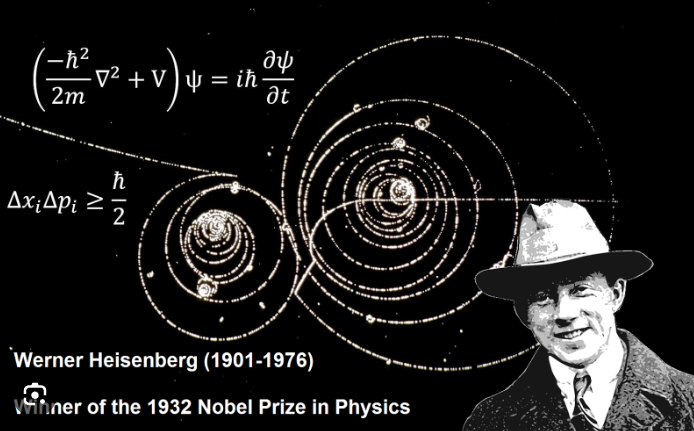
“[I]n quantum mechanics, physicists’ observations can sometimes affect what they’re observing on a quantum scale.”
To put it strongly: that is simply false…
Or, rather, it’s only false if Marin’s words are read in a certain way. More particularly, it depends on how the word “observations” is read.
The way the general idea above is usually expressed (i.e., by New Agers, spiritual commentators, etc.) makes it seem as if consciousness alone literally affects physical reality.
At an extreme level, this would simply be a form of telekinesis.
The definition of the word “telekinesis” perfectly fits some of the things New Agers, spiritual commentators, and some idealists say about the observer effect. Thus:
“Telekinesis [], also known as Psychokinesis, is a hypothetical psychic ability allowing an individual to influence a physical system without physical interaction.”
Yet consciousness alone does not affect physical reality.
However, observations as they occur in physics can affect reality.
So now let’s tackle the notion of observation.
What Is a Scientific Observation?
One factor which may well seem idealist to some occurs when one scientist’s observation-based interpretation of an experiment (orexperimental space) conflicts with another scientist’s observation-based interpretation of the very same experiment. However, there is no actual causal, telekinetic or otherwise affect on the physical world here. It’s simply a case of different scientists coming to different conclusions, formulating different theories (or interpretations), and even “seeing” different things. [See note 1 on Norwood Russell Hanson.]
Theparagraph above can also be deemed to be an indirect reference to Niels Bohr’s notion of complementarity. For example, in one experiment (or observation), a particle is “observed” (or at least posited), and in another experiment, a wave is observed (or posited). That said, it’s usually the different experimental setups which generate the complementary results in these cases.
Again, there’s no literal (or purely) “mental impact” on the world here either.
Of course, observations and experiments (or measuring devices) can and do change what is observed. Yet that’s not what New Agers, idealists and Juan Miguel Marin are attempting to tell us.
To be crude.
If a physicist is fumbling around with a given experimental space, then that will affect that space. However, that has little to do with his consciousness — free of all physical manipulations — affecting the world.
Of course, some believers in the Copenhagen interpretation may argue that we have no right at all to say anything about the world as it is free of minds,experiments, manipulations, etc. There may be no problem with that position. However, such people don’t also state that the consciousnesses of physicists alone affect what they’re observing.
So what about the observer effect itself?
Idealism and Scientific Observation
Almost every time the word “observer” (or “observation”) is used in physics, some level of physical manipulation of the experimental setup is meant.
Take the following basic introduction to the observer effect:
“In physics, the observer effect is the disturbance of an observed system by the act of observation.”
The cat is let out of the bag when this account continues in this way:
“This is often the result of utilizing instruments that, by necessity, alter the state of what they measure in some manner.”
None of the above even hints at idealism or anything mystical.
To repeat. In physics, there is never any (as it were) pureact of observation.
Thus, all this isn’t just a question of a mind observing an experiment and/or thinking about it. That act of observation includes “utilizing instruments”, and the physical manipulations of the experimental apparatus.
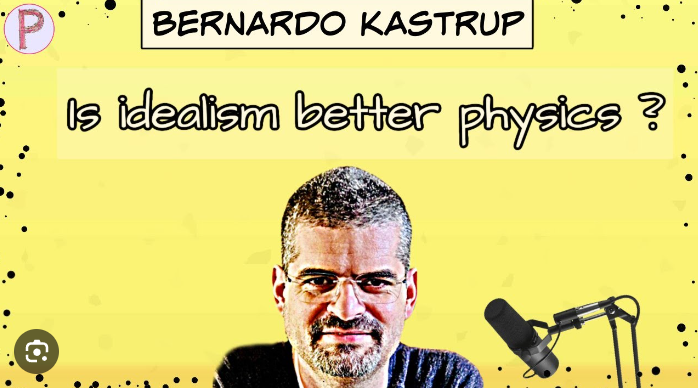
[In idealism, how can any separation at all be made between consciousness and an experiment? See note 2 on Bernardo Kastrup’s position.]
All this means that the word “observation” can be very misleading.
There are indeed conscious observations (carried out by persons) involved in experiments. However, there are physical elements to all these observations too.
Here again readersshould note the words “the disturbance of an observed system”. Taken at face value at least, this clearly has nothing to do with (Carl Jung’s) “acausality”, “consciousness affecting reality”, mysticism, etc. It’s to do with the physical disturbances of an experimental setup (or physical arrangement) by the experimenters and their instruments.
Indeed, physicists also encounter the problem of making a separation between the behavior of a system, and that system’s interaction with measuring instruments and human experimenters. And that, in turn, leads to the problem of knowing what a quantum state is in the first place.
Morespecifically, in any double-slit experiment, it’s fairly uncontroversial to state that the observation of quantum phenomena by an instrument (or detector) can (or will) change the measured results.
To repeat. Here it’s said that the an instrument or electronic detector changes the results of the experiment. The very fact that we’re talking about an instrument shows that this isn’t only about consciousness, or even only about (purely mental) observations.
However, it’s worth mentioning the idea that the quantum realm is often deemed to be “weird” regardless of measurements, experiments and conscious observations.
An Heisenbergian Interlude: Intrinsic Weirdness
The philosopher and historian of scienceRobert P. Crease (quoted at the beginning) writes:
“The strangeness of the uncertainty principle is not due to the measurement process disturbing the object measured, which would be a feature of any Newtonian theory involving exchange of particles. Nor is it due to the presence of statistics. Rather, the strangeness of quantum mechanics is that quantum formulations are not ‘about’ a real or ideal object in the conventional sense.”
This position doesn’t help the mystical or idealist position either.
For a start, this essentially Heisenbergian passage doesn’t even mention “consciousness” or “the observer”. Instead, it can be taken to advance the position that the quantum realm is (as it were) intrinsically weird. That is, it is weird regardless of consciousness or the minds of physicists. Thus, this is hard position to directly (or even indirectly) connect to either idealism or to mysticism.
Despite all that, a double-slit experiment’s results have indeed been interpreted (with a stress on the word “interpreted”) as telling us that “consciousness can affect reality”.
Consciousness, Making a Mark and Observation
Many physicists are keen to stress that an “observer” needn’t be a conscious being — it simply needs to be a scientific instrument of some kind. Of course, minds need to read (or interpret) the instrument’s readings or “marks”. However, that alone hardly seems like a strong argument for idealism and/or for mysticism.
In any case, a mark is made before it is (further) registered by (the consciousness of) a physicist. In addition, the, say, “clicks of a detector” can only be noted by a conscious experimental physicist.
So it still seems obvious that a physicist (or consciousness) would be required to make sense of, say, a thermometer’s registration.
Erwin Schrödinger (who’s often pressganged into the idealist and mystical school) conveniently discussed both measurement and consciousness.
For example, in Schrödinger’s published lecturesMind and Matter (1956/58),he argued that
“there is a difference between measuring instruments and human observation: a thermometer’s registration cannot be considered an act of observation, as it contains no meaning in itself. Thus, consciousness is needed to make physical reality meaningful”.
So even if Schrödinger was influenced by mystical literature (though not when it came to his actual theories in physics), nothing in the passage above is (or need be) necessarily tied to anything mystical or idealist — not even his introduction of the word “consciousness”. In other words, the logical or philosophical point being made above is entirely free of any mystical and/or idealist connotations.
In any case, the thermometer still registered something regardless of any “consciousness” that later (as it were) made sense of that registration. More precisely, the thermometer must have gone through a certain physical process which ended up with a particular physical change. What’s more, all this must have happened before any mind gave it a (to use Schrödinger’s word again) “meaning”.
Sure, the thermostat’s state as it was before it was read or interpreted is of little (or even no) use to the physicist. However, it must still have had a physical state before it was read. [See note 3 on the Copenhagenist position on this matter.] In other words, the thermostat must have been in state x even before it was read or interpreted, and it was still in that state when it was read or interpreted.
(2) In terms of idealism (or at least a certain brand of idealism), it simply can’t be said consciousnessaffects reality. That’s because reality itself is already supposed to be “universal consciousness”. So, on an idealist reading, consciousnessaffecting reality would actually be an example of consciousnessaffecting consciousness.
Interestingly, the idealist Bernardo Kastrupmakes this point against other people who also deem themselves to be idealists. Specifically, Kastrup argues against those who say that “the brain is a conduit of universal consciousness”. (The “filter theory” of the brain.) He corrects them by saying that the brain too is an “image” or “representation” of consciousness. In Kastrup’s own words:
“The idea that the brain does not generate consciousness, but instead limits and filters it down, seems to require dualism and contradict idealism. After all, if all reality exists in consciousness, how can the brain — which is a part of reality — filter down that which gives it its very existence? A water filter is not made of water; a coffee filter is not made of coffee; how can a consciousness filter be made of consciousness? It sounds like a self-referential contradiction.”
Thus, consciousness can’t be “a conduit” of consciousness.
3) It can be supposed that idealists and perhaps some anti-realists can ask the following question:
How do you know the both states of the thermometer — both before and after any registration or interpretation — fully coincide?
This is a question that’s hard to take seriously in physics. However, it does have at least some philosophical substance.
The children were screaming, and their dad was at the top of the stairs waiting to put his boot in my face.
As a police officer, I always seemed to be somewhere I wasn’t wanted, but this was particularly traumatic. The children’s parents were neglecting them, and social services needed our help.
When you remove children from their homes — even when their homes are terrible — they don’t thank you for it. They still love their parents, and you are tearing them away from everything they know.
The children were locked in a bedroom upstairs. Their father guarded the staircase. He promised to kick the first officer who ventured up the stairs in the head. I’d had enough and decided I would be first. He tried to kick me, but I deflected it, and he ended up on the floor in cuffs. I now had to kick down the bedroom door, knowing the children inside would be terrified.
After several kicks, the door opened, and I saw four children sobbing in the corner. The oldest was about five years old. We each picked one up and consoled them as best we could. We handed them over to the social workers and left.
As we left, the neighbors had come out to see what was going on and called us scum.
Despite such an emotional event, I couldn’t cry, I couldn’t rage, and I couldn’t show fear or weakness. The public relies on the police. We have to stay stoic. More calls awaited.
The final straw.
Botting up my emotions came to a head on a night when I attended a double murder and suicide.
A woman and her baby had escaped her abusive husband and were staying in a safe house. After a few weeks, he found them. I saw the woman lying on the bed with her throat cut. Her baby had died from dehydration in the living room. Their killer had died from an overdose in the hallway.
I had to guard the back of the house so journalists couldn’t creep around and get graphic photos of the crime scene. Yes, they are that vile.
I stood there, next to the window, where I could see the woman’s body for 13 hours. I didn’t have a watch, so I used the stopping and starting of the nearby trains as a gauge.
I couldn’t take any more of that. I felt like one more murder or suicide would break me. On my next shift, I confessed my feelings and trauma, and the long process of medical retirement began.
Why ignoring our feelings is so bad.
Bottling up my feelings was the single biggest factor in my suffering from PTSD.
A study from the University of Texas found that not acknowledging your feelings strengthens them. I learned too late that these feelings of pain and anger have to come out somehow. When I didn’t deal with them at the time, they came out when I was doing other things.
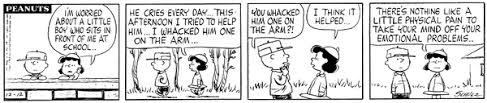
I began to feel worried and anxious. Little things would spark a huge reaction, and I would argue with my loved ones. People started to see me as hot-headed, and I grew to love the physical side of policing. Fighting with criminals was a release.
I soon turned to alcohol. I’d drink myself into a stupor to forget my problems, but it never worked. Instead, alcohol became a brand new problem while all my underlying issues persisted.
I later turned to overeating. Food became an emotional trigger for me. I found I could stave off depression temporarily by getting excited about a meal. I’d eat way too much, and then shame would take over. Like alcohol, food never solved my problems. It made me fat as well as miserable.
Bottling up your emotions can also lead to physical stress. My blood pressure was high, my pulse was up in the triple digits, and my cholesterol was unhealthy.
It took me 20 years to learn how to open up about and express my feelings. I want to show you how I did it so that you can achieve the same result in a much shorter time.
If we can’t deal with our feelings as they occur, checking in with yourself daily is the next best thing.
Most of the problem with bottling up emotions is that we don’t realize they are there. We may not know we feel resentful, jealous, or scared.
Here are some questions you can ask yourself to identify your feelings:
Is your inner dialogue positive?
How would you describe your past week in one feeling?
Do you feel tense?
Can you relax at the moment?
What’s on your mind?
How are your energy levels?
What’s your most common thought?
Communication.
You have to let emotions out to stop holding them in. You only need one person you can trust to make a difference. I was lucky enough to have two — my mum and my partner. Every evening, I’d walk the dog with my mum, and we’d have a heart-to-heart about anything bothering me. I lived with my partner, so we talked during the day.
You don’t have to share every feeling or do it all at once. Start small and build up. Start unpicking the emotional knots in your head.
Get in the habit of talking so that when something terrible happens in the future, you’re ready to deal with it.
Writing is my greatest therapy.
Writing gives my pain a purpose. It means I didn’t waste 20 years of my life suffering. Instead, I learned lessons I can pass on to others so they don’t suffer like I did. Writing is the vessel I use to achieve this.
Every day, writing eases my pain and loneliness. Hearing that my words have helped people is addictive. It helps me as much.
But you don’t have to pour your heart and soul onto online pages:
Write a letter to the person who hurt you.
Write to your parents about how they damaged you as a child.
Write to your future self.
Write to your God.
You’ll understand yourself better when you’ve unpicked the knots and reality is staring you in the face.
Acceptance.
My biggest shame was related to fear.
It took me years to admit it, but when I was guarding the bodies of dead teenagers, I felt terrified.
When I found a man who had hung himself and had been decomposing for two weeks, I wanted to cry for my mum.
When a man was trying to stab me with a screwdriver, and I had to hurt him, my legs shook for an hour.
I realize now that feelings aren’t dirty secrets. They aren’t pathetic, and they aren’t stupid. Feelings develop for a reason. They’re legitimate, and we need to treat them as such.
Here are some questions you can ask to understand your feelings:
What triggered this emotion?
Why can’t you let it go?
When did you last feel like this?
How strong is this feeling?
Are you projecting this feeling onto others?
Conclusion.
We bottle up our emotions because we’re scared.
Scared that we’ll look weak.
Scared people will take advantage.
Scared we’ll let others down.
Scared that we won’t survive the pain.
The antidote to fear and suppression is clarity. When you gain clarity, you illuminate the darkness.
Clarity helped me realize my anger was a smokescreen for fear. I realized I missed opportunities to escape the police and save myself the trauma. Yet I didn’t listen because I wanted to be tough and forge ahead no matter what. Gurus say never quit, but sometimes quitting is best for us.
To become the person you want to be, you must understand who you are and what you want. This journey of self-discovery can be long and hard, yet to become our best selves, we have to undertake it anyway. Using the methods in this article will help shorten your journey.
My journey took 20 years, but I still made it, and you can do it, too.
Today I remember that every event is part of my spiritual journey. Every moment is a moment on my spiritual path, inviting me to rise to the highest version of myself.
May grace, compassion, forgiveness, and love be the hallmarks of my personality, as they are the essence of my true being. May Heaven come to earth through me today.
Dear God, I am willing today To be the person you would have me be. I release to you my illusions. Please strengthen me where I am weak And heal me where I am wounded. Make me strong and make me free. And so it is. Amen.
On the morning Amr Abdallah was killed, he woke before dawn to say his Ramadan prayers with his father, mother, two younger brothers and aunt, in an open field in southern Gaza.
“It is You we worship and You we ask for help,” they prayed. “Guide us to the straight path — the path of those upon whom You have bestowed favor, not of those who have evoked Your anger or of those who are astray.”
It was dark. They made their way back to their tents. Their old life was gone — their village, Al-Qarara, their house — built with the money Amr’s father saved during the 30 years he worked in the Persian Gulf — their orchards, their school, the local mosque and the town’s cultural museum with artifacts dating from 4,000 B.C.
Amr, who was 17, would have graduated from high school this year. The schools were closed in November. He would have gone to college, perhaps to be an engineer like his father, who was a prominent community leader. Amr was a gifted student. Now he lived in a tent in a designated “safe area” that, as he and his family already knew, was not safe. It was shelled sporadically by the Israelis.
It was cold and rainy. The family huddled together to keep warm. Hunger wrapped itself around them like a coil.
“When you say ‘Amr’ it’s like you’re talking about the moon,” his uncle, Abdulbaset Abdallah, who lives in New Jersey, tells me. “He was the special one, handsome, brilliant, and kind.”
Amr in Gaza
The Israeli attacks began in northern Gaza. Then they spread south. On the morning of Friday, Dec. 1, Israeli drones dropped leaflets over Amr’s village.
“To the inhabitants of al-Qarara, Khirbet al-Khuza’a, Absan and Bani Soheila,” the leaflets read. “You must evacuate immediately and go to shelters in the Rafah area. The city of Khan Yunis is a dangerous combat zone. You have been warned. Signed by the Israeli Defense Army.”
One of the leaflets dropped over Amr’s village
Families in Gaza live together. Whole generations. This is why dozens of family members are killed in a single air strike. Amr grew up surrounded by uncles, aunts and cousins.
The villagers panicked. Some began to pack. Some refused to leave.
One of Amr’s uncles was adamant. He would stay behind while the family would go to the “safe area.” His son was a physician at Nasser Hospital. Amr’s cousin left the hospital to plead with his father to leave. Moments after he and his father fled, their street was bombed.
Amr and his family moved in with relatives in Khan Yunis. A few days later more leaflets were dropped. Everyone was told to go to Rafah.
Amr’s family, now joined by relatives from Khan Yunis, fled to Rafah.
Rafah was a nightmare. Desperate Palestinians were living in the open air and on streets. There was little food or water. The family slept in their car. It was cold and rainy. They did not have blankets. They looked desperately for a tent. There were no tents. They found an old sheet of plastic, which they attached to the back of the car to make a protected area. There were no bathrooms. People relieved themselves on the side of the road. The stench was overpowering.
They had been displaced twice in the span of a week.
Amr’s father, who has diabetes and high blood pressure, fell sick. The family took him to the European Hospital near Khan Yunis. The doctor told him he was ill because he was not eating enough.
“We can’t handle your case,” the doctor told him. “There are more critical cases.”
“He had a beautiful house,” Abdallah says of his older brother. “Now he is homeless. He knew everyone in his hometown. Now he lives on the street with crowds of strangers. No one has enough to eat. There is no clean water. There are no proper facilities or bathrooms.”
The family decided to move again to al-Mawasi, designated a “humanitarian area” by Israel. They would at least be in open land, some of which belonged to their family. The coastal area, filled with dunes, now holds some 380,000 displaced Palestinians. The Israelis promised the delivery of international humanitarian aid to al-Mawasi, little of which arrived. Water has to be trucked in. There is no electricity.
Israeli warplanes hit a residential compound in al-Mawasi in January where medical teams and their families from the International Rescue Committee and Medical Aid for Palestinians were housed. Several were injured. An Israeli tank fired on a house in al-Mawasi where staff from Médecins Sans Frontières and their families were sheltering in February, killing two and injuring six.
Amr’s family set up two makeshift tents with palm tree leaves and sheets of plastic. Israeli drones circled overhead night and day.
On the day before he was killed, Amr managed to get a phone connection — telecommunications are often cut — to speak to his sister in Canada.
“Please get us out of here,” he pleaded.
The Egyptian firm Hala, which means “Welcome” in Arabic, provided travel permits for Gazans to enter Egypt for $350, before the Israeli assault. Since the genocide began, the firm has raised the price to $5,000 for an adult and $2,500 for a child. It has sometimes charged as much as $10,000 for a travel permit.
Hala has offices in Cairo and Rafah. Once the money is paid — Hala only accepts U.S. dollars — the name of the applicant is submitted to Egyptian authorities. It can take weeks to get a permit. It would cost around $25,000 to get Amr’s family out of Gaza, double that if they included his widowed aunt and three cousins. This was not a sum Amr’s relatives abroad could raise quickly. They set up a GoFundMe page here. They are still trying to collect enough money.
Once Palestinians get to Egypt, the permits expire within a month. Most of the Palestinian refugees in Egypt survive on money sent to them from abroad.
Amr awoke in the dark. It was the first Friday of Ramadan. He joined his family in the morning prayer. The Fajr. It was 5 a.m.
Muslims fast in the day during the month of Ramadan. They eat and drink once the sun goes down and shortly before dawn. But food was now in very short supply. A little olive oil. The spice za’atar. It was not much.
They went back to their tents after prayers. Amr was in the tent with his aunt and three cousins. A shell exploded near the tent. Shrapnel tore apart his aunt’s leg and critically injured his cousins. Amr frantically tried to help them. A second shell exploded. Shrapnel ripped through Amr’s stomach and exited from his back.
Amr stood up. He walked out of the tent. He collapsed. Older cousins ran towards him. They had enough gas in their car — fuel is in very short supply — to drive Amr to Nasser Hospital, three miles away.
“Amr, are you okay?” his cousins asked.
“Yes,” he moaned.
“Amr, are you awake?” they asked after a few minutes
“Yes,” he whispered.
They lifted him from the car. They carried him into the overcrowded corridors of the hospital. They set him down.
He was dead.
Amr in death
They carried Amr’s body back to the car. They drove to the family’s encampment.
Amr’s uncle shows me a video of Amr’s mother keening over his corpse.
“My son, my son, my beloved son,” she laments in the video, her left hand tenderly stroking his face. “I don’t know what I will do without you.”
They buried Amr in a makeshift grave.
Amr’s Burial
Later that night the Israelis shelled again. Several Palestinians were wounded and killed.
The empty tent, occupied the day before by Amr’s family, was obliterated.
Started streaming 16 minutes ago • Join members of the NOVA team for a behind the scenes look at the preparations being made in Kerrville, TX for the April 8 total solar eclipse!
Consciousness, spirituality, biography, sexuality, androgyny, futurism, space, the arts, science, astrology, democracy, humor, books, movies and more