
DW News • Apr 2, 2024 • Spain has called on Israel to clarify the details surrounding the death of the seven aid workers. It comes as repvorts emerge in Spanish media that Spain will recognize Palestinian statehood by July.
Monthly Archives: April 2024
Universal Consciousness and the Brain with Alexander Escobar
New Thinking • Apr 7, 2024 Alexander Escobar, PhD, is a biology professor at Emory University. He is author of Universal Consciousness: A Scientific Exploration. His website is / alex-escobar-7838a53a Here he shares his understanding of how the visual system in the brain is one likely pathway by which Universal Consciousness interacts with the human nervous system. He explains how photons exist in a realm beyond space and time. 00:00 Introduction 05:00 Photons and the brain 12:25 Interconnectedness of sentient life 17:50 The Emory Tibet Science Initiative 19:46 Photon paradoxes 25:16 Space and time illusions 27:30 Hierarchies of being 30:55 Human implications 38:45 Response from colleagues 45:12 Conclusion Edited subtitles for this video are available in English, French, German, Spanish, Italian, Portuguese, Russian, and Swedish. New Thinking Allowed host, Jeffrey Mishlove, PhD, is author of The Roots of Consciousness, Psi Development Systems, and The PK Man. Between 1986 and 2002 he hosted and co-produced the original Thinking Allowed public television series. He is the recipient of the only doctoral diploma in “parapsychology” ever awarded by an accredited university (University of California, Berkeley, 1980). He is also the Grand Prize winner of the 2021 Bigelow Institute essay competition regarding the best evidence for survival of human consciousness after permanent bodily death. (Recorded on March 9, 2024)
I’m an (Actual) Detective: Here are 7 Signs That Someone Is Lying to You
The truth about lies and how to see through them

Published in ILLUMINATION-Curated
Mar 10, 2024 (Medium.com)
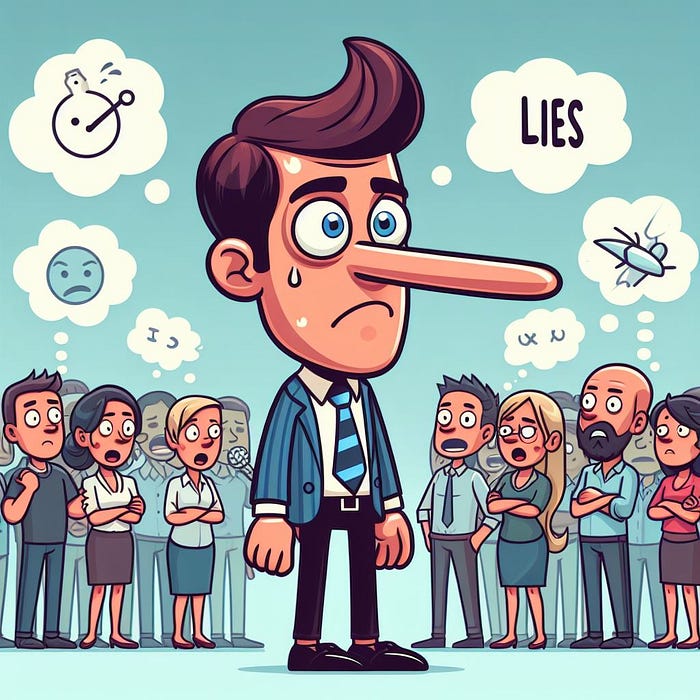
In one day, the average person lies four times. That’s 1,460 lies per year. That’s right, folks. We’re weaving tales, fudging facts, and spinning yarns four times a day.
Whether it’s a white lie to spare a friend’s feelings or a more elaborate whopper, the fact remains — we lie a lot. As much as we lie, you’d think we’d be good at spotting when we’re being lied to. Spoiler alert — we’re not.
Research shows we detect lies no better than 50% of the time — basically a coin flip.
Learning through exposure
Being a detective was like having a front-row seat at the Olympics of lying.
We expect it; no one wants to spend years in jail. No lie is too big. I can’t count the number of times I have arrested someone and later found drugs in their pant pocket.
We would talk about the drugs later in an interview, and the “truth” would come out.
“These aren’t my pants.”
For the people who didn’t dispute ownership of the pants they were wearing, they would have a different “truth.”
“I found those and was just about to get rid of them when you picked me up.”
You see, this poor soul was just being a Good Samaritan. Probably making sure drugs didn’t fall into the hands of kids.
Lying is complex
Especially outside police interrogation, where the reasons are apparent. People lie in social interactions with friends, to their spouses, and to their families, even to strangers.
There is always a reason for lying, although the reason can be hard to determine. It can be fear of judgment, maintaining social status or image, or financial gain.
I make no claim to be an expert at detecting lies, but after hundreds of interviews, patterns in human behavior emerge. Since we interview truthful and deceptive people, the traits associated with both become clearer over time.
People are unique and dynamic, so these signs are not foolproof. However, they have proven right in my experience with surprising accuracy.
1 — Anything other than a firm “no” is a “yes”
What does that mean exactly?
Unless they are a psychopath or a sociopath (terms that have fallen out of favor), we don’t inherently desire to lie. That means we subconsciously try to avoid lying so we avoid firm answers.
And if you are dealing with a psychopath or a sociopath, which make up about one percent of the population — you may not see any of these signs.
Here’s an example:
If I ask a suspect, “The night of the shooting, were you at the house,” the innocent person almost always just says, “No.”
There’s no drama or long-winded story; it’s just “no.”
When I ask a guilty person that same question, the answer is almost always: “That’s crazy. Why would I have been there?” or “I had no reason to be there.”
The deceiver loves to answer a question with a question and avoid a short, firm response without qualifiers.
You’ll see versions of this everywhere. If I ask someone if they liked an article I wrote, and they say, “It was really interesting,” that’s a no. They probably didn’t like it but didn’t want to hurt my feelings.
Honesty is direct, whereas dishonesty tends to be indirect.
2 — Body language
There’s a lot of debate about body language and its usefulness in detecting deception. I’ve found that it can be used effectively, but only under the right circumstances.
You need to ask the person questions where you know the answer and observe them when they give you truthful responses.
Does their response flow freely without hesitation?
Are there subtle mannerisms they use each time they give a truthful response?
This is their baseline. This is who they are and how they act when providing honest answers.
Once you know that, any deviation stands out. Eye contact can be especially significant; many people maintain it well when truthful and deviate when dishonest.
They may develop a fidget or a tick when dishonest.
3 — Avoidance
There is always a reason someone avoids a situation, a topic, or a person.
It can be for many reasons, one of which is having told a lie. If you ask someone where they were, for example, and they don’t want to tell you but don’t want to lie, avoidance becomes the next best option.
This also comes out as changing the subject. You have to be careful with this. There are reasons people need to avoid deception before the subject.
I avoid talking politics with my family, not because I’m lying but because I want to avoid an argument.
4 — Misplaced anger
If someone is lying to you, and you ask questions that threaten to expose that lie, anger is a likely response.
Let’s say you ask your spouse why they worked so late. Talking about it calmly (and probably with some venting about being too busy or some jerk of a boss) is normal if your spouse is being honest.
The question becomes threatening if asked, and your spouse isn’t at work. Threatening because an honest answer might derail the relationship.
When people are asked threatening questions, anger that seems out of place is not an uncommon response. You might be met with an aggravated “Why don’t you believe me?” or “What are you trying to say?”
5 — Easy recollection of non-memorable events
This usually happens when someone wants to distance themselves from an incident. Let’s say I’m interviewing someone suspected of a crime that occurred on a random Wednesday evening three weeks prior.
I would be skeptical if they immediately told me they went on a walk in the woods that evening.
Why? Because most people don’t remember what they did yesterday, let alone weeks ago.
Unless you have a routine that you perform, it’s unusual to have details ready for mundane past events.
6 — A lack of appropriate anger
If you accused me of stealing something, I’d be pretty upset — or at least a bit frustrated. Why? Because I don’t steal, and I would find that insulting.
That’s a very normal human reaction.
The lack of reaction to being accused of something can be a sign of deception. The person being accused isn’t angry because they know you’re right.
They may deny it, but there is zero feeling associated with it besides fear of being found out.
7 — Your gut tells you
You can’t hang your hat on this in police work, but it’s helpful in your personal life. You usually have a feeling about someone’s character, and when that feeling isn’t good, we sometimes rationalize it away.
Listen to your gut.
Be alone with your thoughts and figure out why you feel like you do. Weigh that person’s character and look for any reason they might have for being deceptive.
Conclusions and Takeaways
If someone is deceiving you, these seven signs may stack upon each other. The more of them I see, the more weight I give to the idea that I’m being lied to.
Even if we are the one being lied to, we may be the innocent victim.
Our attitude and personality traits can contribute to being lied to.
What does that mean?
If people know I react negatively to the truth or lash out, I dramatically increase the likelihood of being lied to.
People wish to avoid conflict.
On the other hand, if I’m calm, respectful, and understanding, I foster the trust that allows the other person to be honest without fear. In that case, lying becomes far less desirable.
Being calm and rational incentivizes honesty.
We can also perpetuate dishonesty just by tolerating it.
If someone lies to you and you let it stand, it dramatically increase the odds that the behavior will occur again. Not tolerating lying might be addressing it one time, and making your feelings known.
It might mean exiting the relationship. How you address it is up to you.
Now that you’ve peeked behind the curtain of lie detection, are you ready to test these signs?
The next time you believe someone is being less than truthful, observe their behavior with these signs in mind.
But remember, the most significant challenge may not be uncovering the lies of others but confronting our own.
If you enjoyed this piece, you may enjoy my story titled Why I Quit My Job As A Detective After 12 Years.

Written by Joshua Mason
·Writer for ILLUMINATION-Curated
Former Detective ❖ Medium Top Writer ❖ Writing on change, self-improvement, and leadership ❖ https://joshuamason.carrd.co/ ❖
The Truth is a Story — Seek “What Is” to Find Reality
Knowledge as stories

Published in ILLUMINATION-Curated
5 days ago (Medium.com)

I just came across this quote by writer, critic, and public intellectual Susan Sontag, “The truth is always something that is told, not something that is known. If there were no speaking or writing, there would be no truth about anything. There would only be what is.”
It’s mind-blowing.
Let’s attempt to unpack it.
Objective truth is a story we tell ourselves. Reality is what it is. But how do we get to reality unfiltered?
It’s not that simple.
Even scientific objective truth is passed on in words or writing. You could argue that everything we know about our universe is expert stories in an attempt to get to reality.
“Science can’t exist without telling a story. The question is not whether we should use it, but how we should use it best,” writes Nick Enfield, professor of linguistics at the University of Sydney and head of the Post Truth Initiative.
If you ripped all the books off shelves and silenced every conversation, reality wouldn’t vanish. But our understanding of it would be gone.
You see a red car. Is it red, really? Light bounces off the car in a specific way, triggering your cones to fire a “red” message to your brain. But that’s your experience, not some objective redness existing out there.
Call it the raw data of reality.
Seeking what is almost near impossible, but try anyway.
Now, let’s get back to the red car.
How would you tell someone about it if they had not seen it yet? You translate that experience — the light and neurons — into words. “Red car,” you say. That’s the story. And stories are where things get interesting. Your story — the red car — is shaped by your language, experiences, and maybe even light outside or in a showroom.
Someone else might call it maroon, cherry, or brick-coloured. Their story is different, but does that mean it’s wrong? Not necessarily. Both stories point to the same raw data, the “what is” that Sontag talks about.
Imagine a world with no language, no stories.
Just silent movies: a sunrise, a falling leaf, a predator stalking prey. These are all “what is” objective realities. But without narration, there’s no understanding, no meaning. Is the sunrise beautiful or terrifying? Is the leaf a symbol of decay or renewal? The predator’s hunger — is it nature’s order or a monstrous act?
We can’t say.
We like stories because they bridge the gap between “what is” and what it means. You witness a car accident. The wreckage, the screams — that’s “what is.” But to make sense of it, you need a story.
You piece together the events, assign blame, and draw lessons. The story becomes your truth, shaping your perception of future accidents.
It doesn’t mean all stories are equal. Whoever controls the narrative controls the perception of truth. Lies and propaganda are stories, too, but they distort “what is” for personal gain.
The challenge is to become a discerning storyteller.
Become a savvy consumers of stories, questioning the source, the agenda, the hidden biases. Don’t just accept the first narrative you hear. Sift through the narratives, question their sources and biases. Seek truth that clarifies rather than obscure. And find stories that resonate with your experiences.
Knowledge as stories
The subjective truth can be frustrating.
You want facts, absolutes.
For all its objectivity, science is still a story. It tells a tale of cause and effect, of patterns observed in the universe. Scientific truths are constantly evolving as we gather new evidence and refine our narratives. With every groundbreaking discovery, the “what is” of the atom gets rewritten.
Gravity isn’t a law etched in stone; it’s a powerful explanation of what we observe falling objects do. So, where does this leave us?
It’s a question to ponder.
Sontag’s quote pushes us to be better storytellers. We must be aware of our biases and the lenses through which we see the world. We need to seek out different stories, compare experiences, and challenge our narratives.
Sontag’s quote applies in all areas of life.
For example, a detective board is filled with stories instead of clues. The more stories you pin up, the closer you get to a fuller picture of what is out there. It might not be a single, perfect truth but a rich collection of stories from countless threads.
Here’s the challenge of getting to what it is.
Actively seek out those different stories. Read books by people who disagree with you. Talk to strangers. Listen deeply, even when it’s uncomfortable. Because the more stories you gather, the better equipped you are to understand the ever-shifting truth.
Stories aren’t just about explaining the world but about shaping it. The stories we tell ourselves — about our capabilities, limitations, and place in the world — become our reality.
Imagine a student who constantly hears, “You’re bad at math.” That story can become a self-fulfilling prophecy, limiting their potential. Change the story — “You might struggle, but with effort, you can improve” — and you open doors.
We can rewrite our stories.
Recognising truth as a story empowers us.
We become active participants, not passive receivers. We challenge misleading narratives, crafting our own stories that better reflect the world we want to live in.
The journey of seeking “what is” becomes an ongoing conversation. We listen to others’ stories, enriching our own understanding. We share our narratives, adding to the human experience. It’s messy but dynamic.
Humans thrive on stories.
That’s how we pass knowledge on. You can get closer to what is. But you must become a critical listener, a discerning reader, and a courageous narrator. In the end, it’s not just about understanding the world; it’s about creating the world we want to understand.
Stories have power.
They can inspire, comfort, ignite violence. A well-told story can make the “what is” more real, more relatable. Think about historical fiction. It might not be factual, but it can bring the past alive, spark empathy for people long gone.
The truth may be a story, but it’s a story worth telling. It has the power to illuminate the world, foster understanding, and maybe — just maybe — bridge the gaps between us.
So keep telling stories, but let’s be good, responsible storytellers, forever seeking the best version of the truth we can find.
Objective stories matter.

Written by Thomas Oppong
·Writer for ILLUMINATION-Curated
Making the wisdom of great thinkers instantly accessible. As seen on Forbes, Inc. and Business Insider. For my popular essays, go here: https://thomasoppong.com
15 Laws Of The Modern Gentleman

Member-only story
Good men live by a code.

2 days ago (jamesmsama.medium.com)
When I first started writing back in 2013, I was focused on these missions: To help men become better versions of themselves. To help them understand relationships and attraction. To help them gain confidence, and to stop living in the shadows of others.
Now, more than a decade, 40 million+ views later, the irony is that the vast majority of my readers, and many of my private clients…are women.
Why do you think that is?
In my experience, men are (generally speaking) less interested in personal development. They don’t want to admit their faults, they don’t want another man telling them what to do (even though that’s not what coaching is), and they don’t want to change their ways.
Of course, there are the exceptions to these rules. I also have the honor of coaching some incredibly inspiring and successful men. My male friends are spectacular people. I do understand that they are out there.
How is it, though, that you might spot one of these diamonds in the rough? These men that could be classified as modern gentlemen? The men who hold themselves to a higher standard of conduct?
Pay attention to how a man lives his life, and you’ll learn much about how he sees himself and the world around him.
1: He leads with kindness wherever he goes.
A true mark of a gentleman is how he decides he’s going to show up in the world. How he decides he’s going to treat people. This decision has nothing to do with anything, or anyone else.
It’s not dependent on your social status, on your income level, on your job title, on the context he meets you in.
He doesn’t alter the way he treats people because the treatment being projected is part of his identity. It’s a decision that he has made — to be a kindhearted, authentic, and steady presence in a world full of strife and conflict.
This means that when you see him, you know what you’re going to get, because his identity doesn’t change from day to day, or from one interaction to the next.
If you notice that someone alters their state depending on who they’re around, it could be a sign that they’re putting on an act in order to get what they want from each individual person or circumstance.
A gentleman doesn’t act in self-serving ways, though — he is who he is, no matter where he is.
2: He is focused on self improvement.
I mentioned in the introduction that many men are generally disinterested in topics of personal development.
This is undoubtedly going to ruffle some feathers, as it does every time I bring it up.
It is, however, based on more than a decade of my personal experience in the personal development industry, working with a huge variety of people both privately and publicly.
To be honest, this really isn’t a surprise if you remove the emotion from the equation and think about it logically.
How many men take the risk and responsibility of leadership roles, compared to those who’d rather follow? Leadership at work, or in life, or love, or politics, or starting a business, or…whatever the case may be.
Most men would prefer to coast along and clock out at the end of the day. That’s what is more comfortable, and simpler.
And — hey, if that’s what truly makes you happy and brings you the life you want, then more power to you. There is no right or wrong way to live.
I will say this, though: Men who are driven to level up in life understand that improving themselves is a requirement.
To perform at a higher level, we must operate on a higher level. We must elevate our skills, our mindset, our view of ourselves and what is possible.
We must develop healthy habits and routines that improve our mental and physical health, our confidence, our credibility with ourselves.
This is quite literally the only way to improve.
Men who are willing to coast along have no real reason to push themselves outside of their comfort zone, as they aren’t interested in the lifestyle or the benefits that it would bring to them.
Those who want more, though, are focused on becoming more.
3: He is willing to take risks.
Progress of any kind requires risk. It requires stepping outside of your comfort zone. It sometimes requires doing things that you once never thought you’d do.
It requires being wrong sometimes.
A gentleman is comfortable with being wrong because he understands those instances are opportunities to learn and grow.
We all know someone who refuses to be wrong. They refuse to take responsibility. They avoid accountability for their actions at all costs.
Likely, their ego is too fragile to admit that they’re anything less than perfect. Their entire manufactured view of themselves would fall apart if they acknowledged that reality.
A gentleman, though, knows that nobody is perfect, not even himself.
He understands that being willing to admit a mistake or a lack of knowledge opens a new door of learning to him.
He can step through that door and find new information that helps him improve, gain new skills, and apply them to his growth the next time around.
Not only that, he’ll be a better partner in a relationship, because he’s not always trying to pass off the blame to someone else.
Men who are stagnant and set in their ways refuse to admit being wrong because they’ve tied their identity to being right. If they’re not right all the time — then, who are they?
A gentleman, though, understands that tying your identity to learning and growth brings with it endless possibilities and limitless horizons.
4: He prioritizes his relationships and his family.
I believe that a man has two foundational cores in his life: His inherent identity, which is at the very center of who he is and the life he lives — and also, the relationships he builds.
The closest of his relationships, of course, are his family. I use this term generally to reflect relatives such as siblings and parents, but also the family he builds for himself through marriage or procreation (if he so chooses).
Friendships, working relationships, and even simple acquaintances are all relationships on varying levels of closeness, as well.
All of these relationships, though, bring more joy and fulfillment to one’s life than any accomplishment or material item is capable of doing.
Therefore, they must be prioritized above all else.
I believe that we should all strive to make a positive impact in the world, to live with honor and integrity, to achieve success and accomplish goals — whatever those things mean to you as an individual.
However, I do not think we should ever risk, jeopardize, or sacrifice our family or relationships in the process. If a gentleman feels his professional endeavors negatively impacting his personal life, he should (and will) take time to reflect on how to create further harmony before too much damage is done.
5: He values truth above comfort.
A long time ago I became enamored with the word truth.
This might sound silly at first, but hear me out for a second…
Truth is an objective reality which can only have one universal conclusion.
Truth is not a matter of opinion.
Truth doesn’t care if you like it or not.
Truth makes people uncomfortable all the time — but it can also provide comfort and solace.
Truth is steadfast and unshakable. It cannot be negotiated with.
The human eye perceives the sky as the color blue. That is an inarguable truth.
Some truths are more personal — perhaps even painful to accept.
They are, though, truths nonetheless.
Looking at reality and prioritizing what is true is what helps us live our most connected and empowered lives.
Some people seek comfort, even if it means believing a lie, or tacitly accepting what we are told without questioning it.
I don’t personally believe this is the path to a full and vibrant life, because it effectively creates a fantasy land for us that is removed from reality.
Related to point #3, learning the truth is difficult because it might mean you’ve been wrong about something up until this point. But, as we’ve discussed, this is an opportunity to learn and grow, not to be willingly comforted by the blanket of dishonesty.
6: He GIVES truth at all times.
Ah, honesty.
If a man values receiving truth in his life, it follows that he’ll value giving it, as well.
Now, don’t get me wrong — I’m not suggesting a gentleman goes around pointing out people’s flaws or confusing honesty for meanness. Just the opposite, actually.
His approach to honesty is one of gentle kindness. One that elevates the truth to a level of grace and delivers it as such.
He understands that a reputation for honesty brings with it a reputation for trust, reliability, consistency — you can count on a man who you know will be honest with you. You can go to him for advice, counsel, and input.
You simply cannot be a good man and a dishonest man simultaneously. The two do not align.
7: He is confident, but not arrogant.
True confidence does not show up thinking that it’s better than everyone else.
True confidence is a calm and certain state of being that is projected through steady and strong actions.
It’s certain in itself because it has proven itself over time.
Arrogance is still trying to prove itself. It’s putting on a show to make sure that you notice it, because deep down, it is worried that you won’t.
Confidence doesn’t care whether or not you notice it, because its presence is not affected by your attention.
Confidence has been created and strengthened from within, it’s not made or broken by external validation (or lack thereof).
8: He deeply feels (and expresses) gratitude.
It is a very difficult task to live a full and vibrant life if we are not grateful for the things and people that are in it.
If we get so busy or caught up in our ambitions, or our challenges, or our overwhelming and demanding daily routines that we lose sight of what and who we already have…life will feel empty, no matter how full it is.
A man who understands this can be fully connected to those around him because he values their presence in his life.
He can truly enjoy his accomplishments because he recognizes the efforts they took to achieve.
He can give more to others because he lives in abundance.
Most importantly, his relationships will thrive because each person in his life knows just how much they mean to him.
If he fails to feel or express gratitude, he’ll quickly notice people pulling away from him, and opportunities around him slowing in equal measure.
9: He strives to serve his partner.
Great relationships are not about give and take — they’re about give and give.
A “gentleman” who doesn’t strive to make his partner happy is no gentleman at all.
He will honor the promises and commitments he keeps to the person he loves, and spend every day making sure they feel valued, appreciated, and cherished.
Yes, his work or business is demanding, and life can become chaotic and overwhelming…
But, at the core of it all, is his intimate relationship (if he is in one), and it subsequently affects all other areas of life.
If his relationship is strained and strife with conflict, he will lose focus and ambition in other areas, as well.
Stress and depression have both physical and mental impacts.
Arguments and harsh words can live in our mind for days or weeks.
Making (and keeping) an intimate relationship a priority will help to create a sense of harmony, love, and purpose in one’s life.
It matters not what stage of the relationship one is in. It matters not if you’re dating, engaged, or married. It matters not if you do or don’t have children, nor how many.
It only matters that you remember the person you’re committed to is at the center of the life you are building together, and the health of that relationship will directly impact everything else you touch.
10: He prioritizes his physical AND mental health.
You cannot show up at your best for others if you are not caring for yourself, first.
Self care is not selfish.
It’s not just about going to the gym, or going on your run, or getting to that daily yoga class, either — it’s also about maintaining your mental and emotional health with equal veracity.
In order to operate at our best, we must be our best. We must remain active and challenge ourselves on a regular basis in order to progress and grow.
Equally important is maintenance and recharging, which focus in these areas can also help us achieve.
He will know that if he lets any of these areas of his life slip in importance, the corresponding pieces of life that depend on them will suffer.
If he stops maintaining his physical health, he will have less energy, be more sluggish, and lose a sense of confidence in himself. This can directly impact his work, his performance in your relationship, and how he feels about himself internally as well.
If he stops maintaining his mental health he can quickly feel burned out and overwhelmed, which could make him short tempered, irritable, and frustrated.
If he stops maintaining his emotional health he might feel disconnected from you, or generally unsatisfied in his relationship. Not to mention feel a sense of confusion or depression in areas other than the relationship.
We all know that certain things are simply outside of our control. Medical challenges arise. A loss occurs. Sickness or injury inflict us.
Even more reason, though, to build a strong and solid foundation while we are able — so we can bolster ourselves against the challenges of life.
11: He is conscious of his appearance.
First thing’s first — being a gentleman has nothing to do with one’s appearance.
It matters not how lucky (or unlucky) he got in the genetic lottery.
It doesn’t matter how much money he has for clothing, or even how he dresses, per say.
What matters is how he aligns with and executes his own personal style.
That he practices good hygiene.
That he expresses himself through a comfortable and unique style that speaks to who he is and what’s important to him.
That he just puts in some effort when the occasion calls for it.
We all mope around in big hoodies and sweatpants when there’s not much to do, or when winter rolls around, or when we’re not feeling well. Nobody cares, everyone does it.
However, when it comes to showing up in the world, going on a date, giving a presentation, or just having a casual coffee with a friend — a gentleman is conscious of his appearance and strives to be proud of how he’s chosen to present himself.
12: He makes everyone feel like the most important person in the room.
A gentleman, similarly to a good leader — isn’t trying to convince you that he is the most important person in the room. Conversely, he makes you feel like you are.
He’s inquisitive and engaged. He is present in the moment. He’s genuinely interested in who you are, and what you’re about. This goes for any social interaction, but particularly dating. Of course, networking and business relationships are also best approached in this fashion.
This is the mark of a memorable man (and yes, obviously women, too) — when they make you feel special.
You’ll instantly forget someone who is rambling on about how great they are, but you’ll always remember someone who made you feel important.
13: He speaks with tact and intention.
I believe (no surprise as a professional speaker) that developing healthy communication skills is perhaps one of the most important things any human can ever do.
The talent for speaking eloquently, concisely, and clearly will benefit nearly every single area of one’s life.
It helps you build relationships, it helps you get your ideas across in a meeting, it helps you gain respect from others, and it helps you express yourself clearly.
It also empowers you to speak on behalf of others who may not have honed their voice quite yet.
It eliminates the need to utilize crude or vulgar language just to get a point across (though I do enjoy it for emphasis at times, but it should never be a necessity).
It expresses intelligence, confidence, and aptitude.
14: He is connected with his emotions.
It’s no secret that from a young age, many boys are encouraged to hide or ignore their emotions for the sake of “being a man.”
While this narrative has (thankfully) changed in recent years, it is still in the infancy of adoption across society as a whole, and many resist it, citing the nonsensical argument that it’s “feminizing boys.”
The truth is that it takes more strength to acknowledge your feelings than it does to run from them.
It takes more courage to be honest about your thoughts than it does to hide them.
It takes more fortitude to embrace the entire human experience rather than pretending only the good parts exist.
Now, don’t get me wrong — I’m not saying that he should be bursting into tears at every pet adoption commercial.
What I am saying is that part of being a well rounded and fully present man is acknowledging and respecting the feelings and emotions that come along with the human experience.
The journey has begun to normalize this, and I believe we’ll all be better off the further down the road we get.
15: He is clear and unwavering in his identity and purpose.
A gentleman’s code of conduct cannot be fully developed if he is uncertain about who he is, what he stands for, or the purpose he is driven by.
This is the very compass that guides him through his life.
It is the beacon that helps him make the best decisions for him and his loved ones.
It is the driving force that keeps his ambitions lit aflame.
It is the foundation of his values, his beliefs, and the creation of the man who will live in alignment with them.
When he is strong and clear on who he is and what he stands for, nothing can ever pull him off track.
He is who he is because he fully believes in his path and purpose…
And he embraces the universal truth that we should all dedicate ourselves to:
The more that you believe in yourself, the less it matters if anyone else does.
- My private clients find themselves living more confident, purposeful lives and cultivating healthier relationships with those around them. Click here to book a free call to see if we’re a fit to work together.
- James Michael Sama is an internationally recognized speaker, author, and personal development coach.
- Finding success in creating hundreds of viral articles and videos on building limitless confidence and healthier relationships, James has accumulated over 39 million visitors to his website and a collective social media following of over 400,000.
- James speaks at live events and in the media across the U.S. and has become a go-to expert with outlets such as CNN, Bravo, The New York Post, The Huffington Post, The Daily Beast, CNBC, The Boston Globe, CBS, and more.

Written by James Michael Sama
I help you evolve into the ultimate version of yourself. Life & Executive Coach. Multi #1 writer. Trusted by: CNN, CNBC, NY Post, CBS, more. Say hi! @JamesMSama
Total Solar Eclipse In Aries – Spring Cleaning
(Astrobutterfly.com)
On April 8th, 2024 we have the most intense eclipse of the year: a Total Solar Eclipse in Aries.
The Eclipse is at 19° Aries and it’s exactly conjunct Chiron.
The Sun, the Moon and Chiron align at the same degree and same minute 19° 24’ – I don’t recall ever witnessing an Eclipse with an exact aspect orb; this is BIG.
At the Total Solar Eclipse, the Sun will disappear under the beams of the Moon; similarly, the depths of our being will be revealed, as our Self will be purified and reborn.
Mercury retrograde is also conjunct the Eclipse. What’s even more extraordinary, a comet will make an appearance in the eclipsed sky. What an omen!
To say the Eclipse sky looks spectacular is an understatement. Not only will the Sun disappear in the middle of the day, and the day will become night (that if you’re on the path of the eclipse). Not only are all the personal planets now visible. We also have a comet!

This eclipse has made the headlines, and for good reasons. It IS special.
Does this mean that everyone’s life will be dramatically impacted? Not all eclipses affect us in the same way. If the eclipse makes a tight aspect to personal planets or angles in our natal chart, then yes, the Total Eclipse in Aries will most likely speak to us directly.
But even in this scenario, nothing concrete may happen on the day of the Eclipse. While some eclipses indeed trigger life-changing events, let’s not forget that these are subtle new beginning energies. We may not be aware of the magnitude of this shift just yet.
Whether this Total Solar Eclipse directly affects your chart or not, pay attention. Pay attention to the news. Pay attention to what happens to other people in your life.
North Node Eclipse In Aries – Spring Cleaning
The Aries Eclipse is a North Node Solar Eclipse, signifying fated new beginnings.
The Aries season in general – and especially the New Moon in Aries – signals that time of the year when we start anew. This is when we metaphorically engage in spring cleaning.
Spring cleaning is a way to freshen up the home after the long winter months, remove dust and dirt, and prepare the space for the warmer season ahead.
In the Southern Hemisphere, while it’s not called “spring cleaning” because it’s autumn, the idea of thorough cleaning and organizing to prepare for the change in seasons is similar.
Spring cleaning is a way to clear out the old and make space for the new. Removing the stagnant energies in dust, old clothes, or things we no longer need it’s not just a symbolic act. We literally remove the physical debris of the past, making room for fresh energy and opportunities.
Such a simple truth, yet sometimes we fail to acknowledge it. We have to let go of the old to make space for the new.
Many people want to get what they want first “If I get this, then I’ll make that change” but physics doesn’t work like this. Something new can only emerge when the space is empty and ready to receive it.

What does this concept mean in the context of the Total Eclipse in Aries conjunct Chiron?
Total Solar Eclipse In Aries Conjunct Chiron
At a simplistic level, a North Node Eclipse in Aries signifies the emergence of a new “You”. Who are You, and why are you here? The pull to discover your true potential is stronger than ever.
This is a super tricky task because 90% of the time we don’t know who we are, what we want, and what our mission is. Even when we do, the message is diluted and distorted by decades of societal conditioning.
We live in this world with its rules and frameworks. From the moment we take our first breath, our thoughts, feelings, and psychological processes are shaped by the world we live in. We think we want to pursue certain careers, get married, have a family, be wealthy, or be popular, etc., because this is what society defines as success.
We are wired to ‘prove ourselves’, to ‘convince’ others of our worth. All this is rooted in our Chiron wound of inadequacy. All our issues, everything we do in this life stems from the Chiron wound of not knowing who we are, of needing acceptance and validation in order to feel whole.
We believe that if we do well by society’s standards, if some ‘authority’ or higher power acknowledges us and tells us how great we are, all our issues will be solved. So we try hard to fit into the molds society has created, either by ‘fitting in’ or by ‘fighting back.
The way Aries tries to heal the Chiron identity wound is by fighting head-on. “They don’t see me, but they will”, “I’ll fight to prove them wrong”, “I’ll show them who I really am.”
We try to force our way through. We want to ‘win’ – so that the world can see us, and acknowledge us.
But the irony of this is that the harder we try, the farther away we move from our authentic selves.
When we fight the ‘establishment’ what we really do is to validate it. We give it our power. We allow it to define who WE are.
When we fight ‘patriarchal society’ we indirectly reinforce its unwritten rules. When we fight our devouring mothers, we emulate them, perpetuating the pattern. When we try to convince our manager that we are worthy of a promotion, we undermine our true value.
Of course, we can try to fight the system. And if we’re very determined, we might score some small wins here and there. But at what price? Is it worth it? Does it really make a difference? Does it make us happy?
Total Solar Eclipse In Aries – The Wound And The Gift
The Chiron in Aries identity wound is especially poignant for minorities, foreigners, and other marginalized groups. When we are a minority – and we all are, at least in one sector of our life – we try to ‘fit in’ by copying the majority.
But no matter how hard we try, to what extent we mold our personalities to fit in, we never truly blend in or feel completely accepted.
This effort is futile. Why? Because we can only be ourselves. We cannot be someone else. We will always be very good at being ourselves… and at very best, mediocre at being someone else.
Healing the Chiron identity wound is to an extent accepting that we will never truly ‘fit in’ in this world.
Transforming our wound into a gift is understanding that we are not supposed to.
It’s not ‘playing by the rules’ or ‘being someone else’ that will help us find our place in this world.
It’s being ourselves that will do it. Perhaps you’re not supposed to climb the corporate ladder. Perhaps you’re meant to do your own thing.
That which is odd or different about you is what makes you special. It’s what brings something new to the world. It’s your gift to the world.
It’s by cultivating your uniqueness that will fulfill your purpose in life.
Here are some Aries Eclipse messages and reflection prompts:
- You are not a victim; you are the hero of your own life
- Your past does not define you; you can start again, right here, right now
- There’s nothing to prove; the truth doesn’t need validation
- Let other people be who they are; by acknowledging their unique light, you’re honoring your own
- Allow yourself to be vulnerable; vulnerability is raw life force; vulnerability creates opportunities
- Your wound is your greatest gift
- You are here for a reason; the world needs that unique gift that only you have
- Role-model the change you want to see by living authentically and with integrity
- Be yourself; those who are supposed to will recognize you
Donald Barthelme: Art is the as-yet upspeakable, the as-yet unspoken

“Art is not difficult because it wishes to be difficult, but because it wishes to be art. However much the writer might long to be, in his work, simple, honest, and straightforward, these virtues are no longer available to him. He discovers that in being simple, honest, and straightforward, nothing much happens: he speaks the speakable, whereas what we are looking for is the as-yet unspeakable, the as-yet unspoken.”
| –DONALD BARTHELME |
Donald Barthelme Jr. (April 7, 1931 – July 23, 1989) was an American short story writer and novelist known for his playful, postmodernist style of short fiction. Wikipedia
How Unloving Parents Generate Self-Hating Children
School of Life • Mar 24, 2021 Our sense of self-worth is dependent upon the love we were shown as children. The legacy of an unloving parent may be a lifetime of self-hatred, which we need to unpick in order to escape. Enjoying our Youtube videos? Get full access to all our audio content, videos, and thousands of thought-provoking articles, conversation cards and more with The School of Life Subscription: https://t.ly/g8WsB Be more mindful, present and inspired. Get the best of The School of Life delivered straight to your inbox: https://t.ly/nTVEm FURTHER READING You can read more on this and other subjects here: https://bit.ly/2PrPh4H “A central fact about early childhood is that babies are born into the world entirely at the mercy of others. They have no native strength, intelligence or utility, they cannot fight or complain, walk away or argue their case, their survival depends solely on their capacity to look up from their cots with vast innocent beautiful eyes – and charm their parents into caring for them. It’s their power to attract love that ensures they will be fed and clothed, protected and kept alive. In exchange for this nurture, young children readily offer their parents or caregivers unconditional admiration. They naturally adore and are boundlessly impressed by those who pick them up and bathe them, warm their milk and change their sheets. They are in awe at these giant people who know how to turn on a washing machine and kick a ball over a tree. There is – at this stage – no innate desire whatever to question or doubt figures of authority…”
William James on Love
By Maria Popova (themarginalian.org)

Love is a giver and a plunderer, the way it both anneals the self and alters it, the way it moors our wholeness and maps our incompleteness. At its heart is the ecstatic, disorienting recognition that our world is unfinished, that by entering the world of the other we broaden and magnify our own, that in the end there is no world — only a flowing exchange of energy, through which we become more entirely ourselves.
In this transformation, we partake of the miraculous.
The pioneering psychologist and philosopher William James (January 11, 1842–August 26, 1910) explores this miraculous, world-remaking aspect of love in a passage from The Varieties of Religious Experience: A Study in Human Nature (public library | free ebook) — the 1902 masterwork based on his Gifford Lectures about science, spirituality, and the human search for meaning, which also gave us James on the four features of transcendent experiences.
Falling Star by Witold Pruszkowski, 1884. (Available as a print.)
Building on his revolutionary 1884 theory of emotion, James observes that feeling is what gives valence and meaning to experience — without it, “no one portion of the universe would then have importance beyond another; and the whole collection of its things and series of its events would be without significance, character, expression, or perspective.” Seeing love as “the most familiar and extreme example of this fact,” he considers its power and its choicelessness:
If it comes, it comes; if it does not come, no process of reasoning can force it. Yet it transforms the value of the creature loved as utterly as the sunrise transforms Mont Blanc from a corpse-like gray to a rosy enchantment; and it sets the whole world to a new tune for the lover and gives a new issue to his life.
Precisely because it lives beyond the reach of reason, love is never attained by willful effort, cannot be bargained for or earned — it is a gift and a miracle that comes unbidden as birdsong, total as a galaxy.
Reflecting on these deepest of human emotions, James writes:
The limitations of logic are why we so profoundly fail to imagine what lies on the other side of love’s transformation. The self-limitation of control is the cage of howling loneliness that keeps us from the freedom necessary for love — for love is “a knot made of two intertwined freedoms,” in Octavio Paz’s unforgettable definition. That mysterious aspect of love — unreachable by logic and reason, impervious to will and control — is why our choice in love is largely an illusion, why our slender margin of choice contains only the courage and patience with which we face its trembling uncertainty and choose to love anyway.
Complement with Kahlil Gibran on the courage to weather the uncertainties of love and Christian Wiman on love and the sacred, then revisit William James on the psychology of attention (because, lest we forget, love is “the quality of attention we pay to things.”)
Ukraine Military Chief’s Chilling Warning to the West About Russia’s Threat
Tom Watling/Independent
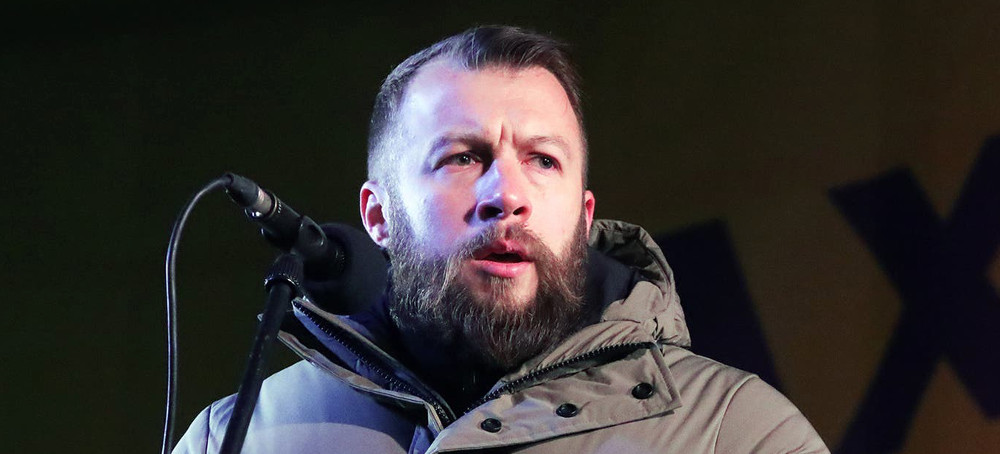 Ukraine’s deputy commander of the 3rd Assault Brigade, Maksym Zhorin, spoke to The Independent from an undisclosed location in Donetsk. (photo: Shutterstock)
07 april 24 (RSN.org)
Exclusive: The Independent speaks to Ukraine’s 3rd Assault Brigade deputy commander Makysm Zhorin about the costly retreat from Avdiivka and the threat of another Russian advance
Russia is ready to “swallow” Europe whole, a top Ukrainian commander has warned – less than two months after he led a costly evacuation from a key city on the eastern frontline.
Speaking to The Independent from an undisclosed location in Donetsk, deputy commander of Ukraine’s 3rd Assault Brigade, Maksym Zhorin, issued a troubling warning to Kyiv’s Western partners.
The West, he said, must urgently prepare. “Create serious defence systems that could counteract Russia because it will undoubtedly open its mouth and try to swallow the rest of Europe,” he warned.
It is the latest in a string of warnings from Ukrainian military and political figures that Russia will not stop with Ukraine. But it comes less than two months after Mr Zhorin helped lead a difficult evacuation from Avdiivka, the first Ukrainian city to be taken over by Russia since last May, in part because a recent lack of Western military support had left Ukrainian forces there at a significant disadvantage.
Mr Zhorin was part of the crack unit, one of the most valued in the Ukrainian army, that was called in at the last minute to evacuate hundreds of soldiers trapped in Avdiivka as Russian forces pushed to encircle it after months of fighting. Many were left behind, where they were later captured or killed, and Russian forces then rushed forward behind the retreating Ukrainian troops, taking several more towns in the process. Videos show Ukrainian soldiers mercilessly killed and left on the streets on the northwest outskirts of the city, which was the last remaining route back to Ukrainian-held land.
Mr Zhorin, more than most, knows the cost of an advancing Russia.
During his interview, the first with Western media since the fall of the city, Mr Zhorin was blunt about the reality of the eastern frontline while Western weapons supplies are delayed or simply being withheld – and he was frank about the future of European security.
A US military package worth roughly $60 billion has been in limbo in Washington for seven months, victim to squabbling politicians, while European partners have failed to send more than half of the million artillery shells they promised to Kyiv by this year, unable to agree on how to finance their production.
Hours after Nato secretary general Jens Stoltenberg announced a long-term proposal for a €100 billion military package to Ukraine this week – a step in the right direction for Kyiv – Mr Zhorin said that the pledge will help but it is, like all Western aid, coming too late.
Roughly seven weeks after Russia claimed Avdiivka, he says the situation has finally stabilised, with defences being held from villages west of Avdiivka including Tonenke, through Semenivka, up to Berydchi.
But the pressure remains, and it is fierce. He claims Russia is dropping between 40 and 60 powerful aerial bombs a day on their positions, while DeepState, a Ukrainian war tracker, said on Thursday that Russia had “advanced” towards Berdychi and was “carrying out assaults in the direction of Semenvika”. Its map suggests Tonenke, meanwhile, is already under Russian control.
The term “stalemate” was taboo while Ukraine’s summer counteroffensive was ongoing last year as it suggested the attack was failing; now it’s a dangerous word for a different reason. Russia and Ukraine may be fighting a war of attrition, but it’s Vladimir Putin’s forces that are on the move.
“Of course, the situation would be a lot more difficult if we didn’t receive the aid at all, but ultimately the cost of hesitation is Ukrainian territory and Ukrainian lives,” Mr Zhorin said.
“The average Ukrainian infantryman is tired, exhausted by the dynamics of war, and by the events that have transpired. They are almost faint. Unfortunately, that is the truth.”
Many of the soldiers his unit were tasked to save from Avdiivka were from the 110th Brigade, which had fought in the city for the entirety of Putin’s full-scale war, launched in February 2022, without rotation. Many in his unit have also been fighting non-stop.
Outside of the artillery disadvantage, which Mr Zhorin says extends to basic armaments, it is this lack of additional troops that has caused issues for Ukraine.
Earlier this week, Ukrainian President Volodymyr Zelensky signed a decree lowering the age of conscription from 27 to 25 to widen the pool of potential recruits. At the moment, the average age of a Ukrainian soldier is 43, as Kyiv has tried to avoid recruiting from a small pool of young people.
But Mr Zhorin says, like the Western aid, that the move is not enough and is coming too late.
“I do not think it is enough,” he said. “I would decrease the age further. As difficult as this is to say, young people must fight.
“It is too difficult to keep the older soldiers motivated and they often have chronic health issues. Young people are more motivated, more energetic and more willing to fight.”
The problems caused by belated mobilisation drives and delayed Western aid are being felt across the frontline but they are acute in the Avdiivka direction.
Despite the calibre of Ukrainian soldiers in the area, Mr Zhorin says they are unable to launch anything other than localised counter-attacks that “are more a form of defence attack as opposed to a large-scale counter”. It is part of what Ukrainian military chief Oleksandr Syrskyi has called active defence.
“It is unwise to talk about counter attacks at the moment,” Mr Zhorin said. “We must concentrate on defence. The priority now is to provide proper solid defence and defensive lines.”
He added that several engineering units had been deployed to help fortify the defences in the area, while every infantryman was digging trenches at one point or another. The natural terrain, which includes treelines, slight hills and a few bodies of water, is also favourable for defence.
That Russia’s Avdiivka offensive has been slowed to some extent is impressive, said Mr Zelensky earlier this week, “given the shortage of shells and a significant slowdown in supplies”. “The resilience of each of the soldiers is the resilience of our entire Ukraine,” he said during a nightly address.
But his and Mr Zhorin’s comments underscore the difficulty facing Ukraine in 2024, as well as the sheer difference in the situation on the frontline compared to last year. The 3rd Assault Brigade may be minimising the Russian advance – Mr Zhorin claims his unit has killed up to 15,000 Russians in the past few months alone – but the threat of another push by Putin’s forces is now real.
And then, it’s Europe next.
“Use this time wisely,” the deputy commander says, addressing Kyiv’s Western partners directly. “While Russia is attacking Ukraine, prepare for your own war with Russia.”