The Lakota Ghost Dance and the Massacre at Wounded Knee

How the American drive to force Indian assimilation turned violent on the plains of South Dakota.

April 16, 2021   |   Louis S. Warren (pbs.org)

FROM THE COLLECTION: NATIVE AMERICANS

Oz-Ghost-Dance.jpg
Native Americans performing ritual Ghost Dance. One standing woman is wearing a white dress, a special costume for the ritual dance, 1890. Photo by James Mooney, an ethnologist with US Dept. of Interior. Alamy

Editor’s note: When L. Frank Baum and other white settlers arrived in Aberdeen, South Dakota in the 1880s, they were entering land that had been part of the homeland of the Western Sioux or Lakota. On the Standing Rock and Pine Ridge reservations west of Aberdeen, conditions were dire for the over 10,000 Lakota living there. In the following excerpt from God’s Red Son: The Ghost Dance Religion and the Making of Modern America, Louis S. Warren recounts the Lakota struggle to resist assimilation and survive in the face of violent suppression from the administration of President Benjamin Harrison.

In the west, drought had baked the earth bare. Indian reservations occupied poor land that had little game and few wild plants of any use. In the withering heat, what grass was left by cattle and sheep (most of them owned by white ranchers) quickly shriveled. Scarce game vanished. By 1885, many Indians had turned their hand to farming, but in 1890 their crops wilted. Starvation, that old monster, circled the camps.

It was thus not surprising that some Indians had turned to a new faith. In doing so, Indian believers unwittingly launched upon a collision course with the anxious American public. What swept the West that summer was an evangelical revival that synthesized ancient Indian beliefs with new millenarian teaching. Strange stories made their way from neighbor to neighbor, from one people to the next, stories of distant laughter on the breeze, dead loved ones brought back to life, and an earth again made green and bountiful. 

SUPPORT PROVIDED BY: LEARN MORE

Bison hunting had ceased by the early 1880s, for the animals were nearly extinct. The only survivors of the great herds were living in Yellowstone National Park in Wyoming, on a few private ranches far to the south or in Canada, and in zoos and traveling Wild West shows. But in 1890, in the midst of the drought, a few of the shaggy beasts appeared suddenly on one of the Sioux reservations in South Dakota. Had the spirits returned their favor? How else could one explain this miraculous event?

Stories like these spread among friends and acquaintances, raising unanswerable questions and inspiring new faith. And all that fall, Indians danced. They danced from the deep Southwest to the Canadian border and into Alberta. They danced from the Sierra Nevada to eastern Oklahoma. They danced in southern Utah, and in Idaho. They danced in Arizona. 

In Nevada, a thousand Shoshones danced all night, and as the eastern sky turned pale shouts rang out that the spirits of deceased loved ones were appearing among the faithful. A thousand voices shouted in unison, “Christ has come!,” and they fell to the ground, or perhaps to their knees, weeping and singing and utterly exhausted. Although many had dismissed the springtime talk of a messiah somewhere in the mountains of western Montana, the rumor seemed only to grow over time. From the Southwest to the Wind River Mountains of Wyoming and on into the plains of South Dakota, Indians spoke of a redeemer to the north.

Oz-ghost-dance-drum.jpg
Ghost Dance Drum by George Beaver, wood, rawhide and pigment, late 1890s, Fenimore Art Museum. Public Domain

By the fall of 1890, authorities who read the telegrams and heard the reports had become uneasy. Thirty Indian reservations were transfixed by the prophecies of the Messiah, but the teachings had a particularly enthusiastic following among the Lakota Sioux, also known as the Western Sioux. Because of the relatively recent history of US hostilities with these people—the notorious Sitting Bull was learning the new faith—it was there that government agents soon focused their attentions.

It is almost impossible to overstate how vehement officials and other Americans eventually became over the need to break up the dances. Of all the features of the new ritual that garnered commentary, the physical excitement of the dancers received the most attention. The central feature of the Ghost Dance everywhere was a ring of people holding hands and turning in a clockwise direction—“men, women, and children; the strong and the robust, the weak consumptive, and those near to death’s door,” as one observer described them. Lakotas had grafted onto the Ghost Dance some symbols of their primary religious ritual, the Sun Dance. Thus, Sioux believers felled a tree, often a young cottonwood, and re-erected it at the center of their dance circle. On it they hung offerings to the spirits, including colored ribbons and sometimes an American flag. Near the tree stood the holy men, supervising the event and assembling the believers, who began by taking a seat in the circle around the tree. There was a prayer, and sometimes a sacred potion was passed for participants to drink. Then dancers might together utter “a sort of plaintive cry, which is pretty well calculated to arrest the ear of the sympathetic.” Once these preliminaries were completed, the dancers rose and started singing—unaccompanied, without drums or other instruments—and the circle began to turn.

Astonished and disturbed by the enthusiasms of the ritual, some American witnesses were moved to dire warnings. One agent reported that the Indians favored “disobedience to all orders, and war if necessary to carry out their dance craze.” “The Indians are dancing in the snow and are wild and crazy,” hyperventilated the agent at Pine Ridge. Another denounced the actual dance as “exceedingly prejudicial” to the “physical welfare” of the Indians, who became exhausted by it. “I think, “the agent went on, “steps should be taken to stop it.” Fearful that unconscious women might be molested, one white witness at Pine Ridge claimed that women “fall senseless to the ground, throwing their clothes over their heads, and laying bare the most prominent part of their bodies, viz., ‘their butts’ and ‘things.’” Concluded still another, “The dance is indecent, demoralizing, and disgusting.” 

Oz-ghost-Dance-Pine-Ridge-LOC.jpg
Bird’s-eye view of a large Lakota camp of tipis, horses, and wagons–probably on or near Pine Ridge Indian Reservation. Photographer John C. H. Gabriel, 1891. Library of Congress

For these observers, the dance was a physical manifestation of irrationality, a refusal to be governed in body or in spirit by the codes of Victorian decorum handed down from missionaries. In one sense, at least, this view was substantially correct. For the Lakota and for other Indians, however, the Ghost Dance was both strikingly new—even radical—and reassuringly familiar. Ghost Dancers were searching for a new dispensation, seeking to restore an intimacy with the Creator that seemed to have vanished. And for followers, the religion’s key attractions included the chance to worship in a form that reconstituted Indians as a community and expressed their history, families, and identity—in a word, their Indianness. The Ghost Dance invited believers, as one Sioux evangelist put it, to “be Indians” again.

The real “messiah craze” of 1890 was the fixation of Americans on Indian dancing and their relentless compulsion to stop it, and the root of that craze was this American passion for assimilation, which was, after all, every bit as millennial a notion as the Second Coming itself. What more utopian a dream could there be for a rapidly globalizing society riven by fractures of race, culture and class than that a day would come when differences between people had simply disappeared? So it was that, in a show of hostility to physical exaltation reminiscent of the Puritans, policymakers waged war on Indian dances. In 1882 US Secretary of the Interior Henry M. Teller issued new orders to suppress “heathenish dances, such as the sun dance, scalp dance, &c.,” in order to bring Indians into line with conventional Christian practice.

The situation was all the more frustrating because it should have been easy. Indians had practically no power. They held no citizenship and remained federal subjects unable to vote. With no political representatives, they depended on appointed officials—reservation supervisors known as “Indian agents”—for their very survival. Dawes and others believed that education, example, and compulsion could turn Indians into good citizens. If Congress would mandate (and Indians agents would follow) a stern policy of assimilation, surely it would “kill the Indian and save the man,” as one prominent assimilationist put it. Thus would Indians enter the fold of the civilized, pointing the way for millions of immigrants and African Americans and preparing the ground for that glorious day when all dark skins would somehow whiten and racial strife would vanish.

Oz-Ghost-Dance-Ogallala-LOC.jpg
The Ghost dance by the Ogallala [sic] Sioux at Pine Ridge Agency, Frederic Remington, Pine Ridge, S. Dakota, 1890. Library of Congress

For Americans, then, the challenge of assimilation was the great social question whirling at the center of the Ghost Dance of 1890. A millennial enthusiasm for assimilating others, as well as a deep anxiety that they might refuse to be assimilated, explains much of what made the Ghost Dance so troubling. To most white Americans, the dance itself was proof that assimilation had failed to dampen the savage impulse and that America’s irresistible conquest might prove resistible after all. In this light, the dances in South Dakota were more than just dances, and more than another Indian uprising. For Americans, something more, much more, was on the line.

Still, well into the fall of 1890, Ghost dances were nothing more than a curiosity, titillating fare for newspaper readers in distant cities. Although the dances had increased in intensity early in the fall, officials on the scene were mostly unconcerned. As late as the first week of November, only one Indian agent in South Dakota had requested military intervention; the others believed that the dance would die out of its own accord. Most local newspapers carried little to no news of the Ghost Dance. 

But on November 13, President Harrison ordered the army into the Sioux reservations to shore up beleaguered officials and prevent “any outbreak that may put in peril the lives and homes of the settlers of the adjacent states.” With one-third of the entire US Army descending on some of the most remote and impoverished communities in the United States, the “Ghost Dance War” quickly became the largest military campaign since Lee’s surrender at Appomattox.

The arrival of columns of soldiers panicked the Indians and, in conjuring the possibility of war, terrified many settlers, who until that moment had not felt threatened. After treating the Ghost Dance mostly as a curiosity, the press now sank to new lows, riveting a considerable portion of the nation’s 63 million people with stories about imminent “outbreaks” by bloodthirsty savages—never mind that fewer than a quarter of a million Indians remained in the United States, and only 18,000 of these were Lakota Sioux. Never mind that there were only about 4,200 Ghost Dancers, and that most of them were children, their mothers, and the very old. The New York Times quoted estimates of 15,000 “fighting Sioux,” and others picked up rumors of an impending Sioux “outbreak.” Some even reported that thousands of armed Indians had surrounded the reservation and killed settlers and soldiers.

Oz-Ghost-Dance-Sitting_Bull_by_D_F_Barry_ca_1883_Dakota_Territory.jpg
Sitting Bull by D F Barry, 1883 Dakota Territory, Public Domain

In mid-December, James McLaughlin, the agent at Standing Rock Reservation (some 275 miles north of Wounded Knee), sent the Indian police to arrest Sitting Bull, the most renowned Lakota chief still living. McLaughlin had long harbored a personal grudge against Sitting Bull. Now, since Sitting Bull had allowed Ghost Dances to take place at his camp, McLaughlin hoped to exploit the Ghost Dance tumult to have him removed from the reservation. When the detachment arrived at Sitting Bull’s home at dawn on December 15 and took him into custody, however, some of Sitting Bull’s enraged followers opened fire, and in the conflagration that followed the police shot the famed chief in the head and chest. The killing of Sitting Bull sent waves of panic and fear across the reservation, and when Lakota Indians there and at other reservations heard the news, they began to crisscross the countryside looking for refuge from the troops.

So it was that on December 28 a starving band of Ghost Dancers who had fled their homes on Cheyenne River Reservation surrendered to Colonel James Forsyth’s Seventh Cavalry at Wounded Knee Creek. The next morning troops upended Sioux lodges in a hunt for weapons. Two soldiers were attempting to seize a weapon from a Lakota man when it discharged. No one was hurt, but it did not matter. The ranks of soldiers opened fire. With four rapid-fire Hotchkiss guns on the edges of the ravine, Custer’s old regiment loosed an exploding shell nearly every second from each of the big guns—and a fusillade of rifle and pistol fire besides—into the mass of mostly unarmed villagers below. Indian men who were not instantly cut down did their best to fend off the troops with a few guns, some knives, rocks, and their bare hands as the ranks of women, children and old people fled up the creek. 

Among the Sioux men at Wounded Knee were a handful of the continent’s most experienced close-range fighters, and when the conflict was over, the army did not emerge unscathed. The Seventh left the field with dozens of wounded, and thirty troopers died. The army took thirty-eight wounded Indians with them but left the Indian dead and more of their wounded to the mercy of the Dakota sky. As night fell, winter descended in all its high-country fury. Temperatures dropped far below freezing, and a fierce blizzard howled in from the north. Corpses turned to ice. When soldiers and a burial party returned three days later, they found several wounded Lakotas yet clinging to life and some surviving infants in the arms of their dead mothers. All but one of these babies and most of the others soon succumbed.

Soldiers heaped wagons with the Indian dead, who looked eerily like the haunting plaster casts of the Pompeii victims of Mount Vesuvius, some having frozen in the grotesque positions in which they had hit the ground. Others were curled up or horribly twisted, their hands clawing at the air and mouths agape, each a memorial to the agony of open wounds, smothering cold and the relentless triumph of death. A photographer arrived to take pictures (which immediately became a popular line of postcards).

Oz-Ghost-Dance-Wounded-Knee-Massacre-LOC.jpg
Big Foot’s camp three weeks after the Wounded Knee Massacre with bodies of several Lakota Sioux people wrapped in blankets in the foreground and U.S. soldiers in the background, Dec. 29, 1890. Library of Congress

The gravediggers lowered the bodies of 84 men, 44 women and 18 children into the ground. More had died, but many had been taken by kin or managed to leave the field before dying, perhaps in another camp, or alone on the darkling plain. We can look at old photographs, read crumpled letters and scan columns of crumbling newspaper, but death is final and pitiless, and its tracks soon vanish. We cannot account for all who were killed at Wounded Knee.

Religion is an affair of the heart, but it offers relief and guidance for people living in a hard-edged world. Indians became Ghost Dancers partly in response to changing material conditions that had created an existential crisis. Much of the religion’s allure came from how it addressed a radically shifting material world and helped Indians cope with the Industrial Revolution and its accompanying juggernaut of modernity, the rise of corporate structures to economic dominance in the United States, and the expanding bureaucracy of the state and modern education. The Ghost Dance served the needs of Indians hoping to adjust to life under industrial capitalism in a nation where literacy was key to negotiating courtrooms and the government offices that administered so much of Indian life. 

In other words, in the aftermath of American invasion, the Ghost Dance helped believers find ways to negotiate and assert new dimensions of control not only over their own spiritual lives but also over their governance. In this sense, the massacre at Wounded Knee marks a brutal suppression not of naive, primitive Indians but of pragmatic people who sought a peaceful way forward into the twentieth century. 

It is testament to its modernity that the religion was not so easily killed. The promise of the Ghost Dance was so great that Indian people carried on its devotions long after Wounded Knee. It survived on the Southern Plains and in Canada well into the twentieth century. In many places, it made lasting contributions to Indian ritual, some of which survive to the present day.

Oz-Ghost-Dance-author-Warren.jpg
Louis S. Warren

Louis S. Warren is W. Turrentine Jackson Professor of Western U.S. History at the University of California, Davis, where he teaches the history of the American West, California history, environmental history, and U.S. history. His most recent book, God’s Red Son: The Ghost Dance Religion and the Making of Modern America. His other books include The Hunter’s Game: Poachers and Conservationists in Twentieth-Century America and Buffalo Bill’s America: William Cody and the Wild West Show.

Excerpted from God’s Red Son: The Ghost Dance Religion and the Making of Modern America by Louis S. Warren. Copyright © 2017. Available from Basic Books, an imprint of Hachette Book Group, Inc.
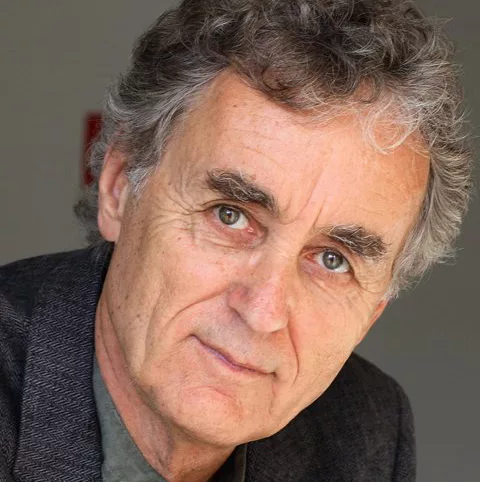
Fritjof Capra on dining with others

“We are all one, but we’ll take separate checks.”

–Fritjof Capra to waiter as remembered by Marilyn Ferguson

Fritjof Capra (born 1939) is an Austrian-born American author, physicist, systems theorist and deep ecologist. In 1995, he became a founding director of the Center for Ecoliteracy in Berkeley, California. He is on the faculty of Schumacher College. Wikipedia

Marilyn Ferguson (April 5, 1938 – October 19, 2008) was an American author, editor and public speaker known for her 1980 book The Aquarian Conspiracy, which is connected with the New Age Movement. Wikipedia

I Started a Meditation Practice to Help Me With Sobriety, but I Found Something More

I thought meditation was bullshit, but I was wrong

Christopher Robin

Christopher Robin

Published in Age of Empathy

1 day ago (Medium.com)

photo by author

Long before I started a meditation practice, someone told me to take a breath and check in with my body. I had no idea what that meant, but it was worth a shot. She said, “Just take a moment and think about how you feel. How does your body feel? Are you holding your shoulders up near your ears? Think about your breathing, about your heartbeat, etc.”

If you close your eyes and do this right now, I’ll bet you notice a few things. You don’t have to act on them, just notice them.

I didn’t know it at the time, but this was my introduction to meditation.

A tenet of Buddhism and meditation is the connection between the mind and body. Modern medicine, particularly in the Western hemisphere, has come to regard the two parts as separate. Medical doctors are taught a narrow biological view of things and are separated from psychiatrists and therapists with little to no communication between them.

When my primary care physician prescribed an anxiety medication, it was news to my therapist. Everything worked out and the medication helped me, but I couldn’t help but notice the disconnect between these two providers. I was the intermediary between them, keeping them each apprised of my progress.

Around the same time, someone introduced me to some powerful new ideas and thought processes. She would be my guide in a larger world, showing me new information and applying it to the world in which I currently live. She gave me some literature by Dr. Gabor Maté, now a well-known guru, and it resonated with me deeply.

It can be scary and uncomfortable to hear that a lot of what you’ve been taught your entire life isn’t necessarily true. It could be true, but everything has a lens through which it passes, and rarely do we ask “Why?

This is one of the reasons I challenge traditionalism and the status quo. We never stop and ask why things are, we just accept them. I attended a patriotic performance at my kids’ elementary school last week and watched the audience wave their flags for America because they’ve been told Americans are the “good guys.” That may be so, but are you sure? I, for one, don’t care for the concept of American exceptionalism, but that’s a different discussion.

There are many elements of daily life that we accept because someone we assumed to be in a position of knowledge or authority told us so. Teachers, parents, elders, bosses, priests, drill sergeants, gurus, even friends.

When I began to challenge conventional wisdom about my emotional and physical health, I found myself reeling. What if being on this medication was doing more harm than good? What if there was a holistic way to take care of my needs? What if I didn’t need medication at all and was just fine the way I was?

It felt unnatural to be thinking holistically instead of medically since we’re taught to believe the medical community and to do what our doctors recommend. I didn’t believe meditation or mindfulness could actually help me.

When I decided to try meditation anyway, my first reaction was defiance and denial. It’s not easy to challenge what we hold true. We call it our ‘comfort zone’ for a reason.

A common theme in my personal life and my writing is challenging conventional wisdom and tradition. These are pillars of our society, and they are the foundation of the way we live today. But that doesn’t mean I’m going to stop searching for answers. If society collapses because we start thinking differently or reading banned books it’s too late for me anyway.

Regardless, I waded into a short meditation routine every morning. It’s important in meditation to find what works for you. Any longer than 15–20 minutes I began to get distracted, and there’s a reason they call it a “practice” and not a meditation “performance.” Like any art form, it’s never perfected, but you practice it daily.

What I learned was that it helped me not to tune out the rest of the world, but to turn inward and contemplate mind and body. It began to reconnect my mind with my body.

Gabor Maté is passionate about the mind-body connection but takes it even further.

To say that the mind is connected to the body is incorrect. To say that the nervous system is connected to the immune system, and the immune system is connected to the emotional apparatus, all of which is connected to the hormone system, is incorrect. They are not connected; they are the same system. — Source

Recently I dove head-first into a book about complexity theory. It’s about how systems emerge from apparent chaos, and our bodies are no different. The parts of our bodies are all intertwined. They all affect the others and work together to make us human. Quarks form atoms form molecules form cells form organs form beings. Somehow in all of this complexity, a consciousness is formed. Life is systems forming systems forming systems.

The point is that we’re all comprised of systems working together. Our brains aren’t acting independently, they’re acting in cooperation with the body’s other systems. The limbic system is a part of the larger brain system that helps us regulate emotions and behavior. It works with the nervous system and hundreds of others.

Not only do these systems not operate independently, they CAN’T operate independently. There’s a symbiosis, a codependency.

The mind doesn’t exist without the body and the rest of the complex systems in cooperation, and no one is sure where consciousness comes in. From religion to science to philosophy, humans have yet to come up with a consensus for where consciousness comes from. Nobody knows where the mind exists, but the Buddhists believe the whole is greater than the sum of its parts, therefore the body and mind combine and interact in a tangled way to make up an individual. The epistemology of it all is endlessly fascinating.

Aside from all the hows and whys, when I meditate and truly commit to the practice, my body feels different. I feel like one being instead of a bag of organs. The borders between what’s outside and inside my body begin to blur, and I begin to feel like part of the universe instead of an isolated creature. I feel my body relax and my soul tap into a vast interconnected world just beyond the horizon. My heart rate slows and I take comfort that I’m doing something solely for myself.

The results are different than what I expected before I knew anything about the practice. When I am kind and gentle to myself in meditation, I am able to use those skills when I’m not meditating.

When I start the day with even a short meditation, it has lasting effects on my mood. During the day, I can take a step back from stressful situations and ground myself. I still know next to nothing, but I’m learning about myself as I go.

Namaste.

Originally published on my Substack:

Christopher Robin’s Nebulous | Substack

I write about mental health, addiction, and parenting, and share art in the most vulnerable and meaningful way I know…

christopherrobin7.substack.com

Check out Gabor Mate in this article in The Guardian here:

The trauma doctor: Gabor Maté on happiness, hope and how to heal our deepest wounds

The physician, author and self-help guru came to worldwide prominence when he appeared with Prince Harry last month. He…

www.theguardian.com

Learn more about Gabor Mate on his website.

Christopher Robin

Written by Christopher Robin

·Editor for Age of Empathy

Podcaster, recovering alcoholic, humorist, contemplatist, essayist, averagest, Editor of my own reality.

Brain, Mind, and Society with Marilyn Ferguson (1938 – 2008)

New Thinking Allowed with Jeffrey Mishlove • Nov 17, 2023 This video is a special release from the original Thinking Allowed series that ran on public television from 1986 until 2002. It was recorded in about 1988. It will remain public for only one week. Leading developments in brain research, management science, social science, spiritual literature and social reform all suggest a new vision of society in which people feel empowered to transform their lives. As publisher of the Brain/Mind Bulletin, the late Marilyn Ferguson was in a unique position to appreciate this vision and chronicle its emergence. She was author of The Brain Revolution and The Aquarian Conspiracy.

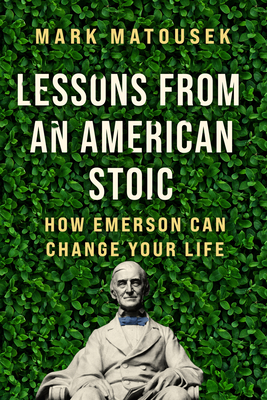
Book: “Lessons from an American Stoic: How Emerson Can Change Your Life”

Lessons from an American Stoic: How Emerson Can Change Your Life

Mark Matousek

A lifelong Emerson lover, teacher, and spiritual seeker reveals how American philosopher Ralph Waldo Emerson’s twelve essential teachings hold the answer to living an authentic and fulfilling life, one that is in harmony with our souls.

In this wise, illuminating book, award-winning author Mark Matousek reveals how Emerson’s timeless wisdom can help us with the problems we’re facing today. America’s ‘original Stoic’ confronted many of the issues before us, from polarization to fake news, from crooked politicians and rampant materialism, to the scourge of racism.

Matousek explains that Emerson’s path of self-reliance can radically improve your quality of life. The mentor and friend of Henry David Thoreau, Emerson (aka the Oracle of Concord) was America’s first self-help author, and his nation’s conscience for half a century. Like the Stoics before him, he emphasized self-knowledge and mindfulness as paths to happiness; also, self-reliance, cooperation, non-conformity, originality, adaptability, and receptiveness.

As Americans are once again discovering the power of Stoicism, Matousek shows why Emerson’s vision is precisely the medicine we need today. The principles of Waldo’s philosophy are universal and require no spiritual faith to put into practice.

Each person creates her own realityObstacles are teachers in disguiseYour character is your destinyWonder and awe are the keys to the kingdomNonconformity is the greatest virtueNature is the doorway to GodLife without self-knowledge is not worth livingEmerson encourages us to throw-off conventions and platitudes, explore ourselves in depth, tell the truth about what we find there, and awaken to our greatest potential. 

(Goodreads.com)

HEALING THROUGH HORROR

On the surprising mental health benefits of a scary movie habit

NOVEMBER 15, 2023 BY PRESTON FASSEL

VIA HEALTH COMMUNICATIONS (crimereads.com)

Oh, the Horror!

It doesn’t often come up but when it does, people are often surprised when I tell them I never set out to be a horror writer. Sure, I’m a die-hard, lifelong fan of the genre, and it was reading Stephen King’s The Shining at thirteen that opened my mind and imagination to a world of literature I never knew existed (you can swear in books), but, I’m really something of a thwarted literati. My first ever trunk novel was a depression-era drama owing a little too much to Ironweed by way of Road to Perdition; after that, it was a coming-of-age road story and a neo noir. When I finally decided to try my hand at horror, though, I realized something unique about the genre: you can do anything in a horror story. From pyrokinetic teens to Lovecraftian abominations to television channels from the beyond, everything is up for grabs and nothing is off the table when it comes to horror.

To quote ad copy for my beloved Hellraiser, “there are no limits.”

Freed from the constraints of hard reality, I produced what turned out to be my first published novel, Our Lady of the Inferno, a dark fable about a troubled young street walker struggling to provide for her sister while slowly coming to realize she’s set to be the latest target of a female serial killer who believes she’s the Minotaur of ancient Greek myth. While my inner Virginia Woolf still tried shopping it to lit fic publishers (a professor friend called it ‘the Mrs. Dalloway of hooker-versus-serial killer novels), it was a horror publisher who bit, and, voila, I was a horror writer. It’s a genre that’s allowed me to let my imagination go as far as it wants, from dinosaur professional wrestlers (The Despicable Fantasies of Quentin Sergenov) to retelling of the Maltese Falcon that replace the titular statue with a cursed film reel (Beasts of 42nd Street).

If you can do anything in horror, though, that also means you can explore anything.

It is, perhaps, why horror has always been so powerful a medium through which to address social issues. From the indictment of racism in George Romero’s Night of the Living Dead to the anti-Reaganism of John Carpenter’s They Live, horror has long been a way through which to dialogue with real world fears and threats through the lens of fictional monsters. It’s a cinematic and literary crucible through which we burn away the irrelevancies of our fears to come to a better understanding of them and a way to deal with them.

If we can explore any issue, any fear, any concern through horror, then, does that mean we can also use it as a lens through which to better understand mental health and the human condition?

Oh, the Humanity!

That was the provocative thought put to me by Chris Grosso back in 2019 when he first came to me with his idea for a project to be called Necessary Death. We were both contributing content to Fangoria magazine, he as an online columnist, myself as a staff writer. He’d recently read Our Lady, and told me he felt based on the book, I was the collaborator he’d been searching for. An accomplished counselor, public speaker, and author with three self-improvement books under his belt (Indie Spiritualist, Dead Set on Living, and Everything Mind), Chris had long wanted to write a book examining the intersection of mental health and horror. How do horror films depict and evaluate different ideas related to concepts in the mental health field, and, more importantly, what can we learn from them? Even more importantly, how can we take that knowledge and practically apply it in our everyday lives, in the furtherance of our own mental health and well-being?

As Chris pointed out, many horror fans see themselves as outsiders and feel they exist on the periphery of society—a place from which it can often be difficult or intimidating to seek help. What if there were a book that used something familiar and comforting- horror films- to open the door to a journey of self-improvement and could serve as the first stepping stone on a journey to getting help for those who need it? It was a fascinating idea, and not like anything I’d ever quite heard before. Too, as a thwarted mental health professional myself with a degree in psychology from Sam Houston State University (I’m a lot of thwarted things), it felt like an opportunity to finally apply those credentials beyond writing serial killers.

So it was that Chris and I embarked upon the creation Necessary Death: What Horror Movies Teach us About Navigating the Human Condition. It was a writing challenge unlike any I’ve ever faced, and proved to be my own self improvement experience: in his role as creator and co-author, Chris challenged me in new and developmental ways, and I’m grateful that he wanted to bring me along on this journey.

Oh, the…book!

From how Jung’s concepts of the persona and shadow self are represented through Leatherface and Michael Meyers to the way the Nightmare on Elm Street series depicts the process of self-actualization, we aimed to make something unlike anything else in the realm of film study and self-improvement: an exploration of thirteen concepts related to mental health and wellness via thirteen iconic horror films.

Much as we can better understand social issues and engage with real-world fears through horror movies, so too can we better understand ourselves. Consider the Exorcist. In a world where religion and politics have become increasingly interwoven at the cost of actual faith, how can we learn to navigate our own spiritual journeys through Father Karras’ personal struggles with both real and metaphorical demons? How about Carrie—what’s the opening attack scene in the locker room but the analogue version of the daily social media pile on with Carrie herself as the Instagram main character of the day? Are those attacks ever justified—and, regardless, how do we handle it if we ourselves wind up on the receiving end?

One of the reasons we so often connect with horror movies is because they’re distinctly human, presenting, at the heart of each, a struggle for survival very much like our own. While the threats facing us may not be rampaging dream demons or hockey mask-wearing zombie death machines, there’s so much synchronicity to be felt between the battles so many final girls have embarked upon and our own daily battles with life. By exploring these parallels and taking a lesson from each of the horror films explored in Necessary Death, we hope to help readers achieve victories over their own Predators and Pazuzus, be those toxic relationships or a sense of inadequacy. It’s an opportunity for every reader to become the final girl (or boy) of their own life- and maybe have a laugh or too along the way.

***

PRESTON FASSEL

Preston Fassel is an award-winning novelist and journalist whose work has appeared in FangoriaRue Morgue, and Screem Magazine. The author of Our Lady of the Inferno, winner of the 2019 Independent Publishers’ Award for Horror, and Landis: The Story of a Real Man on 42nd Street, nominated for the 2022 Rondo Hatton Award for Book of the Year, he has a BS in psychology from Sam Houston State University. His cowriter on Necessary Death, Chris Grosso, is an artist, counselor, writer, and film producer with Fourth Media. He is the author of Indie SpiritualistEverything MindDead Set On Living, and the children’s book, I Love Drums (co-written with Mark O’Connell of Taking Back Sunday). You can usually find him in San Diego up to some kind of spirited mischief. Their book Necessary Death: What Horror Movies Teach us About Navigating the Human Condition was published October 31, 2023 (Health Communications, Inc.; Paperback 978-0757324888 $15.95; Ebook 9780757324895 $11.99).

Einstein on the creation of Israel

Einstein, 1947 (aged 68)

However, he did not support the establishment of a Jewish state or an Arab state to replace the British Mandate for Palestine, instead asserting that he would “much rather see a reasonable agreement reached with the Arabs on the basis of living together in peace” under the framework of a binational Jewish–Arab state.

Albert Einstein (1879–1955), a German-born scientist, was predominantly known during his lifetime for his development of the theory of relativity, his contributions to quantum mechanics, and many other notable achievements in modern physics. However, his political views also garnered much public interest due to his fame and involvement in political, humanitarian, and academic projects around the world.

Einstein was a peace activist and a firm advocate of global federalism and world law. He favoured the principles of socialism, asserting that it was an ideological system that fixed what he perceived as the inherent societal shortcomings of capitalism. This became especially apparent in his later life, when he detailed his economic views in a 1949 article titled “Why Socialism?” for the independent socialist magazine Monthly Review. However, his view was not entirely uniform: he was critical of the methods employed by Vladimir Lenin and the Bolsheviks during the Russian Revolution, stating that they did not have a “well-regulated system of government” and had instead established a “regime of terror” over the fallen Russian Empire. His visible position in society allowed him to speak and write frankly, even provocatively, at a time when many people were being silenced across the European continent due to the swift rise of Nazism in Germany. In January 1933, Adolf Hitler assumed office as Germany’s leader while Einstein was visiting the United States. Einstein, an Ashkenazi Jew, was staunchly opposed to the policies of the Nazi government, and after his family was repeatedly harassed by the Gestapo, he renounced his German citizenship and permanently relocated to the United States, becoming an American citizen in 1940. Though he held a generally positive view of the country’s culture and values, he frequently objected to the systematic mistreatment of African Americans and became active in their civil rights movement. As a Labor Zionist, Einstein supported the Palestinian Jews of the Yishuv. However, he did not support the establishment of a Jewish state or an Arab state to replace the British Mandate for Palestine, instead asserting that he would “much rather see a reasonable agreement reached with the Arabs on the basis of living together in peace” under the framework of a binational Jewish–Arab state. Nonetheless, he praised the Truman administration for granting diplomatic recognition to the State of Israel in 1948.

More at: https://en.wikipedia.org/wiki/Political_views_of_Albert_Einstein#:~:text=However%2C%20he%20did%20not%20support,a%20binational%20Jewish%E2%80%93Arab%20state.