Tony Burgess – Head of UK & European division of Havening Techniques®
A Better Life Through Neuroscience
‘Iffirmational Havening’Since learning Havening techniques, I have been integrating the methods into much of my work when working with therapeutic clients, coaching and some training too.Another method which I use regularly with clients (developed with my partner years ago) is a 6-step belief change process, which helps those who have been ‘getting in their own way’. (The method is captured in our book ‘Beliefs and How to Change Them … For Good!’ http://www.aha– success.co.uk/beliefsbook.html).Step 3 of the 6-step belief change process is the human skill that we call ‘what iffing’. This is an activity that people often naturally do very effectively already – to torture themselves (‘what if I mess up?’, ‘what if I’m not good enough?’, ‘What if I can’t?’, ‘what if people don’t like me?’ etc) and given that it is so powerful, we ask them to harness their well-practised skill and put it to better use. What I mean is that we ask them to choose more empowering endings to the ‘what if …’ phrases. This serves to begin to open up new and refreshing possibilities and can counter existing unhelpful thinking and beliefs.What we have found is that when this is combined with havening touch it seems to be even more effective. I guess we can consider this activity to be a useful pre-cursor to affirmational havening. It allows the client to explore, generate and begin to ‘ease in’ those affirmational ideas. The ‘what if …’ serves to reduce resistance to the new possibilities (as the system does not need to commit to believing them … yet).The ‘what if … ’ structure, said with ‘tantalisingly tempting tonality’ (in their head or out loud during a session) excites the mind to consider a better perspective. When we do this work, clients have such a positive change in perspective that I can imagine their neurons reaching out for one another to test out possible new ‘circuits’. They also have a ‘takeaway’ tool to play with for themselves to reinforce the work we do in any session and also to apply to other areas they feel it is useful to work on.Over the years people have loved the ‘what iffing’ activity in our 6 step process and also use it in isolation for rapid state change too.We have taught many change facilitators the 6-step belief change method and many report to us that it has become one of their favourite tools for working with clients who have become ‘stuck’ in an unhelpful rut. When we teach it now, we suggest integrating havening touch to maximise effectiveness.Dr Ronald Ruden (developer of Havening Techniques) has now reported that he too been using this ‘what iffing’ activity combined with havening touch with his clients and is noticing some really encouraging changes. He has playfully given this blend the name of ‘Iffirmational havening’, which I love!Here are some of my clients’ favourite ‘what ifs’:
What if I’m better than I’ve been telling myself?’
‘What if I can find a way?’
‘What if I can have more influence over this than it first seems?’
‘What if I tap into my greatest resourcefulness?’
‘What if I forgive myself and others?’
‘What if I remain a uniquely magnificent human being no matter what isgoing on in my life?’
‘What if I am surrounded by opportunities and I just need to startnoticing them?’
‘What if there is always a way?’
‘What if I can always keep learning and adapting?’
‘What if I am more than good enough?’
‘What if I am deserving of the very best in life?’
‘What if the universe is on my side?’
‘What if I am in fact totally loveable?’
‘What if I give myself permission to love myself?’
‘What if I am perfect, even with any perceived imperfections?’
‘What if I CAN?’
‘What if I get into the driving seat of my own life?’
‘What if, whatever happens, I am going to be fine?’
‘What if I allow myself to be guided by my highest wisdom?’
‘What if I already have everything I need, I just need to tap into it?’
‘What if I am already whole and complete?’
‘What if being ME is more than good enough’
‘What if I give myself permission to celebrate who I am?’
‘What if I count my blessings?’
‘What if I can start to notice more of the great things in life?’
‘What if I allow myself to feel gratitude for all the good things in life?’
Have fun experimenting with your own and encourage your clients to come up with their best ones too!
The question he addresses here is, What are the emotional bonds that hold collective entities, such as an army and a church, together? It is a fruitful question, and Freud offers some interesting answers. But Group Psychology and the Analysis of the Ego stands chiefly as an invitation to further psychoanalytic exploration.
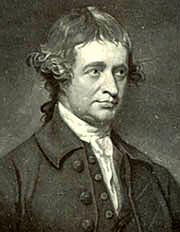
“A disposition to preserve, and an ability to improve, taken together, would be my standard of a statesman.”
–Edmund Burke
Edmund Burke (January 12, 1729 – July 9, 1797) was an Anglo-Irish statesman, economist, and philosopher. Born in Dublin, Burke served as a member of Parliament between 1766 and 1794 in the House of Commons of Great Britain with the Whig Party. Wikipedia,
Pencak silat is one of the sports included in the Southeast Asian Games (SEA Games) and other region-wide competitions. Pencak silat first made its debut in the 1987 Southeast Asian Games and 2018 Asian Games, both of which were held in Indonesia.[3] Training halls are overseen by separate national organisations in each of the main countries where the art is practised. These organisations are the Pencak Silat Association of Indonesia or Ikatan Pencak Silat Indonesia (IPSI) in Indonesia, Persekutuan Silat Kebangsaan Malaysia (PESAKA) in Malaysia, Persekutuan Silat Brunei Darussalam (PERSIB) in Brunei, and Persekutuan Silat Singapura (PERSISI) in Singapore. Practitioners are called pesilat.
Silat Melayu is one of the silat styles. The term Silat Melayu (“Malay silat”) is used in reference to the silat systems in the Riau Archipelago and Johor. Silat Melayu is often associated with fixed hand positions, low stances and slow dance-like movements. While this generalisation does not necessarily reflect the reality of silat techniques, it had a notable influence on the stereotypical way the art is portrayed in Brunei, Indonesia, Malaysia, and Singapore.
Both pencak silat and silat were recognized as a piece of Intangible cultural heritage by UNESCO (United Nations Educational, Scientific and Cultural Organization) in December 2019.[4][5]
Etymology
The origin of the word silat is uncertain. The Malay term silat is linked to the Minangkabau word silek, thus a Sumatran origin of the term is likely.[1] It possibly related to silambam, the Tamil martial art that has been recorded as practiced in Malaysia since at least the fifteenth century in Malacca.[6] According to Malaysian source, the word ‘silat’ originates from the Arabic word ‘silah’ (سِلَاح) meaning ‘weapon’[7] or ‘silah’ (صِلَةُ) meaning ‘connection’.[8] The most popular theory[which?] in Malaysia is that it derives from sekilat meaning “as (fast as) lightning”.[9]
Other theories derive silat from the Sanskritśīla meaning morality or principle, or the Southern Chinesesaula which means to push or perform with the hands.[9] The Sanskrit theory is particularly popular in Thailand, as sila is an alternate form of the word silat in that country. Another possibility is si elat, which means someone who confuses, deceives or bluffs. A similar term, ilat, means an accident, misfortune or calamity.[10] Yet another similar-sounding word is silap meaning wrong or error. Some styles contain techniques called Langkah Silap designed to lead the opponent into making a mistake.[9]
In its proper usage in the languages of its origin, silat is often a general term for any fighting style. This is still common in Indonesia where in some regions both silat and kuntau are traditionally interchangeable.
History
Legend
Stories detail the history of particular styles, which are often used as silat origin stories. One such tale is of a woman named Rama Sukana who witnessed a fight between a tiger and a large hawk. By using the animals’ movements, she was able to fend off a group of drunken men who attacked her. She then taught the techniques to her husband, Rama Isruna, from whom they formally passed down. There are several variations of this story across the region. On Bawean, Rama Sukana is believed to have watched monkeys fighting each other, while the Sundanese of West Java believe that she saw a monkey battle a tiger.[11]
The legend in the Malay Peninsula is that the heroine is named Teemoh. The daughter of a raja in the Langkasuka , her husband is a possessive man named Uma.[9] Teemoh tries to scare away a white-rumped shama or murai batu (more than one in some versions) that flies at her as she bathes. With each move the bird makes, she attempts to wave it off with her hands, and spins as it flies around her. Rather than fighting off drunken men, Teemoh fends off her husband who tries to beat her for taking so long. The fact that this legend attributes silat to a woman reflects the prominence of women in Southeast Asian society, as can be seen in the matriarchal adat perpatih customs of West Sumatra. The exploits of Malay warriors are prominently featured in many classical Malay texts. The Hikayat Hang Tuah epic literature tells the stories of Hang Tuah and his four companions, who with their exceptional skill in martial arts and warfare, rose in fame to become the Malacca‘s foremost Hulubalang. The text recounts arguably the most famous silat duel in literature, that is kris-fighting between Hang Tuah and one of his companions, Hang Jebat.
Another legend tells of three Minangkabau warriors from West Sumatra. By their masters’ instruction, the young men were travelling north in the hope of attaining moksha (enlightenment). On their journey, they are caught in a bloody battle near the Thai border. One of the three is wounded but escapes into a forest. Following a stream, he reaches a waterfall where he rests. The warrior notices a lotus flower come down the waterfall but even as it is pushed below the surface by the waterfall, the lotus reemerges completely intact. The warrior tries throwing a stone and then a stick at the lotus, with the same result. Finally he goes into the water and tries slashing at it with his sword, but the lotus only swirls away unharmed. The exhausted warrior then falls into the water and upon climbing out, he contemplates how this principle of overcoming the hard with the soft could be applied to battle. He creates a method of silat with two compatriots. This story is often told in the Malay Peninsula either as the origin of a particular lineage or to explain the spread of silat from the Minangkabau heartland into mainland Southeast Asia. A Minangkabau-style silat called silek minang influenced the style of Silat in Negeri Sembilan in the Malay Peninsula.[12]
The time period for this tale is generally believed to be the 14th century. However, a later version with a more Islamic setting places it in the 17th century. In this version, the three men are named Burhanuddin, Shamsuddin and Aminuddin. Rather than a quest for enlightenment, they journey to Aceh where Islam has recently been introduced in order to learn more about the religion. Their status as warriors is not mentioned. Instead, Burhanuddin is filling a water jar when he sees the lotus blossom. He then thought he heard a voice from the tree telling him to teach others what he learned. Upon returning home, each of the three men became religious teachers. This version links it with Burhanuddin Ulakan, a Minangkabau man who studied in Aceh and became the first Muslim preacher in West Sumatra.
Early period
Bas-relief of a battle scene at Prambanan Temple, Indonesia, depicting weapons of the time such as the sword, shield, club, bow, and a kris-like dagger
The silat tradition is mostly oral. In the absence of written records, much of its history is known through myth and archaeological evidence. It is believed that this form of martial arts developed around the developments of Bukit Siguntang Mahameru kingdom in Palembang, Sumatra, Indonesia. As narrated in the Malay Annals, the beginning of the Sumatran empire, started with a story of Paduka Demang Lebar Daun and Sang Nila Utama which took place in Batang Musi River. Paduka Demang Lebar Daun was officially styled as the forefather (Mangkubumi) of the Nusantara peoples in Malay archipelago by Sang Nila Utama through their oath. From the Bukit Siguntang Kingdom it developed into three full-grown empires in Malay history. One of them is the Pagaruyung Kingdom (West Sumatra, Indonesia) under the rule of King Adityawarman around the 12th century.[13]
In Nusantara the genesis of traditional martial arts is attributed to the need for self-defense, hunting techniques and military training. Hand-to-hand combat and weapons practice were important in training warriors for combat. Early traditional fighting styles are v believed to have been developed among various Malay tribes from the dawn of Malay civilisation. These early fighting styles epitomize the movements of animals such as the crocodile, tiger and eagle, and was deeply influenced by ancient Austronesiananimism. The expanding Iron Age civilisations on Mainland Southeast Asia engaged in wars and diplomacy led to the advancement of the art of war, weaponry and martial arts skills.[14]
Early Nusantarans and the related Chams were the only sizable Austronesians who had established themselves since the Iron Age on mainland Southeast Asia among the Austroasiatic inhabitants. Scholars such as Hall and Blust argued that the earlier Funanese were Austronesians, and by the early Christian era, a single dialect chain of Austronesian languages extended almost unbroken from the Malay peninsula to Champa. The expansion of the Khmers into the Mekong Delta would have divided an earlier language continuum into two separate dialects. The earliest weapons found in the Malay Archipelago were sharpened stone tools such as axes. Influence from Laos, Vietnam, India, and Southern China arrived during the Neolithic period. Whole communities from Southern China were transferred to Southeast Asia, bringing their weapons and weapon-making technology with them. It is probable that these communities already exercised some form of systematisation over the use of these weapons when they arrived in the 2nd and 3rd century BCE.[15] The early Austronesian settlements that centered around present day Southern Vietnam and the Kra Isthmus region of the Malay peninsula and its peripheries, developed into strong kingdoms including Champa, Langkasuka and Kedah. The Chams were known as formidable warriors. Their skills in warfare were gained through long intermittent conflicts with neighbouring kingdoms. Southeast Asian sea-nomads and indigenous Southeastern Chinese boat-dwellers such as the Baiyue and Tanka people have been noted. Examples include long-boat culture, war fleets, tattoos, familiarity with plant poisons, and bladed weaponry. The Baiyue adopted the use of bronze from northern China and in turn introduced it to Tonkin and Vietnam, resulting in the Đông Sơn culture of the Bronze Age. From Dongson this technology spread to Java in the Indonesian Archipelago, producing steel weapons such as broadswords, spears, and knives[16]: 266 The discovery of prototypes of bronze kris in Southern Vietnam, with hilt decorated by human figures, dating back more than 2000 years, further indicated that the Chams had developed an advanced martial arts tradition. The iconic kris was patterned after the Dongson dagger. Even centuries later, their martial prowess was held in high regard among Malays and Sumatrans, as the legends of prominent Cham warriors appeared in Malay Annals and Tambo of Minangkabau people. Tambo for example, recounts the legend of Cham warrior Harimau Campo (‘tiger of Champa’). Together with Kucieng Siam, Kambiang Hutan and Anjiang Mualim, they developed the early Minangkabau silek.
Early Nusantarans and the related Chams, were the only sizable Austronesians that had established themselves since the Iron Age on the Mainland Southeast Asia among the Austroasiatic inhabitants. Some scholars like Hall and Blust argued that even the earlier Funanese were Austronesians, and by the early centuries of Christian era, a single dialect chain of Austronesian languages would have extended almost unbroken from the Malay peninsula to Champa. The expansion of the Khmers into the region of the Mekong Delta would then have divided an earlier language continuum into two separate and smaller dialects. The earliest weapons found in the Malay Archipelago were sharpened stone tools such as axes. Influence from Laos, Vietnam, India, and Southern China arrived during the Neolithic period. Whole communities from Southern China were transferred to Southeast Asia, bringing their weapons and weapon-making technology with them. It is probable that these communities already exercised some form of systematisation over the use of these weapons when they arrived in the 2nd and 3rd century BCE.[15] The early Austronesian settlements that centered around present day Southern Vietnam and the Kra Isthmus region of Malay peninsula and its peripheries, had developed into strong kingdoms like Champa, Langkasuka and Kedah. The Chams were particularly known as formidable warriors who were great exponents of martial arts. Their exceptional skills in warfare were gained through their long intermittent conflicts with neighbouring kingdoms. Similarities have been observed between Southeast Asian sea-nomads and indigenous Southeastern Chinese boat-dwellers such as the Baiyue and Tanka people. Examples include the long-boat culture, war fleets, tattoos, familiarity with plant poisons, and bladed weaponry. The Baiyue adopted the use of bronze from northern China and in turn introduced it to Tonkin and Vietnam, resulting in the Đông Sơn culture of the Bronze Age. From Dongson this technology spread to Java in the Indonesian Archipelago thus producing steel weapons such as broadswords, spears, and knives.[16]: 266 The discovery of prototypes of bronze kris in Southern Vietnam, with hilt decorated by human figure, dating back to more than 2000 years ago, further indicated that the Chams had developed an advanced martial arts tradition. The iconic kris was patterned after the Dongson dagger. Even centuries later, their martial prowess were still held in high regards among people in Malay peninsula and Sumatra, as the legends of prominent Cham warriors made its way in the Malay Annals and Tambo of Minangkabau people. Tambo for example, recounts the legend of a Cham warrior who goes by the name Harimau Campo (‘tiger of Champa’). Together with Kucieng Siam, Kambiang Hutan and Anjiang Mualim, they developed the early Minangkabau silek.
Since Islamization in the 1980s and 90s in Malaysia, participants have attempted to make silat more compliant with Muslim beliefs and practices. Many instructors justify this by creating histories to tie their style with Islam and distance themselves from traditional folklore. Some Malaysian silat schools go so far as refusing to teach non-Muslims, or to perform at non-Muslim weddings.[17] This has given rise to various misconceptions that Silat is inherently Muslim or can only be practised by followers of the Islamic faith.[17][9] In actuality, the Hindu–Buddhist and animistic roots of the art were never eradicated, and remain very evident even among Muslim practitioners. As a result of this modern trend, many traditional practices and styles have become increasingly rare. It is now illegal for Muslim practitioners in Malaysia to chant mantra, bow to idols, or attempt to acquire supernatural powers. Traditional meditation is sometimes also discouraged or altered, and the incantations spoken before training or during massage are now often replaced with prayer recitation.
Foreign influence
An important development of martial arts of the Nusantara is also attributed to foreign influence. The infusion of foreign elements was obtained through wars and conquests and through trade and diplomacy. The growth in trade relations brought foreign influence throughout the primordial Austronesian ancient states, most importantly in cultural traits including the combative arts. The influence from Chinese and Indian martial arts can be observed from the use of weapons such as the Indian mace and the Chinese sword. During this period, formalised combat arts were believed to have been practiced in the Champa, Malay peninsula and Sumatra. From the 12th century, martial arts were further developed in Langkasuka under Srivijaya after the Chola Empire was expelled from Sumatra and the Malay Peninsula. The Riau Archipelago is noted for its role in the development of Malay martial arts. Its Orang Laut people, also called Orang Selat, are stereotyped as sea pirates, but historically played major roles in the times of Srivijaya and later sultanates of Malacca, and Johor. The fighting styles developed in this area are described as a prototype of Malay martial arts and one of the progenitors of modern Malay Silat.
The influence of the Indian subcontinent and Southern China were fundamental to the development of Silat.[9] By adopting the Indian faiths of Hinduism and Buddhism, Southeast Asian social structure became more organised.[17] Images of Hindu figures such as Durga, Krishna and scenes from the Ramayana all bear testament to the Indian influence on local weapons and armour. Forms are said to have been introduced by Buddhist monk Bodhidharma, born in Central Asia or India (5th or 6th century CE), who came to Southeast Asia via the Srivijayan capital of Palembang.[17] Many of Silat’s medicinal practices and weapons originated in either India or China. The slapping actions in Silatjurus (in which the practitioner slaps their own body) are reminiscent of Indian martial arts.[15] Some form of wrestling is indeed portrayed in Indonesian temple art. The martial arts practised by the Chinese community of Southeast Asia are referred to as kuntao.[15]
The Book of Liang mentions a kingdom called Polingor Poli southeast of Guangdong. Thought to be located in the Malay Peninsula, the people of this kingdom are said to have customs identical with Cambodia and the same produce as Siam. Their weapons are purportedly the same as China’s with the exception of the chakram with which locals are said to be highly skilled.[18]
Folklore credits the promulgation of Silat to pendeta or Hindu-Buddhist sages, often through the study of animals and the natural world. The priests were said to combine the animal movements with meditative postures (semadi) and mystic hand positions (mudra), much like the kuji-in of ninjutsu. The animal-based concept was most likely adopted from Indian martial arts.[19] Village shamans or dukun would often learn Silat as part of their craft and for defending themselves while travelling. Bomoh in some communities such as the Kadayan are required to complete training in Silat before they are initiated. Silat is an integral aspect of healing rituals such as puteri. Through this connection, Silat is used as a method of spiritual training in addition to self-defense.[9] Systems exist that focus exclusively on the internal rather than the physical.[20]
Nomadic boat-dwellers in Southeast Asia and southeastern China were often misconstrued as pirates for political reasons, but Faxian and Zhao Rugua both described fierce warriors armed with an arsenal of weapons who would attack boats passing around Singapore, Sumatra, Java, and the South China Sea. Local rulers like Parameswara relied on the boat-people to maintain control of their territory. They played a key role in the region’s power struggles into the colonial era. Piracy saw an increase after the arrival of European colonists, who recorded Malay pirates armed with sabres, kris and spears across the archipelago into the Gulf of Siam. The Haijin or maritime ban in Ming China spurred the migration of Chinese to Southeast Asia. Marooned Cantonese and Hokkien naval officers set up small gangs for protection along river estuaries and recruited local Silat practitioners as foot soldiers known as lang or lanun (Malay for pirate). Chinese pirates like Liang Daoming and Chen Zuyi became so successful that they became leaders. Whether pirates or not, Southeast Asia’s boat people were crucial to the accumulation of weapons and techniques in Silat. Through their journeys they acquired weapons from across the region, came into contact with other fighting styles, and spread Silat into Brunei.[15]
Changing Audiences Are Making Creators and Institutions Rethink Art Itself
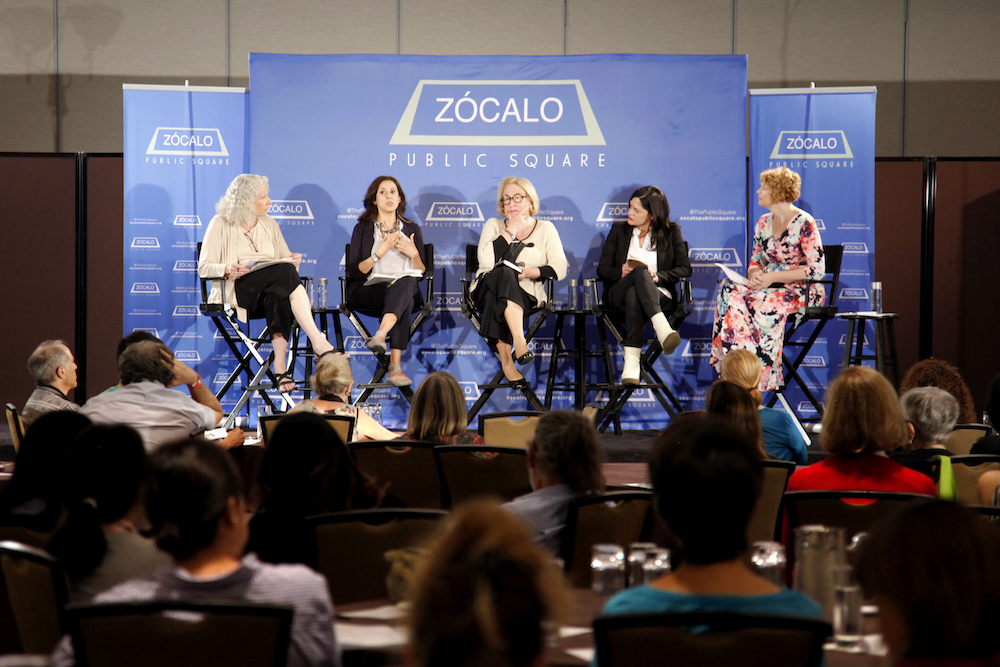
Lynne Conner, Lyne Sneige, Gail Dexter Lord, Luz María Sánchez, and Suse Anderson partake in a panel discussion, “Does Art Really Make Us Better Citizens?” Photo by Aaron Salcido.
by JOE MATHEWS and REED JOHNSON
JUNE 26, 2017 (zocalopublicsquare.org)
If the essence of art is necessarily elusive and hard to define, so too is the essence of arts engagement. As audiences grow more diverse and demanding, and new digital technologies allow anyone to become a content creator with the click of a button, arts engagement now embraces a wide array of strategies, methods and goals.
On June 25 in downtown Los Angeles, more than 200 artists, producers, presenters, grant-makers, museum directors, curators, librarians, cultural administrators, government officials, members of philanthropic entities and journalists came together to consider “What Can the World Teach California About Arts Engagement?” The Zócalo Public Square conference attracted panelists and attendees from across California, the United States and other corners of the planet.
The gathering at the Omni Hotel began with welcoming remarks from Michael Alexander, executive director emeritus of Los Angeles’s Grand Performances series of free outdoor cultural events, followed by a live performance by The Industry, the Los Angeles-based, independent, artist-driven experimental opera company led by artistic director Yuval Sharon.
To frame the day’s conversation, Sharon cited Bertolt Brecht’s adage that “a theater which makes no contact with the public is a nonsense.” Engagement is key to making art that is “responsive to our communities” and “to the times we’re living in,” and that enables us to address our hopes and fears, he concluded.
But how do artists tap into those communities? And does the public even know what it wants from the arts?
Chris Jones, chief theater critic of the Chicago Tribune, took up that question in the day’s first panel discussion. Jones flipped the question on its head, pointing out that some artists feel no obligation whatsoever to please their audiences, convinced that instead their main duty is to please themselves.
In response, panelist Randi Korn, who leads a Virginia-based museum planning firm, and has conducted extensive research on museum audiences, suggested that the real challenge for culture producers is how to create the memorable and meaningful experiences that arise “from people being surprised by what they see.”
“It’s not about meeting people’s expectations,” Korn said. “It’s about exceeding them.”
Another panelist, Cristina King Miranda, a Mexico City-based performing arts curator, suggested that being part of an audience requires its members to connect with each other, and not shy from the debate, conflict and even pain that great art sometimes provokes. “We need to become cartographers of our own experiences in our communities,” she said.
Leslie A. Ito, president of the Japanese American Cultural & Community Center, said that culture producers should be asking themselves how to create the kind of cultural spaces that encourage the fullest participation. She said that her center is presenting more non-Japanese artists in order to connect with the rest of Greater Los Angeles, but also was careful “to ground them in Japanese culture.” For a recent series on world dance music, for example, “we brought artists in for orientation that started with a tea ceremony—so they understand the space and the history of the place in which they are performing,” Ito said.
The conversation also took up the issue of how digital “sharing” and social media have conditioned audiences to seek out cultural events that make cool Facebook posts and generate dozens of Instagram “likes.” Korn warned against “superficial” arts experiences that rely on ginning up Snapchat and Twitter traffic. To make an impact, she said, you “want to be about deepening experience,” as opposed to broadening the arts experience.
Yet the panel concurred that arts and cultural organizations can engage wider audiences, and new audience segments, without pandering to them. Ito cited one New York Historical Society exhibition about taxi drivers that extended its hours from 2 to 6 a.m. to accommodate cabbies working the graveyard shift.
When Jones pressed about how the arts might survive if arts organizations offer collections that are a whole lot of “non-interactive stuff,” panelists said the ability to be in the presence of great stuff (otherwise known as art) still reliably draws audiences and keeps them coming back. “It’s about the intimacy of being with stuff,” said Ito, who recalled visiting a theater in Kyoto, Japan with a very small performance space, no bigger than a table, and the impact of experiencing art in such close, personal quarters.
Jones also pressed the panel on whether the arts must present ways of talking and interacting with people with whom we sharply disagree—particularly in stressed-out, polarized eras like the present. King Miranda responded by making a distinction between “normalization” and “democratization.” She noted that in Mexico, where the state “has failed us” in protecting “security, peace, and justice,” the arts represent a form of resistance.
“The arts remind us of our otherness and our normalness,” King Miranda said.
The morning panel’s exchange set the stage for Steven J. Tepper to deliver the lunchtime keynote address, entitled “Does Arts Engagement Even Matter?” Tepper, the Dean of Arizona State University’s Herberger Institute for Design & the Arts, structured his talk around a transitional process that he described as moving from “Me Experiences” to “Bigger-Than-Me Experiences.”
In the 19th and early 20th centuries, Americans generated much of their own art by themselves and at home, through playing parlor piano, reciting Shakespeare around the dinner table, and other exercises in Emersonian self-reliance. All that changed with the introduction of radio, sound recordings, movie theaters, and other forms of industrially produced mass entertainment. The audience’s role increasingly was reduced to coming to a large venue, sitting in a darkened room, then applauding on cue.
“We saw the rise of cathedrals of consumption,” Tepper said. “It distinctly removed arts and culture from our everyday lives and put it in other places.”
That paradigm persisted through the decades following World War II. But a Wallace Foundation study later recorded a sharp drop in participation in benchmark arts events, setting off some hand-wringing and soul-searching among the cultural cognoscenti.
What was missing in this analysis, Tepper said, was that new forms of engagement were emerging to replace the old ones, leading to a “renaissance” of engagement, in cultural as well as civil life. That ongoing renaissance has been powered by what sociologist C. Wright Mills called “the exuberant expression of self,” which Tepper reframed as the culture of the “I Want What I Want When and How I Want It” generation.
Tepper said he’d taken his daughter to a Taylor Swift concert at which costumed fans posed in front of Taylor Swift-branded props that had been set up to give fangirls a place to snap selfies. Meanwhile, Tepper said, his son has been ordering personally customized Nike shoes.
They’re all symptoms of a phenomenon that Tepper calls the “Curatorial Me.” But if that sounds hopelessly self-absorbed, it also is the phenomenon behind the soaring numbers of people who are buying musical instruments, making their own music, uploading 6 billion hours of content each month onto YouTube, and teaching themselves other new creative pursuits.
Has the pendulum swung too far toward cultural self-expression and consumer autonomy? Studies suggest that this overstimulating our brains may limit capacity for empathy, our receptivity to others’ stories and others’ lives, Tepper said.
Tepper added that “Bigger-Than-Me Experiences” are about purpose more than pleasure, about transformation rather than merely “doing,” about identification rather than identity, and about the “empathetic imagination” rather than the “egoist imagination.” Millennials have shown that they value immersive experiences, diversity, loyalty and the “slow-down economy,” which can be glimpsed in the comeback of vinyl records, the resurgence of community darkrooms, and the popularity of mass group experiences like the Coachella music festival.
“Something about re-immersing ourselves in these shared experiences is extremely powerful for the millennials,” Tepper said.
Alexander then took the floor again to direct an informal exchange among conference attendees, who were encouraged to share their own ideas about arts engagement. One conferee, a library historian, said that museums and theaters could learn a valuable lesson from libraries. “The message that I can bring you from library history is … [if you] provide access and content” you’ll maintain your value, she said.
The discussion moved deeper into the political realm with the day’s third panel talk, “Does Art Really Make Us Better Citizens?” Lynne Conner, a University of North Carolina at Charlotte cultural historian, said that our experiences as members of arts audiences have the potential to teach us how to be better citizens—by learning how to be free thinkers. She added that arts participation can be a means of “rehearsing citizenship.”
Luz María Sánchez, arts and humanities chair of the Universidad Autónoma Metropolitana de México, Lerma, argued that arts serve society and citizenship in three ways. First, the arts are one of the best ways humans have to include people whose voices aren’t being heard.
Second, she noted that in arts work she had done in San Antonio, Texas and Matamoros, Mexico, art could make people more aware of the places they live, and empower them to improve communities. And third, the arts can democratize knowledge. “It is a better way to make outside knowledge, that is being made in the university, and get it out in the proper way and socialize concepts around it,” she said.
In response to a question about the connection between art and citizenship in the Middle East from moderator Suse Anderson, an assistant professor of museum studies at George Washington University, Lyne Sneige, director of the Middle East Institute Arts & Culture Program, said that arts play huge roles in social transformations and in response to conflict. As illustrated by the Arab Spring, she said, “the arts have been the way in which younger generations have resisted in a non-violent way … and the way that they have really demanded that they be treated as citizens in a dignified and respectful way.”
The global arts consultant Gail Dexter Lord said that the arts constitute “a soft power” that influences people’s behavior as citizens through persuasion and agenda setting. Such persuasion can be good—she said that 19th-century novels fostered readers’ empathy and provided the foundation of the modern human rights movement. And she noted that cities around the world have become welcoming places where artists and newcomers can champion notions of citizenship that serve as a check on states that rely on the “hard power” of war and violence.
But, she added, people with ill intentions can also use the arts to try to persuade or set an agenda. “My theory is that art makes some people better citizens, and some people worse citizens,” she said.
So how are the arts and artists innovating to take up these myriad challenges to reach broader audiences? Moderator Seth Porges, a technology writer and television personality, led the day’s third panel in chewing over that question. For New Orleans-based visual artist Brandan “BMike” Odums, an answer has been doing stealth mural interventions in New Orleans public housing complexes that were abandoned in the wake of the 2005 Hurricane Katrina disaster. Odums said he didn’t view these buildings as “blank canvasses” for making art, but as spaces that had histories and told pre-existing stories, and where a shared “level of struggle” was required of those wanting to share in the experience.
“You had to physically get dirty with the space and consequently to ask questions about what could be in that space and what should be in that space,” Odums said.
Lydia Steier, a Connecticut-born opera director who has been living and working in Europe for the last 15 years, emphasized the importance of having a public funding stream for the arts, as is far more common in European countries than the United States. That financial security allows for greater freedom to experiment with content and form, and permits occasional failure. In the United States, she said, the reliance on private money creates an artistic environment that is generally more conservative.
“The reason people [in America] think [opera] is an uncool art for uncool people is because you need funders who tend to be old rich white ladies,” Steier explained. “You’re looking at extremely traditional productions, corsets, the big wigs.”
Rosa Ferré, exhibitions chief at the Centre de Cultura Contemporània de Barcelona, stressed the importance of helping audiences to grasp the relevance and context of artistic expression.
“I think that going to new audiences you need to have risk, you have to have the possibility of failure,” she said, recounting how hard it had been to persuade her board to do an exhibition on Big Data.
In a concluding keynote, Boon Hui Tan, the Asia Society’s vice president for global arts programming, warned against blockbuster exhibitions and attempts to define arts as global.
In this era, the former director of the Singapore Art Museum said, “the purpose of the arts is to awaken a sense of empathy—towards other lives.” With so many social, political, and economic forces creating a situation in which lines are drawn, “the purpose of the arts now is to scratch that line.” Specifically, that requires the arts to help build people’s “ability to read ambiguity,” though that is challenging because “the way things are funded” can encourage simplification or “dumbing down” of art.
“We need, across all sectors of art, to teach people how to engage with complex and ambiguous ideas,” he said.
He championed a “comparative approach” in which a specific locality connects its arts with those of a geographically or historically distant place. He mentioned efforts from Indonesia to Holland to do that kind of comparative work.
Finally, he argued that children’s exhibitions can be particularly powerful in reaching people, and he argued for creating physical spaces for communities (he noted powerful examples from Japan to France) and physical links between neighboring arts institutions so that people find their ways between them.
That brought the day full circle to a point made by emcee Michael Alexander several hours earlier, paraphrasing an observation made by late UCLA musicologist Charles Seeger. “The question is not whether the art is good,” Alexander said. “It’s what the art is good for.”
In what ways can ancient spiritual traditions inform our very modern environmental and ecological problems? Poet, author and translator of Chinese texts David Hinton’s passion for Taoist literature is laid out in his new book Wild Mind, Wild Earth, in which he draws upon the traditional Chinese teachings to explore the notion of deep ecology. Focusing on how this philosophy can help us reconnect with our own formative ‘Paleolithic’ origins, Hinton recalls a time when we lived in a loving, kindred unity with the earth. In this passage from his book, Hinton writes about the impossibility of ever being separated from the all-encompassing life-giving organism of the Tao, and how our lives are a manifestation of, rather than a departure from, the ‘nurturing mother of all beneath heaven.’
Before intention and choice, before ideas and understanding and everything we think we know about ourselves—we love this world around us. We are kindred, emotionally entangled. Ancient China’s Taoist-Ch’an rivers-and-mountains practices represent the culmination of early China’s great cultural transformation, and they could also complete the remarkably similar transformation underway here in the West. They cultivate empty-mind belonging to earth/Tao without any separation, which is love and kinship at the deepest level. And that reveals in immediate experience a broader philosophical principle central to Taoist-Ch’an thought and practice: that we are “unborn”—an understanding that appears to be one more way the Paleolithic experience of self integral to ecosystem survived into China’s Taoist-Ch’an framework.
In that framework, death is a return home, a return to the generative tissue of Tao, to (as Lao Tzu says) the “nurturing mother,” the “mother of all beneath heaven.” And there was solace in that, belonging. But seen at a deeper level, we never leave home. Tao is all reality as a single living existence-tissue. The ten thousand things are not born out of it, never separate from it. They are always part of it.And it’s the same for us—for mind and identity and every aspect of human civilization. It might seem that we are born out of Cosmos/Tao, that in death we return to it. But at these depths, however separate the center of identity may appear, with its thought and memory, we are each a fleeting form conjured in Tao’s generative process of perpetual transformation: not just born out of wild earth/Cosmos/Tao and returned to it in death (which still assumes a center of identity detached from earth and its processes), but never out of it, totally unborn through and through, wild mind integral to wild earth.
“We never leave home. Tao is all reality as a single living existence-tissue. The ten thousand things are not born out of it, never separate from it. They are always part of it.“
This unborn kinship is our original-nature (the very thing Wordsworth and Thoreau and their compatriots yearned for and found in Native American cultures)—and yet, it all but vanished after the Paleolithic. It is difficult for us to inhabit that kinship, which is why spiritual practice existed in ancient China. Taoist-Ch’an cultivation of unborn original-nature is our most radical and deep ecological practice. But it is challenging. In ancient China, the great teachers were Taoist sages, poets and painters, Ch’an masters, rivers and mountains. We definitely need teachers like that, and thankfully they are still available to us. But our most elemental teacher may now be the Great Vanishing itself, earth’s sixth mass-extinction revealing directly how kindred we are with wild earth through the emotional intensity of our planetary love and grief over the vast destruction and suffering and death.
Southern resident orcas slowly starving to death, so stressed that reproduction is rare, their population in steep decline: the Sixth Extinction teaching love. Vietnam’s thirty national parks not actually wildlife preserves, but instead private hunting grounds where a genocidal campaign against primates supplies the rich with exotic meat (not unlike Italy’s ongoing slaughter of songbirds for tasty morsels): the Sixth Extinction teaching kinship. Half the planet’s animals already vanished, individual by individual, species by species, and much of the other half vanishing— red panda and California condor, vaquita porpoise and blue whale, Panamanian golden frog and hawksbill turtle, and even the bonobo and chimpanzee, our closest genetic relatives (sharing no less than 98.7% of DNA with us) vanishing, vanishing: all of it teaching love for this world, teaching kinship with its ten thousand precious things.
“This unborn kinship is our original-nature—and yet, it all but vanished after the Paleolithic. It is difficult for us to inhabit that kinship, which is why spiritual practice existed in ancient China.“
It’s an emotional intensity that reveals our original-nature as wild mind kindred through and through with wild earth—and again, “seeing original-nature” is the very definition of awakening in Ch’an Buddhism. Awakening may seem difficult. Ch’an practices like meditation reawaken kinship, and we can still cultivate them—practices that unravel the Greek-Christian assumptions that structure consciousness for us, and so might stem the destruction. But what a strange blessing this teacher is, this unfolding eco-catastrophe: it reveals how easy it is, how we are always already awakened!
We have seen how, three millennia ago, the anthropocentric and spiritualized paradigm of Shang Dynasty China was transformed into the ecocentric Taoist-Ch’an paradigm. Then, it was the suffering inflicted by political tyranny that drove a wholesale transformation in consciousness. Here, after two centuries of teachers—from Wordsworth and Thoreau to Zen and Land Art—leading a slow transformation in Western assumptions, perhaps the Great Vanishing is itself our next teacher. With the suffering and death of mass-extinction already unimaginably vast, perhaps it is these grievous forces that will complete a similar transformation here—returning wild mind to wild earth.
“Our most elemental teacher may now be the Great Vanishing itself, earth’s sixth mass-extinction revealing directly how kindred we are with wild earth through the emotional intensity of our planetary love and grief over the vast destruction and suffering and death.“
We’ve seen much of what the Sixth Extinction’s Great Vanishing has to teach us, all those insights of Paleolithic and Taoist-Ch’an understanding that have begun emerging here in the West. There’s more, and we’ll get to that. But for now, it’s worth remembering that in denouncing the destruction of the planet, Robinson Jeffers was actually proposing a radical form of self-realization, a liberating self-transformation in which we reestablish our wild-mind kinship with wild earth and Cosmos. And the Great Vanishing is also revealing to us our most profound and beautiful and capacious selves. Calling forth all that love and joy and grief, it reveals our larger and more primordial self, our original wild-mind nature: again, the very definition of awakening in Ch’an Buddhism. And so, the Great Vanishing as an especially profound teacher in our age.
How strange that in cultivating this awakening, this wild mind integral to wild earth, we each cultivatenot only our largest self, but also the possibility of ending today’s Great Vanishing. How perfect that they are woven together: cultivating wild mind and cultivating wild earth! If we can’t master what the Sixth Extinction is teaching, we will live with that vast wound of consciousness torn from existence. And at the same time, Jeffers’s storm will continue arriving from “the long coast / Of the future to scour” our planet clean of the human. Indeed, in our kindred love of this world, it can be hard not to share Jeffers’s feeling that, barring a wholesale transformation in human consciousness, the sooner that storm does its work, the better for wild earth as a whole.
Happy New Year! Cultures around the world and through time have celebrated the transition from one year to another in different ways that often emphasize the letting go of various objects, people or experiences from the old year in order to make way for what is coming in the new. In some Latin American countries, the tradition of ‘Año Nuevo’ sees the burning of a human effigy dressed in old clothes and stuffed with old papers, pieces of wood and sawdust. Naomi Shihab Nye’s poem, Burning the Old Year, is reminiscent of this tradition, invoking the natural process of life’s miscellaneous passings that go up in flames, clearing the stage for new embodiments. What’s done is done and easily reduced to ashes, she writes; but it’s the unsaid and the un-done that linger uneasily, the regrets of what we didn’t do that might not burn so easily in the fire of the past.
Burning the Old Year
Letters swallow themselves in seconds. Notes friends tied to the doorknob, transparent scarlet paper, sizzle like moth wings, marry the air.
So much of any year is flammable, lists of vegetables, partial poems. Orange swirling flame of days, so little is a stone.
Where there was something and suddenly isn’t, an absence shouts, celebrates, leaves a space. I begin again with the smallest numbers.
Quick dance, shuffle of losses and leaves, only the things I didn’t do crackle after the blazing dies.
It is said that before entering the sea a river trembles with fear.
She looks back at the path she has traveled, from the peaks of the mountains, the long winding road crossing forests and villages.
And in front of her, she sees an ocean so vast, that to enter there seems nothing more than to disappear forever.
But there is no other way. The river can not go back.
Nobody can go back. To go back is impossible in existence.
The river needs to take the risk of entering the ocean because only then will fear disappear, because that’s where the river will know it’s not about disappearing into the ocean, but of becoming the ocean.
Albert Einstein, German-born theoretical physicist; developer of the theory of relativity (1879–1955)
Photo Illustration by Erin O’Flynn/The Daily Beast/Getty Images
This past December, the physics Nobel Prize was awarded for the experimental confirmation of a quantum phenomenon known for more than 80 years: entanglement. As envisioned by Albert Einstein and his collaborators in 1935, quantum objects can be mysteriously correlated even if they are separated by large distances. But as weird as the phenomenon appears, why is such an old idea still worth the most prestigious prize in physics?
Coincidentally, just a few weeks before the new Nobel laureates were honored in Stockholm, a different team of distinguished scientists from Harvard, MIT, Caltech, Fermilab and Google reported that they had run a process on Google’s quantum computer that could be interpreted as a wormhole. Wormholes are tunnels through the universe that can work like a shortcut through space and time and are loved by science fiction fans, and although the tunnel realized in this recent experiment exists only in a 2-dimensional toy universe, it could constitute a breakthrough for future research at the forefront of physics.
But why is entanglement related to space and time? And how can it be important for future physics breakthroughs? Properly understood, entanglement implies that the universe is “monistic”, as philosophers call it, that on the most fundamental level, everything in the universe is part of a single, unified whole. It is a defining property of quantum mechanics that its underlying reality is described in terms of waves, and a monistic universe would require a universal function. Already decades ago, researchers such as Hugh Everett and Dieter Zeh showed how our daily-life reality can emerge out of such a universal quantum-mechanical description. But only now are researchers such as Leonard Susskind or Sean Carroll developing ideas on how this hidden quantum reality might explain not only matter but also the fabric of space and time.
Entanglement is much more than just another weird quantum phenomenon. It is the acting principle behind both why quantum mechanics merges the world into one and why we experience this fundamental unity as many separate objects. At the same time, entanglement is the reason why we seem to live in a classical reality. It is—quite literally—the glue and creator of worlds. Entanglement applies to objects comprising two or more components and describes what happens when the quantum principle that “everything that can happen actually happens” is applied to such composed objects. Accordingly, an entangled state is the superposition of all possible combinations that the components of a composed object can be in to produce the same overall result. It is again the wavy nature of the quantum domain that can help to illustrate how entanglement actually works.
Picture a perfectly calm, glassy sea on a windless day. Now ask yourself, how can such a plane be produced by overlaying two individual wave patterns? One possibility is that superimposing two completely flat surfaces results again in a completely level outcome. But another possibility that might produce a flat surface is if two identical wave patterns shifted by half an oscillation cycle were to be superimposed on one another, so that the wave crests of one pattern annihilate the wave troughs of the other one and vice versa. If we just observed the glassy ocean, regarding it as the result of two swells combined, there would be no way for us to find out about the patterns of the individual swells. What sounds perfectly ordinary when we talk about waves has the most bizarre consequences when applied to competing realities. If your neighbor told you she had two cats, one live cat and a dead one, this would imply that either the first cat or the second one is dead and that the remaining cat, respectively, is alive—it would be a strange and morbid way of describing one’s pets, and you may not know which one of them is the lucky one, but you would get the neighbor’s drift. Not so in the quantum world. In quantum mechanics, the very same statement implies that the two cats are merged in a superposition of cases, including the first cat being alive and the second one dead and the first cat being dead while the second one lives, but also possibilities where both cats are half alive and half dead, or the first cat is one-third alive, while the second feline adds the missing two-thirds of life. In a quantum pair of cats, the fates and conditions of the individual animals get dissolved entirely in the state of the whole. Likewise, in a quantum universe, there are no individual objects. All that exists is merged into a single “One.”
Quantum entanglement reveals to us a vast and entirely new territory to explore. It defines a new foundation of science and turns our quest for a theory of everything upside down—to build on quantum cosmology rather than on particle physics or string theory. But how realistic is it for physicists to pursue such an approach? Surprisingly, it is not just realistic—they are actually doing it already. Researchers at the forefront of quantum gravity have started to rethink space-time as a consequence of entanglement. An increasing number of scientists have come to ground their research in the nonseparability of the universe. Hopes are high that by following this approach they may finally come to grasp what space and time, deep down at the foundation, really are.
Whether space is stitched together by entanglement, physics is described by abstract objects beyond space and time or the space of possibilities represented by Everett’s universal wave function, or everything in the universe is traced back to a single quantum object—all these ideas share a distinct monistic flavor. At present it is hard to judge which of these ideas will inform the future of physics and which will eventually disappear. What’s interesting is that while originally ideas were often developed in the context of string theory, they seem to have outgrown string theory, and strings play no role anymore in the most recent research. A common thread now seems to be that space and time are not considered fundamental anymore. Contemporary physics doesn’t start with space and time to continue with things placed in this preexisting background. Instead, space and time themselves are considered products of a more fundamental projector reality. Nathan Seiberg, a leading string theorist at the Institute for Advanced Study at Princeton, is not alone in his sentiment when he states, “I’m almost certain that space and time are illusions. These are primitive notions that will be replaced by something more sophisticated.” Moreover, in most scenarios proposing emergent space-times, entanglement plays the fundamental role. As philosopher of science Rasmus Jaksland points out, this eventually implies that there are no individual objects in the universe anymore; that everything is connected with everything else: “Adopting entanglement as the world making relation comes at the price of giving up separability. But those who are ready to take this step should perhaps look to entanglement for the fundamental relation with which to constitute this world (and perhaps all the other possible ones).” Thus, when space and time disappear, a unified One emerges.
Courtesy Hachette Book Group
Conversely, from the perspective of quantum monism, such mind-boggling consequences of quantum gravity are not far off. Already in Einstein’s theory of general relativity, space is no static stage anymore; rather it is sourced by matter’s masses and energy. Much like the German philosopher Gottfried W. Leibniz’s view, it describes the relative order of things. If now, according to quantum monism, there is only one thing left, there is nothing left to arrange or order and eventually no longer a need for the concept of space on this most fundamental level of description. It is “the One,” a single quantum universe that gives rise to space, time, and matter.
“GR=QM,” Leonard Susskind claimed boldly in an open letter to researchers in quantum information science: general relativity is nothing but quantum mechanics—a hundred-year-old theory that has been applied extremely successfully to all sorts of things but never really entirely understood. As Sean Carroll has pointed out, “Maybe it was a mistake to quantize gravity, and space-time was lurking in quantum mechanics all along.” For the future, “rather than quantizing gravity, maybe we should try to gravitize quantum mechanics. Or, more accurately but less evocatively, ‘find gravity inside quantum mechanics,’” Carroll suggests on his blog. Indeed, it seems that if quantum mechanics had been taken seriously from the beginning, if it had been understood as a theory that isn’t happening in space and time but within a more fundamental projector reality, many of the dead ends in the exploration of quantum gravity could have been avoided. If we had approved the monistic implications of quantum mechanics—the heritage of a three-thousand-year-old philosophy that was embraced in antiquity, persecuted in the Middle Ages, revived in the Renaissance, and tampered with in Romanticism—as early as Everett and Zeh had pointed them out rather than sticking to the influential quantum pioneer Niels Bohr’s pragmatic interpretation that reduced quantum mechanics to a tool, we would be further on the way to demystifying the foundations of reality.
Burns’ psychological landscape was as undulating and mysterious as the Scottish countryside he loved so dearly.
He not only explored this internal world as vigorously as the external, but deftly wove them into one process; one Neoplatonic singularity. His gaze upon nature was informed by his own narrative whilst nature, looking back, reflected to him an alternative yet complimentary perspective. Burns and Nature were mirror and window in ceaseless dialogue.
It’s likely that this non-dualistic correspondence with Nature, sustained Burns during periods of particularly difficult times. When the “blue devil” visited, it appears that Burns was able to recognise these experiences as fluctuations of the One. That, analogous to the weather or seasons, his experiences would blow through him, all the while, his awareness of such events remained, steady and serene. He talked, particularly in his letters, about his mind as if his awareness was separate yet simultaneously recognising the broader unity of being that encompassed the whole.
“Human existence in the most favourable situations does not abound with pleasures, and has its inconveniences and ills: capricious foolish man mistakes these inconveniences and ills as if they were the peculiar property of his particular situation; and hence that eternal fickleness, that love of change, which has ruined, and daily does ruin many a fine fellow”. – Robert Burns
Burns’ fearless documentation of his personal struggles, where he both recognised the distinction between sky and cloud, whilst simultaneously understanding their inseparable oneness is an inspiration to creatives. His work doesn’t seem to have the objective of fixing anything but simply acknowledging and indeed celebrating.
“That you may be both the one and the other is the earnest wish, and that you will be both is the firm persuasion of, my dear sir”. – Robert Burns
slide 1 of 1
Jamie Robson is an award-winning European actor. His quality performances have drawn praise from renowned filmmakers such as Mark Cousins and Aki Kaurismäki. He is an ambassador for a UK homeless charity and patron of two independent film festivals.
You can read more about Jamie and his work on IMDB.






.jpg)