Wintering: Resilience, the Wisdom of Sadness, and How the Science of Trees Illuminates the Art of Self-Renewal Through Difficult Times

By Maria Popova (themarginalian.org)

Rilke reverenced winter as the season for tending to the inner garden of the soul: “Suddenly to be healed again and aware that the very ground of my being — my mind and spirit — was given time and space in which to go on growing,” he wrote to a grief-stricken young woman who had reached out to him for consolation. “In the depths of winter, I finally learned that within me there lay an invincible summer,” Albert Camus wrote a generation later in his stunning essays about travel, which are really meditations on homecoming to our strength. Camus was soon to become the second-youngest Nobel laureate of all time and soon to die in a car crash with an unused train ticket to the same destination in his pocket. We are not invincible. But in how we garden the winters of the soul, we find the summer of our strength and the bloom of our fragile aliveness.

That is what Katherine May explores in Wintering: The Power of Rest and Retreat in Difficult Times (public library) — a gorgeous book, a generous book, a layered book of uncommon sensitivity and substance, drawn from May’s own experience of living through a deep and disquieting winter of life. She writes:

[Since childhood] we are taught to ignore sadness, to stuff it down into our satchels and pretend it isn’t there. As adults, we often have to learn to hear the clarity of its call. That is wintering. It is the active acceptance of sadness. It is the practice of allowing ourselves to feel it as a need. It is the courage to stare down the worst parts of our experience and to commit to healing them the best we can. Wintering is a moment of intuition, our true needs felt keenly as a knife.

Art by Valerio Vidali from The Shadow Elephant by Nadine Robert — a subtle children’s book about honoring sadness.

Like happiness — which, as George Eliot well knew, is a skill we incrementally master as we grow older — sadness, May reminds us, is also a skill: There are self-punishing ways to be sad, and self-salving ways to be sad. In skillful wintering, we learn the difference between the two. Rilke, who wintered amply and wisely, knew that great sadnesses clarify us to ourselves — winters of the spirit come in various sizes and cycles, each meaningful, all cumulative in their soul-sculpting beneficence. May writes:

When you start tuning in to winter, you realise that we live through a thousand winters in our lives — some big, some small… Some winters creep up on us so slowly that they have infiltrated every part of our lives before we truly feel them.

[…]

To get better at wintering, we need to address our very notion of time. We tend to imagine that our lives are linear, but they are in fact cyclical.

This cyclical nature of the seasons of the spirit is counter to our dominant cultural narrative of self-improvement, with its ethos of linear progression toward states of ever-increasing flourishing. It is counter, too, to the world’s major spiritual traditions, with their ideas of salvation and enlightenment. (Any longtime practitioner of Zen or metta meditation, for instance, knows that while we do reach moments of so-called enlightenment — a gladsome dissolution of the self into an all-pervading lovingkindness — these moments are inevitably punctuated by visitations of our habitual tendencies toward egoic shortness of temper, the self-absorption we call melancholy, and other conditioned modes of unenlightened conduct.) And yet befriending this cyclical rhythm of our inner lives, May observes with life-tested clarity, is the key to wintering — to emerging from the coldest seasons of the soul not only undiminished but revitalized.

Ever/After by Maria Popova. (Available as a print.)

Drawing on the analogy of tress — these most fertile metaphors for our humanity, in which we see ourselves and see quiet wisdom on how to live with ourselves, on how to live with each other, on the root of authenticity, on what it means to be an artist and what it means to be human — she writes:

We are in the habit of imagining our lives to be linear, a long march from birth to death in which we mass our powers, only to surrender them again, all the while slowly losing our youthful beauty. This is a brutal untruth. Life meanders like a path through the woods. We have seasons when we flourish and seasons when the leaves fall from us, revealing our bare bones. Given time, they grow again.

In one of the book’s wonderful portals into the world of science as a means of comprehending our elemental humanity, May considers the astonishing actuality of trees beyond the merely metaphorical:

The dropping of leaves by deciduous trees is called abscission. It occurs on the cusp between autumn and winter, as part of an arc of growth, maturity, and renewal. In spring and summer, leaf cells are full of chlorophyll, a bright green substance that absorbs sunlight, fueling the process that converts carbon dioxide and water into the starch and sugar that allow the tree to grow. But at the end of the summer, as the days grow shorter and the temperature falls, deciduous trees stop making food. In the absence of sunlight, it becomes too costly to maintain the machinery of growth. The chlorophyll begins to break down, revealing other colours that were always present in the leaf, but which were masked by the abundance of green pigment: oranges and yellows, derived from carotene and xanthophyll. Other chemical changes take place to create red anthocyanin pigments. The exact mix is different for each tree, sometimes producing bright yellows, oranges, and browns, and sometimes displaying as reds or purples.

But while this is happening, a layer of cells is weakening between the stem and the branch: this is called the abscission zone. Gradually it severs the leaf from access to water, and the leaf dries and browns and in most cases falls off, either under its own weight or encouraged by wintery rains and winds. Within a few hours, the tree will have released substances to heal the scar the leaf has left, protecting itself from the evaporation of water, infection, or the invasion of parasites.

Winter Moon at Toyamagahara, 1931 — one of Japanese artist Hasui Kawase’s stunning vintage woodblocks of trees. (Available as a print.)

I have always cherished the bare beauty of winter trees, so fractal and pulmonary against the somber sky — so skeletal, yet so alive. Anyone willing to look closely — and why be alive at all if not to relish the ecstasy of noticing, that crowning glory of our consciousness? — is rewarded with the gasping recognition that the branches are already covered in tiny dormant buds encoding the Braille promise of spring.

May writes:

Most trees produce their buds in high summer, and the autumn leaf fall reveals them, neat and expectant, protected from the cold by thick scales… from the sharp talons of the beech to the hooflike black buds of the ash. Many trees also display catkins in the winter, like the acid-green lambs’ tails of the hazel and the furry grey nubs of the willow. These employ the wind or insects to spread pollen, ready for the new year.

The tree is waiting. It has everything ready. Its fallen leaves are mulching the forest floor, and its roots are drawing up the extra winter moisture, providing a firm anchor against seasonal storms. Its ripe cones and nuts are providing essential food in this scarce time for mice and squirrels, and its bark is hosting hibernating insects and providing a source of nourishment for hungry deer. It is far from dead. It is in fact the life and soul of the wood. It’s just getting on with it quietly. It will not burst into life in the spring. It will just put on a new coat and face the world again.

Art from Trees at Night by Art Young, 1926. (Available as a print.)

Looking back on her own barren-branched seasons of the soul, she reflects:

Here is another truth about wintering: you’ll find wisdom in your winter, and once it’s over, it’s your responsibility to pass it on. And in return, it’s our responsibility to listen to those who have wintered before us. It’s an exchange of gifts in which nobody loses out. This may involve the breaking of a lifelong habit, one passed down carefully through generations: that of looking at other people’s misfortunes and feeling certain that they brought them upon themselves in a way that you never would. This isn’t just an unkind attitude. It does us harm, because it keeps us from learning that disasters do indeed happen and how we can adapt when they do. It stops us from reaching out to those who are suffering. And when our own disaster comes, it forces us into a humiliated retreat, as we try to hunt down mistakes that we never made in the first place or wrongheaded attitudes that we never held. Either that, or we become certain that there must be someone out there we can blame. Watching winter and really listening to its messages, we learn that effect is often disproportionate to cause; that tiny mistakes can lead to huge disasters; that life is often bloody unfair, but it carries on happening with or without our consent. We learn to look more kindly on other people’s crises, because they are so often portents of our own future.

Art by Arthur Rackham for a rare 1917 edition of the Brothers Grimm fairy tales. (Available as a print.)

The whole of Wintering — which explores the biological, psychological, neurochemical, and philosophical subtleties of our state of being in winter the season and winter the metaphor — is a splendid and soul-salving read. Complement it with Thoreau’s transcendentalist strategy for finding inner warmth in the cold of life, Annie Dillard on how winter awakens us to life, Adam Gopnik’s lyrical love letter to the white season, and D.H. Lawrence on trees, solitude, and how we root ourselves when our worlds collapse, then savor more of May’s writing and the personal story from which it springs in her wonderful On Being conversation with Krista Tippett.
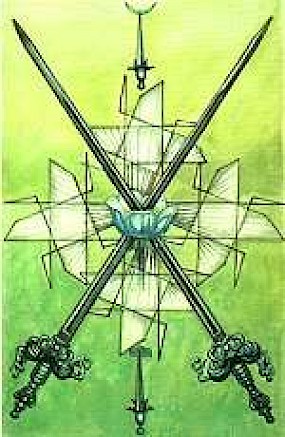
Tarot Card for January 19: The Two of Swords

The Two of Swords

The Lord of Peace is a friendly Sword, which comes as something of a relief when we have spent so much time dealing with his more belligerent cousins. However it must be noted that the card often comes up to indicate that a conflict has been resolved or a breach healed, so there will have been trouble earlier on.

It indicates that a painful and difficult situation is being reconciled. Friendships are rebuilt, old wounds are healed. However in this context it is very important to look carefully at the cards which follow it, for there is often a feeling that a relationship will never be quite the same again as it was before the conflict or quarrel. If the Four of Swords comes up nearby, this is a clear indication that one should remain cautious and thoughtful, not giving too much in the way of trust, for some time. If the Moon was up in the reading, we would be forced to consider the possibility that all is not as it seems.

At an inner level, the Two of Swords really comes into its own, for it marks the period of tranquillity and calmness that can arise when we have finally made difficult decisions, and acted upon them. Often it will come up to show that, now we have got to grips with our confusion, we can rest and recover.

The card will also come up to show that we have let go of old fears or anxieties that were holding us back. It’s a still card indicating a time to rest and recuperate.

The Two of Swords

(via angelpaths.com and Alan Blackman)

Word-Built World: horripilation

horripilation

/hôˌripəˈlāSHən,həˌripəˈlāSHən/

noun

LITERARY

noun: horripilation; plural noun: horripilations

  1. the erection of hairs on the skin due to cold, fear, or excitement.”a horripilation of dread tingled down my spine”

Origin

mid 17th century: from late Latin horripilatio(n- ), from Latin horrere ‘stand on end’ (see horrid) + pilus ‘hair’.

The Integral Yoga of Sri Aurobindo, Parts One, Two and Three

“Pain is an intensity of bliss that the body cannot bear.”
–Sri Aurobindo

Part One: The Revolutionary Yogi, with Debashish Banerji

New Thinking Allo • Jan 5, 2016 Debashish Banerji, PhD, is former Dean of Academic Affairs at the University of Philosophical Research in Los Angeles as well as an adjunct faculty member at Pasadena City College and the California Institute of Integral Studies. He is also the former director of the East West Cultural Center in Los Angeles. He is author of Seven Quartets of Becoming: A Transformative Yoga Psychology Based on the Diaries of Sri Aurobindo and also The Alternate Nation of Abanindranath Tagore, a book about his great grandfather. He edited an anthology about his great uncle, Rabindranath Tagore in the Twenty-First Century. Here he describes Aurobindo’s unique role as a spiritual figure during the chaotic years of the early twentieth century. Born to an upper-class Indian family, he studied in England and achieved high marks as a scholar. When he returned to India, he became a leader in the anti-colonial movement. At this time he also began practicing yoga and quickly discovered many extraordinary states of consciousness. Eventually he was imprisoned for his political activities and, while in prison, his yoga and meditative practices accelerated. He began to experience himself as having a personal relationship with god (Brahman), mediated by the avatar Krishna. He came to experience everything and everyone as an embodiment of Krishna. As a result, he came to realize that a political revolution would be incomplete without an accompanying spiritual revolution. New Thinking Allowed host, Jeffrey Mishlove, PhD, is author of The Roots of Consciousness, Psi Development Systems, and The PK Man. Between 1986 and 2002 he hosted and co-produced the original Thinking Allowed public television series. He is the recipient of the only doctoral diploma in “parapsychology” ever awarded by an accredited university (University of California, Berkeley, 1980). He serves as dean of transformational psychology at the University of Philosophical Research. He teaches parapsychology for ministers in training with the Centers for Spiritual Living through the Holmes Institute. He has served as vice-president of the Association for Humanistic Psychology, and is the recipient of its Pathfinder Award for outstanding contributions to the field of human consciousness. He is also past-president of the non-profit Intuition Network, an organization dedicated to creating a world in which all people are encouraged to cultivate and apply their inner, intuitive abilities. (Recorded on December 20, 2015)

Part Two: The Spiritual Empiricist, with Debashish Banerji

Part Three: Future Evolution of Humanity, with Debashish Banerji

Book: “The Psychic Side of Sports”

The Psychic Side of Sports

The Psychic Side of Sports

by Michael Murphy, Rhea A. White

FRIEND REVIEWS

Dec 06, 2021Daniel rated it really liked it

An exploration of the spiritual and mystical dimensions of athletics. Quite a sincere, beautiful and even romantic book that gives you a clear idea that more–much more–is possible in life and sport than you think. A reader will need a certain level of credulousness to get maximum value out of this book, while a cynical or highly skeptical reader shouldn’t bother reading it at all.

ABOUT MICHAEL MURPHY

Michael Murphy

Bestselling author Michael Murphy has been called the father of the human potential movement, one of the most influential movements in twentieth-century American culture. His bestselling book Golf in the Kingdom (1972) inspired the creation of the Shivas Irons Society, a nonprofit group dedicated to finding beauty and discovery through the game of golf, and has recently been adapted into a movie starring Malcolm McDowell (2010). His other books include Jacob Atabet (1977), An End to Ordinary History (1982), In the Zone (1995), and The Kingdom of Shivas Irons (1997). He lives in California.

(Goodreads.com)

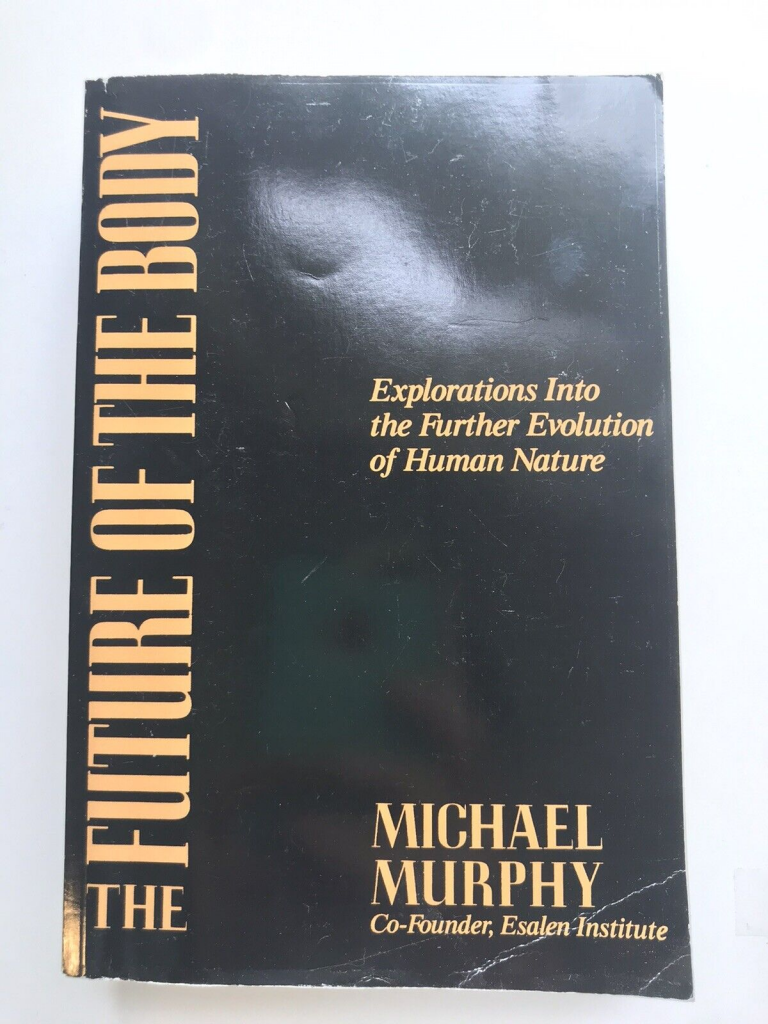
Book: “The Future of the Body: Explorations into the Further Evolution of Human Nature”

The Future of the Body: Explorations into the Further Evolution of Human Nature

by Michael Murphy

In the oral and written histories of every culture, there are countless records of men and women who have displayed extraordinary physical, mental, and spiritual capacities. In modern times, those records have been supplemented by scientific studies of exceptional functioning.

Are the limits of human growth fixed?

Are extraordinary abilities latent within everyone?

Is there evidence that humanity has unrealized capacities for self-transcendence?

Are there specific practices through which ordinary people can develop these abilities?Michael Murphy has studied these questions for over thirty years.

In The Future of the Body, he presents evidence for metanormal perception, cognition, movement, vitality, and spiritual development from more than 3,000 sources. Surveying ancient and modern records in medical science, sports, anthropology, the arts, psychical research, comparative religious studies, and dozens of other disciplines, Murphy has created an encyclopedia of exceptional functioning of body, mind, and spirit. He paints a broad and convincing picture of the possibilities of further evolutionary development of human attributes.

By studying metanormal abilities under a wide range of conditions, Murphy suggests that we can identify those activities that typically evoke these capacities and assemble them into a coherent program of transformative practice.

A few of Murphy’s central observations and proposal include:

The observation that cultural conditioning powerfully shapes (or extinguishes) metanormal capacities.

The proposition that we cannot comprehend our potentials for extraordinary life without an empirical approach that involves many fields of inquiry and different kinds of knowing.

The notion that a widespread realization of extraordinary capacities would constitute an evolutionary transcendence analogous to the rise of humankind from its primal ancestry.

The proposal that all or most instances of significant human development are produced by a limited number of identifiable activities such as disciplined self-observation, visualization of desired capacities, and caring for others.

The idea that a balanced development of our various capacities is possible through integrated practices.

In The Future Of The Body, Murphy states that such practices can carry forward Earth’s evolutionary adventure and lead humanity to the next step in its development.

(Goodreads.com)

China’s first population fall since 1961 creates ‘bleaker’ outlook for country [but good news for the world]

Shift occurring nearly a decade ahead of forecasts heightens concerns over demographic time bomb

A woman holds a baby at a local park on May 12, 2021 in Beijing, China
 A woman holds a baby at a local park in Beijing, China. China’s population has shrunk for the first time since 1961. Photograph: Kevin Frayer/Getty Images

Helen Davidson in Taipei and agencies

Mon 16 Jan 2023 (TheGuardian.com)

China has entered an “era of negative population growth”, after figures revealed a historic drop in the number of people for the first time since 1961.

The country had 1.41175 billion people at the end of 2022, compared with 1.41260 billion a year earlier, the National Bureau of Statistics said on Tuesday, a drop of 850,000. It marked the beginning of what is expected to be a long period of population decline, despite major government efforts to reverse the trend.

Speaking on the eve of the data’s release, Cai Fang, vice-chairman of the Agriculture and Rural Affairs Committee of the National People’s Congress, said China’s population had reached its peak in 2022, much earlier than expected. “Experts in the fields of population and economics have predicted that by 2022 or no later than 2023, my country will enter an era of negative population growth,” Cai said.

Visual illustration showing large crowds of people in India

China’s government has for several years been scrambling to encourage people to have more children, and stave off the looming demographic crisis caused by an ageing population. New policies have sought to ease the financial and social burdens of child rearing, or to actively incentivise having children via subsidies and tax breaks. Some provinces or cities have announced cash payments to parents who have a second or third child. Last week the city of Shenzhen announced financial incentives that translate into a total of 37,500 yuan ($5,550) for a three-child family.

However after decades of a one-child policy that punitively discouraged having multiple children, and rising costs of modern living, resistance remains among couples.

At a press conference on Tuesday, Kang Yi, head of the National Bureau of Statistics, said China’s overall labor supply still exceeded demand, and people should not worry about the population decline.

China is on track to be overtaken by India as the world’s most populous nation.

https://interactive.guim.co.uk/uploader/embed/2022/11/indiapop-zip/giv-6562wl6SRLV918Ob/

Last year’s birthrate was 6.77 births per 1,000 people, down from a rate of 7.52 births in 2021, marking the lowest birthrate on record. In real numbers, there were more than one million fewer registered births in 2022 than the previous year’s total of 10.62 million.

The country also logged its highest death rate since 1976, registering 7.37 deaths per 1,000 people compared with a rate of 7.18 deaths in 2021.

Cai said China’s social policies needed to be adjusted, including aged care and pensions, a national financial burden which would worsen in the future and impact China’s economic growth.

https://interactive.guim.co.uk/uploader/embed/2023/01/china-population/giv-6562uReAccAuALYu/

Online, some Chinese people were unsurprised by the announcement, saying the social pressures which were driving the low birthrate still remained.

“Housing prices, welfare, education, healthcare – reasons why people can’t afford to have children,” said one commenter on Weibo.

“Now who dares to have children, housing prices are so expensive, no one wants to get married and even fall in love, let alone have children,” said another.

“Not talking about raising social security, only talking about raising the fertility rate, it’s all just crap.”

On Tuesday China’s government also announced the GDP had grown 3% in 2022. That figure would mark one of the slowest periods of growth in decades, but was still higher than predicted, prompting some scepticism among analysts given the incredibly stringent zero-Covid restrictions in place during the fourth quarter.

China’s stringent zero-Covid policies that were in place for three years before an abrupt reversal which has overwhelmed medical facilities, have caused further damage to the country’s bleak demographic outlook, population experts have said.

Yi Fuxian, an obstetrics and gynaecology researcher at the University of Wisconsin-Madison and expert on China’s population changes, said the decline in population was occurring almost a decade earlier than the country’s government and the United Nations had projected.

https://interactive.guim.co.uk/charts/embed/jan/2023-01-17-10:55:17/embed.html

“Meaning that China’s real demographic crisis is beyond imagination and that all of China’s past economic, social, defence, and foreign policies were based on faulty demographic data,” Yi said on Twitter.

“China’s demographic and economic outlook is much bleaker than expected. China will have to undergo a strategic contraction and adjust its social, economic, defence, and foreign policies. China will improve relations with the West.”

The Planets And Psyche Model

Astro Butterfly Jan 18, 2023

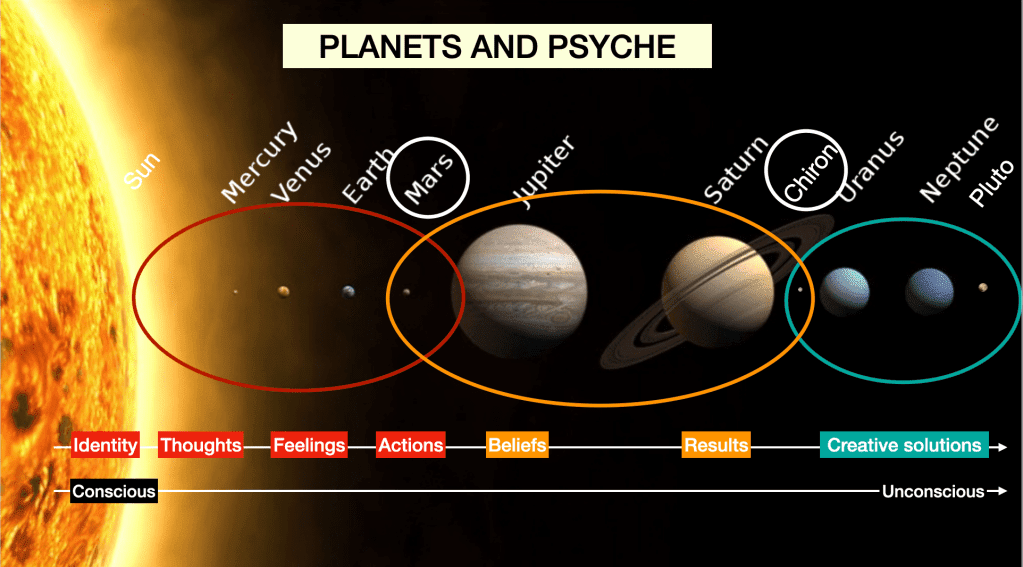
Planets And Psyche is Astro Butterfly’s framework that shows the relationship between the planets in our solar system and our psyche.

Planets And Psyche covers the 10 planets, the Lunar Nodes, and Chiron. According to this framework, the planets build on each other’s expression, according to their distance from the Sun.

The Personal Planets – Sun, Moon, Mercury, Venus, Mars

SUN AND MOON: We start with the Sun and the Moon. The Sun and the Moon are our identity – the Sun is the creative, initiating, YANG identity, and Moon is the receptive, manifesting, YIN identity. We are 50% our Sun, 50% our Moon. Sun and Moon are our identity.

MERCURY: After the Sun and the Moon comes Mercury. Mercury is how we express our Identity (Sun and Moon) and how we interact with the world. These interactions are internalized through language and thinking processes. Mercury is our thoughts.

VENUS: After Mercury comes Venus. Venus is the emotional value we place on our Mercurial input/output. Not all information carries the same weight. Not all Mercury sensorial input is relevant.

We don’t have to remember every single conversation or what we have for breakfast. You will however remember that excellent local dessert or that coffee that had spoiled milk and got you sick. Venus gets to decide what’s relevant and what’s not. Venus is our feelings.

MARS: Next comes Mars. Once we’ve become aware of what’s important to us (Venus), we then take action to fulfill our emotional, subjective desires. If we like (Venus) strawberries, we buy (Mars) strawberries from the supermarket. If we find someone attractive (Venus) we try to get their attention (Mars). Mars is our actions.

The Social Planets – Jupiter and Saturn

JUPITER: After we take action (Mars) according to our wants and desires we get feedback from society (Jupiter). Jupiter is the code of norms and behaviors that are ‘acceptable’ or desirable from a societal standpoint.

Within our psyche, Jupiter is expressed through our beliefs (religious, political beliefs, etc.) i.e. those norms and codes of conduct that we think will help us succeed in life. Jupiter is our beliefs.

SATURN: If we live by our Jupiter beliefs, we will eventually get to reap our Saturn results. If Jupiter, with its unwritten norms and codes of conduct, is the subjective expression of society, Saturn, with its rules and regulations, is the objective, concrete expression of society.

If we live by the rules of society, we get a diploma, we get a job, we have a family, we buy a house, etc. Saturn is our results.

The Planets And Psyche Model

Sun/Moon → Mercury → Venus → Mars → Jupiter → Saturn

Identity → Thoughts → Feelings → Actions → Beliefs → Results

When we look at the planets through the Planets And Psyche lens, we see how these planetary qualities build on each other, which in turn helps us understand where we are ‘stuck’ in our developmental process.

If we have communication problems (Mercury) is perhaps because we don’t know who we are (Sun and Moon). If we don’t get what we want (Mars) is perhaps because we don’t know what we want (Venus).

If we can’t get a job (Saturn) is because we don’t have sound beliefs or support groups (Jupiter) to guide us. Or the issue may be way down the line: we don’t get a job because we don’t send resumes (Mars), or because we don’t know what kind of jobs we like (Venus), or because we don’t know who we are and what makes us special (Sun and Moon).

The Outer Planets – Uranus, Neptune, Pluto

We can’t understand Jupiter and Saturn if we don’t make sense of Mars and Venus first, and we can’t understand Uranus, Neptune, and Pluto until we understand Jupiter and Saturn.

While personal planes (Sun, Moon, Mercury, Venus, Mars) and social planets (Jupiter and Saturn) represent conscious influences that we can integrate with relative ease within our psyche, the outer planets Uranus, Neptune, and Pluto represent collective influences that are beyond our conscious control.

Uranus, Neptune, and Pluto manifest as fated events and influences that happen to us.

The outer planets also represent creative solutions that the universe offers us when the personal and social planets’ “tried and tested” approach no longer works.

The outer planets represent the collective unconscious – the wisdom of our ancestors – as well as the collective superconscious – or those possibilities that have not yet been manifested in the physical plane.

Uranus is the higher octave of Mercury. There is a limit to what we can understand with our limited, human (Mercury) cognition. Uranus is the meta-level of Mercury and it represents intuition, unexpected messages and downloads that seem to come from outside of our mental plane.

Neptune is the higher octave of Venus. If Venus is personal love, Neptune is universal love; we can access Neptune through dreams, art, spirituality, or devotional practices.

Pluto is the higher octave of Mars. If Mars is personal action, Pluto is collective action. We can get a glimpse of Pluto when we follow the flow of nature, for example when we surf, ski, or motor racing.

Mars And Chiron – The “Bridge” Planets

Two planets play a special role in the “Planets And Psyche” model. These planets are Mars and Chiron.

Mars helps us connect the personal planets with the social planets, and Chiron helps us to connect the social planets with the outer planets. Due to their strategic placement, we call Mars and Chiron “bridge” planets.

Mars is a bridge planet because it is the first planet to do a full circle around the Sun (as seen from Earth). Mars is the first planet that breaks away from the Sun, helping us move beyond the basic structure of our Ego.

When we operate from the Sun, Moon, Mercury and Venus alone, we live in a bubble. We are trapped in our ego structure, and we have difficulties relating to other people or understanding different viewpoints.

When we embrace Mars, when we take action, we burst that personal bubble and engage with society, with what’s beyond ourselves.

Chiron is the missing link between the social planets and the outer planets; its role is to help us find wholeness, so we can become receptive to the higher influences of the outer planets and discover our greatest gift.

Planets And Psyche In Practice

We can use the Planets And Psyche model in a myriad of ways. Here are some applications:

  • To understand the planetary archetypes at a deeper level (learning astrology)
  • To understand our psychological processes (self-knowledge)
  • In counseling, to get to the root cause of a problem (awareness and healing)
  • In coaching, to offer practical solutions (mitigating change, getting results)

Let’s take an example:

If someone has relationship issues (Venus), the root cause is found by looking at the planet before Venus. That’s Mercury. Most likely, the reason why their relationships (Venus) are not working is rooted in some negative/outdated mental models (Mercury).

When we can’t express ourselves, or we don’t express ourselves authentically, (Mercury) we don’t build sound values and we don’t know what we want (Venus) – hence, our relationships are affected. When we don’t communicate effectively (Mercury) it’s hard to make ourselves likable and attract other people (Venus).

While the planet BEFORE points to the root cause of the problem, the planet AFTER comes with the solution. The planet after Venus is Mars.

While digging into one’s thoughts and mindset (Mercury) can help us understand the “why”, taking actual action (Mars) can help us overcome the Venus problem by getting out there, meeting people, or going on dates – basically taking Mars action.

The Venus sign, house placement, and the aspects Venus makes with other planets will give further clues about one’s relationship profile and particular challenges and opportunities.

Planets And Psyche Live Zoom Call

On Sunday, January 22nd, 2023 one of our Astro Butterfly in-house astrologers, Caro, will host a live Zoom call to talk about the “Planets And Psyche” Model.

In the call, Caro will explain the model, give practical examples, take questions from the audience, and at the end, share details on how you can further study the model inside the Age Of Aquarius Community.

The call is on Sunday, January 22nd, at 11:00 AM EST (New York) / 8:00 AM PST (Los Angeles) / 4:00 PM BST (London).

The spaces for the Zoom call are limited. You’re invited to register if you are genuinely interested in the topic and you plan to attend live. Please RSVP before January 21st, 2023 by clicking on THIS LINK (one-click registration).

This is going to be a very interesting call! Caro is a master astrologer, certified coach, and former university professor. Her live calls are very sought after (people often stay up late or wake up very early so they can attend live). We hope you can join us!

Princeton Engineers Have Developed a New Way To Remove Microplastics From Water

By PRINCETON UNIVERSITY, ENGINEERING SCHOOL 

JANUARY 7, 2023 (scitechdaily.com)

No Microplastics Concept

Microplastics are tiny particles of plastic that are smaller than 5mm in size and are found in the environment, including in water sources. These particles can come from a variety of sources, including the breakdown of larger plastic items, the use of microbeads in personal care products, and the release of plastic fibers during the washing of synthetic clothing. Microplastics have been found in tap water, bottled water, and even in the oceans, and their presence in the environment is a cause for concern as they can be ingested by marine life and potentially enter the food chain.

Princeton Engineering researchers have developed a cost-effective way to use breakfast foods to create a material that can remove salt and microplastics from seawater.

The researchers used egg whites to create an aerogel, a versatile material known for its light weight and porosity. It has a range of uses, including water filtration, energy storage, and sound and thermal insulation. Craig Arnold, the Susan Dod Brown Professor of Mechanical and Aerospace Engineering and vice dean of innovation at Princeton, leads a lab that focuses on creating new materials, including aerogels, for engineering purposes.

One day, sitting in a faculty meeting, he had an idea.

“I was sitting there, staring at the bread in my sandwich,” said Arnold. “And I thought to myself, this is exactly the kind of structure that we need.” So he asked his lab group to make different bread recipes mixed with carbon to see if they could recreate the aerogel structure he was looking for. None of them worked quite right initially, so the team kept eliminating ingredients as they tested, until eventually, only egg whites remained.

“We started with a more complex system,” Arnold said, “and we just kept reducing, reducing, reducing, until we got down to the core of what it was. It was the proteins in the egg whites that were leading to the structures that we needed.”

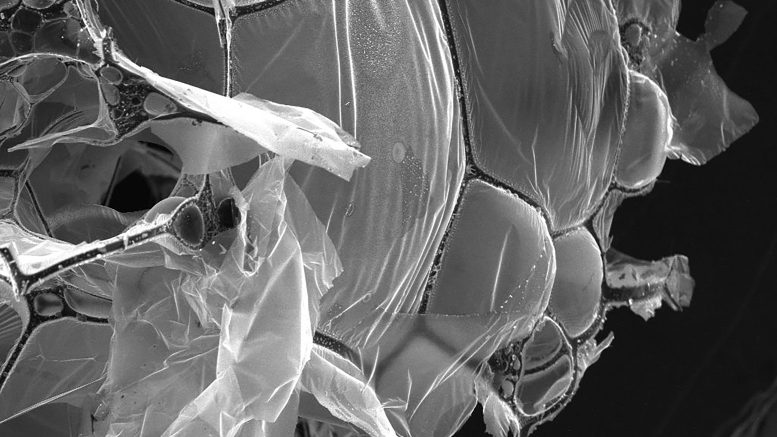
Egg White Protein Aerogel Microscopy Image

The structure of the aerogel is formed by graphene sheets stretched across carbon fiber networks. Credit: Shaharyar Wani

Egg whites are a complex system of almost pure protein that — when freeze-dried and heated to 900 degrees Celsius in an environment without oxygen — create a structure of interconnected strands of carbon fibers and sheets of graphene. In a paper published Aug. 24 in Materials Today, Arnold and his coauthors showed that the resulting material can remove salt and microplastics from seawater with 98% and 99% efficiency, respectively.

“The egg whites even worked if they were fried on the stove first, or whipped,” said Sehmus Ozden, the first author of the paper. Ozden is a former postdoctoral research associate at the Princeton Center for Complex Materials and is now a scientist at Aramco Research Center. While regular store-bought egg whites were used in initial tests, Ozden said, other similar commercially available proteins produced the same results.

“Eggs are cool because we can all connect to them and they are easy to get, but you want to be careful about competing against the food cycle,” said Arnold. Because other proteins also worked, the material can potentially be produced in large quantities relatively cheaply and without impacting the food supply. One next step for the researchers, Ozden noted, is refining the fabrication process so it can be used in water purification on a larger scale.

If this challenge can be solved, the material has significant benefits because it is inexpensive to produce, energy-efficient to use, and highly effective. “Activated carbon is one of the cheapest materials used for water purification. We compared our results with activated carbon, and it’s much better,” said Ozden. Compared with reverse osmosis, which requires significant energy input and excess water for operation, this filtration process requires only gravity to operate and wastes no water.

While Arnold sees water purity as a “major grand challenge,” that is not the only potential application for this material. He is also exploring other uses related to energy storage and insulation.

Reference:  “Egg protein derived ultralightweight hybrid monolithic aerogel for water purification” by Sehmus Ozden, Susanna Monti, Valentina Tozzini, Nikita S. Dutta, Stefania Gili, Nick Caggiano, A. James Link, Nicola M. Pugno, John Higgins, Rodney D. Priestley and Craig B. Arnold, 24 August 2022, Materials Today.
DOI: 10.1016/j.mattod.2022.08.001

The research included contributions from the departments of chemical and biological engineering and geosciences at Princeton and elsewhere. “It’s one thing to make something in the lab,” said Arnold, “and it’s another thing to understand why and how.” Collaborators who helped answer the why and how questions included professors Rodney Priestley and A. James Link from chemical and biological engineering, who helped identify the transformation mechanism of the egg white proteins at the molecular level. Princeton colleagues in geosciences assisted with measurements of water filtration.

Susanna Monti of the Institute for Chemistry of Organometallic Compounds and Valentina Tozzi from Instituto Nanoscienze and NEST-Scuola Normale Superiore created the theoretical simulations that revealed the transformation of egg white proteins into the aerogel.

The study was funded by the Princeton Center for Complex Materials and the National Science Foundation