
Monthly Archives: January 2023

What Are Their Names – David Crosby
Asking a Theoretical Physicist About the Physics of Consciousness
Jordan B Peterson Apr 14, 2022 Dr. Peterson recently traveled to the UK for a series of lectures at Oxford and Cambridge. This conversation was recorded during that period with Sir Roger Penrose, a British mathematical physicist who was awarded the 2020 Nobel Prize in Physics for “discovering that black hole formation is a robust predictor of Einstein’s general relativity.” Moderated by Dr. Stephen Blackwood.
(Contributed by Ben Gilberti, H.W., M.)
Tarot Card for January 20: The Two of Swords
The Two of Swords
The Lord of Peace is a friendly Sword, which comes as something of a relief when we have spent so much time dealing with his more belligerent cousins. However it must be noted that the card often comes up to indicate that a conflict has been resolved or a breach healed, so there will have been trouble earlier on.
It indicates that a painful and difficult situation is being reconciled. Friendships are rebuilt, old wounds are healed. However in this context it is very important to look carefully at the cards which follow it, for there is often a feeling that a relationship will never be quite the same again as it was before the conflict or quarrel. If the Four of Swords comes up nearby, this is a clear indication that one should remain cautious and thoughtful, not giving too much in the way of trust, for some time. If the Moon was up in the reading, we would be forced to consider the possibility that all is not as it seems.
At an inner level, the Two of Swords really comes into its own, for it marks the period of tranquillity and calmness that can arise when we have finally made difficult decisions, and acted upon them. Often it will come up to show that, now we have got to grips with our confusion, we can rest and recover.
The card will also come up to show that we have let go of old fears or anxieties that were holding us back. It’s a still card indicating a time to rest and recuperate.
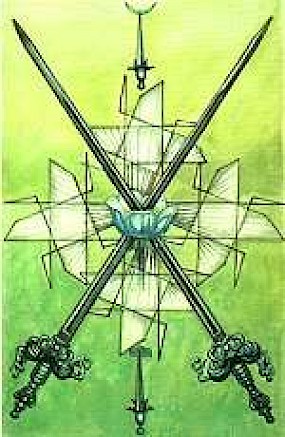
(via angelpaths.com and Alan Blackman)
Joseph of Cupertino: The Saint Who Flew
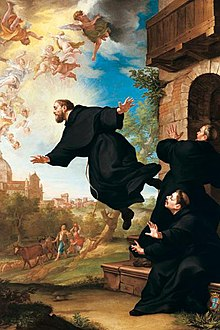
by Ludovico Mazzanti (18th century)
From Wikipedia, the free encyclopedia
| Saint Joseph of Copertino O.F.M. Conv. | |
|---|---|
| St. Joseph of Copertino is lifted in flight at the site of the Basilica of Loreto, by Ludovico Mazzanti (18th century) | |
| Confessor | |
| Born | Giuseppe Desa 17 June 1603 Copertino, Terra di Otranto, Kingdom of Naples |
| Died | 18 September 1663 (aged 60) Osimo, Marche, Papal States |
| Venerated in | Roman Catholic Church (Franciscans) |
| Beatified | 24 February 1753, Rome, Papal States by Pope Benedict XIV |
| Canonized | 16 July 1767, Rome, Papal States by Pope Clement XIII |
| Major shrine | Basilica of St. Joseph of Copertino, Piazza Gallo, 10, Osimo, Ancona, Italy |
| Feast | 18 September |
| Patronage | The City of Copertino and the City of Osimo, aviation, astronauts, mental handicaps, examinations, students |
Joseph of Cupertino, OFM Conv. (Italian: Giuseppe da Copertino; 17 June 1603 – 18 September 1663) was an Italian Conventual Franciscan friar who is honored as a Christian mystic and saint. According to traditional Franciscan accounts, he was “remarkably unclever”, but experienced miraculous levitation and ecstatic visions throughout his life which made him the object of scorn.[1] He applied to the Conventual Franciscan friars, but was rejected due to his lack of education. He then pleaded with them to serve in their stables. After several years of working there, he had so impressed the friars with the devotion and simplicity of his life that he was admitted to their Order, destined to become a Catholic priest, in 1625.
Life
He was born the son of Felice Desa and Frencesca Panara in the village of Cupertino, in the Region of Apulia, then in the Kingdom of Naples, now in the Italian Province of Lecce. His father having died before his birth, however, the family home was seized to settle the large debts he had left, and his mother was forced to give birth to him in a stable.
Joseph began to experience ecstatic visions as a child, which were to continue throughout his life, and made him the object of scorn. His life was not helped by his frequent outbursts of anger. He was soon apprenticed by his uncle to a shoemaker. Feeling drawn to religious life, in 1620 he applied to the Conventual Franciscan friars, but was rejected due to his lack of education. He then applied to the Capuchin friars in Martino, near Taranto, by whom he was accepted in 1620 as a lay brother, but he was dismissed as his continued ecstasies made him unfit for the duties required of him.
After Joseph returned to the scorn of his family, he pleaded with the Conventual friars near Cupertino to be allowed to serve in their stables. After several years of working there, he had so impressed the friars with the devotion and simplicity of his life that he was admitted to their Order, destined to become a Catholic priest, in 1625. He was ordained a priest on 28 March 1628. He was then sent to the convent of Santa Maria della Grotella, just outside Cupertino, where he spent the next 15 years.[2]
After this point, the occasions of ecstasy in Joseph’s life began to multiply. It was claimed that he began to levitate[3] while participating at the Mass or joining the community for the Divine Office, thereby gaining a widespread reputation of holiness among the people of the region and beyond. He was deemed disruptive by his religious superiors and church authorities, however, and eventually was confined to a small cell, forbidden from joining in any public gathering of the community.
As the phenomenon of flying or levitation was widely believed to be connected with witchcraft, Joseph was denounced to the Inquisition. At their command, he was transferred from one Franciscan friary in the region to another for observation, first to Assisi (1639–1653), then briefly to Pietrarubbia and finally Fossombrone, where he lived with and under the supervision of the Capuchin friars (1653–1657). He practiced a severe asceticism throughout his life, usually eating solid food only twice a week, and adding bitter powders to his meals. He passed 35 years of his life following this regimen.
Finally, on 9 July 1657, Joseph was allowed to return to a Conventual community, being sent to the one in Osimo, where he soon died.
Joseph was beatified in 1753 and canonized in 1767.
Reception
It has been pointed out that alleged eyewitness reports of his levitations are unreliable as they are subject to gross exaggeration, or written two years after his death.[4][5]
Robert D. Smith in his book Comparative Miracles (1965) suggested that Joseph performed feats similar to a gymnast. Smith noted that some of his alleged levitations “originate from a leap, and not from a prone or simple standing or kneeling position, the witnesses mistook a leap of a very agile man for levitation.”[6]
Skeptical investigator Joe Nickell concluded that:
Joseph’s most dramatic aerial traverses were launched by a leap—not by a simple slow rising while merely standing or kneeling—but, moreover, I find that they appear to have continued as just the sudden arcing trajectories that would be expected from bounding. They were never circuitous or spiraling flights like a bird’s. Invariably, Joseph’s propulsions began with a shout or scream, suggesting that he was not caused to leap by some force but chose to.[5]
Human poisoning due to the consumption of rye bread made from ergot-infected grain was common in Europe in the Middle Ages. It was known to cause convulsion symptoms and hallucinations. British academic John Cornwell has suggested that Joseph had consumed rye bread (see ergot poisoning). According to Cornwell “Here, perhaps, lay the key to his levitations. After sampling his own loaves he evidently believed he was taking off.”[7]
Word-Built World: Kyrumption

| In Offspring, Fred tells Angel about a Pylean word which reminds her of his and Cordelia’s relationship: Fred: “Kyrumption. It’s the one nice word I remember from the Pylean hell dimension.” Angel: “What’s it mean?” Fred: “It’s when two great heroes meet on the field of battle and recognize their mutual fate. It’s also a kind of grog made out of the ox dung but that’s archaic.” In Waiting in the Wings, Lorne and Angel have the following conversation: Lorne: “Sorry, strudel. It’s not just when you’re singing. We got a little term back in Pylea. Kyrumption?” Angel: “I know it.” Lorne: “Okay. When two great heroes come together…” Angel: “There will be no coming together, okay? Everything we’ve been through together and all anybody wants to talk about is…” Lorne: “Can’t fight Kyrumption, cinnamon buns. It’s fate. It’s the stars. Kyrumption is…” |
(from TV series Angel and offline.buffy.de)
Free Will Astrology: Week of January 19, 2023
JANUARY 17, 2023 AT 7:00 AM BY ROB BREZSNY (newcity.com)
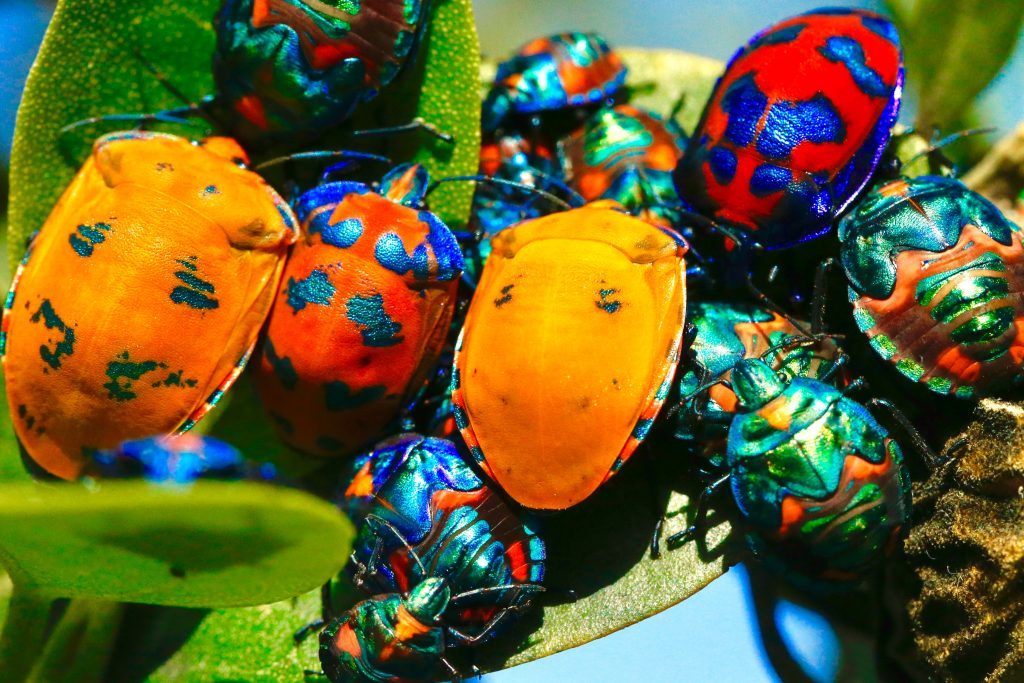
Photo: James Wainscoat
ARIES (March 21-April 19): Good news, Aries! During the next episode in the age-old struggle between the Impulsive You and the Farsighted You, I predict the latter will achieve a ringing victory. Hallelujah! I also foresee you overcoming the temptation to quit a project prematurely, and instead pushing on to complete it. There’s more! You will refrain from knocking your head against an obstacle in the vain hope of toppling it. Instead, you will round up helpers to help you wield a battering ram that will produce the desired toppling.
TAURUS (April 20-May 20): You may not have a clear picture of where you’ll be going in the next five years. The detailed master plan that your higher self devised for you before you were born might even be obscure. But I’m here to tell you that in the coming weeks, a new lucidity can be yours. You can summon an acute instinct about which way is forward, if only you will recognize the subtle ways it’s speaking to you. In fact, I believe you will regularly know what move you should make next so as to expedite your long-term evolution. Life will be rewarding you with mysterious step-by-step guidance. Now please write a short statement affirming your intention to love, honor and obey your intuition.
GEMINI (May 21-June 20): Do you believe in the existence of guardian angels and spirit guides and ancestors who can intervene in your behalf from the other side of the veil? Do you wonder if maybe your invisible friends from childhood show up in your vicinity now and then to offer you support and kindness? Or how about the animals you loved earlier in your life but who have since passed away? Is it possible their souls have never left you, but are available if you need their affection? Even if your rational mind tells you that none of these possibilities are authentic, Gemini, I suspect you will nevertheless be the beneficiary of their assistance in the coming weeks and months. Their influence will be even more potent if you proceed as if they are real.
CANCER (June 21-July 22): Among your potential strengths as a human being are empathy, sensitivity and emotional intelligence. You may or may not choose to develop these natural gifts. But if you do, they can be instrumental in helping you achieve the only kind of success that’s really meaningful for you—which is success that your heart and soul love as much as your head and your ego. According to my astrological analysis, you are moving into a phase of your cycle when you will have extra power to ripen your empathy, sensitivity and emotional intelligence—and thereby enhance your ability to achieve the kind of success that’s meaningful for you.
LEO (July 23-Aug. 22): “Dear Rob the Astrologer: The computer firewall at my youth hostel is blocking your website. I am being told you practice ‘Illegal Folklore and Insurrectionary Fairy Tales.’ What the hell? Can you do anything at your end to get me access to your wonderful horoscopes? Maybe cut back a bit on your Illegal Folklore and Insurrectionary Fairy Tales? Haha. Just kidding. I love that crazy stuff. —Deprived Leo in Ireland.” Dear Deprived: Many of you Leos have lately had problems getting all the Illegal Folklore and Insurrectionary Fairy Tales you need. I hope you will push hard to compensate. In my estimation, you currently have a strong need for dreamy stories that appeal to the Wild Child in you. They’re essential to your mental and spiritual health.
VIRGO (Aug. 23-Sept. 22): In his book “A Million Miles in a Thousand Years: What I Learned While Editing My Life,” Donald Miller acknowledges that fear can be a “guide to keep us safe.” Being afraid may indeed have its uses and benefits. But Miller adds that it’s also “a manipulative emotion that can trick us into living a boring life.” In my astrological opinion, Virgo, fear will be of service to you—a guide to keep you safe—about nine percent of the time in 2023. Around eighty-three percent of the time, it will be a manipulative emotion not worth acting on. For the other eight percent, it will be neither. Please plan accordingly.
LIBRA (Sept. 23-Oct. 22): Select two sticky situations in your world that you would love to reinvent. Let other annoyances and glitches just slide for now. Then cultivate a focused desire to do everything in your power to transform the two awkward or messy circumstances. Proceed as if you will have to do all the work yourself—that nothing will change for the better unless you take full responsibility. If you’re absolutely sure this involves other people altering their behavior, consider the possibility that maybe your behavior needs to shift as well.
SCORPIO (Oct. 23-Nov. 21): Three out of four toxic waste dumps in the U.S. are located in predominantly African American or Latino communities. Two million tons of radioactive uranium tailings have been dumped on Native American lands. Three hundred thousand Latino farm workers in the U.S. suffer from pesticide-related sicknesses every year. These travesties make me furious. More importantly, my rage motivates me to mitigate these travesties, like by educating my readers about them and donating money to groups crusading to fix the problems. In the coming weeks, Scorpio, I hope you will take advantage of your astrological potentials by using your anger constructively, too. Now is a favorable time for you to fight fiercely and tenderly for what’s right.
SAGITTARIUS (Nov. 22-Dec. 21): I predict that love will bring you many AHA! moments in 2023. You can’t fully prepare yourself for them—and that’s a good thing! The epiphanies will be brighter and deeper if they are unexpected. Your motivation to learn the available lessons will be wilder and stronger if you enjoy being surprised. So be ready for lots of entertaining rumbles and reverberations, Sagittarius. The adjustments you will be asked to make will often be strenuous and fun. The inspirations you will be invited to harvest will require you to outgrow some of your previous beliefs about the nature of intimacy and togetherness.
CAPRICORN (Dec. 22-Jan. 19): Some insects are helpful to humans. For example, ladybugs devour aphids, which are highly destructive to crops. Damsel bugs eat the pests called leafhoppers, and lacewings feed on the pernicious nuisances known as mealybugs. I also remind you that some bugs are beautiful, like butterflies, dragonflies and jeweled beetles. Keep these thoughts in mind, Capricorn, as you contemplate my counsel. Metaphorically speaking, you will have experiences with bugs in the next three weeks. But this won’t be a problem if you ally yourself with the good, helpful and beautiful bugs.
AQUARIUS (Jan. 20-Feb. 18): What are “brain orgasms”? Can you seek them out and make them happen, or do you have to wait patiently for them to arrive in their own sweet time? When they occur, what should you do? Surrender into them with all your welcome fully unleashed? Or should you question whether they’re real, be suspicious of their blessings, or dismiss them as irrelevant flukes? I encourage you to meditate on questions like these. That will raise your receptivity to the stream of brain orgasms that life will offer you in the coming weeks.
PISCES (Feb. 19-March 20): My Piscean pagan friend Valie says God is stealthy yet blatant, like a green chameleon perched on a green leaf. After analyzing the astrological omens, I conclude that this is a helpful, all-purpose metaphor for you to use in the coming weeks. I encourage you to be alert for beauty that is hidden in plain sight. See if you can spy the miracles embedded within the ordinary. Ask life to pleasantly blow your mind over and over again. Here’s your phrase of power: open secret.
Homework: Ask life to bring you an insight that will help you ameliorate a long-running dilemma. Newsletter.FreeWillAstrology.com
Meditation can alter human microbiome, improve gut health

JANUARY 17, 2023 (studyfinds.org)
SHANGHAI, China — Deep breathing techniques are known to have a positive impact on stress levels, but scientists are reporting another significant benefit for the body.Trendy mindfulness practices, including deep meditation, can boost good bacteria in the gut, a new study reveals.
A team from Shanghai Jiao Tong University School of Medicine say a study of Buddhist monks found that their microbes differed substantially from those of their non-meditating neighbors. A healthy balance of good gut bacteria has been linked to a lower risk of anxiety, depression, and cardiovascular disease.
Meditation helps people better manage their emotions and enhance their self-awareness. Scientists believe that taking in deep breaths helps dilate blood vessels, allowing more blood to flow through them and lowering blood pressure.
“These results suggest that long-term deep meditation may have a beneficial effect on gut microbiota, enabling the body to maintain an optimal state of health,” the researchers write in a media release.
Over several years, meditating may help to regulate the gut microbiome and potentially lower the risks of physical and mental ill health, according to researchers. Bacteria can affect mood and behavior through the gut-brain axis. This includes the body’s immune response, hormonal signaling, stress response, and the vagus nerve — the main component of the parasympathetic nervous system which oversees an array of crucial bodily functions.
Deep-thinking Tibetan monks can serve as representatives of some deeper meditations. Although the number of participants is small, they are rare because of their geographical location.
Meditation is increasingly being used to help treat mental health disorders, such as depression, anxiety, substance abuse, traumatic stress, eating disorders, and chronic pain. Now, the analysis in the journal General Psychiatry suggests it also alters the composition of the community of trillions of organisms that live in our intestines.
Researchers collected stool and blood samples from 37 Tibetan Buddhist monks at three temples and 19 secular male peers. Tibetan Buddhist meditation originates from the ancient Indian medical system known as Ayurveda and is a form of psychological training.
The monks had been practicing the technique for at least two hours a day for between three and 30 years. Participants had not used antibiotics, probiotics, prebiotics, or antifungal drugs that can affect the microbes in the preceding three months.
Meditation influences gut bacteria linked to mental health
Stool sample analysis revealed significant differences in the diversity and volume of microbes between the monks and their neighbors. Age, blood pressure, heart rate, and diet were taken into account. Species known as Bacteroidetes and Firmicutes were dominant in both groups – as researchers expected.
However, Bacteroidetes and Prevotolla were enriched seven-fold in the monks. There was also a high volume of Megamonas and Faecalibacterium.
“Collectively, several bacteria enriched in the meditation group [have been] associated with the alleviation of mental illness, suggesting that meditation can influence certain bacteria that may have a role in mental health,” the researchers write.
Previous research shows these species include Prevotella, Bacteroidetes, Megamonas, and Faecalibacterium. Computer models indicated several protective anti-inflammatory pathways, in addition to metabolism – the conversion of food into energy – were enhanced in the monks.
Blood scans showed levels of agents linked with a heightened risk of cardiovascular disease, including cholesterol, were also significantly lower. The researchers suggest the role of meditation in helping to prevent or treat psychosomatic illness definitely merits further research.
South West News Service writer Mark Waghorn contributed to this report.

About the Author
Study Finds
Study Finds sets out to find new research that speaks to mass audiences — without all the scientific jargon. Study Finds has been writing and publishing articles since 2016.
The Traditional ‘Imperial Lawn’ Is Dead — Long Live the Trees
Updated: January 13, 2023 (ecowatch.com)
 Edited by Chris McDermott

A house with trees and a garden in the front yard in Los Angeles, California. Citizen of the Planet / Education Images / Universal Images Group via Getty Images
Americans are well known for their evenly clipped, bright green lawns. But rather than being beneficial, these manicured greenspaces are actually detrimental to the environment.
In the U.S., more than 40 million acres of land is covered in some form of lawn, reported Insider. These lawns have the ability to act as carbon sinks that absorb carbon dioxide from the atmosphere, but the substantial carbon cost of lawn maintenance often counteracts the benefits, making lawns climate change contributors, reported Princeton University.
In a new study, researchers encourage the planting of trees in place of “imperial” lawns to help fight the climate crisis.
Auckland University of Technology professor Len Gillman, who was the study’s lead author, said that while letting your pristine lawn go wild “might cut down on the emissions due to maintenance, it’s not going far enough. In terms of climate change we need to absorb as much carbon as we possibly can from the atmosphere… The biggest difference is that shrubs and trees will store vastly more carbon than a lawn,” as The Guardian reported.
The main problem with lawn maintenance is the equipment and chemicals used. Gas-powered lawn mowers, leaf blowers and chemical fertilizers release greenhouse gases that are bad for the environment and contribute to climate change. Lawns also require a lot of water to keep them green in a time of widespread water shortages and drought. And monochromatic turf is a wasteland in terms of biodiversity.
The study, “Calling Time on the Imperial Lawn and the Imperative for Greenhouse Gas Mitigation,” was published in the journal Global Sustainability by Cambridge University Press.
The researchers looked at 65 emissions and carbon sequestration studies comparing lawn or turf with trees, reported The Guardian. They found that as much as 1,797 tons of carbon dioxide could be removed from the atmosphere over two decades if trees were planted on one-third of the city lawns on Earth.
Earlier studies have shown that lawns make up 50 to 70 percent of the planet’s open urban green spaces.
As the climate crisis causes more extreme weather and droughts across the world, rewilding movements are encouraging people to plant wildflowers, trees and native grasses in place of their lawns.
Plants and trees reduce pollution and temperatures in cities and have been shown to provide a wide range of health benefits.
“Spending time around trees and looking at trees reduces stress, lowers blood pressure and improves mood. Numerous studies show that both exercising in forests and simply sitting looking at trees reduce blood pressure as well as the stress-related hormones cortisol and adrenaline,” according to the New York State Department of Environmental Conservation website.
Cristen is a writer of fiction and nonfiction. She holds a JD and an Ocean & Coastal Law Certificate from University of Oregon School of Law and an MA in Creative Writing from Birkbeck, University of London. She is the author of the short story collection The Smallest of Entryways, as well as the travel biography, Ernest’s Way: An International Journey Through Hemingway’s Life.


