Aristotle goes to Hollywood

Aristotle goes to Hollywood | Aeon

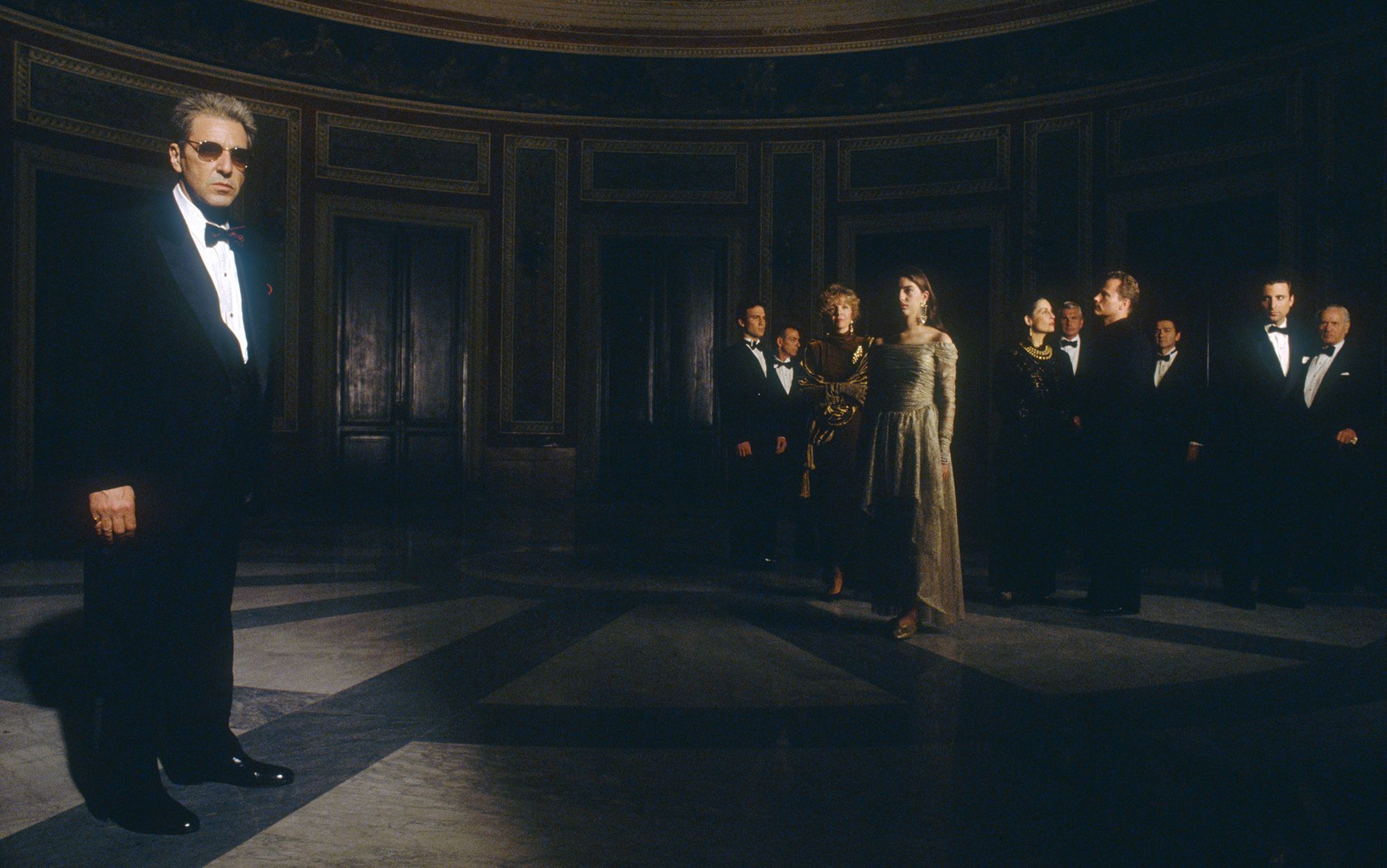
Today, the ancient Greek storyteller would be winning Oscars. To learn how, turn to the Poetics, his masterwork on writingFatal flaws. Al Pacino as Don Michael Corleone in Francis Ford Coppola’s The Godfather: Part III (1990). Photo by Fabian Cevallos/Sygma/Getty Images

Philip Freeman is professor of humanities and Fletcher Jones Chair of Western Culture at Seaver College, Pepperdine University in Malibu, California. He is the author of 21 books, most recently Hannibal: Rome’s Greatest Enemy (2022) and How to Tell a Story (2022).

Edited byPam Weintraub

20 May 2022 (aeon.co)

Love Aeon?

Support our workDONATE

If you wanted to write a screenplay for a blockbuster film, Aristotle is the last person you might ask for advice. He lived more than 2,000 years ago, spent his days lecturing on ethics and earthworms, and never saw a movie in his life. But some of the best contemporary writers of stage and screen, such as Aaron Sorkin and David Mamet, think that this ancient Greek philosopher knew exactly how to tell a gripping story for any age. ‘The rulebook is the Poetics of Aristotle,’ Sorkin says. ‘All the rules are there.’

Aristotle seems like an unlikely guide for storytellers. He was born in the wild land of Macedonia in northern Greece where his father was serving as court physician to the local king, the grandfather of Alexander the Great. After his parents died while he was still a teenager, Aristotle travelled to Athens to study with Plato, the student of Socrates and most famous philosopher of the day. Plato was a brilliant theorist but had little interest in the practical and experimental work that Aristotle loved. The younger man dissected oysters and waded through swamps collecting tadpoles, basically inventing the science of biology, while Plato was busy discoursing on the invisible reality underpinning the cosmos. After Plato died, Aristotle returned to Macedonia for a time to become the tutor of young Alexander, then founded his own school in Athens called the Lyceum, devoted to research and teaching.

In the following years, Aristotle wrote and lectured on every subject imaginable, from astronomy and metaphysics to politics and zoology. Sadly, none of his complete and polished writings survive, only lecture notes. But these notes, sometimes miscopied by later scribes, became the sourcebook of Aristotle’s teaching that would change the world and become the foundation of almost every discipline studied in universities today.

One short work of Aristotle’s that managed to survive the centuries is called the Poetics. In spite of the title, it is about much more than poetry in the modern sense of the word. In ancient Greece, all kinds of literature were written in verse, from epic tales and tragic drama to obscene comedies. Thus the Poetics is really a guide for storytelling of every sort. But the book suffers from an even more mangled manuscript history than most of Aristotle’s writings, with missing and rearranged sections, logical gaps, and the loss of its whole second half on comedy. The fact that so many people through the ages have struggled to study this short work and learn from it is a testimony to its power, even in its jumbled form.

I’ve taught the Poetics to college students many times over the years and been amazed at how often they find it a transformative experience for their own writing and reading. There is simply nothing like this remarkable book for making us think carefully about what makes a story work well, whether we’re composing our own or trying to appreciate Shakespeare or The Shawshank Redemption (1994). But I’ve been so saddened over the years by those bright students who gave up on the Poetics out of sheer frustration that I decided to translate it anew from the ancient Greek, and try to organise it in a way that is understandable for a modern audience. The result – entitled How to Tell a Story (2022) – is a new approach to Aristotle’s Poetics that strives to be a faithful and accurate translation but also a useful handbook for writers and readers. Some scholars might scoff at the idea of presenting the Poetics as a guidebook for non-specialists, but Aristotle’s ideas are so powerful that they beg to be available to a wider audience. You may not agree with everything Aristotle says, but consider his ideas, and see if you don’t think they’re as fresh and brilliant today as they were 2,000 years ago.

Before he lays out the rules of storytelling, Aristotle puts forward some basic principles about what we’re doing when we make any kind of art, whether it be literature, music, painting or dance. He says, most importantly, that everything we create is a kind of imitation (in Greek, mimesis) of life, but using different types of media, objects and manners, whether colours on a canvas, sounds in a concert hall, or words on a page. This doesn’t mean art is a simple mirror of reality – far from it – for we shape the images, sounds or words to make some particular point and tell our own unique story. But it also means that whatever you create must be connected logically to the real world around you and reflect life to some recognisable degree if you want your audience to hear what you have to say.

Aristotle’s rules don’t work well for every type of storytelling. His primary focus in the Poetics is on tragedy and drama – like his favourite play Oedipus Rex by Sophocles – that can be presented in a couple of hours. He has great respect for lengthy Lord of the Rings-style epics, like Homer’s Iliad and the Odyssey, but stories that take days to tell aren’t his main focus. This makes him particularly well-suited for writers working on a movie or one-off television script rather than an episodic series. You can, of course, apply his rules to longer works, like all six seasons of J J Abrams’s TV series Lost (2004-10), but only if you break them up into weekly stories.

Aristotle focuses on single tragedies because of the immediate payback and emotional impact these stories have on an audience when they’re done well. As he explains in one of the most famous statements from the Poetics, what you want to achieve most as a writer of drama is to evoke pity and fear in your viewers – that is, empathetic pity (‘That poor man’) followed by jolting realisation and fear (‘Oh my God, that could be me!’) When you do this right, your audience walks out of the theatre different from when they entered, having experienced an emotional cleansing of sorts – what the Greeks called catharsis. This is the true power of storytelling.

The most common error in films that the Greek philosopher would condemn is a weak ending

So how does Aristotle say that a writer should do this? The first of his key concepts of storytelling is quite simple but too frequently ignored in scripts:

A story that is complete must have a beginning, middle, and ending.

beginning doesn’t necessarily follow from anything before, but other events naturally follow it and proceed from it. An ending, on the other hand, naturally or in general follows from something else that comes before it, but has nothing that comes after it. A middle follows from some other event and also has things that occur after it.

As is often the case with Aristotle’s rules, this seems so obvious that you might wonder what the fuss is about. But consider how many movies you’ve seen that lack a clear and logical beginning to introduce the action and characters. Audiences will allow you some leeway if you want to reveal a backstory in flashbacks, but if you don’t cover the basics at the start of your story, viewers will become confused and bored. There are also plenty of films that start strong but lose their way somewhere in the middle – a fundamental mistake according to Aristotle. But the most common error in films that the Greek philosopher would condemn is a weak ending, in which the screenwriters don’t know how to bring the story to a proper close. As he says, the worst stories will resort to a deus ex machina ending with some untenable twist, as when a slain hero returns miraculously to life or the alien invaders all suddenly die. These are the failings of lazy writers who don’t bother to plan their script before they start. Aristotle says not to insult your audience this way or you will not win any laurels at the next festival of Dionysus.

Some of us like to believe we are divinely inspired by the Muses when we write, and need only to take pen in hand to produce a masterpiece. Aristotle says this is a foolish idea. Writing is hard work and good writing requires a detailed plan, like any other job done well:

Whether drawing on an earlier story or creating one, a writer should first outline the overall structure of the story, then fill in the episodes and details.

Another lesson that Aristotle teaches is one that far too many filmmakers ignore – spectacle must always be secondary to storyline. For the ancient Greeks, this meant a stage with too many props and decorations, but it holds equally true for movies. Whether a cast of thousands in Stanley Kubrick’s classic Spartacus (1960) or cutting-edge digital graphics on the contemporary screen, elaborate pageantry and special effects are meant to serve the narrative. Fantastic battle sequences and crashing cars cannot make up for a weak plot, and in fact are a wearisome distraction when the story is lacking (and, yes, I’m talking about you, Star Wars prequels). Even the most avid fans will grow tired of a film that is all flash and bang with no substance. This doesn’t mean that special effects are a bad idea in a movie, far from it. You can have both a strong storyline and amazing CGI in a film like Avengers: Endgame (2019), but the folks at Marvel were smart enough to make the spectacle always serve the story.

But how long should a movie or television show be? Aristotle has a wonderful analogy for talking about the proper length of a story. Drawing on his background as a biologist, he says that watching a story unfold is like looking at an animal. Your audience must be able to clearly see the whole thing at once to appreciate it. If a plot is like some gigantic sea creature that your audience can’t keep all at once in their mind’s eye, they will lose interest in it. If it’s too small, like a tiny crustacean on an Aegean beach, it isn’t going to engage anyone, either. Aristotle prefers an extended story when possible:

A longer plot is usually better and more beautiful, provided that it can still be held in the memory all at once. A simple definition of the proper length of a story would be that it is long enough to allow a change from good fortune to bad or bad fortune to good, in accord with what is probable or necessary.

But there’s also a reason why we have an Oscar for short films. As Aristotle would certainly appreciate, Pixar and other talented studios can create amazing and complete stories that last no more than five minutes. What matters isn’t so much how long a film lasts as how carefully the time is used. As a writer, you have to find the magic length that gives you enough pages to properly develop the plot, but not one so long as to bore your viewers.

There’s nothing more disturbing and relatable than a fight between people who love each other

The most controversial rule that Aristotle gives in the Poetics is that character is secondary to plot:

Plot is the first principle and, so to speak, the soul of tragedy. Character comes second. Painting is much the same way. If an artist were to cover a surface with the finest and most beautiful colours at random, it would provide the viewer with less pleasure than a simple outline of an object.

Some modern critics might say that Aristotle doesn’t think characters are important, but this is a misreading of the text. In fact, he believes deeply in rich, well-developed characters inhabiting a story, but those characters must always serve the storyline, not vice versa. Granted, some very talented writers and directors believe that Aristotle is simply wrong about this rule and that characterisation is everything in a story, but I think Aristotle is correct. Consider for a moment the best films you’ve ever seen and whether they are ultimately plot- or character-driven. The Usual Suspects (1995), for example, has some of the most intriguing characters I’ve ever seen in a movie, but they are ultimately in service to the plot of the film. The same holds for Casablanca (1942), Black Panther (2018) or Thelma and Louise (1991). I will grant that characters may in fact be more important than storyline in great comedy like A Funny Thing Happened on the Way to the Forum (1966) or The Big Lebowski (1998) but, since the second half of the Poetics on comedy is missing, we don’t know if perhaps Aristotle would have thought so too.

Just because Aristotle thinks plot is ultimately more important than character doesn’t mean that the players in your story are unimportant. One simple but profound observation that Aristotle makes is that any writer who wants to hold the attention of an audience needs to centre the story on conflict between characters. Even if the plot of your movie is based on saving the Earth from a rogue comet, the struggles between your characters are what matters most. Why conflict? Because a story in which everyone gets along beautifully will be as boring as watching paint dry. But who should be in conflict? You could have a straightforward story about a princess who battles an evil villain and prevails, but this is the plot of an entertaining children’s cartoon. If you want your story to appeal to grown-ups, make the conflict about the relationships everyone knows are the most fraught with drama:

The suffering that occurs between those who are in close relationships is best, whether brother against brother, son against father, mother against son, or son against mother.

Your story doesn’t need to be as dark as the Oresteia trilogy by the ancient Greek playwright Aeschylus, in which family members are literally killing one another at every turn, but there’s nothing more disturbing and relatable than a fight between people who love each other (we’ve all been at that Thanksgiving dinner). Parents and children, husbands and wives, best friends – conflicts between these characters are the ones that will tear your heart out and make you want to see how the story ends.

Another key point for Aristotle about tragic characters is how they should fare overall in the arc of a dramatic plot. He says it is vital for a character to change from the beginning to the end of a story; if you want to achieve the maximum effect on an audience, that should be your goal as a writer. But there are different kinds of changes that are possible depending on the fundamental nature of a character. Granted, no one in a story should be two-dimensional and written as simply good or bad, but characters tend to fall into one or the other category. Aristotle, being the master of logic he is, lays out some of the possibilities for character change over the course of a story. He says that you can have a bad person suffer a bad outcome, but this is not very interesting to anyone over the age of five. You could also have a thoroughly good person suffer a horrendous ending, but this will leave your audience full of shock and disgust, not pity and fear. Similarly, if you have a really evil person triumph at the end of your story, the viewers will throw popcorn at the screen, and no one will ever hire you again. What remains is the character change that Aristotle says works best:

We are left then with the best tragic character being someone in-between – that is, neither terribly wicked nor a shining example of virtue. This person undergoes a downfall not through great wickedness or vice, but because of some mistake or weakness.

In other words, the best drama is about someone like you or me – or at least how most of us like to view ourselves – an imperfect but basically decent person who pays their taxes, likes puppies, and will gladly help a friend in need. But this character has a secret flaw, like any of us might, that makes them fall short in life and come to a tragic end. The flaw doesn’t have to be as devastating as the hubris of Oedipus that causes him to unknowingly murder his father and have sex with his own mother, but it needs to be bad enough to lead the character to make some very poor choices, whether because of anger or addiction or even love gone sideways.

Stay out of the story and let your characters carry the action

‘Show, don’t tell’ is another a basic rule of creative writing classes that comes straight from Aristotle. In other words, don’t use narration unless you really have to. Aristotle’s model in this, as for so much else in the Poetics, is the earliest and greatest Greek writer of epic:

Homer deserves praise above other poets for many reasons, but most of all because he knows when not to use his own voice. A storyteller should say as little as possible as a narrator, since this isn’t imitation. Other authors insert their own voices in their stories throughout and use imitation seldom if ever. But Homer, after speaking in a very brief introduction, steps back and brings forward a man, woman, or some other interesting character to take over the narrative.

Narration can work well in the best movies – think Apocalypse Now (1979) or Y tu mamá también (2001) – but it’s very tricky to get right. Unless you have an extraordinary ear for it, stay out of the story and let your characters carry the action.

It also goes without saying that, as a writer, you need to have imagination, but Aristotle adds that you shouldn’t even bother taking up your pen and papyrus unless you have the ability to imagine a story in your head and feel in your soul what your characters are experiencing:

The writers who are most successful are those who by nature are able to identify with their characters and are gripped by their emotions. The truest anger or distress is conveyed by authors who actually feel anger or distress in their soul. Thus the best writers are those who are either highly gifted or insane.

And finally, even troubled writers need to have a firm grip on logic and reason in their writing. Aristotle has no patience for stories with irrational elements:

As far as possible, stories shouldn’t contain any unbelievable parts … The excuse that a plot would be ruined without unbelievable elements is ridiculous, since there’s no reason to include them in the first place. If a writer includes some irrational element and there was a reasonable alternative available, this is unforgivable.

It’s easy to think of good shows that go wrong at times on this point – eg, Daenerys burning down King’s Landing in the TV series Game of Thrones (or, for that matter, when Bran becomes king of Westeros) – but you probably have your own list of favourites.

There are so many more lessons that Aristotle can teach modern writers, but you can discover these for yourself as you work your way through the Poetics. Aristotle’s rules are timeless for the simple reason that our love of stories told well doesn’t change through the ages. They worked for Homer and Sophocles, and they will work for you.

Stories and literature Film and visual culture Thinkers and theories

Conversation with Calvin on May 29

Conversations with Calvin

Dr. Mara Pennell, H.W. 

The Prosperos Sunday Meeting offers another chance to gain insights through interviews with interesting and provocative people in the podcast called “Conversations With Calvin.” 

This meetup features a conversation between Dr. Mara Pennell, H.W., and your host Cavin Harris H.W., M..

This conversation will further explore Mara’s involvement in the Advance Mentors Workshop,  now in its 2nd year; Mara’s work with its Group members in a Dynamic writing challenge that seems to, guarantee to draw forth from the students innate potential and resources. 

This talk will include a glimpse of  Mara’s  life in her use of writing before the workshop, as well as some fun Tidbits and highlights of  Mara’s discoveries about writing within the advance mentor’s workshop.

The event is free, one hour beginning at 11:00 a.m. Pacific Time- Sunday, May 29, 2022 (check time zone against your local time for viewing). follow the link and I will see you there.

Sunday, May 29, 2022, 11:00 am Pacific Time

Go to The Prosperos Sunday Meeting on Zoom: https://us02web.zoom.us/j/332275676

Interesting people + Fun Conversation + Important Insights

Revisiting the Counterculture with Matthew Ingram

New Thinking Allowed with Jeffrey Mishlove Nov 3, 2020 Matthew Ingram is known for throwing raves in West Africa in 1993, writing for Teletubbies, his cult music blog Woebot, writing for the Wire and FACT magazines, setting up the Dissensus forum and putting out a series of LPs. His “Vitamin C” animated documentary was shown at the Chicago International Children’s Film Festival. He is author of Retreat: How the Counterculture Invented Wellness. His website is http://www.woebot.com/ Here the discussion focuses on the many personalities who contributed to the cultural wave that swept the western world, particularly the United States, during the 1960s (many of whom have been interviewed by Jeffrey Mishlove). Matthew’s book specifically focuses on the period from 1955 to 1975. Topics include the role of the Vietnam war, LSD, new psychotherapies, eastern religions and the idea of enlightenment, the anti-establishment protests, the sexual revolution, and feminism. There were, of course, important historical antecedents as well as consequences. (Recorded on October 19, 2020.)

Be a Mother

if abandonment is the core wound

the disconnection from mother

the loss of wholeness

then the most potent medicine

is this ancient commitment

to never abandon yourself

to discover wholeness in the whole-mess

to be a loving mother to your insides

to hold the broken bits

in warm open awareness

and to illuminate the sore places

with the light

of love

–Jeff Foster

(Courtesy of Ben Gilberti, H.W., M.)

Brene Brown on spirituality

“Spirituality is recognizing and celebrating that we are inextricably connected by a power greater than all of us and that our connection to that power and one another is grounded in love and compassion.”
Brene Brown (b. 1965)
American Writer
AN OPPORTUNITY FOR DAILY REFLECTION BROUGHT TO YOU BY THE SCHOOL OF PRACTICAL PHILOSOPHY

HOW A PAKISTANI NOVELIST AND TRANSLATOR LEARNED TO LOVE DICTIONARIES

The Books He Once Saw as ‘Villainous’ and ‘Unwieldy’ Helped Him Introduce Children to Urdu Classical Literature

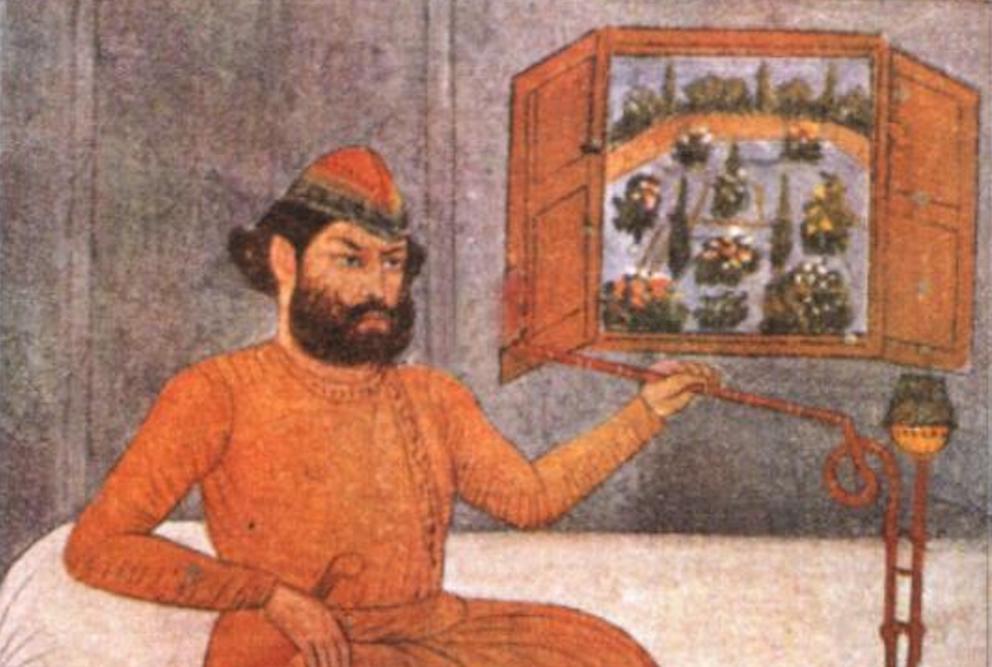
Mir Taqi Mir (1723–1810) was the leading Urdu poet of the 18th century in the courts of the Mughal Empire and Nawabs of Awadh. Courtesy of Wikimedia Commons.

by MUSHARRAF ALI FAROOQI | JULY 25, 2018

(zocalopublicsquare.org)

An image from a winter morning in Hyderabad, Pakistan, when I was four, forms my earliest memory of literacy.

Bundled up in layers of sweaters, I am reciting from an Urdu newspaper as I sit astride my neighbor’s pet goat. I am certain that the sequence of words or their relationships to each other made no sense to me. But my prowess in reading individual words made the exercise as meaningful and empowering as the ability to ride the goat.

That pride, perhaps, explained my ecumenical approach to reading texts in my native language. Possessed by the joy of recognizing words, I did not pass judgment as to the nature of the content, but devoured everything, from my grandfather’s homeopathy manuals to legal documents and exercise guides for warding off old age. A devoted reader does not discriminate between one arrangement of words and another, or between words and numbers. For someone in my situation, Anna Karenina and the railway timetable were one.

As I grew up and moved to Karachi and then Toronto, however, the order and meaning of words took on agonizing importance. I made language my career, becoming a novelist and translator of Urdu classics.

Expanding on the latter role, I eventually developed programs to reintroduce Urdu literature into schools in Pakistan and teach children the vocabulary necessary to understand them. Along the way, I would compile the Urdu language’s first online thesaurus. Oddly enough, it was not the early experience reading astride a goat that shaped my approach in working with children, but a more unfortunate early memory that served as a cautionary tale.

Though I had fallen in love with reading in Urdu at a young age, the experience of learning to read English not long after was radically different. My father’s Chambers Dictionary, bound in red cloth and writ in small print, was my gateway to learning the language. A 19th-century volume often used by crossword puzzle solvers, it represented all the metaphysical terrors the universe held for my seven-year-old, only partially English-literate self. It was not the fear of English letters: I could read them one at a time and had rudimentary grammar. It was the dependence I felt on this heavy, unwieldy book in order to read anything else.

While a dictionary masquerades as a book, it is most certainly not a book, nor can you read it. A dictionary is, in reality, an occult guide that remains unintelligible read in its entirety, and the perplexed may only extract succor from it one word at a time. If you were an unfortunate child who had to consult a dictionary to read story books, you would go sour on life early in your career. I had almost gotten there by the age of seven.

One day I cried in frustration sitting with the Chambers. On that fateful day, I closed it for good. Had someone told me then that I would someday be gleefully dragging around dictionaries to assemble a lexicon of my own, I would not have believed it. As a child, I saw the dictionary as a nasty piece of work, and its making an enterprise suited to a villain.

Musharraf Ali Farooqi, the author, in his goat-riding days (right), with his younger brother. Courtesy of Musharraf Ali Farooqi.

An arduous, lonely journey followed my closing that door. Every few words I got stuck, but I kept reading, sacrificing the pleasure of comprehending words for the joy of reading them. When I encountered an unintelligible word, I moved on but made a note of it. Thereafter, each time that I saw that word again, the context would unravel the word’s definition a little more, and my mind would tag all possible meanings together, slowly clarifying the word. Ultimately, I encountered all, or most, possible contexts in which a particular word was used, and a cluster formed of the many shades of meaning inherent in it. Before long, I realized I was reading and comprehending what I read. I had bypassed Chambers.

As an adult, my work as a translator of classical Urdu literature led me to realize several things about Urdu language and its literature. The Urdu classical narrative genres of the qissa and dastan—typically adventure tales and epic fantasies—offer some of the finest stories in world literature. But I understood that until a number of these works were translated into other languages, they would not be fully appreciated. Yet these works could not be translated on any large scale until they were first reintroduced and widely read within their culture.

Because of the lack of attention shown to them by critics in the last century, their reintroduction to Urdu readers required a transformation from existing lithoprint editions to typeset, annotated ones, as well as a reading program to teach them in schools. It became apparent, however, that neither translations nor modern annotated editions could be made without a single, handy, comprehensive language reference tool.

These realizations slowly came to me over the course of seven years spent translating Dastan-e Amir Hamza (The Adventures of Amir Hamza) for the Modern Library Classics series. While transforming Urdu’s best-known story into English, I daily lugged around five or six fat dictionaries to consult for my translation, commuting to and from work on public transit in Toronto and working during meal breaks in fast food kitchens.

My aching back begged for a solution, which soon came to me. If entries from hundreds of Urdu dictionaries—published during the blossoming of Urdu lexicography in the 19th and early 20th centuries—could be gathered into one electronic resource, no reader, translator, or scholar of Urdu classics would ever have to carry anything heavier than a cellphone. Upon returning to Pakistan in 2009, I began collecting all the Urdu dictionaries I could find from used book dealers and steadily built up a large collection.My father’s Chambers Dictionary, bound in red cloth and writ in small print, was my gateway to learning the language. It represented all the metaphysical terrors the universe held for my seven-year-old, only partially English-literate self.

Having learned English via a rather joyless process, I knew that a reading program should be simpler and more fun. Urdu stories—qissasdastans, and folktales I had studied—would form the content of the program. But they would need to be integrated into a learning process that allowed children to quickly build vocabulary and feel a sense of progress. One way to do this was to embrace synonyms, familiarizing children’s ears with the context in which the new words were used. Later, the same passages and the new words would form part of an online synonyms quiz.

But such a program would need an online Urdu thesaurus. None existed.

So I found myself creating a second reference work. Compiling a thesaurus sounds like a more complex undertaking than compiling a dictionary, but, logistically, the opposite is true. A program for a digital thesaurus requires just a couple of grammatical fields to group the similar and distinct meanings for each word. Then you just pile in the synonyms and antonyms for each entry.

Over the next few years, I organized synonyms from different dictionaries in separate spreadsheets and had them proofread. Once the data was merged, duplications in fields were removed. Lastly, I organized the synonym entries in alphabetical order. Five years later, the data was in a form that could be shared via an online database.

All the work had been done with my own resources. When I got stuck at the stage of software architecture and development, computer scientist Awais Athar offered his help. After undergoing almost a year of testing, the first online Urdu Thesaurus (still in beta) and its android app were launched on July 16, 2016.

For now, the online thesaurus displays 50 percent of the data I collected and still requires a more detailed classification of synonyms, standardized spelling, the insertion of accents and other marks, identification of antonyms, and integration with a dictionary to improve search and filtering features. Several proofreading rounds must follow. But this thesaurus is already a powerful resource, indispensable for a translator. Google Analytics shows it is being used in 124 countries, marking the current extent of Urdu language readership.

I launched the pilot of the Urdu literature reading program known as Storykit in September 2017 in two branches of the Lahore Grammar School in Pakistan. By 2020, the children will read picture books, chapter books, and fully annotated original editions of selected texts, respectively during their primary, middle, and secondary school years. Currently, more than 1,500 students are enrolled in the primary program.

When children learn idioms in middle school, proverbs in secondary school, and conceptual proverbs in their undergraduate years, some eventually will want a Dictionary of Urdu Idioms, and a Dictionary of Urdu Proverbs. But they won’t have to carry one, or even see a dictionary, to be able to read books. Like the Urdu Thesaurus, these tools can be made available online, and integrated into instruction.

I have a conceptual diagram of how all of these reference tools will be linked together, and a dream of creating the most sophisticated word machine of any language. In it, children would learn from a literature reading program, and within a generation become readers, writers, and translators of the Urdu language.

MUSHARRAF ALI FAROOQI is an author, translator, and publisher. He is also the editor of the online Urdu Thesaurus and founder of the Storykit Program.

Tarot Card for May 20: The Emperor

The Emperor

The Emperor is numbered four and is the Empress’s other half. Here is a man in the prime of life – successful, confident, secure and well-established. Where the Empress is allied with the Moon, the Emperor is aligned with the Sun.

The Emperor is quick and energetic, exerting dynamic control over his life. He feels born to rule and at his best is a thoughtful and sensitive leader. He listens to others but always the final decision is his own.

This is a man who has proved himself worthy. He has won most of his battles and now is the time to rule over a rich and bountiful land. He is the King Arthur type. He also represents fatherhood – fertile man, protector and providor.

When we are the Emperor, we are taking hold of our power. We are prepared to protect and defend the vulnerable, as well as to shed the lazy and weak. Finally, we are willing and ready to pass on what we have discovered to others who are ready to learn.

The Emperor

(via angelpaths.com and Alan Blackman)

Gain-of-function research

From Wikipedia, the free encyclopedia

Gain-of-function research (GoF research or GoFR) is medical research that genetically alters an organism in a way that may enhance the biological functions of gene products. This may include an altered pathogenesistransmissibility, or host range, i.e. the types of hosts that a microorganism can infect. This research is intended to reveal targets to better predict emerging infectious diseases and to develop vaccines and therapeutics. For example, influenza B can only infect humans and harbor seals.[1] Introducing a mutation that would allow influenza B to infect rabbits in a controlled laboratory situation would be considered a gain-of-function experiment, as the virus did not previously have that function.[2][3] That type of experiment could then help reveal which parts of the virus are responsible for its host range, enabling the creation of antiviral medicines which block this function.[3]

In virology, gain-of-function research is usually employed with the intention of better understanding current and future pandemics.[4] In vaccine development, gain-of-function research is conducted in the hope of gaining a head start on a virus and being able to develop a vaccine or therapeutic before it emerges.[4] The term “gain of function” is sometimes applied more narrowly to refer to “research which could enable a pandemic-potential pathogen to replicate more quickly or cause more harm in humans or other closely-related mammals.”[5][6]

Some forms of gain-of-function research (specifically work which involves certain select agent pathogens) carry inherent biosafety and biosecurity risks, and are thus also referred to as dual use research of concern (DURC).[7] To mitigate these risks while allowing the benefits of such research, various governments have mandated that DURC experiments be regulated under additional oversight by institutions (so-called institutional “DURC” committees)[8] and government agencies (such as the NIH’s recombinant DNA advisory committee).[9][10][11] A mirrored approach can be seen in the European Union‘s Dual Use Coordination Group (DUCG).[12][13][14]

Importantly, the US and EU regulations both mandate that an unaffiliated member of the public (or several) be “active participants” in the oversight process.[15][16][17][18] Significant debate has taken place in the scientific community on how to assess the risks and benefit of gain-of-function research, how to publish such research responsibly, and how to engage the public in an open and honest review.[19][20][7][21] In January 2020, the National Science Advisory Board for Biosecurity convened an expert panel to revisit the rules for gain-of-function research and provide more clarity in how such experiments are approved, and when they should be disclosed to the public.[22][23]

Experiments that have been referred to as “gain-of-function”

See also: CRISPR

In early 2011, two groups were investigating how flu viruses specific to birds could possibly cross over and create pandemics in humans: one led by Yoshihiro Kawaoka at the University of Wisconsin–Madison in Madison, Wisconsin and another led by Ron Fouchier at Erasmus University Medical Center in the Netherlands.[24][25] Both groups had both serially passaged H5N1 avian influenza in ferrets, manually taking the virus from one ferret to another, until it was capable of spreading via respiratory droplets. The normally bird-specific virus, through replication over time in the ferrets’ lungs, had adopted several amino acid changes that enabled it to replicate in the mammalian lungs, which are a notably colder than those found in birds.[26][27] This small change also allowed the virus to transmit via droplets in the air made when the ferrets’ coughed or sneezed.[24]

Proponents of the Kawaoka and Fouchier experiments cited several benefits: these answered the question of how a virus like H5N1 could possibly become airborne in humans, allowed other researchers to develop vaccines and therapeutics which specifically targeted these amino acid changes,[28][29][30] and also demonstrated that there was a linkage between transmissibility in avian viruses and lethality: while the virus had become more transmissible, it had also become significantly less deadly.[25][31][32] Various critics of the research (including members of Congress) responded to the publications with alarm. Others called the experiments an “engineered doomsday.”[33] Questions were raised by other scientists including Marc Lipsitch of the T. H. Chan School of Public Health at Harvard University about the relative risks and benefits of this research.[34]

In May 2013, a group led by Hualan Chen, director of China‘s National Avian Influenza Reference Laboratory, published several experiments they had conducted at the BSL3+ laboratory of the Harbin Veterinary Research Institute, investigating what would happen if a 2009 H1N1 circulating in humans infected the same cell as an avian influenza H5N1.[35] Importantly, the experiments had been conducted before a research pause on H5N1 experiments had been agreed upon by the greater virologist community.[36][37] They used these experiments to determine that certain genes, if reassorted in such a dual-infection scenario in the wild, would allow transmission of the H5N1 virus more easily in mammals (notably guinea pigs as a model organism for rodent species), proving that certain agricultural scenarios carry the risk of allowing H5N1 to cross over into mammals. As in the Fouchier and Kawaoka experiments above, the viruses in this study were also significantly less lethal after the modification.[37][38]

Critics of the 2013 Chen group study (including Simon Wain-Hobson of the Pasteur Institute and former Royal Society President Robert May) decried this as an unsafe experiment that was unnecessary to prove the intended conclusions, calling Chen’s work “appallingly irresponsible” and also raising concerns about the biosafety of the laboratory itself.[38] Others (including the Director of the WHO Collaborating Centre on Influenza in Tokyo, Masato Tashiro) praised Chen’s laboratory as “state of the art.” Jeremy Farrar, director of the Oxford University Clinical Research Unit in Ho Chi Minh City, described the work as “remarkable” and said that it demonstrated the “very real threat” that “continued circulation of H5N1 strains in Asia and Egypt” poses.[36]

Gain-of-function research of concern

Significant debate has taken place in the scientific community on how to assess risk-benefit of gain-of-function research, and how to engage the public in deliberations for policymaking. These concerns encompass biosafety, relating to the accidental release of a pathogen into the population, biosecurity relating to the intentional release of a pathogen into the population, and bioethics, the principles of biorisk management and research review procedures.[3]

Academic symposia

Gain-of-Function Research: A Symposium

Also in December 2014, the National Research Council and the Institute of Medicine organized a two-day symposium to discuss the potential risks and benefits of gain-of-function research. The event was attended by scientists from around the world, including George GaoGabriel Leung and Michael SelgelidBaruch FischhoffAlta CharoHarvey FinebergJonathan MorenoRalph CiceroneMargaret HamburgJo HandelsmanSamuel StanleyKenneth BernsRalph BaricRobert LambSilja VönekyKeiji FukudaDavid Relman, and Marc Lipsitch.[39] Shortly thereafter, the US government granted exceptions to the GoFR moratorium to 7 out of 18 research projects that had been affected.[40]

Gain-of-Function Research: A Second Symposium

On March 10–11, 2016, the National Academies of Sciences, Engineering, and Medicine held its second public symposium to discuss potential U.S. government policies for the oversight of gain-of-function (GOF) research. The symposium was held at the request of the U.S. government to provide a mechanism to engage the life sciences community and the broader public and solicit feedback on optimal approaches to ensure effective federal oversight of GOF research as part of a broader U.S. government deliberative process.[41]

Academic advocacy groups

Cambridge Working Group

The Cambridge Working Group was formed by Harvard epidemiologist Marc Lipsitch with fellow scientists at a meeting held in Cambridge, Massachusetts, following a “trifecta” of biosecurity incidents involving the CDC, including the accidental exposure of viable anthrax to personnel at CDC’s Roybal Campus,[42][43] the discovery of six vials containing viable smallpox from the 1950s, labeled as Variola but in a box with other samples poorly labeled, at the FDA’s White Oak campus,[44] and the accidental shipping of H9N2 vials contaminated with H5N1 from the CDC lab to a USDA lab.[45]

On July 14, 2014, the group published a Consensus Statement authored by 18 founding members, including Amir AttaranBarry BloomArturo CasadevallRichard H. EbrightAlison Galvani, Edward Hammond, Thomas InglesbyMichael OsterholmDavid RelmanRichard RobertsMarcel Salathé and Silja Vöneky. Since its initial publication, over 300 scientists, academics, and physicians have added their signature.[46][47]

The statement advocates for all work involving potential pandemic pathogens to be halted until a quantitative and objective assessment of the risks has been undertaken. It then argues that alternative approaches that do not involve such risks should be used instead.[46][48][49]

The group engaged in public advocacy, influencing the US government’s decision in December 2014 to suspend funding of research that would create certain types of novel potential pandemic pathogens.[50]

Scientists for Science

Shortly after the Cambridge Working Group released its position statement, Scientists for Science was formed by 37 signatories taking an alternative position, that “biomedical research on potentially dangerous pathogens can be performed safely and is essential for a comprehensive understanding of microbial disease pathogenesis, prevention and treatment.”[51] Since its publication, the SfS statement has received 200+ signatures from working scientists, academics, and biosafety professionals.[52]

One of the group’s founding members, University of Pittsburgh virologist W. Paul Duprex, has argued (ca. 2014) that the then-recent few events were exceptions to an overall good record of lab safety, and that these exceptions should not have been a reason for shutting down experiments that may have been of tangible benefit to public health.[53] He and other SfS signatories have argued that these pathogens are already subject to extensive regulations and that it would be more advantageous and effective to focus on improving lab safety and oversight, ensuring that experiments are conducted in the public interest.[54][55]

Notable signatories are Constance CepkoDickson DespommierErica Ollmann SaphireGeoffrey SmithKarla KirkegaardSean WhelanVincent Racaniello and Yoshihiro Kawaoka. Columbia University virologist Ian Lipkin, who signed both statements, said “there has to be a coming together of what should be done”.[56]

Founders of both groups published a series of letters detailing their discussions and viewpoints.[55] All authors, however, agreed that more education of the public and open discussion of the risks and benefits was necessary. Several also wrote that sensationalized headlines and framings of the ongoing process as a “debate” with “opposing sides” had negatively affected the process, while the reality is much more collegial.[55]

International policies and regulations

International outlook and engagement on gain-of-function research policy and regulation vary by country and region. Due to the potential effect on the global community at large, the ethical acceptability of such experiments depends on the extent to which it is accepted internationally.[57] In 2010, the World Health Organization developed a non-binding guidance document for DURC, summarizing the positions of many different nations as “self-governing” and others as strictly following oversight based on the International Health Regulations, the Biological and Toxin Weapons Convention (BTWC), and the Center for International Security Studies’ Biological Research Security System. The document also recommended the aforementioned as potential resources for countries to develop their own policies and procedures for DURC.[58][59][60]

European Union

The European Academies Science Advisory Council has formed a working group to examine the issues raised by gain-of-function research and to make recommendations for the management of such research and its outputs.[10] The possibility for developing common approaches between the United States and Europe has been explored.[61]

In May 2014, the German National Ethics Council presented a report to the Bundestag on proposed guidance for governance of GoFR.[62] The report called for national legislation on DURC. As of May 2021, the German government has not passed the endorsed legislation.[63] The NEC also proposed a national code-of-conduct for researchers to consent, endorsing which experiments qualify as misconduct and which do not, based on founding principles of public benefit.[64] The German Research Foundation and German National Academy of Sciences made a joint suggestion to expand the role of existing research ethics committees to also evaluate proposals of DURC.[65]

United States

Gain-of-function research moratorium

From 2014 to 2017, the White House Office of Science and Technology Policy and the Department of Health and Human Services instituted a gain-of-function research moratorium and funding pause on any dual-use research into specific pandemic-potential pathogens (influenzaMERS, and SARS) while the regulatory environment and review process were reconsidered and overhauled.[50] Under the moratorium, any laboratory who conducted such research would put their future funding (for any project, not just the indicated pathogens) in jeopardy.[66][67][68][69] The NIH has said 18 studies were affected by the moratorium.[70]

The moratorium was a response to laboratory biosecurity incidents that occurred in 2014, including not properly inactivating anthrax samples,[71] the discovery of unlogged smallpox samples,[72] and injecting a chicken with the wrong strain of influenza.[73] These incidents were not related to gain-of-function research. One of the goals of the moratorium was to reduce the handling of dangerous pathogens by all laboratories until safety procedures were evaluated and improved.

Subsequently, symposia and expert panels were convened by the National Science Advisory Board for Biosecurity (NSABB) and National Research Council (NRC).[74] In May 2016,[5] the NSABB published “Recommendations for the Evaluation and Oversight of Proposed Gain-of-Function Research”.[75] On 9 January 2017, the HHS published the “Recommended Policy Guidance for Departmental Development of Review Mechanisms for Potential Pandemic Pathogen Care and Oversight” (P3CO).[5] This report sets out how “pandemic potential pathogens” should be regulated, funded, stored, and researched to minimize threats to public health and safety.

On 19 December 2017, the NIH lifted the moratorium because gain-of-function research was deemed “important in helping us identify, understand, and develop strategies and effective countermeasures against rapidly evolving pathogens that pose a threat to public health.”[76]

COVID-19 pandemic

See also: COVID-19 lab leak hypothesis and COVID-19 misinformation § Wuhan lab origin

During the COVID-19 pandemic a number of conspiracy theories spread about the origin of the SARS-CoV-2 virus and links to gain-of-function research.[77][78][79][80] In January 2021, University of Saskatchewan virologist Angela Rasmussen wrote that one version of the information invoked previous gain-of-function work on coronaviruses to promulgate the idea that the virus was of laboratory origin. Rasmussen stated that this was unlikely, due to the intense scrutiny and government oversight to which GoFR is subject, and it is improbable that research on hard-to-obtain coronaviruses could occur under the radar.[81]

In a congressional hearing on May 11, 2021 about Anthony Fauci‘s role as the Chief Medical Advisor to the United States Office of the President, senator Rand Paul stated that “the U.S. has been collaborating with Shi Zhengli of the Wuhan Virology Institute, sharing discoveries about how to create super viruses. This gain-of-function research has been funded by the NIH.” Fauci responded “with all due respect, you are entirely and completely incorrect…the NIH has not ever and does not now fund gain-of-function research [conducted at] the Wuhan Institute of Virology.”[82] The Washington Post fact-checking team later rated Paul’s statements as containing “significant omissions and/or exaggerations”.[82][83] NIH funding to the EcoHealth Alliance and later sub-contracted to the Wuhan Institute of Virology was not to support gain-of-function experiments, but instead to enable the collection of bat samples in the wild.[82][84] EcoHealth Alliance spokesperson Robert Kessler has also categorically denied the accusation.[82]

The Washington Post also quoted Rutgers University biosecurity expert Richard Ebright‘s dissenting opinion about Fauci’s testimony, demonstrating that there is disagreement about what qualifies as “gain of function” research. Ebright asserted that experiments conducted under the EcoHealth grant “met the definition for gain-of-function research of concern under the 2014 Pause.”[82] MIT molecular biologist Alina Chan has argued that these experiments would not have been affected by the 2014 moratorium, because the experiments involved “naturally-occurring viruses” adding that the moratorium had “no teeth.”[85]

Several scientists have criticized the US government’s GoFR regulations as having serious shortcomings (especially with regards to the NIH’s funding of the EcoHealth Alliance grant proposal). Ebright has remarked that the process is not applied to all experiments which are implicated in the government’s policies, while virologists David Relman and Angela Rasmussen have cited a worrying lack of transparency from oversight panels.[86]

More at: https://en.wikipedia.org/wiki/Gain-of-function_research

The power of humility and The Greater Fool Theory

  • Published on August 16, 2017 (linkedin.com)

Birender AhluwaliaWorkshops on Positivity @ Off sites, Thinking Big + Different, Innovation + Strategy, Sales , CX.

Being humble is difficult to achieve but is a great virtue to possess.

There is a very interesting behavioural economic theory called The Greater Fool Theory. When you hold an investment, and you think, you cannot make any more money out of it, you look for a greater fool to sell your investment. Someone buys the asset from you, thinking, that they can perhaps make more money than you did.

The investment keeps changing hands, with higher valuation, till the last person, who cannot make money from the investment. That person is the greatest fool. Usually the cycle never stops. Someone always figures a way out. That is the underlying spirit of intellectual competitiveness that drives market forces. You feel you know something that others do not know. You feel you are better than everyone else.

We now witness the emergence of universal competitiveness. At the unit level, individuals compete against each other for scarce jobs. Teams and functions compete for resources. Companies and businesses compete for market share, tough commercial negotiations and favourable regulatory interventions.

Political parties compete to secure electoral and ideological influence. Governments are now overtly competing to secure future resources, geographical dominance and perhaps even religious dominion. Countries have formed Treaties, Groups, Leagues, Councils, Alliances and Unions on the lines of ideology; ranging from terror, currencies, debt, trade blocs & commodities, human movement & migration, speech, human rights and industrial strengths.

This competitiveness makes for very interesting television viewing and digital dissemination. We are now subject to a barrage of opinions and news. Our feeds and personal opinions are fed into our friends’ feeds and now battles are fought on individual but interactive digital screens. Tweet for a Tweet, Share for Share, Comment for a Comment; we are being saturated by combat. Battle lines are constantly being drawn and redrawn. With battle lines comes polarisation leading to a further deepening of trenches.

Last week was terrible from a humanity point of view. Gorakhpur, Charlotseville, gender violence makes us stop in our tracks.

Perhaps the time has come to take a step back from our stated positions.

For many years we seem to be stuck. For that, we need to have the humility to say, that something is broken, and to seek a second opinion. r

Many of you would have seen this little clip go viral. It stars Jeff Daniels who plays the role of Will Mcavoy, a main anchor at a news channel, and he is asked the question, “What Makes America the greatest country in the world”.

The last line is perhaps the most telling, “the first step in solving a problem is recognising that there is one.” Here is the interesting bit, which never went viral. In the first season, Will Mcavoy goes on to reconstruct the entire news philosophy of his channel. He starts by saying that he has been wrong. It speaks of humility. Now watch a small clip from the season finale here.

Jennifer Johnson, sorority girl, shows up at the Mcavoy’s office to apply for an internship. She talks about the greater fool, and how she is driven to become the greater fool. More often than not, it is the perceived greater fool who has the humility to say, let me find someone who knows how to solve the problem. If they can not, well, they learn for the next time. So you will wonder what is the link between the greater fool theory and humility.

With events unfurling, we can see some politicians go the other way. I guess the picture below shows us the spectrum of humility.

Last week one of the greatest athletic rivalries ended.

With an heart warming embrace and of course the bow.

Closer to home, Prime Minister Modi, decided that the path to peace in Kashmir was through love and development, not violence and abuse (goli ya gaali . A marked departure and an epitome of using humility as an approach to reach out, unconditionally.

Let’s explore one of the pioneering minds in the investment world, Sir John Templeton. A billionaire investor and considered to be a pioneer in mutual funds.

In his book, “The Humble Approach”, he states,

“Maybe the earth was designed as a place of hardship because it is the best way to build a soul—the best way to teach spiritual joy versus the bodily ills”.

It is fair to say that Templeton, counted humility as a foremost virtue and strength in leaders. This is what he said:

Sir John Templeton

“Humility is not self-deprecation. To believe that you have no worth, or were created somehow flawed or incompetent, can be foolish. Humility represents wisdom. It is knowing you were created with special talents and abilities to share with the world; but it can also be an understanding that you are one of many souls created by God, and each has an important role to play in life. Humility is knowing you are smart, but not all-knowing. It is accepting that you have personal power, but are not omnipotent… Inherent in humility resides an open and receptive mind… it leaves us more open to learn from others and refrains from seeing issues and people only in blacks and whites. The opposite of humility is arrogance— the belief that we are wiser or better than others. Arrogance promotes separation rather than community. It looms like a brick wall between us and those from whom we could learn.

When we think of other leaders, we see obvious paragons of humility. Warren Buffet who continues to live a modest lifestyle. Rahul Dravid, who now coaches the junior Indian Cricket team is another epitome of humility. While we still consider humility as a virtue, we think of it as something “nice to have”. Some even liken it to be the privilege of the rich (I have loans to pay).

We know instinctively that humility is a virtue worthy of possession and use, but we seem to know very little about it. To that end, the John Templeton foundation has funded studies on humility to the tune of millions of dollars.

A good place is to start with the roots of the word humility. Humus means earth or ground. Humilis means “on the ground”. That is why we use the phrase, down-to-earth, being grounded, a grassroots person. Aristotle called it the golden mean between arrogance and lack of self-esteem. Humility is about seeing the self and others as worthy of equal dignity, and sharing human strengths and limitations. It is the way you can describe yourself without positive or negative exaggeration. It is when you can make an accurate assessment of yourself and have the ability to non-defensively acknowledge that perhaps you do hold some limitations, imperfections, and knowledge gaps.

When people who are at the pinnacle of achievement in their field, they want to get even better. Think of how musicians, sportsmen and business leaders evolve? They have the humility to understand that there are frontiers that they can breach. They always remember the principle of trial and error. It is a process of learning.

At a business level, humility is a process where decisions are made by those with knowledge rather than grade and entitlement. With the support of the John Templeton Foundation; Sonja Lyubomirsky and Elliot Kruse, Joseph Chancellor and Peter Ruberton have done some stellar research.

They propose that humility has five hallmarks:

First, a secure and accepting self-identity, where you are aware of your own values and beliefs; Second, freedom from distortion about one’s strengths and weaknesses, knowledge gaps and imperfections; Third, openness to new information about oneself and the world. Fourth, high focus on others relative to the self; keeping their achievements and capabilities in the perspective of the world and that one is part of a universe; Fifth, a belief that other people are equally worthy, and that everyone can contribute.

The opposite of humility is high self-focus. An exaggerated positive view, could actually be signs of arrogance or narcissism. An exaggerated negative view would lead to depression or low self-esteem.

The authors developed a Brief Humility Scale, which is reproduced below. Please answer these questions based on how you feel at this moment:

(1 = strongly disagree; 4 = neither agree nor disagree; 7 = strongly agree)

1. I feel that, overall, I am no better or worse than the average person.

2. I feel that I have both many strengths and flaws.

3. I feel that I do not deserve more respect than other people.

* 4. To be completely honest, I feel that I am better than most people.

* 5. I feel that I deserve more respect than everyone else.

* 6. I feel that I do not have very many weaknesses.

* Items 4-6 are reverse-scored.

The humility stakes are worthy of our studied consideration:

Humility and charity: In their study, they found that people, who scored high on humility, were more likely to give to charity and help others.

Humility and academic performance: Students who demonstrate humility perform better at academics. How was that?

  • Students, who were more humble, could accurately estimate the time they would need to study for a particular test and then put in the necessary effort.
  • They would develop strong role models and attempt to learn from them.
  • If they received poor test scores or feedback, they were quicker to take action for the next test, than their less humble friends.

Students who were humble reported higher scores, general mental ability, conscientiousness, and self-belief. Research even showed that students with lower mental ability but higher humility, compensated with higher effort.

Humility and Doctor – Patient relationships: Even doctors and patients had better outcomes. Humble physicians were rated as more effective at communicating with patients than their less-humble counterparts (Ruberton et al., in press). Their communication skills were closely associated with better patient outcomes (Ong, de Haes, Hoos, & Lammes, 1995; Stewart, 1995).

Humility also has an impact in the business world: For too long, we have attributed the leader to know and do everything for us. We see the leader to be a dominant and aggressive person. Phrases like “nice guys finish last” have pushed humility into the background.

  • Humble employees, when they are praised, want to become better at their work. They deploy more effort and challenge themselves even more.
  • Research shows that employees who were better at estimating their strengths and weaknesses received better supervisor ratings during their performance appraisals.
  • Followers of humble CEO leaders felt more empowered.
  • Some research also shows a significantly higher proportion of wildly successful companies have a humble leader at the very top.

How does that happen?

When leaders have the humility to acknowledge areas of ignorance and inexperience, they were able to foster learning and adaptation. As mentioned earlier, humility is letting the person who has the best perspective and knowledge make the decision. Many call centers have given the Customer Service Agent the full authority to resolve a customer issue. Many organisations now leave the hiring and remuneration decision to the hiring manager. In part, it is humility that drives the process.

Recall a cross-functional project. You would have enjoyed the project, not only for the outcome, but if your strengths were accurately acknowledged and put to work, either by the leader or your peers, their humility to defer to you led to you enjoying the project and you acting in line with their enhanced but accurate expectations from you delivered a superior outcome.

Humility is also known to play a key role in providing customer care. Ever seen a haughty or arrogant shop assistant? On the other hand, leaders with high levels of narcissism were more prone to commit white-collar crimes.

What are the types of humility:

A team of Psychologists recently published a paper titled “Distinguishing intellectual humility and general humility”. They propose that General Humility is an accurate view of the self and ability to control your egocentrism to cultivate a perspective of the other.

People who have a need for power, have a desire to win in every situation. When faced with dissent of angry faces, their response is to establish dominance. They respond to anger with anger. Escalation is an obvious outcome. People who are more humble would temporarily tone down their own message and try and take control of the situation by bringing in calm and sanity.

People who are power hungry, encourage groupthink and work only within closed circles or cliques and coteries. Leaders who are more inclined to humility would reach out for more information before they make a judgement. They strive for deliberation, critique, diversity of thought and collective intelligence.

This is a poetry written by Prathap Suthan. I thought it is a pretty good example of humility. There is a fine balance of their assessment, of their impact and capability. There is an acknowledgment that there are writers better than him. There is an awareness that he can still make a difference to make words happy within themselves.

Why is intellectual humility needed?

We often overestimate our strengths and underestimate our weaknesses. I still have to come across a performance appraisal, where an employee started by saying that their performance did not deserve the highest rating. When presented with data, we tend to go with the reports we first receive and discount the news you get later on.

If you love a hotel or a brand, you will refuse to hear any news that negates your opinion. That is why news channels start with the big news first. They are aware that the more news that they give you, the lesser are the chance of retention.

I know many board members who would say that they needed more time to process the data. They had no qualms of indicating that they were only human. We would think that it was procrastination. Looking back, perhaps they were being human and practising intellectual humility.

Therefore you need to have the humility to move beyond the first couple of data points that are presented, and overcome our own biases. Intellectual humility is correlated to forgiveness, helpfulness and a log of aggression. Intellectual humility leads to higher and faster learning and personal growth and better relationships.

What humility is not?

It is not about being below, as much as it is about not being above someone. Humility is not about being the proverbial doormat, sucker, nice guy, weakling, and spineless. It is not about being a procrastinator or indecisive. It is not about avoiding conflict to appear being the nice guy. It is most certainly not about suppressing your own emotions.

Humility is about being grounded and remaining neutral, even when your own people want you to be “on their side”. Humility is a nutrient. It is when you move ahead with quiet purpose and resolve and carry the diversity with you. It is about not operating from a competitive reflex.

There is an unsaid story in field sales. We would fight it out in the market and ever retail outlet. In the evening, competitors would sit down and get drunk and curse our bosses. Now I am beginning to learn that value. Humility is about operating through a response, which moves the learning and results forward.

Why is humility difficult?

It is just our reflex. When someone talks about their new home. You want to immediately show them your home ideas. You want to help them with your expertise, however unsolicited it may be. It is that person who will always align the painting. When someone is learning something new, you do not simply hear the person, but you want to jump in to direct them to the best teacher. You need to be aware, are you doing this to demonstrate your own knowledge and prowess? Interestingly, the higher your influence and position of power, the more you are likely to want to use it. Not necessarily in designation though. I have seen many humble senior people with equally arrogant receptionists and assistants.

So how do you build humility so that you are not the last greater fool?

Lyubomirsky and her colleagues propose three strategies:

1) Self-Affirmation:

Think about some deeply held values. Say capital punishment, dowry, arranged marriage, abortion, food preferences, alcohol or smoking. The theory states that individuals who reflect on closely held values they are less likely to feel distress and more open to accepting information, which contradicts their sense of self. It could even be your habits. For example, if you like playing the guitar or drinking coffee. To promote self-affirmation, select one strength or value that you want to explore. Now write an essay on how your strength is portrayed in your life. Maybe you value your strength of, say, courage. Now think back on how you built the strength of courage. When did you realise courage was important to you. Now list down the ways you have shown courage.

Now, you could even think of a problem in your life, and explore how you might look at the problem through the lens of courage and find a solution. For example, I love coffee. When I explored it, it was actually sitting in a coffee shop and watching the world go by. Many times, my coffee would remain untouched. More than half my breakfast coffee is poured into my drain. Coffee for me, meant connecting to the world. It meant connecting and being present for people.

There is an interesting angle to this. Suppose you are a heavy smoker or if you love bacon. If you see an article linking bacon or smoking to cancer, you are more likely to absorb the information and act on it, if you were, self-affirmation increases your ability to be open to other people, treat their views with equal respect. This opens you to building some sense of humility. It moves you from being the greater fool to acquiring new knowledge about your ecosystem and resources.

2) Bringing Awe to your Life:

Awe is a very fascinating emotion. Think of the last time you felt in awe. I feel awe when I look out at the brilliant colours of the sea. When I visit a religious place where thousands have congregated. Brilliant colours of a glorious sunset or a full moon in a clear night bring out the sense of awe in me.

First, awe takes place when you witness something either unexpected or vast. It stops you in your tracks beyond the normal. You are captured by that moment. Awe makes you aware, in a positive manner, that you are a small part of the large scheme of the universe. It opens you up to possibilities. The spotlight is taken away from you and into the grand universe. It opens you up. You become aware of how much more you can become. It helps you recognise forces much larger than your own self. You feel that you are part of something large.

Second, when people experience awe, they open themselves to new experiences. They re-evaluate priorities and challenges and even change their self-beliefs. They become more open to consider what limitations their thoughts and behaviours have put on other people.

Awe is a knowledge emotion that fosters quiet reflection, exploring possibilities and learning something new about themselves. It is about reaching out to people, in this universe, who know better; before you make the decision, and become the greater fool. Or to have the humility to say, you have been made the greater fool, now can someone help you bring the investment home. It is about discovering new strengths and resources and abandoning old beliefs that bind you down.

3) Writing a Gratitude Letter

Robert Emmons defined gratitude as a tendency to first recognise and then emotionally respond with thankfulness after attributing benefits received through benevolence to an external moral agent.

Gratitude is a sense that you have benefited from the actions to another. Lyubomrisky and her colleagues conducted various experiments and found that Gratitude and Humility were caught in a virtuous cycle. Gratitude works in a very interesting way. When you express gratitude, your focus of attention shifts to the experience of receiving something of value. You feel a sense of optimism that there are people out there, who have helped you in the past. It urges you to reach out and repay the gratitude in a pay-it-forward manner.

Once participants in the study increased their gratitude, the humility of the participants increased. Later on, the increased humility led to an increase in gratitude. One aided another.

You could start by writing a letter of thanks to someone. These are the instruction given in a typical gratitude letter. Write a letter or e-mail to someone you appreciate, expressing your gratitude to someone in your life for the positive impact they had on it. Ideally it will be someone who you have not seen in a while, like a high school coach, or an old friend or a family member you’re in sporadic contact with (a grandparent who lives far away, for example). Tell them how they affected your life and why you would not be the same person without their meaningful influence. (You’ll deliver this note in another activity later this week). It is a thoughtful examination of the meaning and pleasure that you derive from the relationship; it includes particular experiences, that provided you as well as shared dreams that are significant.

THE POWER OF “I DON’T KNOW”:

Our business operating environments are just too complex for a single person to know everything. Further environments will keep changing, and leaders will have to rely on others to keep them informed about both subtle and seismic shifts.

Leaders who have the courage to stand up and say, “I don’t know”, will be the leader of the future. “I don’t know” stated from a position of humbleness will trigger responsive, learning, adaptive and innovation processes.

To conclude, our views are becoming sharper and uncompromising. Right from politics to workplaces to families and individual relationships. You might want to consider that perhaps we could experiment with humility.

Greater fools will have the ability to tame the competitive reflex of “I” to drive diversity of contradicting and controversial views. Greater fools who have the humility will not be hardened by the strengths and beliefs of the past, but guided by deep inquiry of self and others. They will help those who help people discover their role in the larger tapestry of organisation purpose will lead the process of change.

If we have to build better relationships, teams, organisations, communities, and a happier country, I think the key is to take a step back and ask the question, what can we do to make things work better.

Who can we learn from?

We need many greater fools to take us forward, to help us lead more positive lives.

The author is the Founder of The Positivity Company, where he helps business leaders become more positive and productive. Birender can be reached on birender.ahluwalia@gmail.comReport this

Published by

Birender Ahluwalia Workshops on Positivity @ Off sites, Thinking Big + Different, Innovation + Strategy, Sales , CX.Published • 4y

Mercury “New Moon” – Sun conjunct Mercury at 0° Gemini

Astro ButterflyMay 19

On May 21st, 2022 Sun is conjunct Mercury at 0° Gemini.

Sun-Mercury conjunctions (when Mercury is retrograde) mark the beginning of a new Mercury cycle. This Mercury cycle happens at 0° Gemini so it’s particularly potent.

0° of any sign is a very powerful degree, because it carries a raw, new beginning energy. And 0° Gemini is perhaps the most important degree for Mercury since Mercury rules Gemini.

If you have any Mercury projects in mind (writing, communication, travel, social media), this is a truly remarkable celestial opportunity to put them into motion.

Mercury New Moon – Time To Start A New Project

Just like the Moon has cycles, Mercury has cycles, too. Every year we have approximately 3 Mercury cycles. A Mercury cycle lasts for approximately 116 days.

Mercury Retrograde conjunct Sun is similar to a New Moon and it’s a time to start something new.

If New Moons (Moon conjunct Sun) are great to start an activity you can complete in one month’s time (or one lunar cycle)

… if Jupiter cycles (Jupiter conjunct Sun, happens once a year) are great for initiating a goal you can complete in one year… (one Jupiter cycle)

… Mercury cycles are great for starting projects you can complete in a 4-month time.

The duration of the cycle (approx. 4 months) is ideal to kick-start and complete medium-term projects.

The Four Phases Of A Mercury Cycle

There are four Mercury “phases” in a Mercury cycle:

Phase I – Observe and Insight: May 21st, 2022 – June 3rd, 2022

Phase I starts at Mercury’s inferior conjunction to the Sun and lasts until Mercury turns direct

In this phase, Mercury gains a clear sense of purpose, thanks to the encounter with the Sun. Sudden clarity can come at this phase. You can come up with new ideas or find new ways of doing things.

And although Phase I is not necessarily a time to take action (you want to wait for Phase II, when Mercury goes direct) this is a great time to do preparation work. If you plan to write an ebook for example, this is a great time to get inspired, brainstorm ideas and decide on a topic.

Phase II – Prototype and Test: June 4th, 2022 – July 16th, 2022

From Mercury direct until Mercury’s superior conjunction to the Sun

Mercury is at its highest speed now – this is when we are capable of intense mental work. This is a good phase to kick off and work towards fulfilling the initiative you started in Phase I.

Phase II is a good time to get creative and test different elements of your plan. Put your creator cap on and try different approaches. If we take our ebook writing example, this is a time to dump ideas from hand to paper, and do most of the writing.

Phase III – Bring To Life: July 17th, 2022 – September 9th, 2022

From Mercury’s superior conjunction until Mercury turns retrograde

Mercury’s superior conjunction with the Sun marks a phase of culmination. Take what you initiated in Phase I and “prototyped” and “tested” in Phase II. Your project can now finally take shape and materialize.

Mercury is getting now a “reality check” from the Sun, who acts like a curator and synthesizes the good bits and pieces that have been produced in the previous phases.

Now is the time to “go live” with your project. In our writing example, now you can do the editing and publish your book.

Phase IV – Analyze: September 10th, 2022 – September 22nd, 2022

From Mercury retrograde station until Mercury’s inferior conjunction to the Sun

Mercury’s fourth phase is contemplative and introspective.

This last phase is a good time to “analyze” what you did in the first three phases and see how the outcome can lead to an even better outcome, to be initiated in the next Mercury cycle.

Your e-book is now published – this is a time to review what worked and what didn’t, in preparation for your next writing project.

Mercury cycles last for almost 4 months. It is well known that the ideal timeline for a project is from 3 to 4 months. This is enough time to delve into a topic, do your research, test and build, and then analyze your outputs.

Anything that goes beyond 4 months loses momentum or becomes the point.2 version of the previous project.

You want to keep your projects within this timeframe. Do you have a goal that takes more than 4 months to complete? Large projects feel overwhelming and that’s the reason why we don’t complete them. The solution is to simply break your project down into 4-month mini-projects.

The 3-Step Process To Work With The Mercury Cycle

Take your time to choose on a project you want to focus on. Follow these 3 steps to identify your project and plan it according to the Mercury cycle:

1) Consider your current priorities. These priorities should not require a long time to complete. Getting a master’s degree, building a house, or restoring your health will take longer than 4 months.

Similarly, your Mercury project should require enough time so you don’t complete it in a few days only – for example writing an article, or learning how to cook a new dish.

You want to identify something in between, a project you can complete in 3 to 4 months.

Examples of Mercury projects I use in my business are launching a podcast, writing an astrology course, or creating a marketing funnel. Examples of Mercury projects from the past are preparing for a presentation, hiring an employee or training for a run.

2) For more guidance look in your natal chart to see in which house the Mercury-Sun conjunction falls in your chart.

For example, if it falls in your 2nd house you may want to start a project to generate a new source of income, if it falls in your 4th house you may want to do home improvement, if it’s in your 6th house you may want to start a new diet and so on.

3) After you have identified your project – split it into 4 different phases according to the 4 phases of the Mercury cycle.

Try to stick to the timeline. You want to spend 2 weeks for Phase I and Phase IV, and around 5 weeks for the Phase II and Phase III.